×
Hero Background
English
Chinese
French
Japanese
Korean
German
Spanish

Human Machine Interface Market Share

ID: MRFR/SEM/0586-CR
188 Pages
Aarti Dhapte
March 2024

Human Machine Interface (HMI) Market Research Report Information By Component (Hardware, Software, and Services), By Technology Type (Motion HMI, Bionic HMI, Tactile HMI, and Acoustic HMI), By Configuration (Embedded HMI and Stand-alone HMI), By Vertical (Process Industries and Discrete Industries) and By Region (North America, Europe, Asia-Pacific, Middle East & Africa, and South America) –Industry Forecast Till 2035

Share:
Download PDF ×

We do not share your information with anyone. However, we may send you emails based on your report interest from time to time. You may contact us at any time to opt-out.

Human Machine Interface Market Infographic
Purchase Options

Market Share

Human Machine Interface Market Share Analysis

One common approach is to try and differentiate companies' HMI solutions from those of their competitors by providing something extra, the most advanced technology or some special function. Using this approach, companies can create their own market space and draw customers who want specific capabilities not easily found elsewhere in the industry or for a particular application. Difference as a strategy Whether it's higher level touchscreen interfaces, gesture recognition methods or integrating with emerging technologies such as augmented reality, differentiation can create competitive space. Those providing HMI using this method frequently take advantage of their existing customer base, offer an expanded product line or open up a new geographic market. This can involve such strategies as competitive pricing, promotional activities and special cooperative projects to increase your profile. Market penetration is a maneuver to improve sales and build up influence in the current market structure. However, market development refers to a strategic perspective that concentrates on expanding into the unexplored industries or applications or entering new markets with HMI products. This strategy, which calls for identifying and targeting new consumer segments that may not have had the opportunity to use HMI technology previously. Through tailoring their HMI solutions to fit the needs of these emerging markets or industries, companies can create business opportunities. In addition, market development often requires some very detailed knowledge of the special demands and difficulties each sector presents. To sustain competitive advantage, organizations constantly attempt to introduce new functions into their products. It also requires integration of emerging technologies and upgrading preexisting ones. In this way, the company not only attracts customers with sophisticated technological skills and a desire for up-to-date developments, but also stamps itself as an innovator in technological development. With the integration of such innovations as artificial intelligence and cloud-based solutions along with virtual reality, an innovation-driven market share positioning strategy becomes more urgent. Heightened visibility and market recognition come with not only an increased online presence, but also exciting marketing activities full of impact combined with authoritative status. Strong brand recognition helps to build consumer confidence, influences their purchasing choices and undergirds a business 'standing in the cut-throat HMI industry.

Author
Aarti Dhapte
Team Lead - Research

She holds an experience of about 6+ years in Market Research and Business Consulting, working under the spectrum of Information Communication Technology, Telecommunications and Semiconductor domains. Aarti conceptualizes and implements a scalable business strategy and provides strategic leadership to the clients. Her expertise lies in market estimation, competitive intelligence, pipeline analysis, customer assessment, etc.

Leave a Comment

FAQs

How much is the Human Machine Interface (HMI) Market?

The Human Machine Interface (HMI) Market size is expected to be valued at USD 5701.82 billion in 2024.

What is the growth rate of the Human Machine Interface (HMI) Market?

The global market is projected to grow at a CAGR of 8.58% during the forecast period, 2025 to 2035.

Which region held the largest market share in the Human Machine Interface (HMI) Market?

North America had the largest share of the global market.

North America had the largest share of the global market.

The key players in the market are Yokogawa Electric Corporation, Rockwell Automation, Inc., ABB, General Electric (GE), Mitsubishi Electric Corporation, Schneider Electric SE, Jabil Inc., Siemens AG, Honeywell International Inc., Advantech Co., Ltd, Emerson Electric Co, Omron Corporation, Eaton Corporation, Beckhoff Automation, and EXOR International. and Other players.

Which Component led the Human Machine Interface (HMI) Market?

The Hardware category dominated the market in 2023.

Market Summary

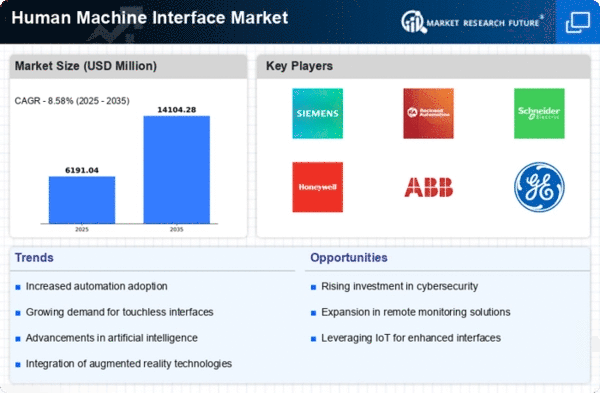
As per MRFR analysis, the Human Machine Interface Market Size was estimated at 5701.82 USD Million in 2024. The Human Machine Interface industry is projected to grow from 6191.15 USD Million in 2025 to 14104.28 USD Million by 2035, exhibiting a compound annual growth rate (CAGR) of 8.58 during the forecast period 2025 - 2035.

Key Market Trends & Highlights

The Human Machine Interface Market is poised for substantial growth driven by technological advancements and evolving user preferences.

  • The integration of Artificial Intelligence is transforming user interactions across various applications.
  • North America remains the largest market, while Asia-Pacific is emerging as the fastest-growing region in the Human Machine Interface sector.
  • Industrial Automation continues to dominate the market, whereas the Healthcare segment is witnessing rapid growth due to increasing demand for advanced interfaces.
  • Key market drivers include advancements in technology and the growing demand for safety and compliance across industries.

Market Size & Forecast

2024 Market Size 5701.82 (USD Million)
2035 Market Size 14104.28 (USD Million)
CAGR (2025 - 2035) 8.58%
Largest Regional Market Share in 2024 North America

Major Players

<p>Siemens (DE), Rockwell Automation (US), Schneider Electric (FR), Honeywell (US), ABB (CH), Emerson Electric (US), General Electric (US), Mitsubishi Electric (JP), Panasonic (JP), B&R Industrial Automation (AT)</p>

Market Trends

The Human Machine Interface Market is currently experiencing a transformative phase, driven by advancements in technology and increasing demand for automation across various industries. This market encompasses a wide range of devices and software that facilitate interaction between humans and machines, enhancing operational efficiency and user experience. As industries strive for greater productivity, the integration of sophisticated interfaces is becoming essential. The rise of smart technologies, including artificial intelligence and the Internet of Things, is further propelling the evolution of this market, as organizations seek to leverage these innovations to optimize processes and improve decision-making. Moreover, the Human Machine Interface Market is witnessing a shift towards more intuitive and user-friendly designs. Companies are increasingly focusing on creating interfaces that not only meet functional requirements but also enhance user satisfaction. This trend is indicative of a broader movement towards human-centric design, where the needs and preferences of users are prioritized. As the market continues to evolve, it is likely that the emphasis on seamless interaction and enhanced usability will shape the future landscape of human-machine interactions, fostering a more connected and efficient operational environment.

Integration of Artificial Intelligence

The incorporation of artificial intelligence into human-machine interfaces is becoming more prevalent. This trend suggests that systems are evolving to become more adaptive and responsive to user inputs, potentially leading to improved efficiency and user satisfaction.

Focus on User Experience

There is a growing emphasis on user experience within the Human Machine Interface Market. Companies are prioritizing the development of interfaces that are not only functional but also intuitive and engaging, indicating a shift towards more user-centric design principles.

Rise of Touchless Interfaces

The emergence of touchless interfaces is gaining traction, particularly in environments where hygiene and safety are paramount. This trend indicates a potential shift in how users interact with machines, favoring gesture recognition and voice commands over traditional touch-based methods.

Human Machine Interface Market Market Drivers

Market Growth Projections

The Global Human Machine Interface Market (HMI) Market Industry is poised for substantial growth, with projections indicating a market value of 5.7 USD Billion in 2024 and an anticipated increase to 14.1 USD Billion by 2035. This growth trajectory suggests a compound annual growth rate of 8.58% from 2025 to 2035. Such figures reflect the increasing reliance on HMI systems across various sectors, driven by technological advancements, rising automation, and a focus on user-friendly interfaces. The market's expansion is indicative of the broader trends towards digitization and smart manufacturing, highlighting the critical role of HMI solutions in modern industrial applications.

Technological Advancements

The Global Human Machine Interface Market (HMI) Market Industry is experiencing rapid technological advancements that enhance user experience and operational efficiency. Innovations in touch screen technology, voice recognition, and augmented reality are reshaping how machines interact with users. For instance, the integration of artificial intelligence in HMI systems allows for predictive maintenance and improved decision-making processes. As these technologies evolve, they are expected to drive the market's growth, with the industry projected to reach 5.7 USD Billion in 2024. This trend indicates a robust demand for more sophisticated and user-friendly interfaces across various sectors.

Rising Automation in Industries

The increasing trend of automation across multiple sectors is a significant driver for the Global Human Machine Interface Market (HMI) Market Industry. Industries such as manufacturing, healthcare, and transportation are adopting automated systems to enhance productivity and reduce human error. For example, the implementation of HMI systems in manufacturing plants allows for real-time monitoring and control of processes, leading to increased operational efficiency. This shift towards automation is anticipated to contribute to the market's growth, with projections indicating a rise to 14.1 USD Billion by 2035. The demand for intuitive HMI solutions is likely to escalate as industries seek to optimize their operations.

Expansion of Smart Manufacturing

The expansion of smart manufacturing initiatives is a pivotal driver for the Global Human Machine Interface Market (HMI) Market Industry. As industries embrace Industry 4.0 principles, the integration of HMI systems becomes essential for facilitating communication between machines and operators. Smart factories utilize HMI solutions to gather and analyze data, enabling real-time decision-making and process optimization. This trend is expected to significantly contribute to the market's growth, with projections indicating a rise to 14.1 USD Billion by 2035. The increasing adoption of IoT-enabled devices in manufacturing processes further underscores the importance of advanced HMI systems in achieving operational excellence.

Increased Focus on Safety and Compliance

Safety and compliance regulations are becoming increasingly stringent across various industries, driving the demand for advanced Human Machine Interface Market (HMI) systems. The Global Human Machine Interface Market (HMI) Market Industry is responding to this need by developing interfaces that enhance safety protocols and ensure regulatory compliance. For example, in the automotive sector, HMI systems are designed to provide real-time feedback to operators, thereby minimizing risks associated with machine operation. This focus on safety not only protects workers but also helps organizations avoid costly penalties associated with non-compliance. As a result, the market is likely to see sustained growth as companies prioritize safety in their operations.

Growing Demand for User-Friendly Interfaces

The demand for user-friendly interfaces is a critical factor propelling the Global Human Machine Interface Market (HMI) Market Industry. As industries strive to improve user engagement and reduce training time, the emphasis on intuitive design becomes paramount. Companies are increasingly investing in HMI solutions that prioritize ease of use, which can lead to enhanced productivity and reduced operational costs. For instance, the healthcare sector is adopting HMI systems that simplify complex data visualization for medical professionals. This trend is expected to sustain the market's growth trajectory, with a compound annual growth rate of 8.58% projected from 2025 to 2035.

Market Segment Insights

By Application: Industrial Automation (Largest) vs. Healthcare (Fastest-Growing)

<p>In the Human Machine Interface Market, the application segment is primarily dominated by Industrial Automation, which encompasses a significant portion of the overall demand. This sector leverages HMI technology for efficient production processes and enhanced operational control. Following closely is the Healthcare application, which, while currently smaller in size, shows a rapid increase in adoption driven by advancements in medical technology and the need for intuitive user interfaces in patient monitoring systems. Examining growth trends, Healthcare stands out as the fastest-growing segment within the market due to rising investments in telemedicine, wearable devices, and patient-centric monitoring systems. Concurrently, Industrial Automation maintains robust growth as industries seek to enhance productivity and automate processes. Factors such as Industry 4.0 initiatives and increasing investments in smart factories are propelling the demand for HMI systems across both segments.</p>

<p>Healthcare: Sensor-Based Interfaces (Dominant) vs. Automotive: Touch-Based Controls (Emerging)</p>

<p>In the Human Machine Interface market, Sensor-Based Interfaces in Healthcare are recognized as the dominant category, providing high precision and reliability in medical applications. These interfaces facilitate seamless interaction between healthcare professionals and technology through touchless and gesture-based controls, ensuring hygiene and usability. On the other hand, Touch-Based Controls in Automotive applications are emerging, driven by consumer demand for intuitive vehicle systems and integrated connectivity solutions. While they currently play a supportive role compared to sensor interfaces in healthcare, advancements in technology and the increasing preference for touchscreen functionalities within vehicles position them as a rapidly adopting segment. Both interfaces reflect the evolution towards enhancing user experiences in their respective sectors.</p>

By Technology: Touch Screen (Largest) vs. Voice Recognition (Fastest-Growing)

<p>The Human Machine Interface (HMI) market is characterized by diverse technologies, with Touch Screens commanding the largest share due to their widespread adoption across various industries such as consumer electronics and automotive. Following closely, Voice Recognition is rapidly gaining traction, driven by advancements in artificial intelligence and increased user preference for hands-free devices. Other technologies like Gesture Recognition, Haptic Technology, and Virtual Reality present significant opportunities, but they currently hold smaller segments of the market.</p>

<p>Voice Recognition (Dominant) vs. Gesture Recognition (Emerging)</p>

<p>Voice Recognition technology has emerged as a dominant force in the Human Machine Interface market, enabled by advances in natural language processing and user interface design. It streamlines user interactions across smart home devices and virtual assistants, showcasing its versatility and user-friendliness. On the other hand, Gesture Recognition represents an emerging segment capturing interest, particularly in gaming and augmented reality applications. This innovative technology offers intuitive control methods but requires further development to enhance accuracy and consumer accessibility. Together, these technologies reflect a significant shift towards intuitive human-machine interactions.</p>

By End Use: Manufacturing (Largest) vs. Transportation (Fastest-Growing)

<p>The Human Machine Interface Market is significantly influenced by its end-use segments, with Manufacturing claiming the largest share in demand. This sector utilizes various interfaces like touchscreens and voice recognition to enhance efficiency and safety in production processes. Conversely, Transportation, while currently smaller, has been rapidly expanding, driven by increased automation and smart vehicle technologies that integrate HMI solutions for improved user experiences. Growth trends in the Human Machine Interface Market are notably driven by advancements in technology, particularly in the Transportation sector, where innovations such as autonomous vehicles embody the fastest-growing trends. Meanwhile, Manufacturing continues to evolve with Industry 4.0 implementations, driving the need for more sophisticated and integrated HMI solutions to streamline operations and improve responsiveness to market changes.</p>

<p>Manufacturing: Dominant vs. Transportation: Emerging</p>

<p>The Manufacturing sector remains the dominant end user of Human Machine Interfaces, as it leverages these technologies to enhance productivity and facilitate complex machinery control. This sector embraces a range of HMI solutions, including graphical user interfaces and advanced touch technologies, which support data visualization and real-time decision-making processes. In contrast, the Transportation sector emerges as a significant contender, characterized by rapid innovation and the growing implementation of smart technologies in vehicles. The increasing demand for connected and automated vehicles positions Transportation as an emerging segment in HMIs, incorporating features such as touchscreen dashboards and voice-activated controls to improve safety and user engagement.</p>

Get more detailed insights about Human Machine Interface (HMI) Market Research Report- Forecast to 2035

Regional Insights

North America : Market Leader in HMI Solutions

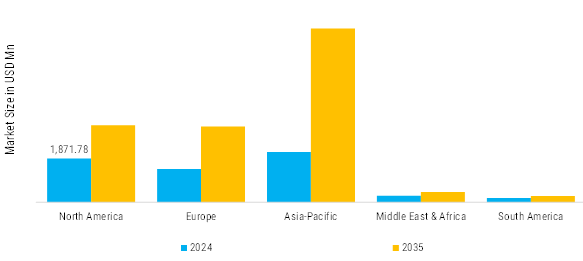
North America continues to lead the Human Machine Interface (HMI) market, holding a significant share of 2850.91M in 2024. The region's growth is driven by rapid technological advancements, increased automation in manufacturing, and a strong focus on enhancing user experience. Regulatory support for smart manufacturing initiatives further fuels demand, making it a pivotal area for HMI development. The competitive landscape is robust, with key players like Siemens, Rockwell Automation, and Honeywell dominating the market. The U.S. stands out as a leader, supported by substantial investments in R&D and innovation. The presence of major corporations ensures a continuous flow of advanced HMI solutions, catering to diverse industries such as automotive, aerospace, and healthcare.

Europe : Innovation and Sustainability Focus

Europe's Human Machine Interface market is projected to reach 1500.0M by 2025, driven by a strong emphasis on innovation and sustainability. The region is witnessing a shift towards smart manufacturing and Industry 4.0, supported by EU regulations promoting digital transformation. This regulatory environment encourages investments in advanced HMI technologies, enhancing operational efficiency across various sectors. Leading countries like Germany, France, and the UK are at the forefront of this transformation, with companies such as Schneider Electric and ABB playing crucial roles. The competitive landscape is characterized by a mix of established players and innovative startups, fostering a dynamic market environment. The focus on user-centric design and integration of AI technologies is expected to further propel growth in the coming years.

Asia-Pacific : Rapid Growth and Adoption

The Asia-Pacific region is experiencing rapid growth in the Human Machine Interface market, projected to reach 1800.0M by 2025. This growth is fueled by increasing industrial automation, rising demand for smart manufacturing solutions, and government initiatives promoting digital transformation. Countries like China and India are leading this trend, with significant investments in technology and infrastructure. The competitive landscape is vibrant, with key players such as Mitsubishi Electric and Panasonic making substantial contributions. The region's diverse industrial base, including automotive, electronics, and consumer goods, drives the demand for advanced HMI solutions. As companies seek to enhance operational efficiency and user experience, the HMI market in Asia-Pacific is poised for significant expansion.

Middle East and Africa : Emerging Market Opportunities

The Middle East and Africa (MEA) region is gradually emerging in the Human Machine Interface market, with a projected size of 550.91M by 2025. The growth is primarily driven by increasing industrialization, investments in smart technologies, and a focus on enhancing operational efficiency. Governments in the region are also promoting initiatives to modernize industries, which is expected to boost HMI adoption significantly. Countries like South Africa and the UAE are leading the charge, with a growing number of local and international players entering the market. The competitive landscape is evolving, with companies focusing on tailored solutions to meet regional needs. As industries in MEA continue to modernize, the demand for advanced HMI solutions is set to rise, presenting significant opportunities for growth.

Key Players and Competitive Insights

The Human Machine Interface Market is currently characterized by a dynamic competitive landscape, driven by rapid technological advancements and increasing demand for automation across various industries. Key players such as Siemens (DE), Rockwell Automation (US), and Schneider Electric (FR) are strategically positioning themselves through innovation and partnerships. Siemens (DE) focuses on integrating AI and IoT technologies into its HMI solutions, enhancing user experience and operational efficiency. Rockwell Automation (US) emphasizes digital transformation, leveraging its FactoryTalk software to provide real-time data analytics, which is crucial for decision-making in manufacturing environments. Schneider Electric (FR) is actively pursuing sustainability initiatives, aligning its HMI products with energy-efficient practices, thereby appealing to environmentally conscious consumers.

The market structure appears moderately fragmented, with numerous players competing for market share. Key business tactics include localizing manufacturing to reduce costs and optimize supply chains, which is essential in maintaining competitive pricing. The collective influence of these major companies shapes the market dynamics, as they continuously innovate and adapt to changing consumer demands and technological advancements.

In November 2025, Siemens (DE) announced the launch of its new HMI platform, which integrates advanced AI capabilities to enhance predictive maintenance features. This strategic move is likely to position Siemens as a leader in the market, as predictive maintenance is increasingly becoming a critical component in industrial operations, reducing downtime and operational costs. The introduction of this platform underscores Siemens' commitment to innovation and its focus on meeting the evolving needs of its customers.

In October 2025, Rockwell Automation (US) expanded its partnership with Microsoft (US) to enhance its cloud-based HMI solutions. This collaboration aims to integrate Rockwell's automation technologies with Microsoft's Azure platform, facilitating improved data analytics and machine learning capabilities. Such a strategic alliance not only strengthens Rockwell's market position but also enhances its ability to offer comprehensive solutions that cater to the growing demand for digital transformation in manufacturing.

In September 2025, Schneider Electric (FR) unveiled its new EcoStruxure HMI, designed to optimize energy consumption in industrial settings. This product launch aligns with the global push towards sustainability and energy efficiency, positioning Schneider as a frontrunner in providing environmentally friendly solutions. The strategic importance of this initiative lies in its potential to attract clients who prioritize sustainability, thereby expanding Schneider's market reach.

As of December 2025, the Human Machine Interface Market is witnessing trends such as increased digitalization, AI integration, and a strong focus on sustainability. Strategic alliances among key players are shaping the competitive landscape, fostering innovation and enhancing product offerings. Moving forward, competitive differentiation is likely to evolve from traditional price-based competition to a focus on technological innovation, reliability in supply chains, and sustainable practices. Companies that can effectively leverage these trends will likely secure a competitive edge in this rapidly changing market.

Key Companies in the Human Machine Interface Market market include

Industry Developments

  • Q3 2024: Volkswagen launches ID. UNYX electric SUV coupé in China with AI-based 3D avatar HMI Volkswagen officially launched the ID. UNYX, a new electric SUV coupé, in China, featuring a smart human-machine interface (HMI) with an AI-based 3D avatar that can be personalized through an app, enhancing user interaction.

Future Outlook

Human Machine Interface Market Future Outlook

<p>The Human Machine Interface Market is projected to grow at an 8.58% CAGR from 2024 to 2035, driven by advancements in automation, IoT integration, and user experience enhancements.</p>

New opportunities lie in:

  • <p>Development of AI-driven predictive maintenance interfaces</p>
  • <p>Expansion of touchless control systems in healthcare</p>
  • <p>Integration of augmented reality for training simulations</p>

<p>By 2035, the market is expected to be robust, driven by innovation and diverse applications.</p>

Market Segmentation

Human Machine Interface Market End Use Outlook

  • Manufacturing
  • Transportation
  • Medical Devices
  • Home Automation
  • Entertainment

Human Machine Interface Market Technology Outlook

  • Touch Screen
  • Voice Recognition
  • Gesture Recognition
  • Haptic Technology
  • Virtual Reality

Human Machine Interface Market Application Outlook

  • Industrial Automation
  • Healthcare
  • Automotive
  • Consumer Electronics
  • Aerospace

Report Scope

MARKET SIZE 20245701.82(USD Million)
MARKET SIZE 20256191.15(USD Million)
MARKET SIZE 203514104.28(USD Million)
COMPOUND ANNUAL GROWTH RATE (CAGR)8.58% (2024 - 2035)
REPORT COVERAGERevenue Forecast, Competitive Landscape, Growth Factors, and Trends
BASE YEAR2024
Market Forecast Period2025 - 2035
Historical Data2019 - 2024
Market Forecast UnitsUSD Million
Key Companies ProfiledSiemens (DE), Rockwell Automation (US), Schneider Electric (FR), Honeywell (US), ABB (CH), Emerson Electric (US), General Electric (US), Mitsubishi Electric (JP), Panasonic (JP), B&R Industrial Automation (AT)
Segments CoveredApplication, Technology, End Use
Key Market OpportunitiesIntegration of artificial intelligence in Human Machine Interface systems enhances user experience and operational efficiency.
Key Market DynamicsRising demand for intuitive interfaces drives innovation and competition in the Human Machine Interface Market.
Countries CoveredNorth America, Europe, APAC, South America, MEA

FAQs

How much is the Human Machine Interface (HMI) Market?

The Human Machine Interface (HMI) Market size is expected to be valued at USD 5701.82 billion in 2024.

What is the growth rate of the Human Machine Interface (HMI) Market?

The global market is projected to grow at a CAGR of 8.58% during the forecast period, 2025 to 2035.

Which region held the largest market share in the Human Machine Interface (HMI) Market?

North America had the largest share of the global market.

North America had the largest share of the global market.

The key players in the market are Yokogawa Electric Corporation, Rockwell Automation, Inc., ABB, General Electric (GE), Mitsubishi Electric Corporation, Schneider Electric SE, Jabil Inc., Siemens AG, Honeywell International Inc., Advantech Co., Ltd, Emerson Electric Co, Omron Corporation, Eaton Corporation, Beckhoff Automation, and EXOR International. and Other players.

Which Component led the Human Machine Interface (HMI) Market?

The Hardware category dominated the market in 2023.

  1. EXECUTIVE SUMMARY 25
  2. MARKET INTRODUCTION 27
    1. DEFINITION 27
    2. SCOPE OF THE STUDY 27
    3. MARKET STRUCTURE 28
  3. RESEARCH METHODOLOGY 29
  4. MARKET DYNAMICS 36
    1. INTRODUCTION 36
    2. DRIVERS 37
      1. GROWING ADOPTION OF INDUSTRY 4.0 37
      2. GROWING DEMAND FOR SMART AUTOMATION SOLUTIONS, AND DEVELOPMENT OF IIOT 37
      3. SURGING ADOPTION OF INDUSTRIAL AUTOMATION IN MANUFACTURING PROCESSES 38
      4. DRIVERS IMPACT ANALYSIS 39
    3. RESTRAINTS 39
      1. COSTS ASSOCIATED WITH SERVICES 39
      2. LACK OF SKILLED PROFESSIONALS 40
    4. OPPORTUNITIES 41
      1. INCREASING INVESTMENTS IN RENWABLE POWER PROJECTS 41
  5. MARKET FACTOR ANALYSIS 42
    1. SUPPLY CHAIN 42
      1. PARTS & COMPONENTS MANUFACTURERS 42
      2. SOFTWARE DEVELOPERS 43
      3. SYSTEM INTEGRATORS 43
      4. HUMAN MACHINE INTERFACE (HMI) SERVICE/SOLUTION PROVIDERS 43
      5. END USERS 43
    2. IMPACT OF COVID-19 44
      1. IMPACT ON SEMICONDUCTOR MANUFACTURERS 44
      2. IMPACT ON COMPONENT MANUFACTURERS 44
      3. IMPACT ON DEVICE MANUFACTURERS 44
      4. COVID-19 IMPACT ON SUPPLY CHAIN DELAY 45
  6. GLOBAL HUMAN MACHINE INTERFACE (HMI) MARKET, BY Component 46
    1. OVERVIEW 46
      1. GLOBAL HUMAN MACHINE INTERFACE (HMI) MARKET, BY COMPONENT, 2024–2032 (USD MILLION) 47
    2. HARDWARE 47
      1. GLOBAL HUMAN MACHINE INTERFACE (HMI) MARKET, BY HARDWARE, 2024–2032 (USD MILLION) 47
      2. BASIC HMI 47
      3. ADVANCED PANEL BASED HMI 48
      4. ADVANCED PC BASED HMI 48
    3. SOFTWARE 48
      1. GLOBAL HUMAN MACHINE INTERFACE (HMI) MARKET, BY SOFTWARE, 2024–2032 (USD MILLION) 48
      2. ON-PREMISES HMI 48
      3. CLOUD BASED HMI 49
    4. SERVICES 49
  7. GLOBAL HUMAN MACHINE INTERFACE (HMI) MARKET, BY TECHNOLOGY TYPE 50
    1. OVERVIEW 50
      1. GLOBAL HUMAN MACHINE INTERFACE (HMI) MARKET, BY TECHNOLOGY TYPE, 2024–2032 (USD MILLION) 51
    2. MOTION HMI 51
    3. BIONIC HMI 51
    4. TACTILE HMI 52
    5. ACOUSTIC HMI 52
  8. GLOBAL HUMAN MACHINE INTERFACE (HMI) MARKET, BY CONFIGURATION 53
    1. OVERVIEW 53
      1. GLOBAL HUMAN MACHINE INTERFACE (HMI) MARKET, BY CONFIGURATION, 2024–2032 (USD MILLION) 54
    2. EMBEDDED HMI 54
    3. STAND-ALONE HMI 54
  9. GLOBAL HUMAN MACHINE INTERFACE (HMI) MARKET, BY VERTICAL 55
    1. OVERVIEW 55
      1. GLOBAL HUMAN MACHINE INTERFACE (HMI) MARKET, BY VERTICAL, 2024–2032 (USD MILLION) 56
    2. PROCESS INDUSTRY 56
      1. GLOBAL HUMAN MACHINE INTERFACE (HMI) MARKET, BY PROCESS INDUSTRIES, 2024–2032 (USD MILLION) 56
      2. OIL AND GAS 57
      3. PHARMACEUTICAL 57
      4. FOOD AND BEVERAGE 57
      5. CHEMICAL 57
      6. ENERGY & POWER 58
      7. METAL & MINING 58
      8. WATER AND WASTEWATER 58
      9. OTHERS 58
    3. DISCRETE INDUSTRY 59
      1. AUTOMOTIVE 59
      2. PACKAGING 59
      3. AEROSPACE AND DEFENSE 59
      4. OTHERS 59
    4. (USD MILLION) 60
  10. GLOBAL HUMAN MACHINE INTERFACE (HMI) MARKET, BY REGION 61
    1. OVERVIEW 61
      1. GLOBAL HUMAN MACHINE INTERFACE (HMI) MARKET, BY REGION, 2024 VS 2032 (USD MILLION) 61
      2. GLOBAL HUMAN MACHINE INTERFACE (HMI) MARKET, BY REGION, 2024–2032 (USD MILLION) 62
    2. NORTH AMERICA 62
      1. NORTH AMERICA: HUMAN MACHINE INTERFACE (HMI) MARKET, BY COUNTRY, 2024–2032 (USD MILLION) 64
      2. NORTH AMERICA HUMAN MACHINE INTERFACE (HMI) MARKET, BY COMPONENT, 2024–2032 (USD MILLION) 64
      3. NORTH AMERICA HUMAN MACHINE INTERFACE (HMI) MARKET, BY TECHNOLOGY TYPE, 2024–2032
      4. NORTH AMERICA HUMAN MACHINE INTERFACE (HMI) MARKET, BY CONFIGURATION, 2024–2032
      5. NORTH AMERICA HUMAN MACHINE INTERFACE (HMI) MARKET, BY VERTICAL, 2024–2032 (USD MILLION) 68
      6. US 69
      7. CANADA 72
      8. MEXICO 74
    3. (USD MILLION) 65
    4. (USD MILLION) 65
    5. (USD MILLION) 66
    6. (USD MILLION) 67
    7. (USD MILLION) 71
    8. (USD MILLION) 71
    9. (USD MILLION) 73
    10. (USD MILLION) 74
    11. (USD MILLION) 74
    12. (USD MILLION) 76
    13. (USD MILLION) 76
    14. EUROPE 77
      1. EUROPE: HUMAN MACHINE INTERFACE (HMI) MARKET, BY COUNTRY, 2024–2032 (USD MILLION) 79
      2. EUROPE HUMAN MACHINE INTERFACE (HMI) MARKET, BY COMPONENT, 2024–2032 (USD MILLION) 79
      3. EUROPE HUMAN MACHINE INTERFACE (HMI) MARKET, BY TECHNOLOGY TYPE, 2024–2032 (USD MILLION) 81
      4. EUROPE HUMAN MACHINE INTERFACE (HMI) MARKET, BY CONFIGURATION, 2024–2032 (USD MILLION) 82
      5. EUROPE HUMAN MACHINE INTERFACE (HMI) MARKET, BY VERTICAL, 2024–2032 (USD MILLION) 83
      6. UK 84
      7. GERMANY 86
      8. FRANCE 89
      9. REST OF EUROPE 91
    15. (USD MILLION) 83
    16. (USD MILLION) 84
    17. (USD MILLION) 86
    18. (USD MILLION) 86
    19. (USD MILLION) 87
    20. (USD MILLION) 88
    21. (USD MILLION) 89
    22. (USD MILLION) 91
    23. (USD MILLION) 91
    24. (USD MILLION) 91
    25. (USD MILLION) 92
    26. (USD MILLION) 92
    27. (USD MILLION) 92
    28. (USD MILLION) 93
    29. ASIA-PACIFIC 95
      1. ASIA-PACIFIC: HUMAN MACHINE INTERFACE (HMI) MARKET, BY COUNTRY, 2024–2032 (USD MILLION) 96
      2. ASIA-PACIFIC HUMAN MACHINE INTERFACE (HMI) MARKET, BY COMPONENT, 2024–2032 (USD MILLION) 97
      3. ASIA-PACIFIC HUMAN MACHINE INTERFACE (HMI) MARKET, BY TECHNOLOGY TYPE, 2024–2032
      4. ASIA-PACIFIC HUMAN MACHINE INTERFACE (HMI) MARKET, BY CONFIGURATION, 2024–2032 (USD MILLION) 99
      5. ASIA-PACIFIC HUMAN MACHINE INTERFACE (HMI) MARKET, BY VERTICAL, 2024–2032 (USD MILLION) 100
      6. CHINA 101
      7. JAPAN 103
      8. INDIA 106
      9. SOUTH KOREA 108
      10. REST OF ASIA-PACIFIC 111
    30. (USD MILLION) 98
    31. (USD MILLION) 100
    32. (USD MILLION) 101
    33. (USD MILLION) 103
    34. (USD MILLION) 103
    35. (USD MILLION) 105
    36. (USD MILLION) 105
    37. (USD MILLION) 108
    38. (USD MILLION) 108
    39. (USD MILLION) 109
    40. (USD MILLION) 109
    41. (USD MILLION) 109
    42. (USD MILLION) 110

Human Machine Interface (HMI) Market Segmentation

Global Human Machine Interface (HMI), By Component Outlook (USD Million, 2018-2032)

  • Hardware
    • Basic HMI
    • Advanced panel Based HMI
    • Advanced PC-based HMI
  • Software
    • On-Premise HMI
    • Cloud Based HMI
  • Services

Global Human Machine Interface (HMI), By Technology Type (USD Million, 2018-2032)

  • Motion HMI
  • Bionic HMI
  • Tactile HMI
  • Acoustic HMI

Global Human Machine Interface (HMI), By Configuration (USD Million, 2018-2032)

  • Embedded HMI
  • Stand-alone HMI

Global Human Machine Interface (HMI), By Vertical (USD Million, 2018-2032)

  • Process Industries
    • Oil and Gas
    • Pharmaceuticals
    • Food and Beverage
    • Chemicals
    • Energy and Power
    • Metal and Mining
    • Water and Wastewater
    • Others
  • Discrete Industries
    • Automotive
    • Packaging
    • Aerospace and Defence
    • Others

Global Human Machine Interface (HMI) Regional Outlook (USD Million, 2018-2032)

  • North America Outlook (USD Million, 2018-2032)
  • North America Human Machine Interface (HMI), By Component (USD Million, 2018-2032)
    • Hardware
      • Basic HMI
      • Advanced panel Based HMI
      • Advanced PC-based HMI
    • Software
      • On-Premise HMI
      • Cloud Based HMI
    • Services
  • North America Human Machine Interface (HMI), By Technology Type (USD Million, 2018-2032)
    • Motion HMI
    • Bionic HMI
    • Tactile HMI
    • Acoustic HMI
  • North America Human Machine Interface (HMI), By Configuration (USD Million, 2018-2032)
    • Embedded HMI
    • Stand-alone HMI
  • North America Human Machine Interface (HMI), By Vertical (USD Million, 2018-2032)
    • Process Industries
      • Oil and Gas
      • Pharmaceuticals
      • Food and Beverage
      • Chemicals
      • Energy and Power
      • Metal and Mining
      • Water and Wastewater
      • Others
    • Discrete Industries
      • Automotive
      • Packaging
      • Aerospace and Defence
      • Others


  • US Outlook (USD Million, 2018-2032)
  • US Human Machine Interface (HMI), By Component (USD Million, 2018-2032)
    • Hardware
      • Basic HMI
      • Advanced panel Based HMI
      • Advanced PC-based HMI
    • Software
      • On-Premise HMI
      • Cloud Based HMI
    • Services
  • US Human Machine Interface (HMI), By Technology Type (USD Million, 2018-2032)
    • Motion HMI
    • Bionic HMI
    • Tactile HMI
    • Acoustic HMI
  • US Human Machine Interface (HMI), By Configuration (USD Million, 2018-2032)
    • Embedded HMI
    • Stand-alone HMI
  • US Human Machine Interface (HMI), By Vertical (USD Million, 2018-2032)
    • Process Industries
      • Oil and Gas
      • Pharmaceuticals
      • Food and Beverage
      • Chemicals
      • Energy and Power
      • Metal and Mining
      • Water and Wastewater
      • Others
    • Discrete Industries
      • Automotive
      • Packaging
      • Aerospace and Defence
      • Others


  • Canada Outlook (USD Million, 2018-2032)
  • Canada Human Machine Interface (HMI), By Component (USD Million, 2018-2032)
    • Hardware
      • Basic HMI
      • Advanced panel Based HMI
      • Advanced PC-based HMI
    • Software
      • On-Premise HMI
      • Cloud Based HMI
    • Services
  • Canada Human Machine Interface (HMI), By Technology Type (USD Million, 2018-2032)
    • Motion HMI
    • Bionic HMI
    • Tactile HMI
    • Acoustic HMI
  • Canada Human Machine Interface (HMI), By Configuration (USD Million, 2018-2032)
    • Embedded HMI
    • Stand-alone HMI
  • Canada Human Machine Interface (HMI), By Vertical (USD Million, 2018-2032)
    • Process Industries
      • Oil and Gas
      • Pharmaceuticals
      • Food and Beverage
      • Chemicals
      • Energy and Power
      • Metal and Mining
      • Water and Wastewater
      • Others
    • Discrete Industries
      • Automotive
      • Packaging
      • Aerospace and Defence
      • Others


  • Mexico Outlook (USD Million, 2018-2032)
  • Mexico Human Machine Interface (HMI), By Component (USD Million, 2018-2032)
    • Hardware
      • Basic HMI
      • Advanced panel Based HMI
      • Advanced PC-based HMI
    • Software
      • On-Premise HMI
      • Cloud Based HMI
    • Services
  • Mexico Human Machine Interface (HMI), By Technology Type (USD Million, 2018-2032)
    • Motion HMI
    • Bionic HMI
    • Tactile HMI
    • Acoustic HMI
  • Mexico Human Machine Interface (HMI), By Configuration (USD Million, 2018-2032)
    • Embedded HMI
    • Stand-alone HMI
  • Mexico Human Machine Interface (HMI), By Vertical (USD Million, 2018-2032)
    • Process Industries
      • Oil and Gas
      • Pharmaceuticals
      • Food and Beverage
      • Chemicals
      • Energy and Power
      • Metal and Mining
      • Water and Wastewater
      • Others
    • Discrete Industries
      • Automotive
      • Packaging
      • Aerospace and Defence
      • Others


  • Europe Outlook (USD Million, 2018-2032)
  • Europe Human Machine Interface (HMI), By Component (USD Million, 2018-2032)
    • Hardware
      • Basic HMI
      • Advanced panel Based HMI
      • Advanced PC-based HMI
    • Software
      • On-Premise HMI
      • Cloud Based HMI
    • Services
  • Europe Human Machine Interface (HMI), By Technology Type (USD Million, 2018-2032)
    • Motion HMI
    • Bionic HMI
    • Tactile HMI
    • Acoustic HMI
  • Europe Human Machine Interface (HMI), By Configuration (USD Million, 2018-2032)
    • Embedded HMI
    • Stand-alone HMI
  • Europe Human Machine Interface (HMI), By Vertical (USD Million, 2018-2032)
    • Process Industries
      • Oil and Gas
      • Pharmaceuticals
      • Food and Beverage
      • Chemicals
      • Energy and Power
      • Metal and Mining
      • Water and Wastewater
      • Others
    • Discrete Industries
      • Automotive
      • Packaging
      • Aerospace and Defence
      • Others


  • Germany Outlook (USD Million, 2018-2032)
  • Germany Human Machine Interface (HMI), By Component (USD Million, 2018-2032)
    • Hardware
      • Basic HMI
      • Advanced panel Based HMI
      • Advanced PC-based HMI
    • Software
      • On-Premise HMI
      • Cloud Based HMI
    • Services
  • Germany Human Machine Interface (HMI), By Technology Type (USD Million, 2018-2032)
    • Motion HMI
    • Bionic HMI
    • Tactile HMI
    • Acoustic HMI
  • Germany Human Machine Interface (HMI), By Configuration (USD Million, 2018-2032)
    • Embedded HMI
    • Stand-alone HMI
  • Germany Human Machine Interface (HMI), By Vertical (USD Million, 2018-2032)
    • Process Industries
      • Oil and Gas
      • Pharmaceuticals
      • Food and Beverage
      • Chemicals
      • Energy and Power
      • Metal and Mining
      • Water and Wastewater
      • Others
    • Discrete Industries
      • Automotive
      • Packaging
      • Aerospace and Defence
      • Others


  • UK Outlook (USD Million, 2018-2032)
  • UK Human Machine Interface (HMI), By Component (USD Million, 2018-2032)
    • Hardware
      • Basic HMI
      • Advanced panel Based HMI
      • Advanced PC-based HMI
    • Software
      • On-Premise HMI
      • Cloud Based HMI
    • Services
  • UK Human Machine Interface (HMI), By Technology Type (USD Million, 2018-2032)
    • Motion HMI
    • Bionic HMI
    • Tactile HMI
    • Acoustic HMI
  • UK Human Machine Interface (HMI), By Configuration (USD Million, 2018-2032)
    • Embedded HMI
    • Stand-alone HMI
  • UK Human Machine Interface (HMI), By Vertical (USD Million, 2018-2032)
    • Process Industries
      • Oil and Gas
      • Pharmaceuticals
      • Food and Beverage
      • Chemicals
      • Energy and Power
      • Metal and Mining
      • Water and Wastewater
      • Others
    • Discrete Industries
      • Automotive
      • Packaging
      • Aerospace and Defence
      • Others


  • France Outlook (USD Million, 2018-2032)
  • France Human Machine Interface (HMI), By Component (USD Million, 2018-2032)
    • Hardware
      • Basic HMI
      • Advanced panel Based HMI
      • Advanced PC-based HMI
    • Software
      • On-Premise HMI
      • Cloud Based HMI
    • Services
  • France Human Machine Interface (HMI), By Technology Type (USD Million, 2018-2032)
    • Motion HMI
    • Bionic HMI
    • Tactile HMI
    • Acoustic HMI
  • France Human Machine Interface (HMI), By Configuration (USD Million, 2018-2032)
    • Embedded HMI
    • Stand-alone HMI
  • France Human Machine Interface (HMI), By Vertical (USD Million, 2018-2032)
    • Process Industries
      • Oil and Gas
      • Pharmaceuticals
      • Food and Beverage
      • Chemicals
      • Energy and Power
      • Metal and Mining
      • Water and Wastewater
      • Others
    • Discrete Industries
      • Automotive
      • Packaging
      • Aerospace and Defence
      • Others


  • Rest of Europe Outlook (USD Million, 2018-2032)
  • Rest of Europe Human Machine Interface (HMI), By Component (USD Million, 2018-2032)
    • Hardware
      • Basic HMI
      • Advanced panel Based HMI
      • Advanced PC-based HMI
    • Software
      • On-Premise HMI
      • Cloud Based HMI
    • Services
  • Rest of Europe Human Machine Interface (HMI), By Technology Type (USD Million, 2018-2032)
    • Motion HMI
    • Bionic HMI
    • Tactile HMI
    • Acoustic HMI
  • Rest of Europe Human Machine Interface (HMI), By Configuration (USD Million, 2018-2032)
    • Embedded HMI
    • Stand-alone HMI
  • Rest of Europe Human Machine Interface (HMI), By Vertical (USD Million, 2018-2032)
    • Process Industries
      • Oil and Gas
      • Pharmaceuticals
      • Food and Beverage
      • Chemicals
      • Energy and Power
      • Metal and Mining
      • Water and Wastewater
      • Others
    • Discrete Industries
      • Automotive
      • Packaging
      • Aerospace and Defence
      • Others


  • Asia-Pacific Outlook (USD Million, 2018-2032)
  • Asia-Pacific Human Machine Interface (HMI), By Component (USD Million, 2018-2032)
    • Hardware
      • Basic HMI
      • Advanced panel Based HMI
      • Advanced PC-based HMI
    • Software
      • On-Premise HMI
      • Cloud Based HMI
    • Services
  • Asia-Pacific Human Machine Interface (HMI), By Technology Type (USD Million, 2018-2032)
    • Motion HMI
    • Bionic HMI
    • Tactile HMI
    • Acoustic HMI
  • Asia-Pacific Human Machine Interface (HMI), By Configuration (USD Million, 2018-2032)
    • Embedded HMI
    • Stand-alone HMI
  • Asia-Pacific Human Machine Interface (HMI), By Vertical (USD Million, 2018-2032)
    • Process Industries
      • Oil and Gas
      • Pharmaceuticals
      • Food and Beverage
      • Chemicals
      • Energy and Power
      • Metal and Mining
      • Water and Wastewater
      • Others
    • Discrete Industries
      • Automotive
      • Packaging
      • Aerospace and Defence
      • Others


  • China Outlook (USD Million, 2018-2032)
  • China Human Machine Interface (HMI), By Component (USD Million, 2018-2032)
    • Hardware
      • Basic HMI
      • Advanced panel Based HMI
      • Advanced PC-based HMI
    • Software
      • On-Premise HMI
      • Cloud Based HMI
    • Services
  • China Human Machine Interface (HMI), By Technology Type (USD Million, 2018-2032)
    • Motion HMI
    • Bionic HMI
    • Tactile HMI
    • Acoustic HMI
  • China Human Machine Interface (HMI), By Configuration (USD Million, 2018-2032)
    • Embedded HMI
    • Stand-alone HMI
  • China Human Machine Interface (HMI), By Vertical (USD Million, 2018-2032)
    • Process Industries
      • Oil and Gas
      • Pharmaceuticals
      • Food and Beverage
      • Chemicals
      • Energy and Power
      • Metal and Mining
      • Water and Wastewater
      • Others
    • Discrete Industries
      • Automotive
      • Packaging
      • Aerospace and Defence
      • Others


  • Japan Outlook (USD Million, 2018-2032)
  • Japan Human Machine Interface (HMI), By Component (USD Million, 2018-2032)
    • Hardware
      • Basic HMI
      • Advanced panel Based HMI
      • Advanced PC-based HMI
    • Software
      • On-Premise HMI
      • Cloud Based HMI
    • Services
  • Japan Human Machine Interface (HMI), By Technology Type (USD Million, 2018-2032)
    • Motion HMI
    • Bionic HMI
    • Tactile HMI
    • Acoustic HMI
  • Japan Human Machine Interface (HMI), By Configuration (USD Million, 2018-2032)
    • Embedded HMI
    • Stand-alone HMI
  • Japan Human Machine Interface (HMI), By Vertical (USD Million, 2018-2032)
    • Process Industries
      • Oil and Gas
      • Pharmaceuticals
      • Food and Beverage
      • Chemicals
      • Energy and Power
      • Metal and Mining
      • Water and Wastewater
      • Others
    • Discrete Industries
      • Automotive
      • Packaging
      • Aerospace and Defence
      • Others


  • India Outlook (USD Million, 2018-2032)
  • India Human Machine Interface (HMI), By Component (USD Million, 2018-2032)
    • Hardware
      • Basic HMI
      • Advanced panel Based HMI
      • Advanced PC-based HMI
    • Software
      • On-Premise HMI
      • Cloud Based HMI
    • Services
  • India Human Machine Interface (HMI), By Technology Type (USD Million, 2018-2032)
    • Motion HMI
    • Bionic HMI
    • Tactile HMI
    • Acoustic HMI
  • India Human Machine Interface (HMI), By Configuration (USD Million, 2018-2032)
    • Embedded HMI
    • Stand-alone HMI
  • India Human Machine Interface (HMI), By Vertical (USD Million, 2018-2032)
    • Process Industries
      • Oil and Gas
      • Pharmaceuticals
      • Food and Beverage
      • Chemicals
      • Energy and Power
      • Metal and Mining
      • Water and Wastewater
      • Others
    • Discrete Industries
      • Automotive
      • Packaging
      • Aerospace and Defence
      • Others


  • Rest of Asia-Pacific Outlook (USD Million, 2018-2032)
  • Rest of Asia-Pacific Human Machine Interface (HMI), By Component (USD Million, 2018-2032)
    • Hardware
      • Basic HMI
      • Advanced panel Based HMI
      • Advanced PC-based HMI
    • Software
      • On-Premise HMI
      • Cloud Based HMI
    • Services
  • Rest of Asia-Pacific Human Machine Interface (HMI), By Technology Type (USD Million, 2018-2032)
    • Motion HMI
    • Bionic HMI
    • Tactile HMI
    • Acoustic HMI
  • Rest of Asia-Pacific Human Machine Interface (HMI), By Configuration (USD Million, 2018-2032)
    • Embedded HMI
    • Stand-alone HMI
  • Rest of Asia-Pacific Human Machine Interface (HMI), By Vertical (USD Million, 2018-2032)
    • Process Industries
      • Oil and Gas
      • Pharmaceuticals
      • Food and Beverage
      • Chemicals
      • Energy and Power
      • Metal and Mining
      • Water and Wastewater
      • Others
    • Discrete Industries
      • Automotive
      • Packaging
      • Aerospace and Defence
      • Others


  • Rest of the World Outlook (USD Million, 2018-2032)
  • Rest of the World Human Machine Interface (HMI), By Component (USD Million, 2018-2032)
    • Hardware
      • Basic HMI
      • Advanced panel Based HMI
      • Advanced PC-based HMI
    • Software
      • On-Premise HMI
      • Cloud Based HMI
    • Services
  • Rest of the World Human Machine Interface (HMI), By Technology Type (USD Million, 2018-2032)
    • Motion HMI
    • Bionic HMI
    • Tactile HMI
    • Acoustic HMI
  • Rest of the World Human Machine Interface (HMI), By Configuration (USD Million, 2018-2032)
    • Embedded HMI
    • Stand-alone HMI
  • Rest of the World Human Machine Interface (HMI), By Vertical (USD Million, 2018-2032)
    • Process Industries
      • Oil and Gas
      • Pharmaceuticals
      • Food and Beverage
      • Chemicals
      • Energy and Power
      • Metal and Mining
      • Water and Wastewater
      • Others
    • Discrete Industries
      • Automotive
      • Packaging
      • Aerospace and Defence
      • Others


  • Middle East & Africa Outlook (USD Million, 2018-2032)
  • Middle East & Africa Human Machine Interface (HMI), By Component (USD Million, 2018-2032)
    • Hardware
      • Basic HMI
      • Advanced panel Based HMI
      • Advanced PC-based HMI
    • Software
      • On-Premise HMI
      • Cloud Based HMI
    • Services
  • Middle East & Africa Human Machine Interface (HMI), By Technology Type (USD Million, 2018-2032)
    • Motion HMI
    • Bionic HMI
    • Tactile HMI
    • Acoustic HMI
  • Middle East & Africa Human Machine Interface (HMI), By Configuration (USD Million, 2018-2032)
    • Embedded HMI
    • Stand-alone HMI
  • Middle East & Africa Human Machine Interface (HMI), By Vertical (USD Million, 2018-2032)
    • Process Industries
      • Oil and Gas
      • Pharmaceuticals
      • Food and Beverage
      • Chemicals
      • Energy and Power
      • Metal and Mining
      • Water and Wastewater
      • Others
    • Discrete Industries
      • Automotive
      • Packaging
      • Aerospace and Defence
      • Others


  • South America Outlook (USD Million, 2018-2032)


  • South America Human Machine Interface (HMI), By Component (USD Million, 2018-2032)
    • Hardware
      • Basic HMI
      • Advanced panel Based HMI
      • Advanced PC-based HMI
    • Software
      • On-Premise HMI
      • Cloud Based HMI
    • Services
  • South America Human Machine Interface (HMI), By Technology Type (USD Million, 2018-2032)
    • Motion HMI
    • Bionic HMI
    • Tactile HMI
    • Acoustic HMI
  • South America Human Machine Interface (HMI), By Configuration (USD Million, 2018-2032)
    • Embedded HMI
    • Stand-alone HMI
  • South America Human Machine Interface (HMI), By Vertical (USD Million, 2018-2032)
    • Process Industries
      • Oil and Gas
      • Pharmaceuticals
      • Food and Beverage
      • Chemicals
      • Energy and Power
      • Metal and Mining
      • Water and Wastewater
      • Others
    • Discrete Industries
      • Automotive
      • Packaging
      • Aerospace and Defence
      • Others
Infographic

Free Sample Request

Kindly complete the form below to receive a free sample of this Report

Get Free Sample

Customer Strories

Compare Licence

×
Features License Type
Single User Multiuser License Enterprise User
Price $4,950 $5,950 $7,250
Maximum User Access Limit 1 User Upto 10 Users Unrestricted Access Throughout the Organization
Free Customization
Direct Access to Analyst
Deliverable Format
Platform Access
Discount on Next Purchase 10% 15% 15%
Printable Versions