Hyperbaric Oxygen Therapy Market (2026 - 2035)

Hyperbaric Oxygen Therapy Market Research Report By Application (Wound Care, Decompression Sickness, Radiation Injuries, Carbon Monoxide Poisoning, Stroke, Autism, Traumatic Brain Injury, Sports Injuries, Anti-Aging), By End User (Hospitals, Clinics, Spas, Sports Facilities, Home Care Settings), By Type (Monoplace Hyperbaric Oxygen Therapy, Multiplace Hyperbaric Oxygen Therapy), By Pressure (Low-Pressure Hyperbaric Oxygen Therapy, High-Pressure Hyperbaric Oxygen Therapy) and By Regional (North America, Europe, South America, Asia Pacific, Middle East and Africa) - Growth & Industry Forecast 2025 To 2035
ID: MRFR/Pharma/28911-HCR
100 Pages
Vikita Thakur, Kinjoll Dey
Last Updated: July 28, 2026
Hyperbaric Oxygen Therapy Market
Market Size
Forecast Period2026-2035
CAGR (2026-2035)6.50%
2025 Market SizeUSD 7.92 Billion
2035 Market SizeUSD 14.85 Billion
Key Players
ETC
Sechrist Industries
Perry Baromedical
Haux-Life-Support GmbH
Fink Engineering
OxyHeal Health Group
Opportunities
  • Outpatient and Freestanding Clinic Expansion
  • Emerging Market Hospital Modernization
  • Telehealth-Integrated Treatment Monitoring

Hyperbaric Oxygen Therapy Market Summary

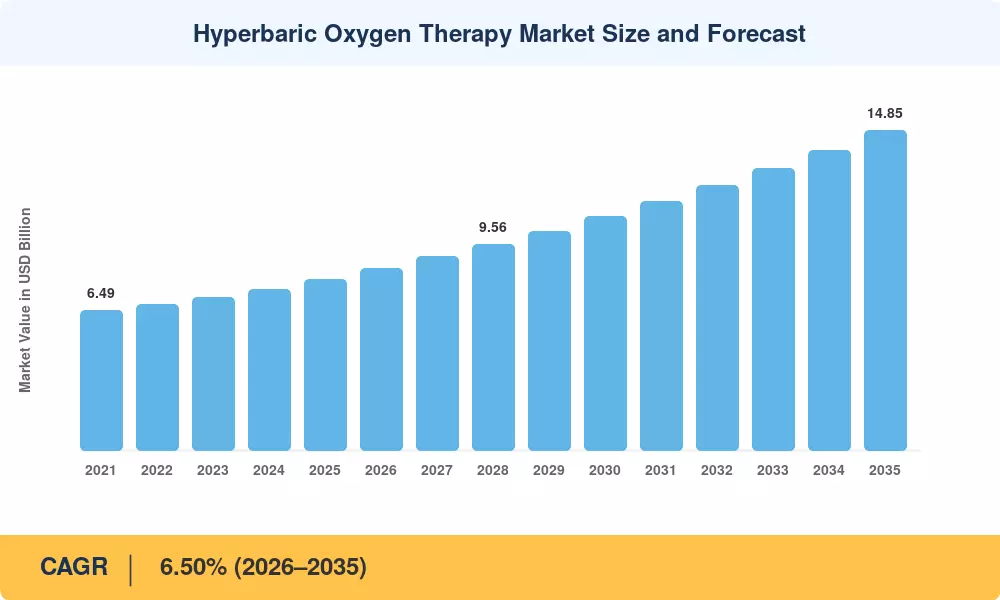
The Hyperbaric Oxygen Therapy Market reached an estimated USD 7.92 billion in 2025 and is projected to grow from USD 8.43 billion in 2026 to USD 14.85 billion by 2035, registering a CAGR of 6.50% during the forecast period. This growth trajectory reflects widening clinical endorsements for hyperbaric treatments across chronic wound management and emergency medicine, paired with expanding insurance reimbursement frameworks in the United States and Western Europe [1]. The U.S. Centers for Medicare & Medicaid Services (CMS) now covers fourteen FDA-cleared indications, creating a reliable revenue floor for hospital-based programs and freestanding treatment centers alike.

Technology trends are dramatically reshaping the Hyperbaric Oxygen Therapy Market. Legacy multiplace steel chambers, created in the 1960s for dive medicine, are being replaced with digitally controlled monoplace acrylic systems with real-time patient monitoring, automated pressure profiling and integrated electronic health record (EHR) connectivity. In 2024, next-generation chamber platforms attracted over USD 420 million in worldwide capital investment, with a dozen manufacturers rolling out FDA 510(k)-cleared portable or semi-portable units targeting outpatient clinics and military field hospitals.

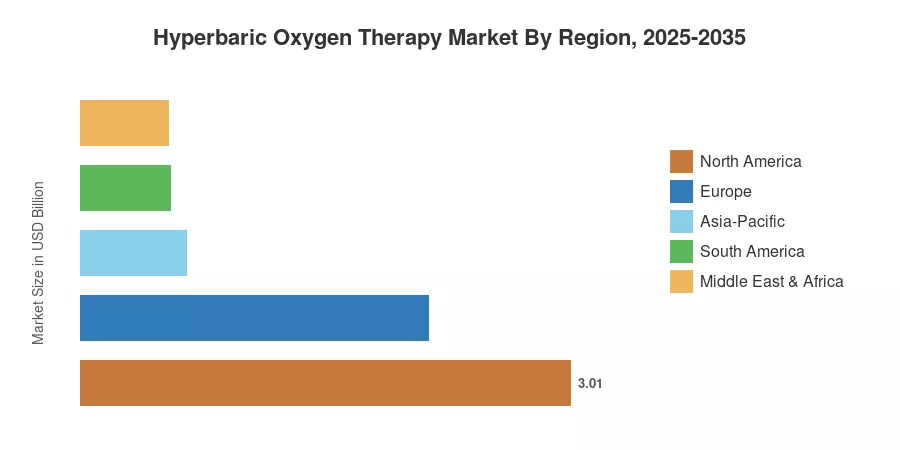
North America has the highest concentration of approved treatment centers in the world, and so accounts for the largest share of the Hyperbaric Oxygen Therapy Market. Asia-Pacific is the fastest-expanding market with a CAGR of 8.2%, projected to be driven by the increasing diabetic population in India and China and government-supported hospital modernisation plans. Europe, with a share of over 27% supported by EU Medical Device Regulation (MDR) harmonization and increased acceptance in sports medicine rehabilitation, has the second largest market [3]. How soon reimbursement policies in emerging markets reflect the clinical data will shape the next decade.


Key Report Takeaways

• By Product Type

  • Monoplace HBOT devices account for approximately 58% of the Hyperbaric Oxygen Therapy Market, favored for lower capital costs and streamlined staffing requirements.
  • Multiplace HBOT devices are forecast to grow at a CAGR of 5.8%, driven by hospital-based programs treating multiple patients simultaneously.

• By Application

  • Wound healing applications represent the largest revenue segment at an estimated USD 2.98 billion in 2025, reflecting the global burden of diabetic foot ulcers and non-healing surgical wounds.
  • Infection treatment indications are gaining share as antibiotic-resistant infections push clinicians toward adjunctive oxygen therapies.

• By Region

  • North America leads the Hyperbaric Oxygen Therapy Market with a 38% share, reflecting mature reimbursement pathways and high facility density.
  • Asia-Pacific is expanding at 8.2% CAGR, the fastest of any region, propelled by government hospital infrastructure investments in India, China, and Southeast Asia.
  • Europe holds approximately a 27% share, with Germany, the UK, and France as primary contributors.


Market Size and Forecast (2021–2035)

Market Research Future employs a triangulated approach combining bottom-up revenue models from device manufacturers and service providers with top-down macroeconomic indicators — including healthcare expenditure growth, chronic disease prevalence rates, and regulatory approval timelines — to arrive at consistent market size estimates for the Hyperbaric Oxygen Therapy Market across the study period.
Hyperbaric Oxygen Therapy Market Size and Forecast
Our Impact
Enabled $4.3B Revenue Impact for Fortune 500 and Leading Multinationals
Partnering with 2000+ Global Organizations Each Year
30K+ Citations by Top-Tier Firms in the Industry

Driver Impact Analysis

Driver ~% Impact on CAGR Geographic Relevance Impact Timeline
Rising global diabetes prevalence ~22% Global Long-term (≥4 yr)
Expanding insurance and reimbursement coverage ~18% North America, Europe Medium-term (2–4 yr)
Military and defense medical program investments ~14% North America, Europe Short-term (≤2 yr)
Technological advancement in chamber design ~13% Global Medium-term (2–4 yr)
Growing evidence base for off-label indications ~12% North America, Asia-Pacific Long-term (≥4 yr)
Sports medicine and wellness tourism adoption ~11% Europe, Asia-Pacific Medium-term (2–4 yr)
Aging population demographics ~10% Europe, Japan Long-term (≥4 yr)


Rising Global Diabetes Prevalence

The International Diabetes Federation (IDF) predicts that by 2030 there will be 643 million adults with diabetes, up from 537 million in 2021 [8]. diabetes foot ulcers affect around 19-34% of diabetes patients at some point in their lifetime and continue to be one of the main clinical indications for hyperbaric oxygen treatment. This epidemiological trend fuels a sustainable and growing patient pool for the Hyperbaric Oxygen Therapy Market, particularly in high incidence countries such as South Asia, the Middle East and North Africa where the healthcare systems are actively enhancing their wound care infrastructure.


Expanding Insurance and Reimbursement Coverage

CMS reimbursement for hyperbaric oxygen therapy includes recognized indications under the Medicare Benefit Policy Manual. It is subject to particular National Coverage Determinations (NCDs) for illnesses such as diabetic lower extremity wounds. Payment structures are periodically adjusted via the Outpatient Prospective Payment System (OPPS). Private payers such as UnitedHealthcare and Aetna have formal coverage rules for medical necessities. In Europe, large statutory health systems, such as Germany’s statutory health insurance (GKV) system and France’s Assurance Maladie, fund hyperbaric treatments for a selection of chronic wound and radiation injury diagnoses, slowly broadening paths for patient access.


Military and Defense Medical Investments

The U.S. Department of Defense (DOD) funds peer-reviewed medical research, including military-relevant applications like hyperbaric medicine, traumatic brain injury (TBI) treatment protocols, and transportable chamber units for forward surgical teams, through annual funding streams from the Congressionally Directed Medical Research Programs (CDMRP). At the same time, international defense partners, particularly critical NATO allies such as the UK and Canada, are incorporating similar procurement and clinical research projects into their defense medical strategy to increase battlefield and field-hospital care capabilities.


Technological Advancement in Chamber Design

Modern monoplace chambers now integrate touchscreen controls, automated pressure curves, real-time SpO₂ and cardiac monitoring, and cloud-based session logging. These advances have reduced required staffing ratios from approximately 1:1 to 1:3 in many outpatient settings, cutting per-session operating costs by an estimated 30–40% [9]. Several manufacturers introduced chambers in 2024 with built-in fire suppression systems and Class B electrical ratings, addressing longstanding safety concerns that historically slowed adoption in freestanding clinics and ambulatory surgery centers.


Restraints Impact Analysis

The restraint impacts below are directional estimates reflecting factors that constrain market growth. They do not subtract directly from the CAGR figure and should be read as relative impediments identified through primary research.

Restraint ~% Negative Impact on CAGR Geographic Relevance Impact Timeline
High capital and operating costs ~–25% Global Short-term (≤2 yr)
Limited clinical evidence for off-label uses ~–22% North America, Europe Medium-term (2–4 yr)
Regulatory complexity and safety concerns ~–20% Global Long-term (≥4 yr)
Facility space and infrastructure requirements ~–18% Emerging markets Medium-term (2–4 yr)
Shortage of trained hyperbaric technicians ~–15% Global Long-term (≥4 yr)


High Capital and Operating Costs

A single monoplace chamber system costs between USD 100,000 and USD 250,000, while multiplace installations can exceed USD 1.5 million including facility modifications, gas supply infrastructure, and fire safety compliance [14]. For small hospital systems and independent clinics, these upfront costs create a significant barrier. Annual maintenance, medical-grade oxygen supply, and liability insurance add USD 40,000–80,000 per chamber per year, translating to breakeven timelines of 3–5 years even at moderate patient volumes. This economic reality limits growth of the Hyperbaric Oxygen Therapy Market in price-sensitive healthcare systems.

Limited Clinical Evidence for Off-Label Uses

While the Undersea and Hyperbaric Medical Society (UHMS) recognizes fourteen approved indications, dozens of additional conditions — including autism spectrum disorder, cerebral palsy, and post-concussion syndrome — lack the randomized controlled trial (RCT) evidence base required for payer coverage [10]. The absence of large-scale, multi-center trials restricts physician referral volumes for these indications and exposes providers to liability risk. Until definitive Phase III data emerges, a meaningful portion of potential clinical demand remains locked behind evidentiary gates.

Regulatory Complexity and Safety Concerns

Hyperbaric chambers are classified as Class II medical devices by the FDA, requiring 510(k) premarket notification. In the EU, compliance with MDR 2017/745 demands notified body certification, clinical evaluation reports, and post-market surveillance systems that smaller manufacturers struggle to maintain [15]. Safety incidents — including rare chamber fires and barotrauma events — receive outsized media attention, creating perception barriers that slow the Hyperbaric Oxygen Therapy Market in regions where the therapy is still gaining clinical acceptance.


Hyperbaric Oxygen Therapy Market Opportunities

Outpatient and Freestanding Clinic Expansion

The shift from inpatient to outpatient delivery models creates a substantial growth lane for the Hyperbaric Oxygen Therapy Market. Freestanding wound care clinics in the U.S. grew by 12% between 2022 and 2024, with many adding dedicated hyperbaric suites to capture referral volumes from vascular surgeons and endocrinologists. Lower real estate costs outside hospital campuses and streamlined staffing models make this channel attractive for physician-entrepreneur investors targeting suburban and secondary metro areas.

Emerging Market Hospital Modernization

India's Ayushman Bharat Health Infrastructure Mission (AB-HIM) has earmarked USD 3.1 billion for district hospital upgrades, including specialty treatment capabilities. China's 14th Five-Year Plan similarly targets advanced therapy installations across Tier 2 and Tier 3 cities. These government-funded programs offer a rare window for chamber manufacturers to establish installed bases in markets where diabetes prevalence is surging but hyperbaric infrastructure remains minimal.

Telehealth-Integrated Treatment Monitoring

Remote patient monitoring platforms now enable real-time session oversight from centralized command centers, allowing a single hyperbaric physician to supervise treatments across multiple clinic locations simultaneously. This model, already piloted by Healogics and RestorixHealth in the U.S., reduces physician staffing bottlenecks and opens a subscription-based service revenue stream for technology providers.

Sports Medicine and Wellness Applications

Professional sports organizations — including NFL, Premier League, and Olympic training programs — have adopted hyperbaric therapy as a recovery modality, generating consumer awareness that spills into the retail wellness segment [11]. Portable soft-shell chambers priced under USD 15,000 are creating an entirely new direct-to-consumer channel, though regulatory classification of these devices varies by jurisdiction.

Data Monetization and Outcomes Analytics

Aggregated treatment outcome data from networked chamber systems represents an emerging asset class. Providers operating multi-site networks can leverage de-identified datasets to support payer negotiations, clinical trial site selection, and real-world evidence (RWE) generation for pharmaceutical companies developing adjunctive therapies. This data-driven business model remains nascent but could reshape competitive dynamics in the Hyperbaric Oxygen Therapy Market by 2030.


Hyperbaric Oxygen Therapy Market Future Outlook

AI-Driven Treatment Protocol Optimization

Artificial intelligence is beginning to reshape how hyperbaric treatment plans are designed and adjusted. Machine learning algorithms trained on thousands of patient treatment histories can now predict optimal pressure profiles, session durations, and total treatment counts for individual wound types. By 2030, AI-guided protocols could reduce average treatment course length by 15–20%, improving throughput and lowering per-patient costs across the Hyperbaric Oxygen Therapy Market [23].

Platform Economics and Multi-Site Network Consolidation

The wound care management industry is consolidating rapidly, with operators like Healogics managing over 600 hospital-based programs across the U.S. Network scale creates procurement leverage, standardized outcome benchmarking, and centralized physician oversight — advantages that independent facilities struggle to replicate. This platform model is expanding internationally, with several U.S.-based operators exploring franchise or management-services agreements in the Middle East and Southeast Asia.

Portable and Home-Use Chamber Development

Regulatory pathways for lower-pressure (1.3–1.5 ATA) soft-shell chambers are evolving, with the FDA currently evaluating whether these devices warrant distinct classification from traditional medical-grade chambers. If cleared for home use under physician supervision, this category could unlock an estimated USD 800 million addressable market segment by 2032, fundamentally broadening the Hyperbaric Oxygen Therapy Market beyond institutional settings [24].


Hyperbaric Oxygen Therapy Market Segmentation

By Application

Segment Key Metric Primary Demand Driver
Wound Healing 37% market share (2025) Diabetic foot ulcers; chronic non-healing surgical wounds
Decompression Sickness CAGR 4.8% Commercial diving; recreational scuba growth
Diabetic Foot Ulcers USD 1.52B (2025) 537M+ global diabetic population
Infection Treatment CAGR 7.1% Antibiotic-resistant infections; necrotizing fasciitis
Gas Embolism 4% market share Emergency medicine protocols
Other Applications CAGR 8.3% TBI, radiation injury, carbon monoxide exposure


The Hyperbaric Oxygen Therapy Market is segmented by application into six categories, with wound healing and diabetic foot ulcers collectively accounting for over half of global revenues. Wound healing dominates because clinical evidence supporting treatment efficacy is strongest for this indication — a 2023 Cochrane review found that hyperbaric therapy improved complete healing rates by 40% compared to standard care alone in chronic ulcer patients [10]. The "Other Applications" category is growing fastest, fueled by expanding clinical investigation into TBI, radiation-induced tissue injury, and sudden sensorineural hearing loss.

Infection treatment stands out as an increasingly important application segment. Rising rates of antibiotic-resistant organisms — particularly methicillin-resistant Staphylococcus aureus (MRSA) and multi-drug-resistant gram-negative bacteria — are driving clinicians toward adjunctive hyperbaric oxygen as a means to enhance white blood cell bactericidal activity and potentiate antibiotic efficacy in compromised tissue beds [10].

By Product Type

Segment Key Metric Primary Demand Driver
Monoplace HBOT Devices 58% market share (2025) Lower cost; outpatient clinic suitability
Multiplace HBOT Devices USD 2.85B (2025) Hospital programs; critical care applications
Topical/Portable Devices CAGR 9.6% Home use; sports medicine; military field deployment


Monoplace devices dominate the Hyperbaric Oxygen Therapy Market by product type due to their comparatively lower capital cost (USD 100,000–250,000 vs. USD 500,000–1.5 million for multiplace systems) and simplified operational requirements. These single-patient chambers require less floor space and fewer support staff, making them the preferred choice for ambulatory wound care centers and outpatient clinics. Multiplace chambers, while more expensive, remain essential in hospital settings where critically ill patients require bedside nursing access during treatment and where multiple patients can be treated simultaneously to optimize throughput [14].

By End User

Segment Key Metric Primary Demand Driver
Hospitals 52% market share (2025) Inpatient wound care; emergency indications
Wound Care & Specialty Clinics CAGR 7.9% Outpatient shift; physician-investor models
Military & Government Facilities USD 0.63B (2025) TBI research; dive medicine
Home/Wellness Settings CAGR 11.2% Direct-to-consumer soft-shell chambers


Hospitals remain the largest end-user channel for the Hyperbaric Oxygen Therapy Market, anchored by emergency indications (gas embolism, decompression sickness, carbon monoxide exposure) that require immediate access. The wound care and specialty clinic channel is growing fastest within institutional settings, reflecting the broader industry trend toward outpatient delivery and value-based care models that reward healing outcomes over inpatient length of stay.


Regional Market Share Analysis

Region Key Metric Primary Investment Themes
North America 38% market share (2025) Reimbursement expansion, wound care network consolidation
Europe 27% market share (2025) MDR compliance, sports medicine integration
Asia-Pacific CAGR 8.2% (2026–2035) Hospital modernization, diabetes prevalence
South America USD 0.55B (2025) Public health infrastructure, burn treatment
Middle East & Africa CAGR 6.8% (2026–2035) Medical tourism, military applications
Total USD 7.92B (2025)

The Hyperbaric Oxygen Therapy Market follows a geographic distribution shaped by healthcare spending maturity, diabetic disease burden, reimbursement frameworks, and military medical infrastructure.


North America

Country Key Metric Key Driver
United States 82% of regional share CMS reimbursement for 14 indications; largest wound care network
Canada CAGR 5.9% Provincial health authority program expansion
Mexico USD 0.12B (2025) Medical tourism and private hospital investment


The United States accounts for the vast majority of North American demand, supported by roughly 1,500 operational hyperbaric treatment sites — more than any other country. CMS reimbursement stability and a growing body of clinical practice guidelines from the UHMS underpin consistent utilization rates. Canada's provinces are gradually adding hyperbaric therapy to funded service lists, while Mexico's private hospital sector in Monterrey and Mexico City is investing in chamber installations to serve medical tourism patients [18].

Europe

Country Key Metric Key Driver
Germany 24% of regional share GKV reimbursement; strong clinical research tradition
United Kingdom CAGR 5.6% NHS pilot programs for chronic wound management
France USD 0.38B (2025) Assurance Maladie coverage for radiation injury
Italy CAGR 5.3% Dive medicine heritage; growing sports medicine use
Spain 8% of regional share Balearic Islands dive medicine infrastructure
Nordic Countries CAGR 5.1% Integrated public healthcare adoption
Russia USD 0.14B (2025) Military and naval medicine programs
Rest of Europe 12% of regional share Mixed adoption driven by tourism and defense


Europe's Hyperbaric Oxygen Therapy Market benefits from a strong academic research tradition, particularly in Germany and France where university hospitals operate some of the world's most advanced multiplace treatment programs. The UK's NHS has launched wound care pathway pilots incorporating hyperbaric therapy at five regional centers since 2023, with early data showing 28% faster healing times for refractory diabetic ulcers [19].

Asia-Pacific

Country Key Metric Key Driver
China 35% of regional share Government hospital build-out; rising diabetes rates
India CAGR 9.4% AB-HIM infrastructure funding; 77M+ diabetic population
Japan USD 0.29B (2025) Aging population; sports medicine research
South Korea CAGR 7.8% K-wellness industry; advanced device manufacturing
ASEAN 14% of regional share Medical tourism in Thailand and Malaysia
Rest of Asia-Pacific CAGR 6.9% Emerging clinical adoption


Asia-Pacific represents the fastest-growing region for the Hyperbaric Oxygen Therapy Market, driven by converging demographic and policy forces. China alone installed over 320 new hospital-grade chambers in 2024 as part of its county-level hospital upgrade initiative. India's diabetic population — projected to reach 100 million by 2030 — creates urgent demand for advanced wound care infrastructure, though reimbursement mechanisms through Ayushman Bharat remain limited to select tertiary facilities [20].

South America

Country Key Metric Key Driver
Brazil 62% of regional share SUS public health system integration; burn treatment demand
Argentina CAGR 5.7% Private healthcare sector investment
Rest of South America USD 0.09B (2025) Gradual clinical awareness growth


Brazil's unified public health system (SUS) has incorporated hyperbaric therapy into burn treatment protocols at twelve federal hospitals, creating a foundation for broader clinical adoption. The Hyperbaric Oxygen Therapy Market in South America remains constrained by limited reimbursement and a shortage of trained operators. However, private sector investment in São Paulo and Buenos Aires is accelerating [21].

Middle East & Africa

Country Key Metric Key Driver
Saudi Arabia 28% of regional share Vision 2030 healthcare investment
UAE CAGR 7.5% Medical tourism hub; premium wellness facilities
South Africa USD 0.05B (2025) Dive medicine for mining and offshore sectors
Egypt CAGR 6.2% Growing private hospital infrastructure
Rest of MEA 22% of regional share Mixed adoption; military and petroleum sectors


Saudi Arabia's Vision 2030 healthcare transformation is channeling capital into specialty treatment capabilities at new medical cities, including dedicated hyperbaric medicine departments. The UAE — particularly Dubai — has positioned itself as a luxury medical tourism destination where hyperbaric therapy features prominently in wellness and anti-aging clinic menus [22]. Across sub-Saharan Africa, adoption remains limited to mining medicine and military applications.


Hyperbaric Oxygen Therapy Market By Region, 2025-2035

Competitive Benchmarking

The Hyperbaric Oxygen Therapy Market exhibits medium market concentration, with the top five companies holding an estimated 40–48% combined revenue share. A mix of established chamber manufacturers, wound care management companies, and emerging players in portable device segments define competitive dynamics. The Herfindahl-Hirschman Index (HHI) for device manufacturing sits in the 1,200–1,500 range, indicating a moderately competitive structure where no single firm dominates pricing or clinical adoption pathways.

Company Est. Revenue Share Range Key Offerings Strategic Positioning
ETC (Environmental Tectonics Corp.) ~10–14% Monoplace and multiplace chambers; military systems Integrated defense and clinical portfolio
Sechrist Industries ~8–12% Monoplace chambers; oxygen delivery systems Cost-competitive outpatient solutions
Perry Baromedical ~7–11% Multiplace chambers; hospital-grade systems Premium hospital segment focus
Haux-Life-Support GmbH ~5–9% Multiplace and mobile chambers European market leader; NATO supplier
Fink Engineering ~4–8% Monoplace chambers; customized installations Asia-Pacific and Oceania specialist
OxyHeal Health Group ~3–6% Monoplace chambers; treatment center operations Vertically integrated manufacturer-operator
Reimers Systems ~3–5% Multiplace chamber systems Custom-engineered hospital installations
Gulf Coast Hyperbarics ~2–5% Refurbished and new monoplace systems Value-tier market positioning
Healogics (SCP Health) ~5–8% Wound care management services; program operations Largest U.S. hospital-based wound care network
SOS Group (SOS Hyperlite) ~2–4% Portable lightweight chambers; military field units Emerging portable/tactical segment leader


Recent News & Developments


  • OxyHealth (May 2024)—acquired Newtowne Hyperbarics to expand its product range and enhance manufacturing capabilities in portable hyperbaric oxygen chamber solutions.
  • Sechrist Industries (March 2023)—completed a strategic acquisition to broaden its global manufacturing footprint and strengthen its market position in advanced hyperbaric systems.
  • Healogics (January 2024)—expanded its nationwide network operations by partnering with major healthcare systems to manage and standardize outpatient hyperbaric wound care clinics.


Hyperbaric Oxygen Therapy Market Report Scope

Parameter Detail
Market Scope Global Hyperbaric Oxygen Therapy Market covering devices, consumables, and treatment services.
Study Period 2021–2035
CAGR 6.50% (2026–2035)
Market Size (2025) USD 7.92 Billion
Market Size (2035) USD 14.85 Billion
Fastest Growing Segment Portable/Topical Devices (by product type); Other Applications incl. TBI (by application)
Companies Profiled 10 major players
Valuation Currency USD (Billion)


FAQs

What insurance coverage gaps exist for hyperbaric therapy in the United States?
Medicare covers fourteen FDA-cleared indications, but most private payers exclude off-label uses like TBI and sudden hearing loss. Patients pursuing non-covered treatments typically pay USD 200–350 per session out of pocket [5].
How do monoplace and multiplace chambers differ in clinical outcomes?
Both deliver equivalent tissue oxygenation at matched pressures. Multiplace chambers allow bedside nursing access for critically ill patients, while monoplace units offer lower per-session costs and simpler staffing in outpatient settings [14].
What accreditation should buyers look for when selecting a hyperbaric facility?
UHMS facility accreditation remains the gold standard, requiring compliance with safety protocols, physician credentialing, and outcome reporting. Accredited facilities demonstrate 23% lower complication rates than non-accredited sites [17].
How is portable soft-shell chamber regulation evolving?
The FDA classifies most soft-shell chambers as Class II devices requiring 510(k) clearance. Current regulatory review may create a distinct lower-pressure category for home use under physician supervision by 2028 [15].
What role does hyperbaric therapy play in antibiotic stewardship programs?
Adjunctive hyperbaric oxygen enhances neutrophil bactericidal activity and aminoglycoside efficacy in hypoxic tissue beds. Several hospital systems now incorporate it into antibiotic stewardship protocols for refractory osteomyelitis and necrotizing infections [10].
How are wound care management companies reshaping the Hyperbaric Oxygen Therapy Market competitive landscape?
Network operators like Healogics manage over 600 hospital-based programs, leveraging scale for procurement discounts and standardized outcomes benchmarking. This consolidation is marginalizing standalone independent providers [22].
What emerging clinical trials could significantly expand the Hyperbaric Oxygen Therapy Market addressable population?
The VA multi-center TBI trial and several Phase III studies on radiation-induced cystitis and proctitis are expected to report by 2028. Positive results could add two to three new CMS-covered indications [25].    
Author
Author
Author Profile
Vikita Thakur LinkedIn
Senior Research Analyst
She holds an experience of about 5+ years in market research and business consulting projects for sectors such as life sciences, medical devices, and healthcare IT. She possesses a robust background in data analysis, market estimation, competitive intelligence, pipeline analysis market trend identification, and consumer behavior insights. Her expertise lies in technical Sales support, client interaction and project management, designing and implementing market research studies, conducting competitive analysis, and synthesizing complex data into actionable recommendations that drive business growth.
Co-Author
Co-Author Profile
Kinjoll Dey LinkedIn
Senior Research Analyst
He is an extremely curious individual currently working in Healthcare and Medical Devices Domain. Kinjoll is comfortably versed in data centric research backed by healthcare educational background. He leverages extensive data mining and analytics tools such as Primary and Secondary Research, Statistical Analysis, Machine Learning, Data Modelling. His key role also involves Technical Sales Support, Client Interaction and Project management within the Healthcare team. Lastly, he showcases extensive affinity towards learning new skills and remain fascinated in implementing them.
Download Free Sample

Kindly complete the form below to receive a free sample of this Report

Download PDF ×

We do not share your information with anyone. However, we may send you emails based on your report interest from time to time. You may contact us at any time to opt-out.
















