Market Growth Projections
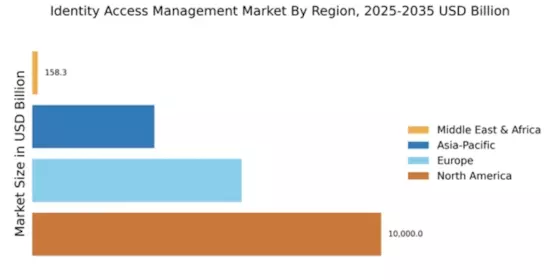
The Global Identity and Access Management Market Industry is poised for substantial growth, with projections indicating a market size of 17.1 USD Billion in 2024 and an anticipated increase to 40 USD Billion by 2035. This growth trajectory reflects a compound annual growth rate (CAGR) of 8.04% from 2025 to 2035. The increasing adoption of IAM solutions across various sectors, driven by factors such as cybersecurity threats, regulatory compliance, and technological advancements, underscores the market's potential. As organizations continue to prioritize identity and access management, the industry is expected to evolve significantly, presenting opportunities for innovation and investment.
Rising Cybersecurity Threats
The increasing frequency and sophistication of cyber threats is a primary driver for the Global Identity and Access Management Market Industry. Organizations are compelled to adopt robust IAM solutions to protect sensitive data and ensure compliance with regulations. For instance, the rise in data breaches has led to a heightened focus on identity verification and access controls. In 2024, the market is projected to reach 17.1 USD Billion, reflecting the urgent need for enhanced security measures. This trend is expected to continue as organizations prioritize safeguarding their digital assets, thereby fueling growth in the IAM sector.
Adoption of Cloud-Based Solutions
The shift towards cloud computing is reshaping the Global Identity and Access Management Market Industry. Organizations are increasingly adopting cloud-based IAM solutions due to their scalability, flexibility, and cost-effectiveness. These solutions enable businesses to manage user identities and access rights more efficiently, particularly in remote work environments. The growing demand for cloud services is expected to drive the IAM market, with a projected CAGR of 8.04% from 2025 to 2035. As companies migrate to the cloud, the need for robust IAM solutions becomes paramount, further propelling market growth.
Regulatory Compliance Requirements
Stringent regulatory frameworks across various sectors are significantly influencing the Global Identity and Access Management Market Industry. Compliance with regulations such as GDPR and HIPAA necessitates organizations to implement effective IAM solutions to manage user identities and access rights. Failure to comply can result in severe penalties, prompting businesses to invest in IAM technologies. As a result, the market is anticipated to grow substantially, with projections indicating a rise to 40 USD Billion by 2035. This regulatory landscape creates a compelling case for organizations to enhance their IAM capabilities, ensuring they meet compliance standards while protecting sensitive information.
Integration of Artificial Intelligence
The integration of artificial intelligence into IAM solutions is emerging as a transformative driver within the Global Identity and Access Management Market Industry. AI technologies enhance identity verification processes, enabling organizations to detect anomalies and potential security threats in real-time. This capability is particularly vital in an era where cyber threats are increasingly sophisticated. As businesses recognize the value of AI-driven IAM solutions, the market is likely to experience significant growth. The combination of AI and IAM not only improves security but also streamlines user access management, making it a critical focus for organizations moving forward.
Growing Demand for User-Centric Experiences
The Global Identity and Access Management Market Industry is witnessing a shift towards user-centric IAM solutions. Organizations are increasingly prioritizing seamless user experiences while maintaining security protocols. This trend is driven by the need to enhance customer satisfaction and engagement in a competitive landscape. As businesses strive to provide intuitive access management solutions, the demand for IAM technologies that balance security and user experience is on the rise. This focus on user-centric design is likely to contribute to the overall growth of the IAM market, as organizations seek to create secure yet accessible environments for their users.