Download Free Sample
Kindly complete the form below to receive a free sample of this Report
Idiopathic Intracranial Hypertension Treatment Market Research Report By Treatment Type (Medication, Surgical Intervention, Optic Nerve Decompression), By Route of Administration (Oral, Intravenous, Intrathecal), By Diagnosis Method (Lumbar Puncture, Magnetic Resonance Imaging, Computed Tomography), By Patient Type (Adults, Pediatric, Pregnant Women) and By Regional (North America, Europe, South America, Asia Pacific, Middle East and Africa) - Growth & Industry Forecast 2025 To 2035
As per MRFR analysis, the Idiopathic Intracranial Hypertension Treatment Market Size was estimated at 1829.12 USD Million in 2024. The Idiopathic Intracranial Hypertension Treatment industry is projected to grow from 1912.56 USD Million in 2025 to 2987.83 USD Million by 2035, exhibiting a compound annual growth rate (CAGR) of 4.56% during the forecast period 2025 - 2035.
The Idiopathic Intracranial Hypertension Treatment Market is experiencing notable growth driven by increased awareness and advancements in treatment options.
| 2024 Market Size | 1829.12 (USD Million) |
| 2035 Market Size | 2987.83 (USD Million) |
| CAGR (2025 - 2035) | 4.56% |
The Idiopathic Intracranial Hypertension Treatment Market is currently experiencing notable developments, driven by a combination of increasing awareness and advancements in therapeutic options. As healthcare professionals gain a deeper understanding of this condition, the demand for effective treatments appears to be rising. This market encompasses a range of interventions, including pharmacological therapies, surgical options, and lifestyle modifications, which collectively aim to alleviate symptoms and improve patient outcomes. Furthermore, ongoing research into the underlying mechanisms of idiopathic intracranial hypertension suggests that innovative treatment modalities may emerge in the near future, potentially reshaping the landscape of care for affected individuals. In addition to the growing focus on treatment efficacy, there is a discernible trend towards personalized medicine within the Idiopathic Intracranial Hypertension Treatment Market. Tailoring therapies to individual patient profiles may enhance treatment effectiveness and minimize adverse effects. Moreover, the integration of technology in monitoring and managing this condition is gaining traction, with digital health solutions offering new avenues for patient engagement and adherence. As the market evolves, stakeholders must remain vigilant to emerging trends and adapt strategies accordingly to meet the needs of patients and healthcare providers alike.
There is an increasing recognition of idiopathic intracranial hypertension among healthcare providers, leading to more accurate diagnoses. This heightened awareness is likely to drive demand for treatment options, as more patients seek help for their symptoms.
Innovations in both pharmacological and surgical treatments are emerging, potentially offering improved outcomes for patients. These advancements may include new drug formulations and minimally invasive surgical techniques that enhance recovery.
The trend towards personalized medicine is becoming more pronounced, with treatments being tailored to individual patient needs. This approach may improve efficacy and reduce side effects, aligning with the broader shift in healthcare towards customized care.
The Global Idiopathic Intracranial Hypertension Treatment Market Industry is projected to experience substantial growth over the coming years. With an estimated market value of 1.83 USD Billion in 2024, the industry is expected to reach approximately 2.99 USD Billion by 2035. This growth trajectory indicates a compound annual growth rate (CAGR) of 4.57% from 2025 to 2035. The increasing prevalence of idiopathic intracranial hypertension, coupled with advancements in treatment modalities and heightened awareness, suggests a robust market outlook. These projections highlight the potential for ongoing investment and innovation within the industry, ultimately benefiting patients and healthcare providers alike.
The allocation of increased research funding towards idiopathic intracranial hypertension is a crucial driver for the Global Idiopathic Intracranial Hypertension Treatment Market Industry. Government and private organizations are recognizing the need for more effective treatments and better understanding of IIH. This influx of funding supports clinical trials and research initiatives aimed at discovering novel therapies. As research progresses, it is anticipated that new treatment options will emerge, enhancing the overall market landscape. The commitment to advancing IIH research is likely to contribute to the market's growth, particularly as new findings translate into clinical practice.
The growing awareness and education surrounding idiopathic intracranial hypertension are vital for the Global Idiopathic Intracranial Hypertension Treatment Market Industry. Increased public and professional knowledge about IIH leads to earlier diagnosis and treatment, which can significantly improve patient outcomes. Educational campaigns and resources provided by healthcare organizations are instrumental in disseminating information about the condition. As awareness continues to rise, more individuals are likely to seek medical attention, thereby driving demand for treatments. This trend is expected to support the market's growth trajectory, particularly as the healthcare community becomes more adept at recognizing and managing IIH.
Innovations in treatment modalities for idiopathic intracranial hypertension are propelling the Global Idiopathic Intracranial Hypertension Treatment Market Industry forward. New pharmacological agents and surgical techniques are emerging, enhancing patient outcomes. For instance, the introduction of minimally invasive procedures has improved the management of IIH, leading to increased patient satisfaction. As these advancements become more widely adopted, the market is likely to experience significant growth. The projected compound annual growth rate (CAGR) of 4.57% from 2025 to 2035 underscores the potential for ongoing development in treatment options, which may further stimulate market expansion.
The dynamics of the Global Idiopathic Intracranial Hypertension Treatment Market Industry are influenced by the competitive landscape among pharmaceutical and biotechnology companies. As companies strive to develop innovative therapies, the market is becoming increasingly competitive. This competition fosters a climate of rapid advancement in treatment options, which may lead to improved patient care. The anticipated market value of 2.99 USD Billion by 2035 reflects the potential for growth driven by these competitive forces. Companies that successfully navigate this landscape and bring effective treatments to market are likely to capture significant market share, further propelling industry expansion.
The increasing incidence of idiopathic intracranial hypertension (IIH) is a primary driver of the Global Idiopathic Intracranial Hypertension Treatment Market Industry. Factors such as obesity, which is a significant risk factor for IIH, have led to a rise in cases. In 2024, the market is valued at approximately 1.83 USD Billion, reflecting the growing need for effective treatment options. As awareness of IIH expands, healthcare providers are more likely to diagnose and treat this condition, thereby contributing to market growth. The demand for specialized therapies and interventions is expected to rise, indicating a robust market trajectory.
In the Idiopathic Intracranial Hypertension Treatment Market, the 'Treatment Type' segment showcases a diverse range of approaches. Medication currently holds the largest market share due to its established efficacy in managing symptoms and reducing intracranial pressure. Surgical intervention, while smaller in market share, is gaining traction as a faster-growing segment thanks to advancements in surgical techniques and higher patient turnover seeking effective relief from debilitating symptoms.
Medication: Oral Treatments (Dominant) vs. Surgical Options (Emerging)
Oral treatments, which include carbonic anhydrase inhibitors and corticosteroids, remain dominant in the Idiopathic Intracranial Hypertension Treatment Market due to their accessibility and non-invasive nature. Patients typically show adherence to medication regimens, resulting in stable efficacy in managing symptoms. Conversely, surgical options, such as shunt procedures, are emerging as vital alternatives, particularly for patients unresponsive to medications. The rise in minimally invasive surgical techniques and improved patient outcomes are also influencing their adoption, positioning these options as an essential consideration in persistent cases.
In the Idiopathic Intracranial Hypertension Treatment Market, age distribution plays a crucial role, with adults aged between 18 and 40 representing the largest segment. This demographic accounts for a significant share of patients diagnosed with idiopathic intracranial hypertension, particularly due to factors such as obesity and hormonal changes. Additionally, the prevalence of the condition in older adults is also notable, although to a lesser extent, indicating varying treatment approaches across age groups.
Age Group: 18-40 (Dominant) vs. BMI: 30 (Emerging)
The age group of 18-40 is dominant in the Idiopathic Intracranial Hypertension Treatment Market. Patients in this demographic are primarily affected due to lifestyle factors and increased obesity rates. Coupled with hormonal influences, this age group presents specific treatment needs and preferences. Conversely, the emerging focus on Body Mass Index (BMI) of 30 signals a growing recognition of obesity as a trigger for idiopathic intracranial hypertension. With the increasing awareness of obesity's impact on health, treatment strategies are evolving to include weight management and lifestyle interventions, highlighting the importance of addressing BMI in managing the disease.
The Diagnosis Method segment in the Idiopathic Intracranial Hypertension Treatment Market reveals significant distinctions among its components, with Lumbar Puncture holding the largest share. This traditional method remains a cornerstone in diagnosing idiopathic intracranial hypertension due to its direct measurement of cerebrospinal fluid pressure. Following closely are Imaging Techniques, including MRI and CT scans, which have gained substantial ground in recent years. Their ability to provide detailed insights into the cerebrum has made them pivotal in diagnosis alongside clinical assessments and visual field testing. Growth trends in this segment are primarily driven by advancements in imaging technologies and the increasing awareness of idiopathic intracranial hypertension among healthcare practitioners. Lumbar Puncture continues to dominate due to its established efficacy, whereas Imaging Techniques are projected to exhibit the fastest growth, spurred by innovations and improved accessibility. The integration of these diagnostic methods into routine practices enhances overall diagnostic efficacy and patient outcomes.
Lumbar Puncture (Dominant) vs. Imaging Techniques (Emerging)
Lumbar Puncture continues to be the dominant diagnosis method in the Idiopathic Intracranial Hypertension Treatment Market due to its effectiveness in assessing intracranial pressure and obtaining cerebrospinal fluid samples. This method, while invasive, provides reliable results and is widely accepted by clinicians. On the other hand, Imaging Techniques represent an emerging alternative, capturing the market's attention with their non-invasive nature and ability to visualize structural abnormalities in the brain. MRI and CT scans are increasingly used alongside traditional methods, enhancing diagnostic accuracy. As advances in technology continue to refine imaging capabilities, the shift towards these modern techniques is likely to gain momentum, potentially reshaping standard diagnostic practice in idiopathic intracranial hypertension.
The Idiopathic Intracranial Hypertension Treatment Market shows a diverse distribution of treatment strategies across severity levels: Mild, Moderate, Severe, and Refractory. Among these, Mild cases represent the largest segment, largely due to higher prevalence and relatively straightforward management strategies. Moderate and Severe levels also contribute significantly, yet Refractory cases are gaining attention due to their complex treatment needs. Growth trends indicate an increasing focus on Refractory cases, often necessitating advanced therapies and interventions. This shift is fueled by rising awareness of the condition and enhanced treatment protocols, which are becoming crucial for improving outcomes in patients who do not respond to standard therapies. Overall, while Mild cases remain dominant, Refractory cases are being recognized as a priority area for market expansion and innovation.
Mild (Dominant) vs. Refractory (Emerging)
In the Idiopathic Intracranial Hypertension Treatment Market, Mild cases continue to dominate due to their high incidence and effective management strategies. Treatments for Mild cases often focus on lifestyle changes and basic pharmaceutical interventions, yielding favorable outcomes. Conversely, Refractory cases are emerging as a critical focus for the market, reflecting a shift in clinical attention and resource allocation. These cases may involve complex symptoms requiring advanced treatment modalities, including neurosurgical interventions. As awareness grows and treatment options expand, the management of Refractory Idiopathic Intracranial Hypertension is expected to become a driving force in the market, prompting healthcare providers to seek innovative solutions for improved patient outcomes.
In the Idiopathic Intracranial Hypertension Treatment Market, hospitals dominate the healthcare setting segment, providing extensive resources and specialized personnel. This segment accounts for the significant majority of treatments administered, capitalizing on advanced imaging and multidisciplinary care teams. Outpatient clinics, however, are emerging rapidly, reflecting a shift towards more accessible healthcare solutions and patient-centric models. The growing prevalence of idiopathic intracranial hypertension is further pushing outpatient facilities to innovate and expand their offerings to cater to an increasing patient base seeking care outside the hospital environment. Recent growth trends indicate that outpatient clinics are becoming the fastest-growing segment due to their ability to provide less invasive treatments and personalized care plans. The demand for convenience and cost-effective treatment options is promoting this shift, as patients prefer receiving care in less intimidating settings while continuing to manage their condition effectively. As healthcare reforms advocate for increased outpatient care, this trend is expected to strengthen further in the coming years.
Hospital (Dominant) vs. Outpatient Clinic (Emerging)
Hospitals play a dominant role in the treatment of idiopathic intracranial hypertension due to their comprehensive facilities and access to multidisciplinary teams. They are well-equipped with advanced diagnostic tools, such as MRIs and CT scans, allowing for precise management of this complex condition. The collaborative nature of care in hospitals offers patients a holistic approach, integrating neurologists, neurosurgeons, and dieticians for effective treatment. Conversely, outpatient clinics are emerging as significant players in this market, offering patients convenient access to care and specialized treatment plans tailored to their needs. With a focus on individualized services and shorter wait times, these clinics are capitalizing on patient preferences for less invasive options and personalized care, making them a key driver of market growth.
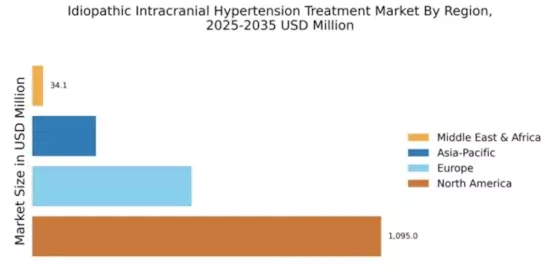
North America is poised to maintain its leadership in the Idiopathic Intracranial Hypertension treatment market, holding a significant market share of $1095.0M in 2025. The region's growth is driven by increasing awareness of the condition, advancements in treatment options, and supportive regulatory frameworks. The demand for innovative therapies is further fueled by a rising prevalence of obesity, a key risk factor for this condition, leading to a robust market outlook. The competitive landscape in North America is characterized by the presence of major pharmaceutical players such as Bristol Myers Squibb, Pfizer, and Eli Lilly. These companies are actively engaged in research and development to enhance treatment efficacy and patient outcomes. The U.S. remains the largest market, supported by a well-established healthcare infrastructure and favorable reimbursement policies, ensuring continued investment in this therapeutic area.
Europe is witnessing a growing market for Idiopathic Intracranial Hypertension treatments, with a market size of $500.0M projected for 2025. The region benefits from increasing healthcare investments and a focus on improving patient access to treatments. Regulatory bodies are actively promoting awareness and research initiatives, which are crucial for driving market growth. The rising incidence of obesity and related health issues is also contributing to the demand for effective treatment options in this region. Leading countries such as Germany, France, and the UK are at the forefront of this market, with a competitive landscape featuring key players like Novartis and Roche. These companies are focusing on innovative therapies and collaborations to enhance treatment efficacy. The European Medicines Agency (EMA) is committed to ensuring that patients have access to safe and effective treatments, which is vital for the market's expansion.
The Asia-Pacific region is emerging as a significant player in the Idiopathic Intracranial Hypertension treatment market, with a projected market size of $200.0M by 2025. The growth is driven by increasing healthcare expenditure, rising awareness of neurological disorders, and a growing patient population. Governments are implementing policies to enhance healthcare access, which is expected to further stimulate market demand. The region's diverse demographics and varying healthcare systems present both challenges and opportunities for market players. Countries like Japan, China, and Australia are leading the charge in this market, with a competitive landscape that includes both local and international pharmaceutical companies. Key players are focusing on expanding their product portfolios and improving treatment accessibility. The presence of innovative therapies and ongoing clinical trials are expected to enhance the treatment landscape in the region, making it a focal point for future growth.
The Middle East and Africa region is characterized by its untapped potential in the Idiopathic Intracranial Hypertension treatment market, with a market size of $34.12M anticipated by 2025. The growth is primarily driven by increasing healthcare investments and a rising prevalence of neurological disorders. Governments are focusing on improving healthcare infrastructure and access to treatments, which is crucial for market development. The region's diverse healthcare systems present unique challenges that require tailored solutions to meet patient needs. Countries such as South Africa and the UAE are emerging as key players in this market, with a growing interest from international pharmaceutical companies. The competitive landscape is evolving, with local firms collaborating with global players to enhance treatment options. As awareness of Idiopathic Intracranial Hypertension increases, the market is expected to expand, presenting significant opportunities for growth.
The Idiopathic Intracranial Hypertension Treatment Market is characterized by a dynamic competitive landscape, driven by a confluence of innovation, strategic partnerships, and a growing emphasis on patient-centric solutions. Key players such as Bristol Myers Squibb (US), Novartis (CH), and Teva Pharmaceuticals (IL) are actively shaping the market through their distinct operational focuses. Bristol Myers Squibb (US) emphasizes research and development, particularly in novel therapeutic approaches, while Novartis (CH) is leveraging its extensive portfolio to enhance treatment accessibility. Teva Pharmaceuticals (IL) appears to be concentrating on cost-effective generics, which may influence pricing strategies across the market. Collectively, these strategies contribute to a competitive environment that is increasingly focused on innovation and patient outcomes.In terms of business tactics, companies are localizing manufacturing and optimizing supply chains to enhance efficiency and responsiveness to market demands. The market structure is moderately fragmented, with several players vying for market share, yet the influence of major companies remains pronounced. This competitive structure allows for a diverse range of treatment options, catering to varying patient needs and preferences.
In November Bristol Myers Squibb (US) announced a collaboration with a leading research institution to explore new biomarkers for Idiopathic Intracranial Hypertension, which could potentially lead to more targeted therapies. This strategic move underscores the company's commitment to advancing personalized medicine, which may enhance treatment efficacy and patient outcomes. Such initiatives are likely to position Bristol Myers Squibb favorably in a market that increasingly values precision in treatment.
In October Novartis (CH) launched a new digital platform aimed at improving patient engagement and adherence to treatment protocols. This initiative reflects a broader trend towards digital transformation in healthcare, suggesting that Novartis is keen on harnessing technology to enhance patient experiences. By integrating digital tools into their treatment offerings, Novartis may strengthen its market position and foster loyalty among patients and healthcare providers alike.
In September Teva Pharmaceuticals (IL) expanded its product line to include a new formulation specifically designed for Idiopathic Intracranial Hypertension, which is expected to improve patient compliance. This strategic expansion not only diversifies Teva's offerings but also indicates a proactive approach to addressing unmet needs in the market. Such product innovations are crucial in a landscape where patient-centric solutions are becoming increasingly vital.
As of December current competitive trends are heavily influenced by digitalization, sustainability, and the integration of artificial intelligence (AI) in treatment protocols. Strategic alliances are becoming more prevalent, as companies recognize the value of collaboration in enhancing innovation and market reach. Looking ahead, competitive differentiation is likely to evolve from traditional price-based competition to a focus on technological advancements, innovative treatment solutions, and robust supply chain reliability. This shift may redefine how companies position themselves in the Idiopathic Intracranial Hypertension Treatment Market, emphasizing the importance of adaptability and forward-thinking strategies.




The Idiopathic Intracranial Hypertension Treatment Market has seen significant recent developments, particularly concerning major pharmaceutical companies, including Pfizer, Roche, and Bristol-Myers Squibb. A notable focus has been on innovative treatment options that target the underlying causes of the condition, enhancing patient outcomes.
Current affairs indicate an increasing interest in personalized medicine approaches and the incorporation of advanced technologies to improve diagnosis and treatment. Market growth is being further supported by initiatives aimed at raising awareness about idiopathic intracranial hypertension encouraging more proactive healthcare measures.
As for mergers and acquisitions, companies like Amgen and Novartis have been engaging in strategic alliances to bolster their research capabilities related to neurological disorders. The rise in market valuation for companies such as AstraZeneca and Merck underscores the competitive landscape's intensity, as they seek to expand their portfolios in this niche yet crucial area of healthcare.
This heightened competition is projected to drive innovation and ultimately improve the availability of effective treatments, benefiting patients suffering from this condition. As the market evolves, collaborations among organizations are expected to play a critical role in addressing the complexities of idiopathic intracranial hypertension.
The Idiopathic Intracranial Hypertension Treatment Market is projected to grow at 4.56% CAGR from 2025 to 2035, driven by increasing awareness and advancements in treatment options.
New opportunities lie in:
By 2035, the market is expected to achieve substantial growth, reflecting evolving treatment paradigms.
| MARKET SIZE 2024 | 1829.12(USD Million) |
| MARKET SIZE 2025 | 1912.56(USD Million) |
| MARKET SIZE 2035 | 2987.83(USD Million) |
| COMPOUND ANNUAL GROWTH RATE (CAGR) | 4.56% (2025 - 2035) |
| REPORT COVERAGE | Revenue Forecast, Competitive Landscape, Growth Factors, and Trends |
| BASE YEAR | 2024 |
| Market Forecast Period | 2025 - 2035 |
| Historical Data | 2019 - 2024 |
| Market Forecast Units | USD Million |
| Key Companies Profiled | Bristol Myers Squibb (US), Novartis (CH), Roche (CH), Teva Pharmaceuticals (IL), Eli Lilly and Company (US), Pfizer (US), AstraZeneca (GB), Sanofi (FR), Johnson & Johnson (US) |
| Segments Covered | Treatment Type, Patient Demographics, Severity of Condition, Healthcare Setting |
| Key Market Opportunities | Advancements in minimally invasive procedures enhance treatment options in the Idiopathic Intracranial Hypertension Treatment Market. |
| Key Market Dynamics | Rising demand for innovative therapies drives competition and regulatory scrutiny in the Idiopathic Intracranial Hypertension Treatment Market. |
| Countries Covered | North America, Europe, APAC, South America, MEA |
As of 2024, the market valuation was 1829.12 USD Million.
The market is expected to reach a valuation of 2987.83 USD Million by 2035.
The market is anticipated to grow at a CAGR of 4.56% from 2025 to 2035.
Key players include Bristol-Myers Squibb, Novartis, Roche, Teva Pharmaceutical Industries, Eli Lilly and Company, Pfizer, AstraZeneca, Sanofi, and Johnson & Johnson.
The primary treatment types include Medication, Surgical Intervention, Lifestyle Modification, and Therapeutic Procedures.
In 2024, the Medication segment generated revenue between 600.0 and 950.0 USD Million.
The Surgical Intervention segment generated revenue between 400.0 and 600.0 USD Million in 2024.
Demographic factors include Age Group, Gender, Body Mass Index, and Comorbid Conditions.
The Clinical Assessment diagnosis method generated revenue between 500.0 and 800.0 USD Million in 2024.
Healthcare settings include Hospitals, Outpatient Clinics, Specialized Neurology Centers, and Home Care.



Kindly complete the form below to receive a free sample of this Report

“This is really good guys. Excellent work on a tight deadline. I will continue to use you going forward and recommend you to others. Nice job”


“Thanks. It’s been a pleasure working with you, please use me as reference with any other Intel employees.”


“Thanks for sending the report it gives us a good global view of the Betaïne market.”


“Thank you, this will be very helpful for OQS.”


“We found the report very insightful! we found your research firm very helpful. I'm sending this email to secure our future business.”


“I am very pleased with how market segments have been defined in a relevant way for my purposes (such as "Portable Freezers & refrigerators" and "last-mile"). In general the report is well structured. Thanks very much for your efforts.”


“I have been reading the first document or the study, ,the Global HVAC and FP market report 2021 till 2026. Must say, good info! I have not gone in depth at all parts, but got a good indication of the data inside!”


“We got the report in time, we really thank you for your support in this process. I also thank to all of your team as they did a great job.”


“The Automotive 48V ECU Components Procurement Intelligence Study” was a complex project, but the Market Research Future (MRFR) team handled it with quality, agility, and customer-centricity. They delivered all requested data on time and within the agreed scope. The team, including Shubhendra Anand and Rahul Gotadki, was always readily available to clarify questions and swiftly implement necessary adjustments, driving the project to a successful conclusion within a very demanding timeframe.
I would also like to specifically commend Akshay Agarwal for his responsiveness and support at every stage—from our initial inquiry on May 6th through to final delivery on June 18th. His dedication made the entire process seamless.”



