×
Request Free Sample ×

Kindly complete the form below to receive a free sample of this Report

* Please use a valid business email

Leading companies partner with us for data-driven Insights

clients tt-cursor
Hero Background

Immune Thrombocytopenia (ITP) Market

ID: MRFR/Pharma/5531-CR
105 Pages
Rahul Gotadki
December 2018

Immune Thrombocytopenia (ITP) Market Research Report By Type (Primary Immune Thrombocytopenia, Secondary Immune Thrombocytopenia, Acquired Immune Thrombocytopenia), By Treatment Type (Corticosteroids, Intravenous Immunoglobulin, Thrombopoietin Receptor Agonists, Immunosuppressive Therapy), By Distribution Channel (Hospital Pharmacies, Retail Pharmacies, Online Pharmacies), By Patient Age Group (Pediatric, Adult, Geriatric) and By Regional (North America, Europe, South America, Asia Pacific, Middle East and Africa) - Forecast to 2035

Share:
Download PDF ×

We do not share your information with anyone. However, we may send you emails based on your report interest from time to time. You may contact us at any time to opt-out.

Immune Thrombocytopenia (ITP) Market Infographic
Purchase Options

Immune Thrombocytopenia (ITP) Market Summary

As per MRFR analysis, the Immune Thrombocytopenia (ITP) Market Size was estimated at 3586.09 USD Million in 2024. The ITP industry is projected to grow from 3632.78 in 2025 to 4134.48 by 2035, exhibiting a compound annual growth rate (CAGR) of 1.3 during the forecast period 2025 - 2035.

Key Market Trends & Highlights

The Immune Thrombocytopenia (ITP) market is poised for substantial growth driven by innovative therapies and increasing patient engagement.

  • The emergence of novel therapies is reshaping treatment paradigms in the ITP market.
  • North America remains the largest market, while Asia-Pacific is recognized as the fastest-growing region for ITP treatments.
  • Chronic Immune Thrombocytopenia continues to dominate the market, whereas Acute Immune Thrombocytopenia is experiencing rapid growth.
  • Rising incidence of ITP and advancements in treatment modalities are key drivers propelling market expansion.

Market Size & Forecast

2024 Market Size 3586.09 (USD Million)
2035 Market Size 4134.48 (USD Million)
CAGR (2025 - 2035) 1.3%

Major Players

Amgen (US), Novartis (CH), Bristol-Myers Squibb (US), GSK (GB), Pfizer (US), Roche (CH), Takeda (JP), Eisai (JP), Sobi (SE)

Immune Thrombocytopenia (ITP) Market Trends

The Immune Thrombocytopenia (ITP) Market is currently experiencing notable developments driven by advancements in treatment options and increasing awareness of the condition. As healthcare professionals and patients alike become more informed about ITP, there is a growing demand for innovative therapies that address the underlying causes of the disorder. This shift towards personalized medicine appears to be influencing the market landscape, as stakeholders seek to provide tailored solutions that enhance patient outcomes. Furthermore, the integration of technology in treatment protocols, such as digital health tools and telemedicine, is likely to reshape how care is delivered, making it more accessible and efficient. In addition to treatment advancements, the Immune Thrombocytopenia (ITP) Market is also witnessing a rise in collaborative efforts among pharmaceutical companies, research institutions, and patient advocacy groups. These partnerships may facilitate the development of new therapies and improve patient education initiatives. As the market evolves, it seems essential for stakeholders to remain adaptable and responsive to emerging trends, ensuring that they meet the needs of patients and healthcare providers effectively. Overall, the Immune Thrombocytopenia (ITP) Market is poised for growth, driven by innovation, collaboration, and a commitment to improving patient care.

Emergence of Novel Therapies

The Immune Thrombocytopenia (ITP) Market is witnessing the introduction of novel therapies that target the disease more effectively. These innovative treatments aim to address the root causes of ITP rather than merely managing symptoms, potentially leading to improved patient outcomes. As research progresses, the focus on developing targeted therapies is likely to gain momentum.

Increased Patient Awareness

There is a noticeable rise in patient awareness regarding Immune Thrombocytopenia (ITP), which is influencing the market dynamics. As individuals become more informed about the condition and its implications, they are more likely to seek medical advice and treatment. This trend may drive demand for healthcare services and innovative therapies.

Technological Integration in Treatment

The integration of technology into the Immune Thrombocytopenia (ITP) Market is transforming treatment approaches. Digital health tools, telemedicine, and data analytics are becoming increasingly prevalent, enhancing patient engagement and monitoring. This technological shift could lead to more personalized care and improved management of the condition.

Immune Thrombocytopenia (ITP) Market Drivers

Rising Prevalence of ITP

The Global Immune Thrombocytopenia (ITP) Market Industry is experiencing growth due to the increasing prevalence of ITP worldwide. Current estimates suggest that the incidence of ITP ranges from 1 to 6 cases per 100,000 people annually. This rise in cases necessitates enhanced diagnostic and therapeutic options, contributing to market expansion. As awareness of the disease grows, more patients are being diagnosed and treated, which is expected to drive the market's value to approximately 3.59 USD Billion in 2024. Consequently, the demand for innovative treatments and management strategies is likely to increase, further propelling the market forward.

Market Trends and Projections

The Global Immune Thrombocytopenia (ITP) Market Industry is characterized by various trends that shape its trajectory. The market is projected to grow from an estimated 3.59 USD Billion in 2024 to approximately 4.13 USD Billion by 2035, reflecting a compound annual growth rate of 1.29% from 2025 to 2035. This growth is influenced by factors such as rising prevalence, advancements in treatment options, and increased awareness. The evolving landscape of ITP management indicates a dynamic market environment, where ongoing research and development efforts will likely play a crucial role in shaping future trends.

Supportive Government Policies

Government initiatives and policies aimed at improving healthcare access and affordability are positively impacting the Global Immune Thrombocytopenia (ITP) Market Industry. Various countries are implementing programs to subsidize treatment costs and enhance patient access to innovative therapies. For instance, reimbursement policies for ITP treatments are evolving, making them more accessible to patients. This supportive environment encourages pharmaceutical companies to invest in research and development, thereby expanding the market. As a result, the market is poised for growth, with projections indicating a steady increase in value as more patients benefit from these initiatives.

Advancements in Treatment Options

Innovations in treatment modalities are significantly influencing the Global Immune Thrombocytopenia (ITP) Market Industry. The introduction of novel therapies, including monoclonal antibodies and thrombopoietin receptor agonists, has transformed patient management. These advancements not only improve patient outcomes but also expand the therapeutic landscape, catering to diverse patient needs. As a result, the market is projected to grow steadily, reaching an estimated value of 4.13 USD Billion by 2035. The ongoing research and development efforts in this field indicate a promising future for treatment options, which may further enhance patient adherence and satisfaction.

Increased Awareness and Diagnosis

The Global Immune Thrombocytopenia (ITP) Market Industry is benefiting from heightened awareness and improved diagnostic capabilities. Educational initiatives aimed at healthcare professionals and the public have led to earlier detection and better management of ITP. Enhanced diagnostic technologies, such as advanced blood tests and imaging techniques, facilitate accurate diagnosis, which is crucial for effective treatment. This trend is expected to contribute to market growth, as more patients are identified and treated. The cumulative effect of these factors is likely to sustain a compound annual growth rate of 1.29% from 2025 to 2035, reflecting the market's resilience and adaptability.

Emerging Markets and Global Expansion

The Global Immune Thrombocytopenia (ITP) Market Industry is witnessing growth in emerging markets, where healthcare infrastructure is improving. Countries in Asia-Pacific and Latin America are increasingly recognizing the need for effective ITP management, leading to an uptick in treatment availability. As healthcare systems evolve, the demand for ITP therapies is expected to rise, contributing to the overall market expansion. The global reach of pharmaceutical companies is facilitating access to innovative treatments in these regions, which may further enhance market dynamics. This trend underscores the potential for significant growth in the coming years.
Market Segment Insights

By Application: Chronic Immune Thrombocytopenia (Largest) vs. Acute Immune Thrombocytopenia (Fastest-Growing)

In the Immune Thrombocytopenia (ITP) market, Chronic Immune Thrombocytopenia holds the largest market share due to its prevalent and often long-term nature, requiring ongoing management strategies. This segment benefits from robust treatment options that drive its demand, establishing it as a crucial area for pharmaceutical development. Meanwhile, Acute Immune Thrombocytopenia, while smaller in market size, is recognized as the fastest-growing segment, largely due to increasing awareness and advancements in therapeutic interventions that cater specifically to this condition.

Chronic Immune Thrombocytopenia (Dominant) vs. Secondary Immune Thrombocytopenia (Emerging)

Chronic Immune Thrombocytopenia is characterized by a prolonged deficiency of platelets, often leading to increased bleeding risks. This segment benefits from established treatment protocols, including immunoglobulins and corticosteroids, making it the dominant player in the ITP market. In contrast, Secondary Immune Thrombocytopenia, caused by underlying conditions like autoimmune diseases or infections, is emerging as a significant focus area due to the growing recognition of its prevalence and the need for tailored therapeutic approaches. The emergence is driven by increased research into the relationship between ITP and its secondary causes, paving the way for innovative treatment solutions.

By Treatment Type: Corticosteroids (Largest) vs. Thrombopoietin Receptor Agonists (Fastest-Growing)

The treatment type segment in the Immune Thrombocytopenia (ITP) market is characterized by diverse options, with corticosteroids holding the largest market share due to their long-established effectiveness in increasing platelet counts. Immunoglobulins and monoclonal antibodies also contribute significantly but are overshadowed by corticosteroids' dominance. Thrombopoietin receptor agonists, while newer, are rapidly gaining traction among healthcare providers and patients alike due to their innovative mechanisms that boost platelet production more effectively than traditional treatments.

Corticosteroids (Dominant) vs. Thrombopoietin Receptor Agonists (Emerging)

Corticosteroids are the cornerstone of ITP treatment and are widely used due to their rapid effectiveness in elevating platelet counts and reducing the need for invasive procedures. They remain the dominant choice for many clinicians in managing acute ITP cases. On the other hand, thrombopoietin receptor agonists represent an emerging class of therapies that offer a novel approach to treatment. Their growing popularity is attributed to their ability to stimulate platelet production through a different physiological pathway, presenting new hope for patients with chronic ITP or those resistant to steroid treatments. As research continues to unveil their benefits, these agonists are positioned to capture an increasing share of the market, making them a key area for future growth.

By Patient Demographics: Pediatric Patients (Largest) vs. Geriatric Patients (Fastest-Growing)

In the Immune Thrombocytopenia (ITP) market, patient demographics play a crucial role in shaping treatment strategies and market dynamics. The distribution reveals that pediatric patients represent the largest segment, benefitting from focused treatment protocols tailored to their unique physiological needs. Alternatively, geriatric patients are emerging as a significant segment, reflecting the increasing prevalence of ITP among older adults, particularly due to age-related factors affecting platelet production and immune function.

Pediatric Patients (Dominant) vs. Geriatric Patients (Emerging)

Pediatric patients dominate the ITP market, reflecting a specialized approach to managing the condition that emphasizes individualized treatment plans and care strategies. Healthcare providers often focus on optimizing long-term outcomes while considering the developmental needs of younger patients. On the other hand, geriatric patients are emerging rapidly in the ITP market due to increasing awareness about age-related immune disorders. This demographic often requires tailored therapies that address co-morbid conditions prevalent in older adults, thus evidencing a shift in marketing and healthcare strategies to cater to their unique needs.

By Diagnosis Method: Blood Tests (Largest) vs. Bone Marrow Biopsy (Fastest-Growing)

In the Immune Thrombocytopenia (ITP) market, blood tests hold the largest share as the most commonly utilized diagnosis method. Their ease of administration and rapid turnaround time make them the go-to choice for clinicians when initially assessing patients for ITP. Conversely, bone marrow biopsy, while historically less favored due to its invasive nature, is witnessing an increase in adoption as diagnostic technologies advance. This method is gaining traction among specialists who seek to confirm diagnoses and rule out underlying conditions that could mimic ITP. The growth trends in the diagnosis method sector reflect a shift towards more precise and less invasive techniques. Blood tests continue to dominate due to their convenience, but the rising efficiency of bone marrow biopsy procedures is fostering its acceptance in diagnostics. Additionally, advancements in imaging techniques are contributing to this segment's evolution, allowing for better visualization of platelet production sites, further driving market interest in comprehensive diagnostic approaches.

Blood Tests (Dominant) vs. Bone Marrow Biopsy (Emerging)

Blood tests are characterized by their simplicity and efficiency, often serving as the first step in the diagnosis of Immune Thrombocytopenia. They evaluate platelet counts and other blood parameters quickly, making them essential in clinical settings. As the dominant method, blood tests benefit from established methodologies and widespread availability. In contrast, bone marrow biopsy, while traditionally viewed as more invasive and complex, is emerging as a crucial diagnostic tool for confirming ITP and exploring alternative causes of thrombocytopenia. With improvements in patient comfort and procedural techniques, bone marrow biopsy is gaining popularity and is increasingly viewed favorably by healthcare professionals looking to ensure accurate diagnosis and tailored patient management.

Get more detailed insights about Immune Thrombocytopenia (ITP) Market

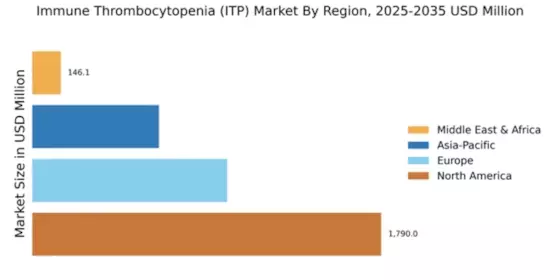
Regional Insights

North America : Market Leader in ITP

North America is poised to maintain its leadership in the Immune Thrombocytopenia (ITP) market, with a projected market size of $1790.0M by December 2025. Key growth drivers include increasing awareness of ITP, advancements in treatment options, and supportive regulatory frameworks. The region's robust healthcare infrastructure and high healthcare expenditure further catalyze demand for innovative therapies, ensuring a strong market presence. The United States stands out as the leading country in this region, hosting major pharmaceutical companies like Amgen, Bristol-Myers Squibb, and Pfizer. The competitive landscape is characterized by a mix of established players and emerging biotech firms, all striving to capture market share. The presence of advanced research facilities and a focus on clinical trials enhances the region's attractiveness for ITP treatment development.

Europe : Growing Market with Potential

Europe's Immune Thrombocytopenia (ITP) market is expected to reach $1000.0M by December 2025, driven by increasing patient awareness and the introduction of novel therapies. Regulatory support from agencies like the European Medicines Agency (EMA) is pivotal in expediting the approval of new treatments, thereby enhancing market growth. The rising prevalence of ITP across European nations further fuels demand, making it a significant market in the global landscape. Leading countries such as Germany, France, and the UK are at the forefront of this market, with a strong presence of key players like Novartis and GSK. The competitive environment is marked by strategic collaborations and partnerships aimed at enhancing treatment options. The focus on patient-centric approaches and innovative therapies positions Europe as a promising region for ITP market expansion.

Asia-Pacific : Emerging Powerhouse in ITP

The Asia-Pacific region is witnessing significant growth in the Immune Thrombocytopenia (ITP) market, projected to reach $650.0M by December 2025. Key drivers include increasing healthcare investments, rising awareness of ITP, and a growing patient population. Regulatory bodies in countries like Japan and Australia are enhancing their frameworks to support the introduction of new therapies, which is expected to further stimulate market growth. Japan and Australia are leading the charge in this region, with major pharmaceutical companies like Takeda and Eisai actively involved in ITP treatment development. The competitive landscape is evolving, with both local and international players vying for market share. The focus on research and development, coupled with favorable government policies, positions Asia-Pacific as a burgeoning market for ITP therapies.

Middle East and Africa : Untapped Market Potential

The Middle East and Africa (MEA) region is gradually emerging in the Immune Thrombocytopenia (ITP) market, with a projected size of $146.09M by December 2025. The growth is driven by increasing healthcare access, rising awareness of ITP, and the introduction of new treatment options. However, challenges such as limited healthcare infrastructure and varying regulatory environments may hinder rapid growth. Nonetheless, the region presents significant opportunities for market players. Countries like South Africa and the UAE are leading the market in the MEA region, with a growing presence of pharmaceutical companies. The competitive landscape is characterized by a mix of local and international players, focusing on expanding their footprint in this untapped market. The emphasis on improving healthcare systems and patient access to treatments is crucial for the region's ITP market development.

Key Players and Competitive Insights

The Immune Thrombocytopenia (ITP) Market is characterized by a dynamic competitive landscape, driven by a confluence of innovation, strategic partnerships, and a growing emphasis on patient-centric solutions. Key players such as Amgen (US), Novartis (CH), and Bristol-Myers Squibb (US) are actively shaping the market through their distinct operational focuses. Amgen (US) has been particularly aggressive in advancing its research and development initiatives, aiming to enhance treatment efficacy and patient outcomes. Meanwhile, Novartis (CH) appears to be leveraging strategic collaborations to expand its therapeutic portfolio, while Bristol-Myers Squibb (US) is concentrating on integrating digital health solutions into its offerings, thereby enhancing patient engagement and adherence.

The business tactics employed by these companies reflect a nuanced understanding of the market's structure, which is moderately fragmented yet increasingly influenced by a few dominant players. Localizing manufacturing and optimizing supply chains have emerged as critical strategies to enhance operational efficiency and reduce costs. This collective approach not only strengthens their market positions but also fosters a competitive environment where innovation and responsiveness to market needs are paramount.

In November 2025, Amgen (US) announced a groundbreaking partnership with a leading biotech firm to co-develop a novel therapy for ITP, which is expected to enter clinical trials in early 2026. This strategic move underscores Amgen's commitment to innovation and its proactive stance in addressing unmet medical needs within the ITP patient population. The collaboration is likely to enhance Amgen's competitive edge by diversifying its product pipeline and accelerating time-to-market for new therapies.

In October 2025, Novartis (CH) launched a new digital platform aimed at improving patient access to ITP treatments. This initiative not only reflects Novartis's dedication to enhancing patient experience but also positions the company as a leader in the integration of technology within healthcare. By streamlining access to therapies, Novartis may significantly improve treatment adherence and patient outcomes, thereby solidifying its market presence.

In September 2025, Bristol-Myers Squibb (US) expanded its clinical trial program for an innovative ITP treatment, focusing on diverse patient demographics. This strategic decision highlights the company's commitment to inclusivity and its recognition of the importance of diverse clinical data in developing effective therapies. By broadening its research scope, Bristol-Myers Squibb is likely to enhance its reputation and trust among healthcare providers and patients alike.

As of December 2025, the competitive trends within the ITP Market are increasingly defined by digitalization, sustainability, and the integration of artificial intelligence (AI) into treatment protocols. Strategic alliances are becoming more prevalent, as companies recognize the value of collaborative innovation in addressing complex healthcare challenges. Looking ahead, the competitive differentiation in this market is expected to evolve, with a pronounced shift from price-based competition to a focus on innovation, technological advancements, and supply chain reliability. This transition may ultimately lead to improved patient outcomes and a more sustainable healthcare ecosystem.

Key Companies in the Immune Thrombocytopenia (ITP) Market market include

Industry Developments

Recent developments in the Immune Thrombocytopenia (ITP) Market reveal an increasing focus on innovative treatments and therapies aimed at enhancing patient care. Companies like Zymeworks and AbbVie have been active in research and development, working on novel therapeutic approaches to address this condition. Fujifilm Holdings and Amgen are also investing in new drug candidates, aiming to expand their portfolios in hematology. Current affairs indicate a growing market valuation, significantly impacted by advancements in biologics and monoclonal antibodies, which are seen as promising therapies.

Merger and acquisition activities are notable, with reports of Daiichi Sankyo’s discussions to enhance their offerings through strategic partnerships, while Roche and Pfizer are exploring opportunities to consolidate their presence in the ITP space.

The collaboration between Sobi and Grifols to develop new treatment modalities is also a highlight, showcasing a trend toward partnership-driven growth. The overall market is witnessing strong momentum, driven by increasing awareness and demand for effective therapies, which bode well for the listed companies as they capitalize on emerging opportunities in the evolving landscape of Immune Thrombocytopenia management.

Future Outlook

Immune Thrombocytopenia (ITP) Market Future Outlook

The Immune Thrombocytopenia (ITP) Market is projected to grow at 1.3% CAGR from 2024 to 2035, driven by advancements in treatment options and increasing awareness.

New opportunities lie in:

  • Development of personalized medicine approaches for ITP patients.
  • Expansion of telehealth services for remote patient monitoring.
  • Investment in innovative biologics targeting specific ITP pathways.

By 2035, the ITP market is expected to demonstrate steady growth, reflecting evolving treatment paradigms.

Market Segmentation

Immune Thrombocytopenia (ITP) Market Application Outlook

  • Chronic Immune Thrombocytopenia
  • Acute Immune Thrombocytopenia
  • Secondary Immune Thrombocytopenia
  • Post-Transfusion Immune Thrombocytopenia

Immune Thrombocytopenia (ITP) Market Treatment Type Outlook

  • Corticosteroids
  • Immunoglobulins
  • Thrombopoietin Receptor Agonists
  • Monoclonal Antibodies

Immune Thrombocytopenia (ITP) Market Diagnosis Method Outlook

  • Blood Tests
  • Bone Marrow Biopsy
  • Imaging Techniques

Immune Thrombocytopenia (ITP) Market Patient Demographics Outlook

  • Pediatric Patients
  • Adult Patients
  • Geriatric Patients

Report Scope

MARKET SIZE 20243586.09(USD Million)
MARKET SIZE 20253632.78(USD Million)
MARKET SIZE 20354134.48(USD Million)
COMPOUND ANNUAL GROWTH RATE (CAGR)1.3% (2024 - 2035)
REPORT COVERAGERevenue Forecast, Competitive Landscape, Growth Factors, and Trends
BASE YEAR2024
Market Forecast Period2025 - 2035
Historical Data2019 - 2024
Market Forecast UnitsUSD Million
Key Companies ProfiledAmgen (US), Novartis (CH), Bristol-Myers Squibb (US), GSK (GB), Pfizer (US), Roche (CH), Takeda (JP), Eisai (JP), Sobi (SE)
Segments CoveredApplication, Treatment Type, Patient Demographics, Diagnosis Method
Key Market OpportunitiesAdvancements in targeted therapies and personalized medicine enhance treatment options in the Immune Thrombocytopenia (ITP) Market.
Key Market DynamicsRising demand for innovative therapies drives competitive dynamics in the Immune Thrombocytopenia market.
Countries CoveredNorth America, Europe, APAC, South America, MEA

Market Highlights

Author
Rahul Gotadki
Assistant Manager

He holds an experience of about 7+ years in Market Research and Business Consulting, working under the spectrum of Life Sciences and Healthcare domains. Rahul conceptualizes and implements a scalable business strategy and provides strategic leadership to the clients. His expertise lies in market estimation, competitive intelligence, pipeline analysis, customer assessment, etc. In addition to the above, his other responsibility includes strategic tracking of high growth markets & advising clients on the potential areas of focus they could direct their business initiatives

Leave a Comment

FAQs

What is the projected growth of the Immune Thrombocytopenia market?

The Immune Thrombocytopenia market is the expected increase in total market value of 4.13 USD billion over a defined forecast period 2025–2035. It is driven by factors such as demand trends, technological advances, regulatory changes, and geographic expansion.

What is the size of the Immune Thrombocytopenia market?

Immune Thrombocytopenia market size was valued at approximately 3.59 billion USD in 2024. This figure will reach 4.13 billion USD covering all regions (America, Europe, Asia, MEA and ROW), focusing its segments / services / distribution channels till 2035.

What is the CAGR of the Immune Thrombocytopenia market?

Immune Thrombocytopenia market is expected to grow at a CAGR of 1.3% between 2025 and 2035.

How much will the Immune Thrombocytopenia market be worth by 2035?

Immune Thrombocytopenia market is expected to be worth of 4.13 billion USD, reflecting growth driven by usage, technology and global demands by the end of 2035.

How will the Immune Thrombocytopenia market perform over the next 10 years?

Over the next 10 years the Immune Thrombocytopenia market is expected to shift from usd billion 3.59 to 4.13 billion USD, led by adoption of advanced tech, demographic trends, regulatory approvals, with potential headwinds from 2025 to 2035.

Which region holds the largest market share in the Immune Thrombocytopenia (ITP) Market in 2024?

In 2024, North America holds the largest market share with a valuation of 2.5 USD Billion.

What is the market size for Primary Immune Thrombocytopenia in 2024?

The market size for Primary Immune Thrombocytopenia in 2024 is valued at 2.5 USD Billion.

Who are the key players in the Immune Thrombocytopenia (ITP) Market?

Key players in the market include Zymeworks, AbbVie, Amgen, Roche, and Pfizer.

What is the expected market value for Secondary Immune Thrombocytopenia by 2035?

By 2035, the expected market value for Secondary Immune Thrombocytopenia is 2.75 USD Billion.

How much is the Immune Thrombocytopenia (ITP) Market projected to be worth in Europe by 2035?

By 2035, the Immune Thrombocytopenia (ITP) Market in Europe is projected to be worth 1.85 USD Billion.

Download Free Sample

Kindly complete the form below to receive a free sample of this Report

Compare Licence

×
Features License Type
Single User Multiuser License Enterprise User
Price $4,950 $5,950 $7,250
Maximum User Access Limit 1 User Upto 10 Users Unrestricted Access Throughout the Organization
Free Customization
Direct Access to Analyst
Deliverable Format
Platform Access
Discount on Next Purchase 10% 15% 15%
Printable Versions