×
Request Free Sample ×

Kindly complete the form below to receive a free sample of this Report

* Please use a valid business email

Leading companies partner with us for data-driven Insights

clients tt-cursor
Hero Background

India Eye Allergy Treatment Market

ID: MRFR/HC/54615-HCR
200 Pages
Rahul Gotadki
February 2026

India Eye Allergy Treatment Market Research Report: Size, Share, Trend Analysis By Types (Seasonal and Perennial Allergic Conjunctivitis, Vernal Keratoconjunctivitis, Atopic Keratoconjunctivitis, Contact Allergic Conjunctivitis, Giant Papillary Conjunctivitis), By Drug Class (Antihistamine, Mast Cell Stabilizer, NSAIDs, Corticosteroid, Decongestants, Immunotherapy Allergy Shots, Others), By Treatment Form (Eyedrops, Injectables, Tablets & Capsules) and By Distribution Channel (Hospital Pharmacies, Online Pharmacies, Retail Pharmacies) - Growth Outlook & Industry Forecast 2025 To 2035

Share:
Download PDF ×

We do not share your information with anyone. However, we may send you emails based on your report interest from time to time. You may contact us at any time to opt-out.

India Eye Allergy Treatment Market Infographic
Purchase Options

India Eye Allergy Treatment Market Summary

As per Market Research Future analysis, the India eye allergy treatment market size was estimated at 221.88 USD Million in 2024. The India eye allergy-treatment market is projected to grow from 236.72 USD Million in 2025 to 452.46 USD Million by 2035, exhibiting a compound annual growth rate (CAGR) of 6.6% during the forecast period 2025 - 2035

Key Market Trends & Highlights

The India eye allergy-treatment market is experiencing notable growth driven by rising allergic conditions and advancements in treatment options.

  • The market is witnessing a rise in allergic conditions, leading to increased demand for effective treatments.
  • Advancements in treatment options are enhancing patient outcomes and expanding market opportunities.
  • There is a noticeable shift towards personalized medicine, catering to individual patient needs and preferences.
  • Key market drivers include increasing pollution levels and growing awareness of eye health, contributing to the rising incidence of allergies.

Market Size & Forecast

2024 Market Size 221.88 (USD Million)
2035 Market Size 452.46 (USD Million)
CAGR (2025 - 2035) 6.69%

Major Players

Allergan (US), Alcon (CH), Bausch Health (CA), Novartis (CH), Regeneron Pharmaceuticals (US), Santen Pharmaceutical (JP), Horizon Therapeutics (IE), Mylan (US)

Our Impact
Enabled $4.3B Revenue Impact for Fortune 500 and Leading Multinationals
Partnering with 2000+ Global Organizations Each Year
30K+ Citations by Top-Tier Firms in the Industry

India Eye Allergy Treatment Market Trends

The eye allergy treatment market is currently experiencing notable growth. This growth is driven by an increasing prevalence of allergic conditions among the population. Factors such as urbanization, environmental changes, and rising pollution levels contribute to the heightened incidence of eye allergies. As awareness regarding eye health expands, individuals are more inclined to seek effective treatments. This trend is further supported by advancements in pharmaceutical formulations and the introduction of innovative therapies, which enhance patient outcomes. Moreover, the availability of over-the-counter options has made it easier for consumers to access treatments without the need for prescriptions, thereby increasing market accessibility. In addition, the eye allergy-treatment market is witnessing a shift towards personalized medicine. Tailored therapies that consider individual patient profiles are becoming more prevalent, as healthcare providers aim to optimize treatment efficacy. This approach not only improves patient satisfaction but also encourages adherence to treatment regimens. Furthermore, the integration of digital health solutions, such as telemedicine and mobile health applications, is transforming how patients manage their conditions. These developments suggest a promising future for the eye allergy-treatment market, as stakeholders continue to innovate and adapt to the evolving needs of consumers.

Rise in Allergic Conditions

The increasing incidence of allergic conditions is a primary driver of the eye allergy-treatment market. Factors such as environmental pollution and lifestyle changes contribute to this trend, leading to a greater demand for effective treatment options.

Advancements in Treatment Options

Innovations in pharmaceutical formulations and therapies are enhancing the effectiveness of treatments available in the eye allergy-treatment market. These advancements are likely to improve patient outcomes and satisfaction.

Shift Towards Personalized Medicine

There is a growing emphasis on personalized medicine within the eye allergy-treatment market. Tailored therapies that consider individual patient needs are becoming more common, potentially leading to better adherence and treatment success.

India Eye Allergy Treatment Market Drivers

Increasing Pollution Levels

The eye allergy-treatment market in India is experiencing growth due to rising pollution levels. Urban areas, particularly, are facing significant air quality issues, which contribute to a higher incidence of allergic reactions, including eye allergies. According to government data, cities like Delhi and Mumbai have reported alarming levels of particulate matter (PM2.5), which can exacerbate allergic conditions. This environmental factor is driving demand for effective treatment options, as individuals seek relief from symptoms caused by allergens present in polluted air. The increasing awareness of the health impacts of pollution is likely to further propel the eye allergy-treatment market, as more people turn to healthcare providers for solutions to manage their eye allergies effectively.

Growing Awareness of Eye Health

There is a notable increase in awareness regarding eye health among the Indian population, which is positively influencing the eye allergy-treatment market. Educational campaigns and initiatives by healthcare organizations have highlighted the importance of addressing eye allergies, leading to a rise in consultations with ophthalmologists and allergists. This heightened awareness is reflected in the growing sales of over-the-counter allergy medications, which have seen a rise of approximately 15% in recent years. As individuals become more informed about the symptoms and treatment options available, the demand for specialized eye allergy treatments is expected to continue its upward trajectory, thereby enhancing the market landscape.

Increased Healthcare Expenditure

The eye allergy treatment market is benefiting from the overall increase in healthcare expenditure in India. With the government and private sectors investing more in healthcare infrastructure, access to medical services is improving. This trend is encouraging individuals to seek medical advice for eye allergies, which may have previously gone untreated. The rise in disposable income among the middle class is also contributing to higher spending on healthcare, including allergy treatments. As more people are willing to invest in their health, the eye allergy-treatment market is likely to see sustained growth, driven by a combination of increased awareness and improved access to treatment options.

Technological Advancements in Treatment

Technological advancements in the eye allergy-treatment market are paving the way for innovative solutions that enhance patient outcomes. The introduction of new drug delivery systems, such as eye drops with sustained-release formulations, is improving the efficacy of treatments. Additionally, advancements in diagnostic tools are enabling healthcare providers to identify specific allergens more accurately, leading to tailored treatment plans. The market is witnessing a shift towards more effective and user-friendly treatment options, which could potentially increase patient adherence. As these technologies continue to evolve, they are expected to play a crucial role in shaping the future of the eye allergy-treatment market in India.

Rising Incidence of Allergies in Children

The eye allergy-treatment market is significantly impacted by the increasing incidence of allergies among children in India. Recent studies indicate that approximately 20% of children in urban areas are affected by allergic conditions, including eye allergies. This trend is concerning, as early exposure to allergens can lead to chronic issues later in life. Parents are becoming more proactive in seeking treatment options for their children, which is driving the demand for pediatric formulations in the eye allergy-treatment market. The focus on developing child-friendly medications and therapies is likely to create new opportunities for market players, as they cater to this growing demographic.


Market Segment Insights

By Type: Seasonal and Perennial Allergic Conjunctivitis (Largest) vs. Vernal Keratoconjunctivitis (Fastest-Growing)

In the India eye allergy-treatment market, Seasonal and Perennial Allergic Conjunctivitis holds the largest market share, driven by the increasing prevalence of allergic conjunctivitis primarily due to seasonal pollen and perennial allergens. This segment appeals to a broad range of consumers who experience chronic symptoms throughout the year. Vernal Keratoconjunctivitis, on the other hand, is emerging rapidly, especially among younger populations during specific seasons, which contributes to its fast growth in recent years. The growth trends within these segments are influenced by heightened environmental awareness and healthcare accessibility. Consumers are increasingly seeking effective treatments for symptoms related to environmental allergens, leading to innovation in product development. The rise of e-commerce and telemedicine also facilitates access to treatments, allowing patients to obtain effective solutions for both dominant and emerging conditions in the allergy landscape.

Seasonal and Perennial Allergic Conjunctivitis (Dominant) vs. Vernal Keratoconjunctivitis (Emerging)

Seasonal and Perennial Allergic Conjunctivitis is the dominant segment in the India eye allergy-treatment market, characterized by its widespread occurrence among individuals exposed to environmental allergens such as pollen and dust. The segment reflects a strong consumer demand for long-term management solutions, along with a variety of treatment options from over-the-counter antihistamines to specialized prescription drugs. In contrast, Vernal Keratoconjunctivitis is labeled as the emerging segment, often affecting adolescents and young adults, particularly during warmer months. Its market growth is fueled by an increasing awareness of specific allergy triggers and the need for targeted therapies. An emphasis on patient education is also critical in managing this condition effectively, as timely diagnosis can lead to better treatment outcomes.

By Drug Class: Antihistamine (Largest) vs. Mast Cell Stabilizer (Fastest-Growing)

In the India eye allergy-treatment market, Antihistamine is the largest segment, holding a significant share due to its effectiveness in alleviating allergy symptoms. Following this, Mast Cell Stabilizer has seen increased adoption, driven by its role in preventing allergic reactions. Other notable segments include NSAIDs and Corticosteroids, which contribute to the market's overall dynamics while serving specialized patient needs. Growth trends indicate a rising awareness of eye allergies, increasing the demand for effective treatments. Factors like the availability of various formulations and advancements in drug delivery mechanisms have propelled the growth of the Mast Cell Stabilizer segment, positioning it as the fastest-growing category. The anticipated increase in lifestyle-related allergies further supports this trend, driving innovation and competition in the market.

Antihistamine: Dominant vs. Mast Cell Stabilizer: Emerging

Antihistamine remains the dominant drug class for treating eye allergies, primarily due to its quick action and proven efficacy in reducing symptoms like itching and redness. The wide range of available formulations—including eye drops, sprays, and oral tablets—enhances its accessibility for consumers. Conversely, the Mast Cell Stabilizer segment represents an emerging option, known for its long-term effectiveness in preventing allergic responses. This drug class is gaining traction among healthcare providers and patients alike for its non-steroidal approach, which minimizes side effects. The growth in the Mast Cell Stabilizer segment signals a shift in treatment preferences towards preventive care, as patients seek solutions that offer sustained relief.

By Treatment Form: Eyedrops (Largest) vs. Injectables (Fastest-Growing)

In the India eye allergy-treatment market, eyedrops hold the largest market share, being the most preferred treatment form among patients due to their ease of application and quick relief. Tablets & capsules follow, providing an oral alternative but with comparatively slower onset of action. Injectables, though currently holding a smaller share, are rapidly gaining traction with increased advancements in formulation and delivery methods. The growth trends indicate a rising consumer preference for more effective and immediate treatment options. The demand for injectables is driven by their ability to provide faster relief for severe allergy symptoms, which makes them appealing for both patients and healthcare providers. Furthermore, increasing awareness about eye allergies and the benefits of various treatment forms contribute to a robust growth forecast for the segment, especially for injectables.

Eyedrops: Dominant vs. Injectables: Emerging

Eyedrops are the dominant segment in the treatment forms for eye allergies, characterized by a user-friendly application and rapid efficacy that appeals to patients looking for immediate relief. This form benefits from widespread availability and established trust in its effectiveness. In contrast, injectables are an emerging segment, gaining ground due to innovations that enhance their delivery and efficacy. Despite being less commonly used, injectables address severe allergy cases and are increasingly favored by healthcare providers. The shift towards injectables also reflects a broader trend in medical treatments favoring quicker, more efficient methods of symptom relief, positioning them as a vital component in the eye allergy treatment landscape.

By Distribution Channel: Hospital Pharmacy (Largest) vs. Online Pharmacy (Fastest-Growing)

The distribution of the market among various channels reveals that Hospital Pharmacies hold the largest share due to their established presence and trusted reputation among patients. Retail Pharmacies follow closely, offering accessibility and personalized service, while Online Pharmacies are rapidly gaining traction. The shift towards digitalization is gradually changing consumer preferences, leading to an increase in online sales across the market. Growth trends indicate a rising inclination towards online purchases spurred by convenience and competitive pricing, making Online Pharmacies the fastest-growing segment. Factors such as increasing smartphone penetration, improved internet access, and the prevalence of e-commerce platforms contribute to this trend. Additionally, healthcare initiatives aimed at enhancing patient awareness and accessibility are further driving the expansion of all three distribution channels.

Hospital Pharmacy (Dominant) vs. Online Pharmacy (Emerging)

Hospital Pharmacies are characterized by their extensive product offerings and the ability to provide specialized treatments, making them the dominant force in the market. Their established infrastructure and professional healthcare environment enhance consumer confidence. In contrast, Online Pharmacies are emerging as a key player, catering to the growing preference for digital solutions. They benefit from cost-effectiveness and the convenience of home delivery, appealing particularly to tech-savvy consumers. Both segments continue to shape the competitive landscape, with Hospital Pharmacies focusing on quality and trust, while Online Pharmacies leverage innovation and accessibility.

Get more detailed insights about India Eye Allergy Treatment Market

Key Players and Competitive Insights

The eye allergy-treatment market in India is characterized by a dynamic competitive landscape, driven by increasing prevalence of allergic conjunctivitis and a growing awareness of treatment options. Key players such as Allergan (US), Alcon (CH), and Bausch Health (CA) are strategically positioned to leverage innovation and expand their market presence. Allergan (US) focuses on developing advanced therapeutic solutions, while Alcon (CH) emphasizes its commitment to enhancing patient outcomes through cutting-edge technology. Bausch Health (CA) is actively pursuing partnerships to broaden its product portfolio, thereby shaping a competitive environment that is increasingly reliant on innovation and strategic collaborations.The market structure appears moderately fragmented, with several players vying for market share. Companies are adopting various business tactics, including localizing manufacturing and optimizing supply chains to enhance efficiency and reduce costs. This competitive structure allows for a diverse range of products and services, catering to the specific needs of consumers while fostering a healthy competitive atmosphere among key players.

In October Allergan (US) announced the launch of a new line of eye drops specifically formulated for seasonal allergic conjunctivitis. This strategic move is significant as it not only addresses a growing consumer demand but also reinforces Allergan's commitment to innovation in the eye care sector. By introducing targeted solutions, the company aims to capture a larger market share and enhance its competitive positioning.

In September Alcon (CH) unveiled a digital platform designed to facilitate patient education and engagement regarding eye allergies. This initiative is crucial as it aligns with the increasing trend towards digitalization in healthcare, allowing Alcon to strengthen its brand presence and foster deeper connections with consumers. The platform is expected to enhance patient adherence to treatment regimens, thereby improving overall treatment outcomes.

In August Bausch Health (CA) entered into a strategic partnership with a local Indian pharmaceutical company to co-develop a new line of allergy treatments. This collaboration is indicative of Bausch Health's strategy to localize its offerings and tap into the expertise of regional players. Such partnerships are likely to enhance product accessibility and cater to the unique needs of the Indian market, thereby positioning Bausch Health favorably against its competitors.

As of November current trends in the eye allergy-treatment market are increasingly defined by digitalization, sustainability, and the integration of artificial intelligence (AI) in product development. Strategic alliances are playing a pivotal role in shaping the competitive landscape, enabling companies to pool resources and expertise. Looking ahead, it is anticipated that competitive differentiation will evolve, shifting from price-based competition to a focus on innovation, technological advancements, and supply chain reliability. This transition underscores the importance of developing unique value propositions that resonate with consumers in an increasingly competitive market.

Key Companies in the India Eye Allergy Treatment Market include

Industry Developments

The India Eye Allergy Treatment Market has witnessed significant activity recently, especially concerning major pharmaceutical companies like Pfizer, Ocular Therapeutix, GSK, Bausch Health, Alcon, and others. In September 2023, Ocular Therapeutix announced promising results from a clinical trial for its allergy eye drops, demonstrating a notable improvement in patient symptoms, which could impact future market dynamics. 

Additionally, in August 2023, Allergan, a subsidiary of AbbVie, launched a new over-the-counter treatment for seasonal eye allergies in various Indian regions, catering to the increasing demand for accessible solutions. There are reports indicating growing market valuation across companies like Merck and Novartis, attributed to innovative product launches and increased consumer awareness of eye allergy treatments. 

Furthermore, in June 2022, AstraZeneca acquired a small firm focused on allergy therapies, enhancing its portfolio in the Indian market. This strategic move, alongside increased investment in Research and Development by these key players, reflects the ongoing trends to address eye allergies more effectively in India, aligning with growth in healthcare accessibility across the nation. The government's initiatives towards promoting health awareness further support this evolving market landscape.


Future Outlook

India Eye Allergy Treatment Market Future Outlook

The Eye Allergy Treatment Market is projected to grow at a 6.69% CAGR from 2025 to 2035, driven by increasing prevalence of allergies and advancements in treatment options.

New opportunities lie in:

  • Development of personalized allergy treatment plans using AI technology.
  • Expansion of telemedicine services for remote consultations and prescriptions.
  • Investment in R&D for innovative drug delivery systems targeting eye allergies.

By 2035, the market is expected to achieve substantial growth, reflecting evolving consumer needs and technological advancements.

Market Segmentation

India Eye Allergy Treatment Market Type Outlook

  • Seasonal and Perennial Allergic Conjunctivitis
  • Vernal Keratoconjunctivitis
  • Atopic Keratoconjunctivitis
  • Contact Allergic Conjunctivitis
  • Giant Papillary Conjunctivitis

India Eye Allergy Treatment Market Drug Class Outlook

  • Antihistamine
  • Mast Cell Stabilizer
  • NSAIDs
  • Corticosteroid
  • Decongestants
  • Immunotherapy Allergy Shots
  • Others

India Eye Allergy Treatment Market Treatment Form Outlook

  • Eyedrops
  • Injectables
  • Tablets & Capsules

India Eye Allergy Treatment Market Distribution Channel Outlook

  • Hospital Pharmacy
  • Online Pharmacy
  • Retail Pharmacy

Report Scope

MARKET SIZE 2024 221.88(USD Million)
MARKET SIZE 2025 236.72(USD Million)
MARKET SIZE 2035 452.46(USD Million)
COMPOUND ANNUAL GROWTH RATE (CAGR) 6.69% (2025 - 2035)
REPORT COVERAGE Revenue Forecast, Competitive Landscape, Growth Factors, and Trends
BASE YEAR 2024
Market Forecast Period 2025 - 2035
Historical Data 2019 - 2024
Market Forecast Units USD Million
Key Companies Profiled Allergan (US), Alcon (CH), Bausch Health (CA), Novartis (CH), Regeneron Pharmaceuticals (US), Santen Pharmaceutical (JP), Horizon Therapeutics (IE), Mylan (US)
Segments Covered Type, Drug Class, Treatment Form, Distribution Channel
Key Market Opportunities Emergence of innovative biologics and personalized therapies in the eye allergy-treatment market.
Key Market Dynamics Rising consumer awareness drives demand for innovative eye allergy treatments amid evolving regulatory frameworks.
Countries Covered India
Leave a Comment

FAQs

What is the projected market size of the India Eye Allergy Treatment Market in 2024?

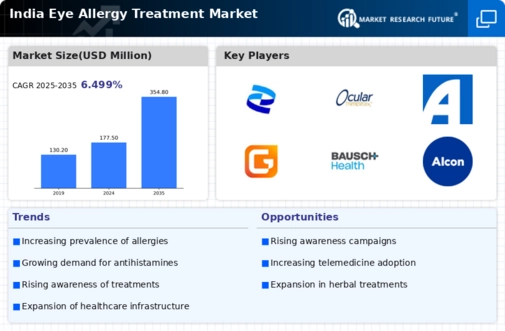
The projected market size of the India Eye Allergy Treatment Market in 2024 is expected to be valued at 177.5 million USD.

What is the expected market growth rate for the India Eye Allergy Treatment Market from 2025 to 2035?

The expected compound annual growth rate, or CAGR, for the India Eye Allergy Treatment Market from 2025 to 2035 is 6.499%.

How much is the market expected to value by 2035?

By 2035, the India Eye Allergy Treatment Market is expected to be valued at 354.8 million USD.

Who are the major players in the India Eye Allergy Treatment Market?

Major players in the India Eye Allergy Treatment Market include Pfizer, Bausch Health, Alcon, and Johnson & Johnson among others.

What segment of eye allergy treatment is expected to hold the largest market share in 2024?

The segment for Seasonal and Perennial Allergic Conjunctivitis is expected to hold the largest market share, valued at 40.0 million USD in 2024.

What market value is attributed to Vernal Keratoconjunctivitis in 2024?

Vernal Keratoconjunctivitis is expected to be valued at 30.0 million USD in the India Eye Allergy Treatment Market in 2024.

What is the expected market size for Contact Allergic Conjunctivitis by 2035?

By 2035, the market size for Contact Allergic Conjunctivitis is expected to reach 95.0 million USD.

Which eye allergy treatment type has the highest projected growth from 2024 to 2035?

Contact Allergic Conjunctivitis has the highest projected growth, increasing from 45.0 million USD in 2024 to 95.0 million USD in 2035.

How does the market size of Atopic Keratoconjunctivitis change from 2024 to 2035?

Atopic Keratoconjunctivitis is expected to grow from 25.0 million USD in 2024 to 50.0 million USD in 2035.

What market opportunities are available in the India Eye Allergy Treatment Market between 2025 and 2035?

There are opportunities in expanding treatment types and improving drug formulations as the market develops between 2025 and 2035.

Download Free Sample

Kindly complete the form below to receive a free sample of this Report

Compare Licence

×
Features License Type
Single User Multiuser License Enterprise User
Price $4,950 $5,950 $7,250
Maximum User Access Limit 1 User Upto 10 Users Unrestricted Access Throughout the Organization
Free Customization
Direct Access to Analyst
Deliverable Format
Platform Access
Discount on Next Purchase 10% 15% 15%
Printable Versions