Download Free Sample
Kindly complete the form below to receive a free sample of this Report
India Pet Obesity Market Research Report: Size, Share, Trend Analysis By Product Type (Blended Diets, Functional Treats, Weight Loss Diet, Food Supplements, Others), By Animal Type (Dogs, Cats, Horses, Other Companion Animals) andBy Distribution Channel (Online Retail, Veterinary Clinics, Petcare stores, Others) - Growth Outlook & Industry Forecast 2025 To 2035
As per Market Research Future analysis, the India pet obesity market Size was estimated at 66.38 USD Million in 2024. The India pet obesity market is projected to grow from 71.48 USD Million in 2025 to 150.0 USD Million by 2035, exhibiting a compound annual growth rate (CAGR) of 7.6% during the forecast period 2025 - 2035
The India pet obesity market is experiencing significant growth driven by health awareness and innovative solutions.
| 2024 Market Size | 66.38 (USD Million) |
| 2035 Market Size | 150.0 (USD Million) |
| CAGR (2025 - 2035) | 7.69% |
Nestle Purina Petcare (US), Mars Petcare (US), Hill's Pet Nutrition (US), Spectrum Brands (US), PetSmart (US), Chewy (US), Royal Canin (FR), Blue Buffalo (US), Wellness Pet Food (US)
Our Impact
Enabled $4.3B Revenue Impact for Fortune 500 and Leading Multinationals
Partnering with 2000+ Global Organizations Each Year
30K+ Citations by Top-Tier Firms in the Industry
The pet obesity market is experiencing notable changes as awareness regarding pet health continues to rise. Pet owners are increasingly recognizing the importance of maintaining their animals' ideal weight, which is influenced by various factors including lifestyle, diet, and exercise. This shift in perception is leading to a growing demand for specialized pet food products that cater to weight management. Additionally, veterinary professionals are playing a crucial role in educating pet owners about the risks associated with obesity, thereby fostering a proactive approach to pet care. As a result, the market is witnessing an influx of innovative solutions aimed at combating obesity in pets. Moreover, the pet obesity market is also seeing advancements in technology that facilitate better monitoring of pet health. Wearable devices and mobile applications are becoming more prevalent, allowing pet owners to track their pets' activity levels and dietary habits. This technological integration not only empowers owners to make informed decisions but also encourages a more active lifestyle for pets. The combination of increased awareness, innovative products, and technological advancements suggests a promising future for the pet obesity market, as stakeholders work collaboratively to address this pressing issue.
There is a growing recognition among pet owners regarding the significance of maintaining their pets' health. This trend is leading to increased demand for products and services that promote weight management and overall well-being.
The market is witnessing a surge in the development of specialized pet food products designed to assist in weight control. These offerings often include low-calorie options and formulations that support healthy metabolism.
The adoption of technology, such as wearable devices and health-tracking applications, is becoming more common. These tools enable pet owners to monitor their pets' activity and dietary intake, fostering healthier lifestyles.
Urbanization in India has led to lifestyle changes that impact pet care. Many pet owners live in apartments with limited space for exercise, which can contribute to obesity in pets. The pet obesity market is responding to this challenge by offering products that promote indoor activity and weight management. For instance, the demand for interactive toys and specialized diets is on the rise. Additionally, urban pet owners are increasingly aware of the need for regular veterinary check-ups, which can help in monitoring and managing pet weight. This shift in lifestyle is likely to drive growth in the pet obesity market.
The rise in pet ownership in India has been notable, with households increasingly welcoming pets as family members. This trend contributes to the pet obesity market, as more pets lead to higher demand for pet food and care products. According to recent estimates, approximately 30 million households in India own pets, with dogs and cats being the most popular. As pet owners become more invested in their pets' well-being, they may inadvertently contribute to obesity through overfeeding and lack of exercise. The pet obesity market is thus likely to see growth as owners seek solutions to manage their pets' weight effectively.
There is a growing awareness among Indian pet owners regarding the health implications of obesity in pets. This awareness is fostering a proactive approach to pet care, with owners seeking information on proper nutrition and exercise. The pet obesity market is benefiting from this trend, as more owners are willing to invest in premium pet food and health supplements. Reports indicate that the premium pet food segment is expected to grow by over 20% in the coming years. This shift towards health-conscious pet ownership is likely to drive demand for products aimed at preventing and managing obesity.
The expansion of e-commerce platforms in India has transformed the way pet owners purchase products. Online shopping offers convenience and access to a wider range of pet food and health products, which can aid in managing pet obesity. The pet obesity market is experiencing growth as e-commerce sales of pet products are projected to increase by 30% annually. This trend allows pet owners to easily find specialized diets and weight management solutions that may not be available in local stores. The accessibility of information and products online is likely to enhance efforts in combating pet obesity.
Veterinarians play a crucial role in educating pet owners about the risks associated with obesity. As more pet owners consult veterinarians for advice, the pet obesity market is likely to see an increase in demand for weight management programs and products. Veterinary recommendations often include specific diets and exercise regimens tailored to individual pets. This professional guidance is essential in addressing the obesity epidemic among pets in India. The collaboration between veterinarians and pet food manufacturers is expected to foster innovation in products aimed at promoting healthier lifestyles for pets.
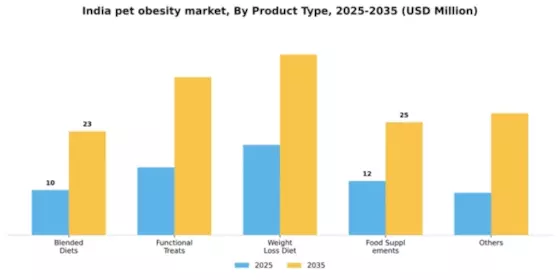
The product type segment in the India pet obesity market reveals significant diversity in consumer preferences. Weight Loss Diet emerges as the largest segment, capturing a substantial share of the market. Following closely are Functional Treats, Blended Diets, Food Supplements, and Others, which collectively contribute to a dynamic landscape. The distribution showcases a growing demand for healthier options tailored for pet weight management. In terms of growth trends, the India pet obesity market is witnessing a surge in demand for Functional Treats, reflecting a shift towards products that offer health benefits alongside palatability. The increasing awareness about pet health and the rising obesity rates among pets are driving this trend. Innovative formulations and marketing strategies are expected to further propel the growth in this segment, creating robust opportunities for manufacturers and retailers.
Weight Loss Diet: Dominant vs. Functional Treats: Emerging
Weight Loss Diet stands out as the dominant product type in the market, characterized by tailored formulations designed to reduce pet weight effectively. This segment is highly preferred by pet owners who prioritize health and wellness, and its prominence is supported by extensive marketing and product education. On the other hand, Functional Treats are emerging rapidly as they cater to the dual demand for snacks that not only provide enjoyment but also contribute to health improvements. These treats often include active ingredients that support various health aspects, such as joint mobility and digestive health, making them increasingly popular among consumers looking for functional benefits alongside nutritional value. This competitive dynamic between the two segments illustrates a growing trend toward holistic pet care.
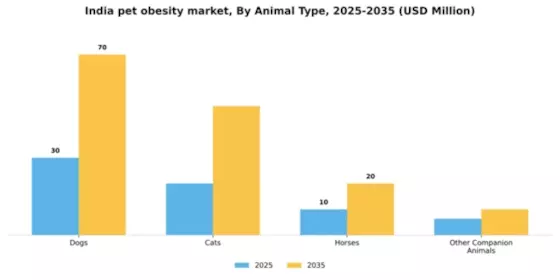
In the India pet obesity market, the distribution of market share is significantly tilted towards dogs, which hold the largest segment share due to their popularity as pets. Cats, while currently a smaller segment, are rapidly increasing in share, highlighting a shift in pet ownership trends and influencing factors like lifestyle changes and increased focus on wellness in pet care. Growth trends indicate that while the dog segment remains dominant, the cat segment is emerging as the fastest-growing area in the market. This is driven by rising awareness of pet obesity's health risks and the growing demand for specialized products catering to feline health. Moreover, an increase in the adoption of cats as pets is further fuelling this trend, making it a key area for future investment and development.
Dogs: Dominant vs. Cats: Emerging
The segment for dogs within the India pet obesity market is characterized by a strong consumer base and a wide variety of available products aimed at managing obesity. Efforts in educating pet owners about canine health have contributed to this segment's sustained dominance. In contrast, the cat segment, though smaller, is quickly emerging due to a surge in cat ownership and the corresponding demand for products tailored to feline health. This shift reflects changing lifestyles, with more families opting for cats due to their lower maintenance compared to dogs. Consequently, the market for cat-specific obesity management solutions is expected to grow rapidly, making it a focal point for innovation in the market.
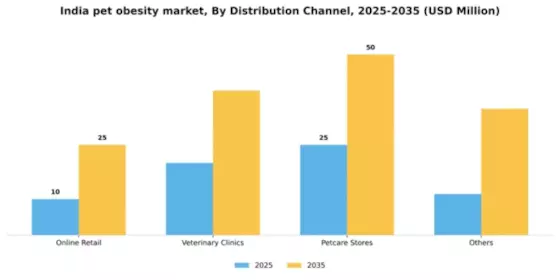
The distribution of the segments in the India pet obesity market reveals that Online Retail holds the largest share, attributed to the increasing number of pet owners who prefer the convenience of online shopping for pet health products. Veterinary Clinics follow closely, catering to concerns about pet obesity with specialized services and products. Petcare Stores and Others also contribute to the market, but to a lesser extent, indicating a trend towards online platforms. In terms of growth trends, Veterinary Clinics are emerging as the fastest-growing segment, driven by heightened awareness of pet health and dedicated services tailored to combat obesity. The shift towards digital platforms has spurred Online Retail, yet the personalized approach of Veterinary Clinics provides significant growth opportunities. This duality indicates both segments are crucial in addressing the rising pet obesity concern, responding to evolving consumer preferences and industry innovations.
Online Retail (Dominant) vs. Veterinary Clinics (Emerging)
Online Retail stands out as the dominant distribution channel in the India pet obesity market due to its emphasis on convenience and a wide array of product offerings accessible from home. Pet owners increasingly turn to e-commerce for pet food, supplements, and weight management solutions. This segment thrives on the technological advancements in online shopping, including personalized recommendations and home delivery services. In contrast, Veterinary Clinics are seen as an emerging segment, gaining traction through a focus on individualized care and education about pet obesity. They build strong relationships with pet owners, emphasizing health assessments and tailored advice. Together, these segments represent significant shifts in consumer purchasing behavior and the ongoing fight against pet obesity.
Get more detailed insights about India Pet Obesity Market Request Free Sample
The pet obesity market in India is currently characterized by a competitive landscape that is both dynamic and multifaceted. Key growth drivers include increasing pet ownership, heightened awareness of pet health, and a growing demand for specialized pet nutrition. Major players such as Nestle Purina Petcare (US), Mars Petcare (US), and Royal Canin (FR) are strategically positioned to leverage these trends. Nestle Purina Petcare (US) focuses on innovation in pet food formulations, while Mars Petcare (US) emphasizes regional expansion and partnerships with local veterinarians to enhance product credibility. Royal Canin (FR) is known for its tailored nutrition solutions, which cater to specific health needs, thereby shaping a competitive environment that prioritizes specialized offerings and consumer education.In terms of business tactics, companies are increasingly localizing manufacturing to reduce costs and improve supply chain efficiency. The market structure appears moderately fragmented, with several players vying for market share. However, the collective influence of key players is significant, as they set industry standards and drive consumer expectations. This competitive structure fosters an environment where innovation and quality are paramount, compelling companies to continuously adapt their strategies to maintain relevance.
In October Mars Petcare (US) announced a partnership with a leading Indian veterinary college to develop a new line of weight management products tailored for local breeds. This strategic move is likely to enhance Mars Petcare's credibility in the market while addressing the specific dietary needs of Indian pets, thereby potentially increasing market penetration. Such initiatives reflect a growing trend towards localized solutions that resonate with pet owners' preferences.
In September Nestle Purina Petcare (US) launched a digital platform aimed at educating pet owners about obesity prevention and management. This initiative not only positions the company as a thought leader in pet health but also aligns with the increasing digitalization trend within the industry. By providing valuable resources, Nestle Purina Petcare (US) may foster brand loyalty and encourage responsible pet ownership, which is crucial in combating obesity.
In August Royal Canin (FR) introduced a new range of veterinary diets specifically designed for weight management in pets. This product line is significant as it underscores the company's commitment to addressing health issues prevalent in pets, particularly obesity. By focusing on veterinary partnerships and evidence-based nutrition, Royal Canin (FR) is likely to strengthen its market position and appeal to health-conscious consumers.
As of November current competitive trends indicate a shift towards digitalization, sustainability, and the integration of AI in product development and customer engagement. Strategic alliances are increasingly shaping the landscape, allowing companies to pool resources and expertise. Looking ahead, competitive differentiation is expected to evolve, with a notable shift from price-based competition to a focus on innovation, technology, and supply chain reliability. This evolution suggests that companies that prioritize these aspects will likely gain a competitive edge in the increasingly health-conscious pet market.

The India Pet Obesity Market has seen significant developments recently, with companies like Mars Petcare, Nestle Purina, and Hill's Pet Nutrition focusing on innovative dietary solutions to tackle rising obesity rates among pets. Current trends indicate a growing consumer awareness about pet health, prompting these companies to introduce specialized weight management pet foods and supplements. Notably, in June 2023, Royal Canin launched a targeted campaign in India, emphasizing nutrition tailored to pet needs, which has been widely received among pet owners.
Additionally, the rising trend of pet adoption during the pandemic has also contributed to an increase in pet obesity awareness, with owners seeking guidance on proper nutrition and exercise strategies. In terms of market dynamics, Zoetis and P&G Pet Care have invested in Research and Development initiatives aimed at creating advanced nutritional products.
Moreover, industry forecasts suggest that the market is poised for growth, reflecting an increasing demand for premium pet food and wellness solutions. The urgency of addressing pet obesity is further underscored by reports from veterinary associations in India highlighting the health risks associated with overweight pets. These developments underline a vibrant market landscape focused on health management for pets.
The Pet Obesity Market in India is projected to grow at a 7.69% CAGR from 2025 to 2035, driven by rising pet ownership, increased health awareness, and innovative dietary solutions.
New opportunities lie in:
By 2035, the market is expected to achieve substantial growth, reflecting heightened consumer awareness and innovative solutions.
| MARKET SIZE 2024 | 66.38(USD Million) |
| MARKET SIZE 2025 | 71.48(USD Million) |
| MARKET SIZE 2035 | 150.0(USD Million) |
| COMPOUND ANNUAL GROWTH RATE (CAGR) | 7.69% (2025 - 2035) |
| REPORT COVERAGE | Revenue Forecast, Competitive Landscape, Growth Factors, and Trends |
| BASE YEAR | 2024 |
| Market Forecast Period | 2025 - 2035 |
| Historical Data | 2019 - 2024 |
| Market Forecast Units | USD Million |
| Key Companies Profiled | Nestle Purina Petcare (US), Mars Petcare (US), Hill's Pet Nutrition (US), Spectrum Brands (US), PetSmart (US), Chewy (US), Royal Canin (FR), Blue Buffalo (US), Wellness Pet Food (US) |
| Segments Covered | Product Type, Animal Type, Distribution Channel |
| Key Market Opportunities | Emerging pet health technologies and tailored nutrition solutions drive growth in the pet obesity market. |
| Key Market Dynamics | Rising consumer awareness drives demand for specialized pet diets and obesity management solutions in the market. |
| Countries Covered | India |
The market valuation was $66.38 Million in 2024.
The market is projected to reach $150.0 Million by 2035.
The expected CAGR is 7.69% during the forecast period.
Leading product types include Weight Loss Diets, Functional Treats, and Blended Diets.
The valuation for Weight Loss Diets was $20.0 Million in 2024.
Online retail channels had a valuation of $10.0 Million in 2024, projected to grow significantly.
The market for dogs was valued at $30.0 Million in 2024, indicating strong demand.
Key players include Nestle Purina Petcare, Mars Petcare, and Royal Canin.
Functional Treats had a valuation range of $15.0 Million to $35.0 Million in 2024.
Petcare Stores and Veterinary Clinics are among the most effective distribution channels.


Kindly complete the form below to receive a free sample of this Report

“This is really good guys. Excellent work on a tight deadline. I will continue to use you going forward and recommend you to others. Nice job”


“Thanks. It’s been a pleasure working with you, please use me as reference with any other Intel employees.”


“Thanks for sending the report it gives us a good global view of the Betaïne market.”


“Thank you, this will be very helpful for OQS.”


“We found the report very insightful! we found your research firm very helpful. I'm sending this email to secure our future business.”


“I am very pleased with how market segments have been defined in a relevant way for my purposes (such as "Portable Freezers & refrigerators" and "last-mile"). In general the report is well structured. Thanks very much for your efforts.”


“I have been reading the first document or the study, ,the Global HVAC and FP market report 2021 till 2026. Must say, good info! I have not gone in depth at all parts, but got a good indication of the data inside!”


“We got the report in time, we really thank you for your support in this process. I also thank to all of your team as they did a great job.”


“The Automotive 48V ECU Components Procurement Intelligence Study” was a complex project, but the Market Research Future (MRFR) team handled it with quality, agility, and customer-centricity. They delivered all requested data on time and within the agreed scope. The team, including Shubhendra Anand and Rahul Gotadki, was always readily available to clarify questions and swiftly implement necessary adjustments, driving the project to a successful conclusion within a very demanding timeframe.
I would also like to specifically commend Akshay Agarwal for his responsiveness and support at every stage—from our initial inquiry on May 6th through to final delivery on June 18th. His dedication made the entire process seamless.”



