×
Hero Background
English
Chinese
French
Japanese
Korean
German
Spanish

Interventional Neurology Market Share

ID: MRFR/HC/5745-HCR
90 Pages
Kinjoll Dey
October 2025

Interventional Neurology Market Research Report Information By Disease Pathology (Cerebral Aneurysms, Ischemic Strokes, & Others), Product (Aneurysm Coiling & Embolization, Neurothrombectomy, Support Devices, & Others), End User – Forecast Till 2035

Share:
Download PDF ×

We do not share your information with anyone. However, we may send you emails based on your report interest from time to time. You may contact us at any time to opt-out.

Interventional Neurology Market Infographic
Purchase Options

Market Share

Interventional Neurology Market Share Analysis

At the center of market share situating in Interventional Neurology is an assurance to nonstop mechanical development. Organizations put resources into innovative work to upgrade neurointerventional devices, consolidating elements like superior imaging capacities, navigational accuracy, and novel materials. These innovative progressions add to the viability and wellbeing of neurovascular procedures. Recognizing the variety of neurological circumstances, organizations center around customization. Fitting neurointerventional devices for explicit procedures, for example, cluster recovery in stroke cases or aneurysm looping, guarantees ideal performance in different clinical situations. Customization improves the importance of devices across various neurovascular intercessions. Adjusting the requirement for productivity with affordability is basic in neurointerventional markets. Organizations foster evaluating techniques that consider the worth their devices give while additionally teaming up medical care payers to guarantee openness. Affordable estimating models add to more extensive market access and significance. Utilizing computerized marketing channels is indispensable to arriving at medical care experts successfully. Organizations use online platforms for designated publicizing, instructive missions, and intuitive ingredient that works with commitment with likely clients. A solid internet-based presence is fundamental for brand perceivability and drawing in a carefully related crowd. Lining up with worldwide maintainability patterns, organizations in the Interventional Neurology market take on eco-friendly practices. This incorporates maintainable bundling, diminished natural effect in assembling, and capable removal choices. Embracing maintainability reflects corporate obligation and lines up with the upsides of earth cognizant medical care offices, decidedly affecting market share situating.

Author
Kinjoll Dey
Research Analyst Level I

He is an extremely curious individual currently working in Healthcare and Medical Devices Domain. Kinjoll is comfortably versed in data centric research backed by healthcare educational background. He leverages extensive data mining and analytics tools such as Primary and Secondary Research, Statistical Analysis, Machine Learning, Data Modelling. His key role also involves Technical Sales Support, Client Interaction and Project management within the Healthcare team. Lastly, he showcases extensive affinity towards learning new skills and remain fascinated in implementing them.

Leave a Comment

FAQs

What was the value of the global interventional neurology in 2030?

The global interventional neurology market had reached a valuation of USD 2.57 Billion in 2032.

At what CAGR is the global interventional neurology market projected to grow in the forecast period (2022-2030)?

The global interventional neurology market is projected to grow at approximately 5.1% CAGR during forecast period (2023-2032).

What are the major tailwinds pushing the growth of the global interventional neurology market?

Augmenting demand for effective neurovascular devices.

Which region holds the largest share in the global interventional neurology market?

North America holds the largest share in the global interventional neurology market followed by Europe and Asia Pacific, respectively.

Who are the top players in the global interventional neurology market?

Johnson & Johnson, Abbott Laboratories, Boston Scientific Corporation, Medtronic PLC, Stryker Corporation, Terumo Corporation, Microport Scientific Corporation, Penumbra, Inc., Merit Medical Systems, Inc., B. Braun Melsungen AG, W.L. Gore & Associates, Inc., and Cook Medical, are some of the major players operating in the interventional neurology market.

Market Summary

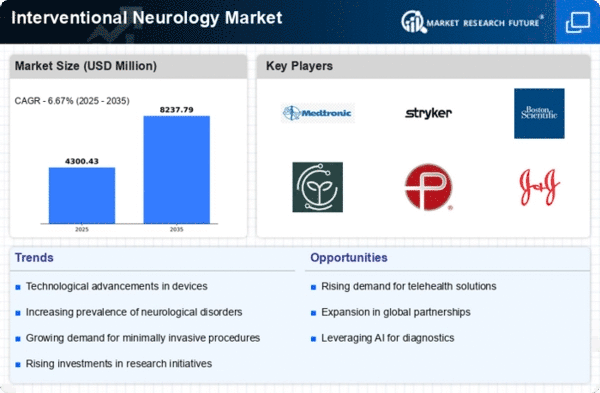
As per MRFR analysis, the Interventional Neurology Market Size was estimated at 4031.53 USD Million in 2024. The Interventional Neurology industry is projected to grow from 4346.63 USD Million in 2025 to 8237.79 USD Million by 2035, exhibiting a compound annual growth rate (CAGR) of 6.67 during the forecast period 2025 - 2035.

Key Market Trends & Highlights

The Interventional Neurology Market is poised for substantial growth driven by technological advancements and increasing healthcare demands.

  • Technological advancements are revolutionizing interventional neurology, enhancing procedural efficacy and patient outcomes.
  • Minimally invasive procedures are gaining traction, leading to shorter recovery times and reduced hospital stays.
  • North America remains the largest market, while the Asia-Pacific region is emerging as the fastest-growing area for interventional neurology.
  • The rising incidence of neurological disorders and technological innovations in interventional devices are key drivers propelling market expansion.

Market Size & Forecast

2024 Market Size 4031.53 (USD Million)
2035 Market Size 8237.79 (USD Million)
CAGR (2025 - 2035) 6.67%
Largest Regional Market Share in 2024 North America

Major Players

<p>Medtronic (US), Stryker (US), Boston Scientific (US), Terumo (JP), Penumbra (US), Johnson & Johnson (US), Abbott (US), B. Braun (DE), NeuroPace (US)</p>

Market Trends

The Interventional Neurology Market is currently experiencing a transformative phase, characterized by advancements in technology and an increasing emphasis on minimally invasive procedures. This shift is largely driven by the growing prevalence of neurological disorders, which necessitates innovative treatment options. As healthcare providers seek to enhance patient outcomes, the integration of cutting-edge imaging techniques and robotic-assisted interventions appears to be gaining traction. Furthermore, the rising awareness of the benefits associated with interventional approaches is likely to propel market growth, as patients and practitioners alike recognize the advantages of reduced recovery times and lower complication rates. In addition, the Interventional Neurology Market is witnessing a surge in research and development activities aimed at improving existing therapies and introducing novel solutions. Collaborations between medical device manufacturers and healthcare institutions seem to be fostering an environment conducive to innovation. This collaborative spirit may lead to the emergence of new products that address unmet clinical needs, thereby expanding the market landscape. Overall, the Interventional Neurology Market is poised for continued evolution, driven by technological advancements and a commitment to enhancing patient care.

Technological Advancements

The Interventional Neurology Market is increasingly influenced by technological innovations, particularly in imaging and device design. Enhanced imaging modalities, such as advanced MRI and CT techniques, facilitate precise diagnosis and treatment planning. Additionally, the development of sophisticated devices, including stents and embolization materials, is likely to improve procedural efficacy and safety.

Minimally Invasive Procedures

There is a notable trend towards minimally invasive techniques within the Interventional Neurology Market. These procedures, which often result in shorter recovery times and reduced hospital stays, are becoming more popular among both patients and healthcare providers. This shift reflects a broader movement in medicine towards approaches that prioritize patient comfort and quicker rehabilitation.

Collaborative Research Initiatives

Collaborative efforts between academic institutions and industry players are emerging as a key trend in the Interventional Neurology Market. Such partnerships aim to accelerate the development of innovative therapies and devices. By pooling resources and expertise, these collaborations may lead to breakthroughs that address current limitations in treatment options.

Interventional Neurology Market Market Drivers

Market Growth Projections

The Global Interventional Neurology Market Industry is projected to witness substantial growth in the coming years. The market is expected to reach a valuation of 2.98 USD Billion by 2035, reflecting a robust compound annual growth rate (CAGR) of 10.87% from 2025 to 2035. This growth trajectory is indicative of the increasing demand for advanced interventional techniques and the rising prevalence of neurological disorders. As healthcare systems worldwide adapt to these challenges, the market is poised for expansion, driven by technological advancements, increased awareness, and supportive regulatory environments.

Regulatory Support and Reimbursement Policies

Regulatory support and favorable reimbursement policies are instrumental in shaping the Global Interventional Neurology Market Industry. Governments and health authorities are increasingly recognizing the importance of interventional neurology in improving patient outcomes, leading to the establishment of supportive regulatory frameworks. Additionally, favorable reimbursement policies for interventional procedures encourage healthcare providers to adopt these techniques, ensuring that patients have access to necessary treatments. This supportive environment not only enhances the market's attractiveness but also fosters innovation as companies are incentivized to develop new technologies and procedures. As these policies evolve, they are likely to further stimulate market growth.

Rising Investment in Healthcare Infrastructure

The Global Interventional Neurology Market Industry is bolstered by rising investments in healthcare infrastructure across various regions. Governments and private entities are increasingly allocating funds to enhance healthcare facilities, particularly in developing countries. This investment facilitates the acquisition of advanced medical equipment and training for healthcare professionals, thereby improving the quality of care for neurological disorders. Enhanced infrastructure not only supports the implementation of interventional neurology techniques but also increases patient access to these services. As healthcare systems evolve, the market is likely to benefit from this trend, fostering an environment conducive to growth and innovation.

Increasing Prevalence of Neurological Disorders

The Global Interventional Neurology Market Industry is experiencing growth due to the rising prevalence of neurological disorders such as stroke, epilepsy, and multiple sclerosis. According to the World Health Organization, neurological disorders affect millions globally, with stroke being a leading cause of disability. This increasing incidence necessitates advanced interventional techniques, driving demand for innovative treatment options. As the global population ages, the burden of these disorders is expected to rise, further propelling the market. In 2024, the market is valued at 0.96 USD Billion, indicating a robust foundation for future growth as healthcare systems adapt to meet these challenges.

Growing Awareness and Education on Neurological Health

Growing awareness and education regarding neurological health are pivotal in driving the Global Interventional Neurology Market Industry. Public health campaigns and educational initiatives are increasingly informing individuals about the symptoms and risks associated with neurological disorders. This heightened awareness encourages early diagnosis and treatment, leading to a greater demand for interventional procedures. Furthermore, healthcare professionals are receiving enhanced training on the latest interventional techniques, which improves patient care. As awareness continues to rise, it is anticipated that the market will experience sustained growth, aligning with the projected CAGR of 10.87% from 2025 to 2035.

Technological Advancements in Interventional Techniques

Technological advancements are a key driver in the Global Interventional Neurology Market Industry. Innovations such as minimally invasive procedures, advanced imaging techniques, and robotic-assisted surgeries enhance the efficacy and safety of neurological interventions. For instance, the development of neurovascular stents and embolization devices has revolutionized the treatment of conditions like aneurysms and arteriovenous malformations. These advancements not only improve patient outcomes but also reduce recovery times, making interventional procedures more appealing to both patients and healthcare providers. As these technologies continue to evolve, they are expected to contribute significantly to the market's expansion, particularly as it approaches a projected value of 2.98 USD Billion by 2035.


Market Segment Insights

By Application: Aneurysm Coiling (Largest) vs. Thrombectomy (Fastest-Growing)

<p>In the Interventional Neurology Market, the application segment shows a diverse distribution of market share among different methodologies. Aneurysm Coiling, which remains the largest segment, is preferred for its efficacy in treating cerebral aneurysms. Following closely are Embolization and Stenting, which also hold significant market shares but are positioned differently based on procedural preferences. Thrombectomy, while newer in clinical adoption, is rapidly gaining traction due to its potential in treating acute ischemic strokes, altering the competitive landscape significantly. Recent trends indicate an upward trajectory in the Thrombectomy segment, driven by advancements in technology and increasing awareness among healthcare professionals. The soaring prevalence of neurological disorders, coupled with innovation in catheter-based interventions, is propelling growth in this sector. Additionally, the integration of imaging technologies to enhance procedural outcomes is leading to increased adoption of these interventional techniques, particularly in acute care settings.</p>

<p>Aneurysm Coiling (Dominant) vs. Balloon Angioplasty (Emerging)</p>

<p>Aneurysm Coiling is established as the dominant technique within the Interventional Neurology Market, owing to its proven success in managing cerebral aneurysms. This method utilizes detachable coils to promote thrombosis within the aneurysm, significantly reducing the risk of rupture. In contrast, Balloon Angioplasty is emerging as a notable technique for vascular access and dilation procedures within the neurology domain. Although it is less commonly used than Aneurysm Coiling, its potential in treating symptomatic stenosis or obstruction in cerebral blood vessels is gaining attention. Surgeons perceive Balloon Angioplasty as a complementary approach, often used in combination with stenting or other vascular interventions, thereby enhancing its market position.</p>

By Procedure Type: Endovascular Procedures (Largest) vs. Neurovascular Surgery (Fastest-Growing)

<p>In the Interventional Neurology Market, Endovascular Procedures hold a significant market share, primarily due to their minimally invasive nature and favorable patient outcomes. They dominate the landscape with various applications, including intracranial aneurysms and carotid artery stenting, leading to increased usage among healthcare providers. Neurovascular Surgery, while currently smaller in total market share, is experiencing rapid growth as advancements in techniques and technologies enhance surgical precision and patient recovery times, attracting a larger patient base.</p>

<p>Endovascular Procedures (Dominant) vs. Neurovascular Surgery (Emerging)</p>

<p>Endovascular Procedures represent a dominant force in the Interventional Neurology Market, characterized by techniques such as catheter-based interventions that significantly reduce recovery times and hospital stays. Their efficacy in treating conditions like intracranial aneurysms and carotid artery stenosis positions them as the preferred choice among neurosurgeons. Conversely, Neurovascular Surgery, though emerging, is gaining momentum due to increasing adoption of innovative surgical approaches, including robotics and enhanced imaging technologies. This segment is poised for growth as the demand for complex neurosurgical interventions rises, propelled by a more robust understanding of neurovascular disorders and the aging population.</p>

By End User: Hospitals (Largest) vs. Ambulatory Surgical Centers (Fastest-Growing)

<p>The Interventional Neurology Market displays a notable distribution in its end-user segments, with hospitals leading the charge as the largest users of interventional neurology products and services. Hospitals account for a significant portion of the market share, driven by their capacity to provide comprehensive neurology services and advanced treatment options. In contrast, ambulatory surgical centers are gaining traction, exhibiting rapid growth due to the rising preference for less invasive procedures and shorter patient recovery times, contributing to increased patient throughput. As the need for effective neurological interventions escalates, the growth trends within these segments reveal an expanding market. The demand for innovative treatment methods within hospitals remains robust, as they invest in advanced technology and specialized personnel. Meanwhile, ambulatory surgical centers are emerging as important players, primarily driven by their ability to offer cost-effective, efficient care. The shift towards outpatient procedures is becoming a defining trend, suggesting a promising future for these centers in the interventional neurology landscape.</p>

<p>Hospitals (Dominant) vs. Ambulatory Surgical Centers (Emerging)</p>

<p>Hospitals are recognized as the dominant force within the interventional neurology market, providing extensive resources, specialized staff, and advanced technologies to deliver high-quality patient care. Their capability to integrate multiple specialties and offer comprehensive treatment options is unrivaled, allowing them to manage complex cases effectively. Conversely, ambulatory surgical centers are rapidly gaining prominence as they cater to the increasing demand for outpatient procedures. These centers provide a convenient, lower-cost alternative for patients requiring less invasive surgeries and emphasize efficiency and quick recovery. As healthcare providers continue adapting to patient preferences for outpatient care, these centers are set to play an essential role in shaping the future of the interventional neurology market.</p>

By Product Type: Catheters (Largest) vs. Stents (Fastest-Growing)

<p>In the Interventional Neurology Market, the product type segment is primarily dominated by catheters, which hold the largest market share among other product types. Catheters are widely utilized in various interventional procedures due to their versatility and effectiveness in accessing vascular pathways. Stents, on the other hand, are emerging as a significant segment within the market, reflecting a shift towards more advanced technologies aimed at addressing complex neurological conditions. Their growing adoption underscores a shift in treatment approaches that prioritize minimally invasive solutions. The growth trends within the interventional neurology market are driven by technological advancements and an increasing prevalence of neurological disorders that necessitate interventions. The rising demand for effective treatment options has led to innovations in catheters and stents, enabling better patient outcomes. Additionally, the favorable regulatory environment and increased investment in research and development are propelling the growth of these product types. As healthcare systems adapt to meet the challenges posed by neurological diseases, both catheters and stents are expected to see significant advancements in their applications and market positions.</p>

<p>Catheters (Dominant) vs. Stents (Emerging)</p>

<p>Catheters are a dominant product type in the Interventional Neurology Market, well-known for their critical role in various vascular interventions. They are designed for precision and ease of navigation, allowing clinicians to access intricate vascular networks. This versatility makes catheters indispensable in treating a range of neurological conditions. Conversely, stents are recognized as an emerging product type, gaining traction due to their ability to provide structural support in vascular pathways. The innovation in stent designs, including bioresorbable and drug-eluting options, is enhancing their effectiveness in preventing restenosis. As these products evolve, their complementary roles within the neurology field solidify their significance in improving treatment efficacy and patient care.</p>

Get more detailed insights about Interventional Neurology Market Research Report – Global Forecast till 2035

Regional Insights

North America : Market Leader in Innovation

North America is poised to maintain its leadership in the Interventional Neurology market, holding a significant market share of $2018.62M in 2024. The region's growth is driven by advanced healthcare infrastructure, increasing prevalence of neurological disorders, and robust investment in research and development. Regulatory support from agencies like the FDA further catalyzes innovation and adoption of new technologies, enhancing patient outcomes and treatment options. The competitive landscape in North America is characterized by the presence of major players such as Medtronic, Stryker, and Boston Scientific. These companies are at the forefront of technological advancements, offering a wide range of products and solutions. The U.S. remains the largest market, supported by a high demand for minimally invasive procedures and a growing aging population. This dynamic environment fosters continuous innovation and strategic partnerships among key stakeholders.

Europe : Emerging Market with Growth Potential

Europe's Interventional Neurology market is projected to grow significantly, with a market size of $1209.23M in 2024. Key growth drivers include an increasing incidence of neurological diseases, advancements in medical technology, and supportive healthcare policies. The European Medicines Agency (EMA) plays a crucial role in regulating and approving innovative therapies, which enhances market accessibility and patient care. Leading countries in this region include Germany, France, and the UK, where healthcare systems are increasingly adopting advanced interventional techniques. Major players like B. Braun and Terumo are expanding their presence, contributing to a competitive landscape that fosters innovation. The collaboration between public and private sectors is vital for driving research initiatives and improving treatment options across Europe.

Asia-Pacific : Rapidly Growing Market Landscape

The Asia-Pacific region is witnessing rapid growth in the Interventional Neurology market, with a market size of $634.62M in 2024. Factors such as increasing healthcare expenditure, rising awareness of neurological disorders, and government initiatives to improve healthcare infrastructure are driving this growth. Regulatory bodies in countries like Japan and Australia are actively promoting the adoption of advanced medical technologies, which is crucial for market expansion. Countries like Japan, China, and India are leading the charge in this burgeoning market. The presence of key players such as Terumo and Penumbra is enhancing competition and innovation. As the region continues to invest in healthcare advancements, the demand for interventional neurology solutions is expected to rise, creating new opportunities for market participants.

Middle East and Africa : Emerging Market with Challenges

The Middle East and Africa region is gradually developing its Interventional Neurology market, with a market size of $169.06M in 2024. Growth is driven by increasing healthcare investments, rising awareness of neurological conditions, and the need for advanced medical technologies. However, challenges such as limited access to healthcare facilities and varying regulatory environments can hinder market growth. Efforts by local governments to improve healthcare infrastructure are essential for overcoming these barriers. Leading countries in this region include South Africa and the UAE, where healthcare systems are beginning to adopt innovative interventional techniques. The presence of key players is still limited, but companies are increasingly looking to enter this market. As the region continues to evolve, there is potential for significant growth in the interventional neurology sector, driven by both local and international investments.

Key Players and Competitive Insights

The Interventional Neurology Market is characterized by a dynamic competitive landscape, driven by technological advancements and an increasing prevalence of neurological disorders. Key players such as Medtronic (US), Stryker (US), and Boston Scientific (US) are at the forefront, each adopting distinct strategies to enhance their market presence. Medtronic (US) focuses on innovation through the development of advanced neurovascular devices, while Stryker (US) emphasizes strategic acquisitions to bolster its product portfolio. Boston Scientific (US) is actively pursuing partnerships to expand its reach in emerging markets, collectively shaping a competitive environment that is increasingly reliant on technological prowess and strategic collaborations.

In terms of business tactics, companies are localizing manufacturing to reduce costs and enhance supply chain efficiency. The market appears moderately fragmented, with several players vying for dominance. The collective influence of these key players is significant, as they not only drive innovation but also set industry standards that smaller companies often follow.

In November 2025, Medtronic (US) announced the launch of a new line of neurovascular stents designed to improve patient outcomes in stroke treatment. This strategic move is likely to enhance Medtronic's competitive edge by addressing a critical need in the market, thereby reinforcing its commitment to innovation and patient care. The introduction of these stents may also position Medtronic as a leader in the neurovascular space, potentially increasing its market share.

In October 2025, Stryker (US) completed the acquisition of a leading neurotechnology firm, which is expected to significantly enhance its capabilities in the interventional neurology sector. This acquisition not only expands Stryker's product offerings but also strengthens its position in a rapidly evolving market. The integration of advanced technologies from the acquired firm could lead to the development of next-generation devices, further solidifying Stryker's competitive stance.

In September 2025, Boston Scientific (US) entered into a strategic partnership with a prominent research institution to accelerate the development of innovative neurointerventional therapies. This collaboration is indicative of a broader trend towards partnerships that leverage academic research to drive product innovation. By aligning with research experts, Boston Scientific aims to enhance its R&D capabilities, potentially leading to breakthroughs that could redefine treatment protocols in interventional neurology.

As of December 2025, the competitive trends in the Interventional Neurology Market are increasingly defined by digitalization, sustainability, and the integration of artificial intelligence (AI). Strategic alliances are becoming more prevalent, as companies recognize the value of collaboration in fostering innovation. The shift from price-based competition to a focus on technological advancement and supply chain reliability is evident. Moving forward, competitive differentiation is likely to hinge on the ability to innovate and adapt to changing market demands, with a clear emphasis on enhancing patient outcomes through advanced technologies.

Key Companies in the Interventional Neurology Market market include

Industry Developments

Future Outlook

Interventional Neurology Market Future Outlook

<p>The Interventional Neurology Market is projected to grow at a 6.67% CAGR from 2024 to 2035, driven by technological advancements, increasing prevalence of neurological disorders, and rising healthcare expenditure.</p>

New opportunities lie in:

  • <p>Development of advanced neurovascular devices for minimally invasive procedures.</p>
  • <p>Expansion of tele-neurology services to enhance patient access and monitoring.</p>
  • <p>Investment in AI-driven diagnostic tools to improve treatment accuracy and efficiency.</p>

<p>By 2035, the Interventional Neurology Market is expected to be robust, reflecting substantial growth and innovation.</p>

Market Segmentation

Interventional Neurology Market End User Outlook

  • Hospitals
  • Ambulatory Surgical Centers
  • Specialty Clinics
  • Research Institutions

Interventional Neurology Market Application Outlook

  • Aneurysm Coiling
  • Embolization
  • Stenting
  • Thrombectomy
  • Balloon Angioplasty

Interventional Neurology Market Product Type Outlook

  • Catheters
  • Guidewires
  • Stents
  • Embolic Agents
  • Balloon Catheters

Interventional Neurology Market Procedure Type Outlook

  • Endovascular Procedures
  • Neurovascular Surgery
  • Intracranial Aneurysm Treatment
  • Carotid Artery Stenting
  • Cerebral Angiography

Report Scope

MARKET SIZE 20244031.53(USD Million)
MARKET SIZE 20254346.63(USD Million)
MARKET SIZE 20358237.79(USD Million)
COMPOUND ANNUAL GROWTH RATE (CAGR)6.67% (2024 - 2035)
REPORT COVERAGERevenue Forecast, Competitive Landscape, Growth Factors, and Trends
BASE YEAR2024
Market Forecast Period2025 - 2035
Historical Data2019 - 2024
Market Forecast UnitsUSD Million
Key Companies ProfiledMedtronic (US), Stryker (US), Boston Scientific (US), Terumo (JP), Penumbra (US), Johnson & Johnson (US), Abbott (US), B. Braun (DE), NeuroPace (US)
Segments CoveredApplication, Procedure Type, End User, Product Type
Key Market OpportunitiesAdvancements in minimally invasive techniques enhance treatment options in the Interventional Neurology Market.
Key Market DynamicsTechnological advancements and regulatory changes drive innovation and competition in the Interventional Neurology Market.
Countries CoveredNorth America, Europe, APAC, South America, MEA

FAQs

What was the value of the global interventional neurology in 2030?

The global interventional neurology market had reached a valuation of USD 2.57 Billion in 2032.

At what CAGR is the global interventional neurology market projected to grow in the forecast period (2022-2030)?

The global interventional neurology market is projected to grow at approximately 5.1% CAGR during forecast period (2023-2032).

What are the major tailwinds pushing the growth of the global interventional neurology market?

Augmenting demand for effective neurovascular devices.

Which region holds the largest share in the global interventional neurology market?

North America holds the largest share in the global interventional neurology market followed by Europe and Asia Pacific, respectively.

Who are the top players in the global interventional neurology market?

Johnson &amp; Johnson, Abbott Laboratories, Boston Scientific Corporation, Medtronic PLC, Stryker Corporation, Terumo Corporation, Microport Scientific Corporation, Penumbra, Inc., Merit Medical Systems, Inc., B. Braun Melsungen AG, W.L. Gore &amp; Associates, Inc., and Cook Medical, are some of the major players operating in the interventional neurology market.

  1. Definition
    1. Scope of the Study
      1. Assumptions
      2. Limitations
  2. Research Methodology
    1. Introduction
    2. Primary Research
    3. Secondary Research
    4. Market Size
    5. Estimation
    6. Chapter 4. Market Dynamics
    7. Drivers
    8. Restraints
    9. Opportunities
    10. Macroeconomic
    11. Indicators
    12. Technology Trends & Assessment
    13. Chapter
  3. Market Factor Analysis
    1. Porter’s
      1. Bargaining Power of Suppliers
      2. Bargaining Power of Buyers
      3. Threat
      4. Intensity of Rivalry
    2. Five Forces Analysis
    3. Threat of New Entrants
    4. of Substitutes
    5. Value Chain Analysis
    6. Chapter 6.
  4. Global Interventional Neurology Market, by Disease Pathology
    1. Introduction
    2. Cerebral Aneurysms
    3. Market Estimates
    4. &Forecast, by Region, 2020-2027
  5. Market Estimates &Forecast, by Country,
    1. Arteriovenous Malformation and Fistulas
  6. Market Estimates & Forecast, by Region, 2020-2027
    1. Market Estimates &
    2. Forecast, by Country, 2020-2027
    3. Ischemic Strokes
    4. Market
    5. Estimates & Forecast, by Region, 2020-2027
    6. Market Estimates & Forecast,
    7. by Country, 2020-2027
    8. Others
    9. Market Estimates &
    10. Forecast, by Region, 2020-2027
  7. Market Estimates & Forecast, by Country,
    1. Chapter 7. Global Interventional Neurology Market,
    2. by Product
    3. Introduction
    4. Aneurysm
      1. Embolic Coils
    5. Coiling & Embolization Devices
    6. Market Estimates & Forecast,
    7. by Region, 2020-2027
  8. Market Estimates & Forecast, by Country, 2020-2027
    1. Market Estimates &
    2. Forecast, by Region, 2020-2027
  9. Coated Detachable Coils
  10. Market Estimates & Forecast, by Country,
    1. Market Estimates
    2. & Forecast, by Region, 2020-2027
  11. Flow Diversion Devices
  12. Market Estimates & Forecast, by Country,
    1. Market Estimates
    2. & Forecast, by Region, 2020-2027
  13. Liquid Embolic Agents
  14. Market Estimates & Forecast, by Country,
    1. Cerebral Balloon Angioplasty and Stenting Systems
      1. Carotid Artery Stents
    2. Market Estimates & Forecast,
    3. by Region, 2020-2027
  15. Market Estimates & Forecast, by Country, 2020-2027
    1. Filter Devices
  16. Embolic Protection Systems
  17. Distal
  18. Market Estimates & Forecast, by Region, 2020-2027
    1. Market
    2. Estimates & Forecast, by Country, 2020-2027
    3. Occlusion Devices
  19. Balloon
  20. Market Estimates & Forecast, by Region, 2020-2027
  21. Market Estimates & Forecast, by Country, 2020-2027
    1. Neurothrombectomy
      1. Clot Retrieval Devices
    2. Devices
    3. Market Estimates
    4. & Forecast, by Region, 2020-2027
  22. Market Estimates & Forecast, by Country,
    1. Market
    2. Estimates & Forecast, by Region, 2020-2027
    3. Market Estimates & Forecast,
    4. by Country, 2020-2027
    5. Market Estimates
    6. & Forecast, by Region, 2020-2027
  23. Suction and Aspiration Devices
  24. Snares
  25. Market Estimates & Forecast, by Country,
    1. Support Devices
      1. Microcatheters
  26. Market Estimates & Forecast, by Region, 2020-2027
    1. Market Estimates &
    2. Forecast, by Country, 2020-2027
  27. Microguidewires
  28. Market Estimates & Forecast, by Region, 2020-2027
    1. Market Estimates &
    2. Forecast, by Country, 2020-2027
    3. Chapter 8. Global Interventional
  29. Neurology Market, by End User
    1. Introduction
    2. Hospitals & Clinics
  30. Market Estimates & Forecast, by Region, 2020-2027
  31. Market Estimates & Forecast, by Country, 2020-2027
    1. Ambulatory
    2. Surgical Centers
  32. Market Estimates & Forecast, by Region, 2020-2027
    1. Market
    2. Estimates & Forecast, by Country, 2020-2027
    3. Research
    4. & Academic Institutes
  33. Market Estimates & Forecast, by Region,
  34. Market Estimates & Forecast, by Country, 2020-2027
    1. Others
  35. Market Estimates & Forecast, by Region, 2020-2027
    1. Market
    2. Estimates & Forecast, by Country, 2020-2027
    3. Chapter 9. Global
  36. Interventional Neurology Market, by Region
    1. Introduction
    2. Americas
      1. North America
      2. South
    3. U.S.
    4. America
    5. Europe
      1. Western Europe
      2. Eastern
    6. Italy
    7. Europe
    8. Asia-Pacific
      1. Japan
      2. China
      3. India
      4. South Korea
    9. Australia
    10. Rest of Asia-Pacific
    11. Middle East & Africa
      1. Middle East
      2. Africa
    12. Chapter
  37. Company Landscape
    1. Introduction
    2. Market Share Analysis
    3. Key Development & Strategies
    4. Chapter 11. Company Profiles
    5. Abbott Laboratories
      1. Company
      2. Type Overview
      3. Financials Overview
      4. SWOT Analysis
    6. Overview
    7. Key Developments
    8. Medtronic PLC
      1. Company
      2. Type Overview
      3. Financial Overview
      4. SWOT Analysis
    9. Overview
    10. Key Developments
    11. Johnson & Johnson
      1. Type Overview
      2. Financial Overview
      3. SWOT Analysis
    12. Company Overview
    13. Key Development
    14. Boston Scientific Corporation
      1. Technologys/Business
      2. Financial Overview
      3. Key Development
    15. Company Overview
    16. Segment Overview
    17. SWOT Analysis
    18. Stryker Corporation
      1. Company Overview
      2. Financial overview
      3. Key Developments
      4. SWOT
    19. Type Overview
    20. Analysis
    21. Terumo
      1. Company Overview
      2. Type Overview
      3. Key Developments
      4. SWOT Analysis
    22. Corporation
    23. Financial Overview
    24. Penumbra, Inc.
      1. Overview
      2. Type Overview
      3. Key Developments
      4. SWOT Analysis
      5. Overview
      6. Type/ Technology Overview
      7. Financials
      8. SWOT Analysis
    25. Financial Overview
    26. Microport Scientific Corporation
    27. Key Developments
    28. Merit Medical Systems, Inc.
      1. Overview
      2. TypeOverview
      3. Key Developments
      4. SWOT Analysis
    29. Financials
    30. W.L.
      1. Overview
      2. TypeOverview
      3. Key Developments
      4. SWOT Analysis
    31. Gore & Associates, Inc.
    32. Financials
    33. B.
      1. Overview
      2. TypeOverview
      3. Key Developments
      4. SWOT Analysis
    34. Braun Melsungen AG
    35. Financials
    36. Cook
      1. Overview
      2. Financials
      3. Key Developments
    37. Medical
    38. Type Overview
    39. SWOT Analysis
    40. Other
    41. Chapter 12
    42. MRFR Conclusion
    43. Key Findings
      1. From CEO’s Viewpoint
      2. Unmet Needs of the Market
    44. Key Companies to Watch
    45. Predictionsfor
    46. the Global Interventional Neurology Market
    47. Chapter 13. Appendix
  38. LIST OF TABLES
  39. Interventional
    1. Neurology Market Synopsis, 2020-2027
    2. Table 2
    3. Interventional Neurology Market Estimates and Forecast, 2020-2027 (USD
    4. Million)
  40. Global Interventional
  41. Neurology Market, by Region, 2020-2027 (USD Million)
    1. Table 4
  42. Global Interventional Neurology Market, by Disease Pathology, 2020-2027 (USD
    1. Million)
  43. Global Interventional
  44. Neurology Market, by Product, 2020-2027 (USD Million)
    1. Table 6
    2. Global Interventional Neurology Market, End User, 2020-2027 (USD Million)
  45. North America: Interventional Neurology
  46. Market, by Disease Pathology, 2020-2027 (USD Million)
    1. Table
  47. North America: Interventional Neurology Market,
    1. by Product, 2020-2027(USD Million)
  48. North America:
    1. Interventional Neurology Market, End User, 2020-2027 (USDMillion)
    2. Table 10
  49. US: Interventional Neurology Market, by Disease Pathology, 2020-2027 (USD
    1. Million)
  50. US: Interventional Neurology Market, by
    1. Product, 2020-2027 (USD Million)
  51. US: Interventional
    1. Neurology Market, End User, 2020-2027 (USD Million)
  52. Canada:Interventional
    1. Neurology Market,byTechnique, 2020-2027 (USD Million)
    2. Table 14
  53. Canada: Interventional Neurology Market, by Product, 2020-2027 (USD Million)
  54. Canada: Interventional Neurology Market, End User,
  55. South America: Interventional
  56. Neurology Market, by Disease Pathology, 2020-2027 (USD Million)
    1. Table 17
  57. South America: Interventional Neurology Market, by Product, 2020-2027 (USD
    1. Million)
  58. South America: Interventional Neurology
    1. Market, End User, 2020-2027 (USDMillion)
  59. Europe:
  60. Interventional Neurology Market, by Disease Pathology, 2020-2027 (USD Million)
  61. Europe: Interventional Neurology Market, by Product,
  62. Europe: Interventional Neurology
    1. Market, End User, 2020-2027 (USD Million)
  63. Western
  64. Europe: Interventional Neurology Market, by Disease Pathology, 2020-2027 (USDMillion)
  65. Western Europe: Interventional Neurology Market, by
    1. Product, 2020-2027 (USD Million)
  66. Western Europe:
  67. Interventional Neurology Market, by End User, 2020-2027(USD Million)
    1. Table
  68. Eastern Europe: Interventional Neurology Market, by Disease
    1. Pathology, 2020-2027 (USD Million)
  69. Eastern Europe:
  70. Interventional Neurology Market, by Product, 2020-2027 (USD Million)
    1. Table
  71. Eastern Europe: Interventional Neurology Market, End User,
  72. Asia-Pacific: Interventional
  73. Neurology Market, by Disease Pathology, 2020-2027 (USD Million)
    1. Table 29
  74. Asia-Pacific: Interventional Neurology Market,by Product, 2020-2027 (USD Million)
  75. Asia-Pacific: Interventional Neurology Market, End
    1. User, 2020-2027 (USD Million)
  76. Middle East &
  77. Africa: Interventional Neurology Market, by Disease Pathology, 2020-2027 (USD Million)
  78. Middle East & Africa: Interventional Neurology
  79. Market, by Product,2020-2027 (USD Million)
  80. Middle
    1. East & Africa: Interventional Neurology Market, End User, 2020-2027(USD Million)
  81. LIST OF FIGURES
  82. Research Process
  83. Segmentation for Global Interventional Neurology Market
  84. Market Dynamics for Global Interventional Neurology
    1. Market
  85. Interventional Neurology Market Share,
    1. by Disease Pathology,2020
  86. Interventional Neurology
  87. Market Share, by Product,2020
  88. Interventional
    1. Neurology Market Share, End User, 2020
  89. Interventional
  90. Neurology Market Share, by Region, 2020
  91. North
  92. America: Interventional Neurology Market Share, by Country, 2020
    1. Figure 9
  93. Europe: Interventional Neurology Market Share, by Country, 2020
    1. Figure
  94. Asia-Pacific: Interventional Neurology Market Share, by Country,
  95. Middle East & Africa: Interventional Neurology
  96. Market Share, by Region, 2020
  97. Interventional Neurology
    1. Market : Company Share Analysis, 2020 (%)
  98. Abbott
    1. Laboratories: Key Financials
  99. Abbott Laboratories:
    1. Segmental Revenue
  100. Abbott Laboratories: Geographical
    1. Revenue
  101. Medtronic PLC : Key Financials
    1. Figure
  102. Medtronic PLC : Segmental Revenue
    1. Figure 18
    2. Medtronic PLC : Geographical Revenue
  103. Johnson
    1. & Johnson:Key Financials
  104. Johnson & Johnson:
    1. Segmental Revenue
  105. Johnson & Johnson: Geographical
    1. Revenue
  106. Boston Scientific Corporation: Key Financials
  107. Boston Scientific Corporation: Segmental Revenue
  108. Boston Scientific Corporation: Geographical Revenue
  109. Stryker Corporation:Key Financials
    1. Figure 26
    2. Stryker Corporation: Segmental Revenue
  110. Stryker
    1. Corporation: Geographical Revenue
  111. Terumo Corporation:
    1. Key Financials
  112. Terumo Corporation: Segmental Revenue
  113. Terumo Corporation: Geographical Revenue
    1. Figure
  114. Penumbra, Inc.: Key Financials
  115. Penumbra,
    1. Inc.: Segmental Revenue
  116. Penumbra, Inc.: Geographical
    1. Revenue
  117. Microport Scientific Corporation:Key Financials
  118. Microport Scientific Corporation: Segmental Revenue
  119. Microport Scientific Corporation: Geographical Revenue
  120. Merit Medical Systems, Inc.: Key Financials
    1. Figure
  121. Merit Medical Systems, Inc.: Segmental Revenue
    1. Figure
  122. Merit Medical Systems, Inc.: Geographical Revenue
  123. W.L. Gore & Associates, Inc.: Key Financials
  124. W.L. Gore & Associates, Inc.: Segmental Revenue
  125. W.L. Gore & Associates, Inc.: Geographical Revenue
  126. B. Braun Melsungen AG : Key Financials
    1. Figure
  127. B. Braun Melsungen AG :Segmental Revenue
    1. Figure 45
    2. B. Braun Melsungen AG : Geographical Revenue
  128. Cook
    1. Medical: Key Financials
  129. Cook Medical: Segmental
    1. Revenue
  130. Cook Medical: Geographical Revenue

Interventional Neurology Market Segmentation

Market Segmentation Overview

  • Detailed segmentation data will be available in the full report
  • Comprehensive analysis by multiple parameters
  • Regional and country-level breakdowns
  • Market size forecasts by segment
Infographic

Free Sample Request

Kindly complete the form below to receive a free sample of this Report

Get Free Sample

Customer Strories

Compare Licence

×
Features License Type
Single User Multiuser License Enterprise User
Price $4,950 $5,950 $7,250
Maximum User Access Limit 1 User Upto 10 Users Unrestricted Access Throughout the Organization
Free Customization
Direct Access to Analyst
Deliverable Format
Platform Access
Discount on Next Purchase 10% 15% 15%
Printable Versions