×
Request Free Sample ×

Kindly complete the form below to receive a free sample of this Report

* Please use a valid business email

Leading companies partner with us for data-driven Insights

clients tt-cursor
Hero Background

Isobutanol Market

ID: MRFR/CnM/4110-HCR
139 Pages
Anshula Mandaokar
October 2025

Isobutanol Market Research Report Information By Type (Bio-Based And Synthetic), Application (Intermediate, Solvent, Solubilizer, Extracting Agent, Additive, And Others), End-Use Industry (Pharmaceuticals, Oil & Gas, Paint & Coatings, Textiles, Chemicals, And Others) Region – Forecast Till 2035

Share:
Download PDF ×

We do not share your information with anyone. However, we may send you emails based on your report interest from time to time. You may contact us at any time to opt-out.

Isobutanol Market Infographic
Purchase Options

Isobutanol Market Summary

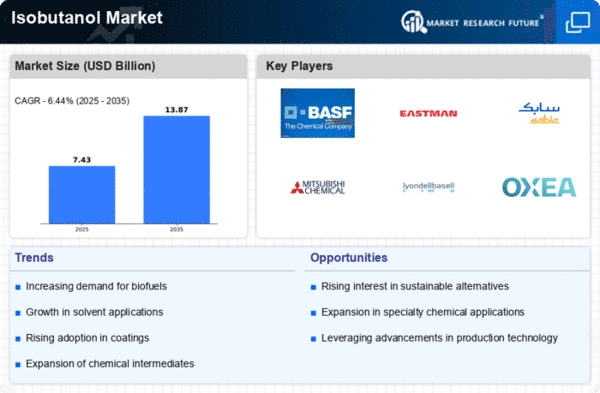
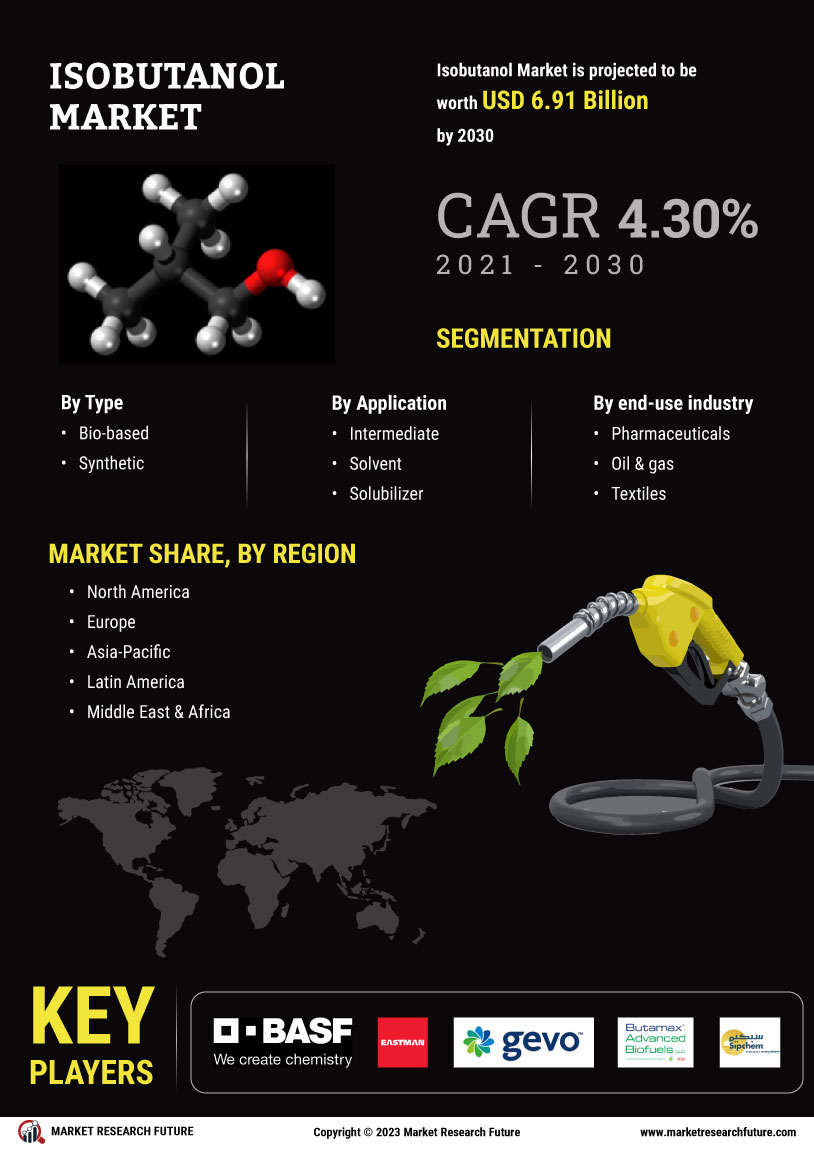
As per MRFR analysis, the Isobutanol Market Size was estimated at 6.98 USD Billion in 2024. The Isobutanol industry is projected to grow from 7.43 USD Billion in 2025 to 13.87 USD Billion by 2035, exhibiting a compound annual growth rate (CAGR) of 6.44 during the forecast period 2025 - 2035.

Key Market Trends & Highlights

The Isobutanol Market is experiencing a dynamic shift towards sustainability and innovation.

  • North America remains the largest market for isobutanol, driven by robust industrial applications.
  • Asia-Pacific is emerging as the fastest-growing region, fueled by increasing demand for biofuels and green chemicals.
  • The solvent segment continues to dominate, while the fuel additive segment is witnessing rapid growth due to technological advancements.
  • Rising demand for biofuels and regulatory support for green chemicals are key drivers propelling market expansion.

Market Size & Forecast

2024 Market Size 6.98 (USD Billion)
2035 Market Size 13.87 (USD Billion)
CAGR (2025 - 2035) 6.44%

Major Players

BASF SE (DE), Eastman Chemical Company (US), SABIC (SA), Mitsubishi Chemical Corporation (JP), LyondellBasell Industries N.V. (NL), Oxea GmbH (DE), Huntsman Corporation (US), Gevo, Inc. (US)

Isobutanol Market Trends

The Isobutanol Market is currently experiencing a dynamic phase characterized by evolving consumer preferences and technological advancements. This market, which serves various applications including solvents, fuels, and chemical intermediates, appears to be influenced by a growing emphasis on sustainable practices. As industries increasingly seek eco-friendly alternatives, the demand for isobutanol, known for its lower environmental impact compared to traditional solvents, seems to be on the rise. Furthermore, the expansion of bio-based isobutanol production methods indicates a shift towards renewable resources, aligning with global sustainability goals. In addition to sustainability, the Isobutanol Market is witnessing innovations in production techniques that enhance efficiency and reduce costs. Companies are exploring advanced fermentation processes and catalytic methods, which may lead to higher yields and improved product quality. This technological evolution could potentially reshape competitive dynamics within the market, as firms that adopt these innovations may gain a significant advantage. Overall, the Isobutanol Market appears poised for growth, driven by a combination of environmental considerations and advancements in production methodologies.

Sustainability Focus

The Isobutanol Market is increasingly influenced by a shift towards sustainable practices. As industries prioritize eco-friendly solutions, the demand for isobutanol, recognized for its reduced environmental footprint, is likely to grow. This trend reflects a broader commitment to sustainability across various sectors.

Technological Advancements

Innovations in production techniques are transforming the Isobutanol Market. Companies are adopting advanced fermentation and catalytic processes, which may enhance efficiency and lower production costs. Such advancements could reshape market dynamics, favoring those who embrace new technologies.

Diverse Applications

The versatility of isobutanol is driving its adoption across multiple industries. From solvents to fuel additives, the range of applications is expanding. This diversification suggests a robust potential for growth, as new uses for isobutanol continue to emerge.

Isobutanol Market Drivers

Market Growth Projections

The Global Isobutanol Market Industry is poised for substantial growth, with projections indicating a rise from 3.47 USD Billion in 2024 to 8.53 USD Billion by 2035. This growth trajectory suggests a compound annual growth rate of 8.52% from 2025 to 2035, reflecting the increasing adoption of isobutanol across various sectors. The market dynamics are influenced by factors such as rising demand for biofuels, expanding applications in chemicals, and regulatory support for green initiatives. These projections highlight the potential for isobutanol to play a pivotal role in the transition towards sustainable industrial practices.

Growing Demand for Biofuels

The increasing emphasis on renewable energy sources is driving the Global Isobutanol Market Industry. Isobutanol Market, being a versatile biofuel, is gaining traction due to its potential to reduce greenhouse gas emissions. In 2024, the market is projected to reach 3.47 USD Billion, reflecting a growing preference for sustainable alternatives in the transportation sector. Governments worldwide are implementing policies to promote biofuels, which further enhances the demand for isobutanol. This trend is expected to continue, with the market potentially expanding as consumers and industries alike seek greener energy solutions.

Expanding Applications in Chemicals

Isobutanol Market is increasingly utilized as a solvent and intermediate in the production of various chemicals, which is propelling the Global Isobutanol Market Industry. Its role in manufacturing paints, coatings, and adhesives is particularly noteworthy, as these sectors are experiencing growth due to rising construction activities globally. The versatility of isobutanol allows it to be integrated into numerous formulations, enhancing product performance. As industries continue to innovate and expand, the demand for isobutanol as a key ingredient is likely to rise, contributing to the market's projected growth to 8.53 USD Billion by 2035.

Rising Demand from Automotive Sector

The automotive industry is a significant driver of the Global Isobutanol Market Industry, as isobutanol is increasingly being used as a fuel additive. Its properties enhance engine performance and reduce emissions, aligning with the industry's shift towards more environmentally friendly solutions. As the global automotive market evolves, the demand for isobutanol is expected to grow, particularly in regions focusing on stringent emission regulations. This trend may contribute to a compound annual growth rate of 8.52% from 2025 to 2035, reflecting the automotive sector's commitment to sustainability and innovation.

Regulatory Support for Green Chemicals

Government regulations promoting the use of green chemicals are significantly impacting the Global Isobutanol Market Industry. Policies aimed at reducing carbon footprints and encouraging the adoption of bio-based products are creating a favorable environment for isobutanol. These regulations often provide incentives for industries to transition towards more sustainable practices, thereby increasing the demand for isobutanol as a renewable alternative. As regulatory frameworks evolve, the market is likely to see a surge in interest and investment, contributing to its growth trajectory and aligning with global sustainability goals.

Technological Advancements in Production

Advancements in production technologies are enhancing the efficiency and cost-effectiveness of isobutanol manufacturing, thereby influencing the Global Isobutanol Market Industry positively. Innovations such as fermentation processes and catalytic conversion methods are being developed to optimize yields and reduce production costs. These technological improvements not only make isobutanol more accessible but also align with the increasing demand for sustainable chemical processes. As production becomes more efficient, the market is expected to benefit from lower prices and increased availability, further driving growth in the coming years.

Market Segment Insights

By Application: Solvent (Largest) vs. Fuel Additive (Fastest-Growing)

The Isobutanol market reveals a diverse distribution among its key application segments, predominantly housing the solvent category which takes the largest share. As industries leverage isobutanol for its efficacy in various industrial operations, the solvent segment has established a strong foothold. Additionally, the fuel additive segment is quickly gaining momentum, particularly with the rising demand for cleaner fuel options and less volatile organic compounds, making it a significant player in the market landscape. Growth trends within the application segment of the Isobutanol market are heavily influenced by evolving regulations aimed at reducing emissions and boosting the use of alternative fuels. The fuel additive segment, in particular, is witnessing dynamic growth driven by consumer preferences shifting towards sustainable and eco-friendly solutions. Meanwhile, the chemical intermediate and plasticizer segments remain essential but are developing at a steadier pace compared to their more aggressive counterparts. It is evident that advancements in production technologies and increased industrial demand will significantly shape the future of these application segments.

Solvent (Dominant) vs. Chemical Intermediate (Emerging)

The solvent application of isobutanol is firmly established as the dominant segment, characterized by its widespread adoption across multiple industries including coatings, adhesives, and personal care products. Its versatile properties enable formulations with high performance and low volatility, making it a preferred choice over traditional solvents. Conversely, the chemical intermediate segment, though emerging, is gaining traction as businesses explore innovative chemical processes that utilize isobutanol. This segment plays a crucial role in the manufacture of various chemicals, particularly in producing high-value additives and specialty chemicals. As more industries look to harness the benefits of isobutanol in their chemical processes, the growth potential for this segment remains significant.

By End Use Industry: Automotive (Largest) vs. Coatings (Fastest-Growing)

In the Isobutanol Market, the distribution among end-use industries reveals that the automotive sector holds the largest market share, leveraging isobutanol as an essential solvent and chemical intermediate in the production of automotive coatings and fuels. The chemical manufacturing and pharmaceutical sectors also represent significant portions of market demand, utilizing isobutanol in various formulations and synthesis processes. The coatings sector, while smaller, shows promising growth trends due to increasing applications in high-performance coatings and eco-friendly solutions. Furthermore, the growth trends within these segments indicate a shift towards sustainability and innovation. The automotive industry continues to expand its use of isobutanol-driven products, driven by the need for enhanced performance and environmental regulations. Coatings, particularly those aimed at reducing volatile organic compounds, are emerging quickly, propelled by growing awareness of environmental impact and regulatory pressures. The pharmaceutical sector remains stable, while the chemical manufacturing segment seeks to innovate, positioning isobutanol as a favorable choice across multiple applications.

Automotive (Dominant) vs. Coatings (Emerging)

In the Isobutanol Market, the automotive segment is characterized by its dominant position, primarily utilizing isobutanol in fuel formulations and as a solvent in paint and coating applications. This industry's robust demand stems from the ongoing evolution towards fuel efficiency and environmentally compliant solutions, maintaining isobutanol's relevance in manufacturing critical products. On the other hand, the coatings segment, while currently emerging, is rapidly gaining traction due to increased focus on sustainability and regulatory compliance. Coatings developed with isobutanol are often designed to be low in volatile organic compounds, a trait that appeals to manufacturers aiming to meet stricter environmental standards. This shift highlights the potential for coatings to carve out a significant market share, particularly as the construction and automotive sectors seek greener solutions.

By Production Method: Fermentation (Largest) vs. Chemical Synthesis (Fastest-Growing)

In the Isobutanol Market, the production methods are notably diverse, with fermentation emerging as the largest segment. It accounts for a significant share due to its sustainable approach and alignment with the growing demand for bio-based chemicals. On the other hand, chemical synthesis holds a notable portion, contributing to stability in the market dynamics. Catalytic process, although smaller in comparison, plays a crucial role in meeting specific performance criteria for industrial applications. The growth trends within the production method segment are increasingly driven by environmental regulations and consumer preferences for sustainable solutions. The fermentation process is bolstered by technological advancements that enhance yield and reduce costs, making it attractive for large-scale production. In contrast, chemical synthesis is becoming the fastest-growing segment, as innovations in catalyst development drive efficiency and lower production costs, attracting new entrants to the market.

Fermentation (Dominant) vs. Catalytic Process (Emerging)

Fermentation stands as the dominant production method in the Isobutanol Market, primarily due to its eco-friendly profile and the ability to convert biomass into valuable products. This method appeals to industries emphasizing sustainability and carbon footprint reduction. In contrast, the catalytic process is regarded as an emerging approach, distinctive for its ability to produce isobutanol from non-renewable resources efficiently. While it may not be as widely adopted as fermentation, the catalytic process is gaining traction thanks to advancements in technology that enhance its viability. Together, these two methods illustrate the dynamic expansion of the Isobutanol Market, catering to varying market needs from sustainability to efficiency.

By Purity Level: Industrial Grade (Largest) vs. High Purity (Fastest-Growing)

In the Isobutanol Market, the purity level segment is primarily dominated by Industrial Grade, which accounts for a significant portion of overall market share due to its extensive use in manufacturing applications. This includes its application in the production of various chemicals, plastics, and as a solvent in numerous industrial processes. High Purity is also gaining traction as it caters to specialized applications that require stringent purity standards, with its share steadily increasing as industries recognize the importance of quality in their operations. The growth trends for the purity level segment are indicative of a shift towards higher purity standards, driven by increasing regulatory requirements and the need for enhanced product performance in specialized applications. High Purity is witnessing rapid growth, attributed to its rising demand in pharmaceuticals, cosmetics, and other sectors where product integrity is critical. As industries continue to prioritize quality, the trend towards higher purity levels is expected to gain momentum in the coming years, further reshaping the market dynamics.

Industrial Grade (Dominant) vs. High Purity (Emerging)

Industrial Grade is recognized for its versatility and wide-ranging applications across various sectors, including solvents, coatings, and fuels. Its lower purity specifications make it suitable for general applications, making it a staple in many manufacturing processes. In contrast, High Purity is characterized by its elevated quality standards, often exceeding 99% purity. This makes it particularly desirable in industries such as pharmaceuticals and food production, where regulatory compliance is critical. The emergence of High Purity is driven by an increasing focus on safety, quality assurance, and performance in applications, positioning it as a crucial segment that complements the more established Industrial Grade, which continues to dominate the market.

Get more detailed insights about Isobutanol Market

Regional Insights

North America : Market Leader in Isobutanol

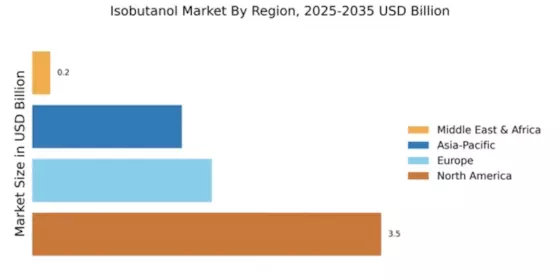
North America is poised to maintain its leadership in the isobutanol market, holding a significant share of 3.5 million metric tons in 2024. The region's growth is driven by increasing demand from the automotive and chemical industries, alongside favorable regulatory frameworks promoting bio-based chemicals. The push for sustainable alternatives is further catalyzing market expansion, with companies investing in innovative production methods to meet environmental standards. The United States stands out as the primary contributor, with major players like BASF SE, Eastman Chemical Company, and Gevo, Inc. leading the charge. The competitive landscape is characterized by strategic partnerships and technological advancements aimed at enhancing production efficiency. As the market evolves, North America is expected to leverage its robust infrastructure and research capabilities to sustain its dominance in The Isobutanol.

Europe : Emerging Market with Potential

Europe is witnessing a burgeoning isobutanol market, with a size of 1.8 million metric tons projected for 2025. The region's growth is fueled by stringent environmental regulations and a strong push towards sustainable chemical solutions. The European Union's Green Deal and various national initiatives are driving investments in bio-based alternatives, making isobutanol a key focus area for manufacturers. Leading countries such as Germany, France, and the Netherlands are at the forefront, with companies like BASF SE and Oxea GmbH actively participating in the market. The competitive landscape is marked by innovation and collaboration among industry players to enhance product offerings. As Europe transitions towards greener solutions, the isobutanol market is expected to flourish, supported by favorable policies and increasing consumer demand for sustainable products.

Asia-Pacific : Rapidly Growing Demand Region

Asia-Pacific is emerging as a significant player in the isobutanol market, with a projected size of 1.5 million metric tons by 2025. The region's growth is driven by rising industrialization, urbanization, and increasing demand for solvents and fuel additives. Countries like China and India are leading the charge, supported by government initiatives aimed at boosting the chemical sector and reducing reliance on fossil fuels. The competitive landscape is evolving, with key players such as Mitsubishi Chemical Corporation and SABIC making substantial investments in production capabilities. The region is witnessing a surge in collaborations and joint ventures aimed at enhancing market presence and technological advancements. As demand continues to rise, Asia-Pacific is set to become a crucial hub for isobutanol production and consumption, aligning with global sustainability goals.

Middle East and Africa : Emerging Market Opportunities

The Middle East and Africa region is gradually emerging in the isobutanol market, with a size of 0.18 million metric tons anticipated by 2025. The growth is primarily driven by increasing industrial activities and a shift towards sustainable chemical solutions. Governments in the region are beginning to recognize the potential of bio-based chemicals, leading to supportive policies and investments in the sector. Countries like South Africa and the UAE are taking steps to enhance their chemical manufacturing capabilities, with local players exploring opportunities in isobutanol production. The competitive landscape is still developing, but there is a growing interest from international companies looking to enter the market. As the region continues to evolve, the isobutanol market is expected to gain traction, supported by rising demand for eco-friendly products and regulatory support.

Key Players and Competitive Insights

The Isobutanol Market exhibits a dynamic competitive landscape characterized by a blend of innovation, strategic partnerships, and regional expansion. Key players such as BASF SE (DE), Eastman Chemical Company (US), and Gevo, Inc. (US) are actively shaping the market through their distinct operational focuses. BASF SE (DE) emphasizes sustainability and innovation, particularly in developing bio-based isobutanol, which aligns with the growing demand for eco-friendly solvents. Meanwhile, Eastman Chemical Company (US) has been focusing on enhancing its production capabilities and expanding its product portfolio to cater to diverse applications, from coatings to personal care products. Gevo, Inc. (US) is strategically positioned in the renewable energy sector, leveraging its technology to produce isobutanol from renewable resources, thus appealing to environmentally conscious consumers. Collectively, these strategies contribute to a competitive environment that prioritizes sustainability and technological advancement.

The business tactics employed by these companies reflect a concerted effort to optimize supply chains and localize manufacturing. The Isobutanol Market appears moderately fragmented, with several players vying for market share. However, the influence of major companies is palpable, as they drive innovation and set industry standards. The collective actions of these key players not only enhance their competitive positioning but also influence market dynamics, pushing smaller entities to adapt or innovate.

In November 2025, BASF SE (DE) announced the launch of a new bio-based isobutanol production facility in Germany, aimed at increasing its capacity to meet the rising demand for sustainable solvents. This strategic move underscores BASF's commitment to sustainability and positions the company as a leader in the bio-based chemicals sector. The facility is expected to enhance supply chain reliability while reducing carbon emissions, aligning with global sustainability goals.

In October 2025, Eastman Chemical Company (US) unveiled a partnership with a leading automotive manufacturer to develop isobutanol-based coatings that enhance vehicle performance and reduce environmental impact. This collaboration not only expands Eastman's market reach but also highlights the growing trend of integrating sustainable materials into traditional industries. The partnership is likely to bolster Eastman's reputation as an innovator in the coatings sector, potentially leading to increased market share.

In September 2025, Gevo, Inc. (US) secured a multi-year supply agreement with a major beverage company to provide isobutanol derived from renewable sources. This agreement is significant as it not only reinforces Gevo's position in the renewable energy market but also demonstrates the increasing demand for sustainable ingredients in consumer products. The strategic alignment with a well-known brand could enhance Gevo's visibility and credibility in the market, potentially attracting further partnerships.

As of December 2025, the Isobutanol Market is witnessing trends that emphasize digitalization, sustainability, and the integration of advanced technologies such as AI. Strategic alliances are becoming increasingly pivotal, as companies seek to leverage each other's strengths to enhance product offerings and operational efficiencies. The competitive landscape is shifting from a focus on price-based competition to one that prioritizes innovation, technological advancements, and supply chain reliability. This evolution suggests that companies that can effectively differentiate themselves through sustainable practices and cutting-edge technology are likely to thrive in the future.

Key Companies in the Isobutanol Market market include

Industry Developments

Due to recent rising demand and supply problems, OQ Chemicals issued a sales control for US oxo intermediates in January 2021. Following the lockout, demand for these chemicals soared across the United States due to increasing demand from the construction and textile industries. The DOW Chemical Company and Johnson Matthey (UK) announced in February 2020 that Guangxi Huayi New Material Company (China), a Chinese company, had chosen LP SELECTOR 10 technology to generate butanol at a new manufacturing site.

The facility, which has a capacity of 300,000 metric tonnes of butanol per year, was developed in Huayi's integrated petrochemical complex in Qinzhou Port, China.

Intended Audience:

    • Isobutanol Market manufacturers
    • Traders and Distributors of isobutanol
    • Production Process Industries
    • Potential Investors
    • Raw Material Suppliers
    • Nationalized Laboratory

Future Outlook

Isobutanol Market Future Outlook

The Isobutanol Market is projected to grow at a 6.44% CAGR from 2024 to 2035, driven by increasing demand in solvents, fuels, and chemical intermediates.

New opportunities lie in:

  • Development of bio-based isobutanol production methods
  • Expansion into emerging markets with high growth potential
  • Investment in advanced isobutanol derivatives for specialty applications

By 2035, the Isobutanol Market is expected to achieve robust growth and diversification.

Market Segmentation

Isobutanol Market Application Outlook

  • Solvent
  • Fuel Additive
  • Chemical Intermediate
  • Plasticizer

Isobutanol Market Purity Level Outlook

  • Industrial Grade
  • Reagent Grade
  • High Purity

Isobutanol Market End Use Industry Outlook

  • Automotive
  • Chemical Manufacturing
  • Pharmaceuticals
  • Coatings

Isobutanol Market Production Method Outlook

  • Fermentation
  • Chemical Synthesis
  • Catalytic Process

Report Scope

MARKET SIZE 20246.98(USD Billion)
MARKET SIZE 20257.43(USD Billion)
MARKET SIZE 203513.87(USD Billion)
COMPOUND ANNUAL GROWTH RATE (CAGR)6.44% (2024 - 2035)
REPORT COVERAGERevenue Forecast, Competitive Landscape, Growth Factors, and Trends
BASE YEAR2024
Market Forecast Period2025 - 2035
Historical Data2019 - 2024
Market Forecast UnitsUSD Billion
Key Companies ProfiledBASF SE (DE), Eastman Chemical Company (US), SABIC (SA), Mitsubishi Chemical Corporation (JP), LyondellBasell Industries N.V. (NL), Oxea GmbH (DE), Huntsman Corporation (US), Gevo, Inc. (US)
Segments CoveredApplication, End Use Industry, Production Method, Purity Level
Key Market OpportunitiesGrowing demand for bio-based solvents and fuels drives innovation in the Isobutanol Market.
Key Market DynamicsRising demand for biofuels drives innovation and competition in the Isobutanol market, influencing production and pricing strategies.
Countries CoveredNorth America, Europe, APAC, South America, MEA

Market Highlights

Author
Anshula Mandaokar
Team Lead - Research

Anshula Mandaokar holds an academic degree in Chemical Engineering and has been contributing to the field for more than 5 years. She has expertise in Market Research and Business Consulting and serves as a Team Lead for a reputed Market Research firm under the Chemicals and Materials domain spectrum. She has worked on multiple projects, generating explicit results in a quick turnaround time. Her understanding of data interpretation justifies her role as a leader.

Leave a Comment

FAQs

What is the forecast period of Isobutanol Market research report?

The forecast period for Isobutanol Market research report is 2025-2035.

Which region will lead the global Isobutanol Market?

Global Isobutanol Market is dominated by APAC region.

Who are the key players in the Isobutanol Market?

BASF SE (Germany), Eastman Chemical Company (U.S.), Gevo (U.S.), Butamax® Advanced Biofuels LLC (U.S.), Sahara PCC (Saudi Arabia), The Dow Chemical Company (U.S.), Mitsubishi Chemical Corporation (Japan), OXEA GmbH (Germany), INEOS (UK), SIBUR (Russia), Lesaffre Advanced Fermentations (France)

Download Free Sample

Kindly complete the form below to receive a free sample of this Report

Compare Licence

×
Features License Type
Single User Multiuser License Enterprise User
Price $4,950 $5,950 $7,250
Maximum User Access Limit 1 User Upto 10 Users Unrestricted Access Throughout the Organization
Free Customization
Direct Access to Analyst
Deliverable Format
Platform Access
Discount on Next Purchase 10% 15% 15%
Printable Versions