Download Free Sample
Kindly complete the form below to receive a free sample of this Report
Italy Oral Anticoagulants Market Research Report By Distribution Channel (Hospital Pharmacies, Retail Pharmacies, Online Pharmacies), By Disease Indication (Atrial Fibrillation, Deep Vein Thrombosis (DVT), Pulmonary Embolism (PE), Heart Attacks) and By Product (Novel Oral Anticoagulant, Warfarin) - Growth & Industry Forecast 2025 To 2035
As per Market Research Future analysis, the Italy Oral Anticoagulants Market size was estimated at 742.8 USD Million in 2024. The Oral Anticoagulants market is projected to grow from 783.73 USD Million in 2025 to 1340.5 USD Million by 2035, exhibiting a compound annual growth rate (CAGR) of 5.5% during the forecast period 2025 - 2035
The Italy oral anticoagulants market is experiencing a transformative shift towards novel therapies and digital integration.
| 2024 Market Size | 742.8 (USD Million) |
| 2035 Market Size | 1340.5 (USD Million) |
| CAGR (2025 - 2035) | 5.51% |
Bristol-Myers Squibb (US), Bayer (DE), Johnson & Johnson (US), Sanofi (FR), Pfizer (US), AstraZeneca (GB), Daiichi Sankyo (JP), Roche (CH), Novartis (CH)
Our Impact
Enabled $4.3B Revenue Impact for Fortune 500 and Leading Multinationals
Partnering with 2000+ Global Organizations Each Year
30K+ Citations by Top-Tier Firms in the Industry
The Italy Oral Anticoagulants Market is currently experiencing notable developments, driven by an increasing prevalence of thromboembolic disorders and a growing awareness of the benefits associated with anticoagulation therapy. In Italy, healthcare professionals are increasingly adopting novel oral anticoagulants due to their favorable safety profiles and ease of use compared to traditional therapies. This shift is further supported by ongoing clinical research and the introduction of innovative formulations that enhance patient compliance. As a result, the market landscape is evolving, with a focus on improving treatment outcomes and reducing the burden of cardiovascular diseases. Moreover, regulatory bodies in Italy are actively promoting the use of oral anticoagulants through updated guidelines and reimbursement policies. This regulatory support is likely to encourage healthcare providers to prescribe these medications more frequently, thereby expanding their market presence. Additionally, the integration of digital health technologies, such as telemedicine and mobile health applications, is facilitating better patient management and adherence to anticoagulation therapy. Overall, the oral anticoagulants market appears poised for growth, driven by advancements in treatment options and supportive healthcare policies.
The oral anticoagulants market is witnessing a significant shift towards the adoption of novel agents. These medications offer advantages such as predictable pharmacokinetics and reduced need for routine monitoring, which enhances patient convenience. As healthcare providers become more familiar with these options, their utilization is likely to increase, potentially leading to improved patient outcomes.
Regulatory bodies in Italy are enhancing the oral anticoagulants market by implementing favorable reimbursement policies. This support encourages healthcare professionals to prescribe these medications, making them more accessible to patients. As a result, the market is expected to expand, with a broader range of patients benefiting from anticoagulation therapy.
The incorporation of digital health technologies is transforming the oral anticoagulants market. Telemedicine and mobile health applications are facilitating better patient engagement and adherence to treatment regimens. This trend may lead to improved management of anticoagulation therapy, ultimately enhancing patient outcomes and satisfaction.
Innovations in pharmaceutical research are propelling the oral anticoagulants market forward in Italy. The development of novel anticoagulants with improved safety profiles and efficacy is attracting attention from healthcare professionals. Recent studies indicate that new agents may offer advantages over traditional therapies, such as reduced bleeding risks and fewer dietary restrictions. As these advancements become available, healthcare providers are likely to adopt them into clinical practice, thereby increasing the overall market size. Furthermore, the Italian regulatory environment appears to be supportive of these innovations, facilitating quicker approvals for new anticoagulant therapies. This dynamic landscape suggests that the oral anticoagulants market will continue to evolve, driven by ongoing research and development efforts.
The increasing prevalence of cardiovascular diseases in Italy is a primary driver for the oral anticoagulants market. According to recent health statistics, cardiovascular diseases account for approximately 35% of all deaths in the country. This alarming trend necessitates effective management strategies, including the use of oral anticoagulants to prevent thromboembolic events. As healthcare providers seek to mitigate risks associated with these conditions, the demand for anticoagulant therapies is expected to rise. Furthermore, the Italian healthcare system is adapting to these challenges by integrating more anticoagulant options into treatment protocols, thereby enhancing patient outcomes. The oral anticoagulants market is likely to benefit from this growing focus on cardiovascular health, as more patients are prescribed these medications to manage their conditions effectively.
Italy's demographic shift towards an aging population significantly influences the oral anticoagulants market. With over 23% of the population aged 65 and older, the demand for anticoagulant therapies is likely to escalate. Older adults are at a higher risk for conditions such as atrial fibrillation and venous thromboembolism, which often require anticoagulation for effective management. The Italian healthcare system is increasingly recognizing the need for tailored treatment options for this demographic, leading to a rise in prescriptions for oral anticoagulants. Additionally, the government is investing in healthcare infrastructure to support the growing needs of the elderly, which may further enhance the accessibility and availability of these medications. This trend suggests a robust growth trajectory for the oral anticoagulants market in the coming years.
The regulatory framework in Italy plays a crucial role in shaping the oral anticoagulants market. Recent initiatives aimed at streamlining the approval process for new medications are likely to enhance market access for innovative anticoagulant therapies. The Italian Medicines Agency (AIFA) has been actively working to ensure that new treatments are evaluated efficiently, which may lead to quicker availability for patients. Additionally, reimbursement policies are evolving to support the inclusion of novel anticoagulants in treatment guidelines, making them more accessible to the population. This supportive regulatory environment suggests a favorable outlook for the oral anticoagulants market, as it encourages the introduction of new therapies that can meet the growing healthcare needs of the Italian population.
There is a notable increase in awareness and education regarding anticoagulation therapy among both healthcare providers and patients in Italy. Campaigns aimed at educating the public about the risks of thromboembolic events and the benefits of anticoagulant therapy are gaining traction. This heightened awareness is likely to lead to more patients seeking treatment options, thereby driving demand in the oral anticoagulants market. Additionally, healthcare professionals are receiving more training on the appropriate use of these medications, which may enhance patient adherence and outcomes. As knowledge about anticoagulation expands, it is anticipated that the market will experience growth, as more individuals are diagnosed and treated effectively.
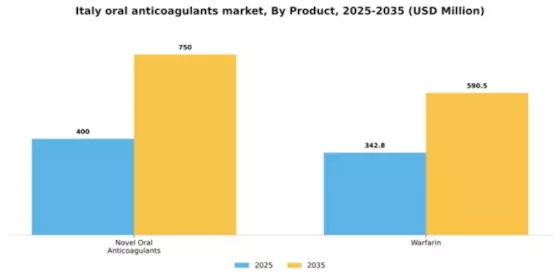
In the Italy oral anticoagulants market, the distribution of market share highlights the dominance of Novel Oral Anticoagulants, capturing a significant portion of the overall usage due to their convenience and effectiveness. In contrast, Warfarin, while historically the standard treatment, is present in a diminishing share of the market as new therapies gain traction and physician preference shifts toward more innovative options. Growth trends in this segment are primarily driven by the increasing prevalence of conditions like atrial fibrillation and venous thromboembolism, which necessitate anticoagulation therapy. Novel Oral Anticoagulants, with their favorable safety profiles and ease of use, are rapidly being adopted in clinical practices, whereas Warfarin is being utilized less frequently, positioning it as an emerging option for specific patient scenarios requiring more careful monitoring and management.
Novel Oral Anticoagulants: Dominant vs. Warfarin: Emerging
Novel Oral Anticoagulants are recognized as the dominant force in the anticoagulant segment, offering advantages such as fixed dosing, no requirement for routine monitoring, and fewer food interactions. Their popularity continues to soar as physicians and patients alike appreciate the convenience they provide. On the other hand, Warfarin, although historically significant, is now seen as an emerging option best suited for individuals with unique clinical needs or contraindications to newer agents. Warfarin requires regular INR monitoring and careful dietary restrictions, making it less favorable in most scenarios. However, it retains a loyal patient base, particularly among those who have been on therapy for long durations, highlighting its continued relevance in the therapy landscape.
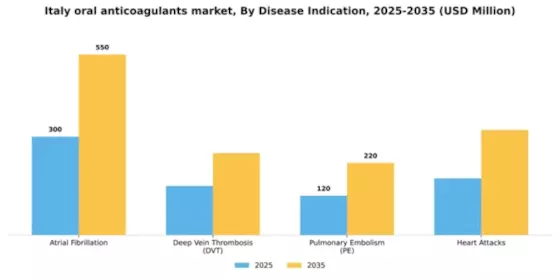
The Italy oral anticoagulants market demonstrates distinct segmentation among disease indications, with Atrial Fibrillation emerging as the largest contributing segment. This condition represents a significant share of the overall market, influenced by an increasing prevalence of cardiovascular diseases and an aging population. Deep Vein Thrombosis (DVT) follows, showcasing a growing interest spurred by heightened awareness and proactive treatment strategies. Market players are increasingly focusing on these indications, reflecting the necessity for effective therapies to cater for patients' needs. In terms of growth trends, Atrial Fibrillation is expected to maintain a steady expansion trajectory due to ongoing advancements in treatment options and patient management. Conversely, DVT is highlighted as the fastest-growing segment, driven by rising incidences and improved diagnostic techniques. Additionally, stakeholders are investing in innovative solutions that emphasize patient outcomes and accessibility, further supporting the market's dynamic growth and sustainability.
Atrial Fibrillation (Dominant) vs. Deep Vein Thrombosis (Emerging)
Atrial Fibrillation remains the dominant segment within the Italy oral anticoagulants market due to its widespread impact on public health. This condition leads to considerable morbidity and necessitates effective anticoagulation management, thus boosting drug demand. Market players have introduced several novel anticoagulants targeting this indication, enhancing treatment options available to healthcare professionals. In contrast, Deep Vein Thrombosis is emerging as a key segment, characterized by a rising incidence linked to factors such as prolonged immobility and post-surgical complications. As awareness grows and screening becomes more prevalent, this segment is likely to witness accelerated uptake of anticoagulant therapies, reflecting the need for improved preventive measures and patient management strategies. Both segments are pivotal in determining the market's overall direction.
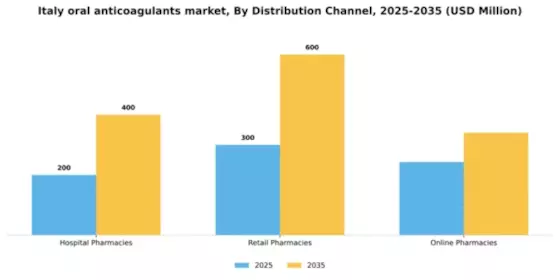
In the Italy oral anticoagulants market, the distribution of market share among Hospital Pharmacies, Retail Pharmacies, and Online Pharmacies reveals a clear hierarchy. Retail Pharmacies dominate the landscape due to their established presence and trust among patients. Hospital Pharmacies hold a significant share as well, largely catering to inpatients and specialized needs. Online Pharmacies are carving out a notable niche, gaining traction among tech-savvy consumers who prefer convenience and swift delivery. The growth trends within this segment highlight a shift towards digitalization, with Online Pharmacies witnessing the fastest expansion. The COVID-19 pandemic has accelerated this trend, as more patients seek remote access to medications. Retail Pharmacies continue to benefit from their broad outreach and familiarity, while Hospital Pharmacies remain vital for serious health cases. Overall, the increasing acceptance of e-commerce is reshaping how these products are distributed.
Retail Pharmacies (Dominant) vs. Online Pharmacies (Emerging)
Retail Pharmacies have secured dominance in the Italy oral anticoagulants market by providing accessible and reliable medication management for a broad consumer base. They are favored for their personal touch and the ability to consult pharmacists directly, which enhances patient adherence to anticoagulation therapy. On the other hand, Online Pharmacies are emerging as a modern solution, especially appealing to younger consumers who prioritize convenience and speed. These online platforms are not only transforming the purchasing experience but also leveraging technology to offer tailored solutions, such as automatic refills and home delivery services. As health and safety concerns evolve, the competition between Retail and Online Pharmacies will shape the future landscape of the market.
Get more detailed insights about Italy Oral Anticoagulants Market Request Free Sample
The oral anticoagulants market in Italy is characterized by a dynamic competitive landscape, driven by increasing prevalence of thromboembolic disorders and a growing aging population. Key players such as Bristol-Myers Squibb (US), Bayer (DE), and Johnson & Johnson (US) are strategically positioned to leverage innovation and expand their market share. Bristol-Myers Squibb (US) focuses on enhancing its product portfolio through research and development, while Bayer (DE) emphasizes partnerships to bolster its distribution channels. Johnson & Johnson (US) appears to be investing in digital transformation initiatives to improve patient engagement and adherence, collectively shaping a competitive environment that prioritizes innovation and patient-centric solutions.The market structure is moderately fragmented, with several players vying for dominance. Key business tactics include localizing manufacturing to reduce costs and optimize supply chains, which is particularly relevant in the context of rising raw material prices. The collective influence of these major companies fosters a competitive atmosphere where agility and responsiveness to market demands are crucial for success.
In October Bayer (DE) announced a strategic partnership with a leading telehealth provider to enhance remote patient monitoring for anticoagulant therapy. This initiative is significant as it aligns with the growing trend of digital health solutions, potentially improving patient outcomes and adherence to treatment regimens. By integrating telehealth services, Bayer (DE) may strengthen its market position and enhance its value proposition in the oral anticoagulants segment.
In September Bristol-Myers Squibb (US) launched a new clinical trial aimed at evaluating the long-term safety and efficacy of its flagship anticoagulant. This move underscores the company's commitment to innovation and reinforces its competitive edge by potentially expanding the therapeutic indications of its product. The results of this trial could significantly influence prescribing patterns and market dynamics in the coming years.
In August Johnson & Johnson (US) unveiled a new digital platform designed to facilitate patient education and support for those on anticoagulant therapy. This strategic action reflects the company's focus on enhancing patient engagement and adherence, which are critical factors in the successful management of anticoagulant therapies. By leveraging technology, Johnson & Johnson (US) may differentiate itself in a crowded market, appealing to both healthcare providers and patients.
As of November current trends in the oral anticoagulants market include a pronounced shift towards digitalization, sustainability, and the integration of artificial intelligence in drug development and patient management. Strategic alliances are increasingly shaping the competitive landscape, enabling companies to pool resources and expertise. Looking ahead, competitive differentiation is likely to evolve from traditional price-based competition to a focus on innovation, technological advancements, and supply chain reliability, as companies strive to meet the complex needs of patients and healthcare systems.




Recent developments in the Italy Oral Anticoagulants Market highlight significant growth and activity among major players. Companies like Teva, Bristol-Myers Squibb, and Pfizer have been actively launching new products to enhance treatment options for patients with cardiovascular issues. In July 2023, Bayer announced an expansion of its marketing efforts for its next-generation oral anticoagulant, focusing on improving patient adherence in Italy. Furthermore, in June 2023, Roche collaborated with Genentech to advance research initiatives for innovative anticoagulant therapies.
Notably, in August 2023, Merck Sharp & Dohme successfully acquired a smaller biotech firm specializing in anticoagulation therapies, a move aimed at enriching its product pipeline.
The market valuation of oral anticoagulants in Italy has been positively impacted by these advancements, with reports suggesting a growth rate of over 6% annually due to an increasing prevalence of atrial fibrillation and thromboembolic disorders. Over the past few years, major events such as new drug approvals and partnerships have catalyzed an evolving competitive landscape for companies like Johnson and Johnson, Boehringer Ingelheim, AstraZeneca, and Novartis, contributing to an increasingly dynamic and investment-driven sector in Italy.
The Oral Anticoagulants Market is projected to grow at 5.51% CAGR from 2025 to 2035, driven by increasing cardiovascular diseases, aging population, and advancements in drug formulations.
New opportunities lie in:
By 2035, the market is expected to achieve substantial growth, driven by innovation and strategic investments.
| MARKET SIZE 2024 | 742.8(USD Million) |
| MARKET SIZE 2025 | 783.73(USD Million) |
| MARKET SIZE 2035 | 1340.5(USD Million) |
| COMPOUND ANNUAL GROWTH RATE (CAGR) | 5.51% (2025 - 2035) |
| REPORT COVERAGE | Revenue Forecast, Competitive Landscape, Growth Factors, and Trends |
| BASE YEAR | 2024 |
| Market Forecast Period | 2025 - 2035 |
| Historical Data | 2019 - 2024 |
| Market Forecast Units | USD Million |
| Key Companies Profiled | Bristol-Myers Squibb (US), Bayer (DE), Johnson & Johnson (US), Sanofi (FR), Pfizer (US), AstraZeneca (GB), Daiichi Sankyo (JP), Roche (CH), Novartis (CH) |
| Segments Covered | Product, Disease Indication, Distribution Channel |
| Key Market Opportunities | Emerging digital health technologies enhance patient adherence in the oral anticoagulants market. |
| Key Market Dynamics | Rising demand for novel oral anticoagulants driven by regulatory support and evolving patient treatment preferences. |
| Countries Covered | Italy |
The oral anticoagulants market in Italy was valued at 742.8 $ Million in 2024.
The market is projected to reach 1340.5 $ Million by 2035.
The expected CAGR for the market during 2025 - 2035 is 5.51 %.
In 2024, the Novel Oral Anticoagulants segment had a valuation of 400.0 $ Million.
The Warfarin segment was valued at 342.8 $ Million in 2024.
Key disease indications include Atrial Fibrillation, Deep Vein Thrombosis (DVT), Pulmonary Embolism (PE), and Heart Attacks.
Atrial Fibrillation had the highest market valuation at 300.0 $ Million in 2024.
Retail Pharmacies, valued at 300.0 $ Million in 2024, are expected to show significant growth.
Key players include Bristol-Myers Squibb, Bayer, Johnson & Johnson, Sanofi, Pfizer, AstraZeneca, Daiichi Sankyo, Roche, and Novartis.
The market is expected to grow steadily, reaching 1340.5 $ Million by 2035, indicating a robust growth trend.


Kindly complete the form below to receive a free sample of this Report

“This is really good guys. Excellent work on a tight deadline. I will continue to use you going forward and recommend you to others. Nice job”


“Thanks. It’s been a pleasure working with you, please use me as reference with any other Intel employees.”


“Thanks for sending the report it gives us a good global view of the Betaïne market.”


“Thank you, this will be very helpful for OQS.”


“We found the report very insightful! we found your research firm very helpful. I'm sending this email to secure our future business.”


“I am very pleased with how market segments have been defined in a relevant way for my purposes (such as "Portable Freezers & refrigerators" and "last-mile"). In general the report is well structured. Thanks very much for your efforts.”


“I have been reading the first document or the study, ,the Global HVAC and FP market report 2021 till 2026. Must say, good info! I have not gone in depth at all parts, but got a good indication of the data inside!”


“We got the report in time, we really thank you for your support in this process. I also thank to all of your team as they did a great job.”


“The Automotive 48V ECU Components Procurement Intelligence Study” was a complex project, but the Market Research Future (MRFR) team handled it with quality, agility, and customer-centricity. They delivered all requested data on time and within the agreed scope. The team, including Shubhendra Anand and Rahul Gotadki, was always readily available to clarify questions and swiftly implement necessary adjustments, driving the project to a successful conclusion within a very demanding timeframe.
I would also like to specifically commend Akshay Agarwal for his responsiveness and support at every stage—from our initial inquiry on May 6th through to final delivery on June 18th. His dedication made the entire process seamless.”



