×
Request Free Sample ×

Kindly complete the form below to receive a free sample of this Report

* Please use a valid business email

Leading companies partner with us for data-driven Insights

clients tt-cursor
Hero Background

Italy Vaccine Technologies Market

ID: MRFR/Pharma/50288-HCR
200 Pages
Rahul Gotadki
October 2025

Italy Vaccine Technologies Market Research Report By Type (Recombinant, Conjugate, Subunit, Inactivated, Live Attenuated, Toxoid), By Route of Administration (Parenteral, Oral), By Disease Indication (Viral Diseases, Bacterial Diseases), By Age Group (Pediatric, Adults) andBy Distribution Channel (Hospital & Retail Pharmacies, Government Suppliers, Others)- Forecast to 2035

Share:
Download PDF ×

We do not share your information with anyone. However, we may send you emails based on your report interest from time to time. You may contact us at any time to opt-out.

Italy Vaccine Technologies Market Infographic
Purchase Options

Italy Vaccine Technologies Market Summary

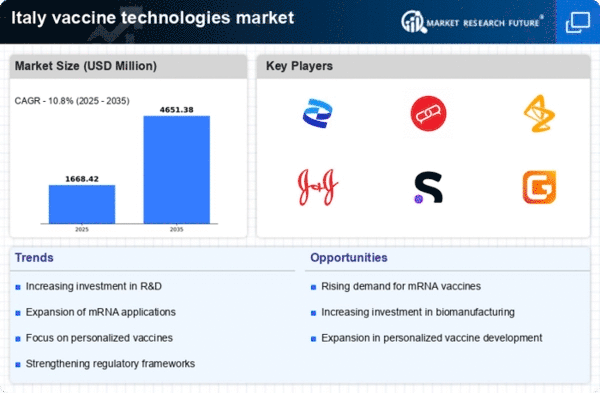
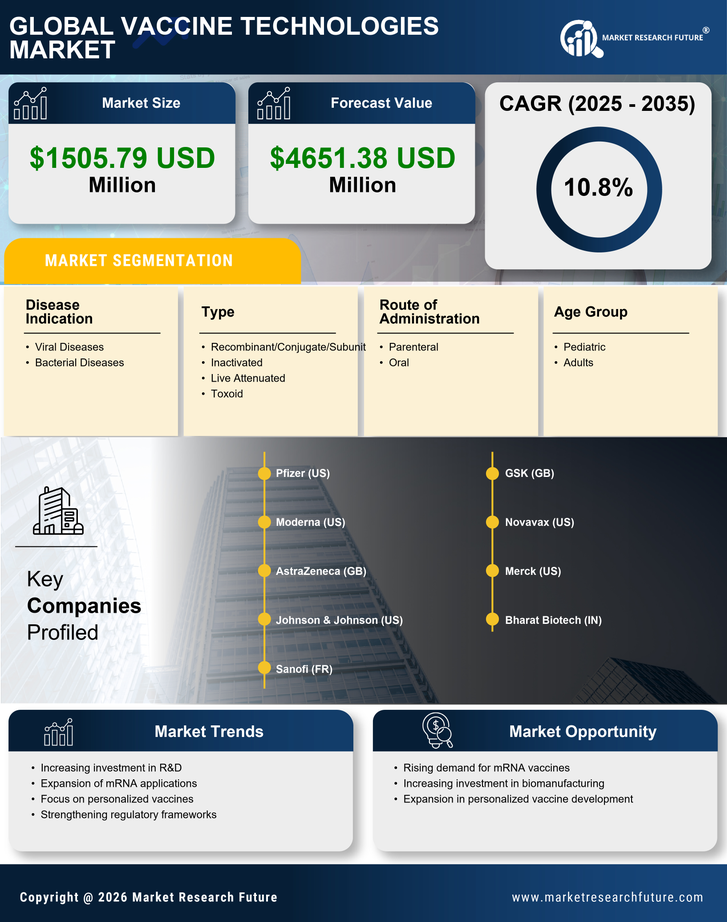
As per MRFR analysis, the Italy vaccine technologies market size was estimated at 1505.79 USD Million in 2024. The Italy vaccine technologies market is projected to grow from 1668.42 USD Million in 2025 to 4651.38 USD Million by 2035, exhibiting a compound annual growth rate (CAGR) of 10.8% during the forecast period 2025 - 2035.

Key Market Trends & Highlights

The Italy vaccine technologies market is experiencing dynamic growth driven by innovative technologies and increasing healthcare demands.

  • The emergence of mRNA technologies is reshaping the landscape of vaccine development in Italy.
  • Public-private partnerships are becoming more prevalent, enhancing collaboration in vaccine research and distribution.
  • There is a growing focus on vaccine accessibility to ensure equitable healthcare for all populations.
  • Rising demand for preventive healthcare and government initiatives are key drivers propelling market expansion.

Market Size & Forecast

2024 Market Size 1505.79 (USD Million)
2035 Market Size 4651.38 (USD Million)
CAGR (2025 - 2035) 10.8%

Major Players

Pfizer (US), Moderna (US), AstraZeneca (GB), Johnson & Johnson (US), Sanofi (FR), GSK (GB), Novavax (US), Merck (US), Bharat Biotech (IN)

Italy Vaccine Technologies Market Trends

the market is currently experiencing notable advancements, driven by a combination of innovative research and increasing public health initiatives. Italy, with its robust healthcare infrastructure, is witnessing a surge in the development and deployment of various vaccine technologies. This includes mRNA platforms, viral vector vaccines, and protein subunit vaccines, which are being explored to enhance immunization strategies. The Italian government, alongside private entities, is investing in research and development to bolster vaccine efficacy and accessibility. Furthermore, collaborations between academic institutions and pharmaceutical companies are fostering a conducive environment for innovation in this sector. In addition to technological advancements, the regulatory landscape in Italy is evolving to support the rapid approval and distribution of new vaccines. The Italian Medicines Agency (AIFA) plays a crucial role in ensuring that vaccines meet safety and efficacy standards. Public awareness campaigns are also being implemented to educate citizens about the importance of vaccination, thereby increasing uptake rates. As the vaccine technologies market continues to grow, it is likely to contribute significantly to public health outcomes in Italy, addressing both current and future health challenges. The focus on sustainability and ethical considerations in vaccine production is also becoming increasingly relevant, reflecting a broader trend towards responsible healthcare practices.

Emergence of mRNA Technologies

The rise of mRNA technologies is transforming the vaccine landscape, offering rapid development and adaptability. This approach allows for swift responses to emerging infectious diseases, making it a focal point in Italy's vaccine strategies. Research institutions are actively exploring mRNA applications beyond infectious diseases, potentially expanding the scope of immunization.

Increased Public-Private Partnerships

Collaborations between public entities and private companies are becoming more prevalent in the vaccine technologies market. These partnerships aim to enhance research capabilities and streamline the development process. Italy's government is encouraging such alliances to foster innovation and ensure timely access to vaccines for its population.

Focus on Vaccine Accessibility

Efforts to improve vaccine accessibility are gaining momentum, with initiatives aimed at reaching underserved populations. The Italian government is implementing strategies to ensure equitable distribution of vaccines, addressing barriers that may hinder access. This focus on inclusivity is essential for achieving comprehensive immunization coverage.

Italy Vaccine Technologies Market Drivers

Government Initiatives and Funding

Government initiatives play a crucial role in shaping the vaccine technologies market in Italy. The Italian Ministry of Health has launched several programs aimed at enhancing vaccine research and development. For instance, the National Vaccine Plan allocates approximately €300 million annually to support innovative vaccine projects. This funding is instrumental in fostering collaboration between public institutions and private enterprises, thereby accelerating the development of new vaccine technologies. Furthermore, the government is actively promoting public awareness campaigns to increase vaccination uptake, which is expected to further stimulate market growth. These initiatives not only bolster the vaccine technologies market but also ensure that Italy remains at the forefront of global vaccine innovation.

Growing Investment in Biotech Sector

The surge in investment within the biotech sector is a significant driver of the vaccine technologies market. In Italy, venture capital funding for biotech firms has seen a remarkable increase, with investments reaching €1 billion in 2025. This influx of capital is facilitating the development of cutting-edge vaccine technologies, as startups and established companies alike seek to innovate. The presence of numerous biotech hubs across the country, particularly in regions like Lombardy and Emilia-Romagna, is fostering a collaborative environment that encourages research and development. As these companies advance their vaccine technologies, the market is likely to experience substantial growth, driven by both domestic and international demand for innovative vaccine solutions.

Public Health Policies and Regulations

Public health policies and regulations are pivotal in shaping the vaccine technologies market. In Italy, stringent regulatory frameworks ensure the safety and efficacy of vaccines, which fosters public trust and encourages vaccination. The Italian Medicines Agency (AIFA) plays a critical role in overseeing vaccine approvals, ensuring that only the most effective products reach the market. Recent policy shifts have also aimed at streamlining the approval process for new vaccine technologies, potentially reducing the time required for market entry. This regulatory environment not only enhances the credibility of the vaccine technologies market but also encourages investment and innovation, as companies are more likely to engage in research and development when they are assured of a supportive regulatory landscape.

Rising Demand for Preventive Healthcare

The increasing awareness of preventive healthcare in Italy is driving the vaccine technologies market. As the population becomes more health-conscious, there is a notable shift towards vaccination as a primary means of disease prevention. This trend is reflected in the growing vaccination rates, which have reached approximately 85% for routine immunizations. The Italian government has also emphasized the importance of vaccination in public health policies, allocating around €500 million annually to support vaccine development and distribution. This financial commitment indicates a robust market environment for vaccine technologies, as stakeholders recognize the potential for innovation and growth in this sector. Furthermore, the rising incidence of vaccine-preventable diseases underscores the necessity for advanced vaccine technologies, thereby propelling market expansion in Italy.

Technological Advancements in Vaccine Development

Innovations in vaccine development technologies are significantly influencing the vaccine technologies market. The advent of novel platforms, such as viral vector and protein subunit vaccines, has enhanced the efficacy and safety profiles of vaccines. In Italy, research institutions and biotech companies are increasingly investing in these advanced technologies, with funding exceeding €200 million in recent years. This investment is likely to yield new vaccine candidates that can address emerging infectious diseases more effectively. Additionally, the integration of artificial intelligence and machine learning in vaccine research is streamlining the development process, potentially reducing time-to-market for new vaccines. As these technologies mature, they are expected to reshape the landscape of the vaccine technologies market, offering more robust solutions to public health challenges.

Market Segment Insights

Vaccine Technologies Market Type Insights

The Italy Vaccine Technologies Market has shown substantial growth, driven by the increasing demand for effective vaccination against various infectious diseases. The Type segment of this market is distinguished by several categories, including Recombinant, Conjugate, Subunit, Inactivated, Live Attenuated, and Toxoid vaccines, each offering unique benefits and applications. Recombinant vaccines are gaining traction due to their ability to generate robust immune responses without live pathogens, making them safer alternatives. Conjugate vaccines play a crucial role in pediatric medicine, particularly in combating bacterial infections that significantly impact children under five.

Subunit vaccines, which include only the essential antigens, present an appealing option for developing targeted immunity with reduced side effects. Inactivated vaccines are instrumental in producing immunity without the risk of disease, making them a cornerstone in national immunization programs. Meanwhile, Live Attenuated vaccines continue to be significant as they provide long-lasting immunity with minimal doses. Toxoid vaccines remain essential in preventing tetanus and diphtheria, showcasing their importance in public health initiatives. 

This segmentation highlights the diverse strategies utilized in vaccine development, addressing various viral and bacterial pathogens that pose risks to the Italian population.As Italy navigates post-pandemic challenges, advancements in vaccine technologies become pivotal, underscoring the need for ongoing Research and Development to enhance efficacy and accessibility. 

The diverse Type categorizations within the Italy Vaccine Technologies Market represent not only a broad strategic foundation for addressing public health challenges but also reflect the increasing innovation within vaccine platforms to enhance healthcare outcomes in Italy. With supportive government policies and robust healthcare frameworks, opportunities in these segments are likely to expand significantly as the country aims to improve vaccination coverage rates and manage emerging infectious disease threats.

Source: Primary Research, Secondary Research, Market Research Future Database and Analyst Review

Vaccine Technologies Market Route of Administration Insights

The Italy Vaccine Technologies Market, particularly in the Route of Administration segment, plays a crucial role in the delivery and efficacy of vaccines. The market encompasses different modes of administration, with parenteral and oral methods being prominent. Parenteral administration, which includes injections, remains significant due to its ability to ensure rapid immune response and higher bioavailability. 

This method is often preferred for vaccines requiring stringent efficacy, particularly in infectious disease control. Oral delivery, though less common for a range of vaccines, offers advantages in terms of ease of administration and public acceptance, making it an important alternative in specific scenarios.With Italy’s robust public health initiatives, the demand for innovative vaccine delivery systems continues to grow, reflecting increasing investments in research and development to enhance vaccination strategies. 

Factors such as public health awareness, government policies, and advancements in adjuvants contribute to the expansion of this market segment, indicating strong potential for future growth and diversification within Italy's healthcare landscape. The Italy Vaccine Technologies Market patterns show a noticeable trend towards optimizing both routes of administration to cater to varying patient needs and enhance overall vaccine uptake.

Vaccine Technologies Market Disease Indication Insights

The Disease Indication segment in the Italy Vaccine Technologies Market remains a critical focus, reflecting the rising need for effective vaccines tailored to combat various illnesses. Within this segment, the attention on Viral Diseases has intensified, driven by the increasing incidence of viral outbreaks and the urgent need for vaccinations against prevalent viruses. Italy's healthcare systems emphasize rapid Research and Development for innovative solutions in this space, ensuring that residents have access to advanced vaccine options. 

Bacterial Diseases also play a substantial role in shaping this market, especially with the growing prevalence of antibiotic resistance and the documented cases of serious bacterial infections.The Italian National Health Service supports initiatives aimed at improving vaccination rates as a preventive strategy against these diseases, illustrating the importance of such interventions. The Vaccine Technologies Market segmentation showcases significant activity and investment, aiming to enhance public health outcomes and ensure that Italy remains at the forefront of vaccine innovation in response to evolving health challenges.

Vaccine Technologies Market Age Group Insights

The Age Group segmentation within the Italy Vaccine Technologies Market highlights the critical distinctions between Pediatric and Adult populations. This market segment is crucial for understanding vaccination needs and trends. In Italy, the pediatric population often requires vaccines that are tailored to their specific developmental stages, leading to ongoing Research and Development efforts in this area. This segment typically experiences consistent demand due to government initiatives promoting childhood immunization, which is crucial for public health standards and disease prevention.

On the other hand, the adult segment is becoming increasingly significant, with a growing focus on vaccines for adults, especially in the wake of recent global health challenges. Adults often seek vaccines to maintain immunity against various diseases, which highlights a shift in public health strategies. This increased awareness and demand for adult immunization also contribute to the overall growth of the Italy Vaccine Technologies Market.

Nevertheless, challenges persist, such as vaccine hesitancy among certain demographics, which could impact overall market potential and growth trajectory.Hence, understanding these age-specific dynamics is vital for stakeholders aiming to navigate and strategically invest in the Italy Vaccine Technologies Market.

Vaccine Technologies Market Distribution Channel Insights

The Distribution Channel segment of the Italy Vaccine Technologies Market plays a crucial role in the accessibility and availability of vaccines across the region. Key channels include Hospital and Retail Pharmacies, which significantly enhance the reach to various population segments, ensuring timely vaccination. Government Suppliers are pivotal in facilitating vaccine distribution, particularly during public health emergencies, helping to bolster national health initiatives. 

The increasing focus on immunization programs in Italy, alongside a well-structured healthcare system, fosters a conducive environment for efficient distribution.Additionally, the growing trend toward collaboration among manufacturers and distributors supports the enhancement of vaccine logistics and supply chain management. With Government Suppliers dominating the market due to their crucial involvement in national vaccine strategies, the distribution landscape is poised for significant evolution, driven by advancements in technology and regulatory frameworks. 

As a result, the Italy Vaccine Technologies Market is adapting to changing healthcare needs while positioning itself for sustained growth in the coming years.The ongoing pandemic has only accelerated these trends, heightening the importance of effective distribution channels in safeguarding public health.

Get more detailed insights about Italy Vaccine Technologies Market

Key Players and Competitive Insights

The vaccine technologies market in Italy is characterized by a dynamic competitive landscape, driven by innovation, strategic partnerships, and a focus on regional expansion. Major players such as Pfizer (US), Moderna (US), and AstraZeneca (GB) are at the forefront, each employing distinct strategies to enhance their market presence. Pfizer (US) continues to leverage its extensive research capabilities, focusing on mRNA technology and expanding its portfolio through collaborations with local biotech firms. Meanwhile, Moderna (US) emphasizes its commitment to innovation, particularly in developing next-generation vaccines, which positions it favorably in a market that increasingly values cutting-edge solutions. AstraZeneca (GB), on the other hand, has been actively pursuing partnerships with European health authorities to bolster its distribution networks, thereby enhancing its operational efficiency and market reach.

The business tactics employed by these companies reflect a concerted effort to localize manufacturing and optimize supply chains, which are crucial in a moderately fragmented market. This competitive structure allows for a diverse range of offerings, yet the influence of key players remains substantial. The collective strategies of these companies not only shape their individual trajectories but also contribute to a more resilient and responsive market environment.

In October 2025, Pfizer (US) announced a strategic partnership with an Italian biotech firm to co-develop a new vaccine targeting emerging infectious diseases. This collaboration is significant as it underscores Pfizer's commitment to localizing its operations and enhancing its responsiveness to regional health needs. Such partnerships are likely to strengthen Pfizer's foothold in Italy, allowing for more agile production and distribution capabilities.

In September 2025, Moderna (US) unveiled plans to establish a new manufacturing facility in Italy, aimed at increasing its production capacity for mRNA vaccines. This move is indicative of Moderna's strategy to not only expand its operational footprint but also to ensure a more robust supply chain within Europe. The establishment of this facility is expected to enhance the company's ability to meet growing demand while also fostering local employment opportunities.

In August 2025, AstraZeneca (GB) entered into a collaboration with the Italian government to enhance vaccine accessibility in underserved regions. This initiative reflects AstraZeneca's focus on social responsibility and its strategic aim to improve public health outcomes. By aligning its operations with governmental health objectives, AstraZeneca is likely to bolster its reputation and strengthen its market position in Italy.

As of November 2025, the competitive trends in the vaccine technologies market are increasingly defined by digitalization, sustainability, and the integration of artificial intelligence. Strategic alliances are becoming more prevalent, as companies recognize the value of collaboration in navigating complex market dynamics. Looking ahead, it appears that competitive differentiation will evolve, shifting from traditional price-based competition to a focus on innovation, technological advancements, and supply chain reliability. This transition may ultimately redefine the landscape, fostering a more sustainable and responsive vaccine ecosystem.

Key Companies in the Italy Vaccine Technologies Market market include

Industry Developments

In recent months, the Italy Vaccine Technologies Market has experienced significant developments. Notably, GlaxoSmithKline and Sanofi have advanced their collaborative efforts in developing a COVID-19 vaccine, an endeavor that has generated considerable interest within the sector. In October 2023, Moderna expanded its manufacturing capabilities in Italy, aiming to bolster local production of mRNA vaccines, reflecting a trend towards enhancing domestic vaccine supply chains. 

Additionally, Bayer announced a partnership with Italian health institutes to expedite the clinical trials of its dengue vaccine, marking an important step in vector-borne disease prevention. Regarding mergers and acquisitions, in September 2023, AstraZeneca completed its acquisition of a minority stake in a local biotech firm focused on rare diseases, fostering innovation within Italy. 

The market valuation for companies such as Pfizer and Johnson & Johnson has seen steady growth, driven by an increase in vaccine distribution agreements and government investments in healthcare infrastructure. Over the past two years, initiatives to increase vaccination coverage in response to emerging infectious diseases have been prioritized by the Italian government, underscoring the vital importance of vaccine technologies in public health strategy.

Future Outlook

Italy Vaccine Technologies Market Future Outlook

The Vaccine Technologies Market in Italy is projected to grow at a 10.8% CAGR from 2024 to 2035, driven by innovation, increased healthcare investments, and rising demand for preventive healthcare solutions.

New opportunities lie in:

  • Development of mRNA vaccine platforms for rapid response to emerging pathogens.
  • Expansion of telehealth services for vaccine consultations and follow-ups.
  • Investment in automated vaccine production facilities to enhance efficiency and scalability.

By 2035, the market is expected to be robust, driven by technological advancements and increased healthcare focus.

Market Segmentation

Italy Vaccine Technologies Market Type Outlook

  • Recombinant/Conjugate/Subunit
  • Inactivated
  • Live Attenuated
  • Toxoid

Italy Vaccine Technologies Market Age Group Outlook

  • Pediatric
  • Adults

Italy Vaccine Technologies Market Disease Indication Outlook

  • Viral Diseases
  • Bacterial Diseases

Italy Vaccine Technologies Market Distribution Channel Outlook

  • Hospital & Retail Pharmacies
  • Government Suppliers
  • Others

Italy Vaccine Technologies Market Route of Administration Outlook

  • Parenteral
  • Oral

Report Scope

MARKET SIZE 2024 1505.79(USD Million)
MARKET SIZE 2025 1668.42(USD Million)
MARKET SIZE 2035 4651.38(USD Million)
COMPOUND ANNUAL GROWTH RATE (CAGR) 10.8% (2024 - 2035)
REPORT COVERAGE Revenue Forecast, Competitive Landscape, Growth Factors, and Trends
BASE YEAR 2024
Market Forecast Period 2025 - 2035
Historical Data 2019 - 2024
Market Forecast Units USD Million
Key Companies Profiled Pfizer (US), Moderna (US), AstraZeneca (GB), Johnson & Johnson (US), Sanofi (FR), GSK (GB), Novavax (US), Merck (US), Bharat Biotech (IN)
Segments Covered Type, Route of Administration, Disease Indication, Age Group, Distribution Channel
Key Market Opportunities Advancements in mRNA technology enhance vaccine efficacy and adaptability in the vaccine technologies market.
Key Market Dynamics Rising demand for innovative vaccine technologies driven by regulatory support and competitive advancements in Italy's healthcare sector.
Countries Covered Italy

Leave a Comment

FAQs

What is the expected market size of the Italy Vaccine Technologies Market in 2024?

The Italy Vaccine Technologies Market is expected to be valued at 2.5 USD Billion in 2024.

How much is the Italy Vaccine Technologies Market projected to grow by 2035?

By 2035, the market is projected to grow to 7.0 USD Billion.

What is the expected compound annual growth rate (CAGR) for the Italy Vaccine Technologies Market between 2025 and 2035?

The expected CAGR for the Italy Vaccine Technologies Market from 2025 to 2035 is 9.812 %.

Which segments are dominating the Italy Vaccine Technologies Market?

The market is primarily divided into Recombinant, Conjugate, Subunit, Inactivated, and Live Attenuated vaccine technologies.

What will be the market value of Recombinant vaccines in 2035?

The market value of Recombinant vaccines is expected to reach 2.8 USD Billion by 2035.

Which companies are the key players in the Italy Vaccine Technologies Market?

Key players include GlaxoSmithKline, Bayer, Novartis, AstraZeneca, Moderna, and Pfizer among others.

What is the expected market value of Inactivated vaccines in 2035?

Inactivated vaccines are projected to reach a market value of 1.2 USD Billion by 2035.

What are the major growth drivers for the Italy Vaccine Technologies Market?

Major growth drivers include increasing vaccine demand and advancements in vaccine technology.

How do Conjugate vaccines' market values project from 2024 to 2035?

Conjugate vaccines are anticipated to grow from 0.6 USD Billion in 2024 to 1.8 USD Billion by 2035.

What are the challenges facing the Italy Vaccine Technologies Market?

Challenges include regulatory hurdles and competition among leading vaccine manufacturers.

Download Free Sample

Kindly complete the form below to receive a free sample of this Report

Compare Licence

×
Features License Type
Single User Multiuser License Enterprise User
Price $4,950 $5,950 $7,250
Maximum User Access Limit 1 User Upto 10 Users Unrestricted Access Throughout the Organization
Free Customization
Direct Access to Analyst
Deliverable Format
Platform Access
Discount on Next Purchase 10% 15% 15%
Printable Versions