×
Request Free Sample ×

Kindly complete the form below to receive a free sample of this Report

* Please use a valid business email

Leading companies partner with us for data-driven Insights

clients tt-cursor
Hero Background

Japan Automotive Logistics Market

ID: MRFR/PCM/54155-HCR
111 Pages
Snehal Singh
October 2025

Japan Automotive Logistics Market Research Report By Service Type (Transportation, Warehousing, Inventory Management, Freight Forwarding), By Logistics Mode (Road, Rail, Air, Sea), By Vehicle Type (Passenger Cars, Commercial Vehicles, Electric Vehicles, Hybrid Vehicles) and By Supply Chain Type (Inbound Logistics, Outbound Logistics, Third Party Logistics)- Forecast to 2035

Share:
Download PDF ×

We do not share your information with anyone. However, we may send you emails based on your report interest from time to time. You may contact us at any time to opt-out.

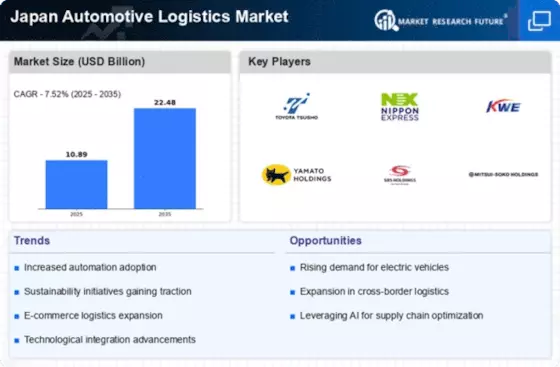
Japan Automotive Logistics Market Infographic
Purchase Options

Japan Automotive Logistics Market Summary

As per analysis, the Japan automotive logistics market is projected to grow from USD 10.97 Billion in 2025 to USD 24.35 Billion by 2035, exhibiting a compound annual growth rate (CAGR) of 8.3% during the forecast period (2025 - 2035).

Key Market Trends & Highlights

The Japan automotive logistics market is experiencing a transformative shift towards sustainability and technological integration.

  • The road segment remains the largest in the automotive logistics market, driven by its extensive infrastructure and capacity.
  • Rail logistics is emerging as the fastest-growing segment, attributed to its efficiency and lower environmental impact.
  • Inbound logistics continues to dominate, while third-party logistics is rapidly expanding due to increasing outsourcing trends.
  • Key market drivers include the growth of e-commerce and consumer preferences for electric vehicles, which are reshaping logistics strategies.

Market Size & Forecast

2024 Market Size 10.13 (USD Billion)
2035 Market Size 24.35 (USD Billion)
CAGR (2025 - 2035) 8.3%

Major Players

Nippon Express (JP), Kintetsu World Express (JP), Yamato Holdings (JP), SBS Holdings (JP), Kawasaki Kisen Kaisha (JP), Mitsui O.S.K. Lines (JP), Nissan Motor Co. (JP), Toyota Tsusho Corporation (JP), Honda Logistics (JP)

Japan Automotive Logistics Market Trends

The Japan automotive logistics market is characterized by its intricate network of transportation and supply chain management tailored specifically for the automotive sector. This market plays a crucial role in ensuring the efficient movement of vehicles and parts across the archipelago, which is home to several prominent automotive manufacturers. The logistics framework in Japan is heavily influenced by advanced technology, including automation and data analytics, which enhance operational efficiency and reduce lead times. Furthermore, the emphasis on sustainability is becoming increasingly pronounced, as companies strive to minimize their environmental impact while maintaining high service levels. In December 2025, the Japan automotive logistics market appears to be navigating a landscape marked by evolving consumer preferences and regulatory changes. The integration of electric vehicles into the logistics chain is gaining traction, prompting logistics providers to adapt their operations accordingly. Additionally, the ongoing development of smart logistics solutions, such as real-time tracking and predictive analytics, suggests a shift towards more responsive and agile supply chains. As the market continues to evolve, stakeholders must remain vigilant to emerging trends and challenges that could shape the future of automotive logistics in Japan.

Sustainability Initiatives

The Japan automotive logistics market is increasingly focusing on sustainability initiatives. Companies are adopting eco-friendly practices, such as optimizing transportation routes and utilizing alternative fuels, to reduce carbon emissions. This shift not only aligns with global environmental goals but also meets the growing consumer demand for greener logistics solutions.

Technological Advancements

Technological advancements are transforming the Japan automotive logistics market. The integration of automation, artificial intelligence, and data analytics is enhancing operational efficiency. These technologies enable real-time tracking of shipments and predictive maintenance, which can significantly reduce delays and improve service quality.

Electric Vehicle Integration

The integration of electric vehicles into the logistics framework is becoming a prominent trend in the Japan automotive logistics market. As the demand for electric vehicles rises, logistics providers are adapting their operations to accommodate the unique requirements of transporting these vehicles, including specialized handling and charging infrastructure.

Market Segment Insights

By Transportation Mode: Road (Largest) vs. Rail (Fastest-Growing)

In the Japan automotive logistics market, transportation modes play a crucial role in ensuring the smooth movement of vehicles and parts throughout the supply chain. Road transportation holds the largest share, driven by its flexibility and ability to provide door-to-door service, making it the preferred choice for many logistics companies. Rail transportation, while smaller in comparison, is witnessing significant growth as manufacturers look for cost-effective and environmentally friendly alternatives for long-distance hauls.

Road (Dominant) vs. Rail (Emerging)

Road transportation dominates the Japanese automotive logistics market due to its extensive network and adaptability in various logistical operations. It offers a competitive advantage with last-mile delivery capabilities and is essential for moving smaller batches of parts and completed vehicles. In contrast, rail transport is emerging as a viable alternative, especially for long-haul transports, promoting sustainability and efficiency. Rail offers the potential for lower costs and a reduced carbon footprint, appealing to companies committed to green supply chain initiatives. As infrastructure improves, rail logistics is expected to carve out a more substantial niche within the market.

By Logistics Type: Inbound Logistics (Largest) vs. Third Party Logistics (Fastest-Growing)

The Japan automotive logistics market exhibits a diverse landscape across its logistics types. Inbound logistics emerges as the largest segment, primarily due to its crucial role in managing the supply chain efficiency that directly impacts vehicle production lines. Third Party Logistics is simultaneously carving out its share, reflecting a growing preference for outsourcing logistics functions among automotive manufacturers. This shift is largely driven by a need for flexibility and specialized services in managing complex supply chains. The growth trend in the logistics type segment is marked by the increasing demand for precision and reliability in outbound logistics processes. Third Party Logistics is considered the fastest-growing segment, fueled by expanding e-commerce and heightened customer expectations for timely deliveries. Manufacturers are increasingly looking to third-party providers to enhance their operational efficiency, reduce costs, and leverage innovative technologies in transportation. The combination of these factors is expected to reshape the logistics landscape in the coming years.

Inbound Logistics (Dominant) vs. Fourth Party Logistics (Emerging)

Inbound logistics holds a dominant position within the Japan automotive logistics market, characterized by its systematic management of materials and parts that flow into manufacturing facilities. This segment ensures that automotive producers maintain optimal inventory levels, enabling just-in-time production methods that reduce waste and enhance productivity. On the other hand, Fourth Party Logistics is emerging as a notable contender in the industry, leveraging advanced technological solutions to orchestrate and manage various logistics functions across the supply chain. This segment offers the potential for further enhancement by integrating logistics processes, thus providing manufacturers with the ability to streamline operations while focusing on core competencies. Both segments exemplify the evolving dynamics shaped by technological advancements and shifting market demands.

By Vehicle Type: Passenger Vehicle (Largest) vs. Electric Vehicle (Fastest-Growing)

In the Japan automotive logistics market, the segment allocation shows that passenger vehicles currently dominate, blending traditional fuel with emerging technologies like electrification. This sector's substantial size is supported by a robust consumer base, accustomed to personal vehicle ownership. Meanwhile, electric vehicles are rapidly gaining traction, appealing to eco-conscious consumers and fostering growth through government incentives and advancements in battery technology. As Japan embraces sustainability, electric vehicles are positioned for remarkable growth, influenced by shifting consumer preferences and stringent emissions regulations. The surge in EV popularity reflects broader global trends toward decarbonization, with local manufacturers ramping up production capacity to meet emerging demand. This shift is paving the way for an innovative automotive sector focused on environmental responsibility.

Passenger Vehicle (Dominant) vs. Electric Vehicle (Emerging)

Passenger vehicles in Japan represent the backbone of the automotive logistics market, characterized by their widespread usage and strong market presence. Traditional combustion engine vehicles remain integral, although manufacturers are increasingly integrating hybrid and electric functionalities to meet evolving consumer needs. The segment is known for its extensive supply chain structure, which efficiently manages logistics from production to distribution. In contrast, electric vehicles, although emerging, are rapidly transforming the market landscape. With progressive technologies enabling longer battery life and faster charging, EVs are appealing to a growing segment of environmentally conscious consumers. Their rising market share is supported by government policies promoting zero-emission vehicles, indicating a transformative shift in automotive logistics that prioritizes sustainability.

By Service Type: Freight Forwarding (Largest) vs. Warehousing (Fastest-Growing)

In the Japan automotive logistics market, Freight Forwarding holds the largest share among various service types, showcasing its essential role in ensuring timely delivery and cost-effective transportation of automotive parts and vehicles. Following closely is Warehousing, which is experiencing significant growth due to rising demand for supply chain efficiency and inventory management. The trend highlights the need for seamless integration of logistics services in supporting automotive manufacturers and suppliers across Japan. The growth in this segment is driven by factors such as increased production rates in the automotive industry, the expansion of e-commerce, and a focus on reducing lead times. Additionally, heightened competition among logistics providers has resulted in innovative service offerings and improved capabilities. This dynamic landscape underscores the importance of Logistics providers leveraging technology and strategic partnerships to address evolving customer needs and enhance overall service delivery.

Freight Forwarding (Dominant) vs. Customs Brokerage (Emerging)

Freight Forwarding remains the dominant service type in the Japan automotive logistics market, mainly due to the increasing need for efficient transportation solutions that can manage complexity and connectivity in a vast supply chain. Its established infrastructure, along with expertise in international shipping regulations, enables logistics firms to optimize transit routes and reduce delays for automotive companies. In contrast, Customs Brokerage is emerging as a critical element within logistics services, focusing on facilitating smooth customs clearance processes amid tighter regulatory standards. With the automotive industry's global presence, the role of Customs Brokerage is becoming more prominent, as it ensures compliance with trade regulations and accelerates import/export processes. This shift indicates an evolving landscape where flexibility and regulatory knowledge are paramount.

Get more detailed insights about Japan Automotive Logistics Market

Key Players and Competitive Insights

The automotive logistics market in Japan is characterized by a competitive landscape that is increasingly shaped by technological advancements and evolving consumer demands. Key players such as Nippon Express (Japan), Kintetsu World Express (Japan), and Toyota Tsusho Corporation (Japan) are actively pursuing strategies that emphasize digital transformation and supply chain optimization. These companies are not only enhancing their operational efficiencies but are also focusing on sustainability initiatives, which appear to be a significant driver of growth in the sector. The collective strategies of these firms suggest a shift towards a more integrated and responsive logistics framework, which is essential in meeting the dynamic needs of the automotive industry.

In terms of business tactics, localizing manufacturing and optimizing supply chains are paramount. The market structure is moderately fragmented, with several players vying for market share while also collaborating on various initiatives. This competitive environment is influenced by the strategic actions of major companies, which often engage in partnerships and technological investments to bolster their market positions. The interplay between these tactics and the competitive structure indicates a landscape where agility and innovation are critical for success.

In November 2025, Nippon Express (Japan) announced a partnership with a leading AI technology firm to enhance its logistics operations through predictive analytics. This strategic move is likely to improve inventory management and reduce lead times, thereby increasing overall efficiency. The integration of AI into logistics operations may provide Nippon Express with a competitive edge, allowing it to respond more swiftly to market fluctuations and customer demands.

In October 2025, Kintetsu World Express (Japan) expanded its warehousing capabilities by acquiring a state-of-the-art facility in the Osaka region. This acquisition is significant as it positions Kintetsu to better serve its automotive clients by providing enhanced storage solutions and faster distribution channels. The strategic importance of this move lies in its potential to streamline operations and improve service delivery, which is crucial in the highly competitive automotive logistics market.

In September 2025, Toyota Tsusho Corporation (Japan) launched a new sustainability initiative aimed at reducing carbon emissions across its logistics operations. This initiative includes the adoption of electric vehicles and the implementation of green logistics practices. The strategic importance of this initiative cannot be overstated, as it aligns with global trends towards sustainability and positions Toyota Tsusho as a leader in environmentally responsible logistics solutions.

As of December 2025, current trends in the automotive logistics market are heavily influenced by digitalization, sustainability, and the integration of AI technologies. Strategic alliances among key players are shaping the competitive landscape, fostering innovation and collaboration. The evolution of competitive differentiation appears to be shifting from traditional price-based competition towards a focus on technological innovation, supply chain reliability, and sustainability. This transition suggests that companies that prioritize these aspects are likely to thrive in the future.

Key Companies in the Japan Automotive Logistics Market market include

Industry Developments

Recent developments in the Japan Automotive Logistics Market have been marked by a focus on automation and efficiency improvements among major players like Sagawa Express, Hitachi Transport System, and Nippon Express. Companies are increasingly adopting smart logistics solutions to streamline supply chains and reduce costs. As of September 2023, Yamato Transport reported significant advancements in its delivery tracking technology, enhancing transparency throughout the logistics process. In terms of mergers and acquisitions, in April 2023, Mitsui-Soko announced an agreement to acquire a stake in a tech startup specializing in logistics optimization, signaling a trend toward digital transformation in the sector.

Meanwhile, Nissan Motor Logistics has committed to expanding its electric vehicle supply chain capabilities amid rising demand for EVs in Japan. Market valuation for automotive logistics solutions continues to grow, driven by a rising emphasis on sustainability and demand for more efficient distribution systems. Observationally, the Japan Automotive Logistics Market has undergone significant changes in the last few years, notably the push towards decarbonization initiatives that integrate logistics operations more closely with manufacturers' eco-friendly goals, especially prominent since 2021.

Future Outlook

Japan Automotive Logistics Market Future Outlook

The Japan automotive logistics market is poised for growth at 8.3% CAGR from 2024 to 2035, driven by technological advancements, increased e-commerce, and demand for efficient supply chains.

New opportunities lie in:

  • Integration of AI-driven route optimization software
  • Expansion of electric vehicle logistics solutions
  • Development of automated warehousing systems for parts distribution

By 2035, the market is expected to achieve robust growth, positioning itself as a leader in logistics innovation.

Market Segmentation

Japan Automotive Logistics Market Service Type Outlook

  • Freight Forwarding
  • Warehousing
  • Inventory Management
  • Customs Brokerage

Japan Automotive Logistics Market Vehicle Type Outlook

  • Passenger Vehicle
  • Commercial Vehicle
  • Electric Vehicle
  • Hybrid Vehicle

Japan Automotive Logistics Market Logistics Type Outlook

  • Inbound Logistics
  • Outbound Logistics
  • Third Party Logistics
  • Fourth Party Logistics

Japan Automotive Logistics Market Transportation Mode Outlook

  • Road
  • Rail
  • Sea
  • Air

Report Scope

MARKET SIZE 202410.13(USD Billion)
MARKET SIZE 202510.97(USD Billion)
MARKET SIZE 203524.35(USD Billion)
COMPOUND ANNUAL GROWTH RATE (CAGR)8.3% (2024 - 2035)
REPORT COVERAGERevenue Forecast, Competitive Landscape, Growth Factors, and Trends
BASE YEAR2024
Market Forecast Period2025 - 2035
Historical Data2019 - 2024
Market Forecast UnitsUSD Billion
Key Companies ProfiledNippon Express (JP), Kintetsu World Express (JP), Yamato Holdings (JP), SBS Holdings (JP), Kawasaki Kisen Kaisha (JP), Mitsui O.S.K. Lines (JP), Nissan Motor Co. (JP), Toyota Tsusho Corporation (JP), Honda Logistics (JP)
Segments CoveredTransportation Mode, Logistics Type, Vehicle Type, Service Type
Key Market OpportunitiesIntegration of advanced automation and artificial intelligence in Japan automotive logistics operations.
Key Market DynamicsRising demand for electric vehicle logistics is reshaping Japan's automotive supply chain dynamics.
Countries CoveredJapan

Leave a Comment

FAQs

What is the expected market size of the Japan Automotive Logistics Market in 2024?

The Japan Automotive Logistics Market is expected to be valued at 3.97 billion USD in 2024.

What is the projected market size for the Japan Automotive Logistics Market by 2035?

By 2035, the market is anticipated to reach a value of 5.65 billion USD.

What is the expected compound annual growth rate (CAGR) for the Japan Automotive Logistics Market from 2025 to 2035?

The CAGR for the Japan Automotive Logistics Market from 2025 to 2035 is estimated to be 3.266 percent.

Which segment of the Japan Automotive Logistics Market is expected to have the largest share in terms of transportation by 2035?

The transportation segment is projected to be valued at 2.25 billion USD by 2035.

What is the anticipated market value for the warehousing segment in the Japan Automotive Logistics Market by 2035?

The warehousing segment is expected to reach a value of 1.55 billion USD by 2035.

Who are some of the key players in the Japan Automotive Logistics Market?

Major players include Sagawa Express, Nippon Express, DHL Supply Chain, and Toyota Tsusho.

What will the inventory management segment value be within the Japan Automotive Logistics Market by 2035?

The inventory management segment is projected to be valued at 1.05 billion USD by 2035.

How is the freight forwarding segment expected to grow in the Japan Automotive Logistics Market by 2035?

The freight forwarding segment is anticipated to reach a value of 0.8 billion USD by 2035.

What growth opportunities are present in the Japan Automotive Logistics Market?

The market presents opportunities through advancements in technology and process optimization.

What challenges might affect the growth of the Japan Automotive Logistics Market?

Challenges include supply chain disruptions and evolving regulatory frameworks impacting logistics.

Download Free Sample

Kindly complete the form below to receive a free sample of this Report

Compare Licence

×
Features License Type
Single User Multiuser License Enterprise User
Price $4,950 $5,950 $7,250
Maximum User Access Limit 1 User Upto 10 Users Unrestricted Access Throughout the Organization
Free Customization
Direct Access to Analyst
Deliverable Format
Platform Access
Discount on Next Purchase 10% 15% 15%
Printable Versions