Download Free Sample
Kindly complete the form below to receive a free sample of this Report
Japan Mechanical Locks Market Size, Share, Industry Trend & Analysis Research Report By Type (Padlocks, Mortise Locks, Cylindrical Locks, Deadbolt, Others), By Grade (Grade 1, Grade 2, Grade 3), and By Raw material (Stainless Steel, Copper, Iron, Aluminum, Others) - Forecast to 2035
As per Market Research Future analysis, the Japan Mechanical Locks Market size was estimated at 392.4 USD Million in 2024. The Japan mechanical locks market is projected to grow from 404.92 USD Million in 2025 to 554.1 USD Million by 2035, exhibiting a compound annual growth rate (CAGR) of 3.1% during the forecast period 2025 - 2035
The Japan mechanical locks market is experiencing a transformative shift driven by technological advancements and evolving consumer preferences.
| 2024 Market Size | 392.4 (USD Million) |
| 2035 Market Size | 554.1 (USD Million) |
| CAGR (2025 - 2035) | 3.19% |
ASSA ABLOY (SE), Allegion (IE), Spectrum Brands (US), Master Lock (US), Kwikset (US), Schlage (US), Baldwin (US), DormaKaba (CH), Groupe BPT (FR)
Our Impact
Enabled $4.3B Revenue Impact for Fortune 500 and Leading Multinationals
Partnering with 2000+ Global Organizations Each Year
30K+ Citations by Top-Tier Firms in the Industry
The Japan Mechanical Locks Market in Japan is currently experiencing a notable evolution, driven by various factors including technological advancements and changing consumer preferences. The demand for enhanced security solutions has led to an increased focus on the development of innovative locking mechanisms. As urbanization continues to rise, the need for reliable and durable locking systems becomes paramount, particularly in residential and commercial sectors. Furthermore, the growing awareness of security issues among consumers is prompting a shift towards more sophisticated locking solutions, which may include features such as keyless entry and smart technology integration. In addition, the mechanical locks market is influenced by regulatory standards and safety requirements that govern the manufacturing and installation of locking systems. These regulations ensure that products meet specific safety criteria, thereby fostering consumer trust. The market landscape is also shaped by the competitive dynamics among local manufacturers and international players, each striving to capture market share through innovation and quality. As the market continues to evolve, it appears that the emphasis on security, durability, and technological integration will remain central to its growth trajectory.
The mechanical locks market is witnessing a trend towards the integration of advanced technologies. This includes the incorporation of smart features that enhance security and convenience. Consumers are increasingly seeking locking systems that offer keyless entry and remote access capabilities, reflecting a shift in preferences towards more modern solutions.
There is a growing emphasis on sustainability within the mechanical locks market. Manufacturers are exploring eco-friendly materials and production processes to meet the rising consumer demand for environmentally responsible products. This trend aligns with broader societal shifts towards sustainability and may influence purchasing decisions.
The mechanical locks market is significantly impacted by regulatory compliance requirements. Stricter safety and security standards are being implemented, compelling manufacturers to ensure their products meet these guidelines. This trend not only enhances consumer safety but also drives innovation as companies adapt to meet evolving regulations.
The increasing concerns regarding security in residential and commercial properties are driving the mechanical locks market. As crime rates fluctuate, individuals and businesses are prioritizing robust security measures. In Japan, the demand for high-quality mechanical locks has surged, with the market projected to grow at a CAGR of 5.2% from 2025 to 2030. This growth is attributed to the need for reliable locking systems that can withstand unauthorized access. The mechanical locks market is responding by innovating products that offer enhanced security features, such as pick-resistant designs and durable materials. Furthermore, the emphasis on physical security solutions is likely to continue, as consumers seek peace of mind in their environments.
The rise of home automation systems is impacting the mechanical locks market in Japan. As consumers embrace smart home technologies, there is a growing interest in integrating mechanical locks with automated systems. This trend is leading to the development of hybrid locking solutions that combine traditional mechanical features with modern electronic capabilities. The mechanical locks market is responding by creating products that not only provide security but also enhance convenience and connectivity. This integration of technology into traditional locking systems may attract a broader customer base, potentially expanding market opportunities in the coming years.
The growing consumer preference for customized security solutions is influencing the mechanical locks market. In Japan, customers are increasingly seeking locks that cater to their specific security needs and aesthetic preferences. This trend is prompting manufacturers in the mechanical locks market to offer a wider range of customizable options, including various finishes, sizes, and functionalities. As a result, the market is witnessing a shift towards personalized locking solutions that enhance user satisfaction. This inclination towards customization may drive innovation and diversification within the industry, as companies strive to meet the unique demands of their clientele.
Advancements in manufacturing technologies are reshaping the mechanical locks market. Innovations such as precision engineering and automated production processes are enhancing the quality and efficiency of lock production. In Japan, manufacturers are increasingly adopting these technologies to produce locks that meet stringent quality standards while reducing costs. The mechanical locks market is likely to benefit from these advancements, as they enable the creation of more complex locking mechanisms that offer improved security features. This trend suggests a competitive edge for companies that invest in modern manufacturing techniques, potentially leading to increased market share.
Japan's ongoing urbanization and infrastructure development are significantly impacting the mechanical locks market. As cities expand and new buildings emerge, the need for effective locking solutions becomes paramount. The construction sector in Japan is expected to grow by approximately 3.5% annually, leading to increased demand for mechanical locks in both residential and commercial applications. The mechanical locks market is adapting to this trend by providing a variety of locking mechanisms suitable for different architectural styles and security needs. This trend indicates a potential for innovation in design and functionality, as manufacturers strive to meet the evolving demands of urban environments.
In the Japan mechanical locks market, the distribution of market share among various types of locks reveals that deadbolt locks command the largest share due to their enhanced security features and widespread use in residential and commercial applications. Mortise locks follow, appreciated for their robustness, while cylindrical locks and padlocks occupy smaller segments of the market. Looking ahead, padlocks are emerging as the fastest-growing segment in the market, driven by their versatility and the increasing demand for portable security solutions. Moreover, the rise in DIY home improvement trends and a burgeoning e-commerce sector are likely to further boost the popularity of padlocks, propelling their market growth during the forecast period.

Deadbolt (Dominant) vs. Padlocks (Emerging)
Deadbolt locks are recognized as the dominant force in the Japan mechanical locks market due to their unmatched security features, making them the preferred choice for securing doors in homes and businesses. Their design provides a higher level of resistance against unauthorized access, which is critical in urban areas. On the other hand, padlocks are characterized as an emerging segment, gaining traction for their adaptability and convenience. These locks cater to a wide range of applications, from securing gates to storage units, and their increasing use in temporary security situations is redefining their market presence. The dynamic nature of consumer preferences towards mobility and security is expected to foster significant growth for padlocks.

Within the Grade segment of the Japan mechanical locks market, Grade 1 holds the largest share, dominating the landscape due to its advanced security features and robust designs preferred by commercial users. On the other hand, Grade 2 has emerged as a notable competitor, rapidly gaining market traction as residential customers seek reliable yet cost-effective locking solutions. The distribution highlights a clear preference for Grade 1 in high-security environments while Grade 2 caters to a growing demand in home security. Growth trends in this segment are being driven by an increasing emphasis on security and innovation in locking mechanisms. The rise of smart technologies has particularly accelerated the adoption of Grade 2 locks, as consumers are drawn to their affordability paired with enhanced security features. Furthermore, regulatory changes and rising awareness surrounding property safety are propelling growth across all grades, fostering a competitive landscape where innovations and cost efficiency become crucial for market players.
Grade 1 (Dominant) vs. Grade 2 (Emerging)
Grade 1 locks are characterized by their superior durability and are often mandated for commercial properties due to stringent security requirements. Their designs typically incorporate advanced locking mechanisms that are resistant to picking and forced entry. In contrast, Grade 2 locks are gaining traction as versatile solutions for residential settings, offering a balance of quality and affordability. The evolution of Grade 2 locks includes features that cater to the smart home trend, making them popular among tech-savvy consumers. As both segments continue to evolve, understanding the unique advantages of each will be essential for consumers and manufacturers alike to meet the varying security needs across different market segments.
In the Japan mechanical locks market, the raw material segment is primarily dominated by stainless steel, which holds the largest market share due to its strength, durability, and resistance to corrosion. Copper follows, appealing to a niche market focused on aesthetic appeal and antimicrobial properties, though it represents a smaller proportion of the overall segment. Iron and aluminum make up the remaining market share, with iron being favored for its cost-effectiveness, while aluminum attracts those seeking lightweight alternatives. The growth trends indicate stainless steel will continue to lead in market share as manufacturers prioritize quality and longevity. Conversely, copper is showing rapid growth owing to rising demand for aesthetically pleasing and high-performance locks, driven by architectural trends emphasizing design sophistication. Additionally, many consumers are becoming increasingly aware of the benefits of antimicrobial materials, fueling this segment’s expansion.
Stainless Steel: Dominant vs. Copper: Emerging
Stainless steel is the dominant material in the Japan mechanical locks market, primarily due to its durability, resistance to rust, and security properties. It is widely chosen for both residential and commercial applications, ensuring longevity and reliability under various environmental conditions. Additionally, manufacturing processes for stainless steel locks have evolved, making them more cost-effective and attractive to manufacturers. In contrast, copper is an emerging alternative, gaining traction as a preferred choice for designers and consumers who value aesthetics and additional benefits such as its natural antimicrobial properties. Copper locks, while still a smaller segment, are increasingly sought after for high-end applications where design and functionality intersect, marking a significant shift in consumer preferences.
Get more detailed insights about Japan Mechanical Locks Market Request Free Sample
The mechanical locks market in Japan is characterized by a competitive landscape that is increasingly shaped by innovation, technological advancements, and strategic partnerships. Key players such as ASSA ABLOY (SE), Allegion (IE), and DormaKaba (CH) are actively pursuing strategies that emphasize product differentiation and market expansion. ASSA ABLOY (SE), for instance, focuses on integrating smart technology into traditional locking systems, thereby enhancing security features and user convenience. Allegion (IE) has been investing in digital transformation initiatives, aiming to streamline operations and improve customer engagement through advanced digital platforms. Meanwhile, DormaKaba (CH) is concentrating on sustainability, developing eco-friendly locking solutions that align with global environmental standards. Collectively, these strategies not only enhance the competitive positioning of these companies but also drive overall market growth by addressing evolving consumer demands.In terms of business tactics, companies are increasingly localizing manufacturing to reduce costs and improve supply chain efficiency. This approach appears to be particularly relevant in Japan, where the market structure is moderately fragmented, with several players vying for market share. The collective influence of these key players fosters a dynamic environment where innovation and operational excellence are paramount. As companies optimize their supply chains and enhance their manufacturing capabilities, they are better positioned to respond to market fluctuations and consumer preferences.
In October ASSA ABLOY (SE) announced a strategic partnership with a leading technology firm to develop next-generation smart locks that utilize AI for enhanced security features. This collaboration is expected to position ASSA ABLOY (SE) at the forefront of the smart locking segment, catering to the growing demand for intelligent security solutions. The integration of AI technology not only improves security but also offers users a seamless experience, potentially increasing market share in a competitive landscape.
In September Allegion (IE) launched a new line of digital locks designed specifically for the Japanese market, incorporating local security standards and user preferences. This localized approach demonstrates Allegion's commitment to understanding regional needs and adapting its product offerings accordingly. By aligning its products with local regulations and consumer expectations, Allegion (IE) is likely to strengthen its foothold in Japan, enhancing brand loyalty and customer satisfaction.
In August DormaKaba (CH) unveiled a series of eco-friendly locking solutions that utilize sustainable materials and energy-efficient technologies. This initiative not only addresses the growing consumer demand for environmentally responsible products but also positions DormaKaba (CH) as a leader in sustainability within the mechanical locks market. The strategic focus on eco-friendly solutions may attract a new segment of environmentally conscious consumers, thereby expanding the company's market reach.
As of November the competitive trends in the mechanical locks market are increasingly defined by digitalization, sustainability, and the integration of advanced technologies such as AI. Strategic alliances are becoming more prevalent, enabling companies to leverage complementary strengths and enhance their product offerings. Looking ahead, the competitive differentiation in this market is likely to evolve from traditional price-based competition to a focus on innovation, technological advancements, and supply chain reliability. Companies that prioritize these aspects will be better positioned to capture market share and meet the demands of a rapidly changing landscape.
Recent developments in the Japan Mechanical Locks Market have shown significant trends and transformations, particularly with key players like Kaba, Panasonic, Schlage, Stanley Black and Decker, SARGENT, DORMA, Futaba, Kawamura, Häfele, MITSUBISHI, Nissin Electric, Allegion, ASSA ABLOY, Tosta, and Yale. As of August 2023, there has been a notable growth in market valuation attributed to the increasing emphasis on security solutions across various sectors, including residential, commercial, and industrial domains. In terms of Mergers and Acquisitions, in February 2023, ASSA ABLOY acquired a substantial stake in a Japanese lock manufacturing company, further consolidating its market presence.
This acquisition aligns with the trends of digital transformation, emphasizing the integration of smart technologies into traditional mechanical systems. Throughout the past two to three years, major events have included increasing investments in technological innovation, with companies enhancing their Research and Development capabilities to adapt to consumer demands. Moreover, collaborative ventures among these entities have also been observed to drive market expansion and competitiveness within Japan’s unique economic landscape. The sector continues to witness a robust evolution, reflecting the changing dynamics and consumer expectations in security solutions.
The Mechanical Locks Market in Japan is projected to grow at a 3.19% CAGR from 2025 to 2035, driven by technological advancements and increasing security concerns.
New opportunities lie in:
By 2035, the mechanical locks market is expected to achieve robust growth and innovation.
| MARKET SIZE 2024 | 392.4(USD Million) |
| MARKET SIZE 2025 | 404.92(USD Million) |
| MARKET SIZE 2035 | 554.1(USD Million) |
| COMPOUND ANNUAL GROWTH RATE (CAGR) | 3.19% (2025 - 2035) |
| REPORT COVERAGE | Revenue Forecast, Competitive Landscape, Growth Factors, and Trends |
| BASE YEAR | 2024 |
| Market Forecast Period | 2025 - 2035 |
| Historical Data | 2019 - 2024 |
| Market Forecast Units | USD Million |
| Key Companies Profiled | ASSA ABLOY (SE), Allegion (IE), Spectrum Brands (US), Master Lock (US), Kwikset (US), Schlage (US), Baldwin (US), DormaKaba (CH), Groupe BPT (FR) |
| Segments Covered | Type, Grade, Raw Material |
| Key Market Opportunities | Integration of smart technology into traditional mechanical locks enhances security and consumer appeal. |
| Key Market Dynamics | Rising demand for advanced security solutions drives innovation in the mechanical locks market. |
| Countries Covered | Japan |
The overall market valuation was $392.4 Million in 2024.
The projected market valuation for 2035 is $554.1 Million.
The expected CAGR for the market during the forecast period 2025 - 2035 is 3.19%.
Key players include ASSA ABLOY, Allegion, Spectrum Brands, Master Lock, Kwikset, Schlage, Baldwin, DormaKaba, and Groupe BPT.
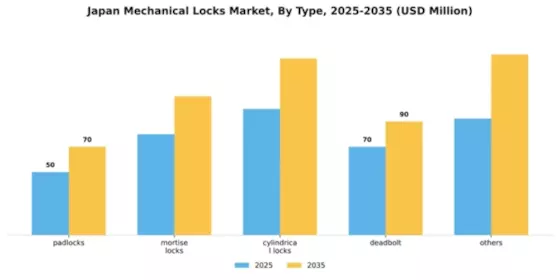
In 2024, padlocks were valued at $50.0 - $70.0 Million, mortise locks at $80.0 - $110.0 Million, cylindrical locks at $100.0 - $140.0 Million, deadbolts at $70.0 - $90.0 Million, and others at $92.4 - $143.1 Million.
In 2024, grade 1 locks were valued at $78.72 - $111.0 Million, grade 2 at $117.36 - $168.0 Million, and grade 3 at $196.32 - $275.1 Million.
In 2024, stainless steel was valued at $78.72 - $111.12 Million, copper at $39.36 - $56.56 Million, iron at $78.72 - $111.12 Million, aluminum at $39.36 - $56.56 Million, and others at $156.96 - $218.64 Million.
The growth appears influenced by increasing security concerns and advancements in lock technology.
While specific regional comparisons are not provided, the Japan market's projected growth rate of 3.19% suggests a steady demand for mechanical locks.
Factors such as technological advancements, changes in consumer preferences, and economic conditions may impact future valuations.



Kindly complete the form below to receive a free sample of this Report

“This is really good guys. Excellent work on a tight deadline. I will continue to use you going forward and recommend you to others. Nice job”


“Thanks. It’s been a pleasure working with you, please use me as reference with any other Intel employees.”


“Thanks for sending the report it gives us a good global view of the Betaïne market.”


“Thank you, this will be very helpful for OQS.”


“We found the report very insightful! we found your research firm very helpful. I'm sending this email to secure our future business.”


“I am very pleased with how market segments have been defined in a relevant way for my purposes (such as "Portable Freezers & refrigerators" and "last-mile"). In general the report is well structured. Thanks very much for your efforts.”


“I have been reading the first document or the study, ,the Global HVAC and FP market report 2021 till 2026. Must say, good info! I have not gone in depth at all parts, but got a good indication of the data inside!”


“We got the report in time, we really thank you for your support in this process. I also thank to all of your team as they did a great job.”


“The Automotive 48V ECU Components Procurement Intelligence Study” was a complex project, but the Market Research Future (MRFR) team handled it with quality, agility, and customer-centricity. They delivered all requested data on time and within the agreed scope. The team, including Shubhendra Anand and Rahul Gotadki, was always readily available to clarify questions and swiftly implement necessary adjustments, driving the project to a successful conclusion within a very demanding timeframe.
I would also like to specifically commend Akshay Agarwal for his responsiveness and support at every stage—from our initial inquiry on May 6th through to final delivery on June 18th. His dedication made the entire process seamless.”



