Download Free Sample
Kindly complete the form below to receive a free sample of this Report
Japan Smart Inhalers Market Research Report By Type (Metered Dose Inhalers, Dry Powder Inhalers, Nebulizers), By Technology (Bluetooth-enabled, Sensor-based, Mobile Application-integrated), By Indication (Asthma, Chronic Obstructive Pulmonary Disease, Allergic Rhinitis, Cystic Fibrosis), By End User (Hospital, Homecare, Pharmaceutical Companies) and By Distribution Channel (Online Pharmacies, Retail Pharmacies, Hospitals) - Growth & Industry Forecast 2025 To 2035
As per Market Research Future analysis, the Japan smart inhalers market size was estimated at 100.4 USD Million in 2024. The Japan smart inhalers market is projected to grow from 116.8 USD Million in 2025 to 530.08 USD Million by 2035, exhibiting a compound annual growth rate (CAGR) of 16.3% during the forecast period 2025 - 2035
The Japan smart inhalers market is poised for substantial growth driven by technological advancements and increasing patient-centric solutions.
| 2024 Market Size | 100.4 (USD Million) |
| 2035 Market Size | 530.08 (USD Million) |
| CAGR (2025 - 2035) | 16.33% |
Propeller Health (US), Teva Pharmaceutical Industries (IL), AstraZeneca (GB), GlaxoSmithKline (GB), Novartis (CH), Boehringer Ingelheim (DE), Sanofi (FR), MediSprout (US), Adherium (NZ)
Our Impact
Enabled $4.3B Revenue Impact for Fortune 500 and Leading Multinationals
Partnering with 2000+ Global Organizations Each Year
30K+ Citations by Top-Tier Firms in the Industry
The smart inhalers market is currently experiencing notable growth, driven by advancements in technology and increasing awareness of respiratory diseases. In Japan, the prevalence of asthma and chronic obstructive pulmonary disease (COPD) has prompted a surge in demand for innovative inhalation devices. These smart inhalers, equipped with digital features, enable patients to monitor their medication usage and receive real-time feedback, thereby enhancing adherence to treatment regimens. Furthermore, the integration of mobile applications with inhalers allows for better tracking of symptoms and triggers, which appears to empower patients in managing their conditions more effectively. Moreover, the regulatory environment in Japan is evolving to support the adoption of smart inhalers. The Pharmaceuticals and Medical Devices Agency (PMDA) has been actively working to streamline the approval process for these devices, which may encourage manufacturers to invest in research and development. As healthcare providers increasingly recognize the benefits of smart inhalers, there is a growing trend towards personalized medicine, where treatment plans are tailored to individual patient needs. This shift could potentially lead to improved health outcomes and reduced healthcare costs in the long run.
The incorporation of advanced technologies into smart inhalers is a prominent trend. Features such as Bluetooth connectivity and mobile app integration facilitate real-time monitoring of medication usage. This technological synergy not only enhances patient engagement but also provides healthcare professionals with valuable data to optimize treatment plans.
The evolving regulatory landscape in Japan is fostering the growth of the smart inhalers market. The PMDA's efforts to expedite the approval process for innovative inhalation devices may encourage manufacturers to bring new products to market. This regulatory support is likely to enhance competition and drive innovation.
There is a noticeable shift towards patient-centric solutions within the smart inhalers market. Manufacturers are increasingly designing devices that prioritize user experience, ensuring ease of use and accessibility. This trend reflects a broader commitment to improving patient outcomes and adherence to treatment.
Government support plays a crucial role in the growth of the smart inhalers market in Japan. Various initiatives aimed at improving respiratory health and promoting innovative medical technologies are being implemented. The Japanese Ministry of Health, Labour and Welfare has allocated substantial funding for research and development in respiratory care, which includes smart inhaler technologies. This financial backing is expected to encourage manufacturers to invest in the development of advanced inhaler systems. Furthermore, public health campaigns aimed at raising awareness about respiratory diseases and the importance of medication adherence are likely to drive market growth. As the government continues to prioritize respiratory health, the smart inhalers market is poised for expansion.
Technological innovations are transforming the healthcare landscape in Japan, significantly impacting the smart inhalers market. The integration of digital health technologies, such as mobile applications and cloud-based data management, enhances the functionality of smart inhalers. These devices not only track medication usage but also provide valuable insights into patient behavior and environmental triggers. The Japanese government has been actively promoting digital health initiatives, which could further stimulate the adoption of smart inhalers. As a result, the market is likely to witness a surge in demand for devices that offer enhanced connectivity and user-friendly interfaces. The potential for improved patient outcomes through technology-driven solutions positions the smart inhalers market favorably within the broader healthcare ecosystem.
Awareness regarding the importance of medication adherence is gaining traction in Japan, significantly impacting the smart inhalers market. Non-adherence to prescribed medication regimens is a persistent issue, particularly among patients with chronic respiratory conditions. Smart inhalers address this challenge by incorporating features that remind patients to take their medication and track their usage. Educational initiatives by healthcare professionals and organizations are emphasizing the consequences of non-adherence, which could lead to exacerbated health issues and increased healthcare costs. As patients become more informed about the benefits of adhering to their treatment plans, the demand for smart inhalers is likely to rise. This growing awareness is expected to drive market growth and encourage manufacturers to innovate further in this space.
The increasing incidence of respiratory diseases in Japan is a primary driver for the smart inhalers market. Conditions such as asthma and chronic obstructive pulmonary disease (COPD) are becoming more prevalent, affecting millions of individuals. According to recent health statistics, approximately 10% of the Japanese population suffers from asthma, which necessitates effective management solutions. Smart inhalers, equipped with advanced technology, offer real-time monitoring and adherence tracking, which are crucial for managing these chronic conditions. The growing awareness of respiratory health and the need for innovative treatment options are likely to propel the demand for smart inhalers in the market. As healthcare providers emphasize the importance of personalized treatment plans, the smart inhalers market is expected to expand significantly in response to these health challenges.
The shift towards personalized medicine is influencing the smart inhalers market in Japan. Patients are increasingly seeking tailored treatment options that cater to their specific health needs. Smart inhalers, with their ability to collect and analyze data on individual usage patterns, provide a platform for personalized treatment plans. This trend aligns with the broader movement in healthcare towards individualized care, where therapies are designed based on patient characteristics. The potential for smart inhalers to enhance medication adherence and optimize treatment outcomes is likely to attract both patients and healthcare providers. As the demand for personalized healthcare solutions continues to rise, the smart inhalers market is expected to benefit from this evolving landscape.
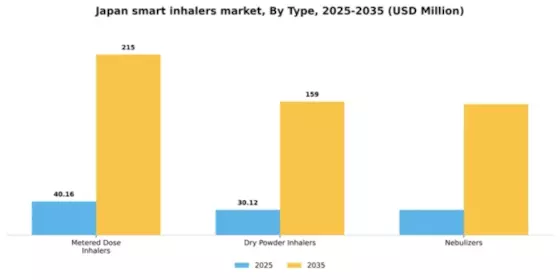
In the Japan smart inhalers market, Metered Dose Inhalers hold the largest market share among the various types of inhalers, reflecting their established presence and acceptance among patients. Dry Powder Inhalers also contribute significantly to the market, yet they are often perceived as having a slower adoption rate compared to Metered Dose Inhalers. Meanwhile, Nebulizers are emerging as a compelling alternative, particularly appealing due to their ease of use for patients with severe respiratory conditions. Growth trends indicate a significant shift towards Nebulizers, driven by advancements in technology and increased awareness of chronic respiratory diseases. Rising preferences for convenient and user-friendly devices among patients have sparked this segment's quick growth and acceptance. Additionally, ongoing developments in inhaler technology, focusing on precision and efficiency, are anticipated to further enhance the market potential for each type in the coming years, aligning with healthcare professionals' recommendations for optimized treatment.
Metered Dose Inhalers (Dominant) vs. Nebulizers (Emerging)
Metered Dose Inhalers are characterized by their reliable dosage delivery system and ease of use, making them highly popular among patients managing asthma and COPD. They dominate the Japan smart inhalers market due to their long-standing presence and effectiveness. On the other hand, Nebulizers, deemed an emerging segment, offer distinct advantages, particularly for those unable to operate conventional inhalers effectively. Their ability to deliver medication in aerosol form seamlessly suits patients with varying inhalation capacities. This growing preference for Nebulizers signifies a changing landscape in inhaler technology, with an increasing demand for accessibility and user-friendly options to enhance patient adherence to treatment.
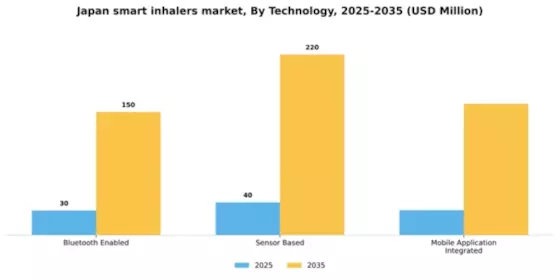
In the Japan smart inhalers market, the market share distribution among technology segments reveals Bluetooth Enabled devices holding the largest share. Sensor Based technology is gaining significant traction, marked as the fastest-growing segment due to the increasing need for enhanced patient monitoring and adherence. The integration of mobile applications into both Bluetooth and Sensor Based technologies is also shaping consumer preferences. Growth trends indicate that the demand for smart inhalers is being driven by advancements in digital health technologies and a growing awareness of respiratory diseases. Bluetooth Enabled inhalers are popular for their ease of connectivity, while Sensor Based inhalers attract consumers seeking advanced monitoring capabilities. The interplay between these technologies is expected to foster innovation and expand the market further.
Technology: Bluetooth Enabled (Dominant) vs. Sensor Based (Emerging)
Bluetooth Enabled smart inhalers represent a dominant force in the Japan smart inhalers market, characterized by their connectivity features that facilitate seamless data sharing with mobile devices. This technology allows users to track their medication usage more effectively and receive reminders for dosing, enhancing compliance. On the other hand, Sensor Based inhalers are emerging as a novel solution for personalized healthcare, integrating various sensors that provide real-time feedback on inhaler usage and environmental factors. These devices are designed to improve the overall management of respiratory conditions by offering users crucial insights, positioning Sensor Based technology as a key player in the future of the smart inhalers segment.
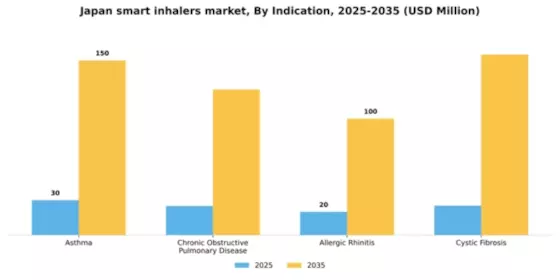
In the Japan smart inhalers market, asthma holds the largest market share, dominating the segment significantly. Chronic obstructive pulmonary disease (COPD), while representing a smaller market share, is rapidly gaining traction due to increasing prevalence and awareness of respiratory health. The combined focus on both conditions highlights the critical area of respiratory treatment and management in the region. The growth trends in this segment are largely driven by the rising incidence of respiratory diseases, advancements in inhaler technology, and increased health awareness among the populace. Moreover, government initiatives aimed at improving asthma management and the growing geriatric population contribute to the expansion of the COPD segment. The market is poised for substantial growth as attention shifts towards innovative inhalation devices and chronic care solutions.
Asthma (Dominant) vs. Chronic Obstructive Pulmonary Disease (Emerging)
Asthma is a dominant indication in the Japan smart inhalers market, accounting for a significant portion of usage due to its prevalence and established treatment protocols. Patients benefit from a range of advanced inhalers designed for effective management of symptoms. In contrast, chronic obstructive pulmonary disease is emerging as a critical focus area, with an increasing number of individuals diagnosed and new treatment options being introduced. COPD requires targeted therapies and patient engagement, creating market opportunities for innovative inhaler solutions. Both segment values reflect a growing understanding of respiratory health, with continuous advancements in device technology catering to the unique needs of asthma and COPD patients.
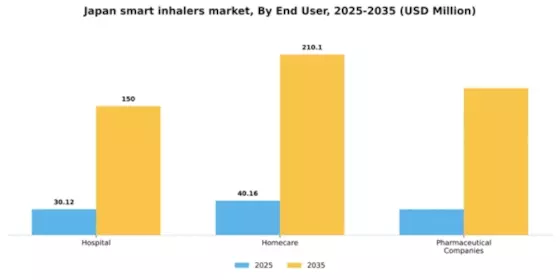
In the Japan smart inhalers market, the distribution of market share among end users reveals that homecare is the largest segment, capturing a substantial share due to its accessibility and convenience for patients. Hospitals follow closely as a significant segment, but as the demand for advanced respiratory care increases, the market is witnessing an uptick in hospital-based solutions for severe cases. Growth trends in this segment indicate a rising preference for smart inhalers among patients receiving homecare services. Factors driving this trend include the growing prevalence of chronic respiratory diseases and the increasing emphasis on remote patient monitoring. Moreover, hospitals are focusing on integrating smart inhaler technology into their respiratory care protocols, making this end-user segment the fastest-growing as healthcare providers adopt innovative solutions to enhance patient outcomes.
Homecare (Dominant) vs. Hospital (Emerging)
The homecare segment in the Japan smart inhalers market demonstrates a dominant position due to its strong alignment with patient needs for convenient and effective management of respiratory conditions. Patients utilizing homecare solutions benefit from the user-friendly design of smart inhalers that promote adherence and self-management, making it a favored choice. Conversely, the hospital segment, while currently emerging, is rapidly gaining traction as healthcare facilities invest in smart inhaler technology to provide better clinical outcomes in acute cases. Hospitals are increasingly adopting these devices for their ability to record usage data and facilitate personalized treatment plans, which enhances their role in respiratory care despite being overshadowed by homecare solutions for now.
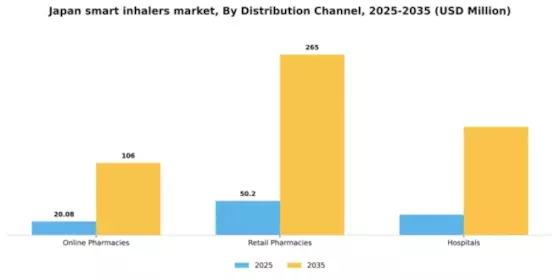
In the Japan smart inhalers market, Online Pharmacies hold the largest market share, reflecting a significant shift towards digital healthcare solutions. This distribution channel benefits from increased consumer comfort and accessibility, allowing for easy purchasing options that cater to patients' needs. In contrast, Retail Pharmacies continue to maintain a steady share, appealing to those who prefer in-person consultations and immediate access to products. Growth trends in this segment are notably driven by advancements in technology and rising health awareness among patients. Online Pharmacies are experiencing accelerated growth due to the convenience they offer and the ongoing digital transformation in healthcare. Meanwhile, Retail Pharmacies focus on enhancing customer service and expanding their product offerings to compete, creating a dynamic and evolving market landscape.
Online Pharmacies (Dominant) vs. Retail Pharmacies (Emerging)
Online Pharmacies dominate the distribution landscape of the Japan smart inhalers market, leveraging technology to provide convenience and a broad range of products accessible from home. They cater to the growing trend of telehealth and provide patients with discreet purchasing experiences. On the other hand, Retail Pharmacies represent an emerging segment by enhancing their services to foster customer loyalty and deliver immediate product access. These pharmacies are adapting to changing consumer preferences and extending their roles to include more consultations and personalized healthcare experiences, thereby reinforcing their relevance in the market.
Get more detailed insights about Japan Smart Inhalers Market Request Free Sample
The smart inhalers market in Japan is characterized by a dynamic competitive landscape, driven by increasing awareness of respiratory diseases and the growing demand for innovative healthcare solutions. Key players such as Propeller Health (US), Teva Pharmaceutical Industries (IL), and AstraZeneca (GB) are actively shaping the market through strategic initiatives focused on technological advancements and partnerships. Propeller Health (US) emphasizes digital health solutions, integrating data analytics to enhance patient adherence, while Teva Pharmaceutical Industries (IL) is concentrating on expanding its product portfolio through collaborations with local healthcare providers. AstraZeneca (GB) is leveraging its strong research capabilities to develop next-generation inhalers, indicating a trend towards innovation as a primary competitive driver.The business tactics employed by these companies reflect a concerted effort to optimize supply chains and localize manufacturing processes. The market structure appears moderately fragmented, with several players vying for market share, yet the influence of major companies is palpable. This competitive environment fosters a climate of innovation, as companies seek to differentiate themselves through advanced technology and improved patient outcomes.
In October Teva Pharmaceutical Industries (IL) announced a strategic partnership with a leading Japanese healthcare technology firm to co-develop a smart inhaler that incorporates AI-driven analytics. This collaboration is poised to enhance patient engagement and adherence, reflecting a broader trend towards integrating artificial intelligence in healthcare solutions. The strategic importance of this partnership lies in its potential to leverage local expertise and accelerate product development, thereby positioning Teva favorably in the competitive landscape.
In September AstraZeneca (GB) launched a new smart inhaler equipped with real-time monitoring capabilities, aimed at improving asthma management. This product introduction underscores AstraZeneca's commitment to innovation and its focus on addressing unmet medical needs in the Japanese market. The strategic significance of this launch is evident in its alignment with the increasing demand for personalized healthcare solutions, which may enhance patient outcomes and drive market growth.
In August Propeller Health (US) expanded its presence in Japan by entering into a distribution agreement with a local pharmaceutical company. This move is indicative of Propeller's strategy to localize its operations and enhance accessibility to its smart inhaler technology. The importance of this agreement lies in its potential to increase market penetration and foster greater patient engagement through localized support and resources.
As of November the competitive trends in the smart inhalers market are increasingly defined by digitalization, sustainability, and the integration of AI technologies. Strategic alliances are becoming a cornerstone of competitive positioning, as companies recognize the value of collaboration in driving innovation. Looking ahead, the competitive differentiation in this market is likely to evolve from traditional price-based competition towards a focus on technological advancements, patient-centric solutions, and robust supply chain reliability.






In recent developments within the Japan Smart Inhalers Market, companies such as GlaxoSmithKline and AstraZeneca are significantly enhancing their product offerings, focusing on integrating advanced digital technologies in asthma and chronic obstructive pulmonary disease management. Omron Corporation has shown robust growth attributed to increased healthcare accessibility, capitalizing on Japan's aging population.
As of March 2023, Adherium announced a partnership with local pharmacies to improve medication adherence through smart inhaler integration. Furthermore, in July 2023, ResMed unveiled new smart inhaler technology aimed at optimizing respiratory therapies, highlighting a trend towards personalized medicine. Amidst a strong government push for innovation in healthcare technology, Japan's market for smart inhalers is projected to grow, driven by increasing demand for digital health solutions.
In terms of mergers and acquisitions, in January 2023, Teva Pharmaceutical Industries completed the acquisition of a minor stake in a local respiratory health startup, aiming to expand its portfolio in the Japanese market. Such strategic moves indicate a competitive landscape that encourages collaboration and innovation among major players like Boehringer Ingelheim, Propeller Health, and Viatris, who are all exploring new avenues in smart inhaler technology.
The Smart Inhalers Market in Japan is projected to grow at a 16.33% CAGR from 2025 to 2035. This growth is driven by technological advancements, increasing respiratory diseases, and rising healthcare expenditure.
New opportunities lie in:
By 2035, the smart inhalers market is expected to achieve substantial growth and innovation.
| MARKET SIZE 2024 | 100.4(USD Million) |
| MARKET SIZE 2025 | 116.8(USD Million) |
| MARKET SIZE 2035 | 530.08(USD Million) |
| COMPOUND ANNUAL GROWTH RATE (CAGR) | 16.33% (2025 - 2035) |
| REPORT COVERAGE | Revenue Forecast, Competitive Landscape, Growth Factors, and Trends |
| BASE YEAR | 2024 |
| Market Forecast Period | 2025 - 2035 |
| Historical Data | 2019 - 2024 |
| Market Forecast Units | USD Million |
| Key Companies Profiled | Propeller Health (US), Teva Pharmaceutical Industries (IL), AstraZeneca (GB), GlaxoSmithKline (GB), Novartis (CH), Boehringer Ingelheim (DE), Sanofi (FR), MediSprout (US), Adherium (NZ) |
| Segments Covered | Type, Technology, Indication, End User, Distribution Channel |
| Key Market Opportunities | Integration of advanced digital health technologies enhances patient adherence in the smart inhalers market. |
| Key Market Dynamics | Rising demand for smart inhalers in Japan driven by regulatory support and technological advancements in respiratory care. |
| Countries Covered | Japan |
The smart inhalers market in Japan was valued at $100.4 Million in 2024.
The projected valuation for the smart inhalers market in Japan is $530.08 Million by 2035.
The expected CAGR for the smart inhalers market in Japan during the forecast period 2025 - 2035 is 16.33%.
Key players in the Japan smart inhalers market include Propeller Health, Teva Pharmaceutical Industries, AstraZeneca, GlaxoSmithKline, Novartis, Boehringer Ingelheim, Sanofi, MediSprout, and Adherium.
The market segments for smart inhalers in Japan based on type include Metered Dose Inhalers ($40.16 - $215.04 Million), Dry Powder Inhalers ($30.12 - $159.04 Million), and Nebulizers ($30.12 - $156.0 Million).
The technology segment includes Bluetooth Enabled ($30.0 - $150.0 Million), Sensor Based ($40.0 - $220.0 Million), and Mobile Application Integrated ($30.4 - $160.08 Million).
Smart inhalers in Japan address indications such as Asthma ($30.0 - $150.0 Million), Chronic Obstructive Pulmonary Disease ($25.0 - $125.0 Million), Allergic Rhinitis ($20.0 - $100.0 Million), and Cystic Fibrosis ($25.4 - $155.08 Million).
The primary end users of smart inhalers in Japan include hospitals ($30.12 - $150.04 Million), homecare ($40.16 - $210.08 Million), and pharmaceutical companies ($30.12 - $170.96 Million).
The distribution channels for smart inhalers in Japan consist of online pharmacies ($20.08 - $106.02 Million), retail pharmacies ($50.2 - $265.04 Million), and hospitals ($30.12 - $159.02 Million).
Trends influencing the growth of the smart inhalers market in Japan include advancements in technology, increasing prevalence of respiratory diseases, and a growing emphasis on patient adherence.



Kindly complete the form below to receive a free sample of this Report

“This is really good guys. Excellent work on a tight deadline. I will continue to use you going forward and recommend you to others. Nice job”


“Thanks. It’s been a pleasure working with you, please use me as reference with any other Intel employees.”


“Thanks for sending the report it gives us a good global view of the Betaïne market.”


“Thank you, this will be very helpful for OQS.”


“We found the report very insightful! we found your research firm very helpful. I'm sending this email to secure our future business.”


“I am very pleased with how market segments have been defined in a relevant way for my purposes (such as "Portable Freezers & refrigerators" and "last-mile"). In general the report is well structured. Thanks very much for your efforts.”


“I have been reading the first document or the study, ,the Global HVAC and FP market report 2021 till 2026. Must say, good info! I have not gone in depth at all parts, but got a good indication of the data inside!”


“We got the report in time, we really thank you for your support in this process. I also thank to all of your team as they did a great job.”


“The Automotive 48V ECU Components Procurement Intelligence Study” was a complex project, but the Market Research Future (MRFR) team handled it with quality, agility, and customer-centricity. They delivered all requested data on time and within the agreed scope. The team, including Shubhendra Anand and Rahul Gotadki, was always readily available to clarify questions and swiftly implement necessary adjustments, driving the project to a successful conclusion within a very demanding timeframe.
I would also like to specifically commend Akshay Agarwal for his responsiveness and support at every stage—from our initial inquiry on May 6th through to final delivery on June 18th. His dedication made the entire process seamless.”



