×
Request Free Sample ×

Kindly complete the form below to receive a free sample of this Report

* Please use a valid business email

Leading companies partner with us for data-driven Insights

clients tt-cursor
Hero Background

Keloid Treatment Market

ID: MRFR/Pharma/5340-HCR
90 Pages
Rahul Gotadki
October 2025

Keloid Treatment Market Research Report Information By Product (Elastic Wraps, Ointment), by Treatment (Radiation Therapy, Cry Therapy, Surgical Treatment, Laser Treatment, Laser Treatment, Interferon), by End-User (Hospitals and Others), Regions - Forecast till 2035

Share:
Download PDF ×

We do not share your information with anyone. However, we may send you emails based on your report interest from time to time. You may contact us at any time to opt-out.

Keloid Treatment Market Infographic
Purchase Options

Keloid Treatment Market Summary

As per MRFR analysis, the Keloid Treatment Market Size was estimated at 3.27 USD Million in 2024. The Keloid Treatment industry is projected to grow from 3.53 in 2025 to 6.69 by 2035, exhibiting a compound annual growth rate (CAGR) of 6.67 during the forecast period 2025 - 2035.

Key Market Trends & Highlights

The Keloid Treatment Market is poised for substantial growth driven by technological advancements and increasing patient awareness.

  • The North American region remains the largest market for keloid treatments, characterized by a high demand for advanced therapies.
  • In the Asia-Pacific region, the keloid treatment market is experiencing rapid growth, fueled by rising healthcare expenditure and awareness.
  • Surgical excision continues to dominate the market as the largest segment, while laser therapy is emerging as the fastest-growing treatment option.
  • The rising incidence of keloids and advancements in treatment technologies are key drivers propelling market expansion.

Market Size & Forecast

2024 Market Size 3.27 (USD Million)
2035 Market Size 6.69 (USD Million)
CAGR (2025 - 2035) 6.67%

Major Players

Bristol-Myers Squibb (US), Mylan N.V. (US), Merck & Co. (US), Pfizer Inc. (US), Galderma S.A. (CH), Sientra, Inc. (US), Revance Therapeutics, Inc. (US), Hugel, Inc. (KR), Evolus, Inc. (US)

Keloid Treatment Market Trends

The Keloid Treatment Market is currently experiencing a notable evolution, driven by advancements in medical technology and an increasing awareness of skin health. Various treatment modalities, including surgical interventions, laser therapies, and topical applications, are gaining traction among healthcare providers and patients alike. This shift appears to be influenced by a growing understanding of keloid formation and the psychological impact these scars can have on individuals. As a result, there is a heightened demand for effective and minimally invasive treatment options that cater to diverse patient needs. Moreover, the Keloid Treatment Market seems to be expanding due to the rising prevalence of keloids, particularly in populations with darker skin types. This demographic trend indicates a potential for targeted therapies that address specific skin characteristics and healing processes. Additionally, the integration of telemedicine and digital health solutions is likely to enhance patient access to treatment options, thereby fostering market growth. Overall, the Keloid Treatment Market is poised for continued development, with innovative approaches and a focus on patient-centered care shaping its future landscape.

Emergence of Advanced Therapies

The Keloid Treatment Market is witnessing the emergence of advanced therapies that leverage cutting-edge technology. These include novel laser treatments and biologic agents that aim to improve efficacy and reduce recurrence rates. Such innovations may provide patients with more effective options, potentially transforming the treatment landscape.

Increased Patient Awareness

There is a growing awareness among patients regarding keloid formation and available treatment options. This trend suggests that individuals are becoming more proactive in seeking medical advice and interventions, which could lead to an uptick in demand for specialized keloid treatments.

Integration of Telehealth Solutions

The integration of telehealth solutions into the Keloid Treatment Market is gaining momentum. This development may facilitate remote consultations and follow-ups, thereby improving access to care for patients who may otherwise face barriers to treatment. Such advancements could reshape how keloid management is approached.

Keloid Treatment Market Drivers

Market Growth Projections

The Global Keloid Treatment Market Industry is projected to experience steady growth, with estimates indicating a market size of 1.73 USD Billion in 2024 and a potential increase to 1.9 USD Billion by 2035. This growth trajectory suggests a compound annual growth rate (CAGR) of 0.86% from 2025 to 2035. Such projections highlight the ongoing demand for keloid treatments and the industry's responsiveness to emerging trends and technologies. The market's expansion reflects broader healthcare trends, including a focus on personalized medicine and improved patient care.

Rising Cosmetic Procedures

The rise in cosmetic procedures is another driver for the Global Keloid Treatment Market Industry. As more individuals undergo surgeries for aesthetic enhancements, the likelihood of keloid formation increases. This trend is particularly pronounced in regions where cosmetic surgery is gaining popularity. Patients seeking to minimize the appearance of keloids post-surgery are driving demand for effective treatment solutions. The market's growth is expected to be sustained as the beauty industry continues to expand, with keloid treatments becoming an integral part of post-operative care.

Rising Prevalence of Keloids

The Global Keloid Treatment Market Industry is experiencing growth due to the rising prevalence of keloids, which are often associated with surgical scars, acne, and trauma. As awareness increases regarding the condition, more individuals seek treatment options. In 2024, the market is projected to reach 1.73 USD Billion, reflecting a growing demand for effective therapies. This trend is particularly evident in regions with high rates of skin injuries, such as urban areas where surgical procedures are common. The increasing incidence of keloids is likely to drive innovation in treatment modalities, further expanding the market.

Growing Awareness and Education

The Global Keloid Treatment Market Industry benefits from increasing awareness and education about keloids among both healthcare professionals and patients. Educational campaigns and resources provided by dermatological associations are helping to demystify keloids, leading to earlier diagnosis and treatment. This heightened awareness is crucial, as it encourages individuals to seek medical advice sooner, thereby increasing treatment uptake. As more patients become informed about their options, the market is likely to see a steady rise in demand for keloid treatments, contributing to a projected CAGR of 0.86% from 2025 to 2035.

Increased Research and Development

Increased investment in research and development is propelling the Global Keloid Treatment Market Industry forward. Pharmaceutical companies and research institutions are focusing on understanding the underlying mechanisms of keloid formation, which may lead to the discovery of novel therapeutic agents. This emphasis on R&D is likely to yield new treatment options that are more effective and tailored to individual patient needs. As the market evolves, the introduction of innovative therapies could significantly alter the treatment landscape, enhancing patient satisfaction and outcomes.

Advancements in Treatment Technologies

Innovations in treatment technologies are significantly influencing the Global Keloid Treatment Market Industry. New methods, such as laser therapy, cryotherapy, and intralesional injections, are being developed and refined, offering patients more effective options. These advancements not only enhance treatment efficacy but also reduce recovery times and side effects. As a result, healthcare providers are increasingly adopting these technologies, contributing to market growth. The anticipated increase in market size to 1.9 USD Billion by 2035 underscores the potential of these advancements to reshape treatment paradigms and improve patient outcomes.

Market Segment Insights

By Treatment Type: Surgical Excision (Largest) vs. Laser Therapy (Fastest-Growing)

In the Keloid Treatment Market, the segment is diversified into various treatment types, including Surgical Excision, Intralesional Steroid Injection, Cryotherapy, Laser Therapy, and Radiation Therapy. Surgical Excision holds the largest market share owing to its effectiveness in permanently removing keloids, appealing to patients seeking permanent solutions. Other treatments like Intralesional Steroid Injection and Cryotherapy play essential roles but capture smaller shares, primarily providing alternatives for patients desiring less invasive approaches or lower-cost options.

Surgical Excision (Dominant) vs. Laser Therapy (Emerging)

Surgical Excision remains the dominant treatment in the Keloid Treatment Market due to its reliability and direct approach to keloid removal. This treatment often leads to significant keloid reduction, making it a patient's first choice despite its invasive nature and possible complications. On the other hand, Laser Therapy is rapidly emerging as a competitive alternative, particularly among patients who favor less invasive methods. Its appeal lies in the reduced recovery time, fewer side effects, and the advancement of technology that enhances its effectiveness. As patient preferences shift towards minimally invasive options, Laser Therapy is poised for robust growth, attracting investment and innovation.

By Keloid Size: Medium Keloids (Largest) vs. Small Keloids (Fastest-Growing)

In the Keloid Treatment Market, the distribution of keloid sizes reveals that medium keloids hold the largest share among the various segments. Their prevalence can be attributed to a combination of genetic factors and the frequency of injury in the population. Small keloids, while currently representing a smaller proportion of the market, are quickly gaining traction as an emerging trend in keloid treatments. The increasing number of cosmetic procedures and awareness regarding keloid treatments has heightened interest in this segment. As the keloid treatment market evolves, medium keloids continue to dominate due to their established treatment protocols and patient familiarity with existing options. Meanwhile, small keloids have become the fastest-growing segment, driven by increasing demand for minimally invasive treatments and innovative therapies. The rise of telemedicine and online consultations has also made it easier for patients to seek treatment for these smaller keloids, further propelling this segment's growth.

Medium Keloids (Dominant) vs. Small Keloids (Emerging)

Medium keloids are characterized by their significant size that often necessitates more intensive treatment options, making them a dominant force in the Keloid Treatment Market. These keloids frequently lead to medical consultations and are typically treated with intralesional steroid injections or surgical excision, which are commonly accepted within the dermatological community. On the other hand, small keloids are emerging in prominence, primarily due to increasing patient awareness and the demand for effective, less invasive treatments. They often respond well to topical therapies and silicone gel sheets, appealing to a demographic seeking cosmesis-oriented solutions without the rigidity of more conventional treatments. This dual landscape illustrates an evolving market that prioritizes both robust therapeutic measures for medium keloids and emerging innovations targeting smaller lesions.

By Patient Demographics: Age Group (Largest) vs. Gender (Fastest-Growing)

In the Keloid Treatment Market, the age group segment demonstrates the largest market share, particularly dominated by individuals aged 20 to 40 years. This demographic is highly aware of aesthetic procedures, leading to a greater demand for effective keloid treatments. Gender analysis reveals a notable share of male patients, though female patients are increasingly seeking solutions, showcasing the overall diversity in patient demographics. Growth trends indicate a shift in consumer awareness regarding skin health and cosmetic appearance. The increasing prevalence of keloids, particularly post-surgical and post-traumatic, along with heightened marketing efforts targeting young adults, contributes to the younger age demographic's dominance. Additionally, emerging trends in gender-specific marketing are propelling treatment uptake among female patients, establishing a faster-growing segment in the market.

Age Group: 20-40 (Dominant) vs. Gender: Female (Emerging)

Within the Keloid Treatment Market, the age group of 20 to 40 years signifies the dominant segment, capturing significant attention due to the heightened aesthetic concerns prevalent in this cohort. This demographic is particularly reactive to branding and marketing strategies that emphasize effective keloid removal or reduction. In contrast, female patients represent an emerging segment as their increasing societal roles and self-awareness drive them toward seeking treatment options. This gender group is recognized for being proactive about their skin health, thus accelerating their growth in the treatment landscape. The dual focus on these segments underscores the importance of tailored marketing approaches to meet the unique needs of different patient demographics.

By Distribution Channel: Hospitals (Largest) vs. Dermatology Clinics (Fastest-Growing)

In the Keloid Treatment Market, Hospitals dominate the distribution channel landscape, holding the largest market share. These institutions provide comprehensive treatment options and have the capacity for advanced surgical interventions, which significantly contributes to their leading position. On the other hand, Dermatology Clinics have emerged as a vital player in this segment, offering specialized services for keloid treatment, which has allowed them to capture a significant portion of the market and cater effectively to a targeted patient demographic.

Hospitals (Dominant) vs. Dermatology Clinics (Emerging)

Hospitals are the dominant distribution channel in the Keloid Treatment Market, recognized for their extensive resources, including state-of-the-art facilities and skilled medical professionals. They provide a wide range of treatment options from surgical removal to advanced laser therapies. Conversely, Dermatology Clinics are emerging as a preferred choice among patients, offering personalized care in a more accessible environment. These clinics facilitate focused attention on skin-related treatments and foster patient-provider relationships, which enhance patient outcomes and satisfaction. As a consequence, Dermatology Clinics are expanding rapidly, driven by the increasing demand for specialized keloid treatment services.

By End User: Healthcare Providers (Largest) vs. Patients (Fastest-Growing)

The Keloid Treatment Market is witnessing a diverse distribution among its end user segments, primarily dominated by Healthcare Providers. This segment encompasses a wide range of professionals, including dermatologists and plastic surgeons, who are essential in administering treatment options for keloids. Patients, while a smaller but significant part of this market, are increasingly driving growth as awareness and accessibility of treatment options expand. This dynamic interplay reinforces the vital role of Healthcare Providers while highlighting the growing significance of Patients in the treatment landscape.

Healthcare Providers (Dominant) vs. Patients (Emerging)

Healthcare Providers hold a dominant position in the Keloid Treatment Market as they are the primary facilitators of keloid management, offering services ranging from consultation to advanced treatment options. Their expertise and availability greatly influence patient access to care. Conversely, the Patients segment is emerging strongly, driven by heightened awareness around keloid treatments and the availability of advanced therapies. This shift indicates that as more individuals seek treatment for keloids, their role in the market will become increasingly pivotal, thus indicating changing dynamics where patient advocacy and choices will further shape treatment options.

Get more detailed insights about Keloid Treatment Market

Regional Insights

North America : Market Leader in Keloid Treatment

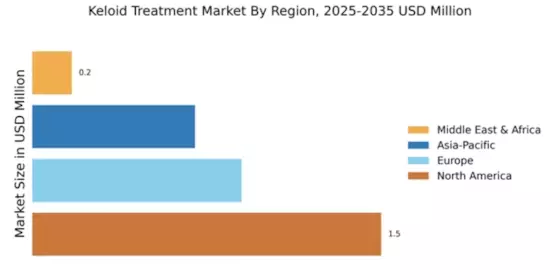
North America is poised to maintain its leadership in the keloid treatment market, holding a significant market size of $1.5 billion as of 2024. The region's growth is driven by increasing awareness of keloid treatments, advancements in medical technology, and a robust healthcare infrastructure. Regulatory support and favorable reimbursement policies further enhance market dynamics, making it a prime area for investment and innovation. The United States stands out as the leading country in this region, with major players like Bristol-Myers Squibb, Merck & Co., and Pfizer Inc. actively participating in the market. The competitive landscape is characterized by a mix of established pharmaceutical companies and emerging biotech firms, all striving to develop effective treatment options. This competitive environment fosters innovation and ensures a diverse range of therapies for patients.

Europe : Emerging Market with Growth Potential

Europe is witnessing a growing interest in keloid treatment, with a market size of $0.9 billion projected for 2025. Factors such as rising incidences of keloids, increased healthcare expenditure, and a focus on dermatological advancements are driving this growth. Regulatory frameworks in various countries are becoming more supportive, facilitating the introduction of new therapies and treatment modalities in the market. Leading countries in Europe include Germany, France, and the UK, where key players like Galderma S.A. and Mylan N.V. are making significant contributions. The competitive landscape is evolving, with a mix of local and international companies vying for market share. The presence of innovative treatment options and a growing patient base are expected to further enhance market dynamics in the region.

Asia-Pacific : Rapidly Growing Market Segment

The Asia-Pacific region is emerging as a significant player in the keloid treatment market, with a market size of $0.7 billion anticipated by 2025. The growth is fueled by increasing awareness of skin health, rising disposable incomes, and a growing population. Additionally, regulatory bodies are beginning to recognize the need for effective keloid treatments, which is expected to catalyze market expansion in the coming years. Countries like Japan, South Korea, and Australia are leading the charge in this region, with companies such as Hugel, Inc. and Sientra, Inc. actively involved in developing innovative solutions. The competitive landscape is characterized by a mix of established firms and new entrants, all focused on addressing the unique needs of patients suffering from keloids. This dynamic environment is likely to foster further advancements in treatment options.

Middle East and Africa : Emerging Market with Challenges

The Middle East and Africa region is gradually developing its keloid treatment market, currently valued at $0.17 billion. The growth is hindered by limited healthcare access and varying levels of awareness about keloid treatments. However, increasing healthcare investments and initiatives aimed at improving dermatological care are expected to drive market growth in the future. Regulatory bodies are beginning to focus on skin health, which may lead to more effective treatment options becoming available. Countries like South Africa and the UAE are at the forefront of this market, with a growing number of healthcare providers recognizing the need for specialized keloid treatments. The competitive landscape is still in its infancy, with few key players present. However, as awareness and healthcare access improve, the market is likely to attract more investment and innovation in keloid treatment solutions.

Key Players and Competitive Insights

The Keloid Treatment Market is characterized by a dynamic competitive landscape, driven by increasing awareness of skin conditions and advancements in treatment modalities. Key players such as Bristol-Myers Squibb (US), Merck & Co. (US), and Galderma S.A. (CH) are strategically positioned to leverage innovation and partnerships to enhance their market presence. Bristol-Myers Squibb (US) focuses on developing novel therapies, while Merck & Co. (US) emphasizes expanding its product portfolio through strategic acquisitions. Galderma S.A. (CH) is enhancing its operational focus on dermatological solutions, which collectively shapes a competitive environment that is increasingly reliant on innovation and strategic collaborations.

The market structure appears moderately fragmented, with several players vying for market share. Key business tactics such as localizing manufacturing and optimizing supply chains are becoming prevalent among these companies. This approach not only reduces operational costs but also enhances responsiveness to regional market demands. The collective influence of these key players fosters a competitive atmosphere where agility and adaptability are paramount.

In November 2025, Merck & Co. (US) announced a strategic partnership with a leading biotechnology firm to co-develop a new keloid treatment. This collaboration is expected to accelerate the development timeline and enhance the therapeutic options available in the market. The strategic importance of this partnership lies in its potential to combine resources and expertise, thereby increasing the likelihood of successful product development and market entry.

In October 2025, Galderma S.A. (CH) launched a new line of topical treatments specifically designed for keloid management. This product introduction is significant as it reflects the company's commitment to innovation in dermatological care. By expanding its product offerings, Galderma aims to capture a larger share of the market and address the unmet needs of patients suffering from keloids.

In September 2025, Bristol-Myers Squibb (US) completed the acquisition of a smaller biotech firm specializing in regenerative medicine. This acquisition is likely to enhance Bristol-Myers Squibb's capabilities in developing advanced therapies for keloid treatment. The strategic move underscores the company's focus on integrating cutting-edge technologies into its product pipeline, which may provide a competitive edge in the evolving market landscape.

As of December 2025, current trends in the Keloid Treatment Market indicate a shift towards digitalization and AI integration, with companies increasingly leveraging technology to enhance patient outcomes. Strategic alliances are shaping the landscape, fostering innovation and collaboration among key players. Looking ahead, competitive differentiation is expected to evolve, with a pronounced shift from price-based competition to a focus on innovation, technology, and supply chain reliability. This transition may redefine how companies position themselves in the market, emphasizing the importance of sustainable practices and advanced therapeutic solutions.

Key Companies in the Keloid Treatment Market market include

Industry Developments

POETYK PSO-2, the second pivotal Phase III clinical trial assessing deucravacitinib, a new, selective tyrosine kinase 2 inhibitor for the treatment of patients with moderate to severe plaque psoriasis, was published in February 2021 by Bristol Myers Squibb Company.

POETYK PSO-2 looked at deucravacitinib 6 mg once a day and found that it met both co-primary objectives, with considerably more patients reaching Psoriasis Area and Severity Index (PASI 75). JUBLIA (efinaconazole) topical solution for the treatment of onychomycosis was approved by the US Food and Drug Administration (FDA) in April 2020 for Bausch Health Companies Inc. and its dermatology business Ortho Dermatologics in Keloid Treatment Market

Intended Audience

  • Manufacturers and Suppliers
  • Dermatology Hospitals and Clinics
  • Dermatology laboratories and associations
  • Research and development centers


Future Outlook

Keloid Treatment Market Future Outlook

The Keloid Treatment Market is projected to grow at a 6.67% CAGR from 2024 to 2035, driven by increasing awareness, technological advancements, and rising demand for effective treatments.

New opportunities lie in:

  • Development of personalized keloid treatment plans using AI technology.
  • Expansion of telemedicine platforms for remote consultations and follow-ups.
  • Investment in regenerative medicine techniques for innovative keloid therapies.

By 2035, the Keloid Treatment Market is expected to achieve substantial growth and innovation.

Market Segmentation

Keloid Treatment Market End User Outlook

  • Healthcare Providers
  • Patients
  • Research Institutions

Keloid Treatment Market Keloid Size Outlook

  • Small Keloids
  • Medium Keloids
  • Large Keloids
  • Giant Keloids

Keloid Treatment Market Treatment Type Outlook

  • Surgical Excision
  • Intralesional Steroid Injection
  • Cryotherapy
  • Laser Therapy
  • Radiation Therapy

Keloid Treatment Market Distribution Channel Outlook

  • Hospitals
  • Dermatology Clinics
  • Online Pharmacies
  • Retail Pharmacies

Keloid Treatment Market Patient Demographics Outlook

  • Age Group
  • Gender
  • Skin Type
  • Ethnicity

Report Scope

MARKET SIZE 20243.27(USD Million)
MARKET SIZE 20253.53(USD Million)
MARKET SIZE 20356.69(USD Million)
COMPOUND ANNUAL GROWTH RATE (CAGR)6.67% (2024 - 2035)
REPORT COVERAGERevenue Forecast, Competitive Landscape, Growth Factors, and Trends
BASE YEAR2024
Market Forecast Period2025 - 2035
Historical Data2019 - 2024
Market Forecast UnitsUSD Million
Key Companies ProfiledBristol-Myers Squibb (US), Mylan N.V. (US), Merck & Co. (US), Pfizer Inc. (US), Galderma S.A. (CH), Sientra, Inc. (US), Revance Therapeutics, Inc. (US), Hugel, Inc. (KR), Evolus, Inc. (US)
Segments CoveredTreatment Type, Keloid Size, Patient Demographics, Distribution Channel, End User
Key Market OpportunitiesAdvancements in minimally invasive techniques enhance patient outcomes in the Keloid Treatment Market.
Key Market DynamicsRising demand for innovative therapies drives competition and regulatory scrutiny in the keloid treatment market.
Countries CoveredNorth America, Europe, APAC, South America, MEA

Market Highlights

Author
Rahul Gotadki
Assistant Manager

He holds an experience of about 7+ years in Market Research and Business Consulting, working under the spectrum of Life Sciences and Healthcare domains. Rahul conceptualizes and implements a scalable business strategy and provides strategic leadership to the clients. His expertise lies in market estimation, competitive intelligence, pipeline analysis, customer assessment, etc. In addition to the above, his other responsibility includes strategic tracking of high growth markets & advising clients on the potential areas of focus they could direct their business initiatives

Leave a Comment

FAQs

What is the valuation of the global keloid market?

The global keloid market is expected to reach a valuation of USD 1.72 billion by 2035.

What is the CAGR of the market?

The market is expected to exhibit a strong 0.86% CAGR over the forecast period from 2023-2035.

What is the leading driver for the market?

The rapid rise in the technological scenario behind skin care products is the major driver for the global keloid treatment market.

What is the leading regional market?

North America is the dominant regional market for keloid treatment.

What are the key players in the market?

Leading players in the keloid treatment market include Valeant, RXi Pharmaceuticals, Novartis, and Pacific World Corporation, among others.

Download Free Sample

Kindly complete the form below to receive a free sample of this Report

Compare Licence

×
Features License Type
Single User Multiuser License Enterprise User
Price $4,950 $5,950 $7,250
Maximum User Access Limit 1 User Upto 10 Users Unrestricted Access Throughout the Organization
Free Customization
Direct Access to Analyst
Deliverable Format
Platform Access
Discount on Next Purchase 10% 15% 15%
Printable Versions