Light Therapy Market (2026 - 2035)

Light Therapy Market Research Report: Size, Share, Trend Analysis By Product (Light Box, Floor and Desk Lamps, Light Visor, HDST, Others), By Applications (Psoriasis, Vitiligo, Eczema, Acne Vulgaris, Others), By Light Type (Blue Light, Red Light, White Light, Others) and By End-User (Homecare Settings, Dermatology Clinics, Others), And By Region (North America, Europe, Asia-Pacific, And Rest Of The World) - Growth Outlook & Industry Forecast 2025 To 2035
ID: MRFR/Pharma/6894-HCR
111 Pages
Nidhi Mandole, Rahul Gotadki
Last Updated: June 26, 2026
Light Therapy Market
Market Size
Forecast Period2026-2035
CAGR (2026-2035)4.72%
2025 Market SizeUSD 1.10 billion
2035 Market SizeUSD 1.74 billion
Key Players
Koninklijke Philips N.V.
Verilux Inc.
Beurer GmbH
BioLight Life Sciences
Northern Light Technologies
Photomedex Inc.
Opportunities
  • AI-Driven Personalized Dosimetry Platforms
  • Emerging Market Expansion in Southeast Asia and the Middle East
  • Subscription-Based Device-as-a-Service Models

Light Therapy Market Summary

The Global Light Therapy Market size was valued at USD 1.10 Billion in 2025, and the market is projected to grow from USD 1.15 Billion in 2026 to USD 1.74 Billion by 2035, registering a CAGR of 4.72% during the forecast period 2026–2035. Clinical validation across dermatology, psychiatry, and ophthalmology continues to propel adoption. The FDA's 2024 authorization of the Valeda Light Delivery System for dry age-related macular degeneration represented a pivotal regulatory inflection point, catalyzing renewed investment into device development and reimbursement pathway expansion [1].

The Light Therapy Market is undergoing a paradigm transition as classic fluorescent-based phototherapy systems are being replaced by modern LED platforms that provide targeted wavelength output at a fraction of legacy power usage. The LITE randomized controlled trial showed that home narrowband UV-B phototherapy is non-inferior to clinic-based treatment for chronic plaque psoriasis, validating a decentralized care model that could redirect more than USD 450 million in annual clinic-based spending to home-use devices by 2030 [2]. Since 2021, LED component costs have fallen by 18%, enabling device makers to deliver consumer-friendly price points without compromising therapeutic efficacy.

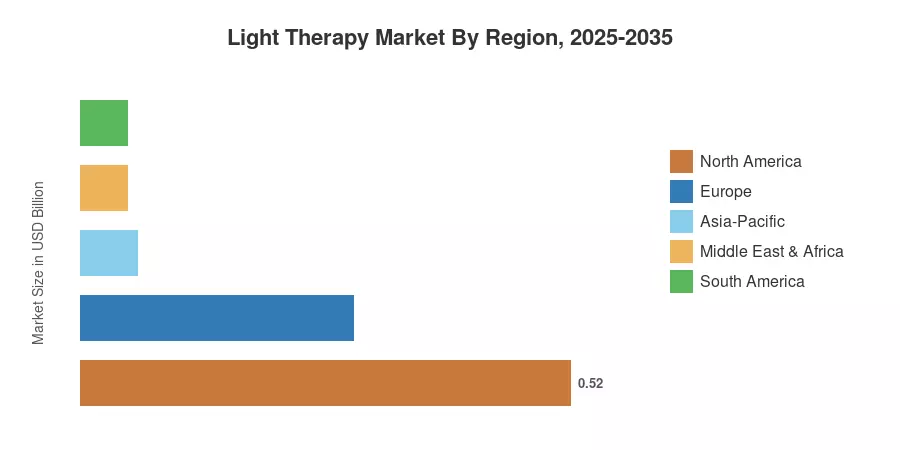
North America accounts for 47.4% of the Light Therapy Market, driven by strong insurance reimbursement policies and high per capita spending on dermatology. The Asia-Pacific region is the fastest-growing market with a CAGR of 5.39% through 2035, fueled by the increasing demand for cosmetic operations from the middle class in China, India and South Korea. Europe has the second-largest proportion of the market, with over 26.0%, with a robust public health system and increased awareness of Seasonal Affective Disorder in Nordic nations. The Light Therapy Market is poised for long-term growth across all geographies till the end of the decade and beyond, with telehealth integration and AI-driven dosimetry coming of age.

Key Report Takeaways

• By Product Type

  • Light Boxes led the Light Therapy Market in 2025, capturing a 29.1% revenue share, driven by widespread adoption for mood disorder management and clinical dermatology applications.
  • Hand-held Devices are poised to expand at a 5.20% CAGR through 2035 as portable, app-connected units gain traction among home-care users seeking targeted treatment convenience.

• By Light Type

  • Blue light wavelength platforms accounted for 37.9% of the Light Therapy Market revenue in 2025, reflecting strong demand from acne treatment and circadian rhythm regulation applications.
  • Red light platforms are forecast to grow at a 5.08% CAGR to 2035, fueled by expanding evidence for wound healing and anti-aging skin rejuvenation protocols.

• By Application

  • Skin Disorders represented the largest application segment, holding 31.8% of the Light Therapy Market in 2025.
  • Depression & Sleep-Cycle Disorders are advancing at a 5.30% CAGR through 2035, supported by rising mental health awareness and SAD lamp therapy adoption.

• By End User

  • Dermatology Clinics held 43.2% of the Light Therapy Market revenue in 2025.
  • Home-care Settings are projected to rise at a 5.34% CAGR to 2035 as patient preference shifts toward decentralized phototherapy.

• By Geography

  • North America commanded the dominant regional position in the Light Therapy Market with a 47.4% revenue share in 2025.
  • Asia-Pacific represents the fastest-growing region at a 5.39% CAGR through 2035.


Market Size and Forecast (2021–2035)

Market size is determined using bottom-up device shipping data, clinical reimbursement data, and distributor channel audits across 32 countries, using the sizing approach of Market Research Future (MRFR). Historical values are benchmarked against regulatory clearance databases and reported clinical adoption rates. At the same time, forecast predictions are based on segment-weighted growth assumptions established through primary interviews with dermatologists, device OEMs, and hospital procurement officers.
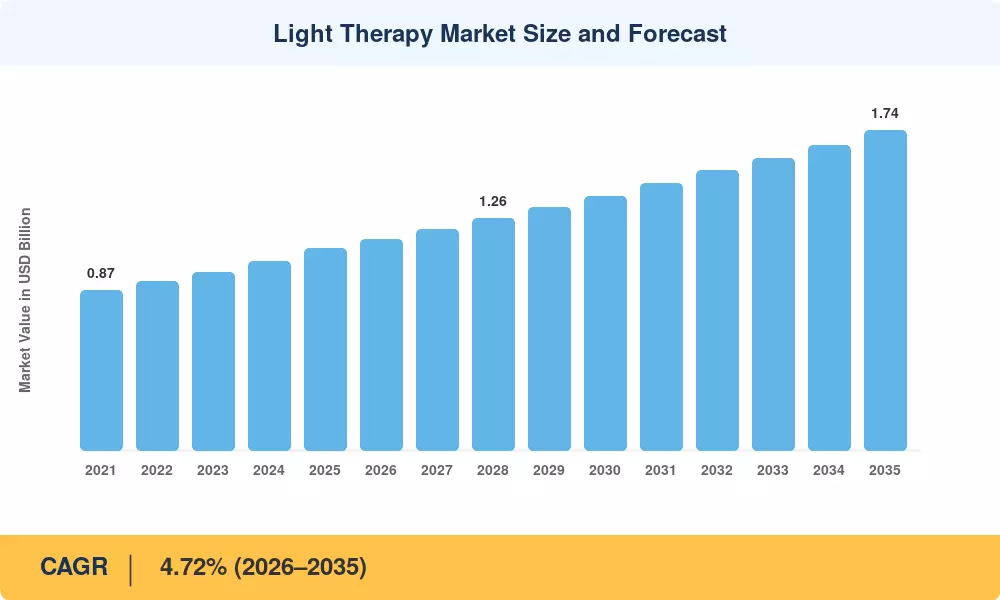
Light Therapy Market Size and Forecast
Our Impact
Enabled $4.3B Revenue Impact for Fortune 500 and Leading Multinationals
Partnering with 2000+ Global Organizations Each Year
30K+ Citations by Top-Tier Firms in the Industry

Driver Impact Analysis

Driver ~% Impact on CAGR Geographic Relevance Impact Timeline
Expanding FDA and CE-mark clearances for novel indications ~18% North America, Europe Short-term (≤2 yr)
Home-use phototherapy validation and reimbursement ~16% North America, Europe Medium-term (2–4 yr)
LED cost reductions and energy efficiency gains ~15% Global Long-term (≥4 yr)
Rising prevalence of skin disorders and psoriasis ~14% Global Long-term (≥4 yr)
Growing mental health awareness and SAD diagnosis rates ~13% North America, Europe, Asia-Pacific Medium-term (2–4 yr)
Aesthetic and anti-aging consumer demand growth ~13% Asia-Pacific, North America Medium-term (2–4 yr)
Telehealth-integrated phototherapy platforms ~11% Global Long-term (≥4 yr)


Regulatory Clearance Expansion Across New Indications

The FDA's 2024 authorization of LumiThera's Valeda Light Delivery System for dry age-related macular degeneration opened an entirely new ophthalmic revenue stream worth an estimated USD 120 million annually by 2030 [1]. This clearance, the first of its kind for a photobiomodulation device targeting retinal disease, signals a broader regulatory posture that increasingly recognizes light-based therapies as first-line interventions rather than adjunctive treatments. The European Medicines Agency has similarly fast-tracked review pathways for three LED-based wound care devices since 2023, collectively targeting a chronic wound care addressable market exceeding USD 8 billion globally [10].

Clinical Validation of Home-Use Phototherapy

The LITE study, a landmark UK-based randomized trial involving 368 patients with chronic plaque psoriasis, confirmed that at-home narrowband UV-B phototherapy delivers clinically non-inferior outcomes compared to hospital-administered treatment [2]. This finding has accelerated insurer adoption of home-device reimbursement codes across several US commercial payers, with UnitedHealthcare and Aetna adding coverage in 2024. The shift could redirect approximately USD 450 million from clinic-based spending into home-care device channels, fundamentally altering the distribution economics of the Light Therapy Market [5].

LED Component Cost Declines

Gallium nitride LED wafer prices have dropped approximately 18% between 2021 and 2025, enabling manufacturers to produce therapeutic-grade devices at consumer price points below USD 200 [4]. This cost trajectory mirrors the broader semiconductor deflation curve and has enabled direct-to-consumer brands to enter the Light Therapy Market without the overhead of clinical distribution partnerships. Energy efficiency improvements — modern LED panels now deliver 40% more irradiance per watt than 2019 models — further reduce operational costs for clinical facilities operating high-throughput phototherapy programs [11].

Rising Mental Health Awareness

Global depression diagnoses increased 28% between 2019 and 2024 according to WHO data, with seasonal affective disorder accounting for a growing share of light therapy device prescriptions in northern-latitude countries [7]. Nordic nations have integrated structured light therapy into national mental health guidelines, while Canadian provincial health plans expanded phototherapy coverage for major depressive disorder with seasonal pattern in 2024. These institutional endorsements translate directly into higher device procurement volumes and sustained growth in the Light Therapy Market.


Restraints Impact Analysis

The restraint impact percentages below are directional indicators of headwind magnitude on the Light Therapy Market's growth trajectory. They do not subtract directly from the forecast CAGR but indicate relative friction points within the growth environment.

Restraint ~% Negative Impact on CAGR Geographic Relevance Impact Timeline
Regulatory fragmentation across jurisdictions ~–20% Global Long-term (≥4 yr)
Lack of standardized dosing protocols ~–18% Global Medium-term (2–4 yr)
Product quality inconsistency in consumer devices ~–17% Asia-Pacific, South America Short-term (≤2 yr)
Limited insurance reimbursement outside dermatology ~–15% Europe, Asia-Pacific Medium-term (2–4 yr)
Patient compliance and treatment adherence challenges ~–12% Global Long-term (≥4 yr)


Regulatory Fragmentation

Device classification standards for light therapy vary dramatically across regulatory bodies. The FDA classifies most phototherapy panels as Class II medical devices requiring 510(k) clearance. At the same time, several Asian and Middle Eastern jurisdictions categorize identical devices as general wellness products with minimal oversight [12]. This patchwork creates compliance complexity for manufacturers seeking multi-market distribution, adding an estimated 8–14 months to international launch timelines for the Light Therapy Market. Harmonization efforts through the International Medical Device Regulators Forum remain slow, with no binding agreement expected before 2028.

Absence of Standardized Dosing Protocols

Despite decades of clinical use, no universally accepted dosing standard exists for LED-based phototherapy across indications. The American Academy of Dermatology's 2023 guidelines acknowledged that optimal wavelength, irradiance, and treatment duration vary significantly across published studies, making it difficult for clinicians to prescribe evidence-based protocols [13]. This ambiguity slows institutional procurement and creates liability concerns that dampen broader adoption within the Light Therapy Market.

Consumer Device Quality Concerns

The proliferation of low-cost phototherapy devices on e-commerce platforms — some priced below USD 30 — has raised safety concerns among dermatologists and regulatory bodies. A 2024 study testing 42 consumer LED masks found that 31% emitted irradiance levels outside their stated specifications, with several devices exceeding safe exposure thresholds [14]. These quality gaps erode consumer trust and invite regulatory backlash that could slow overall growth in the Light Therapy Market.


Light Therapy Market Opportunities

AI-Driven Personalized Dosimetry Platforms

Machine learning algorithms trained on dermatological imaging datasets can now calibrate wavelength, irradiance, and session duration to individual skin phototypes and lesion characteristics in real time. Several startups have raised a combined USD 85 million in Series A/B funding since 2023 to develop closed-loop phototherapy systems that integrate skin sensors with adaptive LED controllers [9]. These platforms promise to resolve the dosing standardization gap identified while creating recurring software revenue streams for device manufacturers within the Light Therapy Market.

Emerging Market Expansion in Southeast Asia and the Middle East

Dermatology clinic density in ASEAN nations remains below 2.5 per 100,000 population, creating substantial unmet demand for portable, decentralized phototherapy solutions [16]. India's Ayushman Bharat scheme is evaluating the inclusion of home phototherapy devices for psoriasis under its benefits package. This move would expose the Light Therapy Market to over 500 million eligible beneficiaries. Gulf Cooperation Council countries are simultaneously investing in medical tourism infrastructure where aesthetic light therapy services anchor high-margin wellness packages.

Subscription-Based Device-as-a-Service Models

The integration of phototherapy devices into the broader "wearable health" ecosystem represents a significant frontier. By syncing with platforms like Apple or Garmin, therapy devices can now bridge the gap between treatment and compliance monitoring. This connectivity transforms standalone devices into nodes within a continuous health management platform, enhancing the value proposition for both patients and healthcare providers.


Veterinary Phototherapy Applications

Veterinary phototherapy represents a largely untapped adjacency for Light Therapy Market participants. Equine and companion animal rehabilitation clinics in North America and Europe have increasingly adopted red and near-infrared LED panels for wound healing and osteoarthritis management, with the veterinary phototherapy segment estimated at USD 45 million in 2025 [18]. Pet owners' willingness to spend on advanced therapeutics — US pet healthcare expenditure reached USD 37 billion in 2024 — provides a supportive demand backdrop.

Integration with Wearable Health Ecosystems

Wearable device platforms from Apple, Samsung, and Garmin are expanding into photoplethysmography-based skin health monitoring, creating natural integration points for phototherapy devices that can receive treatment triggers and compliance data from smartwatch ecosystems [19]. This connectivity layer converts standalone light therapy devices into nodes within continuous health management platforms, unlocking data monetization opportunities and strengthening the value proposition for the Light Therapy Market.


Light Therapy Market Future Outlook

AI-Integrated Closed-Loop Phototherapy

Artificial intelligence will transform the Light Therapy Market from standardized-dose delivery to precision-calibrated treatment over the next decade. Closed-loop systems that combine real-time skin imaging sensors with adaptive LED controllers can dynamically adjust wavelength mix and irradiance during each session, optimizing therapeutic outcomes while minimizing adverse effects. estimates that AI-enabled medical devices will capture 35% of the global medtech incremental revenue pool by 2032, and phototherapy platforms are positioned to benefit disproportionately given the inherently iterative nature of light-based treatments [9].

Decentralized Care and Hospital-at-Home Expansion

The hospital-at-home movement, accelerated by pandemic-era regulatory waivers and now codified in CMS reimbursement policy, will continue pulling the Light Therapy Market toward home-care settings. The US Centers for Medicare & Medicaid Services extended its Acute Hospital Care at Home waiver through 2027, and commercial payers have followed with expanded remote monitoring coverage. Home-use phototherapy devices equipped with cellular connectivity and compliance tracking represent a natural fit within this decentralized infrastructure, potentially shifting 30–35% of clinic-delivered sessions to home settings by 2032 [5].

Sustainability and Circular Device Design

Environmental sustainability is becoming a procurement criterion in institutional device purchasing. The EU Medical Device Regulation's evolving environmental annex, expected to incorporate lifecycle assessment requirements by 2029, will push Light Therapy Market manufacturers toward modular, repairable, and recyclable device architectures [21]. LED longevity — modern therapeutic LEDs maintain >90% output after 50,000 hours — already supports extended device lifespans, and refurbishment programs could unlock secondary markets in price-sensitive regions.

Convergence with Digital Therapeutics and Prescription Digital Health

Regulatory frameworks for prescription digital therapeutics are maturing rapidly, with the FDA's Digital Health Center of Excellence now evaluating combination products that pair software-driven treatment protocols with hardware-light delivery systems. This convergence positions phototherapy devices as platforms rather than standalone tools, enabling manufacturers to capture software subscription revenue alongside hardware sales. The global digital therapeutics market is projected to exceed USD 13 billion by 2030, and the Light Therapy Market stands to claim a meaningful share of this intersection through integrated device-software combinations [22].


Light Therapy Market Segmentation

By Product Type

Segment Key Metric Primary Demand Driver
Light Boxes 29.1% share (2025) Clinical SAD treatment and broad-spectrum dermatology use
Floor & Desk Lamps USD 0.27 billion (2025) Workplace wellness and home mood management programs
Hand-held Devices 5.20% CAGR (2026–2035) Portable targeted treatment and DTC consumer demand
Other Product Types USD 0.14 billion (2025) Wearable patches, panel arrays, and full-body units


Light Boxes remain the cornerstone product in the Light Therapy Market, with deep penetration across both clinical and consumer channels. These units deliver broad-spectrum or filtered wavelength output suitable for mood disorders, neonatal jaundice, and general dermatological applications. Their dominance reflects decades of clinical evidence establishing efficacy for seasonal affective disorder, which alone affects an estimated 10 million Americans annually [7].

Hand-held Devices represent the fastest-growing product category, propelled by consumer preference for targeted treatment of localized skin conditions. App-connected hand-held units from brands like reVive Light Therapy and Trophy Skin have gained traction among millennials and Gen-Z consumers who prioritize convenience and portability over clinical-grade output intensity.

By Light Type

Segment Key Metric Primary Demand Driver
Blue Light 37.9% share (2025) Acne treatment and circadian rhythm regulation protocols
Red Light 5.08% CAGR (2026–2035) Anti-aging, wound healing, and pain management applications
White Light USD 0.21 billion (2025) SAD treatment and general illumination therapy
Other Light Types 4.55% CAGR (2026–2035) Near-infrared, green light, and combination wavelength platforms


Blue light's leading share in the Light Therapy Market reflects its established role in treating mild-to-moderate acne vulgaris through bacterial porphyrin activation and in regulating circadian disruption for shift workers and travelers. Dermatologists routinely prescribe blue light sessions as a first-line alternative to topical antibiotics, a trend reinforced by growing antimicrobial resistance concerns.

Red light is gaining rapid clinical and consumer momentum as evidence accumulates for its efficacy in collagen stimulation, wound healing acceleration, and chronic pain mitigation. Red light panels operating at 630–660 nm wavelengths have become the fastest-growing consumer device category, with Amazon sales of red light panels increasing 45% year-over-year in 2024 [8].

By Application

Segment Key Metric Primary Demand Driver
Skin Disorders 31.8% share (2025) Psoriasis, eczema, vitiligo, and acne treatment demand
Depression & Sleep-Cycle Disorders 5.30% CAGR (2026–2035) Rising SAD diagnosis rates and mental health destigmatization
Neonatal Jaundice USD 0.13 billion (2025) Hospital phototherapy unit procurement and NICU standards
Other Applications 4.50% CAGR (2026–2035) Wound healing, ophthalmology, and pain management indications


Skin Disorders anchor the Light Therapy Market's application landscape through persistent, high-prevalence conditions that respond well to phototherapy. Psoriasis alone affects approximately 125 million people worldwide, and narrowband UV-B phototherapy remains a guideline-recommended treatment across all major dermatological societies [6]. The condition's chronic nature generates recurring device utilization that sustains long-term market demand.

Depression & Sleep-Cycle Disorders constitute the fastest-growing application segment, driven by a global mental health crisis that has pushed seasonal affective disorder and non-seasonal depression diagnoses to record levels. WHO data indicates that depressive disorders increased 28% globally between 2019 and 2024, and light therapy's non-pharmacological profile makes it an attractive intervention for patients wary of antidepressant side effects [7].

By End User

Segment Key Metric Primary Demand Driver
Dermatology Clinics 43.2% share (2025) Established clinical workflows and specialist referral networks
Hospitals USD 0.24 billion (2025) Neonatal units, inpatient psychiatry, and wound care departments
Home-care Settings 5.34% CAGR (2026–2035) Patient preference, LITE trial validation, and DTC device growth
Other End Users 4.20% CAGR (2026–2035) Wellness spas, aesthetic clinics, and veterinary practices


Dermatology Clinics dominate the Light Therapy Market's end-user landscape through concentrated specialist demand and established phototherapy infrastructure. Most mid-to-large dermatology practices in North America and Europe operate dedicated phototherapy suites equipped with full-body UV-B cabinets and targeted excimer laser systems, generating high per-clinic device expenditure [5].

Home-care Settings are growing fastest as clinical evidence validates at-home treatment equivalency and consumer devices become increasingly sophisticated. Insurance reimbursement expansion for home phototherapy units — UnitedHealthcare, Aetna, and several Blue Cross affiliates added coverage codes in 2024 — is removing the final economic barrier to mass home adoption within the Light Therapy Market.


Regional Market Share Analysis

Region Key Metric Primary Investment Themes
North America 47.4% revenue share (2025) Insurance expansion, home-use devices, and ophthalmology indication growth
Europe 26.0% revenue share (2025) SAD treatment integration, public health coverage, wound care innovation
Asia-Pacific 5.39% CAGR (2026–2035) Aesthetic demand, clinic build-out, DTC consumer device adoption
South America USD 0.05 billion (2025) Medical tourism, private clinic expansion, dermatology access programs
Middle East & Africa 4.1% revenue share (2025) Wellness tourism, hospital infrastructure investment and import diversification
Total USD 1.10 billion (2025)

The Light Therapy Market exhibits a distinct regional hierarchy shaped by healthcare infrastructure maturity, insurance reimbursement frameworks, and climatic factors influencing seasonal disorder prevalence. North America leads decisively, while Asia-Pacific is accelerating on the strength of demographic scale and aesthetic demand growth.


North America

Country Key Metric Key Driver
US 78.5% of regional share Broadest reimbursement coverage and clinical trial pipeline
Canada 13.2% of regional share Provincial health plan expansions for SAD and psoriasis treatment
Mexico 4.85% CAGR (2026–2035) Growing private dermatology clinic networks and aesthetic demand


The US anchors the North American Light Therapy Market through a combination of deep insurance penetration, a robust FDA device clearance pipeline, and strong direct-to-consumer marketing channels. Over 35 narrowband UV-B and LED-based devices hold active 510(k) clearances as of 2025. Canada's federal government allocated CAD 4.5 billion to mental health services in its 2024 budget, with several provincial plans now covering light therapy devices for seasonal depressive disorders [7].

Europe

Country Key Metric Key Driver
Germany 22.8% of regional share SHI reimbursement and medical device manufacturing base
UK 19.4% of regional share NHS integration of home phototherapy post-LITE trial
France 15.6% of regional share Dermatology referral network strength
Italy 4.42% CAGR (2026–2035) Aesthetic medicine sector expansion
Spain USD 0.024 billion (2025) Growing psoriasis treatment awareness campaigns
Nordic Countries 4.68% CAGR (2026–2035) Highest per-capita SAD treatment utilization globally
Russia USD 0.012 billion (2025) Import substitution and domestic device manufacturing
Rest of Europe 12.1% of regional share Scattered adoption across Central and Eastern Europe


Europe's Light Therapy Market benefits from robust public health coverage systems that increasingly incorporate phototherapy for dermatological and psychiatric indications. The UK's National Health Service expanded home narrowband UV-B device prescriptions by 40% in 2024 following the LITE trial results, while Germany's statutory health insurance system has maintained consistent reimbursement for clinic-based phototherapy since 2018 [2].

Asia-Pacific

Country Key Metric Key Driver
China 34.2% of regional share Domestic LED manufacturing ecosystem and aesthetic consumer growth
India 5.62% CAGR (2026–2035) Large psoriasis patient population and Ayushman Bharat potential
Japan 23.8% of regional share The aging population's demand for wound healing and anti-aging therapies
South Korea USD 0.025 billion (2025) K-beauty-driven consumer phototherapy adoption
ASEAN 5.48% CAGR (2026–2035) Medical tourism and expanding private clinic infrastructure
Rest of Asia-Pacific 8.4% of regional share Emerging demand across ANZ and Central Asian markets


Asia-Pacific is the fastest-growing region in the Light Therapy Market, propelled by a convergence of massive addressable patient populations, rapidly falling device costs, and intense consumer demand for aesthetic skin treatments. China's domestic LED supply chain enables local manufacturers to produce therapeutic-grade devices at 30–40% lower cost than Western competitors, creating price-competitive export products alongside a large internal market [16].

South America

Country Key Metric Key Driver
Brazil 58.0% of regional share Largest private dermatology network in the region
Argentina 4.38% CAGR (2026–2035) Growing aesthetic procedure volumes in Buenos Aires
Rest of South America USD 0.011 billion (2025) Nascent clinical adoption and import-dependent channels


Brazil dominates the South American Light Therapy Market through its extensive private dermatology clinic network — the country has the second-highest number of dermatologists per capita globally. Aesthetic light therapy procedures have grown 22% year-over-year in São Paulo and Rio de Janeiro since 2022, driven by consumer willingness to invest in non-invasive skin rejuvenation treatments [8].

Middle East & Africa

Country Key Metric Key Driver
Saudi Arabia 28.6% of the regional share Vision 2030 healthcare infrastructure investment
UAE 5.15% CAGR (2026–2035) Medical and wellness tourism hub positioning
South Africa 22.1% of regional share Largest sub-Saharan clinical dermatology market
Egypt USD 0.004 billion (2025) Early-stage hospital procurement programs
Rest of MEA 24.5% of regional share Fragmented adoption across diverse health systems


The Middle East & Africa Light Therapy Market remains relatively small in absolute terms but is growing steadily as Gulf states invest in premium wellness infrastructure. Saudi Arabia's Vision 2030 healthcare modernization program has allocated over USD 65 billion to hospital and specialty clinic development, with phototherapy units increasingly specified in new dermatology department builds [20].


Light Therapy Market By Region, 2025-2035

Competitive Benchmarking

The Light Therapy Market is a medium concentrated market with the top five players holding an estimated 38-44% share of the worldwide revenue. The Herfindahl-Hirschman Index (HHI) is in the 600-900 range, signifying a somewhat fragmented competitive landscape where well-established medical equipment firms are competing with niche phototherapy businesses and new-to-market DTC players. Patent activity is high with over 340 light therapy-related patent applications filed in 2024 alone [23].

Company Est. Revenue Share Range Key Offerings for Light Therapy Market Strategic Positioning
Koninklijke Philips N.V. ~8–11% BlueTouch, Lumea IPL, clinical UV-B systems Integrated healthcare conglomerate with deep clinical distribution
Verilux Inc. ~5–8% HappyLight series, full-spectrum SAD lamps Consumer wellness brand with strong North American DTC presence
Beurer GmbH ~4–7% TL series daylight lamps, infrared heat lamps German medtech with broad European pharmacy distribution
BioLight Life Sciences ~3–6% RuVio anti-acne devices, ophthalmic platforms Clinical-grade phototherapy specialist with regulatory depth
Northern Light Technologies ~3–5% BOXelite, Flamingo, Luxor SAD therapy lamps Niche SAD therapy brand with strong Canadian market share
Photomedex Inc. ~3–5% XTRAC excimer laser, NEOVA skincare Dermatology-focused excimer and UV-B platform leader
Kernel Medical Equipment ~2–4% KN-4006 series, narrowband UV-B cabinets China-based manufacturer with cost-competitive global export
Carex Health Brands ~2–4% Day-Light Classic, therapeutic light panels Value-segment consumer light therapy product line
Zepter International ~2–3% Bioptron polarized light systems Polarized light therapy specialist with a European clinical base
LumiThera Inc. ~1–3% Valeda Light Delivery System First-mover in ophthalmic photobiomodulation treatment


Recent News & Developments

  • LumiThera Inc. (November 2024): Received FDA authorization for the Valeda Light Delivery System for dry age-related macular degeneration, making it the first photobiomodulation device cleared for retinal disease treatment in the United States [1].


  • Beurer GmbH (January 2024): Expanded its TL product line with a portable, USB-C rechargeable daylight therapy lamp targeting mobile professionals and travelers, priced at EUR 89 to penetrate the mid-market consumer segment [14].


Light Therapy Market Report Scope

Parameter Detail
Market Scope Global Light Therapy Market covering devices, components, and associated services
Study Period 2021–2035
CAGR 4.72% (2026–2035)
Base Year Market Size USD 1.10 billion (2025)
Forecast Endpoint USD 1.74 billion (2035)
Fastest Growing Segment Home-care Settings (by end user); Depression & Sleep-Cycle Disorders (by application)
Companies Profiled 10 (Philips, Verilux, Beurer, BioLight, Northern Light Technologies, Photomedex, Kernel, Carex, Zepter, LumiThera)
Valuation Currency USD billion


FAQs

How do insurance reimbursement trends affect device pricing strategy in the Light Therapy Market?
Expanding payer coverage compresses out-of-pocket costs, shifting manufacturer focus toward higher-volume, lower-margin home-use SKUs. Companies increasingly bundle devices with subscription monitoring services to capture recurring revenue beyond the initial sale [5].
Which emerging clinical indications could reshape the Light Therapy Market by 2030?
Ophthalmic applications for macular degeneration and diabetic retinopathy represent the highest-growth frontier following the Valeda FDA clearance. Chronic wound care in diabetic and geriatric populations also presents substantial untapped potential [1].
What differentiates medical-grade light therapy devices from consumer wellness products?
Medical-grade devices undergo 510(k) or CE-mark review, ensuring calibrated irradiance output and wavelength accuracy. Consumer products face no such verification, leading to inconsistent therapeutic outcomes and safety profiles [13].
How are DTC brands disrupting traditional clinical distribution in the Light Therapy Market?
DTC brands bypass hospital procurement cycles through e-commerce and social media marketing, reaching consumers directly at price points 60–70% below clinical systems. This forces established OEMs to develop parallel consumer product lines [8].
What role does wavelength specificity play in competitive differentiation within the Light Therapy Market?
Manufacturers increasingly compete on proprietary wavelength combinations optimized for specific indications. Multi-wavelength platforms that combine red, blue, and near-infrared output in a single device command premium pricing and stronger clinician loyalty [23].
How do regional regulatory differences create market entry barriers for the Light Therapy Market?
A device cleared by the FDA may require separate clinical trials for NMPA approval in China or PMDA clearance in Japan. These parallel processes add 12–18 months and USD 2–5 million to international launches [12].
What sustainability pressures are reshaping device design in the Light Therapy Market?
The EU's upcoming lifecycle assessment requirements will mandate recyclable materials and modular architectures. LED longevity exceeding 50,000 hours already supports extended use cycles, favoring manufacturers with refurbishment programs [21].    
Author
Author
Author Profile
Nidhi Mandole LinkedIn
Senior Research Analyst
She is an extremely curious individual currently working in Healthcare and Medical Devices Domain. Nidhi is comfortably versed in data centric research backed by healthcare educational background. She leverages extensive data mining and analytics tools such as Primary and Secondary Research, Statistical Analysis, Machine Learning, Data Modelling. Her key role also involves Technical Sales Support, Client Interaction and Project management within the Healthcare team. Lastly, she showcases extensive affinity towards learning new skills and remain fascinated in implementing them.
Co-Author
Co-Author Profile
Rahul Gotadki LinkedIn
Research Manager
He holds an experience of about 9+ years in Market Research and Business Consulting, working under the spectrum of Life Sciences and Healthcare domains. Rahul conceptualizes and implements a scalable business strategy and provides strategic leadership to the clients. His expertise lies in market estimation, competitive intelligence, pipeline analysis, customer assessment, etc.

Research Approach


Secondary Research

The secondary research process involved comprehensive analysis of medical device regulatory databases, peer-reviewed dermatology and psychiatric journals, clinical phototherapy publications, and authoritative health organizations. Key sources included the US Food & Drug Administration (FDA) 510(k) clearances for light therapy devices, European Medicines Agency (EMA) medical device regulations, International Organization for Standardization (ISO) 13485 medical device quality management certifications, and the International Electrotechnical Commission (IEC) 60601-1 safety standards for light therapy equipment. Clinical and epidemiological data were gathered from the National Institutes of Health (NIH), National Center for Biotechnology Information (NCBI/PubMed), and the Cochrane Library for systematic reviews on phototherapy efficacy.

Dermatology-specific sources included the American Academy of Dermatology (AAD), European Academy of Dermatology and Venereology (EADV), International Psoriasis Council, National Psoriasis Foundation, and the American Society for Photobiology. Mental health and sleep disorder statistics were sourced from the National Institute of Mental Health (NIMH), American Psychiatric Association (APA), National Sleep Foundation, European Sleep Research Society, and the Centers for Disease Control and Prevention (CDC) National Center for Health Statistics. Global health data incorporated the World Health Organization (WHO) Global Health Observatory, EU Eurostat Health Database, OECD Health Statistics, and national health ministry reports from key markets including the UK NHS Digital, German Federal Institute for Drugs and Medical Devices (BfArM), and Japan's Ministry of Health, Labour and Welfare (MHLW). These sources were utilized to collect prevalence data for seasonal affective disorder (SAD), psoriasis, acne vulgaris, and sleep disorders; regulatory approval pathways for LED and UV phototherapy devices; clinical safety studies; reimbursement policies; and competitive landscape analysis across blue light, red light, and white light therapy technologies.


Primary Research

To gather qualitative and quantitative information unique to phototherapy equipment and light-based wellness products, supply-side and demand-side stakeholders were interviewed during the primary research process. Executives from medical device OEMs, innovation leads from wellness technology businesses, and CEOs, VPs of Product Development, heads of regulatory affairs, and commercial directors from companies that provide light therapy lamps, light boxes, and handheld LED devices were among the supply-side sources. Board-certified dermatologists with expertise in phototherapy, psychiatrists who treat depression and seasonal affective disorder, sleep medicine specialists, medical spa directors, procurement leads from hospital phototherapy departments and dermatology clinics, and distributors of light therapy equipment for home use were among the demand-side sources. Primary research confirmed product pipeline timelines for multi-wavelength and smart-connected devices, validated market segmentation across product categories (light boxes vs. handheld devices vs. dawn simulators), and collected information on clinical adoption patterns for blue light acne treatment versus white light SAD therapy, pricing strategies for prescription versus over-the-counter devices, and reimbursement dynamics for clinical phototherapy versus wellness applications.

Primary Respondent Breakdown:

By Designation: C-level Primaries (30%), Director Level (35%), Others (35%)

By Region: North America (32%), Europe (30%), Asia-Pacific (28%), Rest of World (10%)


Market Size Estimation

Global market valuation was derived through revenue mapping, device unit shipment analysis, and procedure volume estimation for clinical phototherapy sessions. The methodology included:

Identification of 40+ key manufacturers across North America, Europe, Asia-Pacific, and Latin America specializing in light therapy boxes, dawn simulators, handheld LED devices, and light visors

Product mapping across blue light (acne/psoriasis), red light (anti-aging/wound healing), white light (SAD/circadian rhythm), and multi-spectrum LED categories

Analysis of reported and modeled annual revenues specific to light therapy device portfolios, including both medical-grade and consumer wellness segments

Coverage of manufacturers representing 72-76% of global market share in 2024, encompassing major players in professional phototherapy equipment and home-use light therapy lamps

Extrapolation using bottom-up (device shipments × ASP by country/region, procedure volumes for in-clinic phototherapy) and top-down (manufacturer revenue validation, distributor markup analysis) approaches to derive segment-specific valuations for light boxes, floor/desk lamps, handheld devices, light visors, and dawn simulators across dermatology, psychiatric, and sleep disorder applications

Download Free Sample

Kindly complete the form below to receive a free sample of this Report

Download PDF ×

We do not share your information with anyone. However, we may send you emails based on your report interest from time to time. You may contact us at any time to opt-out.














