Download Free Sample
Kindly complete the form below to receive a free sample of this Report
Lip Stain Market Size, Share, Industry Trend & Analysis Research Report Information By Application ( Long Lasting, Moisturizing, Matte Finish, Glossy Finish), By Formulation ( Liquid, Gel, Cream, Stick), By Distribution Channel ( Online Retail, Department Stores, Specialty Stores, Pharmacies), By onsumer Demographics ( Age Group, Gender, Income Level, Lifestyle) And By Region (North America, Europe, Asia-Pacific, And Rest Of The World) - Forecast Till 2035
As per MRFR analysis, the lip stain market size was estimated at 1.5 USD Million in 2024. The lip stain industry is projected to grow from 1.6 in 2025 to 3.0 by 2035, exhibiting a compound annual growth rate (CAGR) of 6.5% during the forecast period 2025 - 2035.
The lip stain market is experiencing a dynamic shift towards sustainability and customization, driven by consumer preferences and social media influence.
| 2024 Market Size | 1.5 (USD Million) |
| 2035 Market Size | 3.0 (USD Million) |
| CAGR (2025 - 2035) | 6.5% |
L'Oreal (FR), Estée Lauder (US), Revlon (US), Maybelline (US), CoverGirl (US), MAC Cosmetics (CA), Clinique (US), NARS (US), Dior (FR)
Our Impact
Enabled $4.3B Revenue Impact for Fortune 500 and Leading Multinationals
Partnering with 2000+ Global Organizations Each Year
30K+ Citations by Top-Tier Firms in the Industry
The lip stain market is currently experiencing a dynamic evolution, characterized by shifting consumer preferences and innovative product offerings. As individuals increasingly seek long-lasting and vibrant color options, brands are responding by developing formulations that promise durability without compromising comfort. This trend appears to be driven by a growing awareness of beauty products that align with personal values, such as sustainability and cruelty-free practices. Furthermore, the rise of social media influencers and beauty enthusiasts has significantly impacted purchasing decisions, as consumers often look to these figures for guidance on the latest trends and products. In addition, the lip stain market is witnessing a diversification of shades and finishes, catering to a broader audience. This expansion reflects a desire for self-expression and individuality among consumers, who are eager to experiment with bold colors and unique textures. As the market continues to evolve, it seems likely that brands will further innovate to meet the demands of a more discerning clientele, potentially leading to the introduction of multifunctional products that combine lip care with color. Overall, the lip stain market is poised for continued growth, driven by a blend of creativity, consumer engagement, and a commitment to quality.
The lip stain market is increasingly prioritizing eco-friendly practices, with brands adopting sustainable sourcing and packaging. This trend reflects a broader consumer demand for products that minimize environmental impact, suggesting that companies may invest in biodegradable materials and ethically sourced ingredients.
A notable trend within the lip stain market is the expansion of color palettes, catering to a wide range of skin tones and personal preferences. This diversification allows consumers to express their individuality, indicating that brands are likely to continue innovating in this area to attract a broader audience.
The influence of social media personalities on the lip stain market cannot be overlooked. As consumers increasingly turn to influencers for beauty advice, brands are likely to collaborate with these figures to enhance visibility and credibility, potentially reshaping marketing strategies in the process.
The lip stain market is witnessing a shift towards clean beauty products, as consumers become more conscious of the ingredients in their cosmetics. There is a rising demand for lip stains that are free from harmful chemicals and are formulated with natural ingredients. This trend aligns with the broader movement towards sustainability and health-conscious living. Recent surveys indicate that nearly 70 percent of consumers are willing to pay a premium for products that are labeled as clean or organic. As a result, brands are reformulating their lip stains to meet these expectations, which could potentially reshape the product offerings in the lip stain market. This focus on clean beauty not only appeals to environmentally conscious consumers but also enhances brand loyalty.
The lip stain market is significantly influenced by social media trends, which play a crucial role in shaping consumer preferences. Platforms such as Instagram and TikTok have become vital for beauty brands to showcase their products and engage with potential customers. Influencers and beauty enthusiasts often share their experiences with various lip stains, leading to increased visibility and brand awareness. Data suggests that products endorsed by popular influencers can see a sales increase of up to 30 percent within a short period. This phenomenon indicates that social media is not merely a marketing tool but a driving force in the lip stain market, compelling brands to invest in digital marketing strategies to capture the attention of their target audience.
The lip stain market is increasingly embracing customization trends, as consumers seek personalized beauty experiences. The desire for unique products that cater to individual preferences is driving brands to offer customizable lip stains. This trend allows consumers to select shades, finishes, and even formulations that align with their specific needs. Recent market analysis suggests that personalized beauty products are projected to grow at a rate of 15 percent annually, indicating a strong consumer interest in tailored solutions. Brands that successfully implement customization options may gain a competitive edge in the lip stain market, as they cater to the evolving demands of consumers who value individuality and self-expression.
The lip stain market is experiencing a transformation due to the expansion of e-commerce platforms. Online shopping has become increasingly popular, providing consumers with convenient access to a wide range of lip stain products. This shift is particularly evident among younger demographics, who prefer the ease of purchasing cosmetics online. Data indicates that e-commerce sales in the beauty sector have grown by over 25 percent in recent years, highlighting the importance of digital channels for brands. As a result, companies are investing in their online presence and optimizing their e-commerce strategies to cater to this growing consumer base. This trend is likely to continue influencing the lip stain market, as brands seek to enhance their online visibility and improve customer engagement.
The lip stain market experiences a notable increase in demand for long-lasting cosmetic products. Consumers are increasingly seeking lip products that offer durability and resistance to fading throughout the day. This trend is driven by the desire for convenience and the busy lifestyles of modern consumers. According to recent data, approximately 60 percent of consumers prioritize longevity in their lip products, which has led to a surge in the development of innovative formulations. Brands are responding by creating lip stains that promise extended wear without compromising comfort. This focus on long-lasting solutions is likely to shape the competitive landscape of the lip stain market, as companies strive to meet consumer expectations and differentiate their offerings.
The application segment of the lip stain market is primarily dominated by Everyday Use, which accounts for the largest share of consumer preferences. This segment caters to the daily needs of individuals who seek a long-lasting, low-maintenance lip color that withstands daily activities. On the other hand, Special Occasions is rapidly gaining traction, appealing to consumers looking for vibrant and impactful colors for events such as weddings or parties. As beauty standards evolve, more consumers are investing in products that offer both staying power and aesthetic appeal related to special moments. As the preferences of consumers continue to shift towards high-quality beauty products, the growth of the Special Occasions segment can be attributed to various factors. The rise of social media influencers and the visual-centric nature of platforms like Instagram have pushed the demand for striking lip stains that enhance one’s appearance in photos. Additionally, product innovation, such as formulations with improved pigments and moisturizing benefits, drives growth in this segment, making it increasingly popular among consumers seeking trendy and fun options for special events.
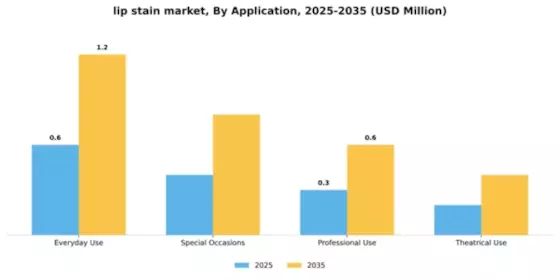
Everyday Use (Dominant) vs. Theatrical Use (Emerging)
Everyday Use remains the dominant segment within the lip stain market, primarily due to its practical applications in daily routines where consumers prioritize convenience and lasting color. This segment is characterized by its broad demographic appeal, focusing on versatile shades that cater to both subtle and bold looks. As a result, brands are expanding their everyday collections to include a variety of shades and finishes to meet diverse consumer preferences. In contrast, Theatrical Use is an emerging segment designed for professional makeup artists and performers, where colors are bolder and more dramatic, specifically tailored for stage and screen. This segment is experiencing a surge in interest among theatrical professionals seeking high-performance products that remain intact under various lighting conditions and emotional performances.
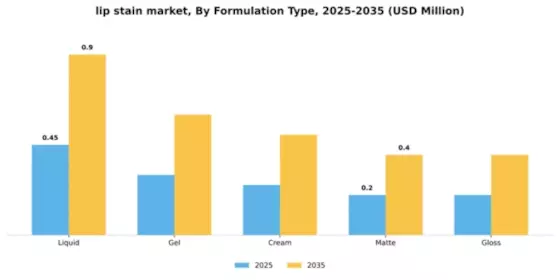
The lip stain market is characterized by diverse formulation types, with liquid formulations holding the largest share. Liquid lip stains are favored for their versatility and ease of application, leading to a prominent position among consumers. They are available in various shades and finishes, appealing to different preferences. Conversely, gel formulations are emerging rapidly in popularity among beauty enthusiasts. Their lightweight texture and long-lasting wear have garnered attention, particularly among younger demographics looking for effective yet comfortable lip products.
Liquid: Dominant vs. Gel: Emerging
Liquid lip stains dominate the formulation type segment due to their blend of vibrant color and lasting power. These products offer a wide range of pigmentation and finishes, making them a go-to choice for consumers seeking both bold and subtle looks. In contrast, gel lip stains are witnessing significant growth. They appeal to consumers who prefer a softer application with a more natural feel, providing a unique selling point. This formulation is expected to capture a larger market share as it caters to a growing trend towards lightweight and comfortable cosmetics. As consumers seek innovation and performance, both formulation types will play a crucial role in shaping the future of the lip stain market.
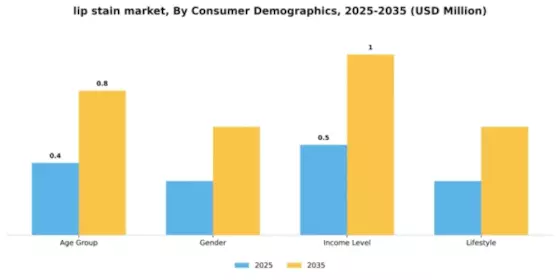
The lip stain market exhibits a diverse range of consumer demographics, with age groupings playing a crucial role in its market share distribution. Younger consumers, particularly those aged 18-24 years, represent the largest share, gravitating towards vibrant colors and trendy styles. Conversely, the lifestyle choice is witnessing rapid growth, with consumers increasingly seeking products that align with their values, such as sustainability and cruelty-free options. As the market evolves, lifestyle choices are significantly influencing purchasing decisions, leading to a rise in demand for lip stains that are not only fashionable but also promote well-being. Younger generations, particularly millennials and Gen Z, are prioritizing these attributes, driving innovation in product formulations and marketing strategies across the sector.
Age Group: 18-24 (Dominant) vs. Lifestyle (Emerging)
The age group of 18-24 stands out as the dominant segment within the lip stain market, characterized by a strong inclination towards bold colors and innovative formulations. This demographic seeks products that enhance their features while reflecting the latest trends. Their purchasing behavior is heavily influenced by social media platforms, where beauty influencers showcase lip stains, driving trends and brand awareness. In contrast, the lifestyle segment is emerging rapidly due to increasing consumer interest in products that align with personal values, such as ethical sourcing and environmental impact. Consumers are gravitating towards brands that champion sustainability, fostering a new market dynamic where both age and lifestyle considerations are paramount in shaping product offerings.
The lip stain market is witnessing significant distribution channel dynamics, with online retail commanding the largest share. Consumers show a strong preference for the convenience and extensive variety available online. Meanwhile, specialty beauty stores are gaining traction, appealing to niche markets and providing a curated experience that consumers value. As a result, the landscape is evolving, with a balanced blend of online and in-store purchasing options becoming increasingly important. Growth trends indicate that online retail is set to remain dominant due to its accessibility and the rise of e-commerce. Conversely, specialty beauty stores are emerging as a fast-growing alternative, driven by personalized shopping experiences and exclusive product offerings. These stores cater to beauty enthusiasts looking for expert advice and unique products. Consequently, the lip stain market is expanding beyond traditional outlets, with a greater emphasis on multi-channel strategies fulfilling diverse consumer needs.
Online Retail (Dominant) vs. Pharmacies (Emerging)
In the lip stain market, online retail stands out as the dominant distribution channel. Its strength lies in its ability to provide extensive product variety, competitive pricing, and convenience, making it the preferred choice for many consumers. On the other hand, pharmacies are emerging as a significant player, often considered a go-to destination for budget-conscious shoppers. While pharmacies typically focus on essential beauty items, they are increasingly broadening their offerings to include trendy lip stain products that appeal to a wider audience. This shift is reflective of evolving consumer shopping habits that favor speed and accessibility, with pharmacies adapting by creating dedicated beauty sections to capture this emerging market segment.
In the lip stain market, long-lasting formulations dominate due to their appeal among consumers looking for durability without frequent reapplication. Among feature preferences, long-lasting options constitute a significant share, as they meet the demands of busy lifestyles. Transfer-proof products are emerging quickly, gaining traction among consumers looking for comfort and wearability, particularly in social situations. This category is becoming increasingly popular, as consumers seek options that can withstand daily activities without compromising appearance. The growth of this segment is driven by rising consumer awareness of cosmetic longevity and performance. More consumers are prioritizing products that not only look good but last throughout the day, driving innovation in formulation technology. As lip stains evolve, features such as color intensity paired with long-lasting and transfer-proof properties are becoming essential for brands aiming to capture the market's attention and satisfy increasingly specific consumer needs.
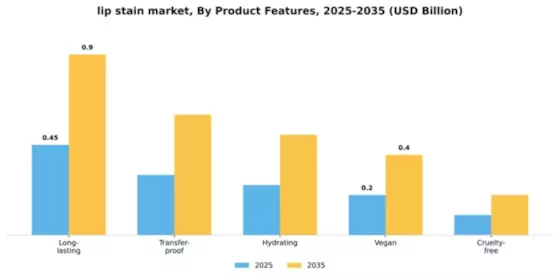
Long-lasting (Dominant) vs. Hydrating (Emerging)
The long-lasting feature in lip stains is a dominant attribute, recognized for its ability to provide a reliable wear-time that resonates with the needs of modern consumers. Brands that emphasize long-lasting effects leverage this quality to appeal to those seeking both beauty and practicality. In contrast, hydrating formulations are emerging as a crucial trend, addressing concerns related to lip dryness often associated with long-wear products. As consumers become more ingredient-conscious, brands that can combine long-lasting wear with moisturizing properties are positioning themselves favorably, satisfying the dual demand for longevity and comfort in makeup. This blend will likely shape future product development strategies, reinforcing the importance of consumer-centric formulations.
Get more detailed insights about Lip Stain Market Request Free Sample
North America holds a commanding 60% share of The lip stain market, driven by a strong consumer preference for long-lasting and vibrant lip products. The region's growth is fueled by increasing disposable incomes, a rising trend in beauty consciousness, and innovative product launches. Regulatory support for cosmetic safety and quality standards further enhances market stability, encouraging brands to invest in research and development. The competitive landscape is characterized by major players such as Estée Lauder, Revlon, and Maybelline, which dominate the market with their extensive product lines. The U.S. is the leading country, accounting for a significant portion of the market share, while Canada also shows promising growth. The presence of established brands and a robust retail network contribute to the region's strong performance in the lip stain segment.
Europe represents 40% of The lip stain market, driven by a growing demand for high-quality, cruelty-free cosmetics. The region's consumers are increasingly seeking products that align with sustainability and ethical practices, which is reshaping the competitive landscape. Regulatory frameworks, such as the EU Cosmetics Regulation, ensure product safety and efficacy, fostering consumer trust and encouraging innovation in formulations. Leading countries like France, Germany, and the UK are at the forefront of this market, with brands like L'Oreal and Dior leading the charge. The competitive environment is vibrant, with both established and emerging brands vying for market share. The focus on natural ingredients and eco-friendly packaging is becoming a significant trend, appealing to the environmentally conscious consumer base.
Asia-Pacific accounts for 35% of The lip stain market, with rapid growth driven by increasing urbanization and a burgeoning middle class. The demand for beauty products is on the rise, particularly among younger consumers who are influenced by social media trends. Regulatory bodies are also becoming more stringent, ensuring that products meet safety and quality standards, which is crucial for market growth. Countries like China, Japan, and South Korea are leading the charge, with a strong presence of both local and international brands. Key players such as MAC Cosmetics and Clinique are expanding their offerings to cater to diverse consumer preferences. The competitive landscape is dynamic, with brands focusing on innovative formulations and marketing strategies to capture the attention of the growing consumer base.
The Middle East and Africa represent 15% of The lip stain market, showcasing significant untapped potential. The region is witnessing a growing interest in beauty products, driven by a youthful population and increasing disposable incomes. Regulatory frameworks are evolving, with governments focusing on enhancing product safety and quality, which is essential for market growth. The rise of e-commerce is also facilitating access to a wider range of products. Leading countries such as the UAE and South Africa are at the forefront of this emerging market, with local and international brands vying for consumer attention. The competitive landscape is characterized by a mix of established players and new entrants, all aiming to cater to the diverse preferences of consumers. The focus on innovative marketing strategies and product offerings is crucial for capturing market share in this region.
The lip stain market is currently characterized by a dynamic competitive landscape, driven by evolving consumer preferences for long-lasting and vibrant lip products. Key players such as L'Oreal (FR), Estée Lauder (US), and Maybelline (US) are actively shaping the market through innovative product offerings and strategic initiatives. L'Oreal (FR) has positioned itself as a leader in sustainability, focusing on eco-friendly formulations and packaging, which resonates with environmentally conscious consumers. Meanwhile, Estée Lauder (US) emphasizes luxury and quality, leveraging its strong brand equity to attract high-end clientele. Maybelline (US), on the other hand, targets a younger demographic with trendy and affordable options, thereby expanding its market share in the competitive landscape.In terms of business tactics, companies are increasingly localizing manufacturing to reduce costs and enhance supply chain efficiency. This approach not only mitigates risks associated with The lip stain market demands. The competitive structure of the lip stain market appears moderately fragmented, with several key players holding substantial market shares while also facing competition from emerging brands. The collective influence of these major companies shapes the market dynamics, as they continuously innovate and adapt to consumer trends.In January 2026, L'Oreal (FR) announced a partnership with a leading tech firm to develop an AI-driven platform for personalized lip stain recommendations. This strategic move is likely to enhance customer engagement and drive sales by providing tailored product suggestions based on individual preferences. Such initiatives indicate L'Oreal's commitment to integrating technology into its marketing strategies, potentially setting a new standard in the industry.In December 2025, Estée Lauder (US) launched a new line of lip stains that incorporate advanced skincare ingredients, positioning the products as dual-function cosmetics. This innovation not only caters to the growing demand for multifunctional beauty products but also reinforces Estée Lauder's reputation for quality and luxury. The introduction of these products may attract a broader consumer base, particularly those seeking both beauty and skincare benefits.In November 2025, Maybelline (US) expanded its distribution channels by partnering with popular e-commerce platforms, enhancing its online presence. This strategic action is indicative of the ongoing shift towards digital retail, allowing Maybelline to reach a wider audience and adapt to changing shopping behaviors. The move is expected to bolster sales and strengthen brand visibility in a competitive market.As of February 2026, current trends in the lip stain market are heavily influenced by digitalization, sustainability, and the integration of AI technologies. Strategic alliances among key players are shaping the competitive landscape, fostering innovation and collaboration. Looking ahead, it is anticipated that competitive differentiation will increasingly pivot from price-based strategies to a focus on innovation, technological advancements, and supply chain reliability. This evolution underscores the importance of adapting to consumer demands while maintaining a commitment to quality and sustainability.
The lip stain market is projected to grow at a 6.5% CAGR from 2024 to 2035, driven by increasing consumer demand for long-lasting and vibrant lip products.
New opportunities lie in:
By 2035, the lip stain market is expected to achieve robust growth and enhanced consumer engagement.
| MARKET SIZE 2024 | 1.5(USD Million) |
| MARKET SIZE 2025 | 1.6(USD Million) |
| MARKET SIZE 2035 | 3.0(USD Million) |
| COMPOUND ANNUAL GROWTH RATE (CAGR) | 6.5% (2024 - 2035) |
| REPORT COVERAGE | Revenue Forecast, Competitive Landscape, Growth Factors, and Trends |
| BASE YEAR | 2024 |
| Market Forecast Period | 2025 - 2035 |
| Historical Data | 2019 - 2024 |
| Market Forecast Units | USD Million |
| Key Companies Profiled | L'Oreal (FR), Estée Lauder (US), Revlon (US), Maybelline (US), CoverGirl (US), MAC Cosmetics (CA), Clinique (US), NARS (US), Dior (FR) |
| Segments Covered | Application, Formulation Type, Consumer Demographics, Distribution Channel, Color Range |
| Key Market Opportunities | Growing demand for long-lasting, transfer-resistant formulations in the lip stain market presents significant opportunities. |
| Key Market Dynamics | Rising consumer preference for long-lasting, transfer-resistant lip stains drives innovation and competition among brands. |
| Countries Covered | North America, Europe, APAC, South America, MEA |
The lip stain market was valued at 1.5 USD Billion in 2024.
The lip stain market is projected to reach 3.0 USD Billion by 2035.
The expected CAGR for the lip stain market during the forecast period 2025 - 2035 is 6.5%.
Key players in the lip stain market include L'Oreal, Estée Lauder, Revlon, Maybelline, MAC Cosmetics, Clinique, NARS, Dior, and Chanel.
The lip stain market segments by application include Everyday Use, Special Occasions, Professional Use, and Theatrical Use, with valuations ranging from 0.2 to 1.2 USD Billion.
Formulation types in the lip stain market include Liquid, Gel, Cream, Matte, and Gloss, with valuations from 0.1 to 0.9 USD Billion.
The market segments by consumer demographics include Age Group, Gender, Income Level, Lifestyle, and Skin Type, with valuations between 0.2 and 0.6 USD Billion.
Distribution channels for the lip stain market include Online Retail, Department Stores, Specialty Beauty Stores, and Pharmacies, with valuations from 0.2 to 1.2 USD Billion.
Prominent product features in the lip stain market include Long-lasting, Transfer-proof, Hydrating, Vegan, and Cruelty-free, with valuations ranging from 0.1 to 0.9 USD Billion.
Trends influencing the growth of the lip stain market include increasing demand for long-lasting and vegan products, contributing to the projected CAGR of 6.5% from 2025 to 2035.



Kindly complete the form below to receive a free sample of this Report

“This is really good guys. Excellent work on a tight deadline. I will continue to use you going forward and recommend you to others. Nice job”


“Thanks. It’s been a pleasure working with you, please use me as reference with any other Intel employees.”


“Thanks for sending the report it gives us a good global view of the Betaïne market.”


“Thank you, this will be very helpful for OQS.”


“We found the report very insightful! we found your research firm very helpful. I'm sending this email to secure our future business.”


“I am very pleased with how market segments have been defined in a relevant way for my purposes (such as "Portable Freezers & refrigerators" and "last-mile"). In general the report is well structured. Thanks very much for your efforts.”


“I have been reading the first document or the study, ,the Global HVAC and FP market report 2021 till 2026. Must say, good info! I have not gone in depth at all parts, but got a good indication of the data inside!”


“We got the report in time, we really thank you for your support in this process. I also thank to all of your team as they did a great job.”


“The Automotive 48V ECU Components Procurement Intelligence Study” was a complex project, but the Market Research Future (MRFR) team handled it with quality, agility, and customer-centricity. They delivered all requested data on time and within the agreed scope. The team, including Shubhendra Anand and Rahul Gotadki, was always readily available to clarify questions and swiftly implement necessary adjustments, driving the project to a successful conclusion within a very demanding timeframe.
I would also like to specifically commend Akshay Agarwal for his responsiveness and support at every stage—from our initial inquiry on May 6th through to final delivery on June 18th. His dedication made the entire process seamless.”



