Download Free Sample
Kindly complete the form below to receive a free sample of this Report
Liver Cancer Treatment Market Research Report: Size, Share, Trend Analysis By Treatment Type (Surgery, Radiation Therapy, Chemotherapy, Targeted Therapy, Immunotherapy), By Medication Type (Small Molecule Drugs, Monoclonal Antibodies, Cytotoxic Agents, Hormonal Therapies), By Patient Type (Early Stage Patients, Advanced Stage Patients, Recurrent Patients), By End Users (Hospitals, Specialty Clinics, Ambulatory Surgery Centers) and Regional (North America, Europe, South America, Asia Pacific, Middle East and Africa) - Growth Outlook & Industry Forecast 2025 To 2035
As per Market Research Future analysis, the Liver Cancer Treatment Market was estimated at 2.813 USD Billion in 2024. The Liver Cancer Treatment industry is projected to grow from 3.008 USD Billion in 2025 to 5.89 USD Billion by 2035, exhibiting a compound annual growth rate (CAGR) of 6.95% during the forecast period 2025 - 2035
The Liver Cancer Treatment Market is experiencing a transformative shift towards innovative therapies and early detection strategies.
| 2024 Market Size | 2.813 (USD Billion) |
| 2035 Market Size | 5.89 (USD Billion) |
| CAGR (2025 - 2035) | 6.95% |
The Liver Cancer Treatment Market is currently experiencing a dynamic evolution, driven by advancements in medical technology and an increasing understanding of the disease's underlying mechanisms. Innovative therapies, including targeted treatments and immunotherapies, are gaining traction, as they offer more personalized approaches to patient care. This shift towards precision medicine appears to enhance treatment efficacy and improve patient outcomes. Furthermore, the rising prevalence of liver cancer, attributed to factors such as hepatitis infections and alcohol consumption, underscores the urgent need for effective treatment options. As healthcare systems adapt to these challenges, the market is likely to witness a surge in research and development activities aimed at discovering novel therapeutic agents. In addition to technological advancements, the Liver Cancer Treatment Market is influenced by regulatory changes and the growing emphasis on early detection. Enhanced screening methods and diagnostic tools are becoming increasingly available, which may facilitate earlier intervention and potentially improve survival rates. Moreover, collaborations between pharmaceutical companies and research institutions are fostering innovation, leading to the development of new treatment modalities. Overall, the Liver Cancer Treatment Market is poised for growth, driven by a combination of scientific progress, regulatory support, and a heightened focus on patient-centered care.
The Liver Cancer Treatment Market is witnessing a notable shift towards targeted therapies, which focus on specific molecular targets associated with cancer cells. This approach may enhance treatment precision and minimize side effects, thereby improving patient quality of life.
Immunotherapy is emerging as a promising avenue within the Liver Cancer Treatment Market. By harnessing the body's immune system to combat cancer, these treatments could offer new hope for patients, particularly those with advanced disease.
There is a growing emphasis on early detection methods in the Liver Cancer Treatment Market. Enhanced screening techniques may lead to earlier diagnosis, which is crucial for effective treatment and improved patient outcomes.
The rising incidence of liver cancer is a primary driver for the Liver Cancer Treatment Market. According to recent statistics, liver cancer cases have been steadily increasing, with an estimated 1 million new cases projected by 2025. This alarming trend is attributed to factors such as hepatitis infections, alcohol consumption, and obesity. As the prevalence of liver cancer escalates, the demand for effective treatment options intensifies. Healthcare providers are compelled to invest in innovative therapies and technologies to address this growing health crisis. Consequently, pharmaceutical companies are focusing on developing new drugs and treatment modalities, thereby propelling the Liver Cancer Treatment Market forward. The increasing awareness of liver cancer symptoms and the importance of early diagnosis further contribute to the market's expansion, as patients seek timely interventions.
The surge in investment for cancer research is a pivotal driver for the Liver Cancer Treatment Market. Governments and private organizations are allocating substantial funds to explore novel treatment options and improve existing therapies. In recent years, funding for liver cancer research has seen a notable increase, with billions of dollars directed towards clinical trials and innovative drug development. This financial support not only accelerates the pace of research but also encourages collaboration among academic institutions, pharmaceutical companies, and healthcare providers. As a result, the Liver Cancer Treatment Market is likely to benefit from the introduction of groundbreaking therapies and treatment protocols. The emphasis on research and development is expected to yield new insights into liver cancer biology, ultimately leading to more effective and targeted treatment strategies.
Rising awareness and education initiatives regarding liver cancer are significantly influencing the Liver Cancer Treatment Market. Public health campaigns aimed at educating individuals about the risk factors, symptoms, and importance of early detection are gaining momentum. These initiatives are crucial in promoting regular screenings and encouraging individuals to seek medical attention promptly. As awareness increases, more patients are likely to be diagnosed at earlier stages, which can lead to better treatment outcomes. Healthcare providers are also focusing on educating their staff and patients about the latest treatment options available. This heightened awareness not only drives demand for liver cancer treatments but also fosters a more informed patient population, which is essential for the growth of the Liver Cancer Treatment Market.
Regulatory support for innovative therapies is emerging as a significant driver for the Liver Cancer Treatment Market. Regulatory agencies are increasingly recognizing the need for expedited approval processes for breakthrough therapies that demonstrate potential in treating liver cancer. Initiatives such as accelerated approval pathways and priority review designations are encouraging pharmaceutical companies to invest in research and development. This supportive regulatory environment is likely to facilitate the introduction of novel treatment options, including targeted therapies and immunotherapies, into the market. As a result, the Liver Cancer Treatment Market is expected to experience accelerated growth, as patients gain access to cutting-edge therapies that may improve survival rates and quality of life. The collaboration between regulatory bodies and industry stakeholders is crucial in fostering innovation and ensuring that effective treatments reach patients in a timely manner.
Technological advancements play a crucial role in shaping the Liver Cancer Treatment Market. Innovations in medical technology, such as minimally invasive surgical techniques, targeted therapies, and advanced imaging modalities, have revolutionized treatment approaches. For instance, the introduction of radiofrequency ablation and transarterial chemoembolization has improved patient outcomes and reduced recovery times. Furthermore, the integration of artificial intelligence in diagnostic processes enhances the accuracy of liver cancer detection, leading to timely interventions. As these technologies continue to evolve, they are likely to attract significant investments from both public and private sectors, thereby fostering growth in the Liver Cancer Treatment Market. The ongoing research and development efforts aimed at creating more effective and personalized treatment options are expected to further stimulate market expansion.
In the Liver Cancer Treatment Market, surgery currently holds the largest market share among treatment types due to its effectiveness in targeting localized tumors. Surgical approaches, including partial hepatectomy and liver transplantation, are preferred options that significantly improve survival rates. Radiation therapy, chemotherapy, targeted therapy, and immunotherapy follow, each contributing to the treatment landscape but with varying degrees of accessibility and effectiveness. The market also witnesses a robust shift towards emerging therapies such as immunotherapy, which is rapidly gaining traction owing to its innovative approaches that enhance the body's immune response against cancer cells. Targeted therapies, focusing on specific molecular targets, are also expanding their influence due to personalized medicine trends. Overall, the growth in the liver cancer treatment segment is propelled by advancements in technology, increased awareness, and a rising geriatric population prone to liver cancer.
Surgery: Traditional (Dominant) vs. Immunotherapy: Innovative (Emerging)
Surgery remains the dominant treatment modality in the Liver Cancer Treatment Market, primarily due to its established history and the substantial efficacy in eradicating tumors. This approach offers potential for complete recovery, particularly in early-stage liver cancer, with techniques such as liver resections and transplantation being widely practiced. On the other hand, immunotherapy represents an emerging force, leveraging the body's immune system to fight cancer. Its innovative nature has captivated attention, particularly as new immune checkpoint inhibitors and personalized cancer vaccines are developed. While surgery provides immediate results, immunotherapy reflects the future of cancer treatment, aiming for long-term remission with fewer side effects. The contrasting dynamics of these treatment types signify a varied yet evolving landscape in liver cancer management.
In the Liver Cancer Treatment Market, the medication type segment is dominated by Small Molecule Drugs, which hold the largest share due to their widespread usage and proven efficacy in treating liver cancer. Monoclonal Antibodies, while currently a smaller segment, are rapidly gaining market traction due to their targeted therapies which enhance treatment outcomes. Cytotoxic Agents and Hormonal Therapies continue to play significant roles but are eclipsed by the advancements in Small Molecule Drugs and the growing popularity of Monoclonal Antibodies.
Small Molecule Drugs: Dominant vs. Monoclonal Antibodies: Emerging
Small Molecule Drugs are characterized by their ability to easily enter cells and target specific pathways, making them highly effective for various liver cancer treatment protocols. Their dominance is attributed to established clinical data supporting their use, along with the ability to target multiple cancer types efficiently. Conversely, Monoclonal Antibodies are emerging as a powerful treatment option, utilizing the body's immune system to attack cancer cells. This category is witnessing a surge in development and approval, particularly in personalized medicine approaches. As research progresses, both segments are likely to evolve, impacting treatment strategies significantly.
In the Liver Cancer Treatment Market, the distribution of patient types reveals significant dynamics. Early Stage Patients currently represent the largest segment, accounting for a substantial share of treatments due to the effectiveness and variety of available interventions. Advanced Stage Patients, however, have emerged as a critical focus area, driven by increasing prevalence rates and the need for more sophisticated therapies tailored to this complex stage of the disease. The growth trends indicate that while Early Stage Patients remain dominant in market share, Advanced Stage Patients are experiencing rapid growth. Factors influencing this trend include advancements in targeted therapies and immunotherapy options that have shown promise in treating advanced liver cancer, alongside increasing awareness about early diagnosis and novel treatment protocols.
Early Stage Patients (Dominant) vs. Advanced Stage Patients (Emerging)
Early Stage Patients represent the dominant force in the Liver Cancer Treatment Market due to their favorable prognosis and availability of multiple treatment modalities, including surgical options and localized therapies. These patients typically benefit from intervention strategies that can lead to complete tumor resection and significantly improve survival rates. In contrast, Advanced Stage Patients represent an emerging segment characterized by complex treatment regimens, including systemic therapies and palliative care. The rapid growth of this segment highlights the rising incidence of liver cancer and a shift toward innovative therapeutic approaches. Ongoing research and clinical trials are essential drivers for expanding treatment options, aiming to enhance quality of life and treatment outcomes for these patients.
In the Liver Cancer Treatment Market, hospitals dominate the landscape as the largest end-user segment, accounting for a significant share of treatment procedures due to their comprehensive resources and specialists. Specialty clinics, on the other hand, are emerging as a fast-growing segment, increasingly preferred for their focused treatments and patient-centric care models. Ambulatory surgery centers occupy a unique position, catering to patients seeking outpatient services but remain smaller in comparison to hospitals and specialty clinics.
Hospitals (Dominant) vs. Specialty Clinics (Emerging)
Hospitals play a dominant role in the liver cancer treatment market as they offer extensive facilities, including advanced imaging and surgical technologies, along with multidisciplinary teams for holistic care. Their ability to provide everything from diagnosis to complex surgeries gives them an edge over other segments. Conversely, specialty clinics are becoming an emerging choice due to their streamlined processes and specialized expertise in liver cancer treatment, which cater to patients desiring prompt and focused care. These clinics are increasingly equipped with state-of-the-art technology and personalized treatment plans that enhance patient outcomes.
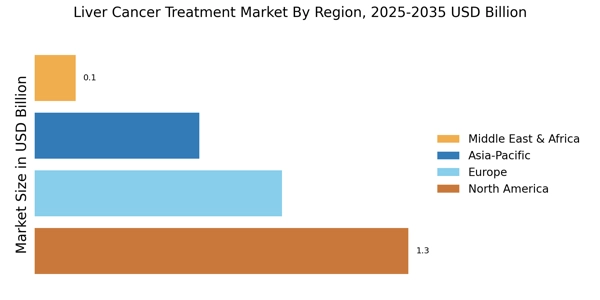
The Global Liver Cancer Treatment Market is projected to witness substantial growth, driven by rising incidences of liver cancer and advancements in treatment methodologies. In 2024, the market is estimated to reach a value of 2.81 USD Billion, with North America leading the charge, valued at 1.1 USD Billion. This region's prominence is attributed to its advanced healthcare infrastructure and increased research investments, growing to 2.3 USD Billion by 2035. Europe follows closely with a valuation of 0.8 USD Billion in 2024, expected to double by 2035 to 1.6 USD Billion, reflecting a significant commitment to cancer treatment.
The APAC region also shows notable potential, valued at 0.7 USD Billion in 2024, growing to 1.5 USD Billion by 2035, pointing towards increasing awareness and availability of treatment options. Meanwhile, South America and the MEA regions contribute smaller shares, with valuations of 0.2 USD Billion and 0.1 USD Billion in 2024, respectively. Although these markets are less dominant, they present growth opportunities due to rising healthcare accessibility. Overall, the Global Liver Cancer Treatment Market segmentation highlights a diverse landscape influenced by regional trends, investment levels, and healthcare initiatives.
The Global Liver Cancer Treatment Market is characterized by a dynamic and competitive landscape where various pharmaceutical companies are striving to develop innovative therapies aimed at reducing mortality and improving the quality of life for patients diagnosed with liver cancer. This market is influenced by numerous factors, including the increasing prevalence of liver cancer, advancements in drug development technology, and the growing inclination towards targeted therapy and immunotherapy. Companies are focusing on research and development to introduce novel treatment modalities that can effectively address the complex nature of liver cancer. As the market continues to evolve, strategic partnerships, mergers, and acquisitions among key players are expected to further intensify competition, leading to the emergence of new treatments and improved outcomes for patients. Gilead Sciences has established a notable presence within the Global Liver Cancer Treatment Market through its commitment to offering advanced therapeutic options, particularly focusing on targeted therapies that have demonstrated efficacy in treating hepatocellular carcinoma. The company’s strong pipeline of novel agents and ongoing clinical trials signifies its focus on expanding treatment horizons in this domain. Gilead Sciences boasts a robust research infrastructure, which aids in the swift identification and development of innovative solutions for liver cancer. Its strategic collaborations with academic institutions and other biotechnology firms enhance Gilead’s capability to stay at the forefront of scientific discovery. The company’s reputation for high-quality products and commitment to patient-centric solutions strengthens its foothold in this competitive market, allowing it to address the diverse needs of patients worldwide. Amgen also plays a crucial role in the Global Liver Cancer Treatment Market, leveraging its extensive expertise in biotechnology and innovative therapy development. This company has positioned itself distinctly with its focus on biologics, particularly monoclonal antibodies, which hold significant therapeutic potential for liver cancer treatment. Amgen emphasizes the importance of research in identifying novel treatment pathways that can lead to better patient outcomes. The company is recognized for its ability to translate scientific innovation into effective therapeutic solutions, which enhances its competitive edge. Amgen’s commitment to clinical research and its strategic initiatives to explore combination therapies can drive its growth in the liver cancer treatment sector. By maintaining a strong collaboration with healthcare providers and leveraging its established reputation, Amgen is poised to make a significant impact in addressing the challenges associated with liver cancer treatment.

The Liver Cancer Treatment Market is projected to grow at a 6.95% CAGR from 2025 to 2035, driven by advancements in targeted therapies, increasing prevalence, and enhanced diagnostic techniques.
New opportunities lie in:
By 2035, the Liver Cancer Treatment Market is expected to achieve substantial growth and innovation.
| MARKET SIZE 2024 | 2.813(USD Billion) |
| MARKET SIZE 2025 | 3.008(USD Billion) |
| MARKET SIZE 2035 | 5.89(USD Billion) |
| COMPOUND ANNUAL GROWTH RATE (CAGR) | 6.95% (2025 - 2035) |
| REPORT COVERAGE | Revenue Forecast, Competitive Landscape, Growth Factors, and Trends |
| BASE YEAR | 2024 |
| Market Forecast Period | 2025 - 2035 |
| Historical Data | 2019 - 2024 |
| Market Forecast Units | USD Billion |
| Key Companies Profiled | Bristol-Myers Squibb (US), Roche (CH), Merck & Co. (US), AstraZeneca (GB), Gilead Sciences (US), Eisai Co. (JP), Novartis (CH), Amgen (US), Bayer (DE) |
| Segments Covered | Treatment Type, Medication Type, Patient Type, End Users |
| Key Market Opportunities | Advancements in immunotherapy and targeted therapies enhance treatment options in the Liver Cancer Treatment Market. |
| Key Market Dynamics | Rising demand for targeted therapies drives innovation and competition in the liver cancer treatment landscape. |
| Countries Covered | North America, Europe, APAC, South America, MEA |
The projected market valuation for the Liver Cancer Treatment Market by 2035 is expected to reach 5.89 USD Billion.
The overall market valuation of the Liver Cancer Treatment Market was 2.813 USD Billion in 2024.
The expected CAGR for the Liver Cancer Treatment Market during the forecast period 2025 - 2035 is 6.95%.
Surgery and Radiation Therapy are projected to have the highest market growth, with valuations reaching 1.75 USD Billion and 1.2 USD Billion, respectively.
Key players in the Liver Cancer Treatment Market include Bristol-Myers Squibb, Roche, Merck & Co., AstraZeneca, and Gilead Sciences.
By 2035, Small Molecule Drugs are expected to lead with a valuation of 1.75 USD Billion, followed by Monoclonal Antibodies at 1.2 USD Billion.
The market outlook for advanced stage liver cancer patients is promising, with projected valuations reaching 2.35 USD Billion by 2035.
Hospitals are anticipated to dominate the market by 2035, with a projected valuation of 3.1 USD Billion.
Immunotherapy is expected to grow, with a projected market valuation of 0.6 USD Billion by 2035.
The market for recurrent liver cancer patients is projected to reach 1.79 USD Billion by 2035, indicating robust growth compared to early and advanced stage patients.



Kindly complete the form below to receive a free sample of this Report

“This is really good guys. Excellent work on a tight deadline. I will continue to use you going forward and recommend you to others. Nice job”


“Thanks. It’s been a pleasure working with you, please use me as reference with any other Intel employees.”


“Thanks for sending the report it gives us a good global view of the Betaïne market.”


“Thank you, this will be very helpful for OQS.”


“We found the report very insightful! we found your research firm very helpful. I'm sending this email to secure our future business.”


“I am very pleased with how market segments have been defined in a relevant way for my purposes (such as "Portable Freezers & refrigerators" and "last-mile"). In general the report is well structured. Thanks very much for your efforts.”


“I have been reading the first document or the study, ,the Global HVAC and FP market report 2021 till 2026. Must say, good info! I have not gone in depth at all parts, but got a good indication of the data inside!”


“We got the report in time, we really thank you for your support in this process. I also thank to all of your team as they did a great job.”


“The Automotive 48V ECU Components Procurement Intelligence Study” was a complex project, but the Market Research Future (MRFR) team handled it with quality, agility, and customer-centricity. They delivered all requested data on time and within the agreed scope. The team, including Shubhendra Anand and Rahul Gotadki, was always readily available to clarify questions and swiftly implement necessary adjustments, driving the project to a successful conclusion within a very demanding timeframe.
I would also like to specifically commend Akshay Agarwal for his responsiveness and support at every stage—from our initial inquiry on May 6th through to final delivery on June 18th. His dedication made the entire process seamless.”



