×
Hero Background
English
Chinese
French
Japanese
Korean
German
Spanish

Malignant Lymphoma Market Size

ID: MRFR/Pharma/1329-HCR
85 Pages
Rahul Gotadki
October 2025

Malignant Lymphoma Market Research Report Information, by types (Hodgkin lymphoma and Non Hodgkin lymphoma), by treatment (chemotherapy, radiation therapy, immunotherapy, stem cell therapy and others) - Forecast to 2035

Share:
Download PDF ×

We do not share your information with anyone. However, we may send you emails based on your report interest from time to time. You may contact us at any time to opt-out.

Malignant Lymphoma Market Infographic
Purchase Options

Malignant Lymphoma Size

Malignant Lymphoma Market Growth Projections and Opportunities

The market for malignant lymphoma treatment is characterized by the different nature of this grouping of cancers, including Hodgkin lymphoma and different non-Hodgkin lymphomas. The distinct subtypes of malignant lymphomas necessitate an extensive variety of treatment draws near, impacting the development of targeted therapies and customized medication. The worldwide frequency of malignant lymphomas is on the ascent, contributing to the growth of the market. Factors like maturing populations, environmental openings, and genetic predispositions assume a part in the rising predominance of these cancers, driving the interest for effective treatment options. Immunotherapy, particularly safe checkpoint inhibitors and CAR-T cell therapies, is transforming the scene of malignant lymphoma treatment. These innovative methodologies bridle the force of the invulnerable system to target cancer cells, offering additional opportunities for patients, and impacting market elements. The trend towards combination therapies is prominent in the malignant lymphoma market. Scientists and pharmaceutical organizations investigate the synergistic effects of consolidating traditional chemotherapy with targeted agents or immunotherapies, going for the gold outcomes and decreased resistance. The cost of cutting-edge treatments, particularly immunotherapies and targeted therapies, presents difficulties in terms of affordability for patients and healthcare systems. Adjusting the benefits of innovative treatments with financial considerations impacts market elements and admittance to novel therapies. Malignant lymphomas exhibit epidemiological changes across districts and populations. Understanding these variations in occurrence, predominance, and subtypes impacts market strategies, including drug development priorities and territorial healthcare arranging. With advancements in treatments, there is a developing spotlight on long haul survivorship and dealing with the late effects of therapy. The consideration of survivorship issues impacts the development of supportive care strategies and post-treatment monitoring, contributing to thorough patient care.
Malignant Lymphoma Market Size Graph
Author
Rahul Gotadki
Assistant Manager

He holds an experience of about 7+ years in Market Research and Business Consulting, working under the spectrum of Life Sciences and Healthcare domains. Rahul conceptualizes and implements a scalable business strategy and provides strategic leadership to the clients. His expertise lies in market estimation, competitive intelligence, pipeline analysis, customer assessment, etc. In addition to the above, his other responsibility includes strategic tracking of high growth markets & advising clients on the potential areas of focus they could direct their business initiatives

Leave a Comment

FAQs

How does the outlook of the global malignant lymphoma market look like?

The outlook of the global malignant lymphoma market looks very promising.

What are the major tailwinds pushing the growth of the global malignant lymphoma market?

Increased government funding for the drug development and increment in the global economy that is widening the access to quality care are the major tailwinds pushing the growth of the global malignant lymphoma market.

Which region holds the largest share in the global malignant lymphoma market?

North America holds the largest share in the global malignant lymphoma market, followed by Europe and the Asia Pacific, respectively.

Who are the top players in the global malignant lymphoma market?

Abiogen Pharma S.p.A., Abbott Laboratories, Genmab, Actelion Pharmaceuticals, Allos Therapeutics, Aeterna Zentaris, Inc., Novartis, Astellas Pharma, Seattle Genetics Johnson & Johnson, Celgene Corporation, Bristol-Myers Squibb Company, Roche, Merck & Co. Inc., Eli Lilly and Company, Inovio Pharmaceuticals, and Onyx Pharmaceuticals, are some of the major players operating in the malignant lymphoma market.

What are the key growth strategies of malignant lymphoma industry players?

Strategic initiatives such as mergers & acquisitions, collaborations, expansion, and technology/ product launch are some of the growth strategies that players operating in the global malignant lymphoma market adopt to gain a larger competitive advantage.

Market Summary

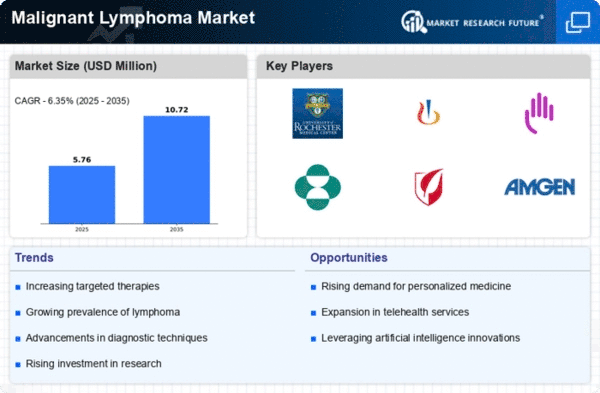
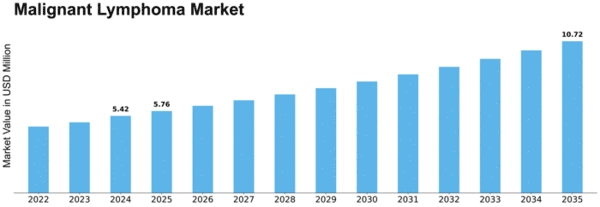
As per MRFR analysis, the Malignant Lymphoma Market Size was estimated at 5.42 USD Million in 2024. The Malignant Lymphoma industry is projected to grow from 5.83 in 2025 to 10.72 by 2035, exhibiting a compound annual growth rate (CAGR) of 6.35 during the forecast period 2025 - 2035.

Key Market Trends & Highlights

The Malignant Lymphoma Market is experiencing a transformative shift towards innovative therapies and personalized treatment approaches.

  • The rise of targeted therapies is reshaping treatment paradigms in the Malignant Lymphoma Market.
  • Immunotherapy is emerging as the fastest-growing segment, particularly in the context of Hodgkin Lymphoma.
  • North America remains the largest market, while Asia-Pacific is recognized as the fastest-growing region for malignant lymphoma treatments.
  • The increase in incidence rates and advancements in diagnostic technologies are driving market growth and innovation.

Market Size & Forecast

2024 Market Size 5.42 (USD Million)
2035 Market Size 10.72 (USD Million)
CAGR (2025 - 2035) 6.35%
Largest Regional Market Share in 2024 North America

Major Players

<p>Roche (CH), Novartis (CH), Bristol-Myers Squibb (US), Merck & Co. (US), Gilead Sciences (US), Amgen (US), Celgene (US), Takeda (JP), AstraZeneca (GB)</p>

Market Trends

The Malignant Lymphoma Market is currently experiencing a dynamic evolution, driven by advancements in treatment modalities and an increasing understanding of the disease's biology. Innovative therapies, including targeted agents and immunotherapies, are gaining traction, offering new hope for patients. The growing prevalence of malignant lymphomas, coupled with heightened awareness and improved diagnostic techniques, is likely to propel market growth. Furthermore, ongoing research into the genetic and molecular underpinnings of these malignancies may lead to more personalized treatment approaches, enhancing patient outcomes. In addition, the Malignant Lymphoma Market is witnessing a shift towards combination therapies, which appear to enhance efficacy and reduce resistance. Collaborations between pharmaceutical companies and research institutions are fostering the development of novel agents, potentially expanding the therapeutic landscape. As the market continues to evolve, stakeholders must remain vigilant to emerging trends and adapt strategies accordingly, ensuring that they meet the needs of patients and healthcare providers alike.

Rise of Targeted Therapies

The Malignant Lymphoma Market is increasingly characterized by the emergence of targeted therapies. These treatments focus on specific molecular targets associated with malignant lymphomas, potentially leading to improved efficacy and reduced side effects. As research progresses, the identification of new targets may further enhance treatment options.

Growth of Immunotherapy

Immunotherapy is gaining prominence within the Malignant Lymphoma Market, as it harnesses the body's immune system to combat cancer. This approach has shown promise in various lymphoma subtypes, suggesting a shift towards more effective and less toxic treatment regimens. Ongoing clinical trials may expand the applicability of immunotherapeutic agents.

Emphasis on Personalized Medicine

The trend towards personalized medicine is becoming increasingly relevant in the Malignant Lymphoma Market. Tailoring treatment based on individual patient characteristics, including genetic profiles, may lead to more effective interventions. This approach not only enhances patient outcomes but also aligns with the broader movement towards precision oncology.

Malignant Lymphoma Market Market Drivers

Rising Incidence of Malignant Lymphoma

The Global Malignant Lymphoma Market Industry is experiencing growth due to the increasing incidence of malignant lymphoma worldwide. According to health statistics, the prevalence of lymphoma cases has been on the rise, with an estimated 4.37 USD Billion market value in 2024. This surge is attributed to factors such as improved diagnostic techniques and heightened awareness among healthcare professionals and patients. As more individuals are diagnosed, the demand for effective treatment options escalates, thereby driving market expansion. The growing population and aging demographics further contribute to the increase in lymphoma cases, indicating a sustained need for innovative therapies in the Global Malignant Lymphoma Market Industry.

Market Segment Insights

By Type of Malignant Lymphoma: Non-Hodgkin Lymphoma (Largest) vs. Hodgkin Lymphoma (Fastest-Growing)

<p>The malignant lymphoma market features a diverse array of lymphoma types, with Non-Hodgkin Lymphoma commanding the largest share due to its high prevalence globally. It encompasses various subtypes and is more common than Hodgkin Lymphoma, which contributes significantly to its market dominance. Meanwhile, Hodgkin Lymphoma, although smaller in terms of market share, is witnessing rapid growth thanks to advancements in treatment options, such as immunotherapy and targeted therapy, appealing to both healthcare providers and patients alike. The growth trends in the malignant lymphoma segment are driven by factors such as increasing incidence rates of lymphoma, the aging population, and rising awareness about different lymphoma types. Additionally, ongoing research and the development of innovative therapies are expected to fuel the growth of Hodgkin Lymphoma as it becomes a focus in clinical studies. The demand for efficient and less toxic treatments is changing the landscape of the market, positioning it for future growth alongside Non-Hodgkin Lymphoma.</p>

<p>Non-Hodgkin Lymphoma (Dominant) vs. Hodgkin Lymphoma (Emerging)</p>

<p>Non-Hodgkin Lymphoma stands out as the dominant segment within the malignant lymphoma market. Characterized by a diverse range of histological subtypes, it presents a broad spectrum of clinical features and treatment responses. This segment benefits from extensive research leading to improved diagnostics and advancements in therapeutic options, including monoclonal antibodies and CAR-T cell therapy. In contrast, Hodgkin Lymphoma, once perceived as less favorable in terms of diagnosis and treatment options, is emerging with new therapies that specifically target its unique pathophysiology. As healthcare continues to evolve, both segments play pivotal roles, but Non-Hodgkin Lymphoma remains a key player with expansive market influence.</p>

By Treatment Modality: Chemotherapy (Largest) vs. Immunotherapy (Fastest-Growing)

<p>In the Malignant Lymphoma Market, treatment modalities are categorized primarily into Chemotherapy, Radiation Therapy, Targeted Therapy, and Immunotherapy. Among these, Chemotherapy holds the largest share, significantly driving treatment practices for various lymphoma types. Radiation Therapy follows closely, however, its market presence is diminishing as newer and more effective treatments gain traction. Targeted Therapy shows a steady growth trend, while Immunotherapy is rapidly increasing in popularity due to its innovative approach and efficacy.</p>

<p>Chemotherapy: Traditional Dominant vs. Immunotherapy: Emerging Approach</p>

<p>Chemotherapy has been the cornerstone of malignant lymphoma treatment for decades, known for its systemic efficacy against rapidly dividing cancer cells. This traditional approach has proven successful across many lymphoma subtypes, yet it typically comes with significant side effects. On the other hand, Immunotherapy represents a burgeoning field in the treatment landscape, utilizing the body’s immune system to fight cancer. This emerging modality is gaining acceptance due to its potential for fewer side effects and improved effectiveness in specific patient populations, making it an increasingly preferred choice among oncologists.</p>

By Stage of Disease: Localized (Largest) vs. Distant (Fastest-Growing)

<p>In the Malignant Lymphoma Market, the distribution of market share across various stages of disease is an essential factor in understanding treatment dynamics. Localized stage lymphomas hold the largest share due to the increased chances of successful treatment and favorable patient outcomes. In contrast, the Distant stage, while currently smaller in share, is experiencing rapid growth as more advanced therapeutic options become available and awareness increases. The growth trends within the Malignant Lymphoma segment reflect the evolving landscape of oncology treatments. The increasing incidence of lymphomas, along with advancements in diagnostic techniques, has fueled the growth of the Regional and Distant stages. Factors like improved access to healthcare, ongoing clinical trials for innovative therapies, and greater patient education are driving demand, particularly for Distant stage treatments, which are being prioritized for better management strategies.</p>

<p>Localized (Dominant) vs. Distant (Emerging)</p>

<p>The Localized stage of malignant lymphoma is characterized by its limited spread, leading to higher curability rates and less complex treatment protocols. Designed for patients diagnosed at a stage where cancer is confined, treatment often includes surgery and radiation. This segment is dominant due to a well-established treatment framework and positive patient outcomes. In contrast, the Distant stage, deemed an emerging segment, represents lymphomas that have spread beyond local lymph nodes. This stage poses significant treatment challenges and often requires systemic therapies, such as chemotherapy and targeted agents. With innovations in treatment and growing awareness of advanced disease management, this emerging segment is expected to witness substantial growth as the medical community focuses on enhancing therapeutic efficacy.</p>

By Patient Demographics: Age Group (Largest) vs. Gender (Fastest-Growing)

<p>The patient demographics of the malignant lymphoma market show a notable distribution across age groups, where older adults, particularly those aged 60 and above, comprise the largest share of diagnosed cases. This demographic accounts for a significant portion of lymphoma patients, reflecting the age-related risk factors associated with the disease. In addition to age, gender also plays a pivotal role in the market, with males generally exhibiting higher incidence rates compared to females. These dynamics underline the importance of focusing treatment and awareness initiatives targeted at these segments. As for growth trends, the analysis indicates a considerable shift towards younger adult segments who are increasingly diagnosed with malignant lymphoma, marking this age group as the fastest-growing. This indicates an evolving awareness and possibly improved diagnostics among healthcare providers that lead to earlier detection. Additionally, gender-specific treatments and clinical trials are becoming more prevalent, driven by the distinct biological responses observed in male and female patients, contributing to the market's growth trajectory.</p>

<p>Age Group: 60+ (Dominant) vs. Gender: Female (Emerging)</p>

<p>The age group of patients aged 60 and above dominates the malignant lymphoma market, primarily due to the increasing prevalence of lymphoproliferative disorders in older populations, where aging is a significant risk factor. This segment prioritizes targeted therapies and personalized treatment plans to manage the disease more effectively. In contrast, the female demographic, while currently recognized as emerging, is gaining attention due to rising diagnosis rates and ongoing research into gender-specific treatments. This shift reflects changing cultural awareness and advancements in medical technology that enable better detection and management of lymphomas in women. As a result, the market is witnessing increased investments aimed at understanding gender-related differences in lymphoma pathophysiology.</p>

Get more detailed insights about Malignant Lymphoma Market Research Report- Global Forecast To 2035

Regional Insights

North America : Market Leader in Innovation

North America continues to lead the malignant lymphoma market, holding a significant share of 2.71 billion in 2024. The region's growth is driven by advanced healthcare infrastructure, high R&D investments, and increasing awareness of lymphoma treatments. Regulatory support, including expedited approval processes for innovative therapies, further fuels market expansion. The rising incidence of lymphoma and the demand for targeted therapies are key trends contributing to this growth. The competitive landscape in North America is robust, featuring major players like Roche, Novartis, and Bristol-Myers Squibb. The U.S. is the largest market, benefiting from a strong pipeline of new therapies and a well-established reimbursement framework. The presence of leading pharmaceutical companies enhances innovation and accessibility to cutting-edge treatments, solidifying North America's position as a market leader.

Europe : Emerging Market with Growth Potential

Europe's malignant lymphoma market is valued at 1.5 billion, reflecting a growing demand for innovative therapies and improved patient outcomes. The region benefits from strong regulatory frameworks that support drug approvals and market access. Increasing investments in healthcare and a rising prevalence of lymphoma are driving market growth. Collaborative efforts among stakeholders, including public health initiatives, are also enhancing treatment accessibility across Europe. Leading countries in this region include Germany, France, and the UK, which are home to several key players like Merck & Co. and Gilead Sciences. The competitive landscape is characterized by a mix of established pharmaceutical companies and emerging biotech firms. According to the European Medicines Agency, "The ongoing commitment to research and development is crucial for advancing lymphoma treatment options in Europe."

Asia-Pacific : Rapidly Growing Market Segment

The Asia-Pacific malignant lymphoma market is valued at 1.0 billion, showcasing significant growth potential driven by increasing healthcare expenditure and rising awareness of lymphoma treatments. The region is witnessing a surge in the incidence of lymphoma, prompting governments to enhance healthcare policies and support innovative therapies. Regulatory bodies are also streamlining approval processes to facilitate faster access to new treatments, contributing to market expansion. Key countries in this region include Japan, China, and Australia, where major players like Takeda and Amgen are actively involved. The competitive landscape is evolving, with a mix of local and international companies striving to capture market share. The increasing focus on personalized medicine and targeted therapies is expected to further drive growth in the Asia-Pacific lymphoma market.

Middle East and Africa : Emerging Market with Challenges

The Middle East and Africa malignant lymphoma market is valued at 0.21 billion, reflecting a nascent stage of development. The region faces challenges such as limited healthcare infrastructure and varying access to treatments. However, increasing awareness of lymphoma and efforts to improve healthcare systems are driving gradual market growth. Regulatory bodies are beginning to implement policies that support the introduction of innovative therapies, which is crucial for market advancement. Countries like South Africa and the UAE are leading the way in terms of market development, with a growing presence of pharmaceutical companies. The competitive landscape is characterized by a mix of local and international players, focusing on improving treatment access and patient outcomes. The World Health Organization emphasizes the need for enhanced healthcare strategies to address the rising burden of lymphoma in this region.

Key Players and Competitive Insights

The Malignant Lymphoma Market is characterized by a dynamic competitive landscape, driven by innovation, strategic partnerships, and a focus on patient-centric solutions. Key players such as Roche (CH), Novartis (CH), and Bristol-Myers Squibb (US) are at the forefront, each employing distinct strategies to enhance their market presence. Roche (CH) emphasizes research and development, particularly in personalized medicine, while Novartis (CH) focuses on expanding its portfolio through strategic acquisitions and collaborations. Bristol-Myers Squibb (US) is leveraging its expertise in immunotherapy, which appears to be a pivotal area of growth. Collectively, these strategies contribute to a competitive environment that is increasingly focused on advanced therapeutic options and patient outcomes.

In terms of business tactics, companies are localizing manufacturing and optimizing supply chains to enhance efficiency and responsiveness to market demands. The competitive structure of the Malignant Lymphoma Market is moderately fragmented, with several players vying for market share. However, the influence of major companies is substantial, as they set trends in innovation and therapeutic approaches that smaller firms often follow.

In November 2025, Roche (CH) announced a groundbreaking partnership with a leading biotechnology firm to develop a novel CAR-T cell therapy aimed at aggressive forms of lymphoma. This collaboration is expected to accelerate the development timeline and enhance the therapeutic options available to patients, indicating Roche's commitment to maintaining its leadership in innovative treatments. The strategic importance of this partnership lies in its potential to significantly improve patient outcomes and solidify Roche's position in the market.

In October 2025, Novartis (CH) launched a new digital platform designed to streamline patient access to clinical trials for lymphoma therapies. This initiative not only enhances patient engagement but also positions Novartis as a leader in utilizing technology to improve treatment accessibility. The strategic significance of this move is evident in its potential to increase patient enrollment in trials, thereby expediting the development of new therapies and reinforcing Novartis's commitment to patient-centric care.

In September 2025, Bristol-Myers Squibb (US) expanded its oncology pipeline by acquiring a promising biotech firm specializing in next-generation immunotherapies for lymphoma. This acquisition is likely to bolster Bristol-Myers Squibb's capabilities in immuno-oncology, a field that continues to show promise in treating various malignancies. The strategic importance of this acquisition lies in its potential to enhance the company's product offerings and strengthen its competitive edge in the market.

As of December 2025, current trends in the Malignant Lymphoma Market are increasingly defined by digitalization, sustainability, and the integration of artificial intelligence in drug development. Strategic alliances are becoming more prevalent, as companies recognize the value of collaboration in driving innovation. Looking ahead, competitive differentiation is expected to evolve, with a shift from price-based competition to a focus on innovation, technology, and supply chain reliability. This transition underscores the importance of developing unique therapeutic solutions that address unmet medical needs, ultimately shaping the future landscape of the Malignant Lymphoma Market.

Key Companies in the Malignant Lymphoma Market market include

Industry Developments

In May 2021, the popular enterpriser PerkinElmer, Inc is planning to acquire the Immunodiagnostic Systems Holdings PLC with an investment of nearly $155 million for expanding their overall diagnostics business.

In March 2020, one of the well-known companies Kura Oncology conducted a clinical trial for a pipeline candidate named tipifarnib which is used for the disease indication of peripheral T-cell lymphoma. Present, the clinical trial is in Phase-II and it received the fast track designation from the FDA.

In February 2021, the famous enterpriser Bristol Myers Squibb announced that their company received approval from the U.S Food and Drug Administration (FDA) for cancer immunotherapy as a treatment for adults who are having certain types of non-Hodgkin lymphoma.

Future Outlook

Malignant Lymphoma Market Future Outlook

<p>The Malignant Lymphoma Market is projected to grow at a 6.35% CAGR from 2024 to 2035, driven by advancements in targeted therapies and increasing patient awareness.</p>

New opportunities lie in:

  • <p>Development of personalized medicine platforms for tailored treatment plans.</p>
  • <p>Expansion of telehealth services for remote patient monitoring and consultations.</p>
  • <p>Investment in AI-driven diagnostic tools to enhance early detection and treatment efficacy.</p>

<p>By 2035, the Malignant Lymphoma Market is expected to exhibit robust growth and innovation.</p>

Market Segmentation

Malignant Lymphoma Market Stage of Disease Outlook

  • Localized
  • Regional
  • Distant
  • Recurrent

Malignant Lymphoma Market Treatment Modality Outlook

  • Chemotherapy
  • Radiation Therapy
  • Targeted Therapy
  • Immunotherapy

Malignant Lymphoma Market Patient Demographics Outlook

  • Age Group
  • Gender
  • Ethnicity
  • Socioeconomic Status

Malignant Lymphoma Market Type of Malignant Lymphoma Outlook

  • Hodgkin Lymphoma
  • Non-Hodgkin Lymphoma
  • Primary Central Nervous System Lymphoma
  • Cutaneous Lymphoma

Report Scope

MARKET SIZE 20245.42(USD Million)
MARKET SIZE 20255.83(USD Million)
MARKET SIZE 203510.72(USD Million)
COMPOUND ANNUAL GROWTH RATE (CAGR)6.35% (2024 - 2035)
REPORT COVERAGERevenue Forecast, Competitive Landscape, Growth Factors, and Trends
BASE YEAR2024
Market Forecast Period2025 - 2035
Historical Data2019 - 2024
Market Forecast UnitsUSD Million
Key Companies ProfiledRoche (CH), Novartis (CH), Bristol-Myers Squibb (US), Merck & Co. (US), Gilead Sciences (US), Amgen (US), Celgene (US), Takeda (JP), AstraZeneca (GB)
Segments CoveredType of Malignant Lymphoma, Treatment Modality, Stage of Disease, Patient Demographics
Key Market OpportunitiesAdvancements in targeted therapies and immunotherapies are reshaping the Malignant Lymphoma Market landscape.
Key Market DynamicsRising demand for targeted therapies drives innovation and competition in the Malignant Lymphoma Market.
Countries CoveredNorth America, Europe, APAC, South America, MEA

FAQs

How does the outlook of the global malignant lymphoma market look like?

The outlook of the global malignant lymphoma market looks very promising.

What are the major tailwinds pushing the growth of the global malignant lymphoma market?

Increased government funding for the drug development and increment in the global economy that is widening the access to quality care are the major tailwinds pushing the growth of the global malignant lymphoma market.

Which region holds the largest share in the global malignant lymphoma market?

North America holds the largest share in the global malignant lymphoma market, followed by Europe and the Asia Pacific, respectively.

Who are the top players in the global malignant lymphoma market?

Abiogen Pharma S.p.A., Abbott Laboratories, Genmab, Actelion Pharmaceuticals, Allos Therapeutics, Aeterna Zentaris, Inc., Novartis, Astellas Pharma, Seattle Genetics Johnson &amp; Johnson, Celgene Corporation, Bristol-Myers Squibb Company, Roche, Merck &amp; Co. Inc., Eli Lilly and Company, Inovio Pharmaceuticals, and Onyx Pharmaceuticals, are some of the major players operating in the malignant lymphoma market.

What are the key growth strategies of malignant lymphoma industry players?

Strategic initiatives such as mergers &amp; acquisitions, collaborations, expansion, and technology/ product launch are some of the growth strategies that players operating in the global malignant lymphoma market adopt to gain a larger competitive advantage.

  1. INTRODUCTION
    1. DEFINITION
    2. SCOPE OF STUDY
      1. RESEARCH OBJECTIVE
      2. ASSUMPTIONS & LIMITATIONS
    3. MARKET STRUCTURE:
  2. RESEARCH METHODOLOGY
    1. RESEARCH PROCESS:
    2. PRIMARY RESEARCH
    3. SECONDARY RESEARCH:
  3. MARKET DYNAMICS
    1. DRIVERS
    2. RESTRAINTS
    3. OPPORTUNITIES
    4. MACROECONOMIC INDICATORS
  4. MARKET FACTOR ANALYSIS
    1. PORTERS FIVE FORCES MODEL
    2. BARGAINING POWER OF SUPPLIERS
    3. BARGAINING POWER OF BUYERS
    4. THREAT OF NEW ENTRANTS
    5. THREAT OF SUBSTITUTES
    6. INTENSITY OF RIVALRY
  5. GLOBAL MALIGNANT LYMPHOMA MARKET, BY TYPE
    1. HODGKIN LYMPHOMA
    2. NON-HODGKIN LYMPHOMA
  6. GLOBAL MALIGNANT LYMPHOMA MARKET, BY OCCURANCE
    1. LYMPH NODES
    2. BONE MARROW
    3. SPLEEN
    4. BLOOD
    5. OTHER ORGANS
  7. GLOBAL MALIGNANT LYMPHOMA MARKET, BY DIAGNOSTIC TESTS
    1. IMMUNOPHENOTYPING
    2. FLUORESCENCE IN SITU HYBRIDIZATION TESTING
    3. FLOW CYTOMETER
  8. GLOBAL MALIGNANT LYMPHOMA MARKET
    1. CHEMOTHERAPY
    2. RADIATION THERAPY
    3. IMMUNOTHERAPY
    4. STEM CELL THERAPY
    5. OTHERS
  9. GLOBAL MALIGNANT LYMPHOMA MARKET, BY REGION
    1. INTRODUCTION
    2. NORTH AMERICA
      1. US
      2. CANADA
    3. EUROPE
      1. WESTERN EUROPE
      2. EASTERN EUROPE
    4. ASIA
      1. JAPAN
      2. CHINA
      3. INDIA
      4. AUSTRALIA
      5. REPUBLIC OF KOREA
      6. REST OF ASIA-PACIFIC
    5. MIDDLE EAST & AFRICA
      1. UNITED ARAB EMIRATES
      2. SAUDI ARABIA
      3. OMAN
      4. KUWAIT
      5. QATAR
      6. REST OF MIDDLE EAST & AFRICA
  10. COMPETITIVE LANDSCAPE
    1. MAJOR STRATEGIES ADOPTED BY MARKET PLAYERS
      1. STRATEGIC PARTNERSHIP
      2. MERGER & ACQUISITION
  11. COMPANY PROFILE
    1. ABBOTT LABORATORIES
      1. OVERVIEW
      2. PRODUCT OVERVIEW
      3. FINANCIALS
      4. KEY DEVELOPMENTS
    2. ABIOGEN PHARMA
      1. OVERVIEW
      2. PRODUCT OVERVIEW
      3. FINANCIALS
      4. KEY DEVELOPMENTS
    3. ACTELION PHARMACEUTICALS
      1. OVERVIEW
      2. PRODUCT OVERVIEW
      3. FINANCIALS
      4. STRATEGY
      5. KEY DEVELOPMENT
    4. ALLOS THERAPEUTICS
      1. OVERVIEW
      2. PRODUCT OVERVIEW
      3. FINANCIALS
      4. KEY DEVELOPMENTS
    5. BRISTOL-MYERS SQUIBB COMPANY
      1. OVERVIEW
      2. PRODUCT OVERVIEW
      3. FINANCIALS
      4. KEY DEVELOPMENTS
    6. OTHERS

Malignant Lymphoma Market Segmentation

Market Segmentation Overview

  • Detailed segmentation data will be available in the full report
  • Comprehensive analysis by multiple parameters
  • Regional and country-level breakdowns
  • Market size forecasts by segment
Infographic

Free Sample Request

Kindly complete the form below to receive a free sample of this Report

Get Free Sample

Customer Strories

Compare Licence

×
Features License Type
Single User Multiuser License Enterprise User
Price $4,950 $5,950 $7,250
Maximum User Access Limit 1 User Upto 10 Users Unrestricted Access Throughout the Organization
Free Customization
Direct Access to Analyst
Deliverable Format
Platform Access
Discount on Next Purchase 10% 15% 15%
Printable Versions