Market Growth Projections
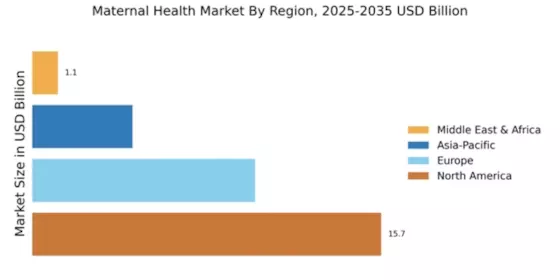
The Global Maternal Health Market Industry is poised for substantial growth, with projections indicating a market value of 31.3 USD Billion in 2024 and an anticipated increase to 140.2 USD Billion by 2035. This growth trajectory suggests a robust compound annual growth rate (CAGR) of 14.6% from 2025 to 2035.
Such figures reflect the increasing recognition of maternal health as a critical component of overall healthcare systems worldwide. The expansion of maternal health services, driven by technological advancements, government initiatives, and rising awareness, is likely to create a dynamic market landscape that addresses the diverse needs of women globally.
- World Bank data indicates that global health expenditure continues to rise across developed and emerging economies, supporting maternal healthcare infrastructure expansion. Increased healthcare investment strengthens prenatal, delivery, and postnatal care services, creating favorable conditions for sustained maternal health market growth.
Government Initiatives and Funding
Government initiatives aimed at improving maternal health are significantly influencing the Global Maternal Health Market Industry. Many countries are allocating substantial budgets to enhance maternal healthcare services, focusing on reducing maternal mortality and morbidity rates. For instance, national health programs in various regions are being funded to provide comprehensive maternal care, including prenatal check-ups and emergency obstetric services.
This financial support is expected to bolster the market, with estimates suggesting a growth to 140.2 USD Billion by 2035. Such initiatives underscore the commitment of governments to prioritize maternal health, thereby driving demand for related services and products.
- According to IHME, maternal health remains a major focus area for public health investments globally. Increased allocation of healthcare resources toward maternal and neonatal care programs has contributed to continuous improvements in maternal outcomes, supporting growing demand for maternal healthcare services and technologies.
Cultural Shifts and Empowerment of Women
Cultural shifts towards the empowerment of women are having a profound impact on the Global Maternal Health Market Industry. As women gain greater access to education and economic opportunities, they are increasingly prioritizing their health and well-being. This empowerment is leading to a demand for comprehensive maternal health services that cater to their specific needs.
Additionally, societal changes are fostering environments where women feel more comfortable seeking medical assistance during pregnancy and childbirth. This trend is likely to contribute to the market's growth, as empowered women advocate for better maternal health services and resources.
- Published studies in PubMed demonstrate that higher female education levels are strongly associated with increased utilization of antenatal care services and skilled birth attendance. Improved healthcare awareness among women continues to strengthen demand for comprehensive maternal healthcare solutions worldwide.
Technological Advancements in Healthcare
Innovations in healthcare technology are playing a pivotal role in shaping the Global Maternal Health Market Industry. The integration of telemedicine, mobile health applications, and wearable devices is enhancing maternal care delivery. For example, telehealth services allow expectant mothers to consult healthcare providers remotely, improving access to care in underserved areas.
These advancements are not only streamlining healthcare processes but also empowering women with information and resources. As a result, the market is projected to grow at a CAGR of 14.6% from 2025 to 2035, reflecting the increasing reliance on technology to improve maternal health outcomes.
- World Bank reports increasing adoption of digital health technologies across healthcare systems globally. Expanding telehealth infrastructure is improving healthcare accessibility for pregnant women, particularly in underserved regions, supporting broader adoption of maternal health monitoring and care solutions.
Rising Awareness of Maternal Health Issues
The Global Maternal Health Market Industry is experiencing a surge in awareness regarding maternal health issues, driven by increased advocacy and education initiatives. Governments and non-governmental organizations are actively promoting maternal prescribed health programs, leading to improved access to prenatal and postnatal care. For instance, campaigns aimed at reducing maternal mortality rates have gained traction, particularly in developing regions.
This heightened awareness is expected to contribute to the market's growth, with projections indicating a market value of 31.3 USD Billion in 2024. As awareness continues to rise, the demand for maternal health services and products is likely to expand significantly.
- IHME findings show continued reductions in maternal mortality rates across numerous countries due to enhanced awareness campaigns and healthcare interventions. Increased public awareness and educational initiatives are encouraging earlier maternal care engagement and improved pregnancy management practices.
Increasing Prevalence of High-Risk Pregnancies
The Global Maternal Health Market Industry is witnessing a rise in high-risk pregnancies, which is prompting a greater need for specialized maternal healthcare services. Factors such as advanced maternal age, pre-existing health conditions, and lifestyle choices contribute to this trend. Healthcare providers are increasingly focusing on tailored care plans to address the complexities associated with high-risk pregnancies.
This growing prevalence is likely to drive demand for advanced maternal health solutions, including monitoring technologies and specialized medical interventions. As the market adapts to these needs, it is anticipated to expand significantly, reflecting the evolving landscape of maternal health.
- PubMed studies indicate that pregnancies among women aged 35 years and older continue to increase globally. Advanced maternal age is associated with higher monitoring requirements, supporting demand for specialized maternal healthcare services, diagnostics, and pregnancy management solutions.