Download Free Sample
Kindly complete the form below to receive a free sample of this Report
Medical Weight Loss Clinic Market Research Report By Treatment Method (Behavior Modification, Medications, Surgical Interventions, Nutritional Counseling), By Patient Demographics (Adults, Children, Senior Citizens, Pregnant Women), By Service Model (In-Person Clinics, Online Consultations, Hybrid Model), By Weight Loss Program Type (Individual Programs, Group Programs, Corporate Wellness Programs) and By Regional (North America, Europe, South America, Asia Asia-Pacific, Middle East and Africa) Forecast to 2035
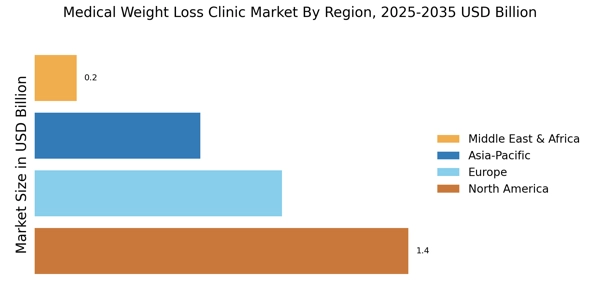
The Global Medical Weight Loss Clinic Market size was valued at USD 3.143 Billion in 2024, and the market is projected to grow from USD 3.31 Billion in 2025 to USD 5.558 Billion by 2035, registering a CAGR of 5.32% during the forecast period 2025–2035. North America led the market with over 44.54% share, generating around USD 1.4 billion in revenue.
The rising prevalence of obesity and associated chronic diseases is a major growth driver for the Medical Weight Loss Clinic Market. Increasing health awareness, demand for medically supervised weight management programs, and personalized treatment approaches are encouraging more individuals to seek professional weight loss services.
According to WHO, more than 1 billion people globally were living with obesity in 2022, including approximately 650 million adults, highlighting a substantial patient population seeking structured medical weight management services and supporting long-term demand for specialized weight loss clinics.
The Medical Weight Loss Clinic Market is experiencing a shift towards personalized and technology-driven solutions.
| 2024 Market Size | 3.143 (USD Billion) |
| 2035 Market Size | 5.558 (USD Billion) |
| CAGR (2025 - 2035) | 5.32% |
The Medical Weight Loss Clinic Market is currently experiencing a notable evolution, driven by a growing awareness of obesity-related health issues and an increasing demand for personalized weight management solutions. Clinics are adapting to the needs of diverse populations, offering tailored programs that incorporate medical supervision, nutritional guidance, and behavioral therapy. This multifaceted approach not only addresses weight loss but also emphasizes overall health improvement, which appears to resonate well with consumers seeking sustainable lifestyle changes.
Furthermore, the integration of technology, such as telemedicine and mobile health applications, is enhancing patient engagement and accessibility, thereby expanding the reach of these clinics. In addition, the Medical Weight Loss Clinic Market is witnessing a shift towards holistic treatment modalities. Many clinics are now incorporating alternative therapies, such as mindfulness and stress management techniques, into their weight loss programs. This trend suggests a broader understanding of the factors influencing weight gain, including psychological and emotional components. As the market continues to evolve, it is likely that clinics will further innovate their offerings, potentially leading to more comprehensive and effective weight management solutions that cater to the unique needs of individuals. Overall, the Medical Weight Loss Clinic Market is poised for growth, driven by a combination of medical advancements and a deeper understanding of patient needs.
The Medical Weight Loss Clinic Market is increasingly focusing on personalized weight management programs. These tailored solutions take into account individual health profiles, preferences, and lifestyle factors, allowing for more effective and sustainable weight loss outcomes. Clinics are utilizing advanced assessments to create customized plans that resonate with patients, enhancing adherence and satisfaction.
The integration of technology within the Medical Weight Loss Clinic Market is transforming patient experiences. Telemedicine and mobile health applications are becoming commonplace, facilitating remote consultations and continuous monitoring. This technological advancement not only improves accessibility but also fosters greater patient engagement, which is crucial for successful weight management.
A notable trend in the Medical Weight Loss Clinic Market is the adoption of holistic treatment approaches. Clinics are increasingly recognizing the importance of addressing psychological and emotional factors in weight management. By incorporating therapies such as mindfulness and stress reduction, these clinics aim to provide a more comprehensive solution that supports long-term health and well-being.
In the Medical Weight Loss Clinic Market, the Treatment Method segment is characterized by a diverse distribution among its values. Behavior Modification holds the largest share of 44%, dominating the market as it focuses on changing the habits and lifestyle of individuals seeking weight loss. In contrast, other methods such as Nutritional Counseling and Medications play significant roles but do not match the prevalence of Behavior Modification. Surgical Interventions, while historically less common, are emerging as a compelling alternative due to advancements in techniques and technologies, gradually gaining traction among patients looking for effective weight loss solutions.
Weight Watchers (WW) continues emphasizing behavioral science-based weight management programs that support sustainable lifestyle changes. Behavior Modification accounted for an estimated 44% market share in 2024, reflecting growing consumer preference for long-term habit-based approaches that improve weight management outcomes and overall wellness.
In the Medical Weight Loss Clinic Market, the distribution of patients across different demographics reveals that adults represent the largest segment holding market share of 68%, primarily due to the increasing prevalence of obesity and weight-related health issues in this age group. This demographic often seeks professional intervention to achieve weight loss goals, resulting in a substantial market share. On the other hand, the children’s segment is witnessing rapid growth, propelled by rising awareness among parents regarding childhood obesity and its long-term health implications. As more clinics broaden their services to cater to younger patients, the pediatric weight loss sector is experiencing increased attention.
Jenny Craig primarily serves adult populations through personalized coaching and nutrition-focused programs. Adults represented approximately 68% of the market in 2024, driven by rising obesity prevalence, chronic disease concerns, and increased participation in medically supervised weight reduction programs.
The Medical Weight Loss Clinic Market exhibits a diverse range of service models, with 'In-Person Clinics' commanding the largest market share of 61%. Traditional face-to-face consultations allow for personalized care and hands-on support, making them a preferred choice for many clients. Meanwhile, 'Online Consultations' have gained traction in recent years, appealing to a tech-savvy demographic and those seeking convenience. Although still a smaller segment, their growing popularity reflects a significant shift in consumer preferences towards digital health solutions.
In-Person Clinics (Dominant) vs. Online Consultations (Emerging)
In-Person Clinics continue to dominate the Medical Weight Loss Clinic Market, leveraging established patient-provider relationships and comprehensive weight loss programs that include nutritional guidance, exercise coaching, and psychological support. These clinics thrive on personal interaction, allowing for tailored strategies that meet individual client needs. Conversely, Online Consultations represent an emerging trend, accommodating clients who prioritize flexibility and remote access. They leverage technology to deliver services efficiently, offering convenience but often lacking the direct, personal touch found in-person settings. Both models have their unique advantages, with growth driven by evolving consumer demands.
In the Medical Weight Loss Clinic Market, Individual Programs hold the largest market share of 58%, primarily driven by personalized approaches that cater to individual needs and preferences. These programs allow clients to work closely with healthcare professionals to achieve their weight loss goals, ensuring a highly tailored and effective experience. In contrast, Group Programs are rapidly gaining momentum, appealing to those who prefer camaraderie and shared experiences in their weight loss journey, thus fostering motivation and accountability among participants.
Individual Programs (Dominant) vs. Group Programs (Emerging)
Individual Programs are characterized by their highly customized approach, offering tailored plans based on individual assessments and goals. Clients benefit from one-on-one consultations with qualified professionals, ensuring they receive personal attention and support throughout their weight loss journey. This personalized service is particularly effective for individuals with unique health conditions or specific dietary needs. On the other hand, Group Programs leverage the power of community support, making them an emerging favorite among those seeking motivation and shared accountability. As more clients express interest in social interactions during their weight loss efforts, these programs are rapidly expanding, providing dynamic group environments that encourage collective progress.
North America leads in the Medical Weight Loss Clinic Market, accounting for over 44.54% of the global revenue in 2024. The region's growth is driven by rising obesity rates, increased health awareness, and a growing demand for personalized weight loss solutions. Regulatory support from health organizations and government initiatives promoting healthy lifestyles further catalyze market expansion.
The United States is the primary player in this market, with significant contributions from Canada. Key players such as Weight Watchers, Jenny Craig, and Nutrisystem dominate the landscape, offering diverse programs tailored to individual needs. The competitive environment is characterized by innovation in service delivery and a focus on technology-driven solutions, enhancing customer engagement and retention.
Europe Medical Weight Loss Clinic Market was valued at USD 0.9429 billion in 2024, making it the second-largest regional market with a 30% share. Factors such as increasing obesity rates, a shift towards preventive healthcare, and rising disposable incomes are driving this growth. Regulatory frameworks in various countries are becoming more supportive, encouraging the establishment of clinics and promoting healthy lifestyle choices among the population.
Leading countries in this region include the United Kingdom, Germany, and France, where key players like Slimming World and Ideal Protein are making significant impacts. The competitive landscape is evolving, with a mix of established brands and new entrants focusing on innovative weight loss solutions. The emphasis on personalized care and digital health solutions is shaping the future of the market.
Asia-Pacific is emerging as a significant player in the medical weight loss clinic market, accounting for about 20% of the global share. The region's growth is fueled by increasing urbanization, changing lifestyles, and a rising prevalence of obesity-related health issues. Government initiatives aimed at promoting health and wellness are also contributing to market expansion, creating a favorable environment for clinic establishment.
Countries like Australia, Japan, and China are leading the charge, with a growing number of clinics offering tailored weight loss programs. The competitive landscape is marked by both local and international players, with a focus on integrating technology into weight loss solutions. This includes mobile applications and online consultations, enhancing accessibility and engagement for clients.
The Middle East and Africa region is gradually emerging in the medical weight loss clinic market, holding approximately 5% of the global market share. The growth is driven by increasing awareness of health issues related to obesity and a rising middle class seeking effective weight management solutions. Regulatory bodies are beginning to recognize the importance of addressing obesity, leading to supportive policies and initiatives.
Countries like South Africa and the UAE are at the forefront, with a growing number of clinics catering to diverse populations. The competitive landscape is still developing, with both local and international players entering the market. There is a significant opportunity for growth, particularly in urban areas where lifestyle-related health issues are prevalent.
The Medical Weight Loss Clinic Market is currently characterized by a dynamic competitive landscape, driven by increasing consumer awareness regarding health and wellness, alongside a growing prevalence of obesity-related health issues. Key players such as Weight Watchers (US), Jenny Craig (US), and Nutrisystem (US) are strategically positioning themselves through innovative program offerings and digital transformation initiatives. These companies are not only enhancing their service delivery through technology but are also focusing on personalized weight loss solutions, which appear to resonate well with consumers seeking tailored health interventions.
The collective strategies of these firms contribute to a moderately fragmented market structure, where competition is intensifying as companies strive to differentiate themselves through unique value propositions. In terms of business tactics, companies are increasingly localizing their services to better cater to regional preferences and cultural nuances. This localization, coupled with supply chain optimization, is becoming essential in meeting the diverse needs of clients across different geographies. The competitive structure of the market remains moderately fragmented, with several players vying for market share, yet the influence of major companies is significant in shaping industry standards and consumer expectations.
In August 2025, Weight Watchers (US) announced a partnership with a leading fitness technology firm to integrate AI-driven analytics into their weight loss programs. This strategic move is likely to enhance user engagement by providing personalized insights and recommendations, thereby improving overall program effectiveness. Such innovations may position Weight Watchers as a frontrunner in the digital health space, potentially attracting a tech-savvy demographic that values data-driven health solutions.
Similarly, in September 2025, Jenny Craig (US) launched a new mobile application designed to facilitate real-time tracking of dietary habits and physical activity. This initiative reflects a growing trend towards digital health management, suggesting that Jenny Craig is keen on leveraging technology to enhance user experience and retention. The app's features, which include virtual coaching and community support, may foster a sense of accountability among users, thereby driving better outcomes and customer loyalty.
In October 2025, Nutrisystem (US) unveiled a new line of meal plans specifically tailored for individuals with dietary restrictions, such as gluten-free and vegan options. This strategic expansion into niche markets indicates Nutrisystem's commitment to inclusivity and responsiveness to consumer demands. By addressing specific dietary needs, Nutrisystem could potentially capture a broader audience, thereby enhancing its competitive edge in a market that increasingly values personalized nutrition.
As of October 2025, the Medical Weight Loss Clinic Market is witnessing a pronounced shift towards digitalization, sustainability, and the integration of artificial intelligence in service delivery. Strategic alliances among key players are becoming increasingly prevalent, as companies recognize the value of collaboration in enhancing service offerings and operational efficiencies. Looking ahead, competitive differentiation is likely to evolve from traditional price-based competition to a focus on innovation, technology integration, and supply chain reliability, suggesting that companies that prioritize these areas may secure a more favorable position in the market.






The Medical Weight Loss Clinic Market has witnessed several significant developments recently. Companies such as Nutrisystem and Weight Watchers have been enhancing their service offerings to cater to a growing demand for personalized weight management solutions. Snap Kitchen has expanded its partnerships with local health providers to integrate meal plans with medical consultations, promoting a holistic approach to weight loss. Recently, Jenny Craig has initiated a new marketing campaign aimed at younger demographics, leveraging social media influencers.
In terms of mergers and acquisitions, Cenegenics has actively sought partnerships to expand its reach, particularly focusing on technology integration for better patient monitoring.Similarly, Medifast has been exploring strategic alliances to enhance its weight loss programs through better nutritional insights. The overall market growth is reflected in a surge in consumer interest and investment in medical weight management services, driving companies like BistroMD and Ideal Protein to innovate further in meal services and support systems. This competitive landscape is fostering advancements and leading to an increase in market valuations, particularly as awareness about health and obesity rates rises globally.
The Medical Weight Loss Clinic Industry size is projected to reach USD 5.558 Billion by 2035, growing at a CAGR of 5.32%, driven by increasing obesity rates, technological advancements, and rising health awareness.
New opportunities lie in:
By 2035, the market is expected to be robust, reflecting substantial growth and innovation.
| MARKET SIZE 2024 | 3.143(USD Billion) |
| MARKET SIZE 2025 | 3.31(USD Billion) |
| MARKET SIZE 2035 | 5.558(USD Billion) |
| COMPOUND ANNUAL GROWTH RATE (CAGR) | 5.32% (2025 - 2035) |
| REPORT COVERAGE | Revenue Forecast, Competitive Landscape, Growth Factors, and Trends |
| BASE YEAR | 2024 |
| Market Forecast Period | 2025 - 2035 |
| Historical Data | 2019 - 2024 |
| Market Forecast Units | USD Billion |
| Key Companies Profiled | Weight Watchers (US), Jenny Craig (US), Nutrisystem (US), Medifast (US), Bariatric Advantage (US), Slimming World (GB), The Diet Center (US), Ideal Protein (CA), LA Weight Loss (US) |
| Segments Covered | Treatment Method, Patient Demographics, Service Model, Weight Loss Program Type, Regional |
| Key Market Opportunities | Integration of personalized nutrition and telehealth services in the Medical Weight Loss Clinic Market. |
| Key Market Dynamics | Rising consumer demand for personalized weight loss solutions drives innovation and competition among medical weight loss clinics. |
| Countries Covered | North America, Europe, APAC, South America, MEA |
The market valuation was 3.143 USD Billion in 2024.
The market is projected to reach 5.558 USD Billion by 2035.
The expected CAGR for the market from 2025 to 2035 is 5.32%.
Key treatment methods include Behavior Modification, Medications, Surgical Interventions, and Nutritional Counseling.
Behavior Modification is projected to reach 1.646 USD Billion, while Medications may reach 1.375 USD Billion.
The market segments include Adults, Children, Senior Citizens, and Pregnant Women, with Adults projected to reach 2.7 USD Billion by 2035.
Service models include In-Person Clinics, Online Consultations, and Hybrid Models, with In-Person Clinics expected to reach 2.195 USD Billion.
The market offers Individual Programs, Group Programs, and Corporate Wellness Programs, with Individual Programs projected to reach 2.215 USD Billion.
Key players include Weight Watchers, Jenny Craig, Nutrisystem, and Medifast, among others.
Trends include a shift towards online consultations and hybrid models, reflecting changing consumer preferences.


Kindly complete the form below to receive a free sample of this Report

“This is really good guys. Excellent work on a tight deadline. I will continue to use you going forward and recommend you to others. Nice job”


“Thanks. It’s been a pleasure working with you, please use me as reference with any other Intel employees.”


“Thanks for sending the report it gives us a good global view of the Betaïne market.”


“Thank you, this will be very helpful for OQS.”


“We found the report very insightful! we found your research firm very helpful. I'm sending this email to secure our future business.”


“I am very pleased with how market segments have been defined in a relevant way for my purposes (such as "Portable Freezers & refrigerators" and "last-mile"). In general the report is well structured. Thanks very much for your efforts.”


“I have been reading the first document or the study, ,the Global HVAC and FP market report 2021 till 2026. Must say, good info! I have not gone in depth at all parts, but got a good indication of the data inside!”


“We got the report in time, we really thank you for your support in this process. I also thank to all of your team as they did a great job.”


“The Automotive 48V ECU Components Procurement Intelligence Study” was a complex project, but the Market Research Future (MRFR) team handled it with quality, agility, and customer-centricity. They delivered all requested data on time and within the agreed scope. The team, including Shubhendra Anand and Rahul Gotadki, was always readily available to clarify questions and swiftly implement necessary adjustments, driving the project to a successful conclusion within a very demanding timeframe.
I would also like to specifically commend Akshay Agarwal for his responsiveness and support at every stage—from our initial inquiry on May 6th through to final delivery on June 18th. His dedication made the entire process seamless.”



