Download Free Sample
Kindly complete the form below to receive a free sample of this Report
Menopause Market Research Report: Information by Treatment Type (Hormone Therapy, Non-Hormonal Treatment, and dietary supplements), By Menopause Stage (menopause, perimenopause, and post-menopause), By Application (Hot Flashes and Night Sweats (Vasomotor Symptoms), Vaginal Dryness and Atrophy, Sleep Disturbances, Mood Swings and Depression, Bone Health, and Urinary Symptoms), By Distribution Channel (hospital pharmacy, retail pharmacy, and online channels.)By Region (North America, Europe, Asia Pacific, South America, Middle East & Africa) -Global Forecast to 2035.
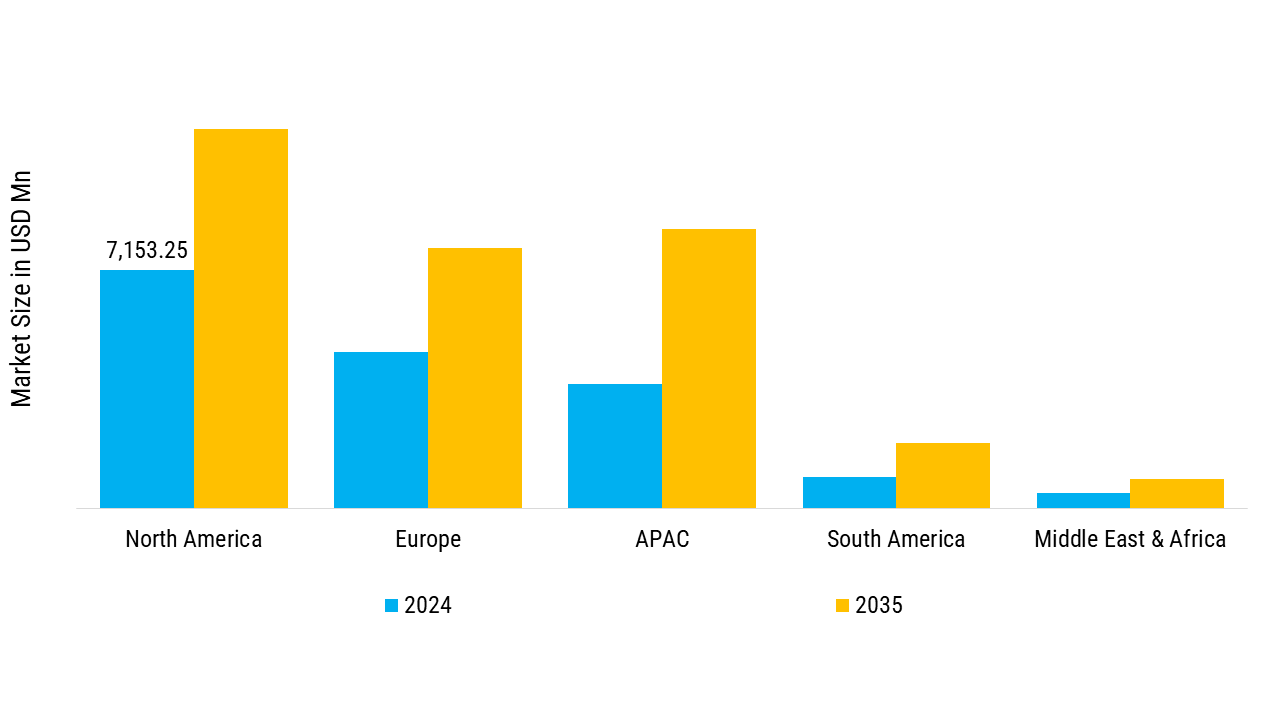
The Global Menopause Market size was valued at USD 16,994.32 Million in 2024, and the market is projected to grow from USD 17,628.21 Million in 2025 to USD 30,415.70 Million by 2035, registering a CAGR of 5.7% during the forecast period 2025–2035. North America led the global market in 2024 with over 42.09% share, generating around USD 7,153.25 Million in revenue.
The global market is expanding steadily due to rising awareness of menopausal health, increasing demand for personalized symptom management, and broader availability of hormone and non-hormonal therapies. Growing healthcare engagement among aging women and digital healthcare accessibility are further accelerating treatment adoption globally.
According to the World Health Organization (WHO), women aged 50 years and older represented nearly 26% of the global female population in 2023, while CDC data indicates that over 80% of women experience menopausal symptoms, driving sustained demand for effective menopause management solutions and long-term therapeutic support.
The Menopause Market is the deep integration of artificial intelligence (AI) and machine learning (ML) for advanced signal processing.
| 2024 Market Size | 16,994.32 (USD Million) |
| 2035 Market Size | 30,415.70 (USD Million) |
| CAGR (2025 - 2035) | 5.7% |
The development of non-hormonal Neurokinin 3 (NK3) receptor antagonists represents a transformative opportunity for the global Menopause Market, particularly for women who are unsuitable for or averse to traditional hormone therapy (HT). These therapies target the "KNDy" neurons in the hypothalamus, which become overactive due to estrogen depletion and disrupt the body's thermoregulatory center.
By blocking neurokinin B (NKB) signaling at the NK3 receptor, these drugs restore thermoregulatory balance without the systemic risks associated with estrogen, such as blood clots or hormone-sensitive cancers.
The increasing recognition of menopause as a significant workplace health issue presents a substantial opportunity for market growth in products, services, and workplace policies tailored to menopausal women. As women constitute nearly half of the global workforce, addressing menopausal health can enhance employee well-being, productivity, and retention. According to the World Health Organization, approximately 50% of women globally experience menopause between ages 45 and 55, highlighting the widespread relevance of this phase.
In recent years, there has been a growing movement toward workplace inclusivity, with companies like Deloitte and Johnson & Johnson implementing menopause-friendly policies that include flexible work arrangements, awareness programs, and health support services.
Based on treatment, the Menopause Market has been segmented into Hormone Therapy, Non-Hormonal Treatment, and dietary supplements. The Hormone Therapy segment held the largest market share at 46.8% in 2025, and the Non-Hormonal Therapy segment is the fastest growing segment during the forecast period.
Based on menopause stage, the industry has been segmented into premature menopause, perimenopause, and postmenopause. The Perimenopause segment held the largest Menopause Market in 2025 with 48.6% , and the Perimenopause segment is the fastest growing segment during the forecast period.
Based on application, the Menopause Market has been segmented into Hot Flashes and Night Sweats (Vasomotor Symptoms), Vaginal Dryness and Atrophy, Sleep Disturbances, Mood Swings and Depression, Bone Health, and Urinary Symptoms. The Hot Flashes and Night Sweats (Vasomotor Symptoms) segment held the largest market in 2025 with 38.9% share, and the Sleep Disturbances segment is the fastest growing segment during the forecast period.
Based on distribution channel, the Menopause Market has been segmented into hospital pharmacy, retail pharmacy, and online channels. The Hospital Pharmacies segment held the largest market share in 2025 at 44.5, and the Online Channels segment is the fastest growing segment during the forecast period.
North America leads in the Menopause Market size, accounting for over 42.09% of the global revenue in 2024. North America remains the global leader in the global market, supported by strong healthcare infrastructure, widespread education, and high consumer engagement.
The U.S. accounts for the vast majority of this regional share. Market dynamics are characterized by a robust demand for both traditional hormone replacement therapies (HRT) and an expanding segment of non-hormonal, prescription-based alternatives. Telemedicine has emerged as a critical driver, facilitating easier access to specialized care and reducing the stigma often associated with menopausal health.
Europe Menopause Market size was valued at USD 5098.30 million in 2024, making it the second-largest regional market with a 30% share. Europe follows as a significant market, bolstered by comprehensive public healthcare systems that often subsidize menopause-related treatments, such as HRT in the UK and various EU nations. This structured access encourages high rates of clinical diagnosis and sustained treatment adherence.
Dietary supplements represent the largest revenue segment, as many women lean toward holistic and over-the-counter solutions alongside conventional medical care. The region is seeing a steady, moderate growth trajectory as it integrates advanced digital health solutions with existing clinical networks.
The APAC region is positioned for the most significant growth, driven by a massive, aging female population and a rapid rise in health consciousness. Market expansion here is unique due to the intersection of Western medical approaches with traditional practices like acupuncture and herbal medicine.
Dietary supplements focused on brain, heart, and bone health are seeing high consumer uptake, supported by the proliferation of e-commerce platforms. Efforts to increase societal awareness and reduce cultural stigma are further accelerating the adoption of menopause-specific wellness products.
South America represents an emerging frontier in the menopause market. Growth is driven by an aging demographic that is increasingly vocal about their specific healthcare needs. Similar to other emerging regions, there is a strong focus on affordable, accessible over-the-counter options and dietary supplements. As awareness grows through local health advocacy and the expansion of digital health access, the region is poised for continued, incremental growth, bridging the gap between historical medical neglect and modern, proactive management.
The Middle East & Africa (MEA) region is emerging as a steady but smaller sonobuoy market, driven by maritime security imperatives and strategic waterways protection requirements. Countries such as Saudi Arabia, the United Arab Emirates, and Egypt have been expanding sonar and sonobuoy systems to monitor areas like the Persian Gulf and Red Sea, where piracy, border security, and critical shipping routes demand enhanced underwater surveillance.
South Africa also contributes through coastal monitoring and research activities. While overall market share is lower compared to North America and Europe, MEA growth reflects increased defense spending, naval modernization, and a rising focus on maritime situational awareness. As regional actors pursue infrastructure protection and joint security initiatives, sonobuoys serve as critical acoustic sensors for ASW and surveillance missions across strategic chokepoints.
Many global, regional, and local vendors characterize the Menopause Market. The global market is highly competitive, with all the players competing to gain market share. Intense competition, rapid advances in Treatment, frequent changes in government policies, and environmental regulations are key factors that confront market growth. The vendors compete based on cost, product quality, reliability, and government regulations. Vendors must provide cost-efficient, high-quality products to survive and succeed in an intensely competitive market.
The major players in the global market Include Astellas Pharma Inc., Amgen Inc., Novartis AG, Pfizer Inc., Bayer AG, Teva Pharmaceutical Industries Ltd, Sandoz Group Ag, AbbVie Inc., strategic market developments and decisions to improve operational effectiveness.






August 2025: Theramex received regulatory approval across Europe and the UK for Bijuva / Bijuve, a combined hormone replacement therapy containing estradiol (1 mg) and progesterone (100 mg). It is the first and only body-identical HRT that combines both hormones in a single daily oral capsule for post-menopausal women with an intact uterus. The formulation uses hormones identical to those naturally produced in the body, offering a safer alternative to synthetic therapies, with real-world evidence indicating lower risks of venous thromboembolism, breast cancer, cardiovascular disease, and stroke. The approval also marks a significant advancement in treatment options for moderate to severe vasomotor symptoms associated with menopause.
April 2025: Real-world study of ~478,651 postmenopausal women showed Prolia reduced fracture risk vs. alendronate, including 36% lower hip fracture risk and 43% lower non-vertebral fracture risk. Risk reduction improved with longer treatment duration, reaching 31% reduction in major osteoporotic fractures by year.
March 2026: Health Canada as the first non-hormonal treatment for moderate to severe vasomotor symptoms (VMS) associated with menopause. The launch is supported by the BRIGHT SKY Phase 3 program (SKYLIGHT 1, 2, and 4 trials) involving over 2,850 patients across the US, Canada, and Europe, demonstrating efficacy in reducing hot flashes and night sweats and establishing long-term safety. The therapy works via neurokinin B receptor antagonism in the hypothalamus. It has also received approvals in the US, UK, Australia, and Europe, with ongoing Phase 3 evaluation (HIGHLIGHT 1) in breast cancer patients.
The Menopause Industry size is projected to reach USD 30,415.70 million by 2035, growing at a CAGR of 5.7%, driven by increasing demand for high-performance computing and enhanced security features.
New opportunities lie in:
|
Market Menopause Stage 2024 |
16,994.32 (USD Million) |
|
Market Menopause Stage 2025 |
17,628.21 (USD Million) |
|
Market Menopause Stage 2035 |
30,415.70 (USD Million) |
|
Compound Annual Growth Rate (CAGR) |
5.7% (2025 - 2035) |
|
Report Coverage |
Revenue Forecast, Competitive Landscape, Growth Factors, and Trends |
|
Base Year |
2024 |
|
Market Forecast Period |
2025 - 2035 |
|
Historical Data |
2019 - 2023 |
|
Market Forecast Units |
USD Million |
|
Key Companies Profiled |
Astellas Pharma Inc., Amgen Inc., Novartis AG, Pfizer Inc., Bayer AG, Teva Pharmaceutical Industries Ltd, Sandoz Group Ag, AbbVie Inc. |
|
Segments Covered |
By Treatment Type By Menopause Stage By Application By Distribution Channel |
|
Key Market Opportunities |
Development of Non-Hormonal Therapies Focus on Menopause at the Workplace. |
|
Key Market Dynamics |
Expanding acceptance of hormone therapy (HT) post-WHI re-evaluation Shift Towards Non-Hormonal and Dietary Supplements Growth in Online Channels & Telehealth Innovation in Delivery Systems. |
|
Region Covered |
North America, Europe, Asia Pacific, South America, Middle East & Africa. |



Kindly complete the form below to receive a free sample of this Report

“This is really good guys. Excellent work on a tight deadline. I will continue to use you going forward and recommend you to others. Nice job”


“Thanks. It’s been a pleasure working with you, please use me as reference with any other Intel employees.”


“Thanks for sending the report it gives us a good global view of the Betaïne market.”


“Thank you, this will be very helpful for OQS.”


“We found the report very insightful! we found your research firm very helpful. I'm sending this email to secure our future business.”


“I am very pleased with how market segments have been defined in a relevant way for my purposes (such as "Portable Freezers & refrigerators" and "last-mile"). In general the report is well structured. Thanks very much for your efforts.”


“I have been reading the first document or the study, ,the Global HVAC and FP market report 2021 till 2026. Must say, good info! I have not gone in depth at all parts, but got a good indication of the data inside!”


“We got the report in time, we really thank you for your support in this process. I also thank to all of your team as they did a great job.”


“The Automotive 48V ECU Components Procurement Intelligence Study” was a complex project, but the Market Research Future (MRFR) team handled it with quality, agility, and customer-centricity. They delivered all requested data on time and within the agreed scope. The team, including Shubhendra Anand and Rahul Gotadki, was always readily available to clarify questions and swiftly implement necessary adjustments, driving the project to a successful conclusion within a very demanding timeframe.
I would also like to specifically commend Akshay Agarwal for his responsiveness and support at every stage—from our initial inquiry on May 6th through to final delivery on June 18th. His dedication made the entire process seamless.”



