Download Free Sample
Kindly complete the form below to receive a free sample of this Report
Mexico Silage Inoculants Market Size, Share, Industry Trend & Analysis Research Report By Application (Corn Silage, Grass Silage, Legume Silage, Mixed Silage), By Type (Homofermentative Inoculants, Heterofermentative Inoculants, Combination Inoculants), By Formulation (Liquid Inoculants, Dry Inoculants) and By End Use (Dairy Farms, Beef Farms, Commercial Feed Processors) - Forecast to 2035
As per analysis, the Mexico silage inoculants market is projected to grow from USD 2.98 Billion in 2025 to USD 5.31 Billion by 2035, exhibiting a compound annual growth rate (CAGR) of 6.33% during the forecast period (2025 - 2035).
The Mexico silage inoculants market is experiencing a robust growth trajectory driven by evolving agricultural practices and increasing demand for quality feed.
| 2024 Market Size | 2.7 (USD Billion) |
| 2035 Market Size | 5.31 (USD Billion) |
| CAGR (2025 - 2035) | 6.33% |
BASF (DE), Bayer (DE), DuPont (US), Lallemand (CA), Chr. Hansen (DK), Alltech (US), Pioneer (US), Kemin (US), Nutreco (NL)
Our Impact
Enabled $4.3B Revenue Impact for Fortune 500 and Leading Multinationals
Partnering with 2000+ Global Organizations Each Year
30K+ Citations by Top-Tier Firms in the Industry
The mexico silage inoculants market is currently experiencing a notable evolution, driven by the increasing demand for high-quality silage among livestock producers. This demand is largely influenced by the need for improved feed efficiency and animal health. As farmers seek to enhance the nutritional value of silage, the adoption of inoculants appears to be gaining traction. These products, which contain beneficial microorganisms, are believed to promote fermentation and preserve the quality of silage, thereby potentially leading to better livestock performance. Furthermore, the growing awareness of sustainable agricultural practices is likely to encourage the use of these inoculants, as they can contribute to reducing waste and improving feed utilization. In addition, the regulatory environment in Mexico seems to be evolving, with increased support for innovative agricultural solutions. This shift may create opportunities for manufacturers and suppliers of silage inoculants to expand their market presence. The collaboration between agricultural research institutions and industry stakeholders is also expected to foster the development of new and effective inoculant formulations. As the market continues to mature, it is essential for stakeholders to remain informed about emerging trends and consumer preferences, which could shape the future landscape of the mexico silage inoculants market.
The Mexico silage inoculants market is poised for growth due to increasing export opportunities for livestock products. As international markets expand, Mexican farmers are looking to enhance the quality of their silage to meet global standards. In 2025, exports of Mexican livestock products are projected to increase by 20%, creating a demand for high-quality silage that can support this growth. The use of inoculants is becoming a key strategy for farmers aiming to improve silage quality and, consequently, the quality of livestock products. This trend indicates that the Mexico silage inoculants market will likely benefit from the global demand for premium livestock products.
The Mexico silage inoculants market is experiencing growth due to the rising demand for livestock products. As the population increases, the need for meat and dairy products escalates, prompting farmers to enhance their production efficiency. Silage, being a crucial feed component, is essential for maintaining livestock health and productivity. In 2025, livestock production in Mexico reached approximately 7 million tons, indicating a robust market for silage inoculants. Farmers are increasingly adopting inoculants to improve fermentation quality and nutrient retention in silage, which directly impacts livestock performance. This trend suggests that the Mexico silage inoculants market will continue to expand as producers seek to optimize feed resources and meet consumer demands.
The Mexico silage inoculants market is positively influenced by government initiatives aimed at promoting agricultural productivity. The Mexican government has implemented various programs that provide financial support and subsidies for farmers adopting modern agricultural practices, including the use of silage inoculants. In 2025, it is estimated that over 30% of farmers received some form of subsidy for purchasing inoculants, which has encouraged wider adoption. These initiatives not only enhance the quality of silage but also contribute to food security in the country. As government support continues, the Mexico silage inoculants market is likely to see sustained growth, as more farmers recognize the economic benefits of using inoculants.
The Mexico silage inoculants market is witnessing a shift in farmer awareness regarding the importance of feed quality. As livestock producers become more educated about the nutritional needs of their animals, there is a growing recognition of the role that high-quality silage plays in overall livestock health. In 2025, surveys indicate that 65% of farmers prioritize feed quality, leading to increased demand for silage inoculants that enhance fermentation and nutrient preservation. This trend suggests that the Mexico silage inoculants market will continue to thrive as producers seek to improve feed efficiency and animal performance through better silage management practices.
The Mexico silage inoculants market is benefiting from ongoing technological advancements in inoculant formulations. Innovations in microbial strains and application methods are enhancing the effectiveness of silage inoculants. For instance, the introduction of multi-strain inoculants has shown to improve fermentation processes and increase the nutritional value of silage. In 2025, the market for advanced inoculants is projected to grow by 15%, driven by these technological improvements. Farmers are increasingly aware of the benefits of using scientifically developed inoculants, which can lead to better silage quality and higher livestock productivity. This trend indicates a shift towards more sophisticated farming practices within the Mexico silage inoculants market.
In the Mexico silage inoculants market, the application segments exhibit a varied distribution, with Dairy Cattle holding the largest share due to the high demand for milk production. This segment benefits from improved silage quality and nutritional value, which enhances milk yield and quality. Beef Cattle follows as a significant application, leveraging the nutritional benefits of high-quality forage while contributing to meat production efficiency. Meanwhile, silage corn and forage crops also play crucial roles but represent smaller portions of the market. Growth trends reveal that the Beef Cattle segment is the fastest-growing due to increasing consumer demand for beef and rising awareness of the benefits of using inoculants in silage production. End-users increasingly recognize the efficiency and quality improvements that silage inoculants bring to forage preservation, leading to better outcomes in livestock productivity. Additionally, the development of specialized inoculant products tailored to serve this segment is expected to boost adoption rates, driving further growth.
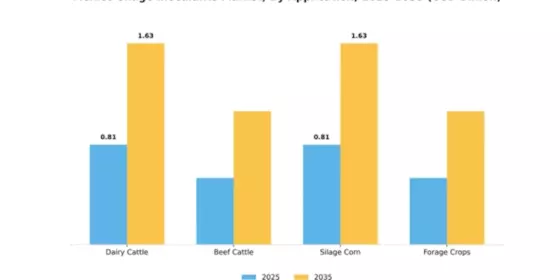
Dairy Cattle (Dominant) vs. Silage Corn (Emerging)
In the Mexico silage inoculants market, Dairy Cattle represents the dominant application segment, primarily driven by the need for high-quality silage to support milk production. This segment thrives on the consistent demand for dairy products, thus fostering innovation and product development in inoculants tailored for improving silage fermentation and preservation. Conversely, the Silage Corn segment is emerging as a key player, gaining traction as more producers recognize the advantages of specially designed inoculants that enhance the efficiency of corn silage. The use of inoculants in silage corn improves ensiling characteristics and feed quality, attracting attention from farmers focusing on optimizing their forage resources and productivity. The alignment of market needs with product innovation is propelling both segments forward.
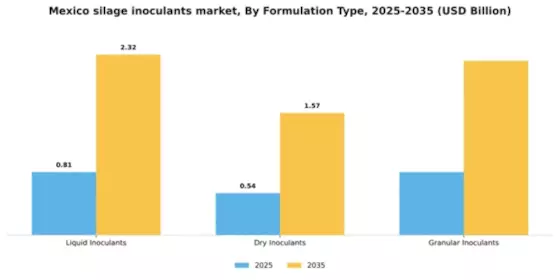
In the Mexico silage inoculants market, the formulation type segment is characterized by three primary categories: liquid, dry, and granular. Among these, the liquid formulation holds the largest market share, bolstered by its ease of application and effective fermentation capabilities. It is widely recognized for enhancing the nutritional profile of silage, thus making it a preferred choice among farmers and producers. Meanwhile, dry inoculants, though currently smaller in market share, are emerging rapidly, appealed by their convenience and extended shelf life which cater to specific user preferences and needs.
Liquid (Dominant) vs. Granular (Emerging)
Liquid silage inoculants are currently the dominant formulation type in the market, owing to their effective application in maintaining silage quality and facilitating fermentation. Their liquid nature allows for easy integration into the silage making process, ensuring uniform distribution and efficacy. Conversely, granular inoculants are emerging as a popular option, particularly among users looking for alternatives. Granular formulations are often valued for their longer shelf life and flexibility in application. As producers seek cost-effective solutions and improved shelf stability, granular inoculants are likely to capture a growing share of the market, positioning themselves as a viable alternative to liquid formulations.
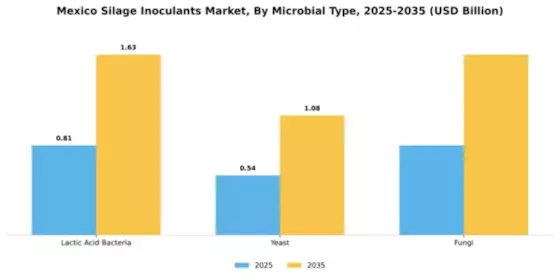
In the Mexico silage inoculants market, Lactic Acid Bacteria (LAB) holds a substantial market share, recognized for its effectiveness in improving silage fermentation and stability. LAB's dominance is largely attributed to its key role in enhancing nutritional value and digestibility, making it a preferred choice among farmers. Yeast, on the other hand, is emerging rapidly as an alternative, capturing interest for its ability to boost fermentation efficiency and palatability in silage, thereby appealing to progressive dairy producers seeking innovative solutions.
Lactic Acid Bacteria (Dominant) vs. Yeast (Emerging)
Lactic Acid Bacteria are the leading microbial type in the Mexico silage inoculants market, valued for their ability to enhance fermentation and silage preservation. They ensure a stable fermentation environment that optimizes feed quality, making them the go-to choice for many cattle farmers. Conversely, Yeast is recognized as the emerging player, gaining traction for its unique benefits in improving fermentation processes and increasing nutrient availability. The adaptability of yeast in various silage conditions, combined with its potential to improve feed intake and animal performance, positions it as a fast-growing innovation in the market.
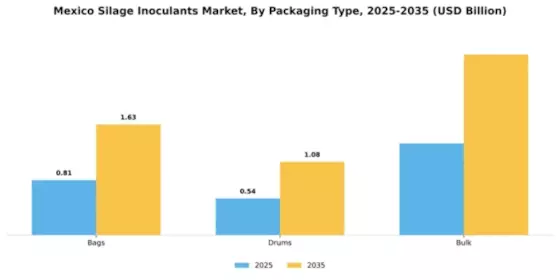
In the Mexico silage inoculants market, the 'Packaging Type' segment showcases notable distribution among the values of Bags, Drums, and Bulk. The Bags category leads in market share, favored for its convenience and ease of use, making it a popular choice among farmers. Drums follow, providing a scalable solution for larger volume needs, while Bulk packages remain a smaller segment due to handling and storage complexities. Each packaging type plays a role in meeting distinct consumer needs, thus shaping the competitive landscape of silage inoculants in Mexico.
Bags (Dominant) vs. Drums (Emerging)
The Bags segment stands out as the dominant packaging type in the Mexico silage inoculants market, celebrated for its user-friendly design and practicality. Farmers prefer Bags due to their manageable size, facilitating easy handling and application. On the other hand, the Drums segment is emerging as a key player, increasingly favored for larger operations looking to optimize costs and efficiency in their silage management processes. Drums offer a bulk solution that can cater to high demand, while still maintaining product integrity. This growth trajectory indicates a shift in market preferences, as operations scale up, leading to a broader acceptance of varied packaging solutions.
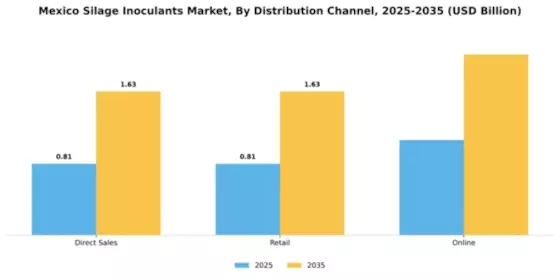
In the Mexico silage inoculants market, the distribution of sales channels reveals intriguing insights. Direct Sales accounts for a significant portion of market share due to its personalized approach, allowing manufacturers to maintain closer relationships with customers and provide tailored solutions. Retail, however, is witnessing rapid growth, driven by increasing consumer access and convenience, making it a significant player in the market dynamics.
Direct Sales (Dominant) vs. Retail (Emerging)
Direct Sales has established itself as the dominant distribution channel in the Mexico silage inoculants market, primarily because it facilitates strong customer relationships and effective communication of product benefits. This hands-on approach enables customized product offerings that align with specific farm needs. In contrast, Retail is emerging rapidly due to the growing preference for convenience among consumers, resulting in increased availability of silage inoculants in agricultural supply stores. Retail provides a vital avenue for farmers seeking quick access to these products without the long lead times associated with direct purchasing.
Get more detailed insights about Mexico Silage Inoculants Market Request Free Sample
The competitive dynamics within the silage inoculants market in Mexico are characterized by a blend of innovation, strategic partnerships, and regional expansion. Key players such as BASF (DE), Bayer (DE), and Lallemand (CA) are actively shaping the landscape through their distinct operational focuses. BASF (DE) emphasizes research and development, aiming to enhance product efficacy and sustainability. Bayer (DE) appears to be leveraging its extensive agricultural portfolio to integrate silage inoculants into broader crop management solutions. Meanwhile, Lallemand (CA) focuses on developing specialized products tailored to local agricultural practices, thereby enhancing its market penetration. Collectively, these strategies foster a competitive environment that is increasingly driven by technological advancements and customer-centric solutions.
In terms of business tactics, companies are increasingly localizing manufacturing to reduce costs and improve supply chain efficiency. This approach not only enhances responsiveness to market demands but also aligns with sustainability goals by minimizing transportation emissions. The market structure is moderately fragmented, with several key players exerting influence while also allowing for niche entrants. This fragmentation encourages innovation and competition, as companies strive to differentiate their offerings in a crowded marketplace.
In December 2025, BASF (DE) announced a partnership with a local agricultural cooperative to develop region-specific silage inoculants. This strategic move is likely to enhance BASF's understanding of local needs and preferences, thereby improving product relevance and market share. Such collaborations may also facilitate knowledge transfer and innovation, positioning BASF favorably against competitors.
In November 2025, Bayer (DE) launched a new line of silage inoculants designed to improve fermentation efficiency and nutrient preservation. This introduction reflects Bayer's commitment to innovation and its strategy to provide comprehensive solutions that address the evolving needs of farmers. By enhancing product performance, Bayer aims to solidify its market position and drive customer loyalty.
In October 2025, Lallemand (CA) expanded its distribution network in Mexico through a strategic alliance with a local distributor. This expansion is indicative of Lallemand's focus on increasing accessibility to its products, thereby enhancing its competitive edge. By ensuring that its products are readily available, Lallemand may improve customer satisfaction and drive sales growth in a competitive market.
As of January 2026, the competitive landscape is increasingly influenced by trends such as digitalization, sustainability, and the integration of artificial intelligence in product development. Strategic alliances are becoming more prevalent, enabling companies to pool resources and expertise to address complex market challenges. Looking ahead, competitive differentiation is likely to evolve from traditional price-based strategies to a focus on innovation, technological advancements, and supply chain reliability. This shift underscores the importance of agility and responsiveness in meeting the dynamic needs of the agricultural sector.


In the Mexico Silage Inoculants Market, recent developments have highlighted an increasing demand for quality livestock feed, driving major companies to innovate their products. For instance, Kemin Industries and Chr. Hansen has recently focused on launching new proprietary silage inoculants tailored to enhance fermentation and improve nutrient absorption in livestock.
In May 2023, Lallemand Animal Nutrition expanded its presence in Mexico through strategic partnerships with local agricultural cooperatives, enabling better distribution of its products. There is also a noticeable trend in mergers and acquisitions; for example, in March 2023, BASF announced its acquisition of a regional silage inoculant manufacturer, thus strengthening its position in the Mexican market. This move is anticipated to impact market dynamics, providing enhanced resources for R&D significantly.
Additionally, innovations in silage preservation methods are becoming increasingly essential due to climate change pressures affecting crop yields. This need for improved agricultural practices has prompted companies such as Alltech and Nutreco to invest in advanced technologies. The growth in valuations of established companies like Grain Processing Corporation is indicative of an evolving market landscape in Mexico's agricultural sector, reflecting rising interest in sustainable farming solutions.
The Mexico silage inoculants market is projected to grow at a 6.33% Compound Annual Growth Rate (CAGR) from 2025 to 2035, driven by increasing dairy production and demand for high-quality feed.
New opportunities lie in:
By 2035, the market is expected to be robust, driven by innovation and strategic partnerships.
| MARKET SIZE 2024 | 2.7(USD Billion) |
| MARKET SIZE 2025 | 2.98(USD Billion) |
| MARKET SIZE 2035 | 5.31(USD Billion) |
| COMPOUND ANNUAL GROWTH RATE (CAGR) | 6.33% (2024 - 2035) |
| REPORT COVERAGE | Revenue Forecast, Competitive Landscape, Growth Factors, and Trends |
| BASE YEAR | 2024 |
| Market Forecast Period | 2025 - 2035 |
| Historical Data | 2019 - 2024 |
| Market Forecast Units | USD Billion |
| Key Companies Profiled | BASF (DE), Bayer (DE), DuPont (US), Lallemand (CA), Chr. Hansen (DK), Alltech (US), Pioneer (US), Kemin (US), Nutreco (NL) |
| Segments Covered | Application, Formulation Type, Microbial Type, Packaging Type, Distribution Channel |
| Key Market Opportunities | Growing demand for sustainable livestock feed solutions drives innovation in the mexico silage inoculants market. |
| Key Market Dynamics | Rising demand for high-quality silage inoculants driven by livestock production growth and evolving agricultural practices in Mexico. |
| Countries Covered | Mexico |
The Mexico silage inoculants market was valued at 2.7 USD Billion in 2024.
The market is projected to reach 5.31 USD Billion by 2035.
The expected CAGR for the Mexico silage inoculants market from 2025 to 2035 is 6.33%.
Key players include BASF, Bayer, DuPont, Lallemand, Chr. Hansen, Alltech, Pioneer, Kemin, and Nutreco.
The main application segments include Dairy Cattle, Beef Cattle, Silage Corn, and Forage Crops.
The market segments by formulation type include Liquid, Dry, and Granular, with Liquid and Granular both valued at 0.81 USD Billion in 2024.
The prevalent microbial types include Lactic Acid Bacteria, Yeast, and Fungi, with Lactic Acid Bacteria valued at 0.81 USD Billion in 2024.
Packaging types include Bags, Drums, and Bulk, with Bulk packaging valued at 1.35 USD Billion in 2024.
Distribution channels include Direct Sales, Retail, and Online, with Online sales projected to grow from 1.08 USD Billion in 2024.
In 2024, Dairy Cattle and Silage Corn both had valuations of 0.81 USD Billion, indicating a balanced market focus.



Kindly complete the form below to receive a free sample of this Report

“This is really good guys. Excellent work on a tight deadline. I will continue to use you going forward and recommend you to others. Nice job”


“Thanks. It’s been a pleasure working with you, please use me as reference with any other Intel employees.”


“Thanks for sending the report it gives us a good global view of the Betaïne market.”


“Thank you, this will be very helpful for OQS.”


“We found the report very insightful! we found your research firm very helpful. I'm sending this email to secure our future business.”


“I am very pleased with how market segments have been defined in a relevant way for my purposes (such as "Portable Freezers & refrigerators" and "last-mile"). In general the report is well structured. Thanks very much for your efforts.”


“I have been reading the first document or the study, ,the Global HVAC and FP market report 2021 till 2026. Must say, good info! I have not gone in depth at all parts, but got a good indication of the data inside!”


“We got the report in time, we really thank you for your support in this process. I also thank to all of your team as they did a great job.”


“The Automotive 48V ECU Components Procurement Intelligence Study” was a complex project, but the Market Research Future (MRFR) team handled it with quality, agility, and customer-centricity. They delivered all requested data on time and within the agreed scope. The team, including Shubhendra Anand and Rahul Gotadki, was always readily available to clarify questions and swiftly implement necessary adjustments, driving the project to a successful conclusion within a very demanding timeframe.
I would also like to specifically commend Akshay Agarwal for his responsiveness and support at every stage—from our initial inquiry on May 6th through to final delivery on June 18th. His dedication made the entire process seamless.”



