Motorhome Market
Motorhome Market Summary
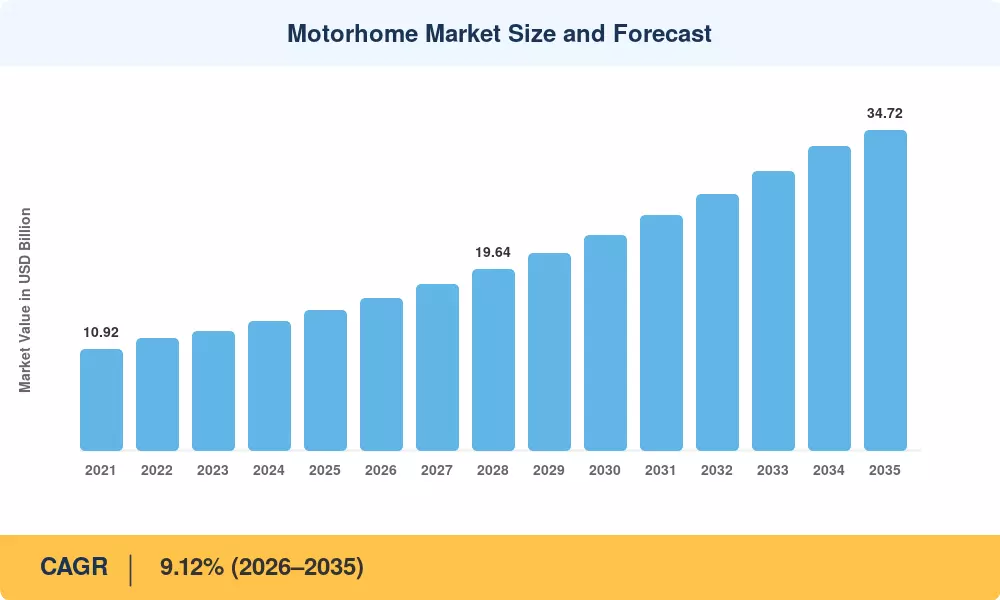
As per Market Research Future analysis, the Motorhome Market Size was estimated at 11.9 USD Billion in 2024. The Motorhome industry is projected to grow from 12.97 USD Billion in 2025 to 30.77 USD Billion by 2035, exhibiting a compound annual growth rate (CAGR) of 9.02% during the forecast period 2025 - 2035
Key Market Trends & Highlights
The motorhome market is experiencing a dynamic shift towards sustainability and technological integration, driven by evolving consumer preferences.
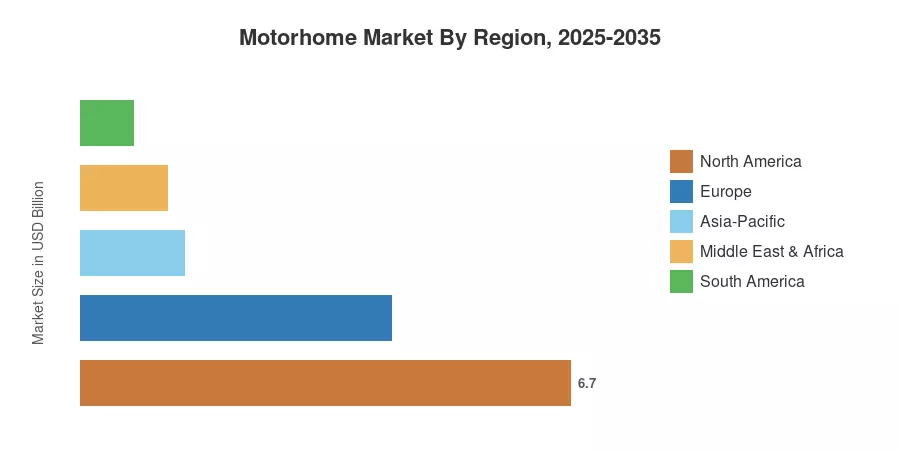
- North America remains the largest market for motorhomes, showcasing a robust demand for outdoor recreation.
- The Asia-Pacific region is emerging as the fastest-growing market, reflecting a rising interest in travel and adventure.
- Class A motorhomes dominate the market, while Class B motorhomes are witnessing the fastest growth due to changing consumer preferences.
- Key market drivers include increased demand for outdoor recreation and rising interest in sustainable travel, influencing both gasoline and diesel segments.
Market Size & Forecast
| 2024 Market Size | 11.9 (USD Billion) |
| 2035 Market Size | 30.77 (USD Billion) |
| CAGR (2025 - 2035) | 9.02% |
Major Players
Thor Industries (US), Forest River (US), Winnebago Industries (US), Dethleffs (DE), Hymer (DE), Knaus Tabbert (DE), Adria Mobil (SI), Niesmann+Bischoff (DE), Bürstner (DE)
Motorhome Market Trends
The Motorhome Market is currently experiencing a dynamic evolution, driven by various factors that influence consumer preferences and industry innovations. As individuals increasingly seek flexible travel options, the appeal of motorhomes has grown significantly. This trend appears to be fueled by a desire for adventure and the convenience of home-like amenities on the road. Furthermore, the rise of remote work has led to a shift in lifestyle choices, with many individuals opting for extended travel experiences. This shift suggests that the Motorhome Market may continue to expand as more consumers embrace the freedom of mobility. In addition to changing consumer behaviors, advancements in technology are reshaping the Motorhome Market. Manufacturers are integrating smart features and eco-friendly solutions into their designs, which may attract environmentally conscious buyers. The emphasis on sustainability indicates a potential shift towards electric and hybrid motorhomes, aligning with broader environmental goals. As the market adapts to these trends, it is likely that the Motorhome Market will see a diversification of offerings, catering to a wider range of preferences and needs, ultimately enhancing the overall travel experience for consumers.
Sustainability Initiatives
The Motorhome Market is increasingly focusing on sustainability, with manufacturers exploring eco-friendly materials and energy-efficient technologies. This trend reflects a growing consumer demand for environmentally responsible travel options, potentially leading to a rise in electric and hybrid motorhomes.
Technological Integration
Advancements in technology are becoming a hallmark of the Motorhome Market, as smart features and connectivity options are integrated into new models. This trend enhances user experience, allowing for greater convenience and control while on the road.
Shift in Consumer Preferences
There is a noticeable shift in consumer preferences towards more flexible travel options. The desire for adventure and the ability to work remotely are driving interest in motorhomes, suggesting that the market may continue to grow as lifestyles evolve.
Motorhome Market Drivers
Rising Interest in Sustainable Travel
Sustainability is becoming a central theme within the Motorhome Market, as consumers increasingly prioritize eco-friendly travel options. The demand for motorhomes that utilize renewable energy sources and sustainable materials is on the rise. In 2025, it is anticipated that sales of eco-friendly motorhomes will increase by 25% compared to previous years. This trend is driven by a growing awareness of environmental issues and a desire to minimize carbon footprints while traveling. Manufacturers are responding by developing motorhomes that incorporate green technologies, such as energy-efficient appliances and sustainable building materials. This focus on sustainability not only appeals to environmentally conscious consumers but also positions the Motorhome Market as a leader in responsible travel.
Increased Demand for Outdoor Recreation
The Motorhome Market experiences a notable surge in demand for outdoor recreational activities. As individuals seek to escape urban environments, the appeal of road trips and camping has intensified. This trend is reflected in the rising sales of motorhomes, which reached approximately 200,000 units in the previous year. The desire for adventure and exploration drives consumers to invest in motorhomes, allowing them to travel with comfort and convenience. Furthermore, the Motorhome Market benefits from the growing popularity of national parks and scenic routes, which attract outdoor enthusiasts. This increasing inclination towards nature-based experiences suggests a robust future for the industry, as more individuals prioritize leisure travel and outdoor activities.
Technological Advancements in Motorhomes
Technological integration within the Motorhome Market is transforming the way consumers experience travel. Innovations such as smart home features, advanced navigation systems, and energy-efficient appliances are becoming standard in modern motorhomes. The incorporation of solar panels and electric drivetrains is particularly noteworthy, as it aligns with the increasing consumer demand for sustainability. In 2025, it is estimated that nearly 30% of new motorhomes will feature electric or hybrid technology. This shift not only enhances the user experience but also positions the Motorhome Market favorably in an era where eco-consciousness is paramount. As technology continues to evolve, the industry is likely to attract a broader demographic, including younger consumers who prioritize innovation.
Expansion of Infrastructure and Campgrounds
The Motorhome Market is benefiting from the expansion of infrastructure and campgrounds, which enhances the overall travel experience for motorhome owners. Increased investment in public and private campgrounds is making it easier for travelers to find suitable accommodations. In 2025, it is estimated that the number of campgrounds will grow by 20%, providing more options for motorhome users. This expansion is crucial as it addresses the growing demand for accessible and well-maintained camping facilities. Additionally, improved road networks and services tailored for motorhomes contribute to a more seamless travel experience. As infrastructure continues to develop, the Motorhome Market is likely to see sustained growth, attracting more consumers to the joys of motorhome travel.
Changing Demographics and Consumer Preferences
The Motorhome Market is witnessing a shift in demographics, with younger generations increasingly embracing motorhome travel. Millennials and Gen Z consumers are drawn to the flexibility and freedom that motorhomes offer, often seeking unique travel experiences over traditional vacations. This demographic shift is reflected in the rising interest in rental services, which cater to those who prefer short-term use. In 2025, it is projected that rental motorhome services will account for over 15% of the market share. This trend indicates a potential for growth in the Motorhome Market, as companies adapt to meet the evolving preferences of younger travelers who value experiences over possessions.
Market Segment Insights
By Type: Class A Motorhomes (Largest) vs. Class B Motorhomes (Fastest-Growing)
In the Motorhome Market, Class A Motorhomes dominate the segment with a significant market share. These luxury RVs are favored for their spacious interiors and high-end amenities, making them ideal for extended travel and comfort-focused consumers. Class B Motorhomes, while smaller, are seeing a rapid increase in popularity due to their ease of maneuverability and fuel efficiency. This evolving preference among consumers is reflective of changing travel trends and lifestyle choices. Class C Motorhomes and Truck Campers make up the remaining segments, catering to a niche market seeking affordable and versatile options. Class C models offer a balanced mix of size and comfort, while Truck Campers appeal to individuals wanting a compact solution. The increasing interest in outdoor adventures is also driving the growth of these segment values.
Class A Motorhomes (Dominant) vs. Class B Motorhomes (Emerging)
Class A Motorhomes stand out as the dominant segment due to their luxurious features, spacious layouts, and comprehensive amenities, attracting affluent consumers who prioritize comfort. These vehicles typically include full kitchens, baths, and expansive living spaces, ideal for longer trips or full-time living. Conversely, Class B Motorhomes, often referred to as camper vans, are emerging rapidly as a favorable option for those seeking a more compact, efficient, and budget-friendly alternative. With advancements in design and technology, Class B models now offer impressive features and comfort, appealing to younger, adventure-seeking demographics. This contrast showcases how evolving consumer preferences are reshaping the Motorhome Market landscape.
By Fuel Type: Gasoline (Largest) vs. Diesel (Fastest-Growing)
In the Motorhome Market, gasoline emerges as the largest fuel type, commanding a significant market share due to its established infrastructure and consumer preference. Diesel follows closely as the fastest-growing segment, appealing to consumers seeking enhanced fuel efficiency and longevity in their motorhomes. As these two fuel types continue to compete, their respective attributes shape consumer choices and market dynamics. Looking ahead, the growth of the diesel segment is driven by the demand for higher torque and better fuel economy, particularly for larger motorhomes. In contrast, gasoline's popularity is sustained by its availability and ease of use. Additionally, with the rising interest in eco-friendly options, alternative fuels like propane and electric are gaining traction, diversifying consumer preferences in the market.
Gasoline (Dominant) vs. Electric (Emerging)
Gasoline remains the dominant fuel type in the motorhome market, favored for its widespread availability and compatibility with most existing motorhome models. Its user-friendly nature appeals to a broad audience, ensuring stable demand. Conversely, electric motorhomes represent an emerging segment, gaining traction due to increasing environmental awareness and advancements in battery technology. The appeal of electric motorhomes lies in their sustainability and lower long-term operating costs, making them attractive to eco-conscious consumers. As charging infrastructure improves, electric motorhomes are likely to penetrate deeper into the market, providing an alternative for those prioritizing environmentally friendly travel.
By Size: Medium (Largest) vs. Large (Fastest-Growing)
In the Motorhome Market, the size segment is prominently divided into three categories: Small (up to 20 feet), Medium (20 to 25 feet), and Large (over 25 feet). The Medium size category holds the largest market share, appealing to a broad audience due to its balance of space and maneuverability. Conversely, the Large motorhomes, while currently smaller in market share, are rapidly gaining traction as consumers seek more spacious and luxurious options for extended travel.
Medium (Dominant) vs. Large (Emerging)
Medium motorhomes are characterized by their versatility, combining comfort with a compact design that allows for easier navigation and parking. This size caters to families or couples looking for a balance between sufficient living space and manageable dimensions. On the other hand, Large motorhomes are emerging as the preferred choice for consumers prioritizing luxury and extensive amenities. These models offer ample living space, superior comfort, and advanced features, which attract a segment of the market interested in long-term travel experiences.
By Amenities: Slide-outs (Largest) vs. Solar panels (Fastest-Growing)
In the Motorhome Market, amenities play a crucial role in consumer purchasing decisions, with Slide-outs accounting for a significant market share. They provide essential additional space and comfort, making them a preferred choice for many buyers. On the other hand, amenities like Solar panels are gaining traction among environmentally conscious consumers, leading to a shift in market dynamics as more manufacturers incorporate these features into new models.
Amenities: Slide-outs (Dominant) vs. Solar panels (Emerging)
Slide-outs are the dominant feature in the amenities segment, offering motorhome owners increased living space and flexibility. This feature allows for expanded interiors when parked, which enhances the overall comfort and usability of the motorhome. As consumers seek more convenience and amenities in their vehicles, Slide-outs continue to be a critical selling point. Conversely, Solar panels are emerging as a vital feature for those looking to minimize their environmental footprint. With the rise in demand for sustainable energy solutions, Solar panels are becoming increasingly popular, appealing to a diverse range of consumers who prefer eco-friendly options for their outdoor adventures.
Regional Insights
North America : Leading Market for Motorhomes
The North American motorhome market is driven by increasing consumer interest in recreational travel and outdoor activities. The region holds the largest market share at approximately 45%, with the U.S. being the primary contributor. Regulatory support for RV manufacturing and tourism initiatives further fuels growth. The demand for eco-friendly motorhomes is also rising, aligning with sustainability trends. Key players like Thor Industries, Forest River, and Winnebago dominate the competitive landscape, offering a wide range of models. The U.S. market is characterized by a strong dealer network and a growing number of rental services, catering to both seasoned RV enthusiasts and newcomers. The presence of established manufacturers ensures a robust supply chain, enhancing market accessibility.
Europe : Emerging Market Dynamics
Europe's motorhome market is characterized by a growing trend towards leisure travel, with a market share of around 30%. Germany and France are the largest markets, accounting for approximately 50% of the region's sales. Regulatory frameworks promoting sustainable tourism and environmental standards are key growth drivers. The increasing popularity of staycations has also boosted demand for motorhomes across various demographics. Leading manufacturers such as Dethleffs, Hymer, and Knaus Tabbert are well-established in the region, offering innovative designs and features. The competitive landscape is marked by a mix of traditional and new entrants, with a focus on electric and hybrid models. The presence of strong dealer networks and rental services further enhances market penetration, catering to diverse consumer preferences.
Asia-Pacific : Rapidly Growing Market Potential
The Asia-Pacific motorhome market is witnessing rapid growth, driven by increasing disposable incomes and a rising interest in outdoor activities. The region holds a market share of approximately 15%, with Australia and Japan being the largest contributors. Regulatory initiatives promoting tourism and recreational vehicle usage are also enhancing market dynamics, encouraging investments in infrastructure and services. Key players like Adria Mobil and Niesmann+Bischoff are expanding their presence in the region, focusing on innovative designs tailored to local preferences. The competitive landscape is evolving, with both established brands and new entrants vying for market share. The growing trend of domestic travel is expected to further boost demand for motorhomes, making it a promising market for future investments.
Middle East and Africa : Untapped Market Opportunities
The Middle East and Africa motorhome market is still in its nascent stages, holding a market share of about 10%. However, there is significant potential for growth driven by increasing interest in leisure travel and outdoor activities. Countries like South Africa and the UAE are leading the market, supported by favorable tourism policies and a growing infrastructure for recreational vehicles. The competitive landscape is characterized by a mix of local and international players, with opportunities for new entrants to capture market share. The presence of key players is limited, but there is a growing interest in motorhome rentals and sales. As the region develops its tourism sector, the demand for motorhomes is expected to rise, presenting a unique opportunity for investment and expansion.
Key Players and Competitive Insights
In August Thor Industries (US) announced a partnership with a leading technology firm to integrate smart home features into its motorhomes. This strategic move is likely to enhance user experience and attract tech-savvy consumers, positioning Thor as a leader in innovation within the market. The integration of smart technology not only aligns with current consumer preferences but also sets a precedent for future developments in the industry.
In September Winnebago Industries (US) unveiled its new line of eco-friendly motorhomes, which utilize sustainable materials and energy-efficient systems. This initiative reflects a growing consumer preference for environmentally responsible products and positions Winnebago as a forward-thinking player in the market. The emphasis on sustainability may resonate well with a demographic increasingly concerned about environmental impact, potentially driving sales and brand loyalty.
In July Dethleffs (DE) launched a new marketing campaign aimed at younger consumers, highlighting the lifestyle benefits of motorhome travel. This campaign is indicative of a broader trend where companies are targeting younger demographics, who are more inclined towards experiential travel. By appealing to this audience, Dethleffs aims to expand its market reach and foster a new generation of motorhome enthusiasts.
As of October the Motorhome Market is witnessing significant trends such as digitalization, sustainability, and the integration of artificial intelligence in vehicle design and functionality. Strategic alliances among manufacturers and technology firms are shaping the competitive landscape, fostering innovation and enhancing product offerings. Looking ahead, it appears that competitive differentiation will increasingly hinge on technological advancements and sustainable practices, moving away from traditional price-based competition. Companies that prioritize innovation, reliability in supply chains, and customer-centric solutions are likely to thrive in this evolving market.
Key Companies in the Motorhome Market include
Industry Developments
The global motorhome market is projected to reach USD 60.0 billion by 2032, exhibiting a CAGR of 4.19% from 2024 to 2032. The increasing popularity of recreational activities, rising disposable income, and growing preference for outdoor travel are key factors driving market growth. Technological advancements, such as the integration of smart features and eco-friendly solutions, are further fueling demand.
Recent news developments include Thor Industries' acquisition of Erwin Hymer Group, creating the largest RV manufacturer globally. Additionally, the launch of innovative motorhomes with advanced safety and connectivity features by Winnebago Industries and Airstream underscores the industry's focus on enhancing customer experience.
- February 2024 - The Caravan and Motorhome Market Club applied to the South Kesteven District Council for a fresh site on Sedgebrook Road in Grantham. According to the development plan submitted by the club, the site will include 140 pitches for touring caravans and motor homes, 10 sites for camping, and a glamping site comprising 15 units, of which one will be fully accessible.
- May 2024 - The First LTC (Luxury Travel Collection) Business Owners Soirée organized by Flight Centre Travel Group on Hayman Island has been finished. The event lasted for three days and was filled with motivation, networking and leadership development activities.
- January 2024 - By Lightship, an RV manufacturing company, announced the commencement of production of its electric models of RVs. The financing of USD 34 million was secured by the company, and a rental agreement for a 32,000 sqft manufacturing base in Colorado has been signed.
- November 2023 - Thor Industries has presented to its customers an electric USB-powered system for recreational vehicle charging. The company showcased 3D-rendered solutions for small and large EVs with both class A and large trailer types models.
Future Outlook
Motorhome Market Future Outlook
The Motorhome Market is projected to grow at a 9.02% CAGR from 2025 to 2035, driven by increasing consumer interest in outdoor recreation and sustainable travel options.
New opportunities lie in:
- Development of electric motorhome models to meet eco-friendly demands. Expansion of rental services targeting urban consumers seeking travel flexibility. Integration of smart technology for enhanced user experience and connectivity.
By 2035, the Motorhome Market is expected to be robust, reflecting evolving consumer preferences and technological advancements.
Market Segmentation
Motorhome Market Size Outlook
- Small (up to 20 feet)
- Medium (20 to 25 feet)
- Large (over 25 feet)
Motorhome Market Type Outlook
- Class A Motorhomes
- Class B Motorhomes
- Class C Motorhomes
- Truck Campers
Motorhome Market Amenities Outlook
- Slide-outs
- Generator
- Solar panels
- Awning
- Kitchenette
- Bathroom
- Air conditioning
- Heating
Motorhome Market Fuel Type Outlook
- Gasoline
- Diesel
- Propane
- Electric
Report Scope
| MARKET SIZE 2024 | 11.9(USD Billion) |
| MARKET SIZE 2025 | 12.97(USD Billion) |
| MARKET SIZE 2035 | 30.77(USD Billion) |
| COMPOUND ANNUAL GROWTH RATE (CAGR) | 9.02% (2025 - 2035) |
| REPORT COVERAGE | Revenue Forecast, Competitive Landscape, Growth Factors, and Trends |
| BASE YEAR | 2024 |
| Market Forecast Period | 2025 - 2035 |
| Historical Data | 2019 - 2024 |
| Market Forecast Units | USD Billion |
| Key Companies Profiled | Thor Industries (US), Forest River (US), Winnebago Industries (US), Dethleffs (DE), Hymer (DE), Knaus Tabbert (DE), Adria Mobil (SI), Niesmann+Bischoff (DE), Bürstner (DE) |
| Segments Covered | Type, Fuel Type, Size, Amenities, Regional |
| Key Market Opportunities | Integration of smart technology and sustainable materials in the Motorhome Market presents significant growth opportunities. |
| Key Market Dynamics | Rising consumer interest in sustainable travel drives innovation and competition in the motorhome market. |
| Countries Covered | North America, Europe, APAC, South America, MEA |
FAQs
What is the current valuation of the Motorhome Market in 2025?
The Motorhome Market is valued at approximately 11.9 USD Billion in 2024.
What is the projected market size for the Motorhome Market by 2035?
The market is expected to reach a valuation of 30.77 USD Billion by 2035.
What is the expected CAGR for the Motorhome Market during the forecast period 2025 - 2035?
The expected CAGR for the Motorhome Market during the forecast period 2025 - 2035 is 9.02%.
Which companies are the key players in the Motorhome Market?
Key players in the Motorhome Market include Thor Industries, Forest River, Winnebago Industries, Dethleffs, and Hymer.
What are the different types of motorhomes and their market valuations?
Class A, B, and C motorhomes, along with truck campers, have market valuations ranging from 2.37 to 9.25 USD Billion.
How does fuel type impact the Motorhome Market?
The market for gasoline, diesel, propane, and electric motorhomes shows valuations from 1.19 to 12.0 USD Billion.
What size categories exist within the Motorhome Market?
The market segments by size include small, medium, and large motorhomes, with valuations from 2.37 to 12.93 USD Billion.
What amenities are popular in the Motorhome Market?
How do the market valuations of different motorhome sizes compare?
What trends are influencing the growth of the Motorhome Market?
Research Approach
Secondary Research
The secondary research process involved comprehensive analysis of regulatory databases, industry publications, government transportation statistics, and authoritative automotive/RV organizations. Key sources included the US Department of Transportation (DOT), National Highway Traffic Safety Administration (NHTSA), US Census Bureau - Vehicle Inventory and Use Survey, European Automobile Manufacturers' Association (ACEA), European Commission - Transport Statistics, RV Industry Association (RVIA), Caravan Industry Association of Australia, Japan Automobile Manufacturers Association (JAMA), China Association of Automobile Manufacturers (CAAM), Statistics Canada - Vehicle Registrations, Australian Bureau of Statistics, International Organization of Motor Vehicle Manufacturers (OICA), World Tourism Organization (UNWTO), US Bureau of Economic Analysis, Eurostat - Transport Database, and national motor vehicle registration authorities from key markets. These sources were used to collect vehicle registration data, manufacturing statistics, consumer demographic trends, regulatory compliance requirements, and market landscape analysis for Class A, Class B, and Class C motorhomes, as well as campervans and luxury RV segments.
Primary Research
Supply-side and demand-side stakeholders were interviewed during the primary research phase in order to gather both qualitative and quantitative information. CEOs, VPs of Manufacturing, heads of Product Development, and commercial directors from motorhome producers, chassis suppliers, and component OEMs were examples of supply-side sources. Fleet managers from RV rental firms, dealership owners, campground operators, tourism board representatives, and procurement leads from luxury camping resorts and recreational vehicle parks were among the demand-side sources. In addition to gathering information on consumer purchase habits, pricing tactics, financing trends, and after-sales service dynamics, primary research validated market segmentation and corroborated product pipeline deadlines.
Primary Respondent Breakdown:
By Designation: C-level Primaries (32%), Director Level (30%), Others (38%)
By Region: North America (32%), Europe (30%), Asia-Pacific (28%), Rest of World (10%)
Market Size Estimation
Global market valuation was derived through revenue mapping and unit sales analysis. The methodology included:
Identification of 50+ key manufacturers across North America, Europe, Asia-Pacific, and Latin America
Product mapping across Class A, Class B, Class C motorhomes, campervans, and specialty/custom RV categories
Analysis of reported and modeled annual revenues specific to motorhome portfolios
Coverage of manufacturers representing 65-70% of global market share in 2024
Extrapolation using bottom-up (unit sales × ASP by country/region) and top-down (manufacturer revenue validation) approaches to derive segment-specific valuations
Kindly complete the form below to receive a free sample of this Report
Customer Stories
“This is really good guys. Excellent work on a tight deadline. I will continue to use you going forward and recommend you to others. Nice job”
“Thanks. It’s been a pleasure working with you, please use me as reference with any other Intel employees.”
“Thanks for sending the report it gives us a good global view of the Betaïne market.”
“Thank you, this will be very helpful for OQS.”
“We found the report very insightful! we found your research firm very helpful. I'm sending this email to secure our future business.”
“I am very pleased with how market segments have been defined in a relevant way for my purposes (such as "Portable Freezers & refrigerators" and "last-mile"). In general the report is well structured. Thanks very much for your efforts.”
“I have been reading the first document or the study, ,the Global HVAC and FP market report 2021 till 2026. Must say, good info! I have not gone in depth at all parts, but got a good indication of the data inside!”
“We got the report in time, we really thank you for your support in this process. I also thank to all of your team as they did a great job.”