Nerve Regeneration Market

Nerve Regeneration Market Research Report: Size, Share, Trend Analysis By Product (Neurostimulation & Neuromodulation Devices, Biomaterials), By Applications (Neurostimulation and Neuromodulation Surgeries, Direct Nerve Repair/Neurorrhaphy, Nerve Grafting, Stem Cell Therapy), By End Users (Hospitals & Clinics, Ambulatory Surgery Centers), and By Region (North America, Europe, Asia-Pacific, And Rest Of The World) - Growth Outlook & Industry Forecast 2025 To 2035
ID: MRFR/Pharma/0696-CR
145 Pages
Satyendra Maurya, Kinjoll Dey
Last Updated: July 29, 2026
Nerve Regeneration Market
Market Size
Forecast Period2025 - 2035
CAGR (2025 - 2035)11.32%
2024 Market Size$ 11.28 Billion
2025 Market Size$ 12.55 Billion
2035 Market Size$ 36.69 Billion
Key Players
Companies such as Axogen
Medtronic
Stryker
Boston Scientific
Nerve Repair Technologies
Neurotech
Opportunities
  • Market Trends and Projections
  • Increasing Geriatric Population
  • Government Initiatives and Funding

Nerve Regeneration Market Summary

The Global Nerve Regeneration Market size was valued at USD 11.28 Billion in 2024, and the market is projected to grow from USD 12.55 Billion in 2025 to USD 36.69 Billion by 2035, registering a CAGR of 11.32% during the forecast period 2025–2035. North America led the market in 2024 with over 50.53% share, generating around USD 5.7 Billion in revenue.
 
The increasing prevalence of neurological disorders and continuous advancements in regenerative medicine are the primary growth drivers for the Nerve Regeneration Market. Growing demand for effective nerve repair technologies, biomaterials, and regenerative therapies continues accelerating adoption across hospitals and specialized neurological care worldwide.
 
According to the WHO, neurological conditions affect up to 1 in 3 people globally, making them one of the leading causes of illness and disability worldwide. The growing neurological disease burden continues accelerating investment in nerve repair technologies, regenerative medicine, and advanced neurorehabilitation solutions.

Key Market Trends & Highlights

The Nerve Regeneration Market is poised for substantial growth driven by technological advancements and increasing demand for innovative treatments.

  • Hospitals represented approximately 56.9% of market demand in 2024 through specialized neurosurgical procedures and comprehensive nerve repair services.
  • Minimally Invasive Surgery captured nearly 59.8% market share in 2024, reflecting growing preference for faster recovery and reduced surgical trauma.
  • Global R&D investment exceeding 2.6% of worldwide GDP continues accelerating innovation in biomaterials, neurostimulation, and regenerative medicine technologies.
  • Europe: USD 3.38 Billion market value with 30% global share in 2024.

Market Size & Forecast

2024 Market Size 11.28 (USD Billion)
2035 Market Size 36.69 (USD Billion)
CAGR (2025 - 2035) 11.32%

Major Players

Companies such as Axogen (US), Medtronic (US), Stryker (US), Boston Scientific (US), Nerve Repair Technologies (US), Neurotech (US), Collagen Solutions (GB), Integra LifeSciences (US), AxoGen (US) are some of the major participants in the global market.

Nerve Regeneration Market Drivers

Market Trends and Projections

The Global Nerve Regeneration Industry is poised for substantial growth, with projections indicating a market value of 11.3 USD Billion in 2024 and an anticipated increase to 36.7 USD Billion by 2035. The compound annual growth rate of 11.32% from 2025 to 2035 underscores the robust demand for nerve regeneration therapies.
 
Key trends influencing this growth include advancements in technology, increasing incidences of neurological disorders, and supportive government policies. These factors collectively contribute to a dynamic market environment, fostering innovation and enhancing treatment options for patients worldwide.
 

  • According to the World Bank, healthcare investment and biomedical research funding continue increasing globally, supported by R&D expenditure exceeding 2.6% of worldwide GDP. Rising investments in regenerative medicine, neurological research, and advanced biomaterials continue strengthening innovation and long-term growth opportunities within the nerve regeneration industry.

Increasing Geriatric Population

The aging population is a critical driver of the Global Nerve Regeneration Industry. As individuals age, the likelihood of experiencing nerve-related issues increases, leading to a greater demand for nerve regeneration therapies. The United Nations projects that the global population aged 60 and over will reach 2.1 billion by 2050.
 
This demographic shift necessitates the development of effective treatment options for age-related neurological conditions, thereby stimulating market growth. The anticipated compound annual growth rate of 11.32% from 2025 to 2035 reflects the increasing need for innovative solutions tailored to this population.
 

  • According to the World Bank, people aged 65 years and above now account for more than 10% of the global population, with the proportion continuing to rise. Population aging is increasing the prevalence of nerve injuries and neurodegenerative disorders, supporting sustained demand for advanced nerve regeneration therapies and rehabilitation technologies.

Government Initiatives and Funding

Government initiatives aimed at enhancing healthcare infrastructure and funding research in nerve regeneration are significantly influencing the Global Nerve Regeneration Industry. Various countries are allocating resources to support clinical trials and research projects focused on nerve repair and regeneration.
 
For example, the National Institutes of Health in the United States has increased funding for studies related to nerve injuries and regeneration. Such initiatives not only foster innovation but also encourage collaboration between academic institutions and industry players, ultimately leading to the development of new therapies and technologies that address unmet medical needs.

Growing Awareness and Patient Advocacy

The Global Nerve Regeneration Industry is benefiting from increased awareness and advocacy surrounding neurological health. Patient advocacy groups are playing a pivotal role in educating the public about nerve injuries and the importance of timely treatment. This heightened awareness is leading to more individuals seeking medical attention for nerve-related issues, thereby driving demand for regenerative therapies.
 
Moreover, campaigns aimed at reducing stigma associated with neurological disorders encourage patients to explore available treatment options. As awareness continues to grow, the market is likely to expand, reflecting the evolving landscape of patient care.

Rising Incidence of Neurological Disorders

The Global Nerve Regeneration Industry is experiencing growth due to the increasing prevalence of neurological disorders such as Alzheimer's disease, Parkinson's disease, and multiple sclerosis. According to the World Health Organization, neurological disorders affect millions globally, leading to a heightened demand for effective treatment options.
 
This surge in patient population necessitates advancements in nerve regeneration technologies, which are projected to reach a market value of 11.3 USD Billion in 2024. As awareness of these conditions grows, healthcare providers are likely to invest more in innovative therapies, thereby driving the market further.

Technological Advancements in Regenerative Medicine

Technological innovations in regenerative medicine are propelling the Global Nerve Regeneration Industry forward. Breakthroughs in stem cell therapy, bioengineering, and nerve grafting techniques have shown promising results in restoring nerve function. For instance, the development of 3D bioprinting has enabled the creation of nerve conduits that mimic natural nerve structures.
 
These advancements not only enhance treatment efficacy but also attract significant investments from both public and private sectors. As these technologies continue to evolve, the market is expected to grow substantially, with projections indicating a value of 36.7 USD Billion by 2035.

Market Segment Insights

By Application: Peripheral Nerve Injury (Largest) vs. Spinal Cord Injury (Fastest-Growing)

In the Nerve Regeneration Market, the application segment includes various types of nerve injuries, with Peripheral Nerve Injury accounting for the largest market share at 41.8%. Peripheral nerve injuries stem from trauma or surgery, presenting a critical area of focus for researchers and manufacturers alike. Spinal Cord Injury, while smaller in share compared to peripheral injuries, is emerging rapidly, driven by advances in medical technologies and increasing awareness of treatment options. Other applications such as Cranial Nerve Injury, Nerve Repair, and Nerve Grafting also contribute to market dynamics but are less pronounced in terms of overall share and growth pace. The growth trends in the market are largely influenced by technological innovations and heightened research activities. Peripheral Nerve Injury continues to receive the most attention with ongoing advancements in surgical techniques and post-operative care. Conversely, the market for Spinal Cord Injury treatment is accelerating due to breakthrough therapies and increased funding directed towards spinal research. As healthcare providers adopt innovative solutions and patient outcomes improve, both segments are poised for significant growth, catering to an increasing patient demographic seeking effective nerve repair solutions.

Collagen Solutions continues expanding regenerative medicine through innovative collagen-based biomaterials designed for nerve repair applications. Ongoing product development and partnerships with medical device manufacturers support the creation of advanced biological scaffolds, improving nerve regeneration efficiency and expanding adoption of nerve graft technologies across surgical centers.

By Product Type: Nerve Grafts (Largest) vs. Nerve Growth Factors (Fastest-Growing)

In the Nerve Regeneration Market, the product type segment shows a diverse distribution, with Nerve Grafts holding the largest share at 56.9%, thereby establishing a dominant presence in the industry. This segment is characterized by a strong demand stemming from an increase in nerve injuries and surgeries. On the other hand, Nerve Growth Factors, while currently smaller in market share, exhibit robust potential for growth as advancements in biotechnology pave the way for innovative treatment solutions, thus capturing attention within the medical community.

Integra LifeSciences continues strengthening hospital-based nerve repair through innovative regenerative implants and neurosurgical technologies. Continuous investments in advanced surgical solutions and collaborations with leading healthcare institutions support increasing adoption of nerve regeneration procedures within specialized hospitals and tertiary care centers.

By End User: Hospitals (Largest) vs. Rehabilitation Centers (Fastest-Growing)

The End User segment in the Nerve Regeneration Market is primarily divided among Hospitals, Ambulatory Surgical Centers, Research Laboratories, and Rehabilitation Centers. Hospitals hold the largest market share, accounting for 56.9%, attributed to their comprehensive facilities and the high volume of nerve-related treatments. Rehabilitation Centers, on the other hand, are witnessing a rapidly increasing share as the demand for post-operative and rehabilitative therapies grows. This shift in patient care approach has resulted in an expanding market presence for Rehabilitation Centers.

Integra LifeSciences continues strengthening hospital-based nerve repair through innovative regenerative implants and neurosurgical technologies. Continuous investments in advanced surgical solutions and collaborations with leading healthcare institutions support increasing adoption of nerve regeneration procedures within specialized hospitals and tertiary care centers.

By Surgery Type: Minimally Invasive Surgery (Largest) vs. Open Surgery (Fastest-Growing)

In the Nerve Regeneration Market, the Minimally Invasive Surgery segment currently commands the largest share, accounting for 59.8%, reflecting a shift toward less invasive techniques that enhance patient recovery. Open Surgery, while historically significant, shows signs of diminishing dominance as advancements in technology and preference for patient comfort increase the adoption of Minimally Invasive Surgery methods. This distribution indicates a clear preference for surgical options that minimize trauma and recovery time, shaping the competitive landscape. On the growth frontier, Open Surgery is emerging as the fastest-growing segment, driven by a resurgence in complex cases requiring surgical intervention. Innovations in surgical instruments and techniques contribute to its rapid adoption. This dynamic is further supported by a growing preference among surgeons for robust procedures that can yield favorable outcomes in challenging cases, suggesting a continued evolution of both surgery types adapting to meet changing patient needs.

AxoGen continues promoting minimally invasive peripheral nerve repair through innovative surgical technologies designed to improve patient recovery and clinical outcomes. Continuous product innovation and surgeon education programs support wider adoption of minimally invasive nerve reconstruction procedures across specialized neurosurgical and orthopedic practices.

By Technology: Neurostimulation (Largest) vs. Cell Therapy (Fastest-Growing)

In the nerve regeneration market, the Neurostimulation segment is the dominant player, capturing a significant 45.7% share of the market. This method has gained traction due to its non-invasive nature and effectiveness in nerve repair, making it a preferred choice among clinicians. Meanwhile, Cell Therapy is rapidly gaining ground, propelled by innovations in regenerative medicine that offer promising results in nerve regeneration. The growing preference for more biologically-based treatments positions this segment as a key player in future market developments. Growth trends in this segment are influenced by increasing investments in research and development, as well as the rising incidence of neurological disorders. Additionally, advancements in technology and techniques for delivering therapies are enhancing treatment outcomes and fostering wider adoption. Healthcare providers are increasingly opting for these advanced therapies, indicating a shift towards more effective nerve repair solutions and driving the demand across the segment.

Integra LifeSciences continues advancing neurotechnology through innovative regenerative platforms and neurosurgical solutions supporting nerve repair and functional recovery. Ongoing investments in neuroscience research and technology development continue expanding clinical adoption of neurostimulation therapies for patients requiring advanced nerve regeneration interventions.

Get more detailed insights about Nerve Regeneration Market

Regional Insights

North America : Market Leader in Innovation

North America is poised to maintain its leadership in the market, holding a significant share of 5.66 in 2024. The region's growth is driven by advanced healthcare infrastructure, increasing prevalence of neurological disorders, and robust investment in R&D. Regulatory support from agencies like the FDA further catalyzes innovation, ensuring rapid market entry for new therapies and technologies.

  • According to the CDC, approximately 3.6 billion laboratory tests are performed annually in the United States, reflecting one of the world's most advanced diagnostic and neurological care infrastructures. Neurotech continues expanding innovative neurotechnology solutions through ongoing research and product development, supporting improved nerve repair, neurorehabilitation, and regenerative treatment outcomes across North America.

The competitive landscape is characterized by key players such as Axogen, Medtronic, and Stryker, who are at the forefront of developing cutting-edge solutions. The U.S. remains the largest market, supported by a strong emphasis on clinical trials and product approvals. This environment fosters collaboration among industry leaders and research institutions, enhancing the overall market dynamics.

Europe : Emerging Market with Growth Potential

Europe's market, valued at 3.38, is experiencing significant growth, driven by increasing healthcare expenditure and a rising aging population. The region benefits from favorable regulatory frameworks, such as the EU Medical Device Regulation, which streamlines the approval process for innovative therapies. This regulatory environment encourages investment in new technologies and enhances patient access to advanced treatments.

  • According to the European Medicines Agency (EMA), more than 100 centrally authorized medicines are scientifically evaluated each year, supporting faster access to innovative neurological therapies across the European Union. Europe's favorable regulatory environment, increasing investment in regenerative medicine, and expanding neuroscience research continue strengthening adoption of advanced nerve regeneration technologies.

Leading countries like Germany, France, and the UK are pivotal in this market, hosting numerous key players including Integra LifeSciences and Collagen Solutions. The competitive landscape is marked by strategic partnerships and collaborations aimed at enhancing product offerings. As the market evolves, the focus on personalized medicine and minimally invasive procedures is expected to further drive growth.

Asia-Pacific : Rapidly Growing Market Landscape

The Asia-Pacific region, with a market size of 2.4, is rapidly emerging as a significant player in the nerve regeneration sector. Factors such as increasing healthcare investments, a growing population, and rising incidences of neurological disorders are driving demand. Additionally, government initiatives aimed at improving healthcare infrastructure are expected to further boost market growth in the coming years.

Countries like Japan, China, and India are leading the charge, with a mix of local and international players entering the market. Companies such as Neurotech and Nerve Repair Technologies are expanding their presence, focusing on innovative solutions tailored to regional needs. The competitive landscape is evolving, with a strong emphasis on research and development to meet the unique challenges of nerve repair in diverse populations.

Middle East and Africa : Untapped Market Opportunities

The Middle East and Africa (MEA) region, with a market size of 0.84, presents untapped opportunities in the market. The growth is driven by increasing awareness of neurological disorders and the need for advanced medical solutions. Government initiatives aimed at enhancing healthcare access and quality are also contributing to market expansion.

The region's diverse healthcare landscape offers a unique environment for growth. Countries like South Africa and the UAE are emerging as key players in this market, with a growing number of healthcare facilities investing in advanced technologies. The competitive landscape is characterized by a mix of local and international companies, focusing on innovative products and solutions. As the market matures, collaboration between stakeholders will be crucial for addressing the region's healthcare challenges.
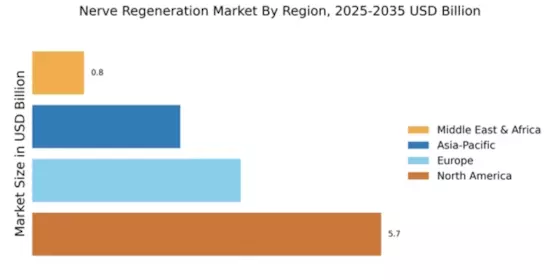

Nerve Regeneration Market Regional Image

Key Players and Competitive Insights

The Nerve Regeneration Market is characterized by a dynamic competitive landscape, driven by advancements in technology and an increasing prevalence of neurological disorders. Key players such as Axogen (US), Medtronic (US), and Stryker (US) are strategically positioned to leverage innovation and expand their market presence. Axogen (US) focuses on developing and commercializing innovative surgical solutions for peripheral nerve repair, while Medtronic (US) emphasizes a broad portfolio of products that address nerve repair and regeneration. Stryker (US) is known for its commitment to enhancing surgical outcomes through advanced technologies.
 
Collectively, these companies shape the competitive environment by fostering innovation and pursuing strategic partnerships to enhance their product offerings.In terms of business tactics, companies are increasingly localizing manufacturing and optimizing supply chains to enhance efficiency and reduce costs. The market appears moderately fragmented, with several players vying for market share. However, the collective influence of major companies like Boston Scientific (US) and Integra LifeSciences (US) contributes to a competitive structure that encourages innovation and collaboration, ultimately benefiting patients and healthcare providers alike.
 
In November Axogen (US) announced the launch of a new nerve repair product designed to improve surgical outcomes in peripheral nerve injuries. This strategic move is significant as it not only expands Axogen's product portfolio but also reinforces its commitment to innovation in nerve repair solutions. The introduction of this product is likely to enhance the company's competitive edge in a market that increasingly values advanced surgical technologies.
 
In October Medtronic (US) entered into a partnership with a leading research institution to develop AI-driven solutions for nerve regeneration. This collaboration is indicative of Medtronic's strategy to integrate cutting-edge technology into its product offerings, potentially revolutionizing the approach to nerve repair. The partnership may enhance Medtronic's capabilities in delivering personalized treatment options, thereby positioning the company favorably in a rapidly evolving market.
 
In September Stryker (US) acquired a smaller firm specializing in nerve regeneration technologies, further consolidating its position in the market. This acquisition is likely to provide Stryker with access to innovative technologies and expertise, enabling the company to enhance its product offerings and expand its market reach. Such strategic acquisitions are becoming increasingly common as companies seek to bolster their competitive advantage through innovation and diversification.
 
As of December current trends in the market include a strong emphasis on digitalization, sustainability, and the integration of AI technologies. Strategic alliances are playing a crucial role in shaping the competitive landscape, as companies collaborate to enhance their capabilities and drive innovation. Looking ahead, competitive differentiation is expected to evolve, with a shift from price-based competition to a focus on innovation, technological advancements, and supply chain reliability. This transition underscores the importance of developing unique solutions that address the complex needs of patients and healthcare providers.

Key Companies in the Nerve Regeneration Market include

Industry Developments

April 2022: 

Boston Scientific got FDA approval for Vercise Neural Navigator with Stimview XT, its image-guided software, in 2022 for deep brain stimulation therapy in Parkinson's patients.

January 2022: 

For the treatment of chronic pain brought on by diabetic peripheral neuropathy, Medtronic acquired FDA approval for the Intellis neurostimulator and the Vanta neurostimulator in 2022. (DPN).

November 2021: 

A collaboration agreement was formed in 2021 by Neuronetics, Inc. and River Region Psychiatry Associates (RRPA), one of the top US mental health service providers. According to the deal, Neuronetics would supply RRPA and its clinics with transcranial magnetic stimulation (TMS) equipment exclusively.

January 2020: 

A privately held US business called Stimgenics, LLC was purchased by Medtronic plc in 2020. This acquisition would strengthen the portfolio of spinal cord stimulation solutions offered by Medtronic.

Future Outlook

Nerve Regeneration Market Future Outlook

The Nerve Regeneration Market size is projected to reach USD 36.69 Billion by 2035, growing at a CAGR of 11.32%, driven by technological advancements, increasing prevalence of nerve injuries, and rising healthcare expenditure.

New opportunities lie in:

  • Development of bioengineered nerve grafts for enhanced regeneration Expansion of telehealth services for remote patient monitoring Investment in AI-driven diagnostics for nerve damage assessment

By 2035, the Nerve Regeneration Market is expected to achieve substantial growth and innovation.

Market Segmentation

Nerve Regeneration Market End User Outlook

  • Hospitals
  • Ambulatory Surgical Centers
  • Research Laboratories
  • Rehabilitation Centers

Nerve Regeneration Market Application Outlook

  • Peripheral Nerve Injury
  • Spinal Cord Injury
  • Cranial Nerve Injury
  • Nerve Repair
  • Nerve Grafting

Nerve Regeneration Market Product Type Outlook

  • Nerve Conduits
  • Nerve Graft
  • Nerve Growth Factor
  • Neurostimulation Devices
  • Biomaterials

Report Scope

MARKET SIZE 2024 11.28(USD Billion)
MARKET SIZE 2025 12.55(USD Billion)
MARKET SIZE 2035 36.69(USD Billion)
COMPOUND ANNUAL GROWTH RATE (CAGR) 11.32% (2025 - 2035)
REPORT COVERAGE Revenue Forecast, Competitive Landscape, Growth Factors, and Trends
BASE YEAR 2024
Market Forecast Period 2025 - 2035
Historical Data 2019 - 2024
Market Forecast Units USD Billion
Key Companies Profiled Axogen (US), Medtronic (US), Stryker (US), Boston Scientific (US), Nerve Repair Technologies (US), Neurotech (US), Collagen Solutions (GB), Integra LifeSciences (US), AxoGen (US)
Segments Covered Application, Product Type, End User
Key Market Opportunities Advancements in biomaterials and neurostimulation technologies drive growth in the market.
Key Market Dynamics Technological advancements in nerve regeneration therapies drive competitive forces and reshape treatment paradigms in the market.
Countries Covered North America, Europe, APAC, South America, MEA

FAQs

What is the current valuation of the Nerve Regeneration Market as of 2024?

The Nerve Regeneration Market was valued at 11.28 USD Billion in 2024.

What is the projected market size for the Nerve Regeneration Market in 2035?

The market is projected to reach 36.69 USD Billion by 2035.

What is the expected CAGR for the Nerve Regeneration Market during the forecast period 2025 - 2035?

The expected CAGR for the Nerve Regeneration Market during 2025 - 2035 is 11.32%.

Which companies are considered key players in the Nerve Regeneration Market?

Key players in the market include Axogen, Medtronic, Stryker, Boston Scientific, Neurotech, Nerve Regen, Baxter, Abbott, and Acelity.

What are the primary applications driving the Nerve Regeneration Market?

Primary applications include Peripheral Nerve Injury, Spinal Cord Injury, Cranial Nerve Injury, Nerve Grafting, and Nerve Conduits.

How much is the Peripheral Nerve Injury segment projected to be worth by 2035?

The Peripheral Nerve Injury segment is projected to reach 10.0 USD Billion by 2035.

What is the expected valuation of the Nerve Grafts product type by 2035?
The Nerve Grafts product type is expected to be valued at 7.36 USD Billion by 2035.
Which end user segment is anticipated to have the highest valuation in 2035?
The Rehabilitation Centers segment is anticipated to reach 12.69 USD Billion by 2035.
What is the projected market size for minimally invasive surgery in the Nerve Regeneration Market by 2035?
Minimally Invasive Surgery is projected to reach 14.63 USD Billion by 2035.
What technologies are expected to drive growth in the Nerve Regeneration Market?
Technologies such as Neurostimulation, Cell Therapy, Gene Therapy, and Tissue Engineering are expected to drive growth.
Author
Author
Author Profile
Satyendra Maurya LinkedIn
Research Analyst
An accomplished research analyst with high proficiency in market forecasting, data visualization, competitive benchmarking, and others. He holds a pronounced track record in research and consulting projects for sectors such as life sciences, medical devices, and healthcare IT. His capabilities in qualitative and quantitative analysis have resulted in positive client outcomes. Working on niche market trends, opportunities, sales, and forecasted value is part of his skill set.
Co-Author
Co-Author Profile
Kinjoll Dey LinkedIn
Senior Research Analyst
He is an extremely curious individual currently working in Healthcare and Medical Devices Domain. Kinjoll is comfortably versed in data centric research backed by healthcare educational background. He leverages extensive data mining and analytics tools such as Primary and Secondary Research, Statistical Analysis, Machine Learning, Data Modelling. His key role also involves Technical Sales Support, Client Interaction and Project management within the Healthcare team. Lastly, he showcases extensive affinity towards learning new skills and remain fascinated in implementing them.

Research Approach


Secondary Research

The secondary research process involved comprehensive analysis of regulatory databases, peer-reviewed medical journals, clinical publications, and authoritative health organizations. Key sources included the US Food & Drug Administration (FDA) Center for Devices and Radiological Health (CDRH), European Medicines Agency (EMA), European Commission Medical Device Coordination Group (MDCG), National Institutes of Health (NIH) National Institute of Neurological Disorders and Stroke (NINDS), National Center for Biotechnology Information (NCBI/PubMed), Centers for Disease Control and Prevention (CDC) National Center for Health Statistics, World Health Organization (WHO) Neurology Atlas, International Association for the Study of Pain (IASP), Society for Neuroscience (SfN), American Association of Neurological Surgeons (AANS), Congress of Neurological Surgeons (CNS), Peripheral Nerve Society (PNS), International Federation of Clinical Neurophysiology (IFCN), European Association of Neurosurgical Societies (EANS), National Spinal Cord Injury Statistical Center (NSCISC), Traumatic Brain Injury Model Systems (TBIMS), EU Eurostat Health Database, OECD Health Statistics, and national health ministry reports from key markets including the US Department of Health and Human Services, UK National Health Service (NHS), Japan Ministry of Health Labour and Welfare, and China National Health Commission. These sources were used to collect procedure statistics, regulatory approval data, clinical safety studies, epidemiological data on peripheral neuropathies and spinal cord injuries, demographic trends, and market landscape analysis for neurostimulation devices, nerve grafts, nerve conduits, biomaterials, and stem cell therapies.


Primary Research

Qualitative and quantitative insights were obtained by interviewing supply-side and demand-side stakeholders during the primary research process. Supply-side sources comprised CEOs, VPs of Product Development, regulatory affairs chiefs, and commercial directors from OEMs, biomaterial suppliers, and nerve regeneration device manufacturers. The demand-side sources included procurement leads from academic medical centers, trauma hospitals, ambulatory surgery centers, and specialty neurology clinics, as well as board-certified neurosurgeons, orthopedic surgeons who specialized in peripheral nerve repair, plastic surgeons with microsurgical expertise, pain management specialists, and medical directors of rehabilitation centers. Market segmentation was validated, product pipeline timelines were confirmed, and insights regarding clinical adoption patterns, reimbursement dynamics, and pricing strategies for nerve repair products were obtained through primary research.

Primary Respondent Breakdown:

By Designation: C-level Primaries (32%), Director Level (31%), Others (37%)

By Region: North America (33%), Europe (29%), Asia-Pacific (28%), Rest of World (10%)


Market Size Estimation

Global market valuation was derived through revenue mapping and procedure volume analysis. The methodology included:

Identification of 50+ key manufacturers across North America, Europe, Asia-Pacific, and Latin America specializing in neurostimulation devices, nerve grafts, nerve conduits, and biomaterials

Product mapping across neurostimulation & neuromodulation devices, nerve grafts (autografts, allografts, xenografts), nerve conduits (synthetic and biological), nerve growth factors, and stem cell therapies

Analysis of reported and modeled annual revenues specific to nerve regeneration portfolios

Coverage of manufacturers representing 72-78% of global market share in 2024

Extrapolation using bottom-up (procedure volume × ASP by country/region for peripheral nerve repair, spinal cord stimulation, and neuromodulation surgeries) and top-down (manufacturer revenue validation) approaches to derive segment-specific valuations

Download Free Sample

Kindly complete the form below to receive a free sample of this Report

Download PDF ×

We do not share your information with anyone. However, we may send you emails based on your report interest from time to time. You may contact us at any time to opt-out.