×
Request Free Sample ×

Kindly complete the form below to receive a free sample of this Report

* Please use a valid business email

Leading companies partner with us for data-driven Insights

clients tt-cursor
Hero Background

North America Athleisure Market

ID: MRFR/CG/44701-HCR
200 Pages
Garvit Vyas
October 2025

North America Athleisure Market Research Report: By Product Type (Leggings, Tights Joggers, Hoodies Sweatshirts, Sneakers, Shorts, Sports Jackets, Sports Bra, Yoga Pants, Others), By Distribution Channel (Store-Based, Non-Store Based) and By End User (Men, Women, Unisex) - Forecast to 2035

Share:
Download PDF ×

We do not share your information with anyone. However, we may send you emails based on your report interest from time to time. You may contact us at any time to opt-out.

North America Athleisure Market Infographic
Purchase Options

North America Athleisure Market Summary

As per MRFR analysis, the North America athleisure market Size was estimated at 168.4 USD Million in 2024. The North America athleisure market is projected to grow from 183.44 USD Million in 2025 to 431.56 USD Million by 2035, exhibiting a compound annual growth rate (CAGR) of 8.93% during the forecast period 2025 - 2035.

Key Market Trends & Highlights

The North America athleisure market is experiencing robust growth driven by evolving consumer preferences and technological advancements.

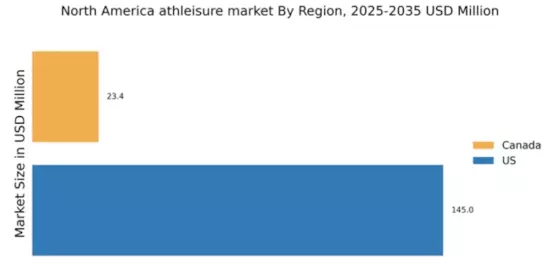
  • The US remains the largest market for athleisure, while Canada is emerging as the fastest-growing region.
  • A strong focus on sustainability is shaping product development and consumer choices across the market.
  • Technological innovations in fabric are enhancing performance and comfort, appealing to a diverse consumer base.
  • Health and wellness awareness, along with e-commerce growth, are key drivers propelling the athleisure market forward.

Market Size & Forecast

2024 Market Size 168.4 (USD Million)
2035 Market Size 431.56 (USD Million)
CAGR (2025 - 2035) 8.93%

Major Players

Nike (US), Adidas (DE), Lululemon Athletica (CA), Under Armour (US), Puma (DE), Reebok (GB), Athleta (US), Fabletics (US), Gymshark (GB)

North America Athleisure Market Trends

The athleisure market in North America is currently experiencing a notable evolution, driven by shifting consumer preferences towards comfort and versatility in apparel. This trend appears to be influenced by a growing awareness of health and wellness, prompting individuals to seek clothing that seamlessly transitions from workout sessions to casual outings. As a result, brands are increasingly focusing on innovative materials and designs that cater to both performance and style. The rise of remote work and flexible lifestyles further contributes to the demand for athleisure, as consumers prioritize comfort without compromising on aesthetics. Moreover, sustainability has emerged as a pivotal factor in purchasing decisions within the athleisure market. Consumers are becoming more discerning, favoring brands that demonstrate a commitment to eco-friendly practices and materials. This shift suggests that companies may need to adapt their strategies to align with these values, potentially incorporating recycled materials and ethical production methods. As the market continues to evolve, it is likely that the intersection of fashion, functionality, and sustainability will shape the future landscape of athleisure in North America.

Sustainability Focus

There is a growing emphasis on sustainable practices within the athleisure market. Brands are increasingly adopting eco-friendly materials and ethical production methods to meet consumer demand for environmentally responsible products.

Technological Advancements

Innovations in fabric technology are transforming the athleisure market. Enhanced moisture-wicking, breathability, and durability are becoming standard features, appealing to consumers seeking high-performance apparel.

Diverse Consumer Base

The athleisure market is witnessing a diversification of its consumer base. Brands are expanding their offerings to cater to various demographics, including different age groups and body types, promoting inclusivity in activewear.

North America Athleisure Market Drivers

E-commerce Growth

The rapid expansion of e-commerce platforms has significantly influenced the athleisure market. With the convenience of online shopping, consumers in North America are increasingly turning to digital channels for their athleisure purchases. In 2025, online sales accounted for approximately %30 of total apparel sales, reflecting a shift in consumer behavior. This trend is particularly pronounced among younger demographics, who favor the ease of browsing and purchasing from home. Retailers are investing in user-friendly websites and mobile applications to enhance the shopping experience, which is crucial for capturing this tech-savvy audience. The athleisure market is adapting to these changes by optimizing their online presence and offering exclusive online collections, thus driving sales and brand loyalty.

Sustainability Initiatives

Sustainability initiatives are becoming a key driver in the athleisure market, as consumers increasingly seek eco-friendly options. In North America, a growing %60 of consumers express a preference for brands that demonstrate a commitment to sustainable practices. This shift is prompting companies to adopt environmentally responsible materials and production methods, which not only appeal to eco-conscious shoppers but also enhance brand reputation. The athleisure market is responding by integrating sustainable fabrics, such as recycled polyester and organic cotton, into their product lines. This focus on sustainability not only addresses consumer demand but also positions brands favorably in a competitive market, potentially leading to increased customer loyalty and sales.

Health and Wellness Awareness

The increasing awareness of health and wellness among consumers is a pivotal driver for the athleisure market. As individuals prioritize fitness and healthy lifestyles, the demand for versatile clothing that can transition from workout to casual settings has surged. In North America, a notable %70 of adults engage in regular physical activity, which correlates with a growing preference for athleisure apparel. This trend is further supported by the rise of fitness influencers and social media platforms that promote active living. Consequently, brands are responding by expanding their athleisure lines to cater to this health-conscious demographic, thereby enhancing their market presence. The athleisure market is likely to continue benefiting from this heightened focus on personal well-being, as consumers seek clothing that aligns with their active lifestyles.

Technological Innovations in Fabric

Technological innovations in fabric development are significantly impacting the athleisure market. Advances in textile technology have led to the creation of materials that offer enhanced performance features, such as moisture-wicking, breathability, and stretchability. In North America, the demand for high-performance fabrics is on the rise, with consumers seeking clothing that supports their active lifestyles. The athleisure market is capitalizing on these innovations by incorporating cutting-edge materials into their products, which not only improve functionality but also attract a broader consumer base. As brands continue to invest in research and development, the potential for new fabric technologies to drive growth in the athleisure market remains substantial.

Fashion Trends and Celebrity Influence

Fashion trends and celebrity endorsements play a crucial role in shaping consumer preferences within the athleisure market. As celebrities and influencers increasingly sport athleisure wear, they create a perception of style and desirability around these products. In North America, the influence of high-profile figures has led to a surge in demand for fashionable yet functional athletic wear. This phenomenon is evident in the collaborations between brands and celebrities, which often result in limited-edition collections that generate significant consumer interest. The athleisure market is likely to see continued growth as brands leverage these partnerships to enhance their visibility and appeal to fashion-conscious consumers, thereby driving sales and market share.

Market Segment Insights

By Type: Leggings (Largest) vs. Sports Bras (Fastest-Growing)

In the North America athleisure market, the distribution of market share across various types reveals that leggings dominate the landscape, capturing a significant share due to their versatility and popularity among consumers. Following leggings, tights and joggers also hold a considerable market presence, appealing to the comfort and style preferences of active individuals. Other categories like hoodies and sweatshirts, sneakers, and shorts contribute to the overall market, but to a lesser extent. Growth trends in the athleisure sector are underscored by the rising demand for sports bras, which are experiencing the fastest growth rate among the segment values. This shift is driven by increased awareness of fitness and wellness, leading to more emphasis on activewear that combines style with functionality. As consumers continue to value comfort, the demand for diverse and innovative athleisure products is projected to increase significantly in the coming years.

Leggings (Dominant) vs. Sports Bras (Emerging)

Leggings are the dominant force in the athleisure segment, characterized by their extensive range of styles, colors, and patterns that cater to diverse consumer preferences. They offer unparalleled comfort and flexibility, making them suitable for various activities, from workouts to casual outings. In comparison, sports bras are emerging rapidly, driven by a surge in fitness participation, particularly among women who prioritize both support and style in their workout gear. The innovation in fabrics and designs has led to a growing acceptance of sports bras as not just functional items but also fashion statements, enhancing their market appeal.

By End User: Women (Largest) vs. Men (Fastest-Growing)

In the North America athleisure market, the end user segment showcases a robust distribution among men, women, and unisex products. Women hold the largest share, consistently driving sales through their preference for stylish and functional athleisure wear that transcends traditional workout attire. Men, while currently in second place, are rapidly increasing their presence in the market, indicating a shift in fashion trends and consumer behavior toward athletic wear that can be worn in various casual settings. Growth trends in this segment are heavily influenced by lifestyle changes, with an increasing number of consumers prioritizing comfort and performance in their daily attire. Men are projected to be the fastest-growing demographic as brands expand their offerings, aligning with evolving attitudes toward fitness and leisure activities. This growth is further supported by targeted advertising and the influence of social media, which is reshaping the buying habits of all end users, particularly younger consumers who value both aesthetics and functionality.

Women (Dominant) vs. Men (Emerging)

Women represent the dominant segment within the North America athleisure market due to their strong affinity for products that blend fashion with functionality. This segment is characterized by a wide array of offerings, ranging from high-performance leggings to versatile sports bras, all designed to appeal to diverse tastes and lifestyle needs. Women are increasingly drawn to brands that prioritize style, creating a strong market presence that has set a benchmark for performance wear. In contrast, the men's segment is emerging, marked by a growing demand for athleisure that caters specifically to male consumers. Brands are recognizing this potential and are increasingly designing male-focused collections that emphasize not only performance but also everyday style, leading to a noteworthy rise in market share.

By Distribution Channel: Store-Based (Largest) vs. Non-Store Based (Fastest-Growing)

In the North America athleisure market, the distribution of market share between Store-Based and Non-Store Based channels indicates that Store-Based channels hold a significant majority. They benefit from established retail networks, enhancing consumer interaction and purchase experience. Non-Store Based channels, while smaller in share, are rapidly gaining traction as more consumers shift towards online shopping, preferring the convenience of purchasing athleisure products from home. The growth trends for this distribution channel segment are primarily driven by the increasing preference for online shopping, especially post-pandemic. Non-Store Based channels are experiencing the fastest growth due to the rise of e-commerce platforms, social media marketing, and improved logistics. Store-Based channels continue to thrive through omnichannel strategies that integrate online and offline experiences, appealing to consumers’ desires for both immediate product access and convenience.

Store-Based (Dominant) vs. Non-Store Based (Emerging)

Store-Based distribution channels dominate the North America athleisure market, offering a tactile shopping experience where customers can feel and try products before purchasing. These channels, which include department stores and specialty retailers, build customer loyalty through personalized services and effective merchandise displays. Conversely, Non-Store Based channels, mainly comprising e-commerce platforms, are emerging rapidly, capitalizing on the technological advancements and customer convenience. These platforms allow flexibility and ease in purchasing, catering especially to the younger, tech-savvy demographic. As both segments evolve, their interaction will likely shape the future shopping experience, blending physical and digital realms to accommodate various customer preferences.

Get more detailed insights about North America Athleisure Market

Regional Insights

US : Leading Trends and Innovations

Key markets include major urban centers like New York, Los Angeles, and Chicago, where demand for athleisure is particularly high. The competitive landscape features major players such as Nike, Under Armour, and Lululemon, each leveraging innovative marketing strategies and product offerings. Local dynamics are characterized by a strong emphasis on fitness culture and lifestyle branding. The growing popularity of online shopping and direct-to-consumer models is reshaping the business environment, making it essential for brands to adapt quickly to changing consumer preferences.

Canada : Health Trends Drive Demand

Key provinces such as Ontario and British Columbia, particularly cities like Toronto and Vancouver, are central to the athleisure market. The competitive landscape includes strong local players like Lululemon Athletica, which has a significant market presence. The business environment is characterized by a growing emphasis on sustainability and ethical production practices. Local dynamics also reflect a blend of outdoor and urban lifestyles, influencing product offerings and marketing strategies.

North America Athleisure Market Regional Image

Key Players and Competitive Insights

The North American athleisure market exhibits a dynamic competitive landscape characterized by rapid innovation and evolving consumer preferences. Key players such as Nike (US), Lululemon Athletica (CA), and Under Armour (US) are at the forefront, each adopting distinct strategies to enhance their market positioning. Nike (US) continues to leverage its strong brand equity through digital transformation initiatives, focusing on personalized consumer experiences and direct-to-consumer sales channels. Lululemon Athletica (CA) emphasizes community engagement and wellness, integrating lifestyle elements into its product offerings, while Under Armour (US) is concentrating on performance-driven innovations and expanding its reach in the e-commerce space. Collectively, these strategies contribute to a competitive environment that is increasingly focused on brand loyalty and consumer engagement.

The business tactics employed by these companies reflect a nuanced understanding of market demands. Localizing manufacturing and optimizing supply chains have become critical as brands seek to enhance responsiveness to consumer trends. The competitive structure of the market appears moderately fragmented, with several players vying for market share, yet the influence of major brands remains substantial. This interplay between established companies and emerging brands fosters a vibrant marketplace where innovation and consumer-centric approaches are paramount.

In October 2025, Nike (US) announced a partnership with a leading tech firm to develop an AI-driven platform aimed at enhancing customer engagement through personalized shopping experiences. This strategic move underscores Nike's commitment to integrating technology into its operations, potentially setting a new standard for customer interaction in the athleisure sector. The implications of this partnership may extend beyond immediate sales, as it positions Nike to gather valuable consumer data, thereby refining its product offerings and marketing strategies.

In September 2025, Lululemon Athletica (CA) launched a new sustainability initiative aimed at reducing its carbon footprint by 50% by 2030. This initiative not only aligns with growing consumer demand for environmentally responsible products but also enhances Lululemon's brand image as a leader in sustainability within the athleisure market. The strategic importance of this move lies in its potential to attract eco-conscious consumers, thereby expanding Lululemon's market reach and reinforcing its competitive edge.

In August 2025, Under Armour (US) unveiled a new line of smart apparel designed to monitor athletic performance metrics in real-time. This innovation reflects Under Armour's focus on performance and technology, catering to a growing segment of consumers interested in data-driven fitness solutions. The introduction of smart apparel may not only enhance customer loyalty but also position Under Armour as a pioneer in the integration of technology within athleisure, potentially reshaping consumer expectations in the market.

As of November 2025, current trends in the athleisure market are increasingly defined by digitalization, sustainability, and the integration of advanced technologies such as AI. Strategic alliances among companies are shaping the competitive landscape, fostering innovation and enhancing operational efficiencies. Looking ahead, competitive differentiation is likely to evolve, with a pronounced shift from price-based competition to a focus on innovation, technology, and supply chain reliability. This transition suggests that companies that prioritize these elements will be better positioned to thrive in an increasingly competitive environment.

Key Companies in the North America Athleisure Market market include

Industry Developments

The North America Athleisure Market has seen significant developments recently. As of October 2023, Nike launched a new line aimed at eco-conscious consumers, focusing on sustainable materials and practices, which aligns with a growing trend towards sustainability in fashion. Meanwhile, Lululemon Athletica reported strong quarterly growth, emphasizing a 30% increase in online sales due to the ongoing shift toward e-commerce, driven largely by changing consumer behaviors post-pandemic. Under Armour has also focused on expanding its product range, particularly in women's apparel, catering to the increasing demand for brands that prioritize inclusivity and style.

Notably, in September 2023, Puma announced a partnership with a wellness organization to promote physical fitness, reinforcing its commitment to holistic health. The market valuation of major companies like Adidas and Reebok continues to grow, fueled by a surge in demand for activewear among millennials and Gen Z. However, as of October 2023, there have been no recent merger or acquisition activities reported among the specified companies. Over the past couple of years, the market has also experienced substantial investment in digital innovation and direct-to-consumer sales channels, significantly altering the competitive landscape in North America.

Future Outlook

North America Athleisure Market Future Outlook

The Athleisure Market is projected to grow at an 8.93% CAGR from 2024 to 2035, driven by increasing health consciousness, lifestyle changes, and technological advancements in fabric.

New opportunities lie in:

  • Expansion of eco-friendly product lines to capture sustainability-focused consumers.
  • Development of smart athleisure wear integrating wearable technology for enhanced user experience.
  • Partnerships with fitness influencers for targeted marketing campaigns to boost brand visibility.

By 2035, the athleisure market is expected to solidify its position as a leading segment in the apparel industry.

Market Segmentation

North America Athleisure Market Type Outlook

  • Leggings
  • Tights & Joggers
  • Hoodies & Sweatshirts
  • Sneakers
  • Shorts
  • Sports Jackets
  • Sports Bra
  • Yoga Pants
  • Others

North America Athleisure Market End User Outlook

  • Men
  • Women
  • Unisex

North America Athleisure Market Distribution Channel Outlook

  • Store-Based
  • Non-Store Based

Report Scope

MARKET SIZE 2024168.4(USD Million)
MARKET SIZE 2025183.44(USD Million)
MARKET SIZE 2035431.56(USD Million)
COMPOUND ANNUAL GROWTH RATE (CAGR)8.93% (2024 - 2035)
REPORT COVERAGERevenue Forecast, Competitive Landscape, Growth Factors, and Trends
BASE YEAR2024
Market Forecast Period2025 - 2035
Historical Data2019 - 2024
Market Forecast UnitsUSD Million
Key Companies Profiled["Nike (US)", "Adidas (DE)", "Lululemon Athletica (CA)", "Under Armour (US)", "Puma (DE)", "Reebok (GB)", "Athleta (US)", "Fabletics (US)", "Gymshark (GB)"]
Segments CoveredType, End User, Distribution Channel
Key Market OpportunitiesIntegration of sustainable materials and smart textiles in athleisure market products.
Key Market DynamicsRising consumer preference for comfort and versatility drives innovation in athleisure product offerings across North America.
Countries CoveredUS, Canada

Leave a Comment

FAQs

What regional market growth trends are expected for Athleisure in North America?

The North America Athleisure Market is expected to exhibit significant growth, driven by increasing consumer preferences for casual and activewear.

Download Free Sample

Kindly complete the form below to receive a free sample of this Report

Compare Licence

×
Features License Type
Single User Multiuser License Enterprise User
Price $4,950 $5,950 $7,250
Maximum User Access Limit 1 User Upto 10 Users Unrestricted Access Throughout the Organization
Free Customization
Direct Access to Analyst
Deliverable Format
Platform Access
Discount on Next Purchase 10% 15% 15%
Printable Versions