Download Free Sample
Kindly complete the form below to receive a free sample of this Report
North America Cattle Feed Market Size, Share, Industry Trend & Analysis Research Report By Type (Protein Meals/Cakes, Cereals & Grains, Brans, Additives, others), By Application (Beef Cattle, Dairy Cattle, Calves, Others) and By Regional (US, Canada) - Forecast to 2035
As per Market Research Future analysis, the North America cattle feed market Size was estimated at 21.5 USD Billion in 2024. The North America cattle feed market is projected to grow from 22.34 USD Billion in 2025 to 32.8 USD Billion by 2035, exhibiting a compound annual growth rate (CAGR) of 3.9% during the forecast period 2025 - 2035
The North America cattle feed market is experiencing a shift towards higher quality and sustainable feed options.
| 2024 Market Size | 21.5 (USD Billion) |
| 2035 Market Size | 32.8 (USD Billion) |
| CAGR (2025 - 2035) | 3.91% |
Cargill (US), Archer Daniels Midland (US), Nutreco (NL), Alltech (US), Land O'Lakes (US), BASF (DE), De Heus (NL), ForFarmers (NL)
Our Impact
Enabled $4.3B Revenue Impact for Fortune 500 and Leading Multinationals
Partnering with 2000+ Global Organizations Each Year
30K+ Citations by Top-Tier Firms in the Industry
The cattle feed market in North America is currently experiencing a dynamic phase characterized by evolving consumer preferences and regulatory changes. The demand for high-quality feed is on the rise, driven by an increasing focus on animal health and productivity. Livestock producers are increasingly seeking feed options that enhance growth rates and improve feed efficiency. This shift is likely influenced by a growing awareness of sustainable practices and the need for environmentally friendly solutions in livestock management. Furthermore, advancements in feed formulation technology are enabling the development of specialized feeds tailored to the nutritional needs of different cattle breeds, which may further stimulate market growth. In addition, the cattle feed market is witnessing a trend towards the incorporation of alternative protein sources. Ingredients such as insect meal and plant-based proteins are gaining traction as viable options to traditional feed components. This shift could be attributed to both economic factors and a desire to reduce reliance on conventional feed sources. As the market continues to evolve, stakeholders must remain vigilant to adapt to these changes, ensuring that they meet the demands of both consumers and regulatory bodies. Overall, the cattle feed market appears poised for growth, driven by innovation and a commitment to sustainability.
Producers are increasingly prioritizing high-quality feed to enhance livestock health and productivity. This trend reflects a broader awareness of the importance of nutrition in animal husbandry, leading to a shift towards premium feed options.
The use of alternative protein sources, such as insect meal and plant-based ingredients, is becoming more prevalent. This trend may be driven by economic considerations and a desire to diversify feed sources, potentially improving sustainability.
Innovations in feed formulation technology are enabling the creation of specialized feeds tailored to the nutritional needs of various cattle breeds. This development could enhance feed efficiency and overall livestock performance.
The cattle feed market is currently facing challenges due to rising feed costs, which have been driven by fluctuations in commodity prices. In 2025, the average cost of feed ingredients has surged by approximately 15%, primarily due to adverse weather conditions affecting crop yields. This increase in feed prices poses a significant challenge for cattle producers, who must balance profitability with the need to provide adequate nutrition for their livestock. Consequently, the cattle feed market is likely to witness a shift towards more cost-effective feed formulations and alternative ingredients that can help mitigate these rising costs.
The cattle feed market in North America is experiencing growth due to the rising demand for livestock production. As consumer preferences shift towards high-quality meat and dairy products, farmers are compelled to enhance their production capabilities. This trend is reflected in the increasing number of cattle raised, which reached approximately 94 million head in 2025. Consequently, the demand for high-quality cattle feed is expected to rise, as producers seek to optimize growth rates and improve feed conversion ratios. The cattle feed market must adapt to these changes by providing innovative feed solutions that meet the nutritional needs of livestock, thereby supporting the overall growth of the sector.
The cattle feed market is adapting to changing consumer preferences, particularly the growing demand for organic and non-GMO products. In North America, consumers are increasingly seeking meat and dairy products that are produced using organic feed. This trend is reflected in the organic cattle feed market, which has seen a growth rate of approximately 20% annually. As a result, cattle producers are compelled to source organic feed ingredients to meet consumer expectations. The cattle feed market must respond to this demand by developing organic feed formulations that comply with certification standards, thereby enhancing market competitiveness.
The cattle feed market is influenced by regulatory frameworks that promote sustainable agricultural practices. In North America, government initiatives aimed at reducing the environmental impact of livestock farming are gaining traction. These regulations encourage the use of sustainable feed ingredients and practices that minimize greenhouse gas emissions. For instance, the implementation of the Environmental Quality Incentives Program (EQIP) has incentivized farmers to adopt sustainable feeding practices. As a result, the cattle feed market is likely to see an increase in demand for eco-friendly feed options, which could account for a substantial share of the market by 2026.
The cattle feed market is benefiting from technological innovations that enhance feed production efficiency. Advances in feed formulation technologies, such as precision nutrition and feed additives, are enabling producers to optimize the nutritional content of cattle feed. These innovations not only improve animal health and growth rates but also contribute to more sustainable feeding practices. In 2025, it is estimated that the adoption of these technologies could lead to a 10% increase in feed efficiency across the industry. As a result, the cattle feed market is likely to see a surge in demand for technologically advanced feed solutions that cater to the evolving needs of livestock producers.
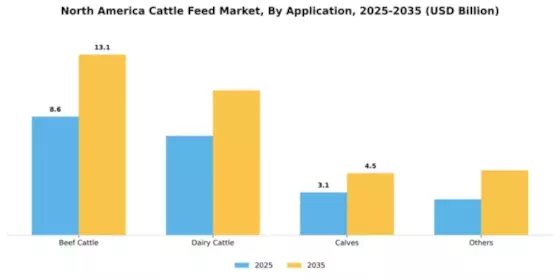
In the North America cattle feed market, the distribution of market share among ingredient types reveals that Protein Meals/Cakes hold a significant portion, largely due to their essential role in providing necessary nutrients for cattle growth and productivity. Following closely are Cereals & Grains, which also contribute notably to the dietary needs of cattle, while Brans and Others make up smaller segments of the market. This distribution reflects the varying priorities of cattle feed formulations that emphasize both nutrition and cost-effectiveness. Growth trends within this segment indicate a strong upward trajectory for Additives, which are increasingly being incorporated to enhance feed efficiency and animal health. Factors driving this growth include rising awareness of animal welfare, increasing demand for higher-quality meat products, and ongoing innovations in feed technology. Meanwhile, Protein Meals/Cakes maintain dominance, yet are also adapting to changing consumer preferences for more sustainable and health-conscious feeding practices.
Protein Meals/Cakes (Dominant) vs. Additives (Emerging)
Protein Meals/Cakes are characterized by their high nutritional value, serving as a vital ingredient in cattle feed formulations. They provide essential amino acids, contributing to optimal growth and milk production. This segment is well-established, benefiting from a consistent demand due to its proven effectiveness in enhancing cattle health. On the other hand, Additives represent an emerging segment that is rapidly gaining traction. These include growth promoters, probiotics, and enzymes that improve feed digestibility and overall animal performance. The rising focus on livestock productivity, along with technological advancements in feed additives formulation, is propelling this segment's growth, challenging traditional ingredient categories while introducing innovative solutions that reflect the evolving needs of cattle raising.
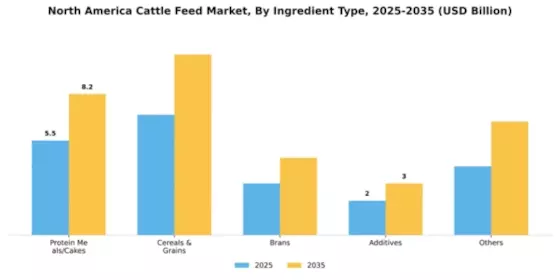
In the cattle feed market, the application segment reveals a diverse distribution among its values. Beef cattle hold the largest share, significantly influencing market dynamics. Following closely, dairy cattle are emerging rapidly, driven by increasing consumer demand for milk and dairy products. While calves and other categories contribute to the market, they remain smaller segments with lesser market impact. Growth in this segment is being fueled by various factors, including heightened awareness of animal nutrition and the rising demand for high-quality feed. The focus on dairy cattle is particularly notable, as these animals require specialized nutrition to enhance milk production. Additionally, government initiatives and advancements in feed technology are further propelling the growth of this segment, making dairy cattle the fastest-growing category in the market.
Beef Cattle: Dominant vs. Dairy Cattle: Emerging
Beef cattle are known for their substantial influence on the cattle feed market, representing the dominant force in terms of application. Their feeding practices are heavily influenced by the demand for quality beef, leading to specific nutritional requirements that enhance growth and health. In contrast, dairy cattle are considered an emerging segment due to the increasing emphasis on milk production efficiency. These animals thrive on specialized feed formulations that promote both milk yield and overall health. As consumer preferences evolve towards sustainable and high-quality dairy products, the dairy cattle segment shows a promising upward trajectory. This competition between the dominant beef cattle and the emerging dairy cattle showcases the dynamic nature of the cattle feed application landscape.
Get more detailed insights about North America Cattle Feed Market Request Free Sample
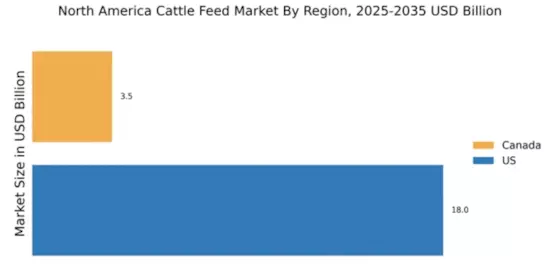
Key markets include Texas, Nebraska, and California, where cattle farming is prevalent. The competitive landscape features major players like Cargill, Archer Daniels Midland, and Alltech, which dominate the market with innovative products. Local dynamics are influenced by a robust agricultural framework and supportive government initiatives. The sector also benefits from applications in dairy and beef production, driving demand for high-quality feed formulations.
Key provinces include Alberta and Ontario, where cattle farming is a significant economic activity. The competitive landscape features players like Nutreco and ForFarmers, which are expanding their market presence through strategic partnerships. Local market dynamics are shaped by a focus on sustainability and environmental stewardship, with increasing consumer demand for traceable and ethically sourced products. The sector is also seeing growth in the dairy industry, further driving feed consumption.
The cattle feed market in North America is characterized by a competitive landscape that is increasingly shaped by innovation, sustainability, and strategic partnerships. Key players such as Cargill (US), Archer Daniels Midland (US), and Alltech (US) are actively pursuing strategies that emphasize product differentiation and technological advancements. Cargill (US), for instance, focuses on enhancing its feed formulations to improve livestock health and productivity, while Archer Daniels Midland (US) is investing in sustainable sourcing practices to meet the growing demand for environmentally friendly products. These strategies collectively foster a dynamic environment where companies are not only competing on price but also on the quality and sustainability of their offerings.In terms of business tactics, companies are increasingly localizing manufacturing to reduce transportation costs and enhance supply chain efficiency. The market structure appears moderately fragmented, with several key players holding substantial market shares. This fragmentation allows for a diverse range of products and innovations, as smaller companies often introduce niche offerings that challenge the larger players. The collective influence of these key players is significant, as they set industry standards and drive trends that smaller companies may follow.In October Cargill (US) announced a partnership with a leading technology firm to develop an AI-driven platform aimed at optimizing feed formulations based on real-time data from livestock. This strategic move is likely to enhance Cargill's competitive edge by providing farmers with tailored solutions that improve feed efficiency and animal health. The integration of AI into their operations suggests a forward-thinking approach that aligns with current trends in digital transformation within the industry.In September Archer Daniels Midland (US) launched a new line of organic cattle feed products, responding to the increasing consumer demand for organic and sustainably sourced food. This initiative not only diversifies their product portfolio but also positions the company as a leader in the organic segment of the market. The strategic importance of this launch lies in its potential to capture a growing market segment that prioritizes health and sustainability, thereby enhancing brand loyalty among consumers.In August Alltech (US) expanded its operations by acquiring a regional feed manufacturer, which allows for greater market penetration and access to local supply chains. This acquisition is indicative of a broader trend where companies seek to consolidate their positions in key markets through strategic mergers and acquisitions. The move is expected to enhance Alltech's operational capabilities and improve its competitive stance in the North American cattle feed market.As of November the competitive trends in the cattle feed market are increasingly defined by digitalization, sustainability, and the integration of advanced technologies such as AI. Strategic alliances are becoming more prevalent, as companies recognize the value of collaboration in enhancing their product offerings and market reach. Looking ahead, it appears that competitive differentiation will evolve from traditional price-based competition to a focus on innovation, technology integration, and supply chain reliability. This shift may redefine how companies position themselves in the market, emphasizing the importance of sustainable practices and technological advancements in meeting consumer demands.


In recent months, the North America Cattle Feed Market has seen notable developments, particularly in the realm of mergers and acquisitions among key players. For instance, in September 2023, Cargill acquired a significant stake in a regional feed mill, enhancing its distribution capabilities across the Midwest. Furthermore, Purina Animal Nutrition announced a strategic partnership with Dairy Farmers of America in March 2023, aiming to innovate animal health solutions and improve feed efficiency for dairy operations. The market has also been impacted by fluctuating commodity prices, which have caused a shift in feed formulations, with an increased focus on cost-effective ingredients.
Associated Feed and Archer Daniels Midland Company have also reported growth in their market valuation, further affirming their foothold in the sector. Over the past two years, the industry has faced challenges from supply chain disruptions, prompting manufacturers like BASF SE and Nutreco to adapt their sourcing strategies. The growing emphasis on sustainability and animal welfare continues to shape regulatory frameworks and consumer demand within the market, with businesses actively aligning with these values to secure their market positions.
The Cattle Feed Market is projected to grow at 3.91% CAGR from 2025 to 2035, driven by rising livestock demand, technological advancements, and sustainable practices.
New opportunities lie in:
By 2035, the cattle feed market is expected to achieve robust growth, driven by innovation and sustainability.
| MARKET SIZE 2024 | 21.5(USD Billion) |
| MARKET SIZE 2025 | 22.34(USD Billion) |
| MARKET SIZE 2035 | 32.8(USD Billion) |
| COMPOUND ANNUAL GROWTH RATE (CAGR) | 3.91% (2025 - 2035) |
| REPORT COVERAGE | Revenue Forecast, Competitive Landscape, Growth Factors, and Trends |
| BASE YEAR | 2024 |
| Market Forecast Period | 2025 - 2035 |
| Historical Data | 2019 - 2024 |
| Market Forecast Units | USD Billion |
| Key Companies Profiled | Cargill (US), Archer Daniels Midland (US), Nutreco (NL), Alltech (US), Land O'Lakes (US), BASF (DE), De Heus (NL), ForFarmers (NL) |
| Segments Covered | Ingredient Type, Application |
| Key Market Opportunities | Adoption of precision nutrition technologies enhances feed efficiency and animal health in the cattle feed market. |
| Key Market Dynamics | Rising demand for sustainable cattle feed drives innovation and competition among North American producers. |
| Countries Covered | US, Canada |
The market valuation was $21.5 Billion in 2024.
The projected valuation for 2035 is $32.8 Billion.
The expected CAGR for the market during 2025 - 2035 is 3.91%.
Key players include Cargill, Archer Daniels Midland, Nutreco, Alltech, Land O'Lakes, BASF, De Heus, and ForFarmers.
Main ingredient types include Protein Meals/Cakes ($5.5 - 8.2 Billion), Cereals & Grains ($7.0 - 10.5 Billion), Brans ($3.0 - 4.5 Billion), Additives ($2.0 - 3.0 Billion), and Others ($4.0 - 6.6 Billion).
Application segments include Beef Cattle ($8.6 - 13.1 Billion), Dairy Cattle ($7.2 - 10.5 Billion), Calves ($3.1 - 4.5 Billion), and Others ($2.6 - 4.7 Billion).
The market for beef cattle was valued at $8.6 - 13.1 Billion, whereas the dairy cattle market was valued at $7.2 - 10.5 Billion.
The market is expected to grow steadily, with a projected valuation increase to $32.8 Billion by 2035.
Protein Meals/Cakes are valued between $5.5 - 8.2 Billion, while Cereals & Grains are valued between $7.0 - 10.5 Billion.
Factors influencing growth may include changes in livestock production, feed ingredient prices, and advancements in feed technology.





Kindly complete the form below to receive a free sample of this Report

“This is really good guys. Excellent work on a tight deadline. I will continue to use you going forward and recommend you to others. Nice job”


“Thanks. It’s been a pleasure working with you, please use me as reference with any other Intel employees.”


“Thanks for sending the report it gives us a good global view of the Betaïne market.”


“Thank you, this will be very helpful for OQS.”


“We found the report very insightful! we found your research firm very helpful. I'm sending this email to secure our future business.”


“I am very pleased with how market segments have been defined in a relevant way for my purposes (such as "Portable Freezers & refrigerators" and "last-mile"). In general the report is well structured. Thanks very much for your efforts.”


“I have been reading the first document or the study, ,the Global HVAC and FP market report 2021 till 2026. Must say, good info! I have not gone in depth at all parts, but got a good indication of the data inside!”


“We got the report in time, we really thank you for your support in this process. I also thank to all of your team as they did a great job.”


“The Automotive 48V ECU Components Procurement Intelligence Study” was a complex project, but the Market Research Future (MRFR) team handled it with quality, agility, and customer-centricity. They delivered all requested data on time and within the agreed scope. The team, including Shubhendra Anand and Rahul Gotadki, was always readily available to clarify questions and swiftly implement necessary adjustments, driving the project to a successful conclusion within a very demanding timeframe.
I would also like to specifically commend Akshay Agarwal for his responsiveness and support at every stage—from our initial inquiry on May 6th through to final delivery on June 18th. His dedication made the entire process seamless.”



