×
Request Free Sample ×

Kindly complete the form below to receive a free sample of this Report

* Please use a valid business email

Leading companies partner with us for data-driven Insights

clients tt-cursor
Hero Background

North America Tonic Water Market

ID: MRFR/FnB/46124-HCR
128 Pages
Snehal Singh
October 2025

North America Tonic Water Market Research Report: By Type (Flavored, Non-flavored), By Packaging Type (Bottles, Cans), By Distribution Channel (Store Based, Non-Store Based) andBy Regional (US, Canada)- Forecast to 2035

Share:
Download PDF ×

We do not share your information with anyone. However, we may send you emails based on your report interest from time to time. You may contact us at any time to opt-out.

North America Tonic Water Market Infographic
Purchase Options

North America Tonic Water Market Summary

As per MRFR analysis, the North America tonic water market Size was estimated at 700.0 USD Million in 2024. The North America tonic water market is projected to grow from 782.95 USD Million in 2025 to 2400.0 USD Million by 2035, exhibiting a compound annual growth rate (CAGR) of 11.85% during the forecast period 2025 - 2035.

Key Market Trends & Highlights

The North America tonic water market is experiencing a dynamic shift towards premiumization and health-conscious consumption.

  • The US remains the largest market for tonic water, driven by a growing preference for premium beverages.
  • Canada is emerging as the fastest-growing region, reflecting a rising interest in craft cocktail culture.
  • Health-conscious choices are influencing consumer preferences, leading to an increased demand for innovative flavors.
  • Key market drivers include the expansion of the mixology trend and a heightened focus on sustainability and eco-friendly practices.

Market Size & Forecast

2024 Market Size 700.0 (USD Million)
2035 Market Size 2400.0 (USD Million)
CAGR (2025 - 2035) 11.85%

Major Players

Fever-Tree (GB), Schweppes (GB), Q Mixers (US), Canada Dry (CA), Fentimans (GB), Tonic Water (US), East Imperial (NZ), Thomas Henry (DE)

North America Tonic Water Market Trends

The tonic water market is currently experiencing a notable transformation, driven by evolving consumer preferences and a growing inclination towards healthier beverage options. As individuals become increasingly health-conscious, the demand for tonic water, often perceived as a sophisticated mixer, is on the rise. This shift is reflected in the growing popularity of premium and artisanal brands that emphasize natural ingredients and unique flavor profiles. Furthermore, the trend towards low-calorie and sugar-free alternatives is gaining traction, appealing to a broader audience seeking refreshing yet guilt-free options. In addition to health considerations, the tonic water market is also influenced by the rise of craft cocktails and mixology culture. Consumers are increasingly interested in experimenting with various mixers to enhance their drinking experiences. This trend is fostering innovation within the sector, as brands introduce diverse flavors and formulations to cater to adventurous palates. The market appears poised for continued growth, as both traditional and innovative uses of tonic water gain traction among consumers, suggesting a vibrant future for this segment of the beverage industry.

Health-Conscious Choices

The tonic water market is witnessing a shift towards health-oriented products. Consumers are increasingly seeking beverages that align with their wellness goals, leading to a rise in demand for low-calorie and sugar-free options. This trend reflects a broader movement towards healthier lifestyles, influencing product development and marketing strategies.

Craft Cocktail Culture

The popularity of craft cocktails is significantly impacting the tonic water market. As consumers embrace mixology, there is a growing interest in high-quality mixers. This trend encourages brands to innovate with unique flavors and premium ingredients, enhancing the overall drinking experience.

Sustainability Initiatives

Sustainability is becoming a focal point within the tonic water market. Brands are increasingly adopting eco-friendly practices, such as using recyclable packaging and sourcing ingredients responsibly. This trend resonates with environmentally conscious consumers, potentially influencing purchasing decisions.

North America Tonic Water Market Drivers

Emergence of Innovative Flavors

The tonic water market in North America is characterized by the emergence of innovative flavors that cater to evolving consumer preferences. Brands are increasingly experimenting with unique botanicals and flavor profiles, moving beyond traditional tonic water offerings. This trend is reflected in the market, where flavored tonic waters have gained traction, accounting for nearly 30% of total sales. The tonic water market is thus witnessing a diversification of its product range, with options such as elderflower, cucumber, and hibiscus becoming popular. This innovation not only attracts new consumers but also encourages existing customers to explore different flavor combinations, enhancing the overall market appeal and driving growth.

Expansion of the Mixology Trend

The tonic water market in North America is significantly influenced by the expansion of the mixology trend. As cocktail culture continues to flourish, bartenders and consumers alike are experimenting with tonic water as a versatile mixer. This trend has led to an increase in tonic water sales, with the market projected to grow by approximately 10% over the next five years. The tonic water market is witnessing a rise in collaborations between tonic water brands and mixologists, resulting in unique cocktail recipes that highlight the product's versatility. This not only enhances the consumer experience but also positions tonic water as an essential ingredient in modern cocktails, further solidifying its place in the beverage industry.

Rising Demand for Premium Beverages

The tonic water market in North America experiences a notable surge in demand for premium beverages. Consumers increasingly seek high-quality, artisanal products that offer unique flavors and ingredients. This trend is reflected in the market, where premium tonic water brands have reported growth rates exceeding 15% annually. The tonic water market is adapting to this shift by introducing innovative flavors and organic options, appealing to discerning consumers. As the market evolves, brands that emphasize quality and craftsmanship are likely to capture a larger share of the market, potentially leading to a more competitive landscape. This demand for premium products not only enhances consumer experience but also drives higher profit margins for manufacturers, indicating a robust future for the tonic water market.

Increased Focus on Health and Wellness

The tonic water market in North America is experiencing a shift towards health and wellness, as consumers become more health-conscious. This trend is evident in the growing popularity of low-calorie and sugar-free tonic water options, which cater to the needs of health-oriented consumers. The market is responding by reformulating products to reduce sugar content while maintaining flavor, thus appealing to a broader audience. Recent data indicates that the demand for low-calorie beverages has increased by 20% in the past year, suggesting a strong potential for growth in this segment. As consumers prioritize health, the tonic water market is likely to see continued innovation in product offerings that align with these values.

Sustainability and Eco-Friendly Practices

The tonic water market in North America is increasingly influenced by sustainability and eco-friendly practices. Consumers are becoming more aware of environmental issues and are seeking products that align with their values. This trend has prompted brands within the tonic water market to adopt sustainable sourcing and packaging practices. For instance, some companies are utilizing recyclable materials and reducing their carbon footprint, which resonates with environmentally conscious consumers. Recent surveys indicate that approximately 70% of consumers are willing to pay a premium for sustainable products, suggesting a significant opportunity for growth in this segment. As sustainability becomes a priority, the tonic water market is likely to see a shift towards more responsible production methods.
Market Segment Insights

By Type: Flavored (Largest) vs. Non-Flavored (Fastest-Growing)

In the North America tonic water market, flavored tonic water holds a significant share, appealing to consumers with a variety of taste preferences. This segment's popularity is largely driven by innovative flavors such as cucumber, elderflower, and hibiscus, which cater to evolving consumer tastes and the trend toward premium beverage options. Non-flavored tonic water, while still a notable segment, represents a smaller portion of the market as consumers increasingly seek diverse flavor experiences in their beverages. The growth trend for flavored tonic water is propelled by rising health consciousness among consumers, leading to a preference for artisanal and unique flavors. On the other hand, non-flavored tonic water is experiencing a resurgence as mixologists embrace classic tonics in cocktails, marking it as the fastest-growing segment. This trend is driven by the cocktail culture and a desire for high-quality mixers, which is shaping consumer preferences and leading to an expansion in product offerings.

Tonic Water: Flavored (Dominant) vs. Non-Flavored (Emerging)

Flavored tonic water dominates the market due to its appeal and versatility in both alcoholic and non-alcoholic beverages. Brands are continuously innovating with exciting flavor combinations to attract consumers looking for something beyond traditional options. This segment benefits from the increasing popularity of craft cocktails and social drinking occasions. Conversely, non-flavored tonic water is emerging as a strong player in the mixer category, valued for its classic taste that pairs well with a variety of spirits. This segment appeals to purists and serves as a staple in bars and restaurants, contributing to its fast growth as it captures a growing interest in classic cocktails.

By Packaging Type: Bottles (Largest) vs. Cans (Fastest-Growing)

In the North America tonic water market, bottles hold the largest market share among the packaging types, reflecting consumer preferences for familiar and high-quality products. Cans, while currently holding a smaller share, are rapidly gaining traction as consumers seek convenient and portable options for on-the-go consumption. This shift has led to a dynamic distribution landscape where bottles dominate sales, but innovative can designs and branding appeal to a younger demographic. Growth trends in this segment are fueled by lifestyle changes and the rising popularity of tonic water as a mixer in cocktails and beverages. The convenience of cans is making them increasingly appealing, especially during outdoor and social activities. Brands are also focusing on eco-friendly materials, further driving the adoption of cans. As sustainability becomes a key consideration for consumers, the packaging type with environmentally-friendly credentials will likely see enhanced popularity.

Bottles: Dominant vs. Cans: Emerging

Bottles dominate the North America tonic water market due to their established market presence and consumer trust. They are often perceived as providing a premium experience, enhancing the brand image and product quality in the eyes of consumers. Additionally, bottles offer better preservation of flavor and carbonation, making them a favored choice for many. On the other hand, cans are emerging as a popular alternative, especially among younger consumers who prioritize convenience and portability. With innovations in can design and reductions in environmental impact, cans cater to a growing desire for sustainability, making them an attractive option for eco-conscious buyers. Thus, while bottles remain dominant, the emerging trend towards cans cannot be overlooked.

By Distribution Channel: Store Based (Largest) vs. Non-Store Based (Fastest-Growing)

In the tonic water market, the Store Based segment holds a significant share, benefiting from consumer habits that favor shopping in physical retail locations. This segment encompasses supermarkets, convenience stores, and other traditional retail outlets, contributing to a stable market presence. On the other hand, the Non-Store Based segment is gaining traction, driven by the increasing popularity of e-commerce and online grocery shopping. The availability of tonic water through various online platforms is gradually reshaping purchasing preferences, allowing consumers to shop from the comfort of their homes. The growth trends within these segments are influenced by several factors, with the Store Based segment primarily relying on in-store promotions and the tactile shopping experience. However, the Non-Store Based segment is witnessing rapid expansion, fueled by the convenience of online shopping and delivery services. As more consumers turn to digital avenues for their grocery needs, the Non-Store Based segment is projected to continue growing, attracting a younger demographic that appreciates the ease of access and product variety available online.

Store Based (Dominant) vs. Non-Store Based (Emerging)

The Store Based segment is characterized by its established presence in the market, with extensive networks of retail outlets making tonic water readily accessible to consumers. This segment benefits from impulse purchases, in-store marketing strategies, and the immediate availability of products. Meanwhile, the Non-Store Based segment is emerging as a viable alternative, driven by the surge in online shopping trends and changing consumer behavior. While still developing, the Non-Store Based segment offers the advantage of convenience, often providing a wider range of product options and the ability to compare prices easily. As consumer preferences evolve, both segments will continue to coexist, but the Non-Store Based segment is likely to capture a larger share of the market over time.

Get more detailed insights about North America Tonic Water Market

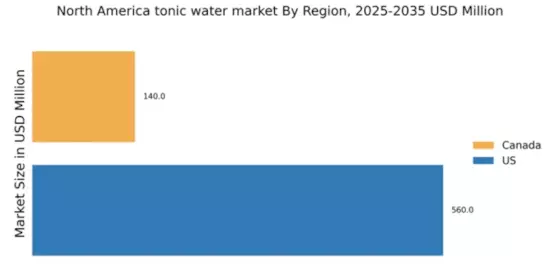
Regional Insights

Canada : Growth in Health-Conscious Choices

Canada's tonic water market is valued at $140.0 million, showcasing a growing interest in premium mixers. The demand is driven by a shift towards healthier beverage options and the increasing popularity of craft cocktails. Government initiatives promoting local beverage production and sustainability are also influencing market dynamics. The Canadian market is characterized by a strong focus on quality and unique flavor profiles, appealing to discerning consumers.

North America Tonic Water Market Regional Image

Key Players and Competitive Insights

The tonic water market in North America is characterized by a dynamic competitive landscape, driven by evolving consumer preferences and a growing inclination towards premium mixers. Key players such as Fever-Tree (GB), Schweppes (GB), and Q Mixers (US) are strategically positioned to capitalize on these trends. Fever-Tree (GB), known for its premium offerings, emphasizes innovation in flavor profiles and sustainable sourcing, which resonates with health-conscious consumers. Meanwhile, Schweppes (GB) leverages its long-standing brand heritage to maintain a strong market presence, focusing on expanding its product range to include low-calorie options. Q Mixers (US) adopts a direct-to-consumer approach, enhancing its digital presence to engage with younger demographics, thereby shaping the competitive environment through targeted marketing and product diversification.

In terms of business tactics, companies are increasingly localizing manufacturing to reduce supply chain vulnerabilities and optimize costs. The market structure appears moderately fragmented, with several players vying for market share, yet the collective influence of major brands like Fever-Tree (GB) and Schweppes (GB) remains substantial. This fragmentation allows for niche players to emerge, fostering innovation and variety in product offerings, which is crucial in meeting diverse consumer demands.

In October 2025, Fever-Tree (GB) announced a partnership with a leading organic farm to source botanicals for its tonic water, enhancing its commitment to sustainability. This strategic move not only strengthens its brand image but also aligns with the increasing consumer demand for environmentally friendly products. By ensuring high-quality, sustainably sourced ingredients, Fever-Tree (GB) positions itself as a leader in the premium mixer segment, potentially attracting a more discerning customer base.

In September 2025, Q Mixers (US) launched a new line of flavored tonic waters aimed at the craft cocktail market. This initiative reflects a strategic pivot towards catering to mixologists and cocktail enthusiasts, thereby expanding its market reach. The introduction of unique flavors could enhance brand loyalty and drive sales, as consumers increasingly seek out innovative and artisanal beverage options.

In August 2025, Canada Dry (CA) unveiled a marketing campaign focused on the versatility of its tonic water in various cocktail recipes. This campaign aims to reinforce its position as a household staple while appealing to a broader audience. By showcasing the product's adaptability, Canada Dry (CA) seeks to capture the attention of both casual drinkers and cocktail aficionados, potentially increasing its market share in a competitive landscape.

As of November 2025, current trends in the tonic water market indicate a strong emphasis on digitalization, sustainability, and the integration of technology in production processes. Strategic alliances among companies are increasingly shaping the competitive landscape, fostering innovation and enhancing supply chain efficiencies. The shift from price-based competition to a focus on product differentiation through innovation and reliability is evident. Companies that prioritize these aspects are likely to thrive, as consumer preferences continue to evolve towards quality and sustainability.

Key Companies in the North America Tonic Water Market market include

Industry Developments

In the North America Tonic Water Market, several notable developments have emerged recently. Q Mixers has expanded its product line with new flavors targeting health-conscious consumers, reflecting the rising trend of premium mixers. Maine Root announced its initiative to source organic ingredients, which aligns with growing consumer demands for sustainability. Bacardi Limited continues to innovate with the launch of its new tonic water variant, aimed at enhancing the cocktail experience, while Fevertree has reported significant growth in sales due to a surge in home making during pandemic-related lockdowns.

Furthermore, the market witnessed a noteworthy acquisition in August 2023 when India-based beverage giant Pernod Ricard acquired a significant stake in Polar Beverages, aiming to expand its footprint in the North American mixer segment. Recent statistics reveal that the tonic water market in North America is projected to reach an estimated valuation of USD 1.5 billion by 2025, driven by rising cocktail culture and increased consumer preference for premium brands like Fentimans and Canada Dry as they cater to a more sophisticated palette. These trends indicate a dynamic shift in consumer habits and market strategies over the last few years.

Future Outlook

North America Tonic Water Market Future Outlook

The Tonic Water Market is projected to grow at 11.85% CAGR from 2024 to 2035, driven by rising health consciousness, premiumization, and innovative product offerings.

New opportunities lie in:

  • Expansion of craft tonic water brands in local markets.
  • Development of low-calorie and organic tonic water variants.
  • Partnerships with bars for exclusive tonic water cocktails.

By 2035, the tonic water market is expected to achieve substantial growth and diversification.

Market Segmentation

North America Tonic Water Market Type Outlook

  • Flavored
  • Non-Flavored

North America Tonic Water Market Packaging Type Outlook

  • Bottles
  • Cans

North America Tonic Water Market Distribution Channel Outlook

  • Store Based
  • Non-Store Based

Report Scope

MARKET SIZE 2024700.0(USD Million)
MARKET SIZE 2025782.95(USD Million)
MARKET SIZE 20352400.0(USD Million)
COMPOUND ANNUAL GROWTH RATE (CAGR)11.85% (2024 - 2035)
REPORT COVERAGERevenue Forecast, Competitive Landscape, Growth Factors, and Trends
BASE YEAR2024
Market Forecast Period2025 - 2035
Historical Data2019 - 2024
Market Forecast UnitsUSD Million
Key Companies Profiled["Fever-Tree (GB)", "Schweppes (GB)", "Q Mixers (US)", "Canada Dry (CA)", "Fentimans (GB)", "Tonic Water (US)", "East Imperial (NZ)", "Thomas Henry (DE)"]
Segments CoveredType, Packaging Type, Distribution Channel
Key Market OpportunitiesGrowing consumer preference for premium tonic water and innovative flavor profiles presents a lucrative opportunity.
Key Market DynamicsRising consumer preference for premium tonic water brands drives innovation and competition in the North American market.
Countries CoveredUS, Canada

Leave a Comment

FAQs

What is the expected market size of the North America Tonic Water Market by 2035?

By 2035, the North America Tonic Water Market is expected to be valued at 1734.49 USD Million.

What was the market size of the North America Tonic Water Market in 2024?

In 2024, the North America Tonic Water Market was valued at 562.07 USD Million.

What is the expected compound annual growth rate (CAGR) for the North America Tonic Water Market from 2025 to 2035?

The expected CAGR for the North America Tonic Water Market from 2025 to 2035 is 10.787%.

How is the market size for flavored tonic water projected to change from 2024 to 2035?

Flavored tonic water is projected to grow from 224.83 USD Million in 2024 to 698.84 USD Million in 2035.

What are the market values for non-flavored tonic water in 2024 and 2035?

The market for non-flavored tonic water is valued at 337.24 USD Million in 2024 and is expected to reach 1035.65 USD Million by 2035.

Which region holds the larger market share in the North America Tonic Water Market?

The US holds the larger market share, valued at 335.0 USD Million in 2024 and projected to reach 1050.0 USD Million by 2035.

What is the projected market size for the Canadian Tonic Water Market by 2035?

By 2035, the Canadian Tonic Water Market is expected to be valued at 684.49 USD Million.

Who are the key players in the North America Tonic Water Market?

Key players include Q Mixers, Maine Root, Bacardi Limited, Fevertree, and Schweppes among others.

What key trends are influencing the North America Tonic Water Market?

Emerging trends include a growing preference for flavored tonic waters and premium products in the beverage sector.

What challenges does the North America Tonic Water Market face?

Challenges include increasing competition and shifting consumer preferences towards healthier beverages.

Download Free Sample

Kindly complete the form below to receive a free sample of this Report

Compare Licence

×
Features License Type
Single User Multiuser License Enterprise User
Price $4,950 $5,950 $7,250
Maximum User Access Limit 1 User Upto 10 Users Unrestricted Access Throughout the Organization
Free Customization
Direct Access to Analyst
Deliverable Format
Platform Access
Discount on Next Purchase 10% 15% 15%
Printable Versions