Download Free Sample
Kindly complete the form below to receive a free sample of this Report
Oilseed Seed for Sowing Market Size, Share, Industry Trend & Analysis Research Report: By Type (Soybean, Sunflower, Rapeseed, Peanut, Cottonseed), By Cultivation Method (Conventional Farming, Organic Farming, Hydroponics), By Seed Trait (Herbicide Resistant, Insect Resistant, Drought Tolerant, Quality Traits), By End Use (Food, Feed, Biofuel) andBy Regional (North America, Europe, South America, Asia Pacific, Middle East and Africa)- Forecast to 2035.
As per MRFR analysis, the Oilseed Seed For Sowing Market Size was estimated at 17.37 USD Billion in 2024. The Oilseed Seed For Sowing industry is projected to grow from 20.26 USD Billion in 2025 to 84.86 USD Billion by 2035, exhibiting a compound annual growth rate (CAGR) of 15.47% during the forecast period 2025 - 2035.
The Oilseed Seed For Sowing Market is experiencing a dynamic shift driven by technological advancements and sustainability efforts.
| 2024 Market Size | 17.37 (USD Billion) |
| 2035 Market Size | 84.86 (USD Billion) |
| CAGR (2025 - 2035) | 15.47% |
Bayer Crop Science (DE), Corteva Agriscience (US), Syngenta (CH), BASF (DE), Dow AgroSciences (US), Limagrain (FR), KWS SAAT SE (DE), Mahyco (IN), Nuziveedu Seeds (IN), Sakata Seed Corporation (JP)
Our Impact
Enabled $4.3B Revenue Impact for Fortune 500 and Leading Multinationals
Partnering with 2000+ Global Organizations Each Year
30K+ Citations by Top-Tier Firms in the Industry
The Oilseed Seed For Sowing Market is currently experiencing a dynamic phase characterized by evolving agricultural practices and increasing demand for oilseeds. This market is influenced by various factors, including advancements in biotechnology, which enhance seed quality and yield potential. Farmers are increasingly adopting hybrid and genetically modified varieties to improve productivity and meet the growing global food requirements. Additionally, the rising awareness of sustainable farming practices is prompting a shift towards eco-friendly seed options, which may further reshape market dynamics. Moreover, the global push for biofuels and renewable energy sources is likely to bolster the demand for oilseeds, as they serve as crucial raw materials in biofuel production. This trend indicates a potential for growth in the Oilseed Seed For Sowing Market, as stakeholders seek to capitalize on the intersection of energy and agriculture. The interplay between consumer preferences, regulatory frameworks, and technological innovations appears to be steering the market towards a more sustainable and productive future, suggesting that the landscape of oilseed cultivation will continue to evolve in response to these multifaceted influences.
The Oilseed Seed For Sowing Market is witnessing a surge in technological innovations aimed at enhancing seed performance. Developments in genetic engineering and biotechnology are leading to the creation of seeds with improved traits, such as pest resistance and drought tolerance. These advancements not only increase crop yields but also contribute to sustainable agricultural practices.
There is a noticeable trend towards sustainability within the Oilseed Seed For Sowing Market. Farmers are increasingly prioritizing eco-friendly seed options that align with environmental conservation efforts. This shift is driven by consumer demand for sustainably sourced products and the need to mitigate the ecological impact of farming.
The rising interest in renewable energy sources is significantly impacting the Oilseed Seed For Sowing Market. Oilseeds are essential for biofuel production, and as countries strive to reduce carbon emissions, the demand for oilseed crops is expected to increase. This trend highlights the interconnectedness of energy and agriculture, suggesting a robust future for oilseed cultivation.
The Oilseed Seed For Sowing Market is witnessing a notable increase in demand for biofuels, particularly biodiesel, which is derived from oilseeds. As countries strive to reduce greenhouse gas emissions and transition to renewable energy sources, the use of oilseed crops for biofuel production has gained traction. Data indicates that the biodiesel market is projected to grow at a compound annual growth rate of over 6% in the coming years, driven by government mandates and consumer preferences for sustainable energy solutions. This trend is likely to encourage farmers to allocate more land for oilseed cultivation, thereby boosting the Oilseed Seed For Sowing Market as it aligns with global sustainability goals.
Government support and subsidies play a crucial role in shaping the Oilseed Seed For Sowing Market. Many countries have implemented policies aimed at promoting oilseed production to enhance food security and reduce dependency on imports. These initiatives often include financial incentives for farmers, research funding for seed development, and infrastructure improvements. For example, in several regions, governments have introduced subsidy programs that cover a portion of the costs associated with purchasing high-quality oilseed seeds. Such measures not only encourage farmers to invest in better seed varieties but also stimulate growth in the Oilseed Seed For Sowing Market by ensuring a steady supply of oilseeds to meet domestic and international demand.
The Oilseed Seed For Sowing Market is benefiting from a growing awareness of the health benefits associated with oilseeds. Consumers are increasingly recognizing the nutritional value of oilseed products, which are rich in essential fatty acids, vitamins, and minerals. This shift in consumer preferences is driving demand for oilseed crops, as they are integral to the production of healthy cooking oils and food products. According to recent data, the consumption of oilseeds has risen by approximately 15% over the past five years, reflecting a broader trend towards healthier eating habits. Consequently, the Oilseed Seed For Sowing Market is poised for expansion as farmers respond to this rising demand by increasing the cultivation of oilseed varieties that cater to health-conscious consumers.
The Oilseed Seed For Sowing Market is experiencing a surge in technological innovations that enhance seed quality and yield. Advanced breeding techniques, such as CRISPR and marker-assisted selection, are being employed to develop high-yielding and disease-resistant oilseed varieties. These innovations not only improve the productivity of oilseed crops but also contribute to sustainable agricultural practices. For instance, the introduction of genetically modified oilseeds has led to a significant increase in oil extraction rates, with some varieties yielding up to 30% more oil than traditional seeds. As farmers increasingly adopt these technologies, the Oilseed Seed For Sowing Market is likely to witness substantial growth, driven by the need for efficient and resilient crop production.
The Oilseed Seed For Sowing Market is significantly influenced by the rising global population and the associated concerns regarding food security. As the world population continues to grow, the demand for edible oils and protein-rich feed derived from oilseeds is expected to increase. Projections suggest that by 2050, the global population may reach nearly 10 billion, necessitating a substantial increase in agricultural output. This scenario compels farmers to adopt more efficient farming practices and invest in high-quality oilseed seeds to meet the escalating demand. Consequently, the Oilseed Seed For Sowing Market is likely to expand as stakeholders seek to enhance productivity and ensure food security in the face of demographic challenges.
In the Oilseed Seed For Sowing Market, the application segment is diverse, with food production holding the largest share. Food production utilizes oilseed for edible oil extraction, making it integral to global nutritional needs. Following closely, animal feed and biofuel production are also significant contributors, with biofuel production gaining attention due to increasing renewable energy initiatives. Industrial uses, though a smaller segment, are emerging as a notable player due to innovations in bioplastics and other industrial applications involving oilseeds. Growth trends within the application segment highlight biofuel production as the fastest-growing area, driven by rising energy demands and environmental concerns. Governments and organizations world over are supporting biofuel initiatives as part of their sustainability strategies. As a result, oilseed used for biofuel is expected to see enhanced production techniques and efficiency improvements. Meanwhile, food production remains steady, driven by population growth, while industrial uses are poised for growth due to technological advancements in oilseed applications.
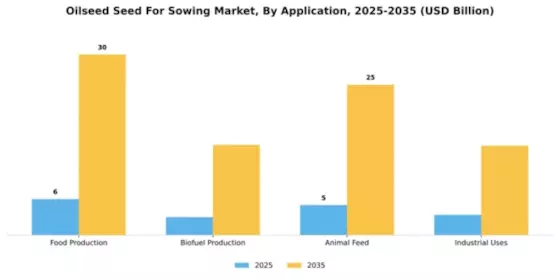
Food Production (Dominant) vs. Animal Feed (Emerging)
In the oilseed seed for sowing market, food production remains the dominant application segment due to its critical role in the agricultural supply chain. It primarily focuses on high-yielding varieties of oilseeds that cater to the growing demand for edible oils and food products. Meanwhile, the animal feed segment is emerging as a significant player, gaining momentum with the livestock industry's expansion. The incorporation of oilseeds in animal feed enhances nutritional value and ensures a balanced diet for livestock. This evolving scenario characterized by food production's stability and the animal feed segment's growth reflects the adaptability of oilseed varieties to meet varied application needs, driven by the changing consumption patterns and agricultural trends.
In the Oilseed Seed For Sowing Market, Hybrid Seeds hold the largest market share, as they are preferred by farmers for their high yield and resilience against adverse conditions. Open-Pollinated Seeds follow, offering the advantage of seed saving and biodiversity, yet they do not match the performance of Hybrid Seeds in commercial agriculture. Genetically Modified Seeds are gaining traction, particularly in regions where farmers seek crops that can withstand pests and climatic challenges, thus gradually increasing their market presence.
Hybrid Seeds (Dominant) vs. Open-Pollinated Seeds (Emerging)
Hybrid Seeds dominate the Oilseed Seed For Sowing Market due to their superior yield potential and adaptability to specific environmental conditions, making them the preferred choice among commercial farmers. These seeds are a product of controlled cross-breeding, enhancing desirable traits such as disease resistance and drought tolerance. In contrast, Open-Pollinated Seeds, while emerging in popularity, appeal to niche markets focusing on natural farming practices and preservation of traditional varieties. They allow farmers to save seeds for future planting, which is appealing for sustainability-focused growers, although they typically yield less than their hybrid counterparts.
In the Oilseed Seed For Sowing Market, the segment distribution reveals that Short Duration seeds hold the largest market share, appealing primarily to farmers who prioritize quick turnaround times for crop production. This segment often includes varieties that can be harvested within a shorter period, thus catering to regions with shorter growing seasons or where rapid cropping systems are implemented.
Short Duration (Dominant) vs. Long Duration (Emerging)
Short Duration varieties are characterized by their ability to reach maturity in a significantly reduced time frame, making them the preferred choice for regions with stringent timelines. They offer numerous cropping cycles within a year, which is economically beneficial for farmers. Conversely, Long Duration seeds, while currently considered emerging, are gaining traction due to increasing demand for specialty crops that require longer growth periods but provide substantial yields and higher-value produce. This shift in preference is influenced by changing consumer tastes and agricultural practices.
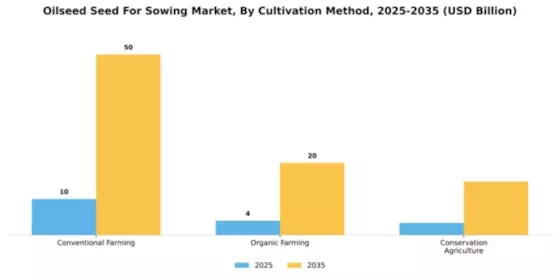
The Oilseed Seed For Sowing Market is diversely segmented into Conventional Farming, Organic Farming, and Conservation Agriculture. Among these, Conventional Farming holds the largest market share due to its wide adoption and established practices in oilseed cultivation. The extensive use of hybrid seeds and modern farming techniques contributes to its dominance, making it the preferred method for many farmers seeking reliability and productivity. On the other hand, Organic Farming, though comparatively smaller in market share, is rapidly gaining traction. This growth is primarily driven by increasing consumer demand for organic products and stricter regulations on synthetic inputs. Growth trends for the cultivation methods segment indicate a shift towards more sustainable practices, particularly in the oilseed domain. Organic Farming is experiencing the fastest growth as consumers become more health-conscious and environmentally aware, prompting farmers to transition from conventional methods. Meanwhile, Conservation Agriculture is also emerging as a viable option, promoting soil health and reducing chemical use. Factors such as government support for sustainable practices, rising input costs for conventional farming, and changing consumer preferences are driving this change in the segment.
Conventional Farming (Dominant) vs. Organic Farming (Emerging)
Conventional Farming remains the dominant cultivation method in the Oilseed Seed For Sowing Market. This method utilizes high-yielding seeds, chemical fertilizers, and pesticides to maximize production efficiency. Its widespread acceptance is maintained due to the immediate benefits seen by farmers in terms of crop yield and profitability. In contrast, Organic Farming is an emerging segment that appeals increasingly to environmentally conscious consumers and farmers seeking to capitalize on niche markets. Organic practices prioritize soil health and biodiversity over immediate yield, promoting long-term sustainability. Although it faces challenges such as higher production costs and certification processes, the growing market for organic oilseeds indicates robust potential for expansion. The dichotomy between these two methods highlights an evolving landscape within the oilseed sector.
Get more detailed insights about Oilseed Seed For Sowing Market Request Free Sample
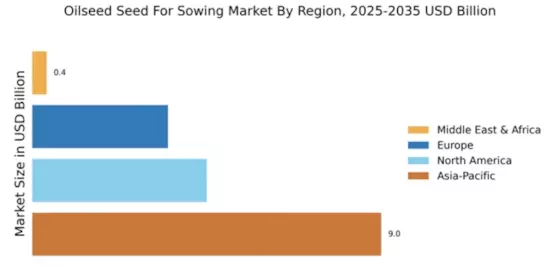
North America is witnessing robust growth in the oilseed seed for sowing market, driven by increasing demand for biofuels and sustainable agricultural practices. The market size is projected at $4.5 billion, reflecting a significant share in the global landscape. Regulatory support for biofuel production and advancements in seed technology are key catalysts for this growth, enhancing productivity and sustainability in farming practices. The United States and Canada are the leading countries in this region, with major players like Corteva Agriscience and Bayer Crop Science dominating the market. The competitive landscape is characterized by innovation in seed varieties and biotechnology, aimed at improving yield and resistance to pests. The presence of established companies ensures a dynamic market environment, fostering continuous advancements in oilseed cultivation.
Europe's oilseed seed for sowing market is evolving, with a market size of $3.5 billion. The region is focusing on sustainable agricultural practices and regulatory frameworks that promote environmentally friendly farming. The European Green Deal and CAP (Common Agricultural Policy) are pivotal in driving demand for oilseed crops, emphasizing sustainability and biodiversity in agriculture, which is crucial for meeting EU climate goals. Leading countries such as Germany, France, and the UK are at the forefront of this market, with key players like BASF and Limagrain actively contributing to innovation. The competitive landscape is marked by a strong emphasis on research and development, with companies investing in genetically modified seeds to enhance yield and resilience. This focus on innovation positions Europe as a leader in sustainable oilseed production.
Asia-Pacific is the largest market for oilseed seeds for sowing, with a market size of $9.0 billion. The region's growth is driven by increasing population, rising income levels, and a shift towards more sustainable agricultural practices. Countries are implementing policies to enhance agricultural productivity, which is crucial for food security. The demand for oilseed crops is expected to rise significantly, supported by government initiatives promoting modern farming techniques. India and China are the leading countries in this region, with companies like Mahyco and Nuziveedu Seeds playing a vital role in the market. The competitive landscape is characterized by a mix of local and international players, focusing on innovation and adaptation to local farming conditions. The presence of major global companies ensures a competitive environment, fostering advancements in oilseed seed technology.
The Middle East and Africa region is gradually developing its oilseed seed for sowing market, with a market size of $0.37 billion. The growth is driven by increasing agricultural investments and a focus on food security. Governments are implementing policies to enhance local production of oilseeds, which is crucial for reducing dependency on imports. The region's agricultural sector is evolving, with a growing emphasis on sustainable practices and modern farming techniques. Countries like South Africa and Egypt are leading the way in oilseed production, with local companies beginning to emerge in the market. The competitive landscape is still in its nascent stages, but there is potential for growth as more players enter the market. The presence of international companies can also stimulate innovation and improve the overall quality of oilseed seeds available in the region.
The Oilseed Seed For Sowing Market is characterized by a dynamic competitive landscape, driven by innovation, sustainability, and strategic partnerships. Major players such as Bayer Crop Science (DE), Corteva Agriscience (US), and Syngenta (CH) are at the forefront, each employing distinct strategies to enhance their market positioning. Bayer Crop Science (DE) focuses on integrating advanced biotechnology into its seed offerings, aiming to improve yield and resilience against climate change. Corteva Agriscience (US) emphasizes digital agriculture solutions, leveraging data analytics to optimize crop management. Syngenta (CH) is actively pursuing sustainability initiatives, aligning its product development with environmental stewardship, which resonates well with current market demands.The business tactics employed by these companies include localizing manufacturing and optimizing supply chains to enhance efficiency and responsiveness to market needs. The competitive structure of the market appears moderately fragmented, with a mix of large multinational corporations and regional players. This fragmentation allows for diverse strategies and innovations, as key players leverage their strengths to capture market share and respond to evolving consumer preferences.
In November Corteva Agriscience (US) announced a partnership with a leading agricultural technology firm to develop AI-driven solutions for precision farming. This strategic move is likely to enhance Corteva's product offerings, enabling farmers to make data-driven decisions that could significantly improve crop yields and resource efficiency. The integration of AI into their operations may position Corteva as a leader in the digital transformation of agriculture.
In October Bayer Crop Science (DE) launched a new line of oilseed varieties specifically engineered for drought resistance. This initiative not only addresses the pressing issue of climate variability but also aligns with global sustainability goals. By focusing on developing seeds that can thrive in adverse conditions, Bayer is likely to strengthen its market position and appeal to environmentally conscious farmers.
In September Syngenta (CH) unveiled a comprehensive sustainability program aimed at reducing the carbon footprint of its oilseed production. This initiative includes commitments to regenerative agriculture practices and partnerships with local farmers to promote biodiversity. Such actions may enhance Syngenta's reputation and marketability, particularly among consumers increasingly concerned about the environmental impact of agricultural practices.
As of December the competitive trends in the Oilseed Seed For Sowing Market are increasingly defined by digitalization, sustainability, and the integration of advanced technologies such as AI. Strategic alliances are becoming pivotal, as companies collaborate to enhance their innovation capabilities and market reach. The shift from price-based competition to a focus on technological advancement and supply chain reliability is evident, suggesting that future competitive differentiation will hinge on the ability to innovate and respond to sustainability challenges.




The Oilseed Seed For Sowing Market is projected to grow at a 15.47% CAGR from 2025 to 2035, driven by increasing demand for biofuels, sustainable agriculture practices, and technological advancements.
New opportunities lie in:
By 2035, the market is expected to be robust, reflecting substantial growth and innovation.
| MARKET SIZE 2024 | 17.37(USD Billion) |
| MARKET SIZE 2025 | 20.26(USD Billion) |
| MARKET SIZE 2035 | 84.86(USD Billion) |
| COMPOUND ANNUAL GROWTH RATE (CAGR) | 15.47% (2025 - 2035) |
| REPORT COVERAGE | Revenue Forecast, Competitive Landscape, Growth Factors, and Trends |
| BASE YEAR | 2024 |
| Market Forecast Period | 2025 - 2035 |
| Historical Data | 2019 - 2024 |
| Market Forecast Units | USD Billion |
| Key Companies Profiled | Bayer Crop Science (DE), Corteva Agriscience (US), Syngenta (CH), BASF (DE), Dow AgroSciences (US), Limagrain (FR), KWS SAAT SE (DE), Mahyco (IN), Nuziveedu Seeds (IN), Sakata Seed Corporation (JP) |
| Segments Covered | Application, Seed Type, Cultivation Method, Oilseed Type |
| Key Market Opportunities | Advancements in biotechnology enhance yield potential in the Oilseed Seed For Sowing Market. |
| Key Market Dynamics | Rising demand for sustainable agriculture drives innovation in oilseed seed varieties and cultivation practices. |
| Countries Covered | North America, Europe, APAC, South America, MEA |
The Oilseed Seed For Sowing Market was valued at 17.37 USD Billion in 2024.
The market is projected to reach 84.86 USD Billion by 2035.
The expected CAGR for the market during the forecast period is 15.47%.
Key players include Bayer Crop Science, Corteva Agriscience, Syngenta, BASF, and Dow AgroSciences.
Main applications include Food Production, Biofuel Production, Animal Feed, and Industrial Uses.
Hybrid seeds were valued at 5.21 USD Billion, while open-pollinated seeds reached 6.0 USD Billion in 2024.
The market for oilseed seeds in animal feed was valued at 5.0 USD Billion in 2024.
The market segments include Conventional Farming, Organic Farming, and Conservation Agriculture.
The valuation for oilseed seeds in organic farming was 4.0 USD Billion in 2024.
Growth cycle durations include Short Duration, Medium Duration, and Long Duration, with respective valuations.



Kindly complete the form below to receive a free sample of this Report

“This is really good guys. Excellent work on a tight deadline. I will continue to use you going forward and recommend you to others. Nice job”


“Thanks. It’s been a pleasure working with you, please use me as reference with any other Intel employees.”


“Thanks for sending the report it gives us a good global view of the Betaïne market.”


“Thank you, this will be very helpful for OQS.”


“We found the report very insightful! we found your research firm very helpful. I'm sending this email to secure our future business.”


“I am very pleased with how market segments have been defined in a relevant way for my purposes (such as "Portable Freezers & refrigerators" and "last-mile"). In general the report is well structured. Thanks very much for your efforts.”


“I have been reading the first document or the study, ,the Global HVAC and FP market report 2021 till 2026. Must say, good info! I have not gone in depth at all parts, but got a good indication of the data inside!”


“We got the report in time, we really thank you for your support in this process. I also thank to all of your team as they did a great job.”


“The Automotive 48V ECU Components Procurement Intelligence Study” was a complex project, but the Market Research Future (MRFR) team handled it with quality, agility, and customer-centricity. They delivered all requested data on time and within the agreed scope. The team, including Shubhendra Anand and Rahul Gotadki, was always readily available to clarify questions and swiftly implement necessary adjustments, driving the project to a successful conclusion within a very demanding timeframe.
I would also like to specifically commend Akshay Agarwal for his responsiveness and support at every stage—from our initial inquiry on May 6th through to final delivery on June 18th. His dedication made the entire process seamless.”



