Download Free Sample
Kindly complete the form below to receive a free sample of this Report
Oral Sleep Apnea Market Research Report: Size, Share, Trend Analysis By Product Type (Continuous Positive Airway Pressure Devices, Oral Appliances, Adaptive Servo-Ventilation Devices, Bi-Level Positive Airway Pressure Devices), By Distribution Channel (Online Pharmacies, Retail Pharmacies, Hospitals, Specialized Clinics), By End Users (Adults, Children, Elderly), By Usage (Home Use, Clinical Use) andBy Regional (North America, Europe, South America, Asia Pacific, Middle East and Africa) - Growth Outlook & Industry Forecast 2025 To 2035
As per Market Research Future analysis, the Oral Sleep Apnea Market Size was estimated at 5.587 USD Billion in 2024. The Oral Sleep Apnea industry is projected to grow from 5.835 USD Billion in 2025 to 9.0 USD Billion by 2035, exhibiting a compound annual growth rate (CAGR) of 4.43% during the forecast period 2025 - 2035
The Oral Sleep Apnea Market is experiencing a dynamic shift towards innovative and non-invasive treatment options.
| 2024 Market Size | 5.587 (USD Billion) |
| 2035 Market Size | 9.0 (USD Billion) |
| CAGR (2025 - 2035) | 4.43% |
ResMed (AU), Philips (NL), Fisher & Paykel Healthcare (NZ), SomnoMed (AU), Apex Medical (TW), BMC Medical (CN), Zyppah (US), Oral Appliances (US)
Our Impact
Enabled $4.3B Revenue Impact for Fortune 500 and Leading Multinationals
Partnering with 2000+ Global Organizations Each Year
30K+ Citations by Top-Tier Firms in the Industry
The Oral Sleep Apnea Market is currently experiencing notable transformations driven by advancements in technology and increasing awareness of sleep disorders. As more individuals recognize the health implications associated with untreated sleep apnea, there is a growing demand for effective treatment options. This market encompasses a variety of products, including oral appliances, which are gaining traction due to their non-invasive nature and ease of use. Furthermore, the integration of digital health solutions is reshaping how patients manage their conditions, suggesting a shift towards more personalized care approaches. In addition to technological innovations, the Oral Sleep Apnea Market is influenced by changing demographics and lifestyle factors. An aging population, coupled with rising obesity rates, appears to contribute to a higher prevalence of sleep apnea. This trend indicates a potential increase in the patient population seeking treatment. Moreover, healthcare providers are increasingly focusing on patient education and awareness campaigns, which may further drive market growth. Overall, the Oral Sleep Apnea Market is poised for expansion as it adapts to evolving consumer needs and preferences, highlighting the importance of ongoing research and development in this field.
The Oral Sleep Apnea Market is witnessing a surge in technological innovations, particularly in the development of smart oral appliances. These devices often incorporate features such as connectivity and real-time monitoring, allowing for enhanced patient engagement and adherence to treatment. Such advancements may lead to improved outcomes and greater acceptance among users.
There is a growing recognition of sleep apnea as a serious health condition, prompting more individuals to seek diagnosis and treatment. This heightened awareness is likely to result in an increase in the number of diagnosed cases, thereby expanding the market. Educational initiatives by healthcare professionals play a crucial role in this trend.
The Oral Sleep Apnea Market is shifting towards non-invasive treatment options, with oral appliances becoming increasingly popular. These alternatives are often preferred by patients due to their comfort and ease of use compared to traditional CPAP machines. This trend suggests a potential reconfiguration of treatment paradigms in managing sleep apnea.
The heightened awareness surrounding sleep health and its impact on overall well-being is a crucial driver for the Oral Sleep Apnea Market. Public health campaigns and educational initiatives have played a significant role in informing individuals about the risks associated with untreated sleep apnea, such as cardiovascular diseases and diabetes. As a result, more people are seeking diagnosis and treatment options, leading to an increase in the demand for oral appliances. Market Research Future indicates that the awareness of sleep apnea has grown by approximately 30% over the past decade, which is likely to continue influencing the Oral Sleep Apnea Market positively as more individuals prioritize their sleep health.
The increasing prevalence of sleep disorders, particularly obstructive sleep apnea, is a primary driver for the Oral Sleep Apnea Market. Studies indicate that approximately 22 million individuals suffer from sleep apnea in the United States alone, with many cases remaining undiagnosed. This growing awareness of sleep-related health issues has led to a surge in demand for effective treatment options. As more individuals seek solutions, the Oral Sleep Apnea Market is likely to expand, driven by the need for innovative oral appliances that offer comfort and efficacy. Furthermore, the aging population, which is more susceptible to sleep disorders, contributes to this trend, suggesting a sustained growth trajectory for the market in the coming years.
The shift towards non-invasive treatment options is reshaping the Oral Sleep Apnea Market. Patients increasingly prefer oral appliances over traditional CPAP machines due to their comfort and ease of use. This trend is supported by market data indicating that the oral appliance segment is projected to grow significantly, with a forecasted increase in sales by 15% annually. The appeal of non-invasive solutions is further enhanced by their ability to provide effective treatment without the discomfort often associated with CPAP therapy. As healthcare providers recognize the benefits of oral appliances, the Oral Sleep Apnea Market is likely to see a continued rise in demand for these alternatives.
Technological advancements in the design and functionality of oral appliances are significantly influencing the Oral Sleep Apnea Market. Innovations such as 3D printing and smart technology integration have led to the development of customized oral devices that enhance patient comfort and compliance. For instance, the introduction of adjustable oral appliances allows for personalized treatment, which may improve therapeutic outcomes. Market data suggests that the segment of oral appliances is expected to witness a compound annual growth rate of over 8% in the next five years. This trend indicates that as technology continues to evolve, the Oral Sleep Apnea Market will likely benefit from increased adoption of these advanced solutions.
The surge in investment for research and development in sleep disorders is a vital driver for the Oral Sleep Apnea Market. Governments and private organizations are allocating substantial funds to explore innovative treatment methodologies and improve existing therapies. This influx of investment is expected to lead to breakthroughs in oral appliance technology and treatment protocols. Recent data suggests that funding for sleep disorder research has increased by over 25% in the last few years, indicating a strong commitment to addressing sleep apnea. As research progresses, the Oral Sleep Apnea Market may experience enhanced product offerings and improved patient outcomes, further stimulating market growth.
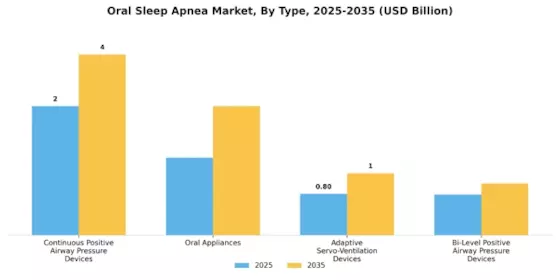
The Oral Sleep Apnea Market has a diverse range of product types, with Continuous Positive Airway Pressure (CPAP) devices dominating the landscape. As the most widely used treatment option, CPAP devices command a significant market share, largely due to their proven efficacy in reducing apnea episodes. Conversely, Oral Appliances are gradually gaining traction as an alternative, appealing to patients seeking less intrusive options. This segment is supported by an increasing recognition of the benefits these devices provide, leading to a growing number of prescriptions and consumer interest. Adaptable to individual patient needs, both Adaptive Servo-Ventilation and Bi-Level Positive Airway Pressure devices serve specific therapeutic purposes. Adaptive Servo-Ventilation devices are particularly beneficial for complex sleep apnea cases, while Bi-Level Positive Airway Pressure devices cater to patients who require varying pressure levels. As awareness of sleep apnea's health impacts expands, growth within these segments is anticipated, driven by technological advancements and increased accessibility to sleep therapy.
Continuous Positive Airway Pressure Devices (Dominant) vs. Oral Appliances (Emerging)
Continuous Positive Airway Pressure (CPAP) devices have maintained their status as the dominant treatment option in the Oral Sleep Apnea Market due to their established effectiveness and comprehensive support for patients experiencing severe symptoms. These devices provide a steady airflow to keep the airway open during sleep. In contrast, Oral Appliances are emerging as a viable alternative, especially for those with mild to moderate sleep apnea, or who prefer a more compact and user-friendly option. They work by repositioning the jaw and tongue to maintain an open airway, offering a convenient solution that often results in enhanced comfort for the user. As the market evolves, both segments are expected to continue their growth trajectories, responding to the diverse needs of patients.
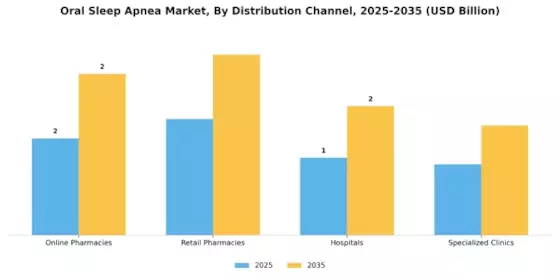
The Oral Sleep Apnea Market is increasingly characterized by a diverse distribution channel landscape. Online pharmacies currently hold the largest market share, attributed to their convenience, extensive product range, and the rising trend of e-commerce. Conversely, specialized clinics are emerging as a critical component of the market, driven by the growing awareness of sleep disorders and the increasing demand for personalized treatment options.
Online Pharmacies (Dominant) vs. Specialized Clinics (Emerging)
Online pharmacies serve as a dominant player in the distribution of oral sleep apnea treatments, capitalizing on their ability to offer a wide array of products and the convenience of home delivery. Their presence fulfills the needs of patients who prefer discreet purchasing and easy access to treatments. In contrast, specialized clinics are rapidly gaining prominence as they provide tailored therapy solutions and professional oversight. This emerging segment is reinforced by the growing recognition of the importance of sleep quality, leading patients to seek specialized guidance for effective management of their condition.
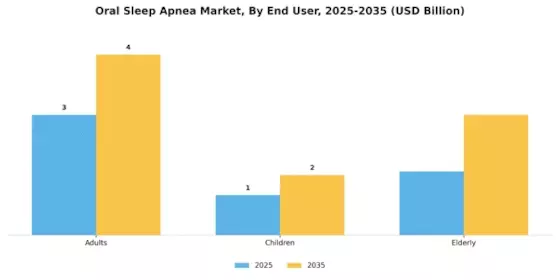
In the Oral Sleep Apnea Market, adults represent the largest segment due to their higher prevalence of sleep apnea, which is often linked to lifestyle factors such as obesity and aging. This demographic's substantial market share is driven by increased awareness, accessibility to treatment options, and proactive health management. Children, although a smaller segment, still make up a significant portion of the market, largely due to rising diagnoses related to obesity and behavioral issues affecting sleep quality. The growth trends indicate that while adults continue to dominate the market, the elderly segment is emerging as the fastest-growing group. Factors such as the aging population and associated health issues are predicted to fuel this trend. Additionally, increased emphasis on high-quality sleep for elderly patients is enhancing treatment adoption rates, thereby supporting overall market expansion.
Adults (Dominant) vs. Elderly (Emerging)
The adult segment of the Oral Sleep Apnea Market is characterized by a diverse range of treatment options, including CPAP machines, oral appliances, and lifestyle adjustments. Adults often represent patients with more complex health needs, resulting in a demand for tailored solutions. In contrast, the elderly segment is emerging due to increasing diagnoses related to age-related physiological changes and a growing consciousness about sleep health among older adults. This demographic tends to require specialized treatments that consider comorbidities, and trends indicate an expanding acceptance of innovative therapies designed specifically for seniors, leading to their rapid market growth. Consequently, both segments are essential, each addressing unique challenges within the oral sleep apnea landscape.
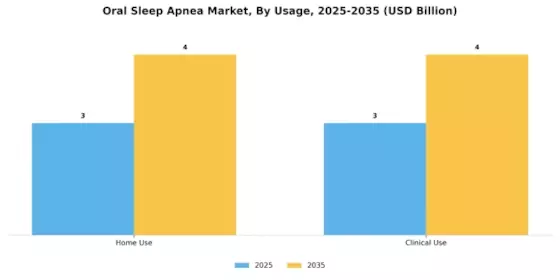
In the Oral Sleep Apnea Market, the distribution of usage segments reveals that home use of sleep apnea devices holds the largest share. This segment is gaining traction due to the increasing preference for home-based treatments, enabling patients to manage their conditions in a comfortable environment. On the other hand, clinical use is emerging as a significant player, often associated with specialized treatments and medical supervision. This juxtaposition highlights the varying preferences of patients as they weigh convenience against expert care.
Usage: Home Use (Dominant) vs. Clinical Use (Emerging)
Home use devices are characterized by their convenience, effectiveness, and accessibility, making them the dominant choice for many patients. These devices allow users to manage their sleep apnea conditions independently, enhancing compliance and overall satisfaction. In contrast, clinical use represents an emerging segment driven by the need for tailored solutions under professional supervision. Clinical settings offer advanced diagnostic tools and personalized treatment plans, catering specifically to patients with severe conditions. The growth in this segment is facilitated by advancements in technology and the increasing awareness of sleep apnea's health implications, thereby attracting more patients seeking professional care.
Get more detailed insights about Oral Sleep Apnea Market Request Free Sample
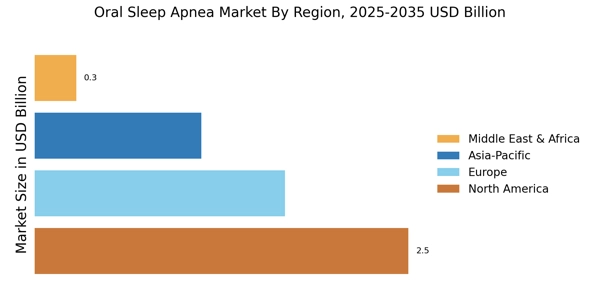
The Global Oral Sleep Apnea Market has shown significant growth in its regional segmentation, with key areas including North America, Europe, APAC, South America, and MEA. In 2024, North America holds the majority with a valuation of 2.4 USD Billion, increasing to 3.8 USD Billion by 2035, highlighting its dominant position in the market supported by a strong healthcare infrastructure and high awareness of sleep disorders.
Europe follows closely, valued at 1.5 USD Billion in 2024 and projected to reach 2.5 USD Billion by 2035, mainly driven by growing initiatives for early diagnosis and treatment of sleep apnea.The APAC market, valued at 1.1 USD Billion in 2024 and expanding to 2.0 USD Billion by 2035, reflects an increasing demand for oral devices due to a rise in the aging population and urbanization. In South America, the market is expected to grow from 0.4 USD Billion in 2024 to 0.7 USD Billion in 2035, showcasing potential opportunities arising from improving healthcare access.
Meanwhile, the MEA region, currently valued at 0.2 USD Billion, is anticipated to reach 0.3 USD Billion by 2035, indicating the gradual emergence of oral appliances as a viable solution for sleep apnea in this region.The Global Oral Sleep Apnea Market revenue reflects an overall trend toward increased awareness and treatment options across these regions.
The Global Oral Sleep Apnea Market is characterized by a competitive landscape that is shaped by the increasing prevalence of sleep apnea, a growing awareness of the disorder, and the subsequent demand for effective treatment options. This market includes various products and innovations aimed at enhancing patient comfort and compliance, as well as technological advancements that drive competitive dynamics. Companies in this sector are engaging in strategic mergers, partnerships, and product development initiatives to capture market share and address the diverse needs of patients. Rapid advancements in oral appliances and broader acceptance of minimally invasive therapies are contributing to the growth and evolution of this market segment, making it a focal area for both established players and new entrants.Nasal Airway plays a pivotal role in the Global Oral Sleep Apnea Market by focusing on solutions that facilitate nasal breathing and enhance overall sleep quality. The company's strengths lie in its innovative product design, which prioritizes ease of use and comfort, thereby improving compliance among users. By offering customized solutions that adapt to individual patient needs, Nasal Airway demonstrates its commitment to addressing the varying degrees of sleep apnea. Their products are often well-regarded for their potential to minimize side effects, such as discomfort or disturbances experienced with traditional therapies. The brand's emphasis on research and development further underscores its competitive position, as it actively seeks to advance the efficacy and accessibility of oral appliances for sleep apnea patients.SomnoMed has established a significant presence in the Global Oral Sleep Apnea Market, and it is recognized for its commitment to providing high-quality oral appliances tailor-made for sleep apnea management. The company boasts a distinct advantage through its patented design and manufacturing techniques, aimed at enhancing both comfort and effectiveness for users. SomnoMed's strong focus on clinical validation and patient outcomes positions it favorably within the competitive landscape, as it continuously aims to evolve its product portfolio based on user feedback and emerging research. This positions SomnoMed as a trusted choice among healthcare providers and patients alike, leading to a growing acceptance of its products in both domestic and international markets. With a robust network of partnerships and collaborations, SomnoMed is well-positioned to leverage its strengths and expand its market reach in the ever-evolving oral sleep apnea landscape.


The Oral Sleep Apnea Market is projected to grow at a 4.43% CAGR from 2025 to 2035, driven by increasing awareness, technological advancements, and rising prevalence of sleep disorders.
New opportunities lie in:
By 2035, the Oral Sleep Apnea Market is expected to be robust, reflecting sustained growth and innovation.
| MARKET SIZE 2024 | 5.587(USD Billion) |
| MARKET SIZE 2025 | 5.835(USD Billion) |
| MARKET SIZE 2035 | 9.0(USD Billion) |
| COMPOUND ANNUAL GROWTH RATE (CAGR) | 4.43% (2025 - 2035) |
| REPORT COVERAGE | Revenue Forecast, Competitive Landscape, Growth Factors, and Trends |
| BASE YEAR | 2024 |
| Market Forecast Period | 2025 - 2035 |
| Historical Data | 2019 - 2024 |
| Market Forecast Units | USD Billion |
| Key Companies Profiled | ResMed (AU), Philips (NL), Fisher & Paykel Healthcare (NZ), SomnoMed (AU), Apex Medical (TW), BMC Medical (CN), Zyppah (US), Oral Appliances (US) |
| Segments Covered | Product Type, Distribution Channel, End Users, Usage, Regional |
| Key Market Opportunities | Integration of telehealth solutions enhances access to Oral Sleep Apnea treatment and monitoring. |
| Key Market Dynamics | Rising consumer awareness drives demand for innovative oral appliances in the Oral Sleep Apnea Market. |
| Countries Covered | North America, Europe, APAC, South America, MEA |
The Oral Sleep Apnea Market was valued at 5.587 USD Billion in 2024.
The market is projected to reach 9.0 USD Billion by 2035.
The expected CAGR for the Oral Sleep Apnea Market during 2025 - 2035 is 4.43%.
In 2024, the Continuous Positive Airway Pressure Devices segment had the highest valuation at 2.5 USD Billion.
Oral Appliances were valued at 1.5 USD Billion in 2024 and are projected to grow to 2.5 USD Billion by 2035.
Online Pharmacies, valued at 1.5 USD Billion in 2024, are expected to grow to 2.5 USD Billion by 2035.
The elderly segment was valued at 1.587 USD Billion in 2024 and is projected to reach 3.0 USD Billion by 2035.
The clinical use segment, valued at 2.7935 USD Billion in 2024, is projected to grow to 4.5 USD Billion by 2035.
In 2024, the adult segment was valued at 3.0 USD Billion, while the children segment was valued at 1.0 USD Billion.



Kindly complete the form below to receive a free sample of this Report

“This is really good guys. Excellent work on a tight deadline. I will continue to use you going forward and recommend you to others. Nice job”


“Thanks. It’s been a pleasure working with you, please use me as reference with any other Intel employees.”


“Thanks for sending the report it gives us a good global view of the Betaïne market.”


“Thank you, this will be very helpful for OQS.”


“We found the report very insightful! we found your research firm very helpful. I'm sending this email to secure our future business.”


“I am very pleased with how market segments have been defined in a relevant way for my purposes (such as "Portable Freezers & refrigerators" and "last-mile"). In general the report is well structured. Thanks very much for your efforts.”


“I have been reading the first document or the study, ,the Global HVAC and FP market report 2021 till 2026. Must say, good info! I have not gone in depth at all parts, but got a good indication of the data inside!”


“We got the report in time, we really thank you for your support in this process. I also thank to all of your team as they did a great job.”


“The Automotive 48V ECU Components Procurement Intelligence Study” was a complex project, but the Market Research Future (MRFR) team handled it with quality, agility, and customer-centricity. They delivered all requested data on time and within the agreed scope. The team, including Shubhendra Anand and Rahul Gotadki, was always readily available to clarify questions and swiftly implement necessary adjustments, driving the project to a successful conclusion within a very demanding timeframe.
I would also like to specifically commend Akshay Agarwal for his responsiveness and support at every stage—from our initial inquiry on May 6th through to final delivery on June 18th. His dedication made the entire process seamless.”



