Download Free Sample
Kindly complete the form below to receive a free sample of this Report
Organic and Natural Tampons Market Research Report Information by Type (Cardboard Applicator, Plastic Applicator, Digital Tampon), by Size (Junior Tampons, Regular Tampons, Super, Super-Plus), by Odour (Fragrance Based, Non-Fragrance Based) - Forecast Till 2035
As per MRFR analysis, the Organic and Natural Tampons Market Size was estimated at 1394.38 USD Million in 2024. The Organic and Natural Tampons industry is projected to grow from 1478.26 in 2025 to 2362.93 by 2035, exhibiting a compound annual growth rate (CAGR) of 4.87% during the forecast period 2025 - 2035.
The Organic and Natural Tampons Market is experiencing a robust shift towards sustainability and health-conscious choices.
| 2024 Market Size | 1394.38 (USD Million) |
| 2035 Market Size | 2362.93 (USD Million) |
| CAGR (2025 - 2035) | 4.87% |
The Organic and Natural Tampons Market is currently experiencing a notable shift towards sustainability and health-conscious choices among consumers. This trend appears to be driven by an increasing awareness of the potential health risks associated with conventional menstrual products, which often contain synthetic materials and chemicals. As a result, many individuals are gravitating towards organic and natural alternatives that promise fewer additives and a more environmentally friendly profile. This growing preference suggests a broader movement towards holistic wellness and eco-conscious living, which is reshaping purchasing behaviors in the feminine hygiene sector. Moreover, the Organic and Natural Tampons Market is likely to benefit from the rising demand for transparency in product ingredients. Consumers are becoming more discerning, seeking out brands that provide clear information about sourcing, manufacturing processes, and ingredient lists. This trend indicates a shift towards informed consumerism, where individuals prioritize products that align with their values of health and sustainability. As awareness continues to grow, it seems plausible that the market will expand further, with innovative products emerging to meet the evolving needs of consumers seeking safer and more sustainable menstrual care options.
The Organic and Natural Tampons Market is witnessing a heightened emphasis on sustainability. Consumers are increasingly prioritizing products that minimize environmental impact, leading to a surge in demand for biodegradable and eco-friendly options.
There is a growing trend towards health-conscious choices within the Organic and Natural Tampons Market. Many consumers are opting for products free from synthetic materials and harmful chemicals, reflecting a broader awareness of personal health.
The demand for transparency in product ingredients is becoming more pronounced. Consumers are seeking brands that openly disclose their sourcing and manufacturing practices, fostering trust and loyalty in the Organic and Natural Tampons Market.
The increasing awareness regarding health and wellness among consumers appears to be a pivotal driver for the Global Organic and Natural Tampons Market Industry. As individuals become more informed about the potential health risks associated with conventional feminine hygiene products, there is a noticeable shift towards organic alternatives. This trend is reflected in the projected market size, which is expected to reach 0.62 USD Billion in 2024. The demand for products free from synthetic chemicals and toxins is likely to continue growing, as consumers prioritize their health and well-being.
In the Organic and Natural Tampons Market, the application segment is predominantly driven by menstrual hygiene products, which command the largest share. This segment caters to a wide consumer base, driven by the growing awareness regarding menstrual health and sustainability. Following closely, postpartum care is rapidly gaining traction due to increasing acknowledgment of organic solutions in maternal health, which reflects a shift towards wellness-oriented choices during this critical phase.
Menstrual Hygiene (Dominant) vs. Postpartum Care (Emerging)
Menstrual hygiene products represent the dominant portion of the application segment, transcending traditional use to incorporate more environmentally friendly materials and packaging. They resonate with health-conscious consumers seeking safer options free from harmful chemicals. On the other hand, postpartum care is emerging as a pivotal area of growth, fueled by rising preferences for organic products among new mothers. This segment is shaped by innovations focusing on gentleness and comfort postpartum, creating opportunities for brands to develop specialized products that cater specifically to this consumer group.
In the Organic and Natural Tampons Market, the material type segment showcases a diverse range of options, with cotton holding the largest market share. This is attributable to its durability, absorbency, and consumer trust in traditional materials. Following cotton, bamboo is emerging rapidly, carved by environmentally-conscious consumer choices that favor sustainable and renewable resources. Organic cotton and biodegradable materials trail behind, but they too are gaining traction as consumers look for more eco-friendly alternatives. The synthetic-free category is also influential, capturing a niche audience that prioritizes health and wellness over conventional materials.
Cotton (Dominant) vs. Bamboo (Emerging)
Cotton remains the dominant player in the Organic and Natural Tampons Market, known for its exceptional absorbent properties and consumer familiarity. This traditional material is associated with comfort and safety, leading to high customer loyalty. On the other hand, bamboo is considered an emerging contender, celebrated for its sustainability and lower environmental footprint. Its rapid growth can be attributed to the increasing demand for green products among consumers, as bamboo can be cultivated without harmful pesticides. As awareness about environmental issues grows, the potential for bamboo to capture a more significant share of the market will likely unfold, offering an innovative alternative to conventional materials such as cotton. Both materials, while distinct in their characteristics, reflect the evolving consumer preferences towards sustainability.
In the Organic and Natural Tampons Market, the distribution channels are witnessing a dynamic composition, with online retail dominating the landscape. Its convenience and accessibility have made it the largest segment, appealing to the modern consumer's preference for shopping via digital platforms. Meanwhile, supermarkets are rapidly gaining ground, becoming the fastest-growing distribution channel. Their extensive reach and increased shelf space for organic products are attracting more consumers. The growth trends within these distribution channels are driven by changing consumer behaviors and preferences. The rise of e-commerce has transformed how tampons are purchased, as online platforms offer a variety of brands and products that cater to eco-conscious consumers. Supermarkets, on the other hand, are responding to demand by expanding their organic ranges, enhancing their role as a pivotal point for shoppers looking for natural alternatives.
Online Retail (Dominant) vs. Health Food Stores (Emerging)
Online retail has established itself as the dominant distribution channel in the Organic and Natural Tampons Market, facilitated by an increasing reliance on digital shopping among consumers. Its competitive edge lies in the ability to provide a wider selection, competitive pricing, and the convenience of home delivery. Health Food Stores, although emerging in comparison, are carving out a niche market by offering specialized organic products, often emphasizing their sustainable and health-focused attributes. While they currently represent a smaller share, their growth is fueled by a dedicated consumer base that prioritizes organic and natural product sourcing. Collaborations with wellness brands and an increase in organic certification awareness are pushing Health Food Stores to the forefront of this evolving market.
The Organic and Natural Tampons Market shows significant variation across different consumer demographics, with age group accounting for the largest share. Younger consumers, particularly those aged 18 to 34, are driving the demand for organic products, prioritizing sustainability and health over traditional options. Conversely, income levels indicate a growing shift, where higher-income consumers are increasingly embracing organic and natural alternatives, reflecting changing attitudes towards personal health and environmental impact. This demographic is more willing to invest in premium products that align with their values. Growth trends indicate a notable rise in health consciousness among consumers, significantly influencing purchasing behavior. The increasing awareness of health benefits associated with organic materials is propelling market growth within the income level segment. Additionally, the trend toward environmental awareness among consumers is encouraging a broader acceptance of organic and natural products, further driving segments aimed at higher-income individuals. This blend of demographics suggests a market ripe for innovation and targeted marketing strategies, capitalizing on the specific values of these consumer groups.
Age Group: 18-34 (Dominant) vs. Income Level: High-Income (Emerging)
The age group of 18-34 is currently the dominant demographic within the Organic and Natural Tampons Market, showcasing a strong preference for sustainable and health-conscious products. This group is not only more likely to engage with brands that promote eco-friendly practices but also values transparency regarding the ingredients used in products. In contrast, high-income consumers represent an emerging segment, increasingly recognizing the benefits of organic options for both personal health and environmental sustainability. This demographic is characterized by higher purchasing power and a willingness to pay a premium for products that align with their values, suggesting a potential for significant growth in tailored marketing strategies targeting both age and income.
In the Organic and Natural Tampons Market, the product type segment plays a crucial role in market dynamics. Regular Tampons hold the largest share among product types, appealing to a broad consumer base due to their familiarity and reliability. Super Tampons follow, providing an essential alternative for those requiring greater absorption, while Super Plus Tampons cater to a niche but growing audience, thus securing a stable position within the market. Applicator and Non-Applicator Tampons represent distinct preferences among consumers, impacting overall product distribution.
Regular Tampons (Dominant) vs. Super Tampons (Emerging)
Regular Tampons are identified as the dominant segment in the Organic and Natural Tampons Market, recognized for their comfort and ease of use. They are preferred by many consumers due to their availability and suitability for average flow. In contrast, Super Tampons are emerging as a popular choice among consumers with heavier flow needs. With increasing awareness of sustainable products, both Regular and Super Tampons are benefitting from the shift toward organic materials, further enhancing their appeal in health-conscious markets. This combination of established reliability and growth potential positions these segments as key players going forward.
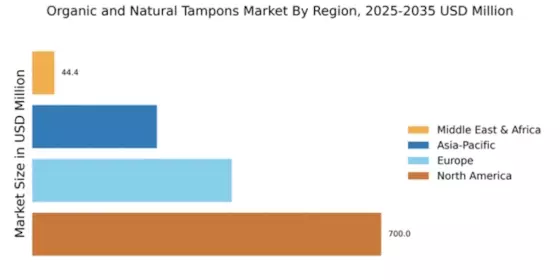
North America is the largest market for organic and natural tampons, holding a significant share of 700.0M in 2024. The growth is driven by increasing consumer awareness regarding health and environmental sustainability, alongside a shift towards organic products. Regulatory support for organic certifications and eco-friendly practices further fuels demand, making this region a hub for innovation in menstrual products. The competitive landscape is robust, with key players like Cora, Seventh Generation, and Rael leading the market. The U.S. is the primary contributor, supported by a growing trend of women seeking safer, chemical-free options. The presence of brands like Natracare and Lola highlights the diverse offerings available, catering to a wide range of consumer preferences.
Europe is witnessing a growing demand for organic and natural tampons, with a market size of 400.0M. Factors such as increasing health consciousness and stringent regulations on product safety are driving this trend. The European Union's commitment to sustainability and eco-friendly products is a significant catalyst, encouraging brands to innovate and meet consumer expectations for organic options. Leading countries in this region include Germany, France, and the UK, where brands like Organyc and Natracare are making significant inroads. The competitive landscape is evolving, with new entrants focusing on organic certifications and sustainable practices. This shift is expected to enhance market growth as consumers increasingly prioritize health and environmental impact in their purchasing decisions.
Asia-Pacific is emerging as a significant player in the organic and natural tampons market, with a market size of 250.0M. The region is experiencing a shift in consumer behavior, with more women opting for organic products due to rising health awareness and environmental concerns. Government initiatives promoting sustainable practices are also contributing to market growth, making this region a focal point for future expansion. Countries like Australia and Japan are leading the charge, with local brands and international players like Cora and Rael gaining traction. The competitive landscape is becoming increasingly dynamic, with a focus on product innovation and marketing strategies that resonate with health-conscious consumers. This trend is expected to continue as awareness of organic products grows across the region.
The Middle East and Africa region represents a niche market for organic and natural tampons, with a market size of 44.38M. Despite being smaller compared to other regions, there is a growing interest in organic products driven by increasing awareness of health and hygiene. Regulatory frameworks are gradually evolving to support organic certifications, which could enhance market growth in the coming years. Countries like South Africa and the UAE are showing potential for expansion, with local brands beginning to emerge. The competitive landscape is still developing, but there is an opportunity for international players to enter the market. As consumer preferences shift towards organic and sustainable options, this region could see significant growth in the organic tampon segment.
The Organic and Natural Tampons Market is currently characterized by a dynamic competitive landscape, driven by increasing consumer awareness regarding health and environmental sustainability. Key players such as Natracare (GB), Cora (US), and Rael (US) are strategically positioning themselves through innovation and sustainability initiatives. Natracare (GB) emphasizes its commitment to organic materials and eco-friendly packaging, which resonates with environmentally conscious consumers. Cora (US) focuses on expanding its product line to include a wider range of menstrual health products, thereby enhancing its market presence. Rael (US) has adopted a digital-first approach, leveraging e-commerce platforms to reach a broader audience, which reflects a significant shift in consumer purchasing behavior towards online shopping.In terms of business tactics, companies are increasingly localizing manufacturing to reduce supply chain vulnerabilities and enhance responsiveness to market demands. The market structure appears moderately fragmented, with several players competing for market share. This fragmentation allows for niche brands to thrive, while larger companies leverage their scale to optimize supply chains and reduce costs. The collective influence of these key players shapes a competitive environment that is both innovative and responsive to consumer needs.
In November Cora (US) launched a new subscription service aimed at providing personalized menstrual care solutions. This strategic move is significant as it not only enhances customer loyalty but also positions Cora as a leader in the direct-to-consumer space, catering to the growing demand for convenience and tailored health solutions. The subscription model may also provide a steady revenue stream, which is crucial in a competitive market.
In October Rael (US) announced a partnership with a leading health tech company to integrate AI-driven insights into its product development process. This collaboration is likely to enhance product innovation by utilizing data analytics to better understand consumer preferences and trends. Such a move indicates a forward-thinking approach that could set Rael apart from competitors by aligning product offerings more closely with consumer needs.
In September Natracare (GB) expanded its distribution channels by entering into a partnership with a major retail chain in Europe. This strategic action is indicative of Natracare's intent to increase its market penetration and accessibility, thereby reaching a wider audience. The expansion into retail signifies a shift towards omnichannel strategies, which are becoming increasingly important in the current market landscape.
As of December the Organic and Natural Tampons Market is witnessing trends such as digitalization, sustainability, and the integration of AI technologies. Strategic alliances are playing a crucial role in shaping the competitive landscape, allowing companies to pool resources and expertise. Looking ahead, competitive differentiation is likely to evolve from traditional price-based competition to a focus on innovation, technology, and supply chain reliability. Companies that can effectively leverage these trends will likely secure a stronger foothold in the market.
May 2023: Corman S.p.A. (Italy) launched a biodegradable and compostable plastic tampon applicator under the brand Organyc in the Netherlands. Moreover, this product was also launched globally in the third quarter of 2023. Tosama's and Corman's teams of researchers and developers have created this technology. This technology can turn leftover parts of wheat, corn, and sugar cane into a type of plastic that can be shaped easily. This special plastic can be quickly molded into a tampon applicator. Not only is this good for the environment, but it's also beneficial for women.
May 2022: TOM Organic (Australia) has launched period products in New Zealand to make menstruation more susceptible. TOM Organic offers market-leading 100% organic cotton tampons made with organic cotton and biodegradable mater ials.
May 2019: Procter & Gamble (US) launched Tampax PURE, an organic tampon that is free of dyes, fragrances, and chlorine bleaching. This product is 100% organic, has a cotton core, and delivers the protection expected from Tampex every time. Moreover, this Tampax PURE applicator is composed of 90% plant-based material. The addition of this product to the Procter & Gamble product portfol io expanded the company’s reach and assisted in generating company revenue.
February 2019: Procter & Gamble (US) acquired an organic period care start-up “This is L. Inc. (US)”, manufactures organic pads and tampons. P&G is dedicated to maintaining the product quality that L.'s customers have come to trust, including perio d products made with organic materials.
Intended Audience
The Organic and Natural Tampons Market is projected to grow at a 4.87% CAGR from 2025 to 2035, driven by increasing consumer awareness and demand for sustainable products.
New opportunities lie in:
By 2035, the market is expected to solidify its position as a leader in sustainable feminine hygiene.
| MARKET SIZE 2024 | 1394.38(USD Million) |
| MARKET SIZE 2025 | 1478.26(USD Million) |
| MARKET SIZE 2035 | 2362.93(USD Million) |
| COMPOUND ANNUAL GROWTH RATE (CAGR) | 4.87% (2025 - 2035) |
| REPORT COVERAGE | Revenue Forecast, Competitive Landscape, Growth Factors, and Trends |
| BASE YEAR | 2024 |
| Market Forecast Period | 2025 - 2035 |
| Historical Data | 2019 - 2024 |
| Market Forecast Units | USD Million |
| Key Companies Profiled | Natracare (GB), Organyc (IT), Cora (US), Seventh Generation (US), Lola (US), Tampon Tribe (CA), Rael (US), Period (US) |
| Segments Covered | Application, Material Composition, Target Demographic, Distribution Channel |
| Key Market Opportunities | Growing consumer preference for sustainable products drives demand in the Organic and Natural Tampons Market. |
| Key Market Dynamics | Rising consumer preference for sustainable products drives innovation and competition in the Organic and Natural Tampons Market. |
| Countries Covered | North America, Europe, APAC, South America, MEA |
The market valuation reached 1394.38 USD Million in 2024.
The market is expected to grow to 2362.93 USD Million by 2035.
The market is projected to experience a CAGR of 4.87% from 2025 to 2035.
Key players include Natracare, Organyc, Cora, Seventh Generation, and others.
The main applications include Menstrual Hygiene, Postpartum Care, and Gynecological Health, with valuations ranging from 150.0 to 1000.0 USD Million.
The market features materials such as Cotton, Bamboo, Organic Cotton, and Biodegradable Materials, with valuations between 200.0 and 700.0 USD Million.
Distribution channels include Supermarkets, Pharmacies, and Online Retail, with valuations from 150.0 to 800.0 USD Million.
Demographics such as Age Group, Income Level, and Health Consciousness are key, with valuations from 194.38 to 700.0 USD Million.


Kindly complete the form below to receive a free sample of this Report

“This is really good guys. Excellent work on a tight deadline. I will continue to use you going forward and recommend you to others. Nice job”


“Thanks. It’s been a pleasure working with you, please use me as reference with any other Intel employees.”


“Thanks for sending the report it gives us a good global view of the Betaïne market.”


“Thank you, this will be very helpful for OQS.”


“We found the report very insightful! we found your research firm very helpful. I'm sending this email to secure our future business.”


“I am very pleased with how market segments have been defined in a relevant way for my purposes (such as "Portable Freezers & refrigerators" and "last-mile"). In general the report is well structured. Thanks very much for your efforts.”


“I have been reading the first document or the study, ,the Global HVAC and FP market report 2021 till 2026. Must say, good info! I have not gone in depth at all parts, but got a good indication of the data inside!”


“We got the report in time, we really thank you for your support in this process. I also thank to all of your team as they did a great job.”


“The Automotive 48V ECU Components Procurement Intelligence Study” was a complex project, but the Market Research Future (MRFR) team handled it with quality, agility, and customer-centricity. They delivered all requested data on time and within the agreed scope. The team, including Shubhendra Anand and Rahul Gotadki, was always readily available to clarify questions and swiftly implement necessary adjustments, driving the project to a successful conclusion within a very demanding timeframe.
I would also like to specifically commend Akshay Agarwal for his responsiveness and support at every stage—from our initial inquiry on May 6th through to final delivery on June 18th. His dedication made the entire process seamless.”



