×
Request Free Sample ×

Kindly complete the form below to receive a free sample of this Report

* Please use a valid business email

Leading companies partner with us for data-driven Insights

clients tt-cursor
Hero Background

Organic Palm Sugar Market

ID: MRFR/FnB/2757-HCR
128 Pages
Tejas Chaudhary
October 2025

Organic Palm Sugar Market Global Research Report by Form (Block, Granule, and Liquid), Packaging Type (Bottles & Jars and Pouches), Distribution Channel (Store-Based and Non-Store-Based) and Region (North America, Europe, Asia-Pacific and Rest of the World) - Forecast till 2032

Share:
Download PDF ×

We do not share your information with anyone. However, we may send you emails based on your report interest from time to time. You may contact us at any time to opt-out.

Organic Palm Sugar Market Infographic
Purchase Options

Organic Palm Sugar Market Summary

As per MRFR analysis, the Organic Palm Sugar Market Size was estimated at 1338.01 USD Million in 2024. The Organic Palm Sugar industry is projected to grow from 1458.64 USD Million in 2025 to 3091.87 USD Million by 2035, exhibiting a compound annual growth rate (CAGR) of 7.87 during the forecast period 2025 - 2035.

Key Market Trends & Highlights

The Organic Palm Sugar Market is experiencing a robust growth trajectory driven by sustainability and health trends.

  • North America remains the largest market for organic palm sugar, reflecting a strong consumer preference for natural sweeteners.
  • The Asia-Pacific region is emerging as the fastest-growing market, driven by increasing health consciousness and demand for organic products.
  • The food and beverage segment dominates the market, while the cosmetics segment is witnessing rapid growth due to rising interest in natural ingredients.
  • Key market drivers include a heightened focus on sustainability and health-conscious choices, which are shaping consumer purchasing behaviors.

Market Size & Forecast

2024 Market Size 1338.01 (USD Million)
2035 Market Size 3091.87 (USD Million)
CAGR (2025 - 2035) 7.87%

Major Players

Coconut Palm Sugar (ID), Coco Sugar (PH), Nature's Way (US), SweetTree (TH), Tropical Food (TH), Bali Nutra (ID), Organic Palm Sugar (MY), Dharma Palm Sugar (ID)

Organic Palm Sugar Market Trends

The Organic Palm Sugar Market is currently experiencing a notable shift towards sustainability and health-conscious consumption. As consumers become increasingly aware of the benefits associated with organic products, the demand for organic palm sugar is on the rise. This sweetener, derived from the sap of palm trees, is perceived as a healthier alternative to refined sugars, appealing to those seeking natural and minimally processed options. Furthermore, the market is witnessing a growing interest in ethical sourcing practices, as consumers prioritize products that support fair trade and environmentally friendly production methods. This trend indicates a broader movement towards responsible consumption, where buyers are more discerning about the origins of their food and its impact on the planet. In addition to sustainability, the Organic Palm Sugar Market is also influenced by the expanding range of applications for this sweetener. It is increasingly utilized in various food and beverage products, including baked goods, beverages, and health foods. This versatility enhances its appeal among manufacturers and consumers alike. Moreover, the rise of e-commerce platforms has facilitated greater accessibility to organic palm sugar, allowing consumers to purchase it conveniently from various online retailers. As the market continues to evolve, it appears poised for further growth, driven by changing consumer preferences and an increasing emphasis on health and sustainability.

Sustainability Focus

The Organic Palm Sugar Market is witnessing a heightened emphasis on sustainability, as consumers increasingly seek products that align with their values. This trend reflects a growing awareness of environmental issues and a desire for ethically sourced ingredients.

Health-Conscious Choices

There is a notable shift towards health-conscious consumption within the Organic Palm Sugar Market. Consumers are gravitating towards natural sweeteners, perceiving organic palm sugar as a healthier alternative to traditional refined sugars.

Diverse Applications

The versatility of organic palm sugar is becoming more recognized, leading to its incorporation in a variety of food and beverage products. This trend enhances its market presence and attracts a broader consumer base.

Organic Palm Sugar Market Drivers

Market Growth Projections

The Global Organic Palm Sugar Industry is poised for remarkable growth, with projections indicating a market value of 1.85 USD Billion by 2035. This growth trajectory is underpinned by a robust CAGR of 23.92% from 2025 to 2035. Such figures suggest a dynamic market environment, driven by increasing consumer demand for organic and healthier alternatives to traditional sweeteners. The anticipated growth reflects broader trends in health, sustainability, and ethical consumption, positioning organic palm sugar as a key player in the global sweetener market.

Rising Health Consciousness

The Global Organic Palm Sugar Industry is experiencing a surge in demand driven by increasing health consciousness among consumers. As individuals become more aware of the adverse effects of refined sugars, they are seeking healthier alternatives. Organic palm sugar, known for its lower glycemic index and natural composition, is gaining traction. In 2024, the market is valued at 0.17 USD Billion, reflecting a growing preference for organic products. This trend is likely to continue, as consumers increasingly prioritize health and wellness, potentially propelling the market further as they opt for organic palm sugar over conventional sweeteners.

Sustainable Production Practices

Sustainability is a pivotal driver in the Global Organic Palm Sugar Industry. The production of organic palm sugar is often associated with environmentally friendly practices, appealing to eco-conscious consumers. Farmers are increasingly adopting sustainable cultivation methods, which not only preserve biodiversity but also enhance soil health. This commitment to sustainability is likely to resonate with consumers who prioritize ethical sourcing. As a result, the market is projected to grow significantly, with estimates suggesting a rise to 1.85 USD Billion by 2035. This growth reflects a broader trend towards sustainable food production, positioning organic palm sugar as a preferred choice.

Growing Vegan and Plant-Based Trends

The rise of veganism and plant-based diets is a compelling driver for the Global Organic Palm Sugar Industry. As more individuals adopt these lifestyles, the demand for plant-derived sweeteners is increasing. Organic palm sugar, being a natural and unrefined product, aligns well with the principles of veganism. This trend is further supported by the increasing availability of vegan products in the market, which often incorporate organic palm sugar as a sweetening agent. The market's growth is expected to reflect this shift, with projections indicating a substantial increase in value, potentially reaching 1.85 USD Billion by 2035.

Diverse Applications in Food Industry

The versatility of organic palm sugar is a notable driver in the Global Organic Palm Sugar Industry. It is utilized across various segments, including confectionery, beverages, and baked goods, making it a valuable ingredient for manufacturers. As the food industry continues to innovate, the demand for organic ingredients is likely to rise. This trend is supported by the increasing incorporation of organic palm sugar in health-focused products, catering to a growing consumer base. The market's expansion is anticipated to be robust, with a projected CAGR of 23.92% from 2025 to 2035, indicating a strong future for organic palm sugar in diverse culinary applications.

Regulatory Support for Organic Products

Government regulations promoting organic farming practices are significantly influencing the Global Organic Palm Sugar Industry. Many countries are implementing policies that support organic agriculture, providing incentives for farmers to transition to organic methods. This regulatory backing not only enhances the credibility of organic products but also encourages consumer trust. As more consumers seek certified organic options, the market is expected to benefit from these supportive measures. The anticipated growth trajectory, with a market value reaching 1.85 USD Billion by 2035, suggests that regulatory frameworks will play a crucial role in shaping the future of organic palm sugar.

Market Segment Insights

By Application: Food and Beverage (Largest) vs. Cosmetics (Fastest-Growing)

In the Organic Palm Sugar Market, the application segment is primarily dominated by the food and beverage industry, which holds the largest share due to the increasing consumer preference for natural sweeteners. This segment is expected to maintain its leading position, driven by a surge in demand for organic products among health-conscious consumers. In contrast, the cosmetics sector is emerging as a significant player, tapping into the trend of using natural ingredients, which is gaining traction in the beauty and personal care products. Growth trends indicate that the food and beverage segment will continue to thrive, bolstered by rising trend of healthier eating habits and the exclusion of artificial additives. This, coupled with the growing adoption of organic food products, supports the food industry's stronghold. On the other hand, the cosmetics sector is poised for rapid expansion, fueled by innovative product formulations that leverage the natural properties of organic palm sugar, appealing to environmentally conscious consumers seeking cleaner beauty solutions.

Food and Beverage (Dominant) vs. Cosmetics (Emerging)

The food and beverage segment is undeniably the dominant force in the Organic Palm Sugar Market, characterized by its extensive use in a variety of products ranging from baked goods to beverages. This segment benefits from consumer trends favoring natural and healthier alternatives to conventional sugars, positioning organic palm sugar as a key ingredient. Meanwhile, the cosmetics segment is emerging, gaining momentum as consumers increasingly prioritize natural ingredients in personal care. The use of organic palm sugar in cosmetics is gaining popularity for its moisturizing and exfoliating properties, attracting brands aiming to align with the clean beauty trend. Both segments play vital roles in driving the organic palm sugar market, with food and beverage leading in volume while cosmetics are rapidly gaining ground.

By End Use: Household (Largest) vs. Food Service (Fastest-Growing)

In the organic palm sugar market, the end use segment is primarily distributed among four key categories: Household, Food Service, Retail, and Industrial. The Household segment holds the largest share, driven by increased consumer preference for natural sweeteners over refined sugars. Meanwhile, the Food Service segment is gaining traction as restaurants and cafes lean towards organic ingredients to meet the rising demand for healthier menu options. The Retail segment caters to both organic-focused consumers and mainstream shoppers, while the Industrial segment utilizes organic palm sugar as an ingredient in various food products.

Household (Dominant) vs. Food Service (Emerging)

The Household segment of the organic palm sugar market is characterized by a strong consumer inclination towards healthier and more natural sweeteners. This demographic is increasingly concerned about packaging, labeling, and the source of their ingredients, which bolsters the market for organic palm sugar in household applications. On the other hand, the Food Service segment is emerging rapidly due to a shift in consumer dining preferences, with many establishments adopting organic products to appeal to health-conscious customers. The integration of organic palm sugar into food service offerings is on the rise, as businesses strive for sustainability and nutritional enhancement in their menus.

By Form: Granulated (Largest) vs. Liquid (Fastest-Growing)

In the Organic Palm Sugar Market, the form segment showcases varied preferences, with granulated palm sugar leading in market share. Granulated forms are favored for their versatility in cooking and baking, making them a staple in many kitchens. Meanwhile, liquid palm sugar, while having a smaller share, is gaining traction due to its ease of use in beverages and sauces, appealing to health-conscious consumers seeking natural sweeteners.

Granulated (Dominant) vs. Liquid (Emerging)

Granulated organic palm sugar remains the dominant form in the market, sought after for its granule size that mimics traditional sugar, making it an easy substitute in recipes. Its stability and long shelf life add to its appeal among consumers who value convenience. On the other hand, liquid organic palm sugar is emerging as a popular choice, particularly among those who prefer sugar dissolvability in cold beverages or quick-serve dishes. The ease of measuring and dispensing liquid forms complements a growing trend towards natural and organic ingredients in food preparation, positioning it as a strong contender in the evolving landscape of food sweeteners.

By Source: Coconut Palm (Largest) vs. Date Palm (Fastest-Growing)

In the Organic Palm Sugar Market, the distribution of market share among the sources is dominated by Coconut Palm, which claims a substantial portion of the market. This source is well-known for its high nutritional content and unique flavor profile, making it a popular choice among consumers. Meanwhile, Date Palm is emerging rapidly, gaining traction due to its natural sweetness and health benefits, appealing to a growing segment of health-conscious customers.

Coconut Palm (Dominant) vs. Date Palm (Emerging)

Coconut Palm stands out as the dominant source in the Organic Palm Sugar Market due to its rich taste and versatility in various culinary applications. It is harvested from the sap of coconut trees, known for its low glycemic index and nutrient-rich profile, making it a favorite among health enthusiasts. On the other hand, Date Palm is considered an emerging segment, appealing to consumers looking for alternatives to refined sugars. Its unique flavor and high antioxidant content position it well in the marketplace, catering to those prioritizing natural and organic food products.

Get more detailed insights about Organic Palm Sugar Market

Regional Insights

North America : Growing Health Consciousness

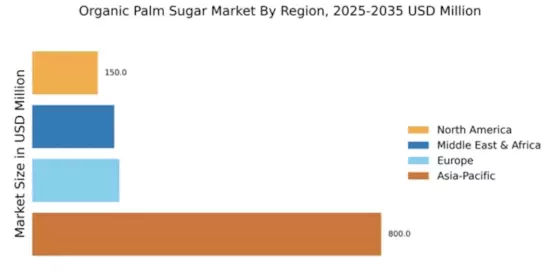
The North American organic palm sugar market is witnessing significant growth, driven by increasing health consciousness among consumers. With a market size of $150.0 million, the demand for organic and natural sweeteners is on the rise, fueled by a shift towards healthier lifestyles and dietary preferences. Regulatory support for organic products further enhances market potential, as consumers seek transparency in food sourcing and production. Leading the market are the United States and Canada, where key players like Nature's Way are making substantial contributions. The competitive landscape is characterized by a mix of established brands and emerging players, all vying for market share. The presence of diverse product offerings, including coconut palm sugar and other organic alternatives, is expected to drive further growth in this region.

Europe : Sustainable Sweetener Adoption

Europe's organic palm sugar market is expanding, with a market size of €200.0 million, as consumers increasingly prioritize sustainability and health. The region's growth is supported by stringent regulations promoting organic farming and food production, which encourage the adoption of organic sweeteners. The demand for natural alternatives to refined sugars is driving market dynamics, with consumers seeking healthier options in their diets. Countries like Germany, France, and the UK are leading the charge, with a growing number of retailers offering organic palm sugar products. The competitive landscape features both local and international players, including SweetTree and Tropical Food, who are capitalizing on the trend towards organic and sustainable products. This shift is expected to continue, bolstered by consumer awareness and regulatory frameworks.

Asia-Pacific : Dominant Market Leader

The Asia-Pacific region dominates the organic palm sugar market, boasting a substantial market size of $900.0 million. This growth is driven by rising health awareness, increasing disposable incomes, and a strong preference for natural sweeteners. The region's favorable climate for palm cultivation and supportive government policies further enhance its market position, making it a key player in the global organic palm sugar landscape. Leading countries such as Indonesia, Thailand, and the Philippines are at the forefront, with key players like Coconut Palm Sugar and Coco Sugar driving innovation and market expansion. The competitive landscape is vibrant, with numerous local producers and exporters contributing to the region's dominance. As consumer preferences shift towards organic products, the market is expected to continue its upward trajectory, solidifying Asia-Pacific's leadership.

Middle East and Africa : Emerging Market Potential

The Middle East and Africa region is emerging as a potential market for organic palm sugar, with a market size of $88.01 million. The growth is attributed to increasing health awareness and a gradual shift towards organic products among consumers. Regulatory initiatives aimed at promoting organic farming practices are also contributing to market development, as consumers seek healthier alternatives to conventional sweeteners. Countries like South Africa and Kenya are leading the way in adopting organic palm sugar, with local producers beginning to enter the market. The competitive landscape is still developing, with opportunities for both local and international players to establish a presence. As awareness of the benefits of organic products grows, the market is poised for significant expansion in the coming years.

Key Players and Competitive Insights

The Organic Palm Sugar Market is currently characterized by a dynamic competitive landscape, driven by increasing consumer demand for healthier sweetening alternatives and a growing awareness of sustainable sourcing practices. Key players such as Coconut Palm Sugar (ID), Nature's Way (US), and Tropical Food (TH) are strategically positioning themselves through innovation and regional expansion. For instance, Coconut Palm Sugar (ID) has focused on enhancing its product line with organic certifications, which appears to resonate well with health-conscious consumers. Meanwhile, Nature's Way (US) emphasizes digital transformation, leveraging e-commerce platforms to reach a broader audience, thereby shaping the competitive environment towards a more consumer-centric approach.

The market structure is moderately fragmented, with numerous players vying for market share. This fragmentation is indicative of a diverse range of offerings, which allows for localized manufacturing and supply chain optimization. Companies are increasingly localizing their production to reduce costs and improve supply chain efficiency, which is crucial in maintaining competitive pricing while ensuring product quality. The collective influence of these key players fosters a competitive atmosphere where innovation and sustainability are paramount.

In November 2025, Tropical Food (TH) announced a partnership with local farmers to enhance sustainable palm sugar production. This initiative not only supports local economies but also aligns with the growing consumer preference for ethically sourced products. The strategic importance of this partnership lies in its potential to strengthen Tropical Food's brand image as a leader in sustainability, which could attract a more environmentally conscious consumer base.

In October 2025, Nature's Way (US) launched a new line of organic palm sugar products specifically designed for the baking segment. This move is significant as it targets a niche market that has been largely underserved, potentially increasing their market share. By diversifying their product offerings, Nature's Way is likely to enhance customer loyalty and drive sales growth in a competitive landscape.

In September 2025, Coconut Palm Sugar (ID) expanded its distribution network into Europe, marking a significant step in its international growth strategy. This expansion is crucial as it opens up new revenue streams and allows the company to tap into the growing European market for organic products. The strategic importance of this move lies in its potential to establish Coconut Palm Sugar as a The Organic Palm Sugar.

As of December 2025, current competitive trends indicate a strong shift towards digitalization, sustainability, and the integration of AI in supply chain management. Strategic alliances are increasingly shaping the landscape, as companies recognize the value of collaboration in enhancing product offerings and market reach. Looking ahead, competitive differentiation is likely to evolve from traditional price-based competition to a focus on innovation, technology, and supply chain reliability, reflecting the changing preferences of consumers who prioritize quality and sustainability.

Key Companies in the Organic Palm Sugar Market market include

Industry Developments

January 2024 – In late December 2023, PT Pertamina (Persero) established a production kit worth IDR 100 million to the winner of the micro, medium, and small enterprises (MSMEs) development competition by Pertamina, namely the Pertapreneur Aggregator 2023. CV Bunga Palm, the winner of this Pertapreneur competition, will use this manufacturing production equipment for a healthy kitchen program, profiting hundreds of sap tappers to improve the quality of palm sugar, making it ideal for export. Pertapreneur Aggregator is Pertamina's development program for MSMEs to be Collaborative MSMEs or fostered MSMEs that can nurture other MSMEs by developing collective networks among neighboring MSMEs.

The chain program focuses on collectively advancing MSMEs, strengthening entrepreneurs to be self-sufficient and competitive, and, at last, boosting local and regional economies.

March 2023- The Kampong Speu palm sugar market has extended its possibilities thanks to the escalating demand from domestic and international markets. However, several palm tree climbers are reaching old age, causing a lesser production capacity that cannot meet market demands. Vy Veasna of the Kampong Speu Palm Sugar Promotion Association (KSPA) conveyed worries over the lowering number of members and the influence on production caused by the younger generation's disinterest in pursuing a career climbing palm trees.

He said that the present market demand is not a test for the KSPA, but the real challenge is the irregular number of farmers. Veasna stated that last year, the market demand for powdered palm sugar was nearly 150 tonnes, but the community could offer only 70 tonnes. This year, more than 100 tonnes are required, but so far, the community has only collected 30 tonnes of sugar with only three months left for production

Recent Trends

Consumers are increasingly concerned about the environmental and social impact of their purchases. This translates to a demand for organic palm sugar produced with sustainable practices and fair trade certifications. Companies like BigTree Farms are known to focus on establishing strong relationships with Southeast Asian farmers, ensuring a stable and ethical supply chain

Regional Market Summary Global Organic Palm Sugar Market Share (%), by Region, 2020    

Source: Secondary Source and MRFR Analysis Asia-Pacific is expected to dominate the organic palm sugar market during the forecast period. Palm sugars are traditionally been used in the region owing to high palm and coconut cultivation in the region. However, North America is anticipated to register the highest CAGR due to the changing lifestyle of people and growing demand for organic products in the region.

Organic Palm Sugar Market, by Form

Block

Granule

Liquid

Organic Palm Sugar Market, by Packaging type

Bottles & Jars

Pouches

Organic Palm Sugar Market, by Distribution Channel

Store-Based

Hypermarkets & Supermarkets

Convenience Stores

Others

Non-Store-Based

Organic Palm Sugar Market, by Region

North America

US

Canada

Mexico

Europe

Germany

France

Italy

Spain

UK

Rest of Europe

Asia-Pacific

Japan

China

India

Australia and New Zealand

Rest of Asia-Pacific

Rest of the World (RoW)

South America

Middle East

Africa

Intended Audience

Organic Palm Sugar Market manufacturers

Dealers and distributors

Raw material suppliers and distributors

Traders, exporters, and importers
Future Outlook

Organic Palm Sugar Market Future Outlook

The Organic Palm Sugar Market is projected to grow at a 7.87% CAGR from 2024 to 2035, driven by rising health consciousness and demand for natural sweeteners.

New opportunities lie in:

  • Expansion into e-commerce platforms for direct consumer sales.
  • Development of innovative packaging solutions to enhance shelf life.
  • Strategic partnerships with health food brands for co-branding opportunities.

By 2035, the market is expected to solidify its position as a leader in natural sweeteners.

Market Segmentation

Organic Palm Sugar Market Form Outlook

  • Granulated
  • Liquid
  • Powdered

Organic Palm Sugar Market Source Outlook

  • Coconut Palm
  • Date Palm
  • Sugar Palm

Organic Palm Sugar Market End Use Outlook

  • Household
  • Food Service
  • Retail
  • Industrial

Organic Palm Sugar Market Application Outlook

  • Food and Beverage
  • Cosmetics
  • Pharmaceuticals
  • Nutraceuticals

Report Scope

MARKET SIZE 20241338.01(USD Million)
MARKET SIZE 20251458.64(USD Million)
MARKET SIZE 20353091.87(USD Million)
COMPOUND ANNUAL GROWTH RATE (CAGR)7.87% (2024 - 2035)
REPORT COVERAGERevenue Forecast, Competitive Landscape, Growth Factors, and Trends
BASE YEAR2024
Market Forecast Period2025 - 2035
Historical Data2019 - 2024
Market Forecast UnitsUSD Million
Key Companies ProfiledCoconut Palm Sugar (ID), Coco Sugar (PH), Nature's Way (US), SweetTree (TH), Tropical Food (TH), Bali Nutra (ID), Organic Palm Sugar (MY), Dharma Palm Sugar (ID)
Segments CoveredApplication, End Use, Form, Source
Key Market OpportunitiesGrowing consumer preference for natural sweeteners drives demand in the Organic Palm Sugar Market.
Key Market DynamicsRising consumer preference for natural sweeteners drives demand for organic palm sugar amidst evolving health trends.
Countries CoveredNorth America, Europe, APAC, South America, MEA

Market Highlights

Author
Tejas Chaudhary
Research Analyst Level II

I have a degree in Engineering (Civil), with masters in Business Administration (Marketing). With more than 4 years of experience in market research and consulting, I am involved in end-to-end process of market research, proposals, project kickoffs and delivery. I have research knowledge and expertise in consumer goods/packaging domain. Also I have worked for various other domains like construction & equipment. Effectively managed and delivered more than 60 report studies for regional as well as global clientele.

Leave a Comment

FAQs

At what CAGR is the organic palm sugar market projected to grow during the forecast period?

Organic palm sugar market is projected to grow at an 14.6% CAGR between 2024- 2032.

Which region is expected to dominate the organic palm sugar market?

Asia Pacific is expected to dominate the organic palm sugar market.

Who are the key players profiled in the organic palm sugar market?

Key players profiled in the organic palm sugar market include The Real Co Inc (US), Organic Wholefoods Limited (UK), Windmill Organics Limited-Biona (UK), Coco Sugar Indonesia (Indonesia), Palm Nectar Organics (Indonesia), Phalada Agro Research Foundations Private Limited (India), Midsona Deutschland GmbH (Germany), Royal Pepper Company (US), Rabiah - Coconut Product (India), and The Groovy Food Company Ltd. (UK).

What are the factors that may limit the organic palm sugar market growth?

Limited awareness about its benefits and concentrated raw material production may limit the organic palm sugar market growth.

What are the key factors driving the organic palm sugar market?

Demand for organic products and need for sugar substitutes are the key factors driving the organic palm sugar market.

Download Free Sample

Kindly complete the form below to receive a free sample of this Report

Compare Licence

×
Features License Type
Single User Multiuser License Enterprise User
Price $4,950 $5,950 $7,250
Maximum User Access Limit 1 User Upto 10 Users Unrestricted Access Throughout the Organization
Free Customization
Direct Access to Analyst
Deliverable Format
Platform Access
Discount on Next Purchase 10% 15% 15%
Printable Versions