×
Request Free Sample ×

Kindly complete the form below to receive a free sample of this Report

* Please use a valid business email

Leading companies partner with us for data-driven Insights

clients tt-cursor
Hero Background

Ovulation Test Market

ID: MRFR/LS/0833-HCR
80 Pages
Kinjoll Dey
October 2025

Ovulation Test Market Research Report Information By Pregnancy Planning Test Type (Urine-based Tests, Saliva-based Tests, and Other Tests), By Application (Hospital, Home Care Settings, Clinics, and Others), and By Region (North America, Europe, Asia-Pacific, and Rest Of The World) – Market Forecast Till 2035

Share:
Download PDF ×

We do not share your information with anyone. However, we may send you emails based on your report interest from time to time. You may contact us at any time to opt-out.

Ovulation Test Market Infographic
Purchase Options

Ovulation Test Market Summary

As per MRFR analysis, the Ovulation Test Market Size was estimated at 2870.15 USD Million in 2024. The Ovulation Test industry is projected to grow from 3051.03 in 2025 to 5621.63 by 2035, exhibiting a compound annual growth rate (CAGR) of 6.3 during the forecast period 2025 - 2035.

Key Market Trends & Highlights

The Ovulation Test Market is experiencing robust growth driven by technological advancements and increasing consumer awareness.

  • North America remains the largest market for ovulation tests, driven by a high prevalence of family planning initiatives.
  • The Asia-Pacific region is the fastest-growing market, reflecting a rising demand for fertility-related products.
  • Digital ovulation tests dominate the market, while urine ovulation tests are witnessing the fastest growth due to their affordability and accessibility.
  • Key market drivers include rising infertility rates and a shift towards home healthcare, which are propelling consumer interest in ovulation testing solutions.

Market Size & Forecast

2024 Market Size 2870.15 (USD Million)
2035 Market Size 5621.63 (USD Million)
CAGR (2025 - 2035) 6.3%

Major Players

Procter & Gamble (US), Church & Dwight (US), Bayer (DE), Clearblue (GB), First Response (US), Easy@Home (US), Pregmate (US), iProven (NL), Wondfo (CN)

Ovulation Test Market Trends

The Ovulation Test Market is currently experiencing notable growth, driven by increasing awareness regarding reproductive health and family planning. As more individuals seek to understand their fertility cycles, the demand for ovulation tests has surged. These tests provide valuable insights into ovulation timing, which is crucial for couples trying to conceive. Furthermore, the rise of e-commerce platforms has facilitated easier access to these products, allowing consumers to purchase them conveniently from home. This shift in purchasing behavior is reshaping the landscape of the Ovulation Test Market, making it more accessible to a broader audience. In addition, advancements in technology have led to the development of more sophisticated ovulation testing methods. Innovations such as digital ovulation tests and smartphone applications that track fertility signals are becoming increasingly popular. These modern solutions not only enhance user experience but also improve accuracy in detecting ovulation. As the market continues to evolve, it appears poised for further expansion, with potential opportunities for new entrants and established brands alike to capitalize on emerging trends and consumer preferences.

Technological Advancements

The Ovulation Test Market is witnessing a shift towards more advanced testing methods. Digital ovulation tests and mobile applications that monitor fertility signals are gaining traction. These innovations enhance user experience and improve accuracy, appealing to tech-savvy consumers.

Increased Consumer Awareness

There is a growing awareness among individuals regarding reproductive health and family planning. This heightened consciousness is driving demand for ovulation tests, as more people seek to understand their fertility cycles and optimize their chances of conception.

E-commerce Growth

The rise of online shopping platforms is transforming the Ovulation Test Market. Consumers now have easier access to a variety of ovulation tests, allowing for convenient purchasing options. This trend is broadening the market's reach and attracting a diverse customer base.

Ovulation Test Market Drivers

Rising Awareness of Fertility Health

The increasing awareness surrounding fertility health is a pivotal driver in the Global Ovulation Test Market Industry. As more individuals and couples seek to understand their reproductive health, the demand for ovulation tests has surged. Educational campaigns and healthcare initiatives have contributed to this trend, emphasizing the importance of tracking ovulation for conception. In 2024, the market is projected to reach 2.87 USD Billion, reflecting a growing recognition of the role ovulation tests play in family planning. This heightened awareness is likely to continue influencing consumer behavior, thereby propelling market growth.

Market Segment Insights

By Product Type: Digital Ovulation Test (Largest) vs. Urine Ovulation Test (Fastest-Growing)

The Ovulation Test Market is witnessing notable growth, with Digital Ovulation Tests capturing the largest market share due to their accuracy and ease of use. These products have become increasingly popular among consumers seeking reliable ovulation detection methods. Analog Ovulation Tests and Saliva Ovulation Tests follow, but they occupy a smaller market share compared to digital counterparts. Urine Ovulation Tests are also prominent, appealing to a wide user base seeking cost-effective solutions for ovulation tracking.

Digital Ovulation Test (Dominant) vs. Urine Ovulation Test (Emerging)

Digital Ovulation Tests stand out as the dominant product type, offering features such as personalized tracking and temperature metrics that enhance user experience. These tests utilize advanced digital technology, providing quick and accurate results. In contrast, Urine Ovulation Tests are emerging as the fastest-growing segment, attracting consumers due to their affordability and convenience. Both categories cater to different consumer preferences, with Digital Tests appealing to tech-savvy users, while Urine Tests attract those who prioritize simplicity and cost-effectiveness.

By Distribution Channel: Online Retail (Largest) vs. Pharmacy (Fastest-Growing)

In the Ovulation Test Market, the distribution of products across various channels showcases the dynamic landscape of consumer purchasing behavior. Online Retail emerges as the largest segment, attracting a significant share of consumers who prefer the convenience and privacy that online shopping offers. Meanwhile, Pharmacy channels hold a vital place, facilitating easy access for customers seeking ovulation tests, particularly among those who prefer traditional shopping experiences and value personal advice from pharmacists. Looking at growth trends, the Pharmacy segment is experiencing the fastest growth as health awareness rises among consumers, prompting more individuals to seek ovulation tests with guidance. In contrast, Online Retail continues to thrive, driven by the increasing trend towards e-commerce and the shift in shopping habits. Enhanced digital marketing strategies are also contributing to the expanding reach of online platforms within this market.

Online Retail (Dominant) vs. Pharmacy (Emerging)

Online Retail stands as the dominant force in the Ovulation Test Market, catering to consumers who prioritize convenience, discretion, and a wide selection. The ease of purchasing from the comfort of home, combined with online promotions and discounted sales, drives consumer preference towards this channel. As digital literacy improves, more consumers are inclined to trust online purchasing methods, which has fostered growth in this segment. On the other hand, the Pharmacy channel is emerging as a key player, particularly valuable for those who seek immediate advice and assurance from healthcare professionals while purchasing ovulation tests. Pharmacies often benefit from foot traffic and the personal touch of in-store experiences, appealing to a demographic that favors straightforward, accessible options for reproductive health aids.

By End User: Women Aged 20-30 (Largest) vs. Couples Trying to Conceive (Fastest-Growing)

In the Ovulation Test Market, the segment of Women Aged 20-30 accounts for the largest share, driven by early family planning and heightened awareness of fertility. This demographic is increasingly turning to ovulation tests as they seek to maximize their chances of conception during their prime reproductive years. In tandem, the Couples Trying to Conceive segment is emerging as the fastest-growing category, attributed to rising societal acceptance of assisted reproductive technologies and a growing focus on fertility health among couples of various ages.

Women Aged 20-30 (Dominant) vs. Couples Trying to Conceive (Emerging)

The Women Aged 20-30 segment is positioned as the dominant force in the Ovulation Test Market, characterized by their proactive approach to family planning. This demographic tends to be tech-savvy, often seeking out the latest ovulation tracking technologies, including apps and digital tests, to enhance their fertility awareness. Conversely, the Couples Trying to Conceive segment is emerging, fueled by increased awareness of fertility issues and the growing popularity of comprehensive fertility testing solutions. This segment spans various age groups, thereby broadening the market appeal and ensuring a diverse range of products to cater to varying needs.

By Technology: Hormone Detection (Largest) vs. Mobile Application Integration (Fastest-Growing)

In the Ovulation Test Market, the segmentation by technology reveals that Hormone Detection stands as the predominant approach with a substantial share of the market, favored for its reliability and scientific backing. This technology leverages hormonal analysis to accurately predict ovulation periods, making it essential for women trying to conceive. In contrast, Mobile Application Integration is gaining momentum, driven by the increasing adoption of smart devices and the rise in personalized health management, contributing to its rapid growth in the marketplace.

Technology: Hormone Detection (Dominant) vs. Mobile Application Integration (Emerging)

Hormone Detection is established as the dominant technology in the Ovulation Test Market, celebrated for its precision and consistent results. This method utilizes sophisticated chemical analysis to measure hormonal changes, thus providing women with reliable ovulation windows. Meanwhile, Mobile Application Integration represents an emerging trend, providing a digital solution to ovulation tracking that incorporates user-friendly interfaces and data analytics. Users can monitor their cycles via apps that sync with ovulation test devices, enhancing accessibility, convenience, and real-time tracking. As health tech continues to evolve, both technologies are positioned to significantly influence the market landscape.

Get more detailed insights about Ovulation Test Market

Regional Insights

North America : Market Leader in Ovulation Tests

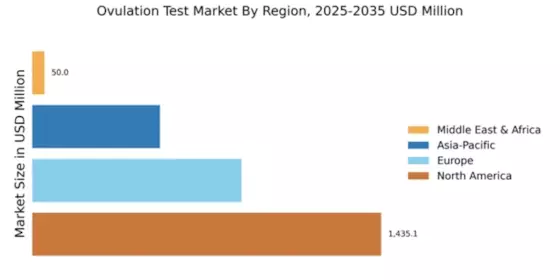
North America continues to lead the ovulation test market, holding a significant share of 1435.06 million in 2025. The growth is driven by increasing awareness of reproductive health, advancements in technology, and a rise in fertility issues among couples. Regulatory support for over-the-counter testing products has further fueled demand, making these tests more accessible to consumers. The United States is the primary market, with key players like Procter & Gamble, Church & Dwight, and Clearblue dominating the landscape. The competitive environment is characterized by innovation and marketing strategies aimed at educating consumers about ovulation tracking. The presence of established brands ensures a robust supply chain and consumer trust, contributing to the region's market strength.

Europe : Emerging Market with Growth Potential

Europe's ovulation test market is valued at 860.09 million in 2025, reflecting a growing interest in fertility awareness and family planning. Factors such as increasing health consciousness, government initiatives promoting reproductive health, and the rise of e-commerce are driving market growth. Regulatory frameworks in various countries are also evolving to support the availability of these tests, enhancing consumer access. Leading countries include Germany, the UK, and France, where brands like Bayer and Clearblue are well-established. The competitive landscape is marked by a mix of local and international players, with a focus on product innovation and consumer education. The market is expected to grow as more women seek reliable methods for ovulation tracking, supported by favorable regulations. "The European market is witnessing a significant shift towards self-testing products, empowering women in their reproductive health decisions."

Asia-Pacific : Rapid Growth in Fertility Awareness

The Asia-Pacific region, valued at 525.0 million in 2025, is experiencing rapid growth in the ovulation test market. This surge is attributed to increasing awareness of reproductive health, changing societal norms, and a growing number of women entering the workforce. Additionally, the rise in fertility issues has led to a higher demand for ovulation tests, supported by government initiatives promoting family planning. Countries like China and India are leading the market, with local brands such as Wondfo gaining traction alongside international players. The competitive landscape is evolving, with a focus on affordability and accessibility of products. As e-commerce continues to expand, more consumers are expected to access ovulation tests, further driving market growth. The region's unique demographic trends present significant opportunities for market players.

Middle East and Africa : Niche Market with Growth Opportunities

The Middle East and Africa region, with a market size of 50.0 million in 2025, represents a niche yet promising segment for ovulation tests. The growth is primarily driven by increasing awareness of reproductive health and the rising prevalence of fertility issues. Cultural shifts towards family planning and reproductive health education are also contributing to market expansion, albeit at a slower pace compared to other regions. Countries like South Africa and the UAE are leading the market, with a growing presence of both local and international brands. The competitive landscape is characterized by limited but increasing product offerings, focusing on affordability and accessibility. As awareness continues to grow, the market is expected to see gradual improvements in consumer access to ovulation tests, paving the way for future growth.

Key Players and Competitive Insights

The Ovulation Test Market is currently characterized by a dynamic competitive landscape, driven by increasing consumer awareness regarding reproductive health and the growing trend of self-monitoring fertility. Key players such as Procter & Gamble (US), Bayer (DE), and Clearblue (GB) are strategically positioned to leverage innovation and technological advancements. Procter & Gamble (US) focuses on enhancing product efficacy through research and development, while Bayer (DE) emphasizes partnerships with healthcare providers to expand its market reach. Clearblue (GB) has adopted a digital transformation strategy, integrating mobile applications with its ovulation tests to provide users with personalized insights. Collectively, these strategies contribute to a competitive environment that is increasingly focused on consumer engagement and technological integration.

In terms of business tactics, companies are localizing manufacturing to reduce costs and optimize supply chains, which is particularly relevant in a moderately fragmented market. The competitive structure is shaped by both established brands and emerging players, with significant influence exerted by key companies that are continuously innovating and adapting to market demands. This collective approach fosters a competitive atmosphere where agility and responsiveness to consumer needs are paramount.

In November 2025, Procter & Gamble (US) announced a partnership with a leading health tech firm to develop a new line of ovulation tests that utilize AI to predict fertility windows more accurately. This strategic move is likely to enhance the company's product offerings and position it as a leader in the integration of technology within reproductive health. The collaboration underscores the importance of innovation in meeting evolving consumer expectations and could potentially reshape market dynamics.

In October 2025, Bayer (DE) launched a new marketing campaign aimed at educating consumers about the benefits of ovulation testing. This initiative not only seeks to increase brand awareness but also aims to establish Bayer as a trusted authority in reproductive health. By focusing on consumer education, Bayer is likely to strengthen its market position and foster brand loyalty, which is essential in a competitive landscape.

In September 2025, Clearblue (GB) introduced a subscription model for its ovulation tests, allowing consumers to receive regular shipments of products tailored to their individual cycles. This innovative approach not only enhances customer convenience but also encourages brand loyalty and repeat purchases. The subscription model reflects a broader trend towards personalized consumer experiences, which is becoming increasingly important in the market.

As of December 2025, the Ovulation Test Market is witnessing trends such as digitalization, sustainability, and the integration of AI technologies. Strategic alliances are becoming more prevalent, as companies recognize the value of collaboration in enhancing product offerings and market reach. Looking ahead, competitive differentiation is expected to evolve, with a shift from price-based competition to a focus on innovation, technology, and supply chain reliability. This transition may redefine how companies engage with consumers, emphasizing the importance of delivering value through advanced solutions.

Key Companies in the Ovulation Test Market market include

Industry Developments

June 2021:The distribution of the REVEAL Rapid AST system by particular diagnoses in Europe was announced by bioMérieux, strengthening the market for rapid testing kits in the continent.

April 2021:Through the Real Talk with Conceiving Hood Campaign, actress Jordana Brewster and Clearblue® raised awareness about the challenges of conception and women's fertility.

Future Outlook

Ovulation Test Market Future Outlook

The Ovulation Test Market is projected to grow at a 6.3% CAGR from 2024 to 2035, driven by increasing awareness of fertility and technological advancements in testing methods.

New opportunities lie in:

  • Development of subscription-based ovulation test kits for continuous monitoring.
  • Integration of mobile applications for personalized fertility tracking and insights.
  • Expansion into emerging markets with tailored marketing strategies and affordable products.

By 2035, the Ovulation Test Market is expected to achieve substantial growth, reflecting evolving consumer needs and technological innovations.

Market Segmentation

Ovulation Test Market End User Outlook

  • Women Aged 20-30
  • Women Aged 31-40
  • Women Aged 41-50
  • Couples Trying to Conceive

Ovulation Test Market Technology Outlook

  • Hormone Detection
  • Temperature Monitoring
  • Saliva Testing
  • Mobile Application Integration

Ovulation Test Market Product Type Outlook

  • Digital Ovulation Test
  • Analog Ovulation Test
  • Saliva Ovulation Test
  • Urine Ovulation Test

Ovulation Test Market Distribution Channel Outlook

  • Online Retail
  • Pharmacy
  • Supermarket
  • Health Store

Report Scope

MARKET SIZE 20242870.15(USD Million)
MARKET SIZE 20253051.03(USD Million)
MARKET SIZE 20355621.63(USD Million)
COMPOUND ANNUAL GROWTH RATE (CAGR)6.3% (2024 - 2035)
REPORT COVERAGERevenue Forecast, Competitive Landscape, Growth Factors, and Trends
BASE YEAR2024
Market Forecast Period2025 - 2035
Historical Data2019 - 2024
Market Forecast UnitsUSD Million
Key Companies ProfiledProcter & Gamble (US), Church & Dwight (US), Bayer (DE), Clearblue (GB), First Response (US), Easy@Home (US), Pregmate (US), iProven (NL), Wondfo (CN)
Segments CoveredProduct Type, Distribution Channel, End User, Technology
Key Market OpportunitiesIntegration of digital health technologies enhances user engagement in the Ovulation Test Market.
Key Market DynamicsRising consumer awareness and technological advancements drive growth in the ovulation test market.
Countries CoveredNorth America, Europe, APAC, South America, MEA

Market Highlights

Author
Kinjoll Dey
Research Analyst Level I

He is an extremely curious individual currently working in Healthcare and Medical Devices Domain. Kinjoll is comfortably versed in data centric research backed by healthcare educational background. He leverages extensive data mining and analytics tools such as Primary and Secondary Research, Statistical Analysis, Machine Learning, Data Modelling. His key role also involves Technical Sales Support, Client Interaction and Project management within the Healthcare team. Lastly, he showcases extensive affinity towards learning new skills and remain fascinated in implementing them.

Leave a Comment

FAQs

What is the projected growth of the Ovulation Test market?

The Ovulation Test market is the expected increase in total market value of 5.62 USD billion over a defined forecast period 2025–2035. It is driven by factors such as demand trends, technological advances, regulatory changes, and geographic expansion.

What is the size of the Ovulation Test market?

Ovulation Test market size was valued at approximately 2.87 billion USD in 2024. This figure will reach 5.62 billion USD covering all regions (America, Europe, Asia, MEA and ROW), focusing its segments / services / distribution channels till 2035.

What is the CAGR of the Ovulation Test market?

Ovulation Test market is expected to grow at a CAGR of 6.3% between 2025 and 2035.

How much will the Ovulation Test market be worth by 2035?

Ovulation Test market is expected to be worth of 5.62 billion USD, reflecting growth driven by usage, technology and global demands by the end of 2035.

How will the Ovulation Test market perform over the next 10 years?

Over the next 10 years the Ovulation Test market is expected to shift from usd billion 2.87 to 5.62 billion USD, led by adoption of advanced tech, demographic trends, regulatory approvals, with potential headwinds from 2025 to 2035.

Which region held the largest market share in the Ovulation Test market?

North America had the largest share in the market

Download Free Sample

Kindly complete the form below to receive a free sample of this Report

Compare Licence

×
Features License Type
Single User Multiuser License Enterprise User
Price $4,950 $5,950 $7,250
Maximum User Access Limit 1 User Upto 10 Users Unrestricted Access Throughout the Organization
Free Customization
Direct Access to Analyst
Deliverable Format
Platform Access
Discount on Next Purchase 10% 15% 15%
Printable Versions