Percutaneous Coronary Intervention Market Research Report Information by Product Type (Coronary Stents, Balloon Catheters, Coronary Guidewires, Guiding Catheters, Guiding Sheaths, Diagnostics Catheters, Crossing Catheters, Inflation Devices, Guidance Systems, Peripheral Thrombectomy System, Embolic Protection System, And Accessories), by Vascular Access (Radial and Femoral), by End User (Hospitals & Clinics, Ambulatory Surgical Centers, and Others), and by Region (North America, Europe, Asia-Pacific, and Rest of the World - Forecast till 2035
Forecast Period
2025 - 2035
CAGR
10.03%
2024 Market Size
$ 11.7 Billion
2035 Market Size
$ 33.48 Billion
Medical Device● Updated July 21, 2026Report ID: MRFR/MED/2288-CR|Pages: 157|Author: Satyendra Maurya, Rahul Gotadki
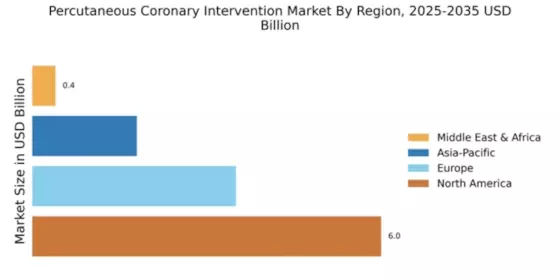
The Global Percutaneous Coronary Intervention Market size was valued at USD 11.7 Billion in 2024, and the market is projected to grow from USD 12.87 Billion in 2025 to USD 33.48 Billion by 2035, registering a CAGR of 10.03% during the forecast period 2025–2035. North America led the market with over 51.28% share, generating around USD 6.0 Billion in revenue. Rising prevalence of cardiovascular diseases, increasing aging populations, and continuous advancements in stent technologies and minimally invasive procedures are accelerating demand for percutaneous coronary interventions, improving treatment outcomes while supporting broader adoption across healthcare systems. According to WHO, cardiovascular diseases cause approximately 17.9 million deaths annually, accounting for 32% of global deaths, reinforcing the urgent need for advanced PCI procedures and early cardiac intervention technologies.
Key Market Trends & Highlights
The Percutaneous Coronary Intervention Market is poised for substantial growth driven by technological advancements and increasing disease prevalence.
North America held 51.28% of PCI market revenue in 2024, maintaining regional leadership.
Europe generated USD 3.5 billion in 2024, contributing approximately 29.91% global market share.
Hospitals accounted for an estimated 58% share, driven by higher cardiovascular procedural volumes globally.
Cardiovascular diseases cause approximately 17.9 million deaths annually, accelerating demand for PCI technologies worldwide.
Market Size & Forecast
2024 Market Size
11.7 (USD Billion)
2035 Market Size
33.48 (USD Billion)
CAGR (2025 - 2035)
10.03%
Major Players
Companies such as Abbott (US), Boston Scientific (US), Medtronic (US), Johnson & Johnson (US), B. Braun (DE), Terumo (JP), Cardinal Health (US), Siemens Healthineers (DE), Philips (NL) are some of the major participants in the market.
Our Impact
Enabled $4.3B Revenue Impact for Fortune 500 and Leading Multinationals
Partnering with 2000+ Global Organizations Each Year
30K+ Citations by Top-Tier Firms in the Industry
Percutaneous Coronary Intervention Market Trends
The Percutaneous Coronary Intervention Market is currently experiencing notable transformations driven by advancements in technology and increasing demand for minimally invasive procedures. As healthcare providers seek to enhance patient outcomes, innovations in catheter design, imaging techniques, and stent technology are becoming more prevalent. These developments not only improve procedural efficiency but also reduce recovery times, thereby appealing to both patients and healthcare professionals.
Furthermore, the growing prevalence of cardiovascular diseases is prompting a shift towards proactive management strategies, which may further bolster the market's expansion. In addition to technological advancements, the Percutaneous Coronary Intervention Market is influenced by evolving regulatory frameworks and reimbursement policies. As governments and health organizations strive to improve access to care, there appears to be a concerted effort to streamline approval processes for new devices and procedures. This regulatory support could facilitate the introduction of innovative solutions, ultimately enhancing the quality of care provided to patients. Overall, the market seems poised for growth, driven by a combination of technological progress and supportive policy environments.
Technological Advancements
The ongoing evolution of technology in the Percutaneous Coronary Intervention Market is reshaping treatment methodologies. Innovations in catheter designs, imaging modalities, and stent materials are enhancing procedural outcomes and patient safety. These advancements are likely to lead to more effective interventions and improved recovery experiences.
Abbott continues advancing drug-eluting stent technologies and imaging-guided PCI solutions supporting improved patient outcomes. Product innovation enhances arterial patency rates, procedural accuracy, and recovery timelines, strengthening adoption of minimally invasive coronary interventions in increasingly complex cardiovascular disease management settings.
Regulatory Support
The regulatory landscape surrounding the Percutaneous Coronary Intervention Market is evolving, with authorities increasingly focused on expediting the approval of new devices and techniques. This regulatory support may facilitate the introduction of cutting-edge solutions, thereby enhancing patient access to advanced care.
Boston Scientific continues expanding cardiovascular portfolios through acquisitions and technology integration strategies. Portfolio diversification strengthens offerings in interventional cardiology, supporting broader adoption of minimally invasive coronary procedures and addressing increasing global cardiovascular disease burden.
Rising Cardiovascular Disease Prevalence
The increasing incidence of cardiovascular diseases is driving demand within the Percutaneous Coronary Intervention Market. As healthcare systems prioritize early intervention and management strategies, the market is expected to expand, reflecting a growing emphasis on proactive healthcare solutions.
The Global Percutaneous Coronary Intervention Market Industry is on a trajectory of substantial growth, with projections indicating a market size of 11.7 USD Billion in 2024 and an anticipated increase to 33.5 USD Billion by 2035. This growth reflects a compound annual growth rate of 10.03% from 2025 to 2035, driven by factors such as rising cardiovascular disease prevalence, technological advancements, and increased healthcare expenditure. These projections highlight the dynamic nature of the PCI market and its critical role in addressing global cardiovascular health challenges.
Cardiovascular diseases remain the leading global cause of mortality, increasing demand for interventional cardiology procedures and supporting sustained growth in PCI adoption worldwide.
Growing Geriatric Population
The demographic shift towards an aging population is a crucial factor propelling the Global Percutaneous Coronary Intervention Market Industry. As individuals age, the risk of developing cardiovascular diseases escalates, necessitating more frequent interventions. By 2030, it is anticipated that the number of people aged 60 and older will surpass 1.4 billion globally, creating a substantial demand for PCI procedures. This demographic trend underscores the need for healthcare systems to adapt and expand their cardiovascular care capabilities, thereby driving market growth in the coming years.
The global population aged 65 years and older continues increasing rapidly, strengthening demand for PCI procedures as aging remains a major cardiovascular disease risk factor.
Increased Healthcare Expenditure
Rising healthcare expenditure across various regions is a significant driver of the Global Percutaneous Coronary Intervention Market Industry. Governments and private sectors are investing more in healthcare infrastructure, particularly in cardiovascular care. This trend is evident in many countries where healthcare budgets are being allocated to advanced medical technologies and procedures. As a result, the market is poised for growth, with a projected compound annual growth rate of 10.03% from 2025 to 2035, reflecting the increasing prioritization of cardiovascular health in national health agendas.
Global healthcare expenditure continues expanding, supporting investments in advanced cardiovascular technologies and improving accessibility to minimally invasive PCI procedures.
Enhanced Awareness and Screening Programs
The growing awareness of cardiovascular health and the implementation of screening programs are pivotal in shaping the Global Percutaneous Coronary Intervention Market Industry. Public health initiatives aimed at educating populations about heart disease risk factors have led to earlier detection and treatment of cardiovascular conditions. This proactive approach not only improves patient outcomes but also drives demand for PCI procedures. As awareness continues to rise, the market is likely to experience sustained growth, further emphasizing the importance of preventive care in cardiovascular health.
Early cardiovascular screening programs significantly improve disease detection and intervention rates, supporting increasing utilization of PCI procedures for coronary disease management.
Rising Prevalence of Cardiovascular Diseases
The increasing incidence of cardiovascular diseases globally serves as a primary driver for the Global Percutaneous Coronary Intervention Market Industry. With an estimated 17.9 million deaths attributed to cardiovascular conditions each year, the demand for effective treatment options is surging. Percutaneous coronary interventions, which include angioplasty and stenting, are becoming essential in managing these diseases. As healthcare systems adapt to this growing burden, the market is projected to reach 11.7 USD Billion in 2024, reflecting the urgent need for innovative solutions in cardiovascular care.
Cardiovascular diseases account for approximately 17.9 million annual deaths globally, reinforcing long-term demand for effective coronary intervention technologies and treatments.
Technological Advancements in PCI Procedures
Technological innovations in percutaneous coronary interventions are significantly influencing the Global Percutaneous Coronary Intervention Market Industry. Advancements such as drug-eluting stents, bioresorbable stents, and improved imaging techniques enhance procedural outcomes and patient safety. These innovations not only improve the efficacy of interventions but also reduce recovery times, leading to increased patient throughput in healthcare facilities. As a result, the market is expected to expand, with projections indicating a growth to 33.5 USD Billion by 2035, driven by the continuous evolution of PCI technologies.
Drug-eluting stents and imaging-guided PCI technologies improve procedural outcomes while reducing restenosis rates, accelerating adoption of advanced interventional cardiology solutions.
Technological advancements have been pivotal in shaping the landscape of PCI products, revolutionizing their effectiveness, safety, and patient outcomes. One notable advancement is the development of drug-eluting stents (DES), which represent a paradigm shift in interventional cardiology. Unlike traditional bare-metal stents, DES are coated with a controlled-release polymer that gradually releases anti-proliferative drugs to inhibit tissue growth at the site of stent implantation. This technology significantly reduces the risk of restenosis, a major concern with bare-metal stents. For instance, in August 2022, Medtronic plc (Ireland) launched the Onyx Frontier, a latest-generation drug-eluting coronary stent system following CE Mark approval. It is used for the treatment of patients with coronary artery disease (CAD). Furthermore, the evolution of imaging technologies has enhanced the precision and accuracy of PCI procedures. Intravascular imaging techniques, such as intravascular ultrasound (IVUS) and optical coherence tomography (OCT), provide real-time visualization of arterial structures and plaque morphology. This information aids cardiologists in selecting appropriate stent sizes, optimizing stent deployment, and ensuring complete lesion coverage. For instance, OCT's high-resolution images allow for a detailed assessment of stent apposition and expansion, resulting in improved procedural outcomes.
Market Segment Insights
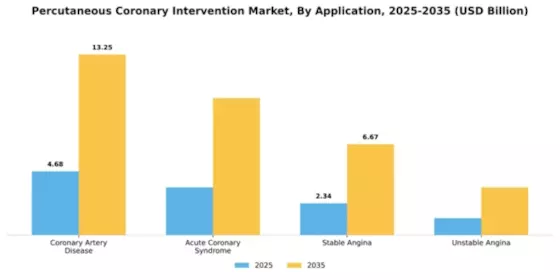
By Application: Coronary Artery Disease (Largest) vs. Acute Coronary Syndrome (Fastest-Growing)
In the Percutaneous Coronary Intervention (PCI) market, the application of treatments for Coronary Artery Disease (CAD) holds the largest market share of 46%. CAD has become more prevalent due to factors such as aging populations and lifestyles that increase cardiovascular risk. This segment accounts for a significant portion of PCI procedures, highlighting its critical role in cardiac health management. Meanwhile, Acute Coronary Syndrome (ACS) is witnessing rapid growth, driven by increasing awareness of heart disease and advancements in PCI technologies. As urgency in treating ACS rises, so does the application of PCI techniques tailored to this condition.
Abbott advances coronary intervention technologies supporting treatment of complex arterial blockages. Coronary artery disease represents approximately 46% market share, driven by increasing prevalence of atherosclerosis, aging populations, and rising adoption of minimally invasive PCI procedures for long-term cardiovascular management.
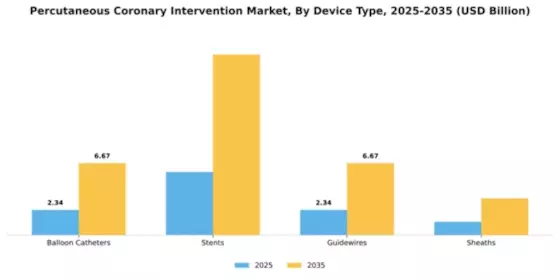
By Device Type: Stents (Largest) vs. Balloon Catheters (Fastest-Growing)
In the Percutaneous Coronary Intervention Market, the segment of device types is characterized by distinct shares among balloon catheters, stents, guidewires, and sheaths. Stents hold the largest market share of 48% owing to their critical role in maintaining arterial patency and preventing restenosis. Balloon catheters have also carved a significant niche; however, their market presence is bolstered by innovative designs that enhance treatment outcomes, attracting a growing segment of healthcare practitioners. The growth trends within this segment reveal a notable surge in the adoption of balloon catheters, which are emerging as the fastest-growing devices due to advances in technology and increased preference for minimally invasive procedures. The prevalence of cardiovascular diseases drives demand for effective intervention devices, with healthcare providers increasingly opting for devices that offer greater efficacy and patient safety, fueling the expansive growth of the percutaneous coronary intervention market.
Boston Scientific continues strengthening interventional cardiology portfolios with advanced stent technologies. Stents account for an estimated 48% market share because of their effectiveness in maintaining arterial patency, reducing restenosis risks, and improving long-term PCI outcomes for coronary artery disease patients.
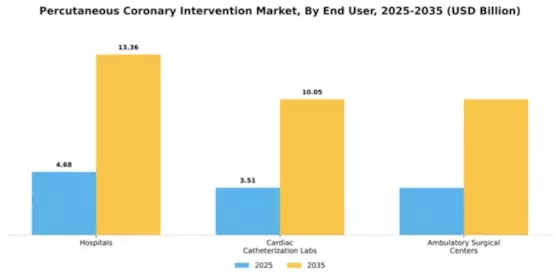
By End User: Hospitals (Largest) vs. Cardiac Catheterization Labs (Fastest-Growing)
In the Percutaneous Coronary Intervention Market, hospitals hold the largest share with 58% of the end-user segment, given their comprehensive facilities and skilled personnel. They cater to a broad patient demographic, from elective procedures to emergency interventions, thus solidifying their market dominance. Cardiac catheterization labs follow, reflecting a significant portion of the market share. These specialized centers play an important role by providing targeted services, which appeals to a niche patient base seeking dedicated cardiac care, greatly influencing overall market dynamics. Growth trends are indicating a gradual shift toward cardiac catheterization labs as they offer enhanced efficiency and faster patient recovery times. This segment is expected to see rapid advancements driven by technological innovations, improving procedural outcomes. Simultaneously, hospitals continue to adapt by integrating more sophisticated equipment, which helps to attract a high volume of cardiac patients. Together, these trends reflect evolving patient care preferences and advancements in procedural technologies within the market.
Medtronic supports hospital-based cardiovascular care through advanced interventional technologies. Hospitals dominate with approximately 58% share, reflecting higher procedural volumes, integrated cardiac care infrastructure, and access to specialized cardiology teams managing elective and emergency PCI procedures.
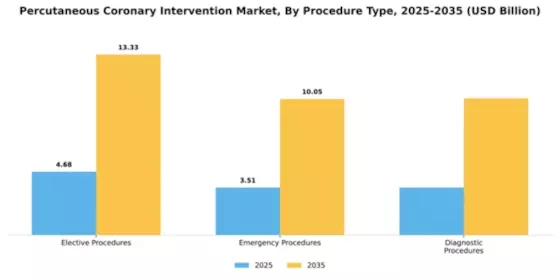
By Procedure Type: Elective Procedures (Largest) vs. Emergency Procedures (Fastest-Growing)
In the Percutaneous Coronary Intervention Market, the distribution of procedure types reveals that elective procedures dominate the landscape, comprising a significant 61% market share. These procedures are often planned in advance, allowing for effective resource allocation and patient management, thus overshadowing the other categories. Meanwhile, emergency procedures have gained notable traction, particularly in light of rising cardiovascular diseases, pushing them into a rapidly growing segment driven by urgent healthcare needs.
Elective Procedures (Dominant) vs. Emergency Procedures (Emerging)
Elective procedures are characterized by their planned nature, often allowing patients to choose their timing and setting, which helps maintain a steady workflow in healthcare facilities. In contrast, emergency procedures cater to acute cardiac events that require immediate intervention, thereby marking their emergence in the market. The growing prevalence of coronary diseases and the need for timely interventions are driving factors behind the increasing adoption of emergency procedures. Both segments play critical roles in the overall structure; however, elective procedures continue to maintain a robust foothold due to established protocols and patient preferences.
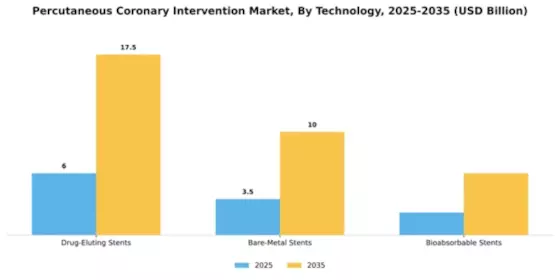
By Technology: Drug-Eluting Stents (Largest) vs. Bioabsorbable Stents (Fastest-Growing)
In the Percutaneous Coronary Intervention Market, Drug-Eluting Stents (DES) hold the largest share of 52%, gaining prominence due to their ability to prevent restenosis and improve patient outcomes. Following DES, Bare-Metal Stents (BMS) continue to be a reliable choice due to their availability and lower cost, while Bioabsorbable Stents are emerging, capturing interest for their innovative design aimed at promoting natural vessel healing. Together, these segments contribute to a dynamic landscape within the market.
Technology: Drug-Eluting Stents (Dominant) vs. Bioabsorbable Stents (Emerging)
Drug-Eluting Stents are at the forefront of the Percutaneous Coronary Intervention Market, favored for their drug-release mechanism that reduces the incidence of restenosis effectively, thus providing longer-term solutions for patients. On the other hand, Bioabsorbable Stents represent an innovative trend aimed at addressing limitations associated with traditional stents, such as maintaining optimal vessel function post-procedure. As these stents dissolve over time, they engage the body’s healing processes more naturally. While currently considered an emerging technology, their potential for faster adoption is fueled by advancements in materials science and increasing focus on personalized medicine.
Get more detailed insights about Percutaneous Coronary Intervention MarketRequest Free Sample
Regional Insights
North America : Market Leader in Innovation
North America leads in the Percutaneous Coronary Intervention Market Size, accounting for over 51.28% of the global revenue in 2024. The region's growth is driven by advanced healthcare infrastructure, increasing prevalence of cardiovascular diseases, and a strong emphasis on research and development. Regulatory support from agencies like the FDA further catalyzes innovation, ensuring rapid adoption of new technologies and procedures.
Approximately 805,000 Americans experience a heart attack annually, increasing long-term demand for PCI procedures, coronary stents, and minimally invasive cardiovascular intervention technologies.
The competitive landscape in North America is robust, featuring key players such as Abbott, Boston Scientific, and Medtronic. These companies are at the forefront of technological advancements, offering a range of innovative PCI devices. The U.S. remains the largest market, supported by high healthcare expenditure and a growing aging population. This dynamic environment fosters continuous improvement and expansion in PCI offerings, solidifying North America's position as a global leader.
GE Healthcare continues advancing cardiovascular imaging technologies supporting earlier diagnosis and improved precision in interventional cardiology procedures, strengthening North America’s PCI ecosystem.
Europe : Emerging Market with Growth Potential
Europe Percutaneous Coronary Intervention Market size was valued at USD 3.5 Billion in 2024, making it the second-largest regional market with a 29.91% share, reflecting a growing demand for minimally invasive cardiac procedures. The region benefits from a well-established healthcare system, increasing awareness of cardiovascular health, and supportive regulatory frameworks. Initiatives by the European Medicines Agency (EMA) promote innovation and ensure patient safety, driving market growth and adoption of advanced PCI technologies.
The European Medicines Agency supports regulatory pathways for innovative cardiovascular devices, accelerating adoption of advanced PCI technologies while strengthening patient safety and treatment efficacy standards across Europe.
Leading countries in Europe include Germany, France, and the UK, where major players like B. Braun and Siemens Healthineers are actively expanding their market presence. The competitive landscape is marked by collaborations and partnerships aimed at enhancing product offerings. As the region continues to invest in healthcare technology, the PCI market is expected to witness significant advancements, catering to the rising demand for effective cardiac interventions.
Asia-Pacific : Rapidly Growing Healthcare Sector
The Asia-Pacific region, with a market size of 1.8, is rapidly emerging as a significant player in the PCI market. Factors such as increasing urbanization, rising disposable incomes, and a growing prevalence of lifestyle-related diseases are driving demand for PCI procedures. Governments are also investing in healthcare infrastructure, which is expected to further boost market growth. Regulatory bodies are working to streamline approval processes for new devices, enhancing market accessibility.
Countries like Japan, China, and India are leading the charge in this region, with key players such as Terumo and Cardinal Health expanding their operations. The competitive landscape is evolving, with local manufacturers entering the market, increasing competition. As healthcare systems improve and awareness of cardiovascular health rises, the Asia-Pacific region is set to experience substantial growth in PCI procedures and technologies.
Middle East and Africa : Untapped Market Opportunities
The Middle East and Africa (MEA) region, with a market size of 0.4, presents untapped opportunities in the PCI market. The growth is driven by increasing healthcare investments, rising awareness of cardiovascular diseases, and a growing population. Governments are focusing on improving healthcare access and quality, which is expected to enhance the adoption of PCI procedures. Regulatory bodies are also working to establish frameworks that support the introduction of innovative medical technologies.
Countries like South Africa and the UAE are leading the way in PCI adoption, with a growing number of healthcare facilities offering advanced cardiac care. The competitive landscape is gradually evolving, with both local and international players entering the market. As healthcare infrastructure improves and patient awareness increases, the MEA region is poised for significant growth in the PCI sector, attracting investments and innovations.
Key Players and Competitive Insights
The Percutaneous Coronary Intervention Market is characterized by a dynamic competitive landscape, driven by technological advancements, increasing prevalence of cardiovascular diseases, and a growing aging population. Major players such as Abbott (US), Boston Scientific (US), and Medtronic (US) are strategically positioned to leverage innovation and expand their market presence. Abbott (US) focuses on enhancing its product portfolio through continuous innovation, while Boston Scientific (US) emphasizes strategic partnerships to bolster its research and development capabilities. Medtronic (US) is actively pursuing mergers and acquisitions to enhance its technological capabilities and market reach, collectively shaping a competitive environment that is increasingly focused on advanced therapeutic solutions.Key business tactics within the market include localizing manufacturing and optimizing supply chains to enhance operational efficiency. The competitive structure appears moderately fragmented, with several key players exerting influence over market dynamics. This fragmentation allows for a diverse range of products and services, catering to varying patient needs and preferences, while also fostering innovation through competition.In November Abbott (US) announced the launch of its latest drug-eluting stent, which incorporates advanced polymer technology aimed at improving patient outcomes. This strategic move is significant as it not only enhances Abbott's product offerings but also positions the company to capture a larger share of the market by addressing the growing demand for effective coronary interventions. The introduction of this innovative stent is expected to strengthen Abbott's competitive edge in a rapidly evolving market.In October Boston Scientific (US) entered into a collaboration with a leading digital health company to integrate AI-driven analytics into its cardiac intervention devices. This partnership is pivotal as it reflects the increasing trend towards digitalization in healthcare, enabling Boston Scientific to offer enhanced patient monitoring and personalized treatment options. Such strategic alliances are likely to redefine the competitive landscape by fostering innovation and improving patient care.In September Medtronic (US) completed the acquisition of a promising startup specializing in minimally invasive cardiac devices. This acquisition is indicative of Medtronic's commitment to expanding its technological capabilities and diversifying its product range. By integrating innovative solutions from the startup, Medtronic aims to enhance its competitive positioning and address the evolving needs of healthcare providers and patients alike.As of December current competitive trends in the Percutaneous Coronary Intervention Market are increasingly defined by digitalization, sustainability, and the integration of AI technologies. Strategic alliances among key players are shaping the landscape, fostering collaboration that drives innovation. Looking ahead, competitive differentiation is likely to evolve from traditional price-based competition towards a focus on technological advancements, innovative solutions, and reliable supply chains. This shift underscores the importance of adaptability and forward-thinking strategies in maintaining a competitive edge in the market.
Key Companies in the Percutaneous Coronary Intervention Market include
Industry Developments
In January 2023, MicroPort Scientific Corporation (China) received marketing approval for “MicroPort Coronary Balloon Catheters” in Peru. By this product approval company expand its business in Peru and support.
In August 2022, Medtronic (Ireland) launched the Onyx Frontier drug-eluting stent (DES) System. The Onyx Frontier DES offers a unique delivery mechanism, built upon the acute performance and clinical data of the Resolute Onyx drug-eluting stent.
In March 2022, MicroPort Scientific Corporation (China) received marketing approval from approval from Japan Pharmaceuticals and Medical Devices Agency (PMDA) for its product “Hyperflex”. The company can market its products in Japan and boost the revenue growth.
Future Outlook
Percutaneous Coronary Intervention Market Future Outlook
The Percutaneous Coronary Intervention Industry size is projected to reach USD 33.48 Billion by 2035, growing at a CAGR of 10.03%, driven by technological advancements, increasing prevalence of cardiovascular diseases, and rising healthcare expenditure.
New opportunities lie in:
Development of advanced biodegradable stents for improved patient outcomes. Integration of AI-driven analytics for personalized treatment plans. Expansion of telehealth services for remote patient monitoring and follow-up.
By 2035, the market is expected to achieve substantial growth, reflecting enhanced treatment options and patient accessibility.
Market Segmentation
Percutaneous Coronary Intervention Market End User Outlook
Hospitals
Cardiac Catheterization Labs
Ambulatory Surgical Centers
Percutaneous Coronary Intervention Market Application Outlook
Coronary Artery Disease
Acute Coronary Syndrome
Stable Angina
Unstable Angina
Percutaneous Coronary Intervention Market Device Type Outlook
Balloon Catheters
Stents
Guidewires
Sheaths
Percutaneous Coronary Intervention Market Procedure Type Outlook
Elective Procedures
Emergency Procedures
Diagnostic Procedures
Report Scope
MARKET SIZE 2024
11.7(USD Billion)
MARKET SIZE 2025
12.87(USD Billion)
MARKET SIZE 2035
33.48(USD Billion)
COMPOUND ANNUAL GROWTH RATE (CAGR)
10.03% (2025 - 2035)
REPORT COVERAGE
Revenue Forecast, Competitive Landscape, Growth Factors, and Trends
BASE YEAR
2024
Market Forecast Period
2025 - 2035
Historical Data
2019 - 2024
Market Forecast Units
USD Billion
Key Companies Profiled
Abbott (US), Boston Scientific (US), Medtronic (US), Johnson & Johnson (US), B. Braun (DE), Terumo (JP), Cardinal Health (US), Siemens Healthineers (DE), Philips (NL)
Segments Covered
Application, Device Type, End User, Procedure Type
Key Market Opportunities
Integration of advanced imaging technologies enhances precision in the Percutaneous Coronary Intervention Market.
Key Market Dynamics
Technological advancements and regulatory changes drive competitive dynamics in the Percutaneous Coronary Intervention Market.
What is the projected market valuation of the Percutaneous Coronary Intervention Market by 2035?
The projected market valuation for the Percutaneous Coronary Intervention Market is expected to reach 33.48 USD Billion by 2035.
What was the market valuation of the Percutaneous Coronary Intervention Market in 2024?
The overall market valuation was 11.7 USD Billion in 2024.
What is the expected CAGR for the Percutaneous Coronary Intervention Market during the forecast period 2025 - 2035?
The expected CAGR for the Percutaneous Coronary Intervention Market during the forecast period 2025 - 2035 is 10.03%.
Which application segment is projected to have the highest valuation by 2035?
The Coronary Artery Disease application segment is projected to reach 13.25 USD Billion by 2035.
What are the key players in the Percutaneous Coronary Intervention Market?
Key players in the market include Abbott, Boston Scientific, Medtronic, Johnson & Johnson, B. Braun, Terumo, Cardinal Health, Siemens Healthineers, and Philips.
Which device type is expected to dominate the market by 2035?
Stents are expected to dominate the market, projected to reach 16.73 USD Billion by 2035.
What is the projected valuation for the Emergency Procedures segment by 2035?
The Emergency Procedures segment is projected to reach 10.05 USD Billion by 2035.
How does the market for Drug-Eluting Stents compare to Bare-Metal Stents by 2035?
By 2035, the market for Drug-Eluting Stents is projected to reach 17.5 USD Billion, significantly higher than the 10.0 USD Billion for Bare-Metal Stents.
What is the expected growth trend for Cardiac Catheterization Labs as an end user by 2035?
Cardiac Catheterization Labs are expected to grow, reaching a valuation of 10.05 USD Billion by 2035.
What is the projected market size for Ambulatory Surgical Centers by 2035?
The projected market size for Ambulatory Surgical Centers is expected to reach 10.05 USD Billion by 2035.
Author
Author
Satyendra Maurya
Research Analyst
An accomplished research analyst with high proficiency in market forecasting, data visualization, competitive benchmarking, and others. He holds a pronounced track record in research and consulting projects for sectors such as life sciences, medical devices, and healthcare IT. His capabilities in qualitative and quantitative analysis have resulted in positive client outcomes. Working on niche market trends, opportunities, sales, and forecasted value is part of his skill set.
read more
Co-Author
Rahul Gotadki
Research Manager
He holds an experience of about 9+ years in Market Research and Business Consulting, working under the spectrum of Life Sciences and Healthcare domains. Rahul conceptualizes and implements a scalable business strategy and provides strategic leadership to the clients. His expertise lies in market estimation, competitive intelligence, pipeline analysis, customer assessment, etc.
The secondary research process involved comprehensive analysis of regulatory databases, peer-reviewed cardiovascular journals, clinical publications, and authoritative health organizations. Key sources included the US Food & Drug Administration (FDA) Center for Devices and Radiological Health (CDRH), European Medicines Agency (EMA) Medical Device Coordination Group (MDCG), National Institutes of Health (NIH) National Heart, Lung, and Blood Institute (NHLBI), National Center for Biotechnology Information (NCBI/PubMed), Centers for Disease Control and Prevention (CDC) National Center for Health Statistics, World Health Organization (WHO) Global Health Observatory, European Society of Cardiology (ESC), American College of Cardiology (ACC), Society for Cardiovascular Angiography and Interventions (SCAI), American Heart Association (AHA), European Association of Percutaneous Cardiovascular Interventions (EAPCI), Japan Pharmaceuticals and Medical Devices Agency (PMDA), Health Canada Medical Devices Directorate, Therapeutic Goods Administration (TGA) Australia, National Health Service (NHS) England Cardiovascular Disease Prevention Program, EU Eurostat Health Database, Organization for Economic Cooperation and Development (OECD) Health Statistics, World Bank Health, Nutrition and Population Statistics, International Medical Device Regulators Forum (IMDRF), Global Burden of Disease Collaborative Network, and national cardiovascular registries including the National Cardiovascular Data Registry (NCDR) CathPCI Registry, British Cardiovascular Intervention Society (BCIS) Audit, German ALKK Quality Registry, and national health ministry reports from key markets. These sources were used to collect PCI procedure statistics, regulatory approval data, clinical safety studies, cardiovascular disease prevalence trends, stent adoption patterns, and market landscape analysis for drug-eluting stents, bare-metal stents, bioresorbable scaffolds, balloon catheters, and other PCI device technologies.
Primary Research
In order to gather both qualitative and quantitative insights, supply-side and demand-side stakeholders were interviewed during the primary research process. CEOs, VPs of Product Development, heads of regulatory affairs, and commercial directors from PCI device makers, stent developers, catheter OEMs, and cardiovascular technology providers were examples of supply-side sources. Board-certified interventional cardiologists, directors of cardiac catheterization labs, cardiovascular surgeons, hospital procurement managers, and medical directors from ambulatory surgery facilities, cardiac centers, and tertiary care hospitals were among the demand-side sources. Primary research verified product pipeline timelines for next-generation drug-eluting stents and bioresorbable scaffolds, validated market segmentation across product types (stents, balloon catheters, guidewires, guiding catheters), and collected information on clinical adoption patterns, radial vs. femoral access trends, pricing strategies, and reimbursement dynamics.
Primary Respondent Breakdown:
By Designation: C-level Primaries (28%), Director Level (33%), Others (39%)
By Region: North America (32%), Europe (29%), Asia-Pacific (34%), Rest of World (5%)
Market Size Estimation
Global market valuation was derived through revenue mapping and procedure volume analysis. The methodology included:
Identification of 50+ key manufacturers across North America, Europe, Asia-Pacific, and Latin America
“This is really good guys. Excellent work on a tight deadline. I will continue to use you going forward and recommend you to others. Nice job”
Noah MalgeriCo-Founder
“Thanks. It’s been a pleasure working with you, please use me as reference with any other Intel employees.”
Joseph AguayoSales Operations & Pricing Manager
“Thanks for sending the report it gives us a good global view of the Betaïne market.”
Peter Groot koerkampAccount and Business Manager
“Thank you, this will be very helpful for OQS.”
La Terria DoddProgram Support Specialist
“We found the report very insightful! we found your research firm very helpful. I'm sending this email to secure our future business.”
Younghwan ChoiSenior Retail Manager
“I am very pleased with how market segments have been defined in a relevant way for my purposes (such as "Portable Freezers & refrigerators" and "last-mile").
In general the report is well structured. Thanks very much for your efforts.”
Mark IrwinManagement Consultant
“I have been reading the first document or the study, ,the Global HVAC and FP market report 2021 till 2026. Must say, good info! I have not gone in depth at all parts, but got a good indication of the data inside!”
Rob KooikerGroup Product Manager HVAC & Fire Protection GMA
“We got the report in time, we really thank you for your support in this process. I also thank to all of your team as they did a great job.”
Akif MorogluStrategy & Business Development Director
“The Automotive 48V ECU Components Procurement Intelligence Study” was a complex project, but the Market Research Future (MRFR) team handled it with quality, agility, and customer-centricity. They delivered all requested data on time and within the agreed scope. The team, including Shubhendra Anand and Rahul Gotadki, was always readily available to clarify questions and swiftly implement necessary adjustments, driving the project to a successful conclusion within a very demanding timeframe.
I would also like to specifically commend Akshay Agarwal for his responsiveness and support at every stage—from our initial inquiry on May 6th through to final delivery on June 18th. His dedication made the entire process seamless.”
Guilherme Gomes MartinsProduct Management Director