Download Free Sample
Kindly complete the form below to receive a free sample of this Report
Personalized Skincare Market Research Report: Information by Product Type (Custom Formulated Serums, Custom Formulated Moisturizers, Custom Cleansers, Custom Sunscreen, Custom Face Masks, Custom Peels and Exfoliants, Personalized Sheet Masks, Custom Face Oils, Skin Nutrition, Other Products (custom creams, balms, etc.)), By Personalization Method (Genetic & DNA-based, AI or Algorithm-Based Skincare Diagnostic-driven, Rule-Based & Questionnaire-Driven, Expert-Led & Dermatologist-Curated, Others (Biomarker-Based (Non-DNA), Microbiome-based)), By Skin Concern (Acne and Blemishes, Anti-Aging and Wrinkles, Hyperpigmentation, Dryness and Dehydration, Sensitivity and Redness, Oil Control and Shine, Others (Barrier Repair & Skin Resilience, Texture, Pores & Smoothness, etc.)),By Distribution Channel(E-Commerce or Direct-to-Consumer (DTC), Specialty Stores, Pharmacies or Drugstores , Professional or Clinical Channels, Others (Department stores, salons, etc.)), By Price Range Economy (Economy, Mid-Range, Premium), By End User (Women, Men) By Region - Global Forecast to 2035
As per Market Research Future analysis, Personalized Skincare Market Size was valued at USD 31,263.41 million in 2024. The Personalized Skincare Industry is projected to grow from USD 35,299.65 million in 2025 to USD 113,224.94 million by 2035, exhibiting a compound annual growth rate (CAGR) of 11.1% during the forecast period (2025 - 2035)
The Personalized Skincare Market is witnessing transformative shifts driven by technological innovation, consumer health priorities, and personalized wellness demands.
| 2024 Market Size | 31,263.41 (USD Million) |
| 2035 Market Size | 113,224.94 (USD Million) |
| CAGR (2025 - 2035) | 11.1% |
Bo International, L’Oréal, COSMIX, Proven Skincare, Omy Laboratoires, Function of Beauty, Parallel Health, Curology, Dermatica, and Neutrogena Corporation
Our Impact
Enabled $4.3B Revenue Impact for Fortune 500 and Leading Multinationals
Partnering with 2000+ Global Organizations Each Year
30K+ Citations by Top-Tier Firms in the Industry
Expansion into emerging markets presents a significant growth opportunity for the personalized skincare market, driven by rapid urbanization, rising disposable incomes, and increasing awareness of skincare and personal wellness. Consumers in these regions are becoming more exposed to global beauty trends through digital media, e-commerce platforms, and social networking channels. Growing middle-class populations are demonstrating a higher willingness to spend on premium and value-added skincare solutions, particularly those that promise visible results and address region-specific skin concerns such as hyperpigmentation, pollution-related damage, and climate-induced sensitivity. Personalized skincare aligns well with these needs by offering tailored formulations that account for local environmental conditions, skin types, and lifestyle factors, creating strong relevance in emerging economies.
Sustainable and eco-friendly product development represents a major opportunity for differentiation and growth within the personalized skincare market. Consumers are increasingly prioritizing environmental responsibility, ethical sourcing, and clean formulations alongside product performance. Personalized skincare brands can leverage customization to reduce overconsumption by delivering precisely formulated products tailored to individual needs, minimizing product waste and unnecessary usage. On-demand production and small-batch manufacturing further align with sustainability goals by reducing excess inventory and resource inefficiency
Technological innovation is a central enabler of the personalized skincare market, transforming customization from a conceptual idea into a scalable commercial model. Advances in artificial intelligence, machine learning, big data analytics, and digital diagnostics have made it possible to collect, process, and interpret complex skin-related data at an individual level. AI-powered skin analysis tools, facial scanning technologies, and mobile diagnostic applications allow brands to assess parameters such as hydration levels, pigmentation, pore structure, wrinkle depth, oil balance, and skin sensitivity with increasing accuracy. These technologies enable precise segmentation at the individual consumer level rather than traditional demographic-based segmentation. In parallel, cloud computing and data integration platforms support the storage and analysis of large-scale consumer data, enabling continuous refinement of personalization algorithms and recommendation engines.
The increasing global awareness of skin health is one of the most fundamental drivers of the personalized skincare market. Consumers are becoming more educated about skin biology, dermatological science, and the long-term impact of environmental stressors such as UV radiation, pollution, climate change, and lifestyle habits on skin integrity. This awareness is shifting consumer perception of skincare from cosmetic enhancement to preventive and therapeutic care. Skin is now widely viewed as a health organ rather than just an aesthetic surface, leading to greater demand for scientifically formulated products that address individual skin conditions such as acne, pigmentation disorders, sensitivity, inflammation, premature aging, and barrier dysfunction. Consumers increasingly recognize that skin conditions are influenced by genetics, diet, stress, hormones, geography, and environment, making generic skincare solutions less effective for diverse populations. As a result, demand is rising for solutions that can adapt to individual skin physiology rather than applying standardized formulations across broad demographic groups.
Based on Product type, the Personalized Skincare Market has been segmented into Custom Formulated Serums, Custom Formulated Moisturizers, Custom Cleansers, Custom Sunscreen, Custom Face Masks, Custom Peels and Exfoliants, Personalized Sheet Masks, Custom Face Oils, Skin Nutrition, Other Products (custom creams, balms, etc.). Custom-formulated serums represent one of the most prominent and high-growth product types within the personalized skincare market due to their concentrated nature and targeted efficacy. Serums are designed to deliver active ingredients deep into the skin, making them ideal for personalization based on specific concerns such as hyperpigmentation, acne, aging, dehydration, and sensitivity. Custom cleansers are designed to address individual cleansing needs based on skin type, sensitivity, oil levels, and environmental exposure.

Personalized cleansing formulations adjust surfactant strength, pH balance, and active ingredients to ensure effective cleansing without disrupting the skin barrier. This is particularly important for consumers with sensitive, acne-prone, or compromised skin, where conventional cleansers may cause dryness, irritation, or imbalance. Custom cleansers help prepare the skin for subsequent skincare steps, improving the overall effectiveness of personalized regimens.

Based on Personalization Method, the Personalized Skincare Market has been segmented into Genetic & DNA-based, AI or Algorithm-Based Skincare, Diagnostic-driven, Rule-Based & Questionnaire-Driven, Expert-Led & Dermatologist-Curated, Others (Biomarker-Based (Non-DNA), Microbiome-based). AI or algorithm-based skincare is the most widely adopted personalization method due to its scalability, accessibility, and operational efficiency. This approach uses artificial intelligence and machine learning models to analyze consumer data such as skin images, questionnaires, environmental exposure, lifestyle habits, and product usage patterns.
Expert-led and dermatologist-curated personalization emphasizes professional expertise in designing customized skincare regimens. This method involves dermatologists or skincare experts assessing individual skin conditions through consultations, diagnostic tools, or case reviews, followed by personalized product recommendations or formulations. The involvement of medical professionals enhances trust, credibility, and clinical relevance.
Based on Skin Concerns, the Personalized Skincare Market has been segmented into Acne and Blemishes, Anti-Aging and Wrinkles, Hyperpigmentation, Dryness and Dehydration, Sensitivity and Redness, Oil Control and Shine, Others (Barrier Repair & Skin Resilience, Texture, Pores & Smoothness, etc.). Anti-aging and wrinkle management is a major skin concern fueling the growth of personalized skincare, particularly among aging populations and preventive skincare consumers. Skin aging is influenced by intrinsic factors such as genetics and cellular turnover, as well as extrinsic factors including UV exposure, pollution, stress, and lifestyle habits.

Acne and blemishes represent one of the most prominent and persistent skin concerns driving demand for personalized skincare solutions. This concern affects a wide demographic range, extending beyond adolescents to adults experiencing hormonal fluctuations, stress-related breakouts, lifestyle-induced acne, and environmentally triggered skin congestion.

Based on Distribution channel, the Personalized Skincare Market has been segmented into E-Commerce or Direct-to-Consumer (DTC), Specialty Stores, Pharmacies or Drugstores, Professional or Clinical Channels, Others (Department stores, salons, etc.). E-commerce and direct-to-consumer (DTC) channels represent the most dominant and fastest-growing distribution pathway in the personalized skincare market. Personalized skincare inherently relies on consumer data collection, digital diagnostics, questionnaires, AI-based skin analysis, and ongoing feedback, all of which are seamlessly integrated into online platforms.
Professional and clinical channels, including dermatology clinics, aesthetic centers, and medical spas, serve as high-credibility distribution pathways for personalized skincare solutions. These channels emphasize clinical validation, expert diagnosis, and medically supervised customization, making them particularly relevant for consumers with complex or chronic skin concerns. Personalized skincare delivered through professional settings often involves detailed skin analysis, diagnostic testing, and customized treatment plans aligned with in-clinic procedures.
Based on Price Economy, the Personalized Skincare Market has been segmented into Economy, Mid-Range, and Premium. The premium price range in the personalized skincare market focuses on high-end, science-backed, and deeply individualized skincare solutions. This segment leverages advanced personalization technologies such as AI-powered diagnostics, skin imaging, genetic or microbiome analysis, and expert-led formulation processes. Products are often custom-manufactured in small batches, using high-purity, clinically tested, and sometimes rare or innovative ingredients.

The mid-range price segment represents the core growth engine of the personalized skincare market, balancing affordability with advanced personalization and enhanced product performance. Brands operating in this range typically employ AI-driven algorithms, digital skin analysis tools, and expanded consumer data inputs to create more precise skincare recommendations.

Based on End User, the Personalized Skincare Market has been segmented into Women, Men. Women represent the largest and most influential end-user segment in the personalized skincare market, driven by high skincare awareness, proactive beauty routines, and strong willingness to adopt innovative skincare solutions. Female consumers typically engage with skincare at an earlier age and maintain multi-step routines that evolve over time to address changing skin concerns such as acne, pigmentation, aging, sensitivity, and hydration.
Men represent a rapidly expanding end-user segment in the personalized skincare market, driven by evolving grooming habits, rising awareness of skin health, and shifting cultural perceptions around male skincare. Traditionally, men relied on minimal and functional skincare routines, often limited to basic cleansing or shaving products.
Get more detailed insights about Personalized Skincare Market Request Free Sample
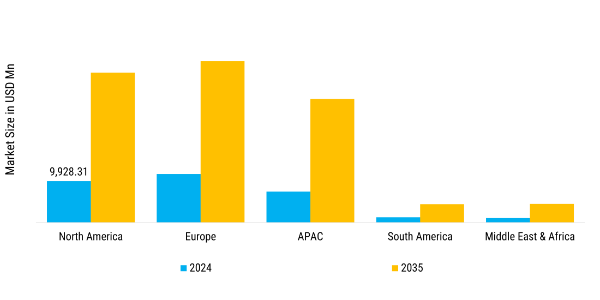
North America represents one of the most mature and innovation-driven regions in the personalized skincare market. High consumer awareness of skin health, strong purchasing power, and early adoption of advanced technologies have positioned the region as a leader in personalized skincare development and commercialization. Consumers in this region actively seek data-driven and results-oriented skincare solutions, making them highly receptive to AI-based skin analysis, diagnostic tools, and customized formulations. The prevalence of lifestyle-related skin concerns such as aging, acne, sensitivity, and environmental damage further supports demand for individualized skincare regimens.
Europe holds a significant share in the personalized skincare market, driven by a strong emphasis on skin health, sustainability, and regulatory compliance. Consumers across the region display high awareness of ingredient safety, formulation quality, and ethical sourcing, making them receptive to personalized skincare solutions that emphasize precision and responsibility. The diverse climatic conditions and varied skin types across European countries further support the demand for customized skincare tailored to individual and regional needs. Personalized solutions addressing aging, sensitivity, pigmentation, and barrier repair are particularly prominent in this market.
Asia Pacific is the fastest-growing region in the personalized skincare market, driven by a large population base, rising disposable incomes, and deep-rooted skincare cultures. Consumers in this region are highly engaged with skincare routines and demonstrate strong interest in innovation, beauty technology, and preventive skincare. The region’s diversity in skin tones, environmental conditions, and lifestyle patterns creates substantial demand for personalized solutions that address concerns such as pigmentation, acne, hydration, and early aging. Digital adoption and mobile-first consumer behavior further accelerate market growth.
South America represents an emerging opportunity in the global personalized skincare market, supported by increasing urbanization, growing beauty consciousness, and expanding access to digital platforms. Consumers in this region are becoming more aware of skin health and are gradually shifting from generic skincare products to more targeted solutions. Environmental factors such as high sun exposure and humidity contribute to prevalent skin concerns, including pigmentation, oiliness, and premature aging, creating a strong need for personalized skincare approaches.
The Middle East & Africa region is an evolving market for personalized skincare, shaped by diverse climatic conditions, cultural influences, and varying levels of market maturity. Harsh environmental factors such as heat, dryness, and high UV exposure drive demand for skincare solutions focused on hydration, sun protection, and barrier repair. Consumers in urban centers and higher-income segments increasingly seek personalized skincare to address region-specific skin challenges while aligning with cultural preferences for premium and performance-oriented products.
Many global, regional, and local vendors characterize the Personalized Skincare Market. The market is highly competitive, with all the players competing to gain market share. Intense competition, rapid advances in technology, frequent changes in government policies, and environmental regulations are key factors that confront market growth. The vendors compete based on cost, product quality, reliability, and government regulations. Vendors must provide cost-efficient, high-quality products to survive and succeed in an intensely competitive market.The major players in the market include Bo International, L’Oréal, COSMIX, Proven Skincare, Omy Laboratoires, Function of Beauty, Parallel Health, Curology, Dermatica, and Neutrogena Corporation, with strategic market developments and decisions to improve operational effectiveness.





June 2025: Proven Skincare, The Expert in Personalized Skincare, Announced A Groundbreaking Partnership with Sephora, Its First Retail Entry and Sephora's Debut in Skincare Personalization Offering Digital and In-Store Experiences Amid Surging Demand. The U.S. Digital Launch Provides Access to Proven's 3-Minute Skin Genome Quiz at Sephora. Proven skincare. Com For Custom Formulations, With Products Searchable on Sephora's Site and Integrated Perks for Buyers.
August 2025: Omy Laboratoires launched the world’s first refillable personalized skincare products, including Customized Serum, Day Cream, and Night Cream—using vegan, cruelty-free formulas with 95% natural-origin ingredients. Customers buy a reusable glass bottle and pump once, then get 100% recyclable plastic refills aligned with reduce-reuse-recycle principles, preventing waste equivalent to 1,645 plastic straws per person yearly; SkinAI technology analyzes selfies and quizzes to customize with ingredients like peptides or hyaluronic acid, based on mineralized water for all skin types.
September 2025: L’Oréal acquired the distinctive luxury beauty brand Aesop, as per terms announced on 3 April 2023, integrating it into the L’Oréal Luxe Division to unlock massive growth potential, especially in China. L’Oréal CEO Nicolas Hieronimus hailed Aesop’s “unique urbanity, hedonism, and luxury,” while Luxe President Cyril Chapuy predicted it would join the “Billionaire Brands” club; Aesop CEO Michael O’Keeffe expressed excitement about global expansion with L’Oréal’s support, and Natura &Co CEO Fabio Barbosa praised Aesop’s growth and sustainability under their stewardship. This move enhances L’Oréal’s premium portfolio amid its €38.26 billion 2022 sales.
The Global Personalized Skincare Market is projected to grow at a 11.1% CAGR from 2025 to 2035, driven by increasing demand for high-performance computing and enhanced security features.
New opportunities lie in:
|
Market Size 2024 |
31,263.41 (USD Million) |
|
Market Size 2025 |
35,299.65 (USD Million) |
|
Market Size 2035 |
113,224.94 (USD Million) |
|
Compound Annual Growth Rate (CAGR) |
11.1% (2025 - 2035) |
|
Report Coverage |
Revenue Forecast, Competitive Landscape, Growth Factors, and Trends |
|
Base Year |
2024 |
|
Market Forecast Period |
2025 - 2035 |
|
Historical Data |
2019 - 2023 |
|
Market Forecast Units |
USD Million |
|
Key Companies Profiled |
Bo International, L’Oréal, COSMIX, Proven Skincare, Omy Laboratoires, Function of Beauty, Parallel Health, Curology, Dermatica, and Neutrogena Corporation |
|
Segments Covered |
By Product Type, By Personalization Method, By Skin Concern, By Distribution Channel, By Price Range Economy, By End User |
|
Key Market Opportunities |
Expansion into Emerging Markets Integration of AI and Machine Learning for Personalization Growth of Subscription-based Models Sustainable and Eco-friendly Product Development. |
|
Key Market Dynamics |
Growing Awareness of Skin Health Advancements in Technology Increasing Demand for Customized Products Rise of E-commerce Platforms Influence of Social Media and Beauty Trends |
|
Region Covered |
North America, Europe, Asia Pacific, South America, Middle East & Africa. |



Kindly complete the form below to receive a free sample of this Report

“This is really good guys. Excellent work on a tight deadline. I will continue to use you going forward and recommend you to others. Nice job”


“Thanks. It’s been a pleasure working with you, please use me as reference with any other Intel employees.”


“Thanks for sending the report it gives us a good global view of the Betaïne market.”


“Thank you, this will be very helpful for OQS.”


“We found the report very insightful! we found your research firm very helpful. I'm sending this email to secure our future business.”


“I am very pleased with how market segments have been defined in a relevant way for my purposes (such as "Portable Freezers & refrigerators" and "last-mile"). In general the report is well structured. Thanks very much for your efforts.”


“I have been reading the first document or the study, ,the Global HVAC and FP market report 2021 till 2026. Must say, good info! I have not gone in depth at all parts, but got a good indication of the data inside!”


“We got the report in time, we really thank you for your support in this process. I also thank to all of your team as they did a great job.”


“The Automotive 48V ECU Components Procurement Intelligence Study” was a complex project, but the Market Research Future (MRFR) team handled it with quality, agility, and customer-centricity. They delivered all requested data on time and within the agreed scope. The team, including Shubhendra Anand and Rahul Gotadki, was always readily available to clarify questions and swiftly implement necessary adjustments, driving the project to a successful conclusion within a very demanding timeframe.
I would also like to specifically commend Akshay Agarwal for his responsiveness and support at every stage—from our initial inquiry on May 6th through to final delivery on June 18th. His dedication made the entire process seamless.”



