Pharma Hub Patient Access Support Service Market

Pharma Hub And Patient Access Support Service Market Research Report By Service Type (Patient Assistance Programs, Hub Services, Co-pay Assistance, Financial Assistance, Disease Management Programs, Patient Education and Support), By Indication (Oncology, Rare Diseases, Autoimmune Disorders, Cardiovascular Diseases, Gastrointestinal Diseases, Respiratory Diseases), By Payer Type (Commercial Insurance, Government Insurance, Medicare, Medicaid, Self-Pay), By Delivery Channel (Hub Centers, Call Centers, Online Portals, Mobile Applications, In-Person Support), By Population (Adult Patients, Pediatric Patients, Geriatric Patients, Underserved Patients, Vulnerable Populations) and By Regional (North America, Europe, South America, Asia Pacific, Middle East and Africa) - Growth & Industry Forecast 2025 To 2035
ID: MRFR/Pharma/27701-HCR
128 Pages
Rahul Gotadki
Last Updated: June 23, 2026
Pharma Hub Patient Access Support Service Market
Market Size
Forecast Period2025 - 2035
CAGR (2025 - 2035)23.43%
2024 Market Size$ 57.28 Billion
2025 Market Size$ 70.7 Billion
2035 Market Size$ 580.39 Billion
Key Players
Companies such as IQVIA
Parexel
Syneos Health
PRA Health Sciences
Covance
Medpace
Opportunities
  • Regulatory Support for Access Programs
  • Technological Advancements in Healthcare
  • Rising Demand for Patient-Centric Services

Pharma Hub Patient Access Support Service Market Summary

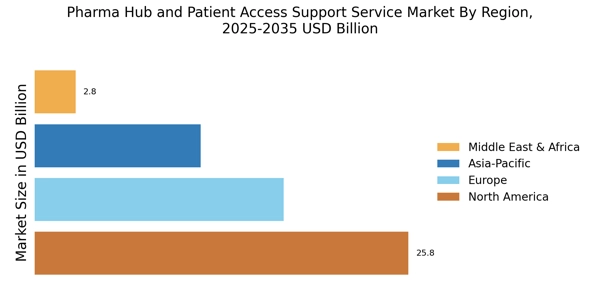
Global Pharma Hub and Patient Access Support Service Market Size was valued at USD 57.28 Billion in 2024 & the market is projected to grow from USD 70.7 Billion in 2025 to USD 580.39 Billion by 2035, registering a CAGR of 23.43% during the forecast period 2025–2035. North America led the market with over 45.04% share, generating around USD 25.8 Billion in revenue.
 
The growing complexity of specialty therapies and increasing focus on patient-centric healthcare are major drivers of the Pharma Hub and Patient Access Support Service Market. Healthcare providers and pharmaceutical companies are expanding support programs to improve medication access, adherence, reimbursement navigation, and treatment outcomes.
 
According to WHO, noncommunicable diseases account for approximately 41 million deaths annually, representing 74% of global deaths, highlighting the increasing need for long-term patient support programs and coordinated access services for chronic disease management.

Key Market Trends & Highlights

The Pharma Hub and Patient Access Support Service Market is experiencing a transformative shift towards digital integration and personalized care.

  • North America remained the largest regional market in 2024, accounting for approximately 45% of global Pharma Hub and Patient Access Support Service revenue.
  • Europe represented approximately 30% of global Pharma Hub and Patient Access Support Service Market revenue in 2024, ranking second worldwide.
  • Patient Assistance Programs generated approximately 42% market share in 2024, supported by growing reimbursement and affordability assistance initiatives.
  • Commercial Insurance represented nearly 54% of market revenue in 2024, remaining the leading payer segment across patient access services.
  • Adult Patients accounted for approximately 68% of market revenue in 2024, reflecting high specialty therapy utilization and chronic disease prevalence.
  • Oncology contributed around 38% of market revenue in 2024, driven by increasing cancer cases and complex treatment pathways.

Market Size & Forecast

2024 Market Size 57.28 (USD Billion)
2035 Market Size 580.39 (USD Billion)
CAGR (2025 - 2035) 23.43%

Major Players

Companies such as IQVIA(US), Parexel (US), Syneos Health (US), PRA Health Sciences (US), Covance (US), Medpace (US), PPD (US), Charles River (US), Celerion (US) are some of the major participants in the market.

Our Impact
Enabled $4.3B Revenue Impact for Fortune 500 and Leading Multinationals
Partnering with 2000+ Global Organizations Each Year
30K+ Citations by Top-Tier Firms in the Industry

Pharma Hub Patient Access Support Service Market Drivers

Regulatory Support for Access Programs

Regulatory frameworks are increasingly supporting the development of access programs within the Pharma Hub and Patient Access Support Service Market. Governments and health authorities are recognizing the importance of ensuring that patients have access to essential medications and therapies. Initiatives aimed at reducing barriers to access, such as streamlined approval processes for patient support services, are being implemented.
 
This regulatory support not only enhances the availability of treatments but also encourages pharmaceutical companies to invest in access programs. Consequently, the Pharma Hub and Patient Access Support Service Market is poised for growth as these supportive measures create a conducive environment for patient access initiatives.

  • According to the World Bank, global health expenditure exceeds 9% of global GDP, reflecting increasing governmental support for healthcare accessibility programs, reimbursement initiatives, and patient-centered access services that facilitate broader treatment availability.

Technological Advancements in Healthcare

Technological advancements are significantly influencing the Pharma Hub and Patient Access Support Service Market. Innovations such as telemedicine, mobile health applications, and data analytics are reshaping how healthcare services are delivered. These technologies facilitate better communication between patients and healthcare providers, enhancing access to necessary medications and support services.
 
The integration of artificial intelligence and machine learning in patient support systems is expected to streamline processes, improve efficiency, and reduce costs. As a result, the Pharma Hub and Patient Access Support Service Market is likely to experience accelerated growth, with technology playing a pivotal role in transforming patient access and support.

  • According to PubMed, telemedicine interventions have demonstrated improvements in medication adherence rates by up to 20%, highlighting the growing impact of digital healthcare technologies on patient access and support services.

Rising Demand for Patient-Centric Services

The Pharma Hub and Patient Access Support Service Market is witnessing a notable increase in demand for patient-centric services. This trend is driven by a growing emphasis on personalized healthcare, where patients seek tailored treatment options that align with their individual needs. As healthcare systems evolve, the focus shifts towards enhancing patient experiences and outcomes.
 
Reports indicate that patient engagement strategies are becoming integral to service delivery, with a projected increase in investments in patient support programs. This shift not only improves adherence to treatment regimens but also fosters a sense of empowerment among patients, thereby driving the growth of the Pharma Hub and Patient Access Support Service Market.

  • According to PubMed, patient-centered care programs have been associated with up to 30% higher treatment adherence rates, reinforcing the importance of personalized support services across healthcare delivery systems.

Increased Focus on Chronic Disease Management

The rising prevalence of chronic diseases is driving a heightened focus on chronic disease management within the Pharma Hub and Patient Access Support Service Market. As the burden of conditions such as diabetes, cardiovascular diseases, and respiratory disorders continues to grow, there is an urgent need for effective management strategies.
 
Patient access support services play a crucial role in providing education, resources, and ongoing support to patients managing these conditions. This focus on chronic disease management not only improves patient outcomes but also reduces healthcare costs associated with complications. Therefore, the Pharma Hub and Patient Access Support Service Market is likely to expand as healthcare providers prioritize chronic disease management initiatives.

  • According to IHME, chronic noncommunicable diseases account for more than 74% of global deaths, emphasizing the growing need for comprehensive patient support programs and long-term disease management services.

Collaboration Between Pharmaceutical Companies and Healthcare Providers

Collaboration between pharmaceutical companies and healthcare providers is emerging as a key driver in the Pharma Hub and Patient Access Support Service Market. Such partnerships facilitate the sharing of resources, knowledge, and expertise, ultimately enhancing patient access to medications and support services.
 
By working together, stakeholders can develop comprehensive patient support programs that address the unique needs of diverse patient populations. This collaborative approach not only improves the effectiveness of patient access initiatives but also fosters innovation in service delivery. As a result, the Pharma Hub and Patient Access Support Service Market is expected to benefit from increased collaboration, leading to improved patient outcomes and satisfaction.

  • According to PubMed, collaborative care models have demonstrated improvements in patient outcomes by over 20%, supporting continued investment in integrated pharmaceutical and healthcare provider partnerships.
 

Market Segment Insights

By Service Type: Patient Assistance Programs (Largest) vs. Hub Services (Fastest-Growing)

The Pharma Hub and Patient Access Support Service Market is primarily influenced by Patient Assistance Programs, which account for a significant 42% share of the market, followed closely by Hub Services. While Patient Assistance Programs formed the cornerstone of support services, Hub Services are rapidly gaining traction as they provide extensive access and streamlined processes for patients in need. The evolving landscape of patient support is increasingly leaning towards integrated solutions that align with patient needs, making Hub Services a pivotal player in this market.

IQVIA continues enhancing patient support infrastructure through advanced access management solutions. Patient Assistance Programs accounted for an estimated 42% of market revenue in 2024, driven by growing affordability initiatives, reimbursement support services, and increasing demand for medication access programs among specialty therapy patients.

By Indication: Oncology (Largest) vs. Rare Diseases (Fastest-Growing)

The Pharma Hub and Patient Access Support Service Market exhibits a diverse indication landscape, with Oncology commanding the largest market share of 38% among the specified segments. This sector's prominence is largely attributed to the rising prevalence of cancer worldwide, driving significant investment in therapeutic innovations and patient support services. Following closely, Rare Diseases have shown remarkable growth potential, albeit starting from a smaller base. With an increase in awareness and advancements in biotechnology, services aimed at these conditions are gaining traction rapidly. The growth trends within the indication segment highlight Oncology's sustained demand driven by escalating healthcare needs and ongoing research initiatives. Conversely, Rare Diseases' increase reflects a shift towards personalized medicine, with biotech advancements enabling targeted therapies. The autoimmune disorders and cardiovascular segments also present substantial opportunities, albeit with slower growth rates compared to the fastest-growing Rare Diseases. The confluence of technology and healthcare accessibility is enhancing overall patient outcomes in these areas.

Parexel supports oncology-focused patient access initiatives through extensive clinical and regulatory expertise. Oncology represented approximately 38% of market revenue in 2024, reflecting increasing cancer prevalence, rising specialty drug utilization, and significant investments in patient navigation and support programs.

By Payer Type: Commercial Insurance (Largest) vs. Medicare (Fastest-Growing)

In the Pharma Hub and Patient Access Support Service Market, the payer type segment shows a diverse distribution among its categories. Commercial Insurance stands out as the largest segment, significantly dominating the market with a 54% share due to its widespread utilization. In contrast, Medicare has become the fastest-growing segment, driven by the increasing aging population and expanded healthcare access for seniors. This shift highlights changing dynamics in patient demographics and their respective payment sources. Growth trends within the payer type segment reflect ongoing changes in healthcare policy and consumer behavior. As a result of initiatives to provide more comprehensive coverage, Medicare is experiencing rapid growth, appealing to an increasing number of patients. Conversely, the prominence of Commercial Insurance remains stable, indicating its deep-rooted position in the market. Overall, regulatory adjustments and evolving healthcare needs are key factors influencing the trends within this segment.

Commercial Insurance (Dominant) vs. Medicaid (Emerging)

The comparison between Commercial Insurance and Medicaid illustrates distinct market positions within the Pharma Hub and Patient Access Support Service Market. Commercial Insurance, as the dominant player, benefits from a robust framework that supports a wide range of healthcare services, providing patients with various access options and flexibility in treatment plans. In contrast, Medicaid represents an emerging segment, characterized by its focus on low-income individuals, including families and children. As more states expand Medicaid coverage, this segment is gaining traction, driven by policy reforms aimed at improving accessibility. While Commercial Insurance remains a staple in covering diverse patient populations, Medicaid's expansion signals a growing recognition of the need for affordable treatments among underrepresented groups.

By Delivery Channel: Hub Centers (Largest) vs. Mobile Applications (Fastest-Growing)

In the Pharma Hub and Patient Access Support Service Market, the delivery channel segment showcases a diverse range of options, with Hub Centers leading the market in terms of share with 46%. They have established a strong foothold by providing centralized services that cater directly to the needs of patients and healthcare providers. Following Hub Centers, Call Centers and Online Portals hold notable portions of the market, but the rise of Mobile Applications signifies a shift towards more tech-savvy solutions. In-Person Support remains relevant, though it accounts for a smaller share as digital options gain traction.

Hub Centers (Dominant) vs. Mobile Applications (Emerging)

Hub Centers have emerged as the dominant delivery channel in the Pharma Hub and Patient Access Support Service Market, recognized for their comprehensive services that streamline access to medications and support for patients. They leverage integrated systems to enhance patient engagement and compliance. In contrast, Mobile Applications are the fastest-growing segment, driven by the increasing reliance on smartphones and the demand for convenience and accessibility. These applications offer patients on-the-go access to support services, appointment scheduling, and medication reminders, which cater to the evolving preferences of tech-savvy users. Together, they highlight the dynamic nature of the delivery channel landscape.

By Population: Adult Patients (Largest) vs. Pediatric Patients (Fastest-Growing)

In the Pharma Hub and Patient Access Support Service Market, Adult Patients represent the largest segment, comprising a significant portion of the total market share with 68% due to their prevalent healthcare needs. Their demand is predominantly driven by chronic conditions requiring ongoing pharmaceutical interventions, which creates a stable foundation for this segment. Meanwhile, Pediatric Patients are emerging rapidly, capturing attention for their unique healthcare requirements and the increasing focus on tailoring treatments for younger demographics. This segment is witnessing a surge in services aimed at improving access to medications and support, underscoring its growth potential.

Adult Patients (Dominant) vs. Pediatric Patients (Emerging)

Adult Patients represent a dominant force in the Pharma Hub and Patient Access Support Service Market due to their extensive healthcare requirements, primarily driven by chronic diseases and aging populations. This segment benefits from well-established healthcare infrastructure, which facilitates access to a range of pharmaceutical services. Conversely, Pediatric Patients are recognized as an emerging segment, characterized by specialized needs for age-appropriate formulations and therapies. Their growth is supported by an increasing emphasis on personalized medicine and the necessity for tailored access solutions. These segments exemplify distinct approaches to healthcare access, with Adult Patients relying on existing services and Pediatric Patients pushing for innovative support mechanisms.

Get more detailed insights about Pharma Hub Patient Access Support Service Market

Regional Insights

North America : Leading Innovation and Growth

North America is the largest market for Pharma Hub and Patient Access Support Services, holding approximately 45% of the global market share. The region benefits from advanced healthcare infrastructure, high R&D investments, and a strong regulatory framework that fosters innovation. Demand is driven by increasing patient access needs and the growing complexity of drug therapies, which necessitate robust support services.

  • According to CDC estimates, approximately 129 million Americans live with at least one major chronic disease, creating substantial demand for patient access programs, medication support services, and long-term care coordination.

The United States is the primary player in this market, with key companies like IQVIA, Parexel, and Syneos Health leading the charge. The competitive landscape is characterized by a mix of established firms and emerging players, all vying for market share. The presence of these key players ensures a dynamic environment, with continuous advancements in service offerings to meet evolving patient needs.

  • GE HealthCare invests approximately USD 1 billion annually in research and development, supporting healthcare digitalization, patient engagement technologies, and advanced care coordination solutions that strengthen patient access ecosystems.

Europe : Regulatory Framework and Growth

Europe is the second-largest market for Pharma Hub and Patient Access Support Services, accounting for around 30% of the global market. The region's growth is fueled by increasing healthcare expenditure, a rising aging population, and stringent regulations that promote patient access to innovative therapies. The European Medicines Agency (EMA) plays a crucial role in shaping the regulatory landscape, ensuring that patient needs are prioritized in drug approvals.

  • EMA supports access to innovative medicines across the European Union's population of more than 450 million people. In recent years, EMA has continued evaluating dozens of new medicines annually, helping improve patient access pathways and supporting the expansion of comprehensive patient support services throughout Europe.

Leading countries in this market include Germany, France, and the UK, which are home to several prominent players such as Parexel and PRA Health Sciences. The competitive landscape is marked by collaborations between pharmaceutical companies and service providers to enhance patient access. This synergy is vital for navigating the complex regulatory environment and meeting the diverse needs of patients across Europe.

Asia-Pacific : Emerging Market Potential

Asia-Pacific is witnessing rapid growth in the Pharma Hub and Patient Access Support Services market, holding approximately 20% of the global share. The region's expansion is driven by increasing healthcare investments, a growing middle class, and rising demand for advanced medical treatments. Governments are implementing policies to enhance healthcare access, which is further propelling market growth and attracting foreign investments in the pharmaceutical sector.

Key players in this region include local firms and international companies looking to tap into the burgeoning market. Countries like China and India are at the forefront, with significant investments in healthcare infrastructure and services. The competitive landscape is evolving, with a mix of established players and new entrants striving to meet the increasing demand for patient access support services.

Middle East and Africa : Untapped Market Opportunities

The Middle East and Africa region is gradually emerging in the Pharma Hub and Patient Access Support Services market, currently holding about 5% of the global market share. The growth is driven by increasing healthcare investments, a rising prevalence of chronic diseases, and government initiatives aimed at improving healthcare access. Regulatory bodies are working to streamline processes, which is expected to enhance market dynamics in the coming years.

Countries like South Africa and the UAE are leading the charge, with a growing number of local and international players entering the market. The competitive landscape is characterized by partnerships and collaborations aimed at expanding service offerings. As healthcare systems evolve, the demand for patient access support services is anticipated to rise significantly, presenting lucrative opportunities for stakeholders in the region.

Pharma Hub Patient Access Support Service Market Regional Image

Key Players and Competitive Insights

Major players in Pharma Hub And Patient Access Support Service Market are constantly developing and innovating new products and technologies to meet the evolving needs of patients and healthcare providers. Leading Pharma Hub And Patient Access Support Service Market players are investing heavily in research and development to bring new products to market and expand their product portfolios. This competitive landscape is expected to remain fragmented, with several major players and a large number of small and medium-sized companies operating in the market.
 
The Pharma Hub And Patient Access Support Service Market is characterized by intense competition, with leading players focusing on product innovation, strategic acquisitions, and partnerships to gain market share. The competitive dynamics in the Pharma Hub And Patient Access Support Service Market are expected to intensify further in the coming years. A leading company in the Pharma Hub And Patient Access Support Service Market, Novo Nordisk, is a global healthcare company that develops and manufactures a range of pharmaceutical products, including diabetes care, obesity care, and biopharmaceuticals. Novo Nordisk has a strong presence in the Pharma Hub And Patient Access Support Service Market and offers a comprehensive suite of services to support patients and healthcare providers.
 
The company's patient access support services include financial assistance, medication adherence programs, and disease management education. Novo Nordisk has a wide network of partnerships with healthcare providers and organizations, which allows it to reach a large number of patients and provide them with the support they need. Another leading player in the Pharma Hub And Patient Access Support Service Market, McKesson, is a global healthcare company that provides a range of services to hospitals, healthcare providers, and patients.
 
McKesson's Pharma Hub And Patient Access Support Service Market offerings include medication management, patient assistance programs, and disease management services. The company has a strong focus on innovation and has developed a number of proprietary technologies to support its patient access services. McKesson has a large network of distribution centers and pharmacies, which allows it to provide patients with access to the medications they need in a timely and convenient manner.

Key Companies in the Pharma Hub Patient Access Support Service Market include

Industry Developments

The Pharma Hub And Patient Access Support Service Market is projected to reach USD 249.9 billion by 2032, exhibiting a CAGR of 23.43% during the forecast period (2024-2032). The market is driven by factors such as the growing prevalence of chronic diseases, increasing demand for personalized and targeted therapies, and the need to improve patient access to affordable healthcare. Key industry players are focusing on strategic partnerships, acquisitions, and investments in research and development to expand their service offerings and gain a competitive edge.

Recent developments include the collaboration between McKesson and Cardinal Health to enhance patient support services and the acquisition of BioPlus Specialty Pharmacy by Walgreens Boots Alliance to strengthen its specialty pharmacy network. The market is expected to witness continued growth in the coming years due to the increasing adoption of value-based care models and the growing emphasis on patient-centric healthcare delivery.

Future Outlook

Pharma Hub Patient Access Support Service Market Future Outlook

The Pharma Hub and Patient Access Support Service Industry size is projected to reach USD 580.39 Billion by 2035, growing at a CAGR of 23.43% driven by technological advancements and increasing patient demand.

New opportunities lie in:

  • Integration of AI-driven patient management systems Expansion of telehealth services for remote patient access Development of personalized medication adherence programs

By 2035, the market is expected to be robust, reflecting substantial growth and innovation.

Market Segmentation

Pharma Hub Patient Access Support Service Market Indication Outlook

  • Oncology
  • Rare Diseases
  • Autoimmune Disorders
  • Cardiovascular Diseases
  • Gastrointestinal Diseases
  • Respiratory Diseases

Pharma Hub Patient Access Support Service Market Payer Type Outlook

  • Commercial Insurance
  • Government Insurance
  • Medicare
  • Medicaid
  • Self-Pay

Pharma Hub Patient Access Support Service Market Population Outlook

  • Adult Patients
  • Pediatric Patients
  • Geriatric Patients
  • Underserved Patients
  • Vulnerable Populations

Pharma Hub Patient Access Support Service Market Service Type Outlook

  • Patient Assistance Programs
  • Hub Services
  • Co-pay Assistance
  • Financial Assistance
  • Disease Management Programs
  • Patient Education and Support

Pharma Hub Patient Access Support Service Market Delivery Channel Outlook

  • Hub Centers
  • Call Centers
  • Online Portals
  • Mobile Applications
  • In-Person Support

Report Scope

MARKET SIZE 2024 57.28(USD Billion)
MARKET SIZE 2025 70.7(USD Billion)
MARKET SIZE 2035 580.39(USD Billion)
COMPOUND ANNUAL GROWTH RATE (CAGR) 23.43% (2025 - 2035)
REPORT COVERAGE Revenue Forecast, Competitive Landscape, Growth Factors, and Trends
BASE YEAR 2024
Market Forecast Period 2025 - 2035
Historical Data 2019 - 2024
Market Forecast Units USD Billion
Key Companies Profiled IQVIA (US), Parexel (US), Syneos Health (US), PRA Health Sciences (US), Covance (US), Medpace (US), PPD (US), Charles River (US), Celerion (US)
Segments Covered Service Type, Indication, Payer Type, Delivery Channel, Population, Regional
Key Market Opportunities Integration of digital health solutions enhances patient engagement in the Pharma Hub and Patient Access Support Service Market.
Key Market Dynamics Rising demand for streamlined patient access solutions drives innovation and competition in Pharma Hub services.
Countries Covered North America, Europe, APAC, South America, MEA

FAQs

What is the current valuation of the Pharma Hub and Patient Access Support Service Market?

The market valuation was 57.28 USD Billion in 2024.

What is the projected market size for the Pharma Hub and Patient Access Support Service Market by 2035?

The market is projected to reach 580.39 USD Billion by 2035.

What is the expected CAGR for the Pharma Hub and Patient Access Support Service Market during the forecast period?

The expected CAGR for the market from 2025 to 2035 is 23.43%.

Which service type segment holds the highest valuation in the Pharma Hub and Patient Access Support Service Market?

Hub Services holds the highest valuation at 150.0 USD Billion.

What are the key players in the Pharma Hub and Patient Access Support Service Market?

Key players include IQVIA, Parexel, Syneos Health, and PRA Health Sciences.

Which indication segment is projected to have the highest market size in 2035?

Respiratory Diseases is projected to have the highest market size at 220.39 USD Billion.

What is the valuation of the Patient Assistance Programs segment in 2024?

The Patient Assistance Programs segment was valued at 100.0 USD Billion in 2024.

How does the market size for Adult Patients compare to that of Pediatric Patients?

The market size for Adult Patients is 200.0 USD Billion, significantly higher than the 100.0 USD Billion for Pediatric Patients.

What delivery channel is expected to dominate the market by 2035?

Online Portals are expected to dominate the market with a valuation of 150.0 USD Billion.

What is the valuation of the Government Insurance payer type segment in 2024?

The Government Insurance payer type segment was valued at 100.0 USD Billion in 2024.

Author
Author
Author Profile
Rahul Gotadki LinkedIn
Research Manager
He holds an experience of about 9+ years in Market Research and Business Consulting, working under the spectrum of Life Sciences and Healthcare domains. Rahul conceptualizes and implements a scalable business strategy and provides strategic leadership to the clients. His expertise lies in market estimation, competitive intelligence, pipeline analysis, customer assessment, etc.
Leave a Comment

Research Approach


Secondary Research

The secondary research process involved comprehensive analysis of regulatory databases, peer-reviewed healthcare journals, pharmaceutical industry publications, and authoritative health organizations. Key sources included the US Food & Drug Administration (FDA), Centers for Medicare & Medicaid Services (CMS.gov), European Medicines Agency (EMA), National Institutes of Health (NIH), National Center for Biotechnology Information (NCBI/PubMed), CDC National Center for Health Statistics, World Health Organization (WHO) Global Health Observatory, EU Eurostat Health Database, US Department of Health and Human Services (HHS), Health Resources and Services Administration (HRSA), Patient-Centered Outcomes Research Institute (PCORI), Agency for Healthcare Research and Quality (AHRQ), Office of the Assistant Secretary for Planning and Evaluation (ASPE), Organisation for Economic Co-operation and Development (OECD) Health Statistics, and national health ministry reports from key markets. These sources were used to collect patient access program statistics, regulatory framework data, reimbursement policy studies, healthcare expenditure trends, and market landscape analysis for Patient Assistance Programs, Hub Services, Co-pay Assistance, Financial Assistance, Disease Management Programs, and Patient Education and Support services.


Primary Research

Qualitative and quantitative insights were obtained by interviewing supply-side and demand-side stakeholders during the primary research process. CEOs, VPs of Patient Services, regulatory affairs chiefs, and commercial directors from pharma hub service providers, patient access program vendors, and healthcare technology companies comprised the supply-side sources. Demand-side sources included chief pharmacy officers, reimbursement specialists, procurement leaders from pharmaceutical manufacturers, specialty pharmacies, hospital systems, payer organizations, and patient advocacy groups, and patient access program directors. Market segmentation was validated, digital health integration timelines were confirmed, and insights regarding service adoption patterns, pricing strategies, and reimbursement dynamics were obtained through primary research.

Primary Respondent Breakdown:

By Designation: C-level Primaries (32%), Director Level (30%), Others (38%)

By Region: North America (38%), Europe (25%), Asia-Pacific

Download Free Sample

Kindly complete the form below to receive a free sample of this Report

Download PDF ×

We do not share your information with anyone. However, we may send you emails based on your report interest from time to time. You may contact us at any time to opt-out.