×
Request Free Sample ×

Kindly complete the form below to receive a free sample of this Report

* Please use a valid business email

Leading companies partner with us for data-driven Insights

clients tt-cursor
Hero Background

Picture Archiving Communications Systems Market

ID: MRFR/HS/4377-HCR
100 Pages
Kinjoll Dey
October 2025

Picture Archiving and Communication System (PACS) Market Research Report Information By Type (Oncology, PACS, Others), Component (Hardware, Software, Services), Imaging (MRI, Others), Delivery Mode (Cloud, Web, On-Premise Mode), End-User- Forecast Till 2035

Share:
Download PDF ×

We do not share your information with anyone. However, we may send you emails based on your report interest from time to time. You may contact us at any time to opt-out.

Picture Archiving Communications Systems Market Infographic
Purchase Options

Picture Archiving Communications Systems Market Summary

As per MRFR analysis, the Picture Archiving Communications Systems Market Size was estimated at 4041.02 USD Million in 2024. The Picture Archiving Communications Systems industry is projected to grow from 4394.04 USD Million in 2025 to 9074.9 USD Million by 2035, exhibiting a compound annual growth rate (CAGR) of 7.59 during the forecast period 2025 - 2035.

Key Market Trends & Highlights

The Picture Archiving Communications Systems Market is poised for substantial growth driven by technological advancements and increasing healthcare demands.

  • The integration of Artificial Intelligence is transforming the efficiency and accuracy of image analysis in the market.
  • Cloud-based solutions are gaining traction, offering scalable and flexible storage options for healthcare providers.

  • Data security remains a critical focus as healthcare organizations prioritize the protection of sensitive patient information.
  • Rising demand for digital imaging and advancements in imaging technology are key drivers propelling market growth, particularly in North America and the Asia-Pacific region, with radiology and diagnostic imaging centers leading the segments.

Market Size & Forecast

2024 Market Size 4041.02 (USD Million)
2035 Market Size 9074.9 (USD Million)
CAGR (2025 - 2035) 7.59%

Major Players

Siemens Healthineers (DE), GE Healthcare (US), Philips Healthcare (NL), Agfa HealthCare (BE), Fujifilm Medical Systems (JP), Canon Medical Systems (JP), Carestream Health (US), Merge Healthcare (US), Infinitt Healthcare (KR)

Picture Archiving Communications Systems Market Trends

The Picture Archiving Communications Systems Market is currently experiencing a transformative phase, driven by advancements in imaging technology and the increasing demand for efficient data management in healthcare settings. As healthcare providers seek to enhance patient care and streamline operations, the integration of Picture Archiving Communications Systems into clinical workflows appears to be a priority. This shift is likely influenced by the growing emphasis on digital health solutions, which facilitate remote access to medical images and improve collaboration among healthcare professionals. Furthermore, the rising prevalence of chronic diseases necessitates the adoption of robust imaging systems that can support comprehensive patient monitoring and diagnosis. In addition, the Picture Archiving Communications Systems Market is witnessing a surge in innovation, with emerging technologies such as artificial intelligence and machine learning being incorporated into imaging solutions. These advancements may enhance image analysis, reduce diagnostic errors, and optimize workflow efficiency. Moreover, the increasing focus on data security and compliance with regulatory standards is prompting healthcare organizations to invest in advanced Picture Archiving Communications Systems that ensure the protection of sensitive patient information. Overall, the market appears poised for growth as stakeholders recognize the value of sophisticated imaging solutions in delivering high-quality healthcare services.

Integration of Artificial Intelligence

The incorporation of artificial intelligence into Picture Archiving Communications Systems is becoming increasingly prevalent. This trend suggests that AI can enhance image analysis, automate routine tasks, and improve diagnostic accuracy, thereby streamlining workflows in healthcare settings.

Cloud-Based Solutions

The shift towards cloud-based Picture Archiving Communications Systems is gaining traction. This transition indicates a preference for scalable, flexible solutions that allow for remote access to medical images, facilitating collaboration among healthcare professionals and improving patient care.

Focus on Data Security

There is a growing emphasis on data security within the Picture Archiving Communications Systems Market. This trend highlights the necessity for systems that comply with regulatory standards and protect sensitive patient information, ensuring trust and reliability in healthcare operations.

Picture Archiving Communications Systems Market Drivers

Market Growth Projections

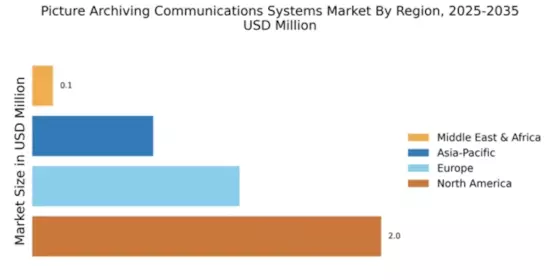
The Global Picture Archiving and Communications Systems Market Industry is poised for substantial growth in the coming years. Projections indicate that the market will expand from 2.01 USD Billion in 2024 to 6.06 USD Billion by 2035. This growth trajectory suggests a compound annual growth rate of 10.56% from 2025 to 2035. Such figures underscore the increasing reliance on digital imaging solutions in healthcare settings. The expansion of the market is likely to be driven by various factors, including technological advancements, rising healthcare expenditure, and the growing need for remote access to imaging data. These trends collectively indicate a robust future for the PACS market.

Increasing Healthcare Expenditure

The Global Picture Archiving and Communications Systems Market Industry benefits from rising healthcare expenditure across various regions. Governments and private sectors are investing heavily in healthcare infrastructure, which includes the implementation of advanced imaging technologies. This trend is particularly evident in developing countries, where improving healthcare access and quality is a priority. Increased funding allows healthcare facilities to upgrade their imaging systems, thereby enhancing diagnostic capabilities. As healthcare expenditure continues to rise, the demand for PACS solutions is expected to grow, contributing to a compound annual growth rate of 10.56% from 2025 to 2035.

Rising Demand for Digital Imaging

The Global Picture Archiving and Communications Systems Market Industry experiences a notable increase in demand for digital imaging solutions. As healthcare facilities transition from traditional film-based systems to digital platforms, the need for efficient storage, retrieval, and sharing of medical images becomes paramount. This shift is driven by the growing emphasis on improving patient care and operational efficiency. In 2024, the market is projected to reach 2.01 USD Billion, reflecting the increasing adoption of digital technologies in healthcare. Furthermore, the anticipated growth in the market highlights the importance of integrating advanced imaging technologies to enhance diagnostic accuracy and streamline workflows.

Technological Advancements in Imaging Systems

Technological advancements play a crucial role in shaping the Global Picture Archiving and Communications Systems Market Industry. Innovations such as artificial intelligence, machine learning, and cloud computing are transforming how medical images are processed and analyzed. These technologies enable faster diagnosis and improved patient outcomes, which are increasingly valued in modern healthcare settings. The integration of AI algorithms into PACS systems allows for enhanced image analysis, potentially reducing the time required for radiologists to interpret results. As these technologies continue to evolve, they are likely to drive market growth, with projections indicating a market size of 6.06 USD Billion by 2035.

Growing Need for Remote Access to Imaging Data

The Global Picture Archiving and Communications Systems Market Industry is significantly influenced by the growing need for remote access to imaging data. As telemedicine gains traction, healthcare providers require efficient systems that allow for the secure sharing of medical images across different locations. This demand is particularly relevant in rural and underserved areas, where access to specialized care may be limited. PACS systems that facilitate remote access enable healthcare professionals to collaborate effectively, improving patient outcomes. The increasing reliance on telehealth services is likely to propel the growth of the PACS market, as organizations seek to enhance their imaging capabilities.

Regulatory Support for Digital Health Initiatives

Regulatory support for digital health initiatives is a driving force in the Global Picture Archiving and Communications Systems Market Industry. Governments worldwide are implementing policies that promote the adoption of digital health technologies, including PACS. These initiatives aim to enhance healthcare delivery, improve patient safety, and streamline operations within healthcare facilities. By providing funding and incentives for the implementation of digital imaging solutions, regulatory bodies are fostering an environment conducive to market growth. As these policies continue to evolve, they are expected to further stimulate the demand for PACS systems, aligning with the broader goals of improving healthcare efficiency and accessibility.

Market Segment Insights

By Application: Radiology (Largest) vs. Cardiology (Fastest-Growing)

In the Picture Archiving Communications Systems (PACS) market, Radiology remains the largest application segment, capturing a significant portion of the market share. The increasing demand for efficient imaging solutions in hospitals and clinics drives the adoption of PACS technologies in radiological departments, enhancing workflow and patient care. Additionally, advancements in imaging technologies and the integration of artificial intelligence are bolstering the effectiveness of radiological practices. On the other hand, Cardiology is emerging as the fastest-growing application segment within the PACS market. The rising prevalence of cardiovascular diseases and the growing focus on early detection and management are propelling the demand for advanced imaging systems in cardiology. Furthermore, the integration of cloud-based PACS solutions is facilitating remote access to cardiac images, thus enhancing diagnostic capabilities and patient outcomes.

Radiology (Dominant) vs. Oncology (Emerging)

Radiology is positioned as the dominant application segment in the PACS market, underpinned by its extensive utilization in diagnostics and patient management. The segment benefits from continuous Investment in technology upgrades, improving image quality, and expediting the diagnostic process. This dominance is complemented by the rise in regulatory standards demanding higher efficiency in radiological practices. Conversely, Oncology represents an emerging segment, propelled by the increasing necessity for precise imaging solutions in cancer detection and treatment planning. The demand for personalized medicine is driving innovations in oncology PACS, allowing for better tracking of treatment efficacy and faster adjustments. Both segments are essential, with Radiology leading in applications while Oncology showcases significant potential for future growth.

By End Use: Hospitals (Largest) vs. Diagnostic Imaging Centers (Fastest-Growing)

The Picture Archiving Communications Systems Market showcases a diverse distribution of end-use segments. Hospitals currently hold the largest market share, capitalizing on the increasing demand for efficient imaging solutions and the necessity for archiving vast amounts of patient data. Diagnostic Imaging Centers, while smaller in market share compared to hospitals, are rapidly gaining traction, driven by a growing emphasis on outpatient services and the need for quick imaging solutions. In terms of growth trends, both segments are experiencing notable advancements. Hospitals are investing significantly in upgrading their PACS infrastructure to improve workflow efficiency and enhance patient outcomes. Meanwhile, Diagnostic Imaging Centers are expanding due to the rising demand for non-invasive diagnostic procedures, making them the fastest-growing segment. Emerging technologies and the integration of AI further propel this growth, fostering increased adoption of PACS among these centers.

Hospitals (Dominant) vs. Research Institutions (Emerging)

In the Picture Archiving Communications Systems Market, Hospitals are recognized as the dominant segment, due to their comprehensive imaging needs and substantial patient volumes. Their advanced PACS implementation allows for streamlined processes, efficient data management, and improved patient care. Conversely, Research Institutions, categorized as an emerging segment, are increasingly adopting PACS to facilitate advanced studies and medical research. The need for high-quality imaging data collection and analysis is becoming paramount in research settings. These institutions focus on innovative applications, such as clinical trials and biomedical imaging research, thereby driving demand for tailored PACS solutions. The continued evolution of technologies in both segments highlights their crucial role in enhancing the overall healthcare landscape.

By Deployment Mode: Cloud-Based (Largest) vs. Hybrid (Fastest-Growing)

In the Picture Archiving Communications Systems Market, the deployment mode is broken down into three primary categories: On-Premises, Cloud-Based, and Hybrid. Currently, Cloud-Based systems hold the largest market share due to their accessibility, scalability, and cost-efficiency, making them an attractive option for healthcare facilities seeking modernization. Meanwhile, Hybrid systems are gaining traction, appealing to organizations that prefer a blend of on-premises security with the flexibility of cloud storage solutions, hence illustrating a competitive distribution among these segments.

Cloud-Based (Dominant) vs. Hybrid (Emerging)

Cloud-Based Picture Archiving Communications Systems are at the forefront of the market thanks to their ability to provide secure, scalable storage and rapid access to images over the internet. This deployment method allows for seamless collaboration among healthcare professionals across different locations. In comparison, Hybrid systems are emerging as a viable option for institutions that require both traditional on-premises infrastructure and cloud features. They combine the benefits of secure, localized storage with the advantages of cloud computing, making them appealing for organizations prioritizing data security while still wanting some cloud flexibility.

By Technology: Digital Imaging (Largest) vs. Network Infrastructure (Fastest-Growing)

Within the Picture Archiving Communications Systems (PACS) market, Digital Imaging holds the largest share among the technology segment values, attributed to its crucial role in diagnostics. As healthcare facilities increasingly adopt advanced imaging modalities, the demand for reliable digital imaging technology continues to rise. Meanwhile, Network Infrastructure is rapidly gaining traction as it enhances the connectivity and efficiency of imaging systems, responding to the growing need for seamless data exchange in healthcare settings.

Technology: Digital Imaging (Dominant) vs. Network Infrastructure (Emerging)

Digital Imaging represents the cornerstone of PACS solutions, providing critical capabilities for capturing, storing, and managing images from various modalities. Its dominant position stems from continuous innovations that improve image quality and accessibility, ensuring that healthcare providers can offer precise diagnostics. In contrast, Network Infrastructure is emerging as a vital component that supports the increasing data load from digital imaging technologies. Enhanced security protocols and faster network speeds position it as an essential asset for healthcare organizations aiming to streamline workflows and improve patient care. This growth is driven by the demand for integrated solutions that facilitate efficient communication and data management.

By Component: Software (Largest) vs. Services (Fastest-Growing)

In the Picture Archiving Communications Systems (PACS) market, the component segment is primarily dominated by software, which is considered the largest part of the market due to its critical role in image management and analysis. Software solutions enable healthcare facilities to efficiently store, retrieve, and manipulate medical images, ensuring accurate diagnostics and patient care. Following software, hardware components such as servers and storage devices contribute significantly to the market, while services, including installation and maintenance, also play a vital supporting role.

Software: Dominant vs. Services: Emerging

Software stands as the dominant force in the PACS market due to its essential functions in image storage and manipulation, which are crucial for modern healthcare provisions. The extensive capabilities of software tailored for data security, interoperability, and user-friendly interfaces contribute to its leading position. Meanwhile, services are emerging as a fast-growing segment, driven by the increasing demand for comprehensive support and maintenance as healthcare organizations transition to more sophisticated PACS. The demand for technical support, training, and integration services highlights the shift towards service-oriented models in this sector.

Get more detailed insights about Picture Archiving Communications Systems Market

Regional Insights

North America : Market Leader in Innovation

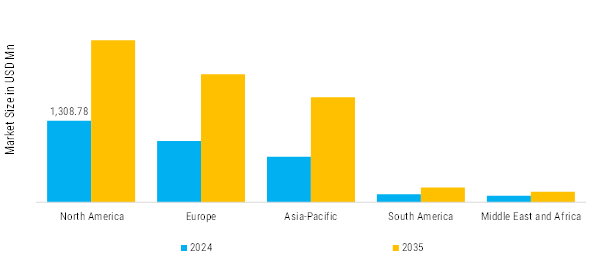
North America continues to lead the Picture Archiving Communications Systems (PACS) market, holding a significant share of 2020.51 USD Million. in 2024. The growth is driven by advancements in healthcare technology, increasing demand for efficient imaging solutions, and supportive regulatory frameworks. The region's focus on digital transformation in healthcare is further catalyzing market expansion, with hospitals and clinics investing heavily in PACS to enhance patient care and operational efficiency. The competitive landscape in North America is robust, featuring key players such as GE Healthcare and Siemens Healthineers. The U.S. remains the largest market, supported by a high adoption rate of advanced imaging technologies. The presence of major healthcare institutions and a strong emphasis on research and development are pivotal in maintaining the region's leadership in the PACS market. As healthcare providers seek to improve diagnostic accuracy and streamline workflows, the demand for PACS solutions is expected to grow significantly.

Europe : Emerging Market with Growth Potential

Europe's Picture Archiving Communications Systems (PACS) market is valued at 1200.0M, reflecting a growing demand for advanced imaging solutions. Factors such as an aging population, increasing prevalence of chronic diseases, and the need for efficient healthcare delivery systems are driving market growth. Regulatory support for digital health initiatives and interoperability standards is also enhancing the adoption of PACS across the region, making it a key player in the global market. Leading countries in Europe include Germany, France, and the UK, where healthcare systems are increasingly investing in digital imaging technologies. The competitive landscape features major players like Philips Healthcare and Agfa HealthCare, which are innovating to meet the evolving needs of healthcare providers. As hospitals and clinics prioritize patient-centered care, the demand for integrated PACS solutions is expected to rise, positioning Europe as a significant market in the coming years.

Asia-Pacific : Rapidly Growing Healthcare Sector

The Asia-Pacific region is witnessing rapid growth in the Picture Archiving Communications Systems (PACS) market, valued at 700.0M. This growth is fueled by increasing healthcare expenditures, rising awareness of advanced imaging technologies, and government initiatives aimed at enhancing healthcare infrastructure. The region's diverse population and the rising burden of chronic diseases are also contributing to the demand for efficient imaging solutions, making PACS a critical component of modern healthcare delivery. Countries like Japan, China, and India are leading the charge in adopting PACS technologies. The competitive landscape is characterized by the presence of key players such as Fujifilm Medical Systems and Canon Medical Systems, which are focusing on innovation and strategic partnerships to expand their market reach. As healthcare providers in the region strive for improved diagnostic capabilities and operational efficiency, the PACS market is poised for significant growth in the coming years.

Middle East and Africa : Emerging Market with Challenges

The Middle East and Africa (MEA) region's Picture Archiving Communications Systems (PACS) market is valued at 120.51M, reflecting a nascent but growing interest in advanced imaging solutions. Factors such as increasing healthcare investments, a rising prevalence of diseases, and a focus on improving healthcare infrastructure are driving market growth. However, challenges such as limited budgets and varying levels of technological adoption across countries may hinder rapid expansion in the region. Leading countries in the MEA region include South Africa and the UAE, where healthcare systems are beginning to embrace digital transformation. The competitive landscape features both local and international players, with companies like Carestream Health making strides in the market. As healthcare providers seek to enhance diagnostic accuracy and patient care, the demand for PACS solutions is expected to grow, albeit at a slower pace compared to other regions.

Key Players and Competitive Insights

The Picture Archiving Communications Systems Market is currently characterized by a dynamic competitive landscape, driven by technological advancements and increasing demand for efficient healthcare solutions. Major players such as Siemens Healthineers (Germany), GE Healthcare (US), and Philips Healthcare (Netherlands) are at the forefront, each adopting distinct strategies to enhance their market positioning. Siemens Healthineers (Germany) emphasizes innovation through the integration of artificial intelligence (AI) in imaging solutions, aiming to improve diagnostic accuracy and workflow efficiency. Meanwhile, GE Healthcare (US) focuses on strategic partnerships and collaborations to expand its product offerings and enhance customer engagement, thereby solidifying its market presence. Philips Healthcare (Netherlands) is actively pursuing digital transformation initiatives, leveraging cloud-based solutions to facilitate remote access to imaging data, which is increasingly vital in modern healthcare settings.

In terms of business tactics, companies are localizing manufacturing and optimizing supply chains to enhance operational efficiency and reduce costs. The market structure appears moderately fragmented, with a mix of established players and emerging companies vying for market share. This fragmentation allows for diverse offerings and competitive pricing, although the influence of key players remains substantial, shaping overall market dynamics.

In November 2025, Siemens Healthineers (Germany) announced the launch of its latest AI-driven imaging platform, which is designed to streamline workflows and enhance diagnostic capabilities. This strategic move is likely to reinforce Siemens' position as a leader in innovation within the market, catering to the growing demand for advanced imaging solutions that improve patient outcomes. The introduction of this platform may also set a new benchmark for competitors, compelling them to accelerate their own innovation efforts.

In October 2025, GE Healthcare (US) entered into a partnership with a leading telehealth provider to integrate imaging services into remote patient care solutions. This collaboration is significant as it reflects GE's commitment to expanding its service offerings and adapting to the evolving healthcare landscape, where remote diagnostics are becoming increasingly prevalent. By enhancing accessibility to imaging services, GE Healthcare is likely to capture a larger share of the market, particularly among healthcare providers seeking comprehensive telehealth solutions.

In September 2025, Philips Healthcare (Netherlands) unveiled a new cloud-based imaging solution aimed at improving data interoperability across healthcare systems. This initiative is crucial as it addresses the growing need for seamless data exchange in healthcare, facilitating better collaboration among providers. By prioritizing interoperability, Philips is positioning itself as a forward-thinking player in the market, likely attracting healthcare organizations that prioritize integrated solutions.

As of December 2025, current competitive trends indicate a strong focus on digitalization, sustainability, and AI integration within the Picture Archiving Communications Systems Market. Strategic alliances are increasingly shaping the landscape, enabling companies to pool resources and expertise to drive innovation. The competitive differentiation is expected to evolve, shifting from price-based competition to a focus on technological advancements and supply chain reliability. This transition underscores the importance of innovation as a key driver of success in the market, as companies strive to meet the demands of a rapidly changing healthcare environment.

Key Companies in the Picture Archiving Communications Systems Market market include

Industry Developments

In 2017, over 92.1 million persons had at least one type of cardiovascular disease, according to the Centers for Disease Control and Prevention (CDC). According to a study published in the BMC Public Health journal in 2017, the prevalence of type 2 diabetes, obesity, and cardiovascular diseases has climbed quickly in recent years.

Singular Medical Technologies (SMT), a technology business based in the United States, announced two new additions to its PACStation suite of devices on March 26, 2018. The PACStation-GO is a portable reading workstation with two full-size diagnostic displays. Radiology imaging solutions have paid off handsomely for the company's healthcare IT investment.Intended Audience

  • Pharmaceutical Companies
  • Software Companies
  • Research and Development (R&D) Companies
  • Diagnostic Laboratories
  • Government Research Institutes
  • Academic Institutes and Universities

Research Methodology Picture Archiving and Communications Systems (PACS) marketSources: Annual reports, Press release, White paper, and Company presentations

Future Outlook

Picture Archiving Communications Systems Market Future Outlook

The Picture Archiving Communications Systems Market is projected to grow at a 7.59% CAGR from 2024 to 2035, driven by technological advancements, increasing healthcare digitization, and rising demand for efficient imaging solutions.

New opportunities lie in:

  • Integration of AI-driven analytics for enhanced diagnostic capabilities.
  • Development of cloud-based PACS solutions for remote access and scalability.
  • Expansion into emerging markets with tailored, cost-effective PACS offerings.

By 2035, the market is expected to achieve substantial growth, reflecting evolving healthcare needs and technological innovations.

Market Segmentation

Picture Archiving Communications Systems Market End Use Outlook

  • Hospitals
  • Diagnostic Imaging Centers
  • Research Institutions
  • Ambulatory Surgical Centers

Picture Archiving Communications Systems Market Component Outlook

  • Software
  • Hardware
  • Services

Picture Archiving Communications Systems Market Technology Outlook

  • Digital Imaging
  • Data Storage
  • Image Retrieval
  • Network Infrastructure

Picture Archiving Communications Systems Market Application Outlook

  • Radiology
  • Cardiology
  • Oncology
  • Orthopedics
  • Neurology

Picture Archiving Communications Systems Market Deployment Mode Outlook

  • On-Premises
  • Cloud-Based
  • Hybrid

Report Scope

MARKET SIZE 20244041.02(USD Million)
MARKET SIZE 20254394.04(USD Million)
MARKET SIZE 20359074.9(USD Million)
COMPOUND ANNUAL GROWTH RATE (CAGR)7.59% (2024 - 2035)
REPORT COVERAGERevenue Forecast, Competitive Landscape, Growth Factors, and Trends
BASE YEAR2024
Market Forecast Period2025 - 2035
Historical Data2019 - 2024
Market Forecast UnitsUSD Million
Key Companies ProfiledSiemens Healthineers (DE), GE Healthcare (US), Philips Healthcare (NL), Agfa HealthCare (BE), Fujifilm Medical Systems (JP), Canon Medical Systems (JP), Carestream Health (US), Merge Healthcare (US), Infinitt Healthcare (KR)
Segments CoveredApplication, End Use, Deployment Mode, Technology, Component
Key Market OpportunitiesIntegration of artificial intelligence enhances diagnostic accuracy in the Picture Archiving Communications Systems Market.
Key Market DynamicsTechnological advancements and regulatory changes drive the evolution of Picture Archiving Communications Systems in healthcare.
Countries CoveredNorth America, Europe, APAC, South America, MEA

Market Highlights

Author
Kinjoll Dey
Research Analyst Level I

He is an extremely curious individual currently working in Healthcare and Medical Devices Domain. Kinjoll is comfortably versed in data centric research backed by healthcare educational background. He leverages extensive data mining and analytics tools such as Primary and Secondary Research, Statistical Analysis, Machine Learning, Data Modelling. His key role also involves Technical Sales Support, Client Interaction and Project management within the Healthcare team. Lastly, he showcases extensive affinity towards learning new skills and remain fascinated in implementing them.

Leave a Comment

FAQs

what is the uses of picture archiving and communication system in healthcare industry?

Picture Archiving and Communication System (PACS) technology is used specifically for image transmission from the site of image acquisition to other locations. The technology is convenient to access multiple modalities such as radiographs, CT scan, MRI, ultrasound, and others.

Which region is expected to lead the Picture Archiving and Communication System Market?

The Americas is expected to lead the Picture Archiving and Communication System Market.

What are the key factors driving the Picture Archiving and Communication System Market?

Increasing incidence of cancer and unmet medical needs are adding to the market growth.

Which factors may limit the Picture Archiving and Communication System Market growth?

High cost and poor healthcare system may limit market growth.

What are the different strategies used by market players to create a dominance in the Picture Archiving and Communication System Market?

Different strategies used by market players to create a dominance in the Picture Archiving and Communication System Market include collaborations, mergers, partnerships, and product development.

At what CAGR is the Picture Archiving and Communication System Market projected to grow during the forecast period?

Picture Archiving and Communication System Market is projected to grow at a 5.9% CAGR between 2022-2035.

Download Free Sample

Kindly complete the form below to receive a free sample of this Report

Compare Licence

×
Features License Type
Single User Multiuser License Enterprise User
Price $4,950 $5,950 $7,250
Maximum User Access Limit 1 User Upto 10 Users Unrestricted Access Throughout the Organization
Free Customization
Direct Access to Analyst
Deliverable Format
Platform Access
Discount on Next Purchase 10% 15% 15%
Printable Versions