×
Request Free Sample ×

Kindly complete the form below to receive a free sample of this Report

* Please use a valid business email

Leading companies partner with us for data-driven Insights

clients tt-cursor
Hero Background

Plastic Recycling Market

ID: MRFR/PCM/2113-CR
169 Pages
Sejal Akre
June 2025

Plastic Recycling Market Research Report Information by Source (Residential, Commercial, Industrial), by Material (Polyethylene Terephthalate (PET), High-Density Polyethylene (HDPE), Low-Density Polyethylene (LDPE), Polypropylene (PP), Polyvinyl chloride (PVC), Polystyrene (PS), BOPE, BOPP), by Recycling Process (Mechanical and Chemical), by Application (Packaging, Construction, Textile, Automotive, Electronics, Others) and Region (North America, Europe, Asia-Pacific, South America, Middle East & Africa) - Forecast till 2035

Share:
Download PDF ×

We do not share your information with anyone. However, we may send you emails based on your report interest from time to time. You may contact us at any time to opt-out.

Plastic Recycling Market Infographic
Purchase Options

Plastic Recycling Market Summary

As per MRFR analysis, the Plastic Recycling Market Size was estimated at 46696.7 USD Billion in 2024. The Plastic Recycling industry is projected to grow from 50348.49 in 2025 to 106902.91 by 2035, exhibiting a compound annual growth rate (CAGR) of 7.82 during the forecast period 2025 - 2035.

Key Market Trends & Highlights

The Plastic Recycling Market is experiencing robust growth driven by technological advancements and increasing consumer demand for sustainability.

  • Technological advancements in recycling processes are enhancing efficiency and output quality.
  • North America remains the largest market, while Asia-Pacific is recognized as the fastest-growing region in plastic recycling.
  • The packaging segment dominates the market, whereas the automotive segment is witnessing the fastest growth in recycling applications.
  • Key market drivers include technological innovations in recycling and heightened consumer awareness regarding sustainability.

Market Size & Forecast

2024 Market Size 46696.7 (USD Billion)
2035 Market Size 106902.91 (USD Billion)
CAGR (2025 - 2035) 7.82%

Major Players

Veolia (FR), Suez (FR), Biffa (GB), Waste Management (US), Republic Services (US), Coca-Cola (US), Unilever (GB), PepsiCo (US), Dow (US), LyondellBasell (US)

Plastic Recycling Market Trends

The Plastic Recycling Market is currently experiencing a transformative phase, driven by increasing environmental awareness and regulatory pressures. Stakeholders across various sectors are recognizing the necessity of sustainable practices, which has led to a surge in investments aimed at enhancing recycling technologies and infrastructure. This shift is not merely a response to consumer demand but also reflects a broader commitment to reducing plastic waste and promoting circular economy principles. As a result, companies are exploring innovative methods to recycle plastics more efficiently, thereby minimizing the environmental footprint associated with plastic production and disposal. Moreover, the market is witnessing a growing collaboration between public and private entities to establish comprehensive recycling systems. These partnerships are crucial in addressing the challenges of plastic waste management, as they facilitate knowledge sharing and resource allocation. The emphasis on developing advanced recycling techniques, such as chemical recycling, is indicative of the industry's potential to evolve and adapt to changing market dynamics. In this context, the Plastic Recycling Market appears poised for substantial growth, as it aligns with global sustainability goals and the increasing demand for recycled materials across various industries.

Technological Advancements in Recycling Processes

The Plastic Recycling Market is seeing a notable trend towards the adoption of advanced technologies that enhance recycling efficiency. Innovations such as automated sorting systems and chemical recycling methods are gaining traction, enabling the processing of a wider range of plastic types. These advancements not only improve the quality of recycled materials but also reduce operational costs, making recycling more economically viable.

Increased Regulatory Support and Policies

Governments worldwide are implementing stricter regulations aimed at reducing plastic waste and promoting recycling initiatives. This trend is fostering a more favorable environment for the Plastic Recycling Market, as policies encourage businesses to adopt sustainable practices. Enhanced regulatory frameworks are likely to drive investments in recycling infrastructure and technology, further supporting market growth.

Growing Consumer Demand for Sustainable Products

There is a rising consumer preference for products made from recycled materials, which is influencing the Plastic Recycling Market. As awareness of environmental issues increases, consumers are actively seeking brands that prioritize sustainability. This shift in consumer behavior is prompting manufacturers to incorporate recycled plastics into their products, thereby creating a more circular economy.

Plastic Recycling Market Drivers

Increasing Environmental Regulations

The Global Plastic Recycling Market Industry is experiencing a surge in demand due to stringent environmental regulations imposed by governments worldwide. These regulations aim to mitigate plastic pollution and promote sustainable practices. For instance, the European Union has set ambitious targets for recycling, with a goal of recycling 50% of plastic waste by 2025. This regulatory landscape encourages businesses to adopt recycling technologies and processes, thereby driving market growth. As a result, the market is projected to reach 19.1 USD Billion in 2024, reflecting the increasing emphasis on compliance and sustainability in the plastic sector.

Market Segment Insights

By Application: Packaging (Largest) vs. Automotive (Fastest-Growing)

In the Plastic Recycling Market, packaging is the largest segment, holding a significant portion of the overall market share. It is primarily driven by the increasing demand for sustainable packaging solutions among consumers and businesses. The push for eco-friendly materials has led to a surge in the recycling of packaging plastics, which contributes to a circular economy and reduces environmental impact. Other segments, such as automotive, have also seen significant interest but do not match the dominance of packaging as of now. The growth trends indicate a noticeable shift towards innovative recycling technologies and methods to enhance the efficiency of plastic waste management. The automotive sector is emerging as the fastest-growing segment due to rising awareness about sustainability, stringent regulations on waste disposal, and manufacturers' commitments to using recycled plastics. This growth is supported by advancements in recycling processes, making it feasible for automotive companies to incorporate recycled materials into their production lines.

Packaging (Dominant) vs. Automotive (Emerging)

The packaging segment acts as the dominant force within the Plastic Recycling Market, primarily focusing on the development of reusable and recyclable packaging solutions to meet consumer demands for sustainability. This sector is characterized by innovative designs and materials that facilitate the recycling process and reduce plastic waste. Conversely, the automotive sector is emerging, with many manufacturers exploring the integration of recycled plastics into vehicle production. This shift is driven by regulatory pressures and a growing consumer base that values environmentally friendly practices. Both segments leverage technology to improve recycling rates, although packaging leads in maturity and volume, while automotive is catching up by investing in sustainable practices and partnerships with recycling facilities.

By End Use: Recycled Plastic Products (Largest) vs. Raw Material for Manufacturing (Fastest-Growing)

In the Plastic Recycling Market, the distribution of market share among the end use segments reveals that Recycled Plastic Products occupies the largest share, driven by increasing consumer preference for sustainable materials across various industries. This dominant position is attributed to high demand from the packaging, automotive, and construction sectors, where recycled plastics are increasingly used as alternatives to virgin materials. Conversely, Raw Material for Manufacturing is emerging as the fastest-growing segment, fueled by the expanding focus on circular economy practices and regulations favoring recycled content in manufacturing processes.

Recycled Plastic Products (Dominant) vs. Waste Management (Emerging)

Recycled Plastic Products are becoming a dominant force in the Plastic Recycling Market due to their versatility and wide application across various sectors. These products not only meet sustainability goals but also appeal to eco-conscious consumers. This segment benefits from advanced recycling technologies that enhance the quality and aesthetic of recycled plastics, making them suitable for high-end applications. In contrast, Waste Management is gaining traction as an emerging segment, primarily driven by the growing need for effective waste diversion strategies and innovations in recycling processes. This shift encompasses enhanced collection systems, processing technologies, and increased awareness of the environmental impact of plastic waste, positioning Waste Management as a crucial part of the overall recycling ecosystem.

By Technology: Mechanical Recycling (Largest) vs. Chemical Recycling (Fastest-Growing)

The Plastic Recycling Market exhibits a variety of technologies, with Mechanical Recycling leading the segment due to its established processes and widespread adoption. This method retains the original properties of plastics and is heavily utilized by processors due to its cost-effectiveness and relatively straightforward methodology. In contrast, Chemical Recycling is gaining traction as industries seek more sophisticated solutions for non-recyclable plastics, thus preparing the way for new innovations in the market.

Technology: Mechanical Recycling (Dominant) vs. Chemical Recycling (Emerging)

Mechanical Recycling remains the dominant force in the Plastic Recycling Market, leveraging well-known techniques to convert post-consumer plastics back into usable materials without significant degradation of quality. This segment benefits from extensive infrastructure and established practices that make it the go-to option for many recyclers. On the other hand, Chemical Recycling is an emerging technology that offers the potential to process complex and contaminated plastics, positioning itself as a viable alternative for future growth. Supported by advancements in technology and regulatory incentives, Chemical Recycling is expected to play a crucial role in enhancing overall recycling rates in the coming years.

By Material Type: Polyethylene Terephthalate (Largest) vs. Low-Density Polyethylene (Fastest-Growing)

In the Plastic Recycling Market, the distribution of market share among the material types reveals significant differences in their popularity and application. Polyethylene Terephthalate (PET) stands out as the largest segment due to its extensive use in beverage bottles and food containers, making it a frontrunner in recycling initiatives. Following closely, High-Density Polyethylene (HDPE) enjoys a strong presence as well, often utilized in milk jugs and detergent bottles, while Polyvinyl Chloride (PVC) faces challenges due to its complex recycling process, leading to lower market share.

Polyethylene Terephthalate (Dominant) vs. Low-Density Polyethylene (Emerging)

Polyethylene Terephthalate (PET) is recognized as a dominant material in the recycling landscape, primarily because of its excellent recyclability and widespread consumer acceptance. It holds a significant position in packaging, particularly in drinks and foods, which drives its continual recovery and reuse. On the other hand, Low-Density Polyethylene (LDPE) is emerging as a faster-growing segment, often employed in plastic bags and wraps. While historically viewed as less recyclable, advancements in recycling technologies are enhancing LDPE's viability, attracting interest from both industries and consumers. This shift reflects a broader trend toward sustainability and the increasing emphasis on reducing plastic waste, positioning LDPE for substantial growth in the coming years.

Get more detailed insights about Plastic Recycling Market

Regional Insights

North America : Leading Market Innovators

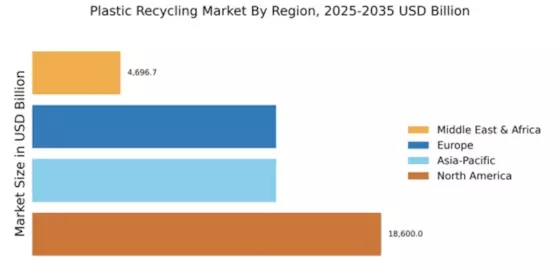
North America is poised to maintain its leadership in the plastic recycling market, holding a significant share of 18600.0. The region's growth is driven by stringent regulations promoting recycling, increasing consumer awareness, and technological advancements in recycling processes. Demand for recycled plastics is surging as companies aim to meet sustainability goals, further supported by government initiatives encouraging circular economy practices. The competitive landscape is robust, with key players like Waste Management, Republic Services, and Coca-Cola leading the charge. The U.S. is the primary market, benefiting from a well-established infrastructure for waste management and recycling. Companies are investing heavily in innovative technologies to enhance recycling efficiency, positioning themselves as leaders in sustainability and environmental responsibility.

Europe : Sustainability Focused Region

Europe's plastic recycling market is projected to reach 13000.0, driven by ambitious EU regulations aimed at reducing plastic waste and promoting recycling. The European Green Deal and Circular Economy Action Plan are pivotal in shaping market dynamics, encouraging member states to adopt stringent recycling targets. This regulatory framework is fostering innovation and investment in recycling technologies, making Europe a leader in sustainable practices. Germany, France, and the UK are at the forefront of this movement, with companies like Veolia and Suez leading the market. The competitive landscape is characterized by a mix of established players and emerging startups focused on innovative recycling solutions. The region's commitment to sustainability is evident in its investments in advanced recycling technologies and public awareness campaigns.

Asia-Pacific : Emerging Market Potential

Asia-Pacific is witnessing rapid growth in the plastic recycling market, with a projected size of 13000.0. The region's expansion is fueled by increasing urbanization, rising plastic consumption, and growing environmental concerns. Governments are implementing policies to enhance recycling rates, supported by public awareness campaigns about plastic waste management. The demand for recycled plastics is expected to rise as industries seek sustainable alternatives to virgin materials. China, Japan, and India are leading the charge in this market, with significant investments in recycling infrastructure and technology. Key players like Dow and LyondellBasell are actively participating in the region, driving innovation and efficiency in recycling processes. The competitive landscape is evolving, with both multinational corporations and local firms striving to capture market share in this burgeoning sector.

Middle East and Africa : Developing Recycling Initiatives

The Middle East and Africa region is gradually developing its plastic recycling market, currently valued at 4696.7. The growth is driven by increasing awareness of environmental issues and the need for sustainable waste management solutions. Governments are beginning to implement regulations aimed at reducing plastic waste, although the market is still in its nascent stages compared to other regions. Initiatives to promote recycling are gaining traction, supported by international partnerships and funding. Countries like South Africa and the UAE are leading efforts to enhance recycling capabilities, with local companies and international players collaborating to improve infrastructure. The competitive landscape is characterized by a mix of established waste management firms and new entrants focused on innovative recycling solutions. As awareness and regulations evolve, the market is expected to grow significantly in the coming years.

Key Players and Competitive Insights

The Plastic Recycling Market is currently characterized by a dynamic competitive landscape, driven by increasing regulatory pressures and a growing consumer demand for sustainable practices. Key players are actively engaging in strategic initiatives to enhance their operational capabilities and market presence. For instance, Veolia (FR) has been focusing on expanding its recycling facilities and investing in advanced technologies to improve the efficiency of plastic waste processing. Similarly, Waste Management (US) has been enhancing its recycling operations through partnerships with technology firms to optimize its supply chain and reduce operational costs. These strategies collectively contribute to a more competitive environment, as companies strive to differentiate themselves through innovation and sustainability.

In terms of business tactics, companies are increasingly localizing their manufacturing processes and optimizing their supply chains to respond to regional demands more effectively. The market appears moderately fragmented, with several key players exerting influence over their respective segments. This fragmentation allows for a variety of approaches to recycling, with companies leveraging their unique strengths to capture market share. The collective influence of these players shapes the market structure, fostering competition that encourages continuous improvement and innovation.

In November 2025, Coca-Cola (US) announced a significant investment in a new recycling facility aimed at increasing its capacity to process PET plastics. This strategic move is expected to enhance the company's sustainability profile and align with its commitment to using 50% recycled content in its packaging by 2030. The establishment of this facility not only underscores Coca-Cola's dedication to circular economy principles but also positions the company as a leader in the sustainable packaging movement.

In October 2025, Unilever (GB) unveiled a partnership with a tech startup to develop AI-driven solutions for optimizing plastic waste collection and sorting. This collaboration is indicative of Unilever's commitment to leveraging technology to enhance its recycling capabilities. By integrating AI into its operations, the company aims to improve the efficiency of its recycling processes, thereby reducing costs and increasing the volume of materials recovered for reuse.

In September 2025, Dow (US) launched a new initiative focused on developing advanced recycling technologies that can convert hard-to-recycle plastics into valuable feedstock. This initiative reflects Dow's strategic emphasis on innovation and its commitment to addressing the challenges associated with plastic waste. By investing in advanced recycling technologies, Dow is positioning itself to play a pivotal role in the transition towards a more sustainable plastic economy.

As of December 2025, current trends in the Plastic Recycling Market indicate a strong emphasis on digitalization, sustainability, and the integration of AI technologies. Strategic alliances are increasingly shaping the competitive landscape, as companies recognize the value of collaboration in achieving their sustainability goals. Looking ahead, it is likely that competitive differentiation will evolve, with a shift from price-based competition to a focus on innovation, technology, and supply chain reliability. This evolution suggests that companies that prioritize sustainable practices and technological advancements will be better positioned to thrive in the future.

Key Companies in the Plastic Recycling Market market include

Industry Developments

Nov 2023: Cross Wrap, a member of the Saalasti Group, has recently expanded its presence in France and Spain. This expansion is facilitated through Saalasti Spain, which now serves as a local sales and service affiliate for Cross Wrap.

Future Outlook

Plastic Recycling Market Future Outlook

The Plastic Recycling Market is projected to grow at a 7.82% CAGR from 2024 to 2035, driven by increasing regulatory pressures, consumer demand for sustainability, and technological advancements in recycling processes.

New opportunities lie in:

  • Investment in advanced sorting technologies to enhance material recovery rates.
  • Development of biodegradable plastic alternatives to expand product offerings.
  • Partnerships with municipalities for integrated waste management solutions.

By 2035, the Plastic Recycling Market is expected to be robust, driven by innovation and strategic collaborations.

Market Segmentation

Plastic Recycling Market End Use Outlook

  • Recycled Plastic Products
  • Raw Material for Manufacturing
  • Waste Management
  • Energy Recovery

Plastic Recycling Market Technology Outlook

  • Mechanical Recycling
  • Chemical Recycling
  • Thermal Recycling
  • Biological Recycling

Plastic Recycling Market Application Outlook

  • Packaging
  • Construction
  • Automotive
  • Textiles
  • Consumer Goods

Plastic Recycling Market Material Type Outlook

  • Polyethylene Terephthalate
  • High-Density Polyethylene
  • Polyvinyl Chloride
  • Low-Density Polyethylene

Report Scope

MARKET SIZE 202446696.7(USD Billion)
MARKET SIZE 202550348.49(USD Billion)
MARKET SIZE 2035106902.91(USD Billion)
COMPOUND ANNUAL GROWTH RATE (CAGR)7.82% (2024 - 2035)
REPORT COVERAGERevenue Forecast, Competitive Landscape, Growth Factors, and Trends
BASE YEAR2024
Market Forecast Period2025 - 2035
Historical Data2019 - 2024
Market Forecast UnitsUSD Billion
Key Companies ProfiledVeolia (FR), Suez (FR), Biffa (GB), Waste Management (US), Republic Services (US), Coca-Cola (US), Unilever (GB), PepsiCo (US), Dow (US), LyondellBasell (US)
Segments CoveredApplication, End Use, Technology, Material Type
Key Market OpportunitiesAdoption of advanced sorting technologies enhances efficiency in the Plastic Recycling Market.
Key Market DynamicsRising regulatory pressures and technological advancements drive innovation and competition in the plastic recycling market.
Countries CoveredNorth America, Europe, APAC, South America, MEA

Market Highlights

Author
Sejal Akre
Senior Research Analyst

She has over 5 years of rich experience, in market research and consulting providing valuable market insights to client. Hands on expertise in management consulting, and extensive knowledge in domain including ICT, Automotive & Transportation and Aerospace & Defense. She is skilled in Go-to market strategy, industry analysis, market sizing, in depth company profiling, competitive intelligence & benchmarking and value chain amongst others.

Leave a Comment

FAQs

How much is the Plastic Recycling Market?

USD 19.10 Billion is the Plastic Recycling Market in 2024

Which Material holds the largest market share?

The Polyethylene Terephthalate (PET) segment by Material holds the largest market share and grows at a CAGR of 9.37 % during the forecast period.

Which region holds the largest market share in the Plastic Recycling Market?

Asia-Pacific holds the largest market share in the Plastic Recycling Market.

Who are the prominent players in the Plastic Recycling Market?

CarbonLite Industries LLC, Seraphim Plastics LLC, MBA Polymers Inc., Kuusakoski Group Oy, Envision Plastics, Custom Polymers, Plastic Recycling, Inc., UltrePET LLC, KW Plastics, Inc., Green-O-Tech India are prominent players in the Plastic Recycling Market.

Which Application segment led the Plastic Recycling Market?

The Packaging segment dominated the market in 2024.

Download Free Sample

Kindly complete the form below to receive a free sample of this Report

Compare Licence

×
Features License Type
Single User Multiuser License Enterprise User
Price $4,950 $5,950 $7,250
Maximum User Access Limit 1 User Upto 10 Users Unrestricted Access Throughout the Organization
Free Customization
Direct Access to Analyst
Deliverable Format
Platform Access
Discount on Next Purchase 10% 15% 15%
Printable Versions