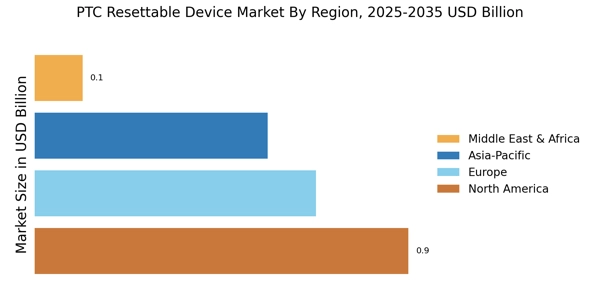
Increased Regulatory Standards
The PTC Resettable Device Market is significantly influenced by the tightening of regulatory standards aimed at enhancing safety and reliability in electrical systems. Governments and regulatory bodies are implementing stringent guidelines that necessitate the use of protective devices in various applications, including automotive, industrial, and consumer electronics. For instance, the International Electrotechnical Commission (IEC) has established standards that mandate the inclusion of resettable fuses in specific electrical equipment. This regulatory push is expected to drive the adoption of PTC resettable devices, as manufacturers seek compliance with safety standards. As a result, the market is likely to witness an uptick in demand, with projections indicating a compound annual growth rate (CAGR) of around 6% over the next five years, reflecting the growing emphasis on safety in electrical applications.
Growth in Electric Vehicle Adoption
The PTC Resettable Device Market is poised for growth, largely due to the accelerating adoption of electric vehicles (EVs). As the automotive sector transitions towards electrification, the demand for advanced protective devices becomes paramount. PTC resettable devices play a crucial role in safeguarding battery management systems and electric drivetrains from overcurrent conditions. In 2025, the electric vehicle market is anticipated to surpass 10 million units sold, creating a substantial opportunity for PTC resettable devices. This trend is further supported by government incentives and consumer preferences shifting towards sustainable transportation solutions. Consequently, manufacturers are increasingly integrating PTC resettable devices into EV designs, thereby enhancing safety and reliability while contributing to the overall growth of the market.
Expansion of Renewable Energy Sector
The PTC Resettable Device Market is being positively impacted by the expansion of the renewable energy sector. As the world shifts towards sustainable energy sources, the demand for efficient power management solutions is increasing. PTC resettable devices are essential in protecting solar inverters, wind turbines, and energy storage systems from overcurrent conditions. The renewable energy market is expected to grow significantly, with investments projected to reach over 2 trillion USD by 2025. This growth is likely to drive the adoption of PTC resettable devices, as manufacturers seek to enhance the reliability and safety of renewable energy systems. Furthermore, the integration of these devices into renewable energy applications underscores their critical role in supporting the transition to a more sustainable energy landscape.
Rising Demand for Consumer Electronics
The PTC Resettable Device Market is experiencing a notable surge in demand driven by the increasing proliferation of consumer electronics. As devices such as smartphones, tablets, and wearables become ubiquitous, the need for reliable protection against overcurrent conditions intensifies. In 2025, the consumer electronics sector is projected to reach a valuation of approximately 1 trillion USD, indicating a robust growth trajectory. This growth is likely to propel the PTC resettable devices, which are essential for safeguarding sensitive electronic components. The integration of these devices in various applications, including chargers and power supplies, underscores their critical role in enhancing device longevity and performance. Consequently, manufacturers are increasingly incorporating PTC resettable devices into their designs, thereby fostering innovation and expanding the market landscape.
Technological Innovations in PTC Devices
The PTC Resettable Device Market is witnessing a wave of technological innovations that are enhancing the performance and applicability of resettable devices. Advances in materials science and engineering are leading to the development of PTC devices with improved thermal stability and response times. These innovations are enabling manufacturers to create devices that can operate effectively in a wider range of temperatures and conditions, thereby expanding their applicability across various sectors. For instance, the introduction of new polymer materials is enhancing the durability and efficiency of PTC resettable devices. As industries increasingly seek reliable and efficient solutions for overcurrent protection, the market is likely to benefit from these advancements, with a projected growth rate of approximately 5% annually over the next few years.