Download Free Sample
Kindly complete the form below to receive a free sample of this Report
Public-relations-and-media-relations-services-market Size, Share and Trends Analysis Research Report Information By End Use (Government, Healthcare, Education, Non-Profit Organizations, Corporate Sector), By Application (Corporate Communication, Crisis Management, Media Relations, Public Affairs, Social Media Management), And By Region (North America, Europe, Asia-Pacific, And Rest Of The World) – Market Forecast Till 2035.
As per MRFR analysis, the Public Relations and Media Relations Services Market was estimated at 19.5 USD Billion in 2024. The Public Relations and Media Relations Services industry is projected to grow from 20.07 USD Billion in 2025 to 26.7 USD Billion by 2035, exhibiting a compound annual growth rate (CAGR) of 2.9% during the forecast period 2025 - 2035.
The Public Relations and Media Relations Services Market is experiencing a dynamic shift towards digital integration and authenticity.
| 2024 Market Size | 19.5 (USD Billion) |
| 2035 Market Size | 26.7 (USD Billion) |
| CAGR (2025 - 2035) | 2.9% |
Edelman (US), Weber Shandwick (US), FleishmanHillard (US), Burson Cohn & Wolfe (US), Ketchum (US), Hill+Knowlton Strategies (US), Golin (US), Porter Novelli (US), MSL (FR), Ogilvy (US)
Our Impact
Enabled $4.3B Revenue Impact for Fortune 500 and Leading Multinationals
Partnering with 2000+ Global Organizations Each Year
30K+ Citations by Top-Tier Firms in the Industry
The Public Relations and Media Relations Services Market is currently experiencing a dynamic evolution, driven by the increasing importance of digital communication and the need for organizations to maintain a positive public image. As businesses navigate a complex landscape of social media, online reviews, and instant communication, the demand for strategic public relations services has intensified. Companies are increasingly recognizing the value of engaging with their audiences through tailored messaging and proactive media outreach. This shift suggests a growing reliance on specialized agencies that can effectively manage brand reputation and foster meaningful connections with stakeholders. Moreover, the rise of data analytics and technology integration within public relations strategies appears to be reshaping the industry. Organizations are leveraging insights derived from consumer behavior and media trends to inform their communication strategies. This data-driven approach not only enhances the effectiveness of campaigns but also allows for more precise targeting of audiences. As the Public Relations and Media Relations Services Market continues to adapt to these changes, it is likely that agencies will increasingly focus on innovative solutions that align with the evolving expectations of clients and consumers alike.
The ongoing digital transformation is reshaping how public relations agencies operate. With the proliferation of social media platforms and online communication channels, PR strategies are increasingly focused on digital engagement. This trend indicates a shift from traditional media relations to a more integrated approach that encompasses social media management, content creation, and influencer partnerships.
There is a growing emphasis on brand authenticity within the Public Relations and Media Relations Services Market. Organizations are recognizing the importance of transparent communication and genuine engagement with their audiences. This trend suggests that brands that prioritize authenticity are likely to build stronger relationships with consumers, fostering loyalty and trust.
The integration of data analytics into public relations strategies is becoming more prevalent. Agencies are utilizing data to measure campaign effectiveness, understand audience preferences, and refine messaging. This trend indicates a move towards evidence-based decision-making, allowing PR professionals to craft more targeted and impactful communication strategies.
The increasing prevalence of social media platforms has transformed the Public Relations and Media Relations Services Market. Organizations are now compelled to engage with audiences through these channels, necessitating a shift in PR strategies. In 2025, it is estimated that over 70 percent of consumers rely on social media for brand information, highlighting the need for effective media relations. This trend indicates that PR firms must adapt to the dynamic nature of social media, utilizing real-time engagement and content creation to maintain relevance. The ability to manage online reputation and respond to public sentiment is crucial, as negative feedback can spread rapidly across these platforms. Consequently, PR agencies are investing in social media expertise to enhance their service offerings, ensuring they meet the evolving demands of clients in this competitive landscape.
The integration of data analytics into public relations strategies is reshaping the Public Relations and Media Relations Services Market. Organizations are increasingly leveraging data to inform their PR campaigns, allowing for more targeted and effective communication. By 2025, it is anticipated that nearly 60 percent of PR firms will utilize data analytics to measure campaign performance and audience engagement. This trend underscores the importance of understanding audience behavior and preferences, enabling PR professionals to tailor their messaging accordingly. Furthermore, data-driven insights facilitate the evaluation of media coverage and public sentiment, providing valuable feedback for future strategies. As a result, PR agencies are investing in advanced analytics tools and training to enhance their capabilities, ensuring they remain competitive in a rapidly evolving market.
In an era where information spreads rapidly, the demand for crisis management services within the Public Relations and Media Relations Services Market has surged. Organizations face heightened scrutiny from the public and media, making effective crisis communication essential. As of 2025, it is projected that the crisis management segment will account for approximately 25 percent of the overall PR market. This growth is driven by the need for companies to protect their reputations and maintain stakeholder trust during adverse situations. PR firms are increasingly offering specialized services to navigate crises, including media training, strategic messaging, and stakeholder engagement. The ability to respond swiftly and effectively to crises can significantly impact an organization's long-term success, making this a critical area of focus for PR professionals.
The increasing emphasis on corporate social responsibility (CSR) is significantly influencing the Public Relations and Media Relations Services Market. Consumers are becoming more discerning, often favoring brands that demonstrate a commitment to social and environmental issues. In 2025, it is expected that companies prioritizing CSR initiatives will experience a 20 percent increase in customer loyalty. This trend compels PR firms to develop strategies that effectively communicate their clients' CSR efforts, highlighting their contributions to society. By crafting compelling narratives around social impact, PR agencies can enhance brand reputation and foster positive public perception. Additionally, the integration of CSR into PR campaigns can attract media attention, further amplifying the reach of these initiatives. As such, PR professionals are increasingly tasked with aligning their clients' values with societal expectations, making CSR a pivotal aspect of modern public relations.
Technological advancements are reshaping the landscape of the Public Relations and Media Relations Services Market. Innovations such as artificial intelligence, virtual reality, and automation are enhancing the way PR professionals communicate with audiences. By 2025, it is projected that over 40 percent of PR firms will adopt AI-driven tools to streamline processes and improve efficiency. These technologies enable PR agencies to analyze vast amounts of data, personalize communication, and engage audiences in innovative ways. Furthermore, the rise of virtual events and webinars has transformed traditional PR practices, allowing for broader reach and engagement. As organizations seek to leverage these advancements, PR firms must stay abreast of emerging technologies to remain competitive. The ability to harness technology effectively can lead to more impactful campaigns and stronger relationships with stakeholders.
In the Public Relations and Media Relations Services Market, Corporate Communication holds the largest market share, underscoring its crucial role in enhancing an organization's brand image and reputation. Following closely, Media Relations also commands a significant presence, focusing on building relationships with journalists and media outlets for effective message dissemination. Other segments like Public Affairs and Social Media Management contribute to the market, but their shares are comparatively smaller, emphasizing the dominance of traditional communication strategies in this sector.
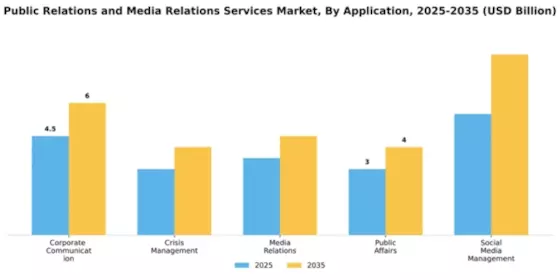
Corporate Communication (Dominant) vs. Crisis Management (Emerging)
Corporate Communication is a cornerstone of the Public Relations landscape, emphasizing strategic messaging and relationship-building with stakeholders. It encompasses various functions such as internal communications, corporate branding, and public engagement, making it a vital tool for organizations aiming to maintain a favorable public perception. On the other hand, Crisis Management has emerged rapidly in importance as organizations navigate the complexities of modern communication landscapes, particularly in the face of social media scrutiny. It requires swift action and strategic planning to mitigate negative impacts on a brand's reputation, making it essential for organizations to invest in robust crisis communication strategies.
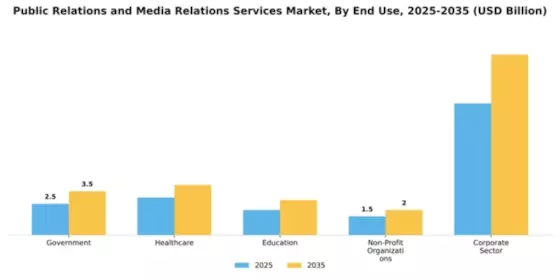
In the Public Relations and Media Relations Services Market, the Government sector leads in market share, leveraging significant budgets to manage communication and public perception effectively. This sector engages with communities and stakeholders to enhance transparency and trust, making it a vital player in the market. Following the Government, the Corporate Sector is a pivotal area, focusing on maintaining brand image and navigating crises through strategic media relations, highlighting its essential role in organizational success. As the market evolves, the Corporate Sector emerges as the fastest-growing segment, driven by increased competition and the need for businesses to communicate their values effectively. Factors such as digital transformation and the rise of social media platforms are reshaping how organizations manage their public relations strategies. This trend emphasizes innovative and responsive communication to engage various audiences effectively, signaling ongoing growth potential within this segment.
Government (Dominant) vs. Corporate Sector (Emerging)
The Government sector in the Public Relations and Media Relations Services Market stands as a dominant force, characterized by its robust approach to maintaining public trust and effectively managing communications on a broad scale. This segment encompasses a diverse range of initiatives, from crisis management to outreach programs aimed at fostering community engagement. On the other hand, the Corporate Sector represents an emerging domain that is rapidly adapting to the fast-paced media landscape. Companies in this segment are increasingly prioritizing public relations to enhance brand reputation, address stakeholder concerns, and engage consumers effectively. The evolution of digital tools and platforms is allowing corporate entities to implement tailored strategies that resonate with their target audiences, setting the stage for significant growth and innovation in their public relations efforts.
In the Public Relations and Media Relations Services Market, Strategic Communication holds the largest share, reflecting its essential role in aligning communication strategies with business goals. Event Management, while smaller in share, demonstrates robust growth as brands increasingly recognize the value of engaging audiences through live experiences and events. Other segments such as Content Creation, Media Training, and Influencer Engagement also contribute to market dynamics but with varying growth rates. The growth trends within this segment are driven by the digital transformation and the necessity for brands to adapt their communication strategies to diverse platforms. Strategic Communication sees sustained demand for its comprehensive approach, while Event Management is harnessing the rise of experiential marketing. Additionally, growing trends in content-driven strategies and influencer partnerships are shaping the evolving market landscape.
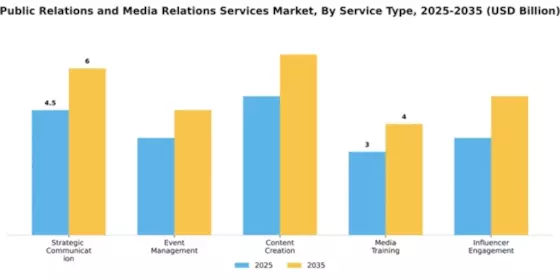
Strategic Communication (Dominant) vs. Influencer Engagement (Emerging)
Strategic Communication stands out as the dominant player in the Public Relations and Media Relations Services Market, characterized by its comprehensive strategies that encompass stakeholder engagement, crisis communication, and brand management. Organizations leveraging this service are seen as more adept at navigating complex media landscapes and stakeholder expectations. In contrast, Influencer Engagement has emerged as a significant trend within the market, driven by the rise of social media and the demand for authentic connections. Brands are increasingly turning to influencers to amplify their messages, fostering engagement through personalized content. This segment's growth is propelled by the shifts in consumer behavior toward peer recommendations, highlighting the importance of influencers in modern communication strategies.
Get more detailed insights about Public Relations and Media Relations Services Market Request Free Sample
North America continues to lead the Public Relations and Media Relations Services Market, holding a significant market share of 9.75 in 2024. The region's growth is driven by increasing digital transformation, demand for strategic communication, and a robust regulatory environment that encourages transparency and accountability. Companies are investing heavily in innovative PR strategies to enhance brand reputation and engage with diverse audiences effectively. The competitive landscape is characterized by major players such as Edelman, Weber Shandwick, and FleishmanHillard, which dominate the market. The U.S. remains the largest contributor, with a strong presence of global firms and a growing number of boutique agencies. This competitive environment fosters innovation and adaptability, ensuring that North America remains at the forefront of PR services.
Europe's Public Relations and Media Relations Services Market is valued at 5.85, reflecting a growing demand for integrated communication strategies. Key growth drivers include the rise of social media, increasing regulatory scrutiny, and a shift towards sustainability in corporate communications. The region is witnessing a trend towards digital PR, with companies leveraging data analytics to enhance their outreach and engagement strategies. Leading countries such as the UK, Germany, and France are at the forefront of this market, with a mix of established firms and innovative startups. Major players like MSL and Ogilvy are adapting to changing consumer behaviors and regulatory requirements. The competitive landscape is vibrant, with agencies focusing on niche markets and specialized services to differentiate themselves in a crowded field.
The Asia-Pacific region, with a market size of 3.9, is experiencing rapid growth in Public Relations and Media Relations Services. This growth is fueled by increasing urbanization, a burgeoning middle class, and the rising importance of digital communication. Regulatory frameworks are also evolving, promoting transparency and ethical practices in PR, which further drives demand for professional services in the region. Countries like China, India, and Japan are leading the charge, with a mix of local and international agencies competing for market share. Key players are focusing on innovative solutions to meet the diverse needs of clients, from crisis management to digital engagement. The competitive landscape is dynamic, with firms adapting to the fast-paced changes in consumer behavior and technology.
The Middle East and Africa (MEA) region, with a market size of 0.95, presents emerging opportunities in the Public Relations and Media Relations Services Market. The growth is driven by increasing investments in infrastructure, a young population, and a growing emphasis on corporate social responsibility. Regulatory frameworks are gradually improving, fostering a more conducive environment for PR services to thrive. Countries like the UAE and South Africa are leading the market, with a mix of local and international agencies establishing a presence. The competitive landscape is evolving, with firms focusing on tailored solutions to meet the unique cultural and business needs of the region. As the market matures, there is a growing emphasis on strategic communication and reputation management.
The Public Relations and Media Relations Services Market is currently characterized by a dynamic competitive landscape, driven by the increasing demand for strategic communication and brand management. Key players such as Edelman (US), Weber Shandwick (US), and FleishmanHillard (US) are at the forefront, each adopting distinct strategies to enhance their market positioning. For instance, Edelman (US) has focused on integrating digital transformation into its service offerings, thereby enhancing its ability to engage with audiences across multiple platforms. Meanwhile, Weber Shandwick (US) emphasizes innovation through data analytics, allowing for more targeted and effective communication strategies. These approaches collectively contribute to a competitive environment that is increasingly reliant on technological advancements and strategic partnerships.The market structure appears moderately fragmented, with numerous players vying for market share. Key business tactics include localizing services to cater to regional markets and optimizing supply chains to enhance service delivery. This fragmentation allows for a diverse range of service offerings, although it also intensifies competition among established firms and emerging players alike. The collective influence of these key players shapes the market dynamics, as they continuously adapt to evolving client needs and industry trends.In November FleishmanHillard (US) announced a strategic partnership with a leading AI technology firm to enhance its media monitoring capabilities. This collaboration is poised to revolutionize how the agency analyzes public sentiment and media coverage, enabling clients to make more informed decisions based on real-time data. The integration of AI into their operations signifies a critical shift towards leveraging technology for improved service delivery and client engagement.In October Ketchum (US) launched a new sustainability initiative aimed at helping clients navigate the complexities of environmental communication. This initiative not only aligns with global sustainability trends but also positions Ketchum (US) as a thought leader in responsible communication practices. By prioritizing sustainability, the agency enhances its appeal to environmentally conscious brands, thereby expanding its client base and reinforcing its market presence.In September Ogilvy (US) unveiled a comprehensive digital strategy that focuses on enhancing client engagement through immersive storytelling and interactive content. This strategic move reflects the growing importance of digital channels in public relations, as brands seek to connect with audiences in more meaningful ways. By investing in innovative content creation, Ogilvy (US) aims to differentiate itself in a crowded market, appealing to clients looking for cutting-edge communication solutions.As of December the competitive trends in the Public Relations and Media Relations Services Market are increasingly defined by digitalization, sustainability, and the integration of AI technologies. Strategic alliances are becoming more prevalent, as firms recognize the value of collaboration in enhancing service offerings and expanding market reach. Looking ahead, competitive differentiation is likely to evolve, shifting from traditional price-based competition to a focus on innovation, technological integration, and supply chain reliability. This transition underscores the necessity for firms to adapt and innovate continuously in order to maintain relevance in a rapidly changing market.



The Public Relations and Media Relations Services Market is projected to grow at a 2.9% CAGR from 2025 to 2035, driven by digital transformation, increased demand for transparency, and evolving consumer engagement strategies.
New opportunities lie in:
By 2035, the market is expected to be robust, adapting to new communication paradigms and consumer expectations.
| MARKET SIZE 2024 | 19.5(USD Billion) |
| MARKET SIZE 2025 | 20.07(USD Billion) |
| MARKET SIZE 2035 | 26.7(USD Billion) |
| COMPOUND ANNUAL GROWTH RATE (CAGR) | 2.9% (2025 - 2035) |
| REPORT COVERAGE | Revenue Forecast, Competitive Landscape, Growth Factors, and Trends |
| BASE YEAR | 2024 |
| Market Forecast Period | 2025 - 2035 |
| Historical Data | 2019 - 2024 |
| Market Forecast Units | USD Billion |
| Key Companies Profiled | Edelman (US), Weber Shandwick (US), FleishmanHillard (US), Burson Cohn & Wolfe (US), Ketchum (US), Hill+Knowlton Strategies (US), Golin (US), Porter Novelli (US), MSL (FR), Ogilvy (US) |
| Segments Covered | Application, End Use, Service Type |
| Key Market Opportunities | Integration of artificial intelligence in Public Relations and Media Relations Services enhances communication strategies and audience engagement. |
| Key Market Dynamics | Growing demand for digital engagement strategies drives innovation in Public Relations and Media Relations Services. |
| Countries Covered | North America, Europe, APAC, South America, MEA |
The market valuation was 19.5 USD Billion in 2024.
The market is projected to reach 26.7 USD Billion by 2035.
The expected CAGR is 2.9% during the forecast period 2025 - 2035.
Social Media Management is expected to grow from 5.5 USD Billion in 2024 to 8.2 USD Billion by 2035.
The Corporate Sector contributed 10.5 USD Billion in 2024 and is projected to grow to 14.4 USD Billion by 2035.
Key players include Edelman, Weber Shandwick, and FleishmanHillard, among others.
Crisis Management is expected to increase from 3.0 USD Billion in 2024 to 4.0 USD Billion by 2035.
Content Creation is projected to grow from 5.0 USD Billion in 2024 to 6.5 USD Billion by 2035.
The Healthcare sector is anticipated to grow from 3.0 USD Billion in 2024 to 4.0 USD Billion by 2035.
Public Affairs is expected to grow from 3.0 USD Billion in 2024 to 4.0 USD Billion by 2035.


Kindly complete the form below to receive a free sample of this Report

“This is really good guys. Excellent work on a tight deadline. I will continue to use you going forward and recommend you to others. Nice job”


“Thanks. It’s been a pleasure working with you, please use me as reference with any other Intel employees.”


“Thanks for sending the report it gives us a good global view of the Betaïne market.”


“Thank you, this will be very helpful for OQS.”


“We found the report very insightful! we found your research firm very helpful. I'm sending this email to secure our future business.”


“I am very pleased with how market segments have been defined in a relevant way for my purposes (such as "Portable Freezers & refrigerators" and "last-mile"). In general the report is well structured. Thanks very much for your efforts.”


“I have been reading the first document or the study, ,the Global HVAC and FP market report 2021 till 2026. Must say, good info! I have not gone in depth at all parts, but got a good indication of the data inside!”


“We got the report in time, we really thank you for your support in this process. I also thank to all of your team as they did a great job.”


“The Automotive 48V ECU Components Procurement Intelligence Study” was a complex project, but the Market Research Future (MRFR) team handled it with quality, agility, and customer-centricity. They delivered all requested data on time and within the agreed scope. The team, including Shubhendra Anand and Rahul Gotadki, was always readily available to clarify questions and swiftly implement necessary adjustments, driving the project to a successful conclusion within a very demanding timeframe.
I would also like to specifically commend Akshay Agarwal for his responsiveness and support at every stage—from our initial inquiry on May 6th through to final delivery on June 18th. His dedication made the entire process seamless.”



