Download Free Sample
Kindly complete the form below to receive a free sample of this Report
Radiation Dose Optimization Software Market Research Report By Deployment Model (Cloud-based, On-premise), By Application (Radiotherapy, Nuclear Medicine, Interventional Radiology), By End-User (Hospitals, Radiation Oncology Centers, Imaging Centers), By Region (North America, Europe, Asia-Pacific, South America, Middle East and Africa) and By Regional (North America, Europe, South America, Asia Pacific, Middle East and Africa) - Growth & Industry Forecast 2025 To 2035.
As per Market Research Future analysis, the Radiation Dose Optimization Software Market was estimated at 0.06 USD Billion in 2024. The Radiation Dose Optimization Software industry is projected to grow from USD 0.0645 Billion in 2025 to USD 0.1332 Billion by 2035, exhibiting a compound annual growth rate (CAGR) of 7.52% during the forecast period 2025 - 2035
The Radiation Dose Optimization Software Market is experiencing robust growth driven by technological advancements and regulatory compliance.
| 2024 Market Size | 0.06 (USD Billion) |
| 2035 Market Size | 0.1332 (USD Billion) |
| CAGR (2025 - 2035) | 7.52% |
The Radiation Dose Optimization Software Market is currently experiencing a notable evolution, driven by the increasing emphasis on patient safety and the need for enhanced imaging quality. As healthcare providers strive to minimize radiation exposure while maintaining diagnostic accuracy, the demand for sophisticated software solutions has surged. These tools not only assist in dose management but also facilitate compliance with regulatory standards, thereby fostering a culture of safety within medical imaging practices. Furthermore, advancements in technology, such as artificial intelligence and machine learning, are likely to play a pivotal role in shaping the future of this market. By integrating these technologies, software can potentially offer real-time dose monitoring and optimization, which may lead to improved patient outcomes and operational efficiencies. In addition, the growing awareness of the long-term effects of radiation exposure is prompting healthcare institutions to adopt more rigorous dose management protocols. This trend is further supported by collaborative efforts among industry stakeholders, including software developers, healthcare providers, and regulatory bodies, to establish best practices and guidelines. As the Radiation Dose Optimization Software Market continues to expand, it appears poised to become an integral component of modern healthcare, ensuring that patient safety remains at the forefront of medical imaging practices. The ongoing evolution of this market suggests a promising future, characterized by innovation and a commitment to excellence in patient care.
The incorporation of artificial intelligence into radiation dose optimization software is becoming increasingly prevalent. This technology enables more precise dose calculations and real-time adjustments, enhancing the overall efficiency of imaging procedures. AI-driven solutions may also facilitate predictive analytics, allowing healthcare providers to anticipate and mitigate potential risks associated with radiation exposure.
As regulatory bodies emphasize the importance of radiation safety, there is a growing trend towards software solutions that ensure compliance with established guidelines. This focus on standardization not only aids healthcare facilities in meeting legal requirements but also promotes best practices in dose management, ultimately enhancing patient safety.
The Radiation Dose Optimization Software Market is witnessing increased collaboration among various stakeholders, including software developers, healthcare providers, and regulatory agencies. This trend fosters the sharing of knowledge and resources, leading to the development of more effective solutions that address the complexities of radiation dose management in clinical settings.
The growing focus on cost-effectiveness is emerging as a significant driver within the Radiation Dose Optimization Software Market. Healthcare providers are increasingly seeking solutions that not only enhance patient safety but also reduce operational costs associated with radiation procedures. By optimizing radiation doses, facilities can minimize unnecessary exposure, thereby potentially lowering the costs related to patient management and treatment. Furthermore, the implementation of radiation dose optimization software can lead to improved workflow efficiencies, which can translate into financial savings for healthcare institutions. As the industry continues to evolve, the emphasis on cost-effectiveness is likely to drive further investments in radiation dose management technologies, positioning the Radiation Dose Optimization Software Market for sustained growth.
The Radiation Dose Optimization Software Market is experiencing a notable surge in demand driven by an increasing emphasis on patient safety. Healthcare providers are increasingly prioritizing the minimization of radiation exposure during diagnostic and therapeutic procedures. This trend is underscored by the growing awareness of the potential risks associated with radiation, leading to a heightened focus on optimizing doses. According to recent data, the market for radiation dose management solutions is projected to grow at a compound annual growth rate of approximately 10% over the next five years. This growth reflects a broader commitment within the healthcare sector to enhance patient outcomes while ensuring compliance with safety standards. As a result, the Radiation Dose Optimization Software Market is likely to witness significant advancements in technology and methodologies aimed at achieving optimal radiation doses.
The rising incidence of chronic diseases is significantly impacting the Radiation Dose Optimization Software Market. As the prevalence of conditions such as cancer and cardiovascular diseases increases, the demand for diagnostic imaging and radiation therapy is also on the rise. This trend necessitates the use of advanced radiation dose optimization software to ensure that patients receive the appropriate levels of radiation while minimizing risks. The increasing number of imaging procedures performed annually highlights the need for effective dose management solutions. Consequently, healthcare providers are likely to invest in radiation dose optimization technologies to enhance treatment efficacy and patient safety. This growing demand indicates a robust future for the Radiation Dose Optimization Software Market, as it adapts to the evolving healthcare landscape.
Regulatory pressures and compliance requirements are increasingly influencing the Radiation Dose Optimization Software Market. Governments and health organizations are implementing stringent regulations aimed at minimizing radiation exposure to patients. These regulations necessitate the adoption of advanced software solutions that can monitor, manage, and optimize radiation doses effectively. Compliance with these regulations is not only essential for patient safety but also for healthcare facilities to avoid potential legal repercussions. As a result, the market for radiation dose optimization software is likely to expand as healthcare providers invest in technologies that ensure adherence to regulatory standards. The ongoing evolution of these regulations suggests that the Radiation Dose Optimization Software Market will continue to adapt and innovate in response to changing compliance landscapes.
Technological advancements in imaging techniques are playing a pivotal role in shaping the Radiation Dose Optimization Software Market. Innovations such as digital imaging, 3D imaging, and advanced algorithms for dose calculation are enhancing the precision of radiation delivery. These advancements not only improve diagnostic accuracy but also facilitate the effective management of radiation doses. The integration of sophisticated software solutions allows healthcare professionals to analyze and adjust radiation levels in real-time, thereby optimizing patient safety. As imaging technologies continue to evolve, the demand for radiation dose optimization software is expected to rise correspondingly. This trend indicates a potential for the Radiation Dose Optimization Software Market to expand significantly, as healthcare facilities seek to adopt cutting-edge solutions that align with modern imaging practices.
In the Radiation Dose Optimization Software Market, the deployment model segment showcases a noteworthy distribution between cloud-based and on-premise solutions. The cloud-based deployment model has emerged as the largest segment, dominating the market due to its flexibility, scalability, and ease of integration with existing healthcare systems. On the other hand, the on-premise solutions are rapidly gaining traction as healthcare providers aim to keep sensitive data within their organizational boundaries, driving interest in this deployment model among facilities seeking enhanced control and compliance.
Deployment Model: Cloud-based (Dominant) vs. On-premise (Emerging)
Cloud-based radiation dose optimization software is recognized for its dominant position in the market, offering significant advantages such as remote access, reduced costs, and continuous software updates. With a user-friendly interface and high data processing capabilities, cloud solutions improve clinical workflows and enable better patient care. Conversely, the on-premise deployment model is emerging as a strong alternative for organizations concerned about data privacy and control features, fostering a growing demand among facilities prioritizing their regulatory compliance. While both models serve different organizational needs, their respective characteristics ensure that both will continue to play essential roles in the evolving landscape of radiation dose optimization.
In the Radiation Dose Optimization Software Market, Radiotherapy represents the largest application segment. This is primarily driven by the increasing prevalence of cancers requiring effective radiation treatments. Following closely is Nuclear Medicine, whose importance is rapidly rising due to its essential role in diagnostic imaging and cancer treatment. Interventional Radiology, while significant, captures a smaller share compared to these two segments.
Radiotherapy (Dominant) vs. Nuclear Medicine (Emerging)
Radiotherapy stands as the dominant application in the Radiation Dose Optimization Software Market due to its extensive use in cancer therapies, where precision in dose delivery is critical. It leverages advanced software for enhanced treatment accuracy and minimized dose to surrounding healthy tissue. Conversely, Nuclear Medicine is an emerging segment, characterized by the growing adoption of radiopharmaceuticals that demand optimized dosing for patient safety and treatment efficacy. With its rapid advancements and integration into clinical practices, Nuclear Medicine attracts investment and innovation, posing a competitive challenge to established radiotherapy solutions.
In the Radiation Dose Optimization Software Market, hospitals hold the largest market share due to their extensive use of advanced imaging technologies and the necessity for patient safety in radiology departments. Hospitals invest significantly in software solutions to enhance their radiation delivery systems, which leads to meticulous dose management. Radiation oncology centers follow closely, with their share reflecting a crucial need for precision in treatment administration, aided by dose optimization software to improve patient outcomes and operational efficiency.
Hospitals (Dominant) vs. Radiation Oncology Centers (Emerging)
Hospitals are the dominant end-user segment in the Radiation Dose Optimization Software Market, driven by their need to manage complex imaging procedures and ensure patient safety through optimized radiation doses. These institutions typically leverage sophisticated technologies and protocols to enhance their treatment accuracy. In contrast, radiation oncology centers represent an emerging segment that is rapidly adopting these software solutions as they aim to refine treatment precision and increase operational efficacy. They focus on personalized treatment plans, utilizing real-time data analytics to adjust dosing based on individual patient profiles, thus reflecting a shift towards more data-driven oncological practices.
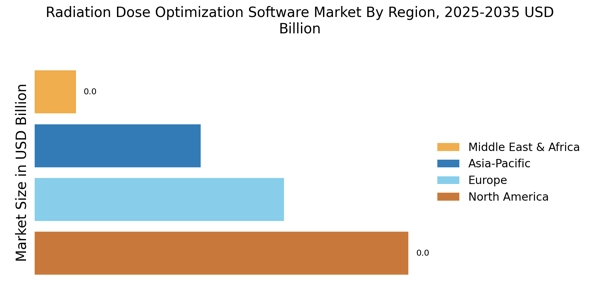
North America is the largest market for Radiation Dose Optimization Software, holding approximately 45% of the global share. The region's growth is driven by advanced healthcare infrastructure, increasing awareness of radiation safety, and stringent regulatory frameworks. The demand for optimized radiation doses is further fueled by rising incidences of chronic diseases requiring imaging diagnostics, alongside government initiatives promoting patient safety and technological advancements. The United States is the primary contributor, with significant investments from key players like GE Healthcare and Varian Medical Systems. Canada also plays a vital role, focusing on enhancing healthcare delivery through innovative technologies. The competitive landscape is characterized by collaborations and partnerships among leading firms, ensuring continuous advancements in software capabilities and market penetration.
Europe is the second-largest market for Radiation Dose Optimization Software, accounting for around 30% of the global market share. The region's growth is propelled by stringent regulations aimed at minimizing radiation exposure, alongside increasing investments in healthcare technology. The European Union's directives on radiation protection and patient safety are significant catalysts, encouraging healthcare providers to adopt advanced software solutions for dose optimization. Germany and the United Kingdom are the leading countries in this market, with a strong presence of key players like Siemens Healthineers and Philips Healthcare. The competitive landscape is marked by innovation and collaboration among companies, focusing on developing user-friendly software that meets regulatory standards. The emphasis on research and development further enhances the region's market potential, ensuring continuous improvement in radiation safety practices.
Asia-Pacific is witnessing rapid growth in the Radiation Dose Optimization Software market, holding approximately 20% of the global share. The region's expansion is driven by increasing healthcare expenditures, rising awareness of radiation safety, and a growing number of diagnostic imaging procedures. Countries like China and India are investing heavily in healthcare infrastructure, which is expected to boost the demand for advanced software solutions that optimize radiation doses and enhance patient safety. China is the largest market in the region, supported by government initiatives aimed at improving healthcare quality. India follows closely, with a burgeoning healthcare sector and increasing adoption of advanced technologies. The competitive landscape features both local and international players, with a focus on developing cost-effective solutions tailored to the unique needs of the region's healthcare systems. This dynamic environment fosters innovation and collaboration among key stakeholders.
The Middle East and Africa region is gradually emerging in the Radiation Dose Optimization Software market, accounting for about 5% of the global share. The growth is driven by increasing investments in healthcare infrastructure, rising awareness of radiation safety, and the need for advanced imaging technologies. Governments in the region are focusing on enhancing healthcare services, which is expected to create opportunities for software solutions that optimize radiation doses and improve patient outcomes. Countries like South Africa and the UAE are leading the way, with significant investments in healthcare technology and infrastructure. The competitive landscape is characterized by a mix of local and international players, with a focus on developing tailored solutions that meet the specific needs of the region. As healthcare systems evolve, the demand for radiation dose optimization software is expected to grow, presenting opportunities for innovation and market expansion.
Key participants in the Radiation Dose Optimization Software Market are concentrating their efforts on offering innovative solutions and advanced solutions to streamline the optimization process and enhance the accuracy of radiation therapy.
Leading market players in the Radiation Dose Optimization Software Market, such as Varian Medical Systems, Elekta, and RaySearch Laboratories, are focusing on investments in research and development to create innovative software solutions to cater to the growing demands of healthcare providers.
The Radiation Dose Optimization Software Market is witnessing an enhanced number of partnerships and collaborations between leading companies that will positively impact the development of the Radiation Dose Optimization Software Market, strengthen the competitive landscape, and drive the expansion of the business.
Varian Medical Systems is a key provider of solutions for radiation therapy, including Radiation Dose Optimization Software. The company's Eclipse treatment planning system is deployed in radiation therapy clinics across the world. The organization is dedicated to providing effective and innovative software solutions to enable clinicians to impart safe and precise radiation treatments.
Varian has a considerable track record of investments in research and development, and the company's team is continuously engaged in developing new software tools to improve the efficiency and accuracy of radiation therapy.
Elekta is another key player in the Radiation Dose Optimization Software Market. The company provides Monaco, a treatment planning system that is renowned for its powerful Optimization algorithms and comprehensive features.
Elekta provides software solutions that motivate clinicians to optimise their treatment outcomes for patients who are suffering from cancer. The company's software development team is also dedicated to creating new software tools to streamline the treatment planning process and reduce the delivery time for radiation treatments.
The Global Radiation Dose Optimization Software Market is poised to grow significantly over the next decade. Key drivers of this growth include increasing demand for radiation therapy, growing awareness of radiation safety, and technological advancements.
Recent news developments include the launch of new software solutions, such as Varian's Eclipse TPS with AI-driven optimization capabilities, and strategic partnerships between vendors and healthcare providers. The market is expected to witness significant growth in emerging economies, driven by rising healthcare expenditure and increasing access to radiation therapy services.
The Radiation Dose Optimization Software Market is projected to grow at a 7.52% CAGR from 2025 to 2035, driven by technological advancements and increasing regulatory requirements.
New opportunities lie in:
By 2035, the market is expected to be robust, driven by innovation and strategic collaborations.
| MARKET SIZE 2024 | 0.06(USD Billion) |
| MARKET SIZE 2025 | 0.0645(USD Billion) |
| MARKET SIZE 2035 | 0.1332(USD Billion) |
| COMPOUND ANNUAL GROWTH RATE (CAGR) | 7.52% (2025 - 2035) |
| REPORT COVERAGE | Revenue Forecast, Competitive Landscape, Growth Factors, and Trends |
| BASE YEAR | 2024 |
| Market Forecast Period | 2025 - 2035 |
| Historical Data | 2019 - 2024 |
| Market Forecast Units | USD Billion |
| Key Companies Profiled | GE Healthcare (US), Siemens Healthineers (DE), Philips Healthcare (NL), Canon Medical Systems (JP), Agfa HealthCare (BE), Carestream Health (US), Varian Medical Systems (US), Elekta (SE), Mirada Medical (GB) |
| Segments Covered | Deployment Model, Application, End-User, Region, Regional |
| Key Market Opportunities | Integration of artificial intelligence for enhanced radiation dose management and patient safety in the Radiation Dose Optimization Software Market. |
| Key Market Dynamics | Rising regulatory pressures drive demand for advanced radiation dose optimization software in healthcare settings. |
| Countries Covered | North America, Europe, APAC, South America, MEA |
The projected market valuation for the Radiation Dose Optimization Software Market in 2035 is 0.1332 USD Billion.
The market valuation for the Radiation Dose Optimization Software Market in 2024 was 0.06 USD Billion.
The expected CAGR for the Radiation Dose Optimization Software Market during the forecast period 2025 - 2035 is 7.52%.
Key players in the market include GE Healthcare, Siemens Healthineers, Philips Healthcare, Canon Medical Systems, and others.
The primary deployment models for Radiation Dose Optimization Software are Cloud-based and On-premise.
In 2024, the market for Cloud-based Radiation Dose Optimization Software was valued at 0.03 USD Billion.
The applications driving the market include Radiotherapy, Nuclear Medicine, and Interventional Radiology.
The market size for Radiation Oncology Centers in 2024 was 0.015 USD Billion.
The Imaging Centers segment is projected to grow to 0.04 USD Billion by 2035.
Trends influencing the market include advancements in technology and increasing demand for optimized radiation doses in healthcare.


Kindly complete the form below to receive a free sample of this Report

“This is really good guys. Excellent work on a tight deadline. I will continue to use you going forward and recommend you to others. Nice job”


“Thanks. It’s been a pleasure working with you, please use me as reference with any other Intel employees.”


“Thanks for sending the report it gives us a good global view of the Betaïne market.”


“Thank you, this will be very helpful for OQS.”


“We found the report very insightful! we found your research firm very helpful. I'm sending this email to secure our future business.”


“I am very pleased with how market segments have been defined in a relevant way for my purposes (such as "Portable Freezers & refrigerators" and "last-mile"). In general the report is well structured. Thanks very much for your efforts.”


“I have been reading the first document or the study, ,the Global HVAC and FP market report 2021 till 2026. Must say, good info! I have not gone in depth at all parts, but got a good indication of the data inside!”


“We got the report in time, we really thank you for your support in this process. I also thank to all of your team as they did a great job.”


“The Automotive 48V ECU Components Procurement Intelligence Study” was a complex project, but the Market Research Future (MRFR) team handled it with quality, agility, and customer-centricity. They delivered all requested data on time and within the agreed scope. The team, including Shubhendra Anand and Rahul Gotadki, was always readily available to clarify questions and swiftly implement necessary adjustments, driving the project to a successful conclusion within a very demanding timeframe.
I would also like to specifically commend Akshay Agarwal for his responsiveness and support at every stage—from our initial inquiry on May 6th through to final delivery on June 18th. His dedication made the entire process seamless.”



