×
Request Free Sample ×

Kindly complete the form below to receive a free sample of this Report

* Please use a valid business email

Leading companies partner with us for data-driven Insights

clients tt-cursor
Hero Background

Resilient Flooring Market

ID: MRFR/PCM/6187-HCR
110 Pages
Snehal Singh
October 2025

Resilient Flooring Market Research Report Information by Product (Luxury Vinyl Tiles, Vinyl Composite Tiles, Vinyl Sheets), By Application (Residential, Commercial, Industrial), and by Region (North America, Europe, APAC, RoW) Global Industry Forecast till 2035

Share:
Download PDF ×

We do not share your information with anyone. However, we may send you emails based on your report interest from time to time. You may contact us at any time to opt-out.

Resilient Flooring Market Infographic
Purchase Options

Resilient Flooring Market Summary

As per MRFR analysis, the Resilient Flooring Market Size was estimated at 40.21 USD Billion in 2024. The resilient flooring industry is projected to grow from 43.19 USD Billion in 2025 to 82.11 USD Billion by 2035, exhibiting a compound annual growth rate (CAGR) of 7.4 during the forecast period 2025 - 2035.

Key Market Trends & Highlights

The Resilient Flooring Market is experiencing a dynamic shift towards sustainability and health-conscious choices.

  • The North American region remains the largest market for resilient flooring, driven by a robust construction sector.
  • Asia-Pacific is recognized as the fastest-growing region, reflecting increasing urbanization and infrastructure development.
  • The residential segment continues to dominate the market, while the commercial segment is witnessing rapid growth due to evolving workspace designs.
  • Technological advancements and a rising demand for eco-friendly products are key drivers propelling market expansion.

Market Size & Forecast

2024 Market Size 40.21 (USD Billion)
2035 Market Size 82.11 (USD Billion)
CAGR (2025 - 2035) 7.4%

Major Players

Mohawk Industries (US), Shaw Industries (US), Armstrong Flooring (US), Tarkett (FR), Gerflor (FR), Forbo Flooring (CH), Mannington Mills (US), Interface (US), Beaulieu International Group (BE), LG Hausys (KR)

Resilient Flooring Market Trends

The Resilient Flooring Market is currently experiencing a notable transformation, driven by evolving consumer preferences and advancements in manufacturing technologies. As sustainability becomes a focal point for many industries, the demand for eco-friendly flooring solutions is on the rise. This shift is prompting manufacturers to innovate, leading to the development of products that not only meet aesthetic desires but also adhere to environmental standards. Furthermore, the increasing awareness of health and wellness is influencing choices, with consumers gravitating towards materials that promote better indoor air quality and overall well-being. In addition to sustainability, the Resilient Flooring Market is witnessing a surge in the popularity of luxury vinyl tiles and planks. These products offer a combination of durability and design versatility, appealing to both residential and commercial sectors. The ongoing trend towards open-concept living spaces is also contributing to the demand for flooring solutions that can seamlessly integrate with various interior styles. As the market continues to evolve, it appears poised for further growth, with innovations and consumer trends shaping its future landscape.

Sustainability Focus

The emphasis on eco-friendly materials is reshaping the Resilient Flooring Market. Manufacturers are increasingly prioritizing sustainable practices, leading to the creation of products that minimize environmental impact while meeting consumer demands.

Luxury Vinyl Appeal

Luxury vinyl tiles and planks are gaining traction within the Resilient Flooring Market. Their combination of durability, aesthetic appeal, and ease of maintenance makes them a preferred choice for both residential and commercial applications.

Health-Conscious Choices

Consumers are becoming more health-conscious, influencing their flooring selections. The demand for materials that enhance indoor air quality and contribute to overall well-being is driving innovation in the Resilient Flooring Market.

Resilient Flooring Market Drivers

Sustainability Trends

The Global Resilient Flooring Market Industry is increasingly influenced by sustainability trends as consumers and businesses prioritize eco-friendly materials. The demand for resilient flooring made from recycled content or renewable resources is on the rise. This shift is evident in the growing popularity of products such as luxury vinyl tiles and linoleum, which are designed to minimize environmental impact. As a result, manufacturers are investing in sustainable production processes, which not only appeal to environmentally conscious consumers but also comply with stringent regulations. This focus on sustainability is expected to drive the market's growth, contributing to a projected market value of 30 USD Billion in 2024.

Technological Advancements

Technological advancements play a pivotal role in shaping the Global Resilient Flooring Market Industry. Innovations in flooring manufacturing processes, such as improved printing techniques and enhanced surface treatments, have led to products that are more durable, aesthetically appealing, and easier to maintain. For instance, advancements in digital printing technology allow for intricate designs that mimic natural materials, thus broadening consumer choices. These innovations not only enhance product performance but also cater to diverse consumer preferences, thereby driving market growth. As the industry evolves, the integration of smart technologies in flooring solutions may further enhance functionality and appeal, potentially increasing the market's value to 50 USD Billion by 2035.

Diverse Aesthetic Preferences

Diverse aesthetic preferences among consumers are shaping the Global Resilient Flooring Market Industry. With an increasing emphasis on interior design, consumers are looking for flooring solutions that not only provide functionality but also enhance the visual appeal of their spaces. The availability of a wide range of colors, patterns, and textures in resilient flooring products allows consumers to express their personal style. This trend is particularly evident in the commercial sector, where businesses seek to create inviting environments for customers. As manufacturers continue to innovate and expand their product offerings, the market is expected to benefit from this growing demand for aesthetically pleasing flooring solutions.

Health and Wellness Awareness

Health and wellness awareness is emerging as a significant driver within the Global Resilient Flooring Market Industry. Consumers are increasingly seeking flooring solutions that promote healthier indoor environments, leading to a preference for products that are low in volatile organic compounds and easy to clean. This trend is particularly relevant in sectors such as healthcare and education, where flooring materials can impact occupant health and well-being. Manufacturers are responding by developing flooring options that meet stringent health standards, thus enhancing their market appeal. As awareness of health-related issues continues to grow, the demand for resilient flooring that supports wellness initiatives is likely to rise, further propelling market growth.

Rising Construction Activities

The Global Resilient Flooring Market Industry is significantly bolstered by rising construction activities across various sectors, including residential, commercial, and industrial. As urbanization continues to accelerate, the demand for new buildings and renovations is increasing, leading to a higher consumption of resilient flooring materials. In particular, the residential sector is witnessing a surge in demand for flooring solutions that offer durability and aesthetic appeal. This trend is expected to contribute to a compound annual growth rate of 4.75% from 2025 to 2035, reflecting the industry's robust growth trajectory. The expansion of construction projects globally is likely to sustain the momentum of the resilient flooring market.

Market Segment Insights

By Application: Residential (Largest) vs. Commercial (Fastest-Growing)

In the Resilient Flooring Market, the application segment is diversified among residential, commercial, industrial, and institutional sectors. Residential flooring holds the largest share of the market, driven by a continuous demand for aesthetic and durable options that cater to homeowners’ preferences. In contrast, commercial flooring is experiencing significant growth, attributed to the expansion of retail spaces, office developments, and hospitality industries, which require high-performance flooring solutions that can withstand heavy foot traffic. Growth in the resilient flooring market is being fueled by trends towards sustainability, increased awareness of lifecycle costs, and the development of innovative, eco-friendly materials. The residential segment continues to benefit from trends emphasizing home improvement and renovation, while the commercial segment is propelled by an increasing number of commercial projects. The rise in urbanization and consumer spending on non-residential properties are additional factors driving the growth of these applications, positioning them favorably for the future.

Residential (Dominant) vs. Commercial (Emerging)

The residential segment of the resilient flooring market is characterized by a strong preference for aesthetic appeal, comfort, and durability. Consumers are increasingly seeking flooring options that combine functionality with style, leading to a rise in high-demand products such as luxury vinyl tile (LVT) and engineered hardwood. In terms of market position, this segment is currently dominant due to its larger consumer base in homeowner renovations and new builds. On the other hand, the commercial segment is emerging rapidly as businesses focus on quality, sustainability, and adaptability in their flooring choices. As commercial spaces evolve, the demand for versatile, easy-to-maintain, and long-lasting flooring products is increasing, making commercial resilient flooring an integral part of modern office and retail environments.

By Material Type: Vinyl (Largest) vs. Rubber (Fastest-Growing)

The Resilient Flooring Market showcases a diverse range of material types, with vinyl flooring leading the pack due to its versatility and affordability, commanding a significant share of the market. Following closely, linoleum is appreciated for its eco-friendly properties, though it holds a smaller segment share. Rubber, meanwhile, is gaining traction among commercial applications for its durability, while cork remains niche, catering primarily to environmentally conscious consumers seeking insulation and acoustic benefits.

Vinyl (Dominant) vs. Cork (Emerging)

Vinyl flooring is the dominant force in the Resilient Flooring Market, known for its ease of installation, broad design options, and water resistance, making it a popular choice for both residential and commercial spaces. In contrast, cork flooring is emerging as a sustainable option, prized for its renewable properties and thermal insulation benefits. While vinyl continues to capture the largest segment share, cork appeals to a growing demographic focused on sustainability and wellness, enhancing its market presence as health-conscious trends rise.

By End Use: Flooring (Largest) vs. Wall Covering (Fastest-Growing)

In the Resilient Flooring Market, the 'End Use' segment is characterized by distinct categories, primarily Flooring, Wall Covering, Countertops, and Ceilings. Flooring is the largest component, commanding a substantial share of the market due to its widespread application in residential and commercial spaces. Wall Covering, while smaller in share, is rapidly gaining traction as more consumers seek versatile and stylish interior design options. Countertops and Ceilings, though significant, have a more niche presence, contributing to overall product diversity.

Flooring (Dominant) vs. Wall Covering (Emerging)

Flooring remains the dominant segment in the Resilient Flooring Market, favored for its durability, ease of maintenance, and aesthetic versatility. The demand for resilient flooring solutions is driven by increasing consumer awareness about sustainability and the need for cost-effective flooring options that can withstand high traffic. Meanwhile, Wall Covering is emerging as a significant contender, fueled by trends in interior design that prioritize innovative and eco-friendly materials. Both segments leverage advancements in technology, such as enhanced durability and design capabilities, positioning them uniquely to respond to shifting consumer preferences and design trends.

By Installation Method: Glue Down (Largest) vs. Click Lock (Fastest-Growing)

In the resilient flooring market, the installation method segment is characterized by distinct preferences among consumers and professionals alike. Glue Down products hold the largest market share, reflecting their traditional use and reliability in various applications. Loose Lay and Sheet styles cater to specific markets and projects where convenience and versatility are paramount, yet they lag behind in overall acceptance. Click Lock systems have gained traction, appealing to both DIY enthusiasts and professional installers for their ease of installation without the need for adhesives. As the market continues to evolve, growth trends indicate a significant rise in the use of Click Lock installations. This shift is driven by an increasing consumer demand for hassle-free, time-efficient installation processes. Innovations in interlocking technology have made Click Lock options more attractive, especially in residential applications where ease of maintenance is a concern. As sustainability becomes a key criterion for buyers, Loose Lay options are also projected to reflect significant growth due to their environmentally friendly characteristics.

Glue Down (Dominant) vs. Loose Lay (Emerging)

Glue Down represents the dominant installation method in the resilient flooring market, known for providing a robust and long-lasting floor solution. This method is favored for its ability to adhere securely to subfloors, making it ideal for high-traffic areas and commercial applications. On the other hand, Loose Lay is emerging as a flexible alternative, appealing to a growing segment of consumers seeking easy installation without the commitment of adhesives. Loose Lay tiles and planks offer easy removal and replacement, making them particularly attractive for residential settings and temporary installations. As preferences shift with consumer trends, Loose Lay is positioned for growth as it aligns with demands for versatility and sustainability in flooring solutions.

By Design: Textured (Largest) vs. Patterned (Fastest-Growing)

The resilient flooring market's design segment showcases a diverse range of options, with textured designs maintaining the largest market share. Textured surfaces are favored for their aesthetic appeal and practicality, often providing enhanced grip and reducing slip hazards. Following textured designs, patterned options are emerging rapidly in popularity, presenting intricate designs that cater to modern flooring preferences. These designs are particularly appealing to consumers looking for unique and personalized flooring solutions.

Textured (Dominant) vs. Patterned (Emerging)

Textured resilient flooring holds a dominant position in the market due to its functionality and broad appeal. These designs not only enhance the visual appeal of spaces but also offer practical benefits, such as improved traction, making them ideal for both residential and commercial settings. In contrast, patterned resilient flooring is gaining traction as an emerging choice among consumers desiring distinctive and customizable aesthetics. As more manufacturers introduce innovative patterns, this segment is expected to attract a younger demographic seeking uniqueness without sacrificing durability, capturing a significant share of future market growth.

Get more detailed insights about Resilient Flooring Market

Regional Insights

North America : Market Leader in Resilient Flooring

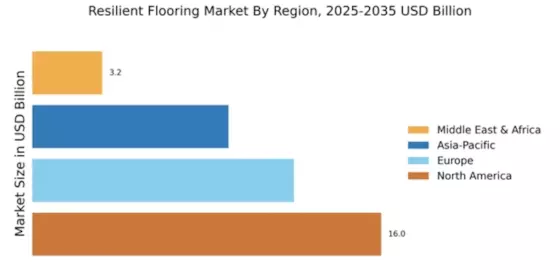
North America is poised to maintain its leadership in the resilient flooring market, holding a significant market share of 16.0 in 2024. The growth is driven by increasing consumer demand for durable and low-maintenance flooring solutions, alongside a surge in residential and commercial construction activities. Regulatory support for sustainable building practices further catalyzes market expansion, as eco-friendly flooring options gain traction among consumers. The competitive landscape in North America is robust, featuring key players such as Mohawk Industries, Shaw Industries, and Armstrong Flooring. These companies are leveraging innovative technologies and sustainable materials to enhance product offerings. The U.S. remains the largest market, with Canada and Mexico also contributing to regional growth. The presence of established manufacturers ensures a dynamic market environment, fostering continuous advancements in flooring solutions.

Europe : Emerging Trends in Flooring Solutions

Europe's resilient flooring market is projected to grow significantly, with a market size of 12.0 in 2025. The region is witnessing a shift towards sustainable flooring solutions, driven by stringent regulations and consumer preferences for eco-friendly products. The European Union's commitment to reducing carbon emissions and promoting sustainable construction practices is a key catalyst for this growth, encouraging manufacturers to innovate and adapt. Leading countries such as Germany, France, and the UK are at the forefront of this transformation, with companies like Tarkett and Gerflor leading the charge. The competitive landscape is characterized by a mix of established players and emerging startups focusing on sustainability. The presence of diverse flooring options, including luxury vinyl tiles and linoleum, caters to varying consumer needs, enhancing market dynamics.

Asia-Pacific : Rapid Growth in Emerging Markets

The Asia-Pacific region is experiencing rapid growth in the resilient flooring market, with a market size of 9.0 projected for 2025. This growth is fueled by urbanization, rising disposable incomes, and an increasing focus on modern interior designs. Countries like China and India are leading the charge, with significant investments in infrastructure and real estate development driving demand for resilient flooring solutions. The competitive landscape is evolving, with both local and international players vying for market share. Companies such as LG Hausys and Forbo Flooring are expanding their presence in the region, offering innovative products tailored to local preferences. The growing awareness of sustainability and durability in flooring options is further enhancing market opportunities, making Asia-Pacific a key player in The Resilient Flooring.

Middle East and Africa : Emerging Market Potential

The Middle East and Africa (MEA) region is gradually emerging as a potential market for resilient flooring, with a market size of 3.21 projected for 2025. The growth is driven by increasing urbanization, infrastructure development, and a rising demand for modern flooring solutions in both residential and commercial sectors. Government initiatives aimed at enhancing construction standards are also contributing to market expansion, as they promote the use of durable and sustainable materials. Countries like the UAE and South Africa are leading the market, with a growing number of international players entering the region. The competitive landscape is characterized by a mix of established brands and local manufacturers, creating a dynamic environment. Companies are focusing on innovation and customization to meet the diverse needs of consumers, positioning MEA as a region with significant growth potential in the resilient flooring market.

Key Players and Competitive Insights

The Resilient Flooring Market is currently characterized by a dynamic competitive landscape, driven by innovation, sustainability, and strategic partnerships. Major players such as Mohawk Industries (US), Shaw Industries (US), and Tarkett (FR) are at the forefront, each adopting distinct strategies to enhance their market positioning. Mohawk Industries (US) emphasizes product innovation, particularly in eco-friendly flooring solutions, while Shaw Industries (US) focuses on expanding its digital capabilities to improve customer engagement and streamline operations. Tarkett (FR), on the other hand, is leveraging its commitment to sustainability, integrating circular economy principles into its product lifecycle, which collectively shapes a competitive environment that prioritizes environmental responsibility alongside performance.

In terms of business tactics, companies are increasingly localizing manufacturing to reduce lead times and enhance supply chain resilience. This approach appears to be a response to the growing demand for quick turnaround times and customization in flooring solutions. The market structure is moderately fragmented, with a mix of large multinational corporations and smaller regional players. The collective influence of these key players fosters a competitive atmosphere where innovation and operational efficiency are paramount.

In November 2025, Mohawk Industries (US) announced the launch of a new line of luxury vinyl tiles (LVT) that incorporates recycled materials, reflecting its commitment to sustainability. This strategic move not only aligns with consumer preferences for eco-friendly products but also positions Mohawk as a leader in the sustainable flooring segment. The introduction of this product line is likely to enhance brand loyalty and attract environmentally conscious consumers.

In October 2025, Shaw Industries (US) unveiled a digital platform aimed at enhancing customer experience through augmented reality (AR) tools that allow customers to visualize flooring options in their spaces. This initiative underscores Shaw's focus on digital transformation, which is increasingly vital in a market where consumer expectations are evolving rapidly. By integrating technology into the purchasing process, Shaw Industries is likely to improve customer satisfaction and drive sales growth.

In September 2025, Tarkett (FR) entered into a strategic partnership with a leading technology firm to develop smart flooring solutions that integrate IoT capabilities. This collaboration is indicative of Tarkett's forward-thinking approach, as it seeks to merge flooring with technology, potentially revolutionizing how flooring interacts with users and their environments. Such innovations may set Tarkett apart in a competitive landscape that is increasingly leaning towards smart home solutions.

As of December 2025, the competitive trends in the Resilient Flooring Market are heavily influenced by digitalization, sustainability, and the integration of advanced technologies such as AI. Strategic alliances are becoming more prevalent, enabling companies to pool resources and expertise to drive innovation. The competitive differentiation is likely to evolve from traditional price-based competition to a focus on technological advancements, product innovation, and supply chain reliability. This shift suggests that companies that prioritize these areas will be better positioned to thrive in an increasingly complex market.

Key Companies in the Resilient Flooring Market market include

Industry Developments

  • Q2 2024: Tarkett Launches New Circular Selection of Resilient Flooring Market in North America Tarkett announced the launch of its Circular Selection, a new portfolio of resilient flooring products designed for full recyclability and reduced environmental impact, targeting commercial and institutional markets.
  • Q2 2024: Armstrong Flooring Announces New LVT Manufacturing Facility in Georgia Armstrong Flooring revealed plans to open a new luxury vinyl tile (LVT) manufacturing facility in Georgia, aiming to expand its U.S. production capacity and meet growing demand for resilient flooring.
  • Q3 2024: Mohawk Industries Acquires European Resilient Flooring Market Producer IVC Group Mohawk Industries completed the acquisition of IVC Group, a leading European manufacturer of resilient flooring, strengthening its global footprint and product portfolio.
  • Q1 2024: Shaw Industries Unveils New Bio-Based Resilient Flooring Market Line Shaw Industries launched a new line of bio-based resilient flooring, incorporating renewable materials to address sustainability goals in commercial and residential applications.
  • Q2 2024: Gerflor Acquires U.S. Sports Flooring Specialist Connor Sports Gerflor, a global leader in resilient flooring, acquired Connor Sports, a U.S.-based manufacturer of sports flooring, expanding its presence in the North American athletic flooring market.
  • Q3 2024: Forbo Flooring Systems Opens New Distribution Center in Texas Forbo Flooring Systems inaugurated a new distribution center in Texas to enhance logistics and service capabilities for its resilient flooring customers across the southern United States.
  • Q2 2024: Interface Appoints New CEO to Drive Growth in Resilient Flooring Market Segment Interface, Inc. announced the appointment of a new Chief Executive Officer, with a strategic focus on expanding the company’s resilient flooring offerings and accelerating innovation.
  • Q1 2024: LG Hausys Launches Next-Generation Homogeneous Vinyl Flooring LG Hausys introduced a new range of homogeneous vinyl flooring products, featuring enhanced durability and design flexibility for healthcare and education sectors.
  • Q4 2024: Beaulieu International Group Announces €50 Million Investment in Resilient Flooring Market Plant Expansion Beaulieu International Group committed €50 million to expand its resilient flooring manufacturing plant in Belgium, aiming to increase capacity and support innovation in sustainable flooring solutions.
  • Q2 2025: Tarkett and IKEA Partner to Develop Circular Resilient Flooring Market Solutions Tarkett and IKEA announced a strategic partnership to co-develop circular resilient flooring products, focusing on recyclability and sustainable material sourcing.
  • Q1 2025: Mannington Commercial Wins Major Contract for Resilient Flooring Market in U.S. School Districts Mannington Commercial secured a multi-million dollar contract to supply resilient flooring for several large U.S. school districts, supporting modernization and health-focused renovations.
  • Q2 2025: Gerflor Launches Recycled Content Vinyl Flooring for Commercial Markets Gerflor introduced a new line of commercial vinyl flooring with high recycled content, targeting green building projects and environmentally conscious clients.

Future Outlook

Resilient Flooring Market Future Outlook

The Resilient Flooring Market is projected to grow at a 7.4% CAGR from 2024 to 2035, driven by increasing demand for sustainable materials and innovative designs.

New opportunities lie in:

  • Expansion into eco-friendly product lines
  • Development of smart flooring solutions
  • Partnerships with construction firms for integrated flooring systems

By 2035, the market is expected to achieve robust growth, solidifying its position as a leader in flooring solutions.

Market Segmentation

Resilient Flooring Market Design Outlook

  • Textured
  • Smooth
  • Patterned
  • Solid

Resilient Flooring Market End Use Outlook

  • Flooring
  • Wall Covering
  • Countertops
  • Ceilings

Resilient Flooring Market Application Outlook

  • Residential
  • Commercial
  • Industrial
  • Institutional

Resilient Flooring Market Material Type Outlook

  • Vinyl
  • Linoleum
  • Rubber
  • Cork

Resilient Flooring Market Installation Method Outlook

  • Glue Down
  • Loose Lay
  • Click Lock
  • Sheet

Report Scope

MARKET SIZE 202440.21(USD Billion)
MARKET SIZE 202543.19(USD Billion)
MARKET SIZE 203582.11(USD Billion)
COMPOUND ANNUAL GROWTH RATE (CAGR)7.4% (2024 - 2035)
REPORT COVERAGERevenue Forecast, Competitive Landscape, Growth Factors, and Trends
BASE YEAR2024
Market Forecast Period2025 - 2035
Historical Data2019 - 2024
Market Forecast UnitsUSD Billion
Key Companies ProfiledMohawk Industries (US), Shaw Industries (US), Armstrong Flooring (US), Tarkett (FR), Gerflor (FR), Forbo Flooring (CH), Mannington Mills (US), Interface (US), Beaulieu International Group (BE), LG Hausys (KR)
Segments CoveredApplication, Material Type, End Use, Installation Method, Design
Key Market OpportunitiesGrowing demand for sustainable materials drives innovation in the Resilient Flooring Market.
Key Market DynamicsRising consumer preference for sustainable materials drives innovation and competition in the resilient flooring market.

Countries CoveredNorth America, Europe, APAC, South America, MEA

Market Highlights

Author
Snehal Singh
Assistant Manager - Research

High acumen in analyzing complex macro & micro markets with more than 6 years of work experience in the field of market research. By implementing her analytical skills in forecasting and estimation into market research reports, she has expertise in Packaging, Construction, and Equipment domains. She handles a team size of 20-25 resources and ensures smooth running of the projects, associated marketing activities, and client servicing.

Leave a Comment

FAQs

What are two types of resilient flooring?

The three most common types of resilient flooring are LVT (Luxury Vinyl Tile), WPC (Wood Plastic Composite), and SPC (Stone, Plastic Composite).

Which region is predicted to have the largest share in the resilient flooring market?

The Asia Pacific is predicted to have the largest share in the resilient flooring market.

At what CAGR is the resilient flooring market projected to grow during the forecast period?

Resilient flooring market is projected to grow at a 10% CAGR between 2025-2035.

Which application segment will lead the resilient flooring market?

The residential application segment will lead the resilient flooring market.

Which factors may limit the resilient flooring market growth?

Volatile raw material prices may limit the resilient flooring market growth.

What are the key factors driving the resilient flooring market?

Growth of the commercial sector and demand for eco-friendly floor coverings are the key factors driving the resilient flooring market.

What is the largest vinyl flooring segment market?

Vinyl flooring material is made from a combination of limestone-based material which consists of some of the composites of both natural and synthetic polymeric materials. It belongs to the robust and resilient flooring which is widely helpful in some of the construction activities. Some of the infrastructural development in the units of healthcare, education, and industries spurs up the market size and the market demand.

Download Free Sample

Kindly complete the form below to receive a free sample of this Report

Compare Licence

×
Features License Type
Single User Multiuser License Enterprise User
Price $4,950 $5,950 $7,250
Maximum User Access Limit 1 User Upto 10 Users Unrestricted Access Throughout the Organization
Free Customization
Direct Access to Analyst
Deliverable Format
Platform Access
Discount on Next Purchase 10% 15% 15%
Printable Versions