×
Hero Background
English
Chinese
French
Japanese
Korean
German
Spanish

Retinal Biologics Market Size

ID: MRFR/Pharma/8693-HCR
140 Pages
Rahul Gotadki
October 2025

Retinal Biologics Market Research Report Information By Drug Class (TNF-a Inhibitor and VEGF-A Antagonist), By Indication (Macular Degeneration, Diabetic Retinopathy, Uveitis, and Others), By Distribution Channel (Hospitals and Clinics, Pharmacies, and Others), and By Region (North America, Europe, Asia-Pacific, and Rest Of The World) – Market Forecast Till 2035.

Share:
Download PDF ×

We do not share your information with anyone. However, we may send you emails based on your report interest from time to time. You may contact us at any time to opt-out.

Retinal Biologics Market Infographic
Purchase Options

Retinal Biologics Size

Retinal Biologics Market Growth Projections and Opportunities

The Pharmaceutical Retinal Biologics Market is an ever-changing sector in the pharmaceutical industry that addresses retinal concerns, a key component of the eye for processing visual information. It comprises biological drugs developed for retinal diseases like diabetic retinopathy, age-related macular degeneration (AMD), and retinal vein occlusion. The medications are different from normal drugs or other ophthalmic preparations because they are made from living organisms and also designed to stop specific proteins causing ailments of the eye.

One of its key drivers has been increased cases involving retinal diseases particularly among old people. Among people aged 50 years and more, advanced macular degeneration accounts for greater loss of sight than any other cause. Anti-angiogenesis methods may offer newer treatment options compared to traditional ones by blocking certain molecules involved in pathogenesis of retinal diseases.

Anti-vascular endothelial growth factor (anti-VEGF) biologics is one class within The Pharmaceutical Retina Biologics Market group with huge implications. They include aflibercept, ranibizumab and bevacizumab that prevent abnormal blood vessels growth on retina shown in many types of retinal diseases. These biologics function through inhibiting VEGF thereby reducing vascular leakage, neovascularization inhibition and slow progression of disease. Like AMD, Anti-VEGF therapy completely altered treatment paradigms for many conditions.

Besides, there is concern about individuals living with this condition over long period who frequently require ongoing dosing or treatment. There are also sustained-release systems based on brolucizumab which provide continuous therapeutic effects thus decreasing number of injections needed to manage the condition. It therefore simplifies access to these therapies leading to better long-term outcomes as patients have improved medication adherence.

Some issues encountered by The Pharmaceutical Retinal Biologics Market encompass necessity for further research and development activities targeting new mechanisms or targets related to retinal disorders. Despite great success of anti-VEGF biologics, other pathways and novel biologics that can address other aspects of retinal diseases such as neuroprotection, inflammation is still being investigated. Thus, market response involves dynamic collaborations between drug manufacturers, academia, and doctors who want to know more about retinal biology and find new therapeutic goals.

Therefore, the focus in the emerging Pharmaceutical Retinal Biologics Market is personalized medicine approaches whereby treatments are based on specific disease profiles or traits/attributes exhibited by each patient. This would involve searching for biomarkers or genetic factors that make a distinction as far as individual responses to certain retinal biologics are concerned leading to better therapy planning. Personalization of medication optimizes the therapeutic outcomes while minimizing adverse effects hence contributing towards overall successfulness of retinal biological treatments.
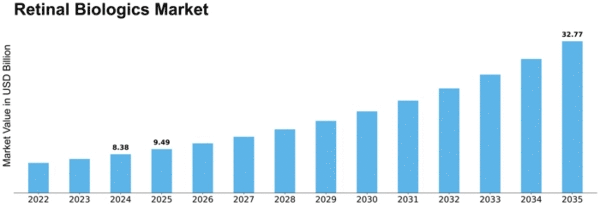
Retinal Biologics Market Size Graph
Author
Rahul Gotadki
Assistant Manager

He holds an experience of about 7+ years in Market Research and Business Consulting, working under the spectrum of Life Sciences and Healthcare domains. Rahul conceptualizes and implements a scalable business strategy and provides strategic leadership to the clients. His expertise lies in market estimation, competitive intelligence, pipeline analysis, customer assessment, etc. In addition to the above, his other responsibility includes strategic tracking of high growth markets & advising clients on the potential areas of focus they could direct their business initiatives

Leave a Comment

FAQs

What is the projected growth of the Retinal Biologics market?

The Retinal Biologics market is the expected increase in total market value of 32.77 USD billion over a defined forecast period 2025–2035. It is driven by factors such as demand trends, technological advances, regulatory changes, and geographic expansion.

What is the size of the Retinal Biologics market?

Retinal Biologics market size was valued at approximately 8.38 billion USD in 2024. This figure will reach 32.77 billion USD covering all regions (America, Europe, Asia, MEA and ROW), focusing its segments / services / distribution channels till 2035.

What is the CAGR of the Retinal Biologics market?

Retinal Biologics market is expected to grow at a CAGR of 13.2% between 2025 and 2035.

How much will the Retinal Biologics market be worth by 2035?

Retinal Biologics market is expected to be worth of 32.77 billion USD, reflecting growth driven by usage, technology and global demands by the end of 2035.

How will the Retinal Biologics market perform over the next 10 years?

Over the next 10 years the Retinal Biologics market is expected to shift from usd billion 8.38 to 32.77 billion USD, led by adoption of advanced tech, demographic trends, regulatory approvals, with potential headwinds from 2025 to 2035.

Which region held the largest market share in the Retinal Biologics market?

North America had the largest share in the market

Market Summary

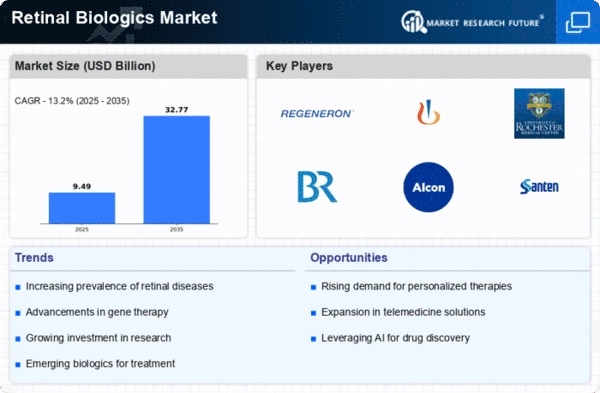
As per MRFR analysis, the Retinal Biologics Market Size was estimated at 8.38 USD Billion in 2024. The Retinal Biologics industry is projected to grow from 9.48 USD Billion in 2025 to 32.77 USD Billion by 2035, exhibiting a compound annual growth rate (CAGR) of 13.2 during the forecast period 2025 - 2035.

Key Market Trends & Highlights

The Retinal Biologics Market is poised for substantial growth driven by technological advancements and increasing investments in research.

  • North America remains the largest market for retinal biologics, driven by a robust healthcare infrastructure and high prevalence of retinal disorders.
  • The Asia-Pacific region is emerging as the fastest-growing market, fueled by increasing healthcare access and rising awareness of retinal diseases.
  • Diabetic Retinopathy represents the largest segment, while Age-related Macular Degeneration is the fastest-growing segment in the retinal biologics landscape.
  • Key market drivers include the rising prevalence of retinal disorders and advancements in biologic therapies, which are supported by increased funding for research and regulatory backing.

Market Size & Forecast

2024 Market Size 8.38 (USD Billion)
2035 Market Size 32.77 (USD Billion)
CAGR (2025 - 2035) 13.2%
Largest Regional Market Share in 2024 North America

Major Players

<p>Regeneron Pharmaceuticals (US), Novartis (CH), Roche (CH), Bayer (DE), Alcon (CH), Santen Pharmaceutical (JP), Amgen (US), Eyenovia (US), Ophthotech (US)</p>

Market Trends

The Retinal Biologics Market is currently experiencing a transformative phase, characterized by rapid advancements in therapeutic options and a growing understanding of retinal diseases. This market encompasses a range of biologic treatments aimed at addressing conditions such as age-related macular degeneration, diabetic retinopathy, and retinal vein occlusion. The increasing prevalence of these disorders, coupled with an aging population, appears to drive demand for innovative therapies. Furthermore, the integration of cutting-edge technologies, such as gene therapy and monoclonal antibodies, suggests a promising future for treatment efficacy and patient outcomes. In addition to technological advancements, the Retinal Biologics Market is influenced by evolving regulatory frameworks and heightened investment in research and development. Pharmaceutical companies are likely to focus on collaborations and partnerships to expedite the development of novel biologics. This collaborative approach may enhance the speed at which new therapies reach the market, ultimately benefiting patients. As the landscape continues to evolve, stakeholders must remain vigilant to emerging trends and shifts in consumer preferences, which could shape the future trajectory of this dynamic market.

Technological Advancements in Treatment

The Retinal Biologics Market is witnessing a surge in technological innovations, particularly in gene therapy and targeted biologics. These advancements are likely to enhance treatment precision and efficacy, offering new hope for patients with previously challenging retinal conditions.

Increased Investment in Research

There appears to be a growing trend of investment in research and development within the Retinal Biologics Market. Pharmaceutical companies are focusing on innovative solutions, which may lead to the discovery of novel therapies and improved patient outcomes.

Regulatory Changes and Collaborations

The evolving regulatory landscape is influencing the Retinal Biologics Market, as companies seek to navigate new guidelines. Collaborations between industry players and regulatory bodies may facilitate faster approvals and bring new treatments to market more efficiently.

Retinal Biologics Market Market Drivers

Market Growth Projections

The Global Retinal Biologics Market Industry is projected to experience robust growth, with estimates indicating a rise from 8.38 USD Billion in 2024 to 32.8 USD Billion by 2035. This growth trajectory suggests a compound annual growth rate of 13.2% from 2025 to 2035, driven by various factors including increasing prevalence of retinal diseases, advancements in biologic therapies, and heightened awareness of eye health. The market dynamics indicate a promising future for stakeholders involved in the development and distribution of retinal biologics.

Regulatory Support and Approvals

Regulatory bodies are playing a pivotal role in shaping the Global Retinal Biologics Market Industry through streamlined approval processes for new therapies. Initiatives aimed at expediting the review of biologics, particularly those addressing serious retinal conditions, encourage innovation and market entry. This supportive regulatory environment fosters competition among manufacturers, leading to a diverse range of treatment options for patients. As a result, the market is expected to experience substantial growth, with a projected increase to 32.8 USD Billion by 2035, reflecting the positive impact of regulatory advancements.

Advancements in Biologic Therapies

Technological advancements in biologic therapies are significantly influencing the Global Retinal Biologics Market Industry. Innovations in drug formulation, delivery systems, and targeted therapies enhance treatment efficacy and patient compliance. For instance, recent developments in gene therapy and monoclonal antibodies have shown promising results in clinical trials, leading to increased adoption. This surge in innovation is likely to contribute to a compound annual growth rate of 13.2% from 2025 to 2035, as healthcare providers seek to incorporate cutting-edge therapies into their treatment protocols.

Rising Prevalence of Retinal Diseases

The increasing incidence of retinal diseases such as age-related macular degeneration and diabetic retinopathy is a primary driver of the Global Retinal Biologics Market Industry. As populations age and lifestyle-related conditions rise, the demand for effective treatment options escalates. In 2024, the market is projected to reach 8.38 USD Billion, reflecting a growing need for innovative biologics. This trend is expected to continue, with the market potentially expanding to 32.8 USD Billion by 2035, indicating a robust growth trajectory fueled by the rising prevalence of these debilitating conditions.

Increasing Awareness and Screening Programs

The rise in awareness regarding retinal diseases and the importance of early detection is propelling the Global Retinal Biologics Market Industry. Public health initiatives and screening programs are being implemented globally to educate populations about the risks associated with retinal conditions. This heightened awareness leads to earlier diagnosis and treatment, subsequently increasing the demand for biologic therapies. As the market evolves, it is anticipated that the increased focus on preventive care will contribute to the projected market growth, reaching 8.38 USD Billion in 2024.

Growing Investment in Research and Development

Investment in research and development within the ophthalmic sector is a crucial driver for the Global Retinal Biologics Market Industry. Pharmaceutical companies and biotech firms are allocating substantial resources to discover novel biologics that address unmet medical needs. This focus on R&D is evidenced by the increasing number of clinical trials and collaborations aimed at developing advanced therapies. As a result, the market is poised for significant growth, with projections indicating a rise to 32.8 USD Billion by 2035, driven by the continuous influx of innovative treatment options.

Market Segment Insights

By Application: Diabetic Retinopathy (Largest) vs. Age-related Macular Degeneration (Fastest-Growing)

<p>In the Retinal Biologics Market, Diabetic Retinopathy holds the largest share among the application segments, driven by the rising prevalence of diabetes globally, which translates into a higher demand for effective treatments. This segment's substantial market presence is supported by developed therapies addressing the specific needs of diabetic patients. In contrast, Age-related Macular Degeneration is the fastest-growing segment, fueled by an aging population and increasing awareness regarding early diagnosis and innovative treatment options. The demand for anti-VEGF therapies is particularly significant in this area, leading to rapid advancements in research and product development. As lifestyle changes contribute to the rise in retinal disorders, each segment witnesses unique growth trajectories. For instance, the emphasis on preventive care and education about diabetic eye diseases is expected to enhance the Diabetic Retinopathy segment's stability. On the other hand, Age-related Macular Degeneration continues to expand quickly, encouraged by collaborations between researchers and pharmaceutical companies to bring forth novel biologics that meet the clinical needs of this demographic. Factors such as technological advancements and regulatory approvals will also play critical roles in shaping the future landscape of these application segments.</p>

<p>Diabetic Retinopathy (Dominant) vs. Retinal Vein Occlusion (Emerging)</p>

<p>The Diabetic Retinopathy segment remains dominant in the Retinal Biologics Market, primarily due to the consistent acceleration of diabetes cases worldwide and the implementation of comprehensive treatment plans. With effective therapies like anti-VEGF injections and laser treatments being well-established, this segment enjoys robust market advantages and patient acceptance. Concurrently, the Retinal Vein Occlusion segment is emerging as a significant player, driven by increasing recognition of the condition and the development of targeted therapies. This growing awareness, along with an expanding arsenal of treatment modalities, positions Retinal Vein Occlusion as a promising market segment. Innovations, regulatory approvals, and improved patient outcomes are expected to expedite market penetration, creating a competitive dynamic between the dominant and emerging segments.</p>

By Route of Administration: Intravitreal Injection (Largest) vs. Subretinal Injection (Fastest-Growing)

<p>In the Retinal Biologics Market, the distribution of market share among the routes of administration reveals that Intravitreal Injection holds the largest share, reflecting its widespread acceptance and familiarity among practitioners. This method is favored for delivering biologics directly into the vitreous humor, allowing for localized treatment of retinal conditions. In contrast, Subretinal Injection, while currently smaller in market share, is gaining traction due to advances in technology and its potential for targeted therapy, leading to a noticeable shift in interest towards this method. Growth trends in the Retinal Biologics Market show an increasing preference for minimally invasive techniques, with Subretinal Injection emerging as a vital player, driven by innovations in drug delivery systems. The growing incidence of retinal diseases and an aging population are fueling demand for effective treatments, further incentivizing research and development in this area. The emergence of new therapeutics and clinical successes in the Subretinal space portray a promising future as healthcare providers aim for precision in treating complex retinal conditions.</p>

<p>Intravitreal Injection (Dominant) vs. Systemic Administration (Emerging)</p>

<p>Intravitreal Injection continues to dominate the Retinal Biologics Market due to its efficacy and precision in delivering therapeutic agents directly to the site of disease. This method offers rapid action and minimizes systemic side effects, establishing it as the preferred choice for conditions like age-related macular degeneration. On the other hand, Systemic Administration is emerging as a viable option, offering broader distribution of biologics throughout the body, which may benefit patients with systemic comorbidities. While not the primary route for retinal therapies, advances in systemic delivery systems are positioning it as an attractive alternative to reach the retina indirectly. As research evolves, the landscape for retinal treatment options is expanding, with both methodologies contributing uniquely to patient outcomes.</p>

By Drug Type: Monoclonal Antibodies (Largest) vs. Gene Therapy Products (Fastest-Growing)

<p>In the Retinal Biologics Market, Monoclonal Antibodies dominate the landscape, holding the largest share due to their effectiveness in treating various retinal conditions. Their comprehensive application in conditions like age-related macular degeneration (AMD) has cemented their position as a preferred choice among healthcare providers. Conversely, Gene Therapy Products are emerging rapidly, gaining traction with innovative treatments aimed at addressing genetic disorders affecting vision. This shift highlights increasing interest in personalized medicine. The growth trends in this segment are significantly driven by advancements in biotechnology and a better understanding of retinal diseases. The ongoing research into Gene Therapy Products promises to reshape treatment paradigms, appealing to both patients and clinicians. As the market embraces new technologies, the combination of efficacy and personalization positions Gene Therapy as a frontrunner for future growth. Increasing regulatory approvals and clinical trial successes also bolster confidence in the efficacy of these modern therapies.</p>

<p>Monoclonal Antibodies (Dominant) vs. Cell-based Therapies (Emerging)</p>

<p>Monoclonal Antibodies represent a dominant force within the Retinal Biologics Market, renowned for their precision and targeted action against retinal diseases, including AMD and diabetic retinopathy. Their established use, backed by extensive clinical data, ensures they remain the go-to treatment option for many practitioners. In contrast, Cell-based Therapies, while still emerging, show incredible promise in regenerative medicine and tissue repair. These therapies aim to restore lost vision by repairing damaged retinal cells or replacing them with healthy ones. Although currently less prevalent, the innovation surrounding cell-based solutions is beginning to attract significant interest, with ongoing research highlighting their potential to offer new hope for patients with previously untreatable conditions.</p>

By Patient Demographics: Age Group (Largest) vs. Gender (Fastest-Growing)

<p>In the Retinal Biologics Market, the distribution among patient demographics indicates that the largest segment belongs to the age group category, primarily focusing on those aged 60 and above, reflecting the higher prevalence of retinal diseases in older populations. Gender-based demographics show an increasing market presence among females, who represent a growing proportion of patients receiving retinal biologics, driven by factors such as greater healthcare engagement and diagnosis rates in women.</p>

<p>Age Group: 60+ (Dominant) vs. Gender: Female (Emerging)</p>

<p>The dominance of the age group 60 and above in the Retinal Biologics Market is primarily attributed to the aging population, making them more susceptible to retinal disorders such as age-related macular degeneration. This segment exhibits stability in demand for biologics, characterized by high treatment seeking behavior. On the other hand, the female demographic is emerging as a significant group, with increasing awareness and access to treatment options. Factors contributing to this trend include targeted marketing efforts and advancements in healthcare services that cater specifically to women's needs, ultimately reshaping the market landscape.</p>

By End User: Hospitals (Largest) vs. Ophthalmology Clinics (Fastest-Growing)

<p>The retinal biologics market demonstrates a diverse distribution among various end-user segments, with hospitals holding the largest share due to their advanced infrastructure and capability to handle complex procedures. Ophthalmology clinics are also significant players, but their share is rapidly increasing as more patients prefer specialized care for retinal conditions, leading to an uptick in new clinic setups. Research institutions and home healthcare segments are smaller, yet they play crucial roles in advancing treatment through clinical trials and offering convenient care solutions, respectively.</p>

<p>Hospitals (Dominant) vs. Ophthalmology Clinics (Emerging)</p>

<p>Hospitals are the dominant end-user segment in the retinal biologics market, primarily due to their capacity to provide comprehensive care, advanced diagnostic facilities, and surgical options for a wide range of retinal disorders. With access to multidisciplinary teams and cutting-edge technologies, hospitals offer patients integrated treatment paths that enhance outcomes. Conversely, ophthalmology clinics are emerging as a vital segment owing to the increasing demand for specialized eye care. These clinics focus on personalized treatment plans and often provide a more accessible option for patients seeking care, encouraging a trend towards early diagnosis and treatment, thus contributing to their rapid growth in the market.</p>

Get more detailed insights about Retinal Biologics Market Research Report -Forecast till 2035

Regional Insights

North America : Market Leader in Biologics

North America is poised to maintain its leadership in the retinal biologics market, holding a significant market share of 4.5 in 2024. The region's growth is driven by increasing prevalence of retinal diseases, advancements in biologic therapies, and supportive regulatory frameworks. The demand for innovative treatments is further fueled by rising healthcare expenditures and a well-established healthcare infrastructure. The competitive landscape in North America is robust, featuring key players such as Regeneron Pharmaceuticals, Amgen, and Eyenovia. The U.S. is the primary market, benefiting from high R&D investments and a favorable reimbursement environment. The presence of leading pharmaceutical companies enhances innovation and accelerates the development of new therapies, ensuring sustained growth in this sector.

Europe : Emerging Market Dynamics

Europe's retinal biologics market is experiencing significant growth, with a market size of 2.5 in 2024. Key drivers include an aging population, increasing incidence of retinal disorders, and advancements in treatment options. Regulatory bodies are actively promoting research and development, which is expected to enhance market accessibility and patient outcomes. The region's healthcare policies are increasingly focused on integrating innovative therapies into standard care practices. Leading countries such as Germany, France, and the UK are at the forefront of this market, supported by strong healthcare systems and investment in biotechnology. Major players like Novartis and Roche are expanding their portfolios, contributing to a competitive landscape. The European market is characterized by collaborations between pharmaceutical companies and research institutions, fostering innovation and improving treatment options for patients.

Asia-Pacific : Rapidly Growing Market

The Asia-Pacific region is witnessing rapid growth in the retinal biologics market, with a market size of 1.8 in 2024. Factors such as increasing healthcare awareness, rising disposable incomes, and a growing elderly population are driving demand for advanced treatment options. Regulatory bodies are also enhancing their frameworks to support the introduction of innovative therapies, which is expected to further boost market growth in the coming years. Countries like Japan, China, and Australia are leading the charge in this market, with significant investments in healthcare infrastructure and biotechnology. Key players such as Santen Pharmaceutical and Alcon are actively expanding their presence in the region. The competitive landscape is evolving, with a focus on local partnerships and collaborations to enhance market penetration and improve patient access to cutting-edge treatments.

Middle East and Africa : Emerging Opportunities

The Middle East and Africa (MEA) region is gradually emerging in the retinal biologics market, with a market size of 0.58 in 2024. The growth is driven by increasing awareness of retinal diseases, improving healthcare infrastructure, and rising investments in the pharmaceutical sector. Regulatory bodies are beginning to implement frameworks that support the introduction of innovative biologics, which is expected to enhance treatment options for patients in the region. Countries such as South Africa and the UAE are leading the market, supported by government initiatives aimed at improving healthcare access. The competitive landscape is characterized by a mix of local and international players, with companies like Bayer and Roche exploring opportunities in this region. As healthcare systems evolve, the potential for growth in the retinal biologics market is significant, paving the way for new entrants and innovations.

Key Players and Competitive Insights

The Retinal Biologics Market is characterized by a dynamic competitive landscape, driven by advancements in therapeutic innovations and an increasing prevalence of retinal diseases. Key players such as Regeneron Pharmaceuticals (US), Novartis (CH), and Roche (CH) are strategically positioned to leverage their robust research and development capabilities. Regeneron Pharmaceuticals (US) focuses on pioneering monoclonal antibody therapies, while Novartis (CH) emphasizes a diversified portfolio that includes gene therapies. Roche (CH) is enhancing its presence through strategic partnerships aimed at expanding its product offerings. Collectively, these strategies foster a competitive environment that is increasingly centered on innovation and collaboration.

In terms of business tactics, companies are localizing manufacturing and optimizing supply chains to enhance operational efficiency. The market structure appears moderately fragmented, with several players vying for market share. However, the influence of major companies is substantial, as they set the pace for technological advancements and therapeutic developments, thereby shaping the overall market dynamics.

In November 2025, Regeneron Pharmaceuticals (US) announced a collaboration with a leading biotech firm to develop next-generation retinal biologics. This partnership is expected to accelerate the development of innovative therapies, potentially enhancing Regeneron's competitive edge in the market. The strategic importance of this collaboration lies in its potential to expand Regeneron's pipeline and address unmet medical needs in retinal diseases.

In October 2025, Novartis (CH) launched a new gene therapy for retinal disorders, which has shown promising results in clinical trials. This launch not only reinforces Novartis's commitment to innovation but also positions the company as a leader in the gene therapy space. The introduction of this therapy is likely to attract significant attention from healthcare providers and patients alike, further solidifying Novartis's market presence.

In September 2025, Roche (CH) entered into a strategic alliance with a digital health company to integrate artificial intelligence into its retinal biologics development process. This move is indicative of Roche's forward-thinking approach, as it seeks to enhance drug discovery and patient outcomes through technology. The integration of AI could streamline research processes and lead to more effective therapies, thereby enhancing Roche's competitive positioning.

As of December 2025, current trends in the Retinal Biologics Market include a pronounced shift towards digitalization, sustainability, and the integration of AI technologies. Strategic alliances are increasingly shaping the competitive landscape, allowing companies to pool resources and expertise. Looking ahead, competitive differentiation is likely to evolve, with a greater emphasis on innovation and technological advancements rather than solely on price. This shift underscores the importance of supply chain reliability and the ability to deliver cutting-edge therapies to meet the growing demands of the market.

Key Companies in the Retinal Biologics Market market include

Industry Developments

  • Q2 2024: Outlook Therapeutics Announces FDA Acceptance of Resubmitted Biologics License Application for ONS-5010/LYTENAVA™ (bevacizumab-vikg) for the Treatment of Wet AMD Outlook Therapeutics announced that the U.S. FDA accepted its resubmitted Biologics License Application for ONS-5010/LYTENAVA™ (bevacizumab-vikg), a retinal biologic candidate for wet age-related macular degeneration (AMD).
  • Q2 2024: Kodiak Sciences Announces FDA Acceptance of Biologics License Application for KSI-301 for Wet AMD Kodiak Sciences reported that the FDA accepted its Biologics License Application for KSI-301, an investigational anti-VEGF therapy for the treatment of wet age-related macular degeneration.
  • Q2 2024: Genentech’s Vabysmo® (faricimab-svoa) Receives European Commission Approval for Treatment of Diabetic Macular Edema and Wet AMD Genentech, a member of the Roche Group, announced that the European Commission approved Vabysmo® (faricimab-svoa) for the treatment of diabetic macular edema and wet age-related macular degeneration.
  • Q2 2024: Adverum Biotechnologies Announces $200 Million Public Offering to Advance Gene Therapy Pipeline for Retinal Diseases Adverum Biotechnologies completed a $200 million public offering to support the development of its gene therapy candidates targeting retinal diseases.
  • Q2 2024: Regeneron and Decibel Therapeutics Announce Collaboration to Develop Gene Therapies for Retinal Diseases Regeneron Pharmaceuticals and Decibel Therapeutics entered into a collaboration agreement to develop gene therapies for inherited retinal diseases.
  • Q3 2024: Ocular Therapeutix Appoints New Chief Medical Officer to Lead Retinal Biologics Market Programs Ocular Therapeutix announced the appointment of a new Chief Medical Officer to oversee the company’s expanding retinal biologics pipeline.
  • Q3 2024: Graybug Vision Announces Initiation of Phase 2b Clinical Trial of GB-102 for Retinal Vein Occlusion Graybug Vision initiated a Phase 2b clinical trial of GB-102, a long-acting intravitreal injection for the treatment of retinal vein occlusion.
  • Q3 2024: EyePoint Pharmaceuticals Announces FDA Fast Track Designation for EYP-1901 for Wet AMD EyePoint Pharmaceuticals received FDA Fast Track designation for EYP-1901, a sustained delivery anti-VEGF therapy for wet age-related macular degeneration.
  • Q3 2024: Biogen and Samsung Bioepis Announce FDA Approval of Byooviz™ (ranibizumab-nuna), a Biosimilar to Lucentis®, for Retinal Diseases Biogen and Samsung Bioepis received FDA approval for Byooviz™ (ranibizumab-nuna), the first biosimilar to Lucentis®, for the treatment of retinal diseases.
  • Q4 2024: Roche Opens New Biologics Manufacturing Facility in Switzerland to Support Ophthalmology Pipeline Roche inaugurated a new biologics manufacturing facility in Switzerland dedicated to producing biologic therapies for ophthalmic indications, including retinal diseases.
  • Q4 2024: 4D Molecular Therapeutics Announces $120 Million Series C Financing to Advance Retinal Gene Therapy Programs 4D Molecular Therapeutics raised $120 million in Series C financing to accelerate the development of its retinal gene therapy candidates.
  • Q1 2025: Regeneron Pharmaceuticals Receives FDA Approval for EYLEA® HD Injection for Wet AMD and Diabetic Retinopathy Regeneron Pharmaceuticals received FDA approval for EYLEA® HD, a high-dose formulation of aflibercept, for the treatment of wet age-related macular degeneration and diabetic retinopathy.

Future Outlook

Retinal Biologics Market Future Outlook

<p>The Retinal Biologics Market is projected to grow at a 13.2% CAGR from 2024 to 2035, driven by technological advancements, increasing prevalence of retinal diseases, and rising healthcare investments.</p>

New opportunities lie in:

  • <p>Development of personalized biologic therapies for retinal diseases</p>
  • <p>Expansion of telemedicine platforms for remote patient monitoring</p>
  • <p>Strategic partnerships with biotech firms for innovative drug delivery systems</p>

<p>By 2035, the Retinal Biologics Market is expected to achieve substantial growth and innovation.</p>

Market Segmentation

Retinal Biologics Market End User Outlook

  • Hospitals
  • Ophthalmology Clinics
  • Research Institutions
  • Home Healthcare

Retinal Biologics Market Drug Type Outlook

  • Monoclonal Antibodies
  • Gene Therapy Products
  • Small Molecules
  • Cell-based Therapies

Retinal Biologics Market Application Outlook

  • Diabetic Retinopathy
  • Age-related Macular Degeneration
  • Retinal Vein Occlusion
  • Uveitis
  • Other Retinal Disorders

Retinal Biologics Market Patient Demographics Outlook

  • Age Group
  • Gender
  • Socioeconomic Status
  • Comorbidities

Retinal Biologics Market Route of Administration Outlook

  • Intravitreal Injection
  • Subretinal Injection
  • Systemic Administration
  • Topical Administration

Report Scope

MARKET SIZE 20248.38(USD Billion)
MARKET SIZE 20259.48(USD Billion)
MARKET SIZE 203532.77(USD Billion)
COMPOUND ANNUAL GROWTH RATE (CAGR)13.2% (2024 - 2035)
REPORT COVERAGERevenue Forecast, Competitive Landscape, Growth Factors, and Trends
BASE YEAR2024
Market Forecast Period2025 - 2035
Historical Data2019 - 2024
Market Forecast UnitsUSD Billion
Key Companies ProfiledRegeneron Pharmaceuticals (US), Novartis (CH), Roche (CH), Bayer (DE), Alcon (CH), Santen Pharmaceutical (JP), Amgen (US), Eyenovia (US), Ophthotech (US)
Segments CoveredApplication, Route of Administration, Drug Type, Patient Demographics, End User
Key Market OpportunitiesAdvancements in gene therapy and personalized medicine enhance treatment options in the Retinal Biologics Market.
Key Market DynamicsRising demand for innovative therapies drives competition and regulatory scrutiny in the retinal biologics market.
Countries CoveredNorth America, Europe, APAC, South America, MEA

FAQs

What is the projected growth of the Retinal Biologics market?

The Retinal Biologics market is the expected increase in total market value of 32.77 USD billion over a defined forecast period 2025–2035. It is driven by factors such as demand trends, technological advances, regulatory changes, and geographic expansion.

What is the size of the Retinal Biologics market?

Retinal Biologics market size was valued at approximately 8.38 billion USD in 2024. This figure will reach 32.77 billion USD covering all regions (America, Europe, Asia, MEA and ROW), focusing its segments / services / distribution channels till 2035.

What is the CAGR of the Retinal Biologics market?

Retinal Biologics market is expected to grow at a CAGR of 13.2% between 2025 and 2035.

How much will the Retinal Biologics market be worth by 2035?

Retinal Biologics market is expected to be worth of 32.77 billion USD, reflecting growth driven by usage, technology and global demands by the end of 2035.

How will the Retinal Biologics market perform over the next 10 years?

Over the next 10 years the Retinal Biologics market is expected to shift from usd billion 8.38 to 32.77 billion USD, led by adoption of advanced tech, demographic trends, regulatory approvals, with potential headwinds from 2025 to 2035.

Which region held the largest market share in the Retinal Biologics market?

North America had the largest share in the market

  1. EXECUTIVE SUMMARY
    1. Market Attractiveness Analysis
      1. Global Retinal Biologics Market, by Drug Class
      2. Global Retinal Biologics Market, by Indication
      3. Global Retinal Biologics Market, by Distribution Channel
  2. MARKET INTRODUCTION
    1. Definition
    2. Scope of the Study
      1. Research Objective
      2. Assumptions
      3. Limitations
  3. RESEARCH METHODOLOGY
    1. Overview
    2. Data Mining
    3. Secondary Research
    4. Primary Research
      1. Breakdown of Primary Respondents
    5. Forecasting Indications
    6. Research Methodology for Market Size Estimation
      1. Bottom-Up Approach
      2. Top-Down Approach
    7. Data Triangulation
    8. Validation
  4. MARKET DYNAMICS
    1. Overview
    2. Drivers
    3. Restraints
    4. Opportunities
  5. MARKET FACTOR ANALYSIS
    1. Porter’s Five Forces Analysis
      1. Bargaining Power of Suppliers
      2. Bargaining Power of Buyers
      3. Threat of New Entrants
      4. Threat of Substitutes
      5. Intensity of Rivalry
    2. Value Chain Analysis
      1. R&D and Designing
      2. Manufacturing
      3. Distribution & Sales
      4. Post Sales Services
    3. Impact of COVID 19 on Retinal Biologics Market
      1. Impact on Market Value in 2023 and 2021
      2. Clinical Trial Impact
      3. Impact of Demand
      4. Strategies to Overcome the Challenges
  6. GLOBAL RETINAL BIOLOGICS MARKET, BY DRUG CLASS
    1. Overview
    2. TNF-α Inhibitor
  7. Market Estimates & Forecast, by Region, 2023–2030
  8. Market Estimates & Forecast, by Country, 2023–2030
    1. VEGF-A Antagonist
  9. Market Estimates & Forecast, by Region, 2023–2030
  10. Market Estimates & Forecast, by Country, 2023–2030
  11. GLOBAL RETINAL BIOLOGICS MARKET, BY INDICATION
    1. Overview
    2. Macular Degeneration
  12. Market Estimates & Forecast, by Region, 2023–2030
  13. Market Estimates & Forecast, by Country, 2023–2030
    1. Diabetic Retinopathy
  14. Market Estimates & Forecast, by Region, 2023–2030
  15. Market Estimates & Forecast, by Country, 2023–2030
    1. Uveitis
  16. Market Estimates & Forecast, by Region, 2023–2030
  17. Market Estimates & Forecast, by Country, 2023–2030
    1. Others
  18. Market Estimates & Forecast, by Region, 2023–2030
  19. Market Estimates & Forecast, by Country, 2023–2030
  20. GLOBAL RETINAL BIOLOGICS MARKET, BY DISTRIBUTION CHANNEL
    1. Overview
    2. Hospitals and Clinics
  21. Market Estimates & Forecast, by Region, 2023–2030
  22. Market Estimates & Forecast, by Country, 2023–2030
    1. Pharmacies
  23. Market Estimates & Forecast, by Region, 2023–2030
  24. Market Estimates & Forecast, by Country, 2023–2030
    1. Others
  25. Market Estimates & Forecast, by Region, 2023–2030
  26. Market Estimates & Forecast, by Country, 2023–2030
  27. GLOBAL RETINAL BIOLOGICS MARKET, BY REGION
    1. Overview
    2. Americas
      1. North America
      2. Latin America
    3. Europe
      1. Western Europe
      2. Eastern Europe
    4. Asia-Pacific
      1. Japan
      2. China
      3. India
      4. Australia
      5. South Korea
      6. Rest of Asia-Pacific
    5. Middle East & Africa
      1. Middle East
      2. Africa
  28. COMPANY LANDSCAPE
    1. Overview
    2. Competitor Dashboard
    3. Major Growth Strategy in the Global Retinal Biologics Market
    4. Competitive Benchmarking
    5. The Leading Player in terms of Number of Developments in the Global Retinal Biologics Market
    6. Key Developments & Growth Strategies
      1. New Product Launch/Service Deployment
      2. Merger & Acquisition
      3. Joint Ventures
    7. Major Players Financial Matrix & Market Ratio
      1. Sales & Operating Income 2019
      2. Major Players R&D Expenditure 2019
  29. COMPANY PROFILES
    1. Amgen, Inc.
      1. Company Overview
      2. Products/Services Offered
      3. Financial Overview
      4. Key Developments
      5. SWOT Analysis
      6. Key Strategies
    2. AbbVie Inc.
    3. MeiraGTx Limited
    4. Regeneron Pharmaceuticals Inc
    5. Ocular Therapeutixc.
    6. Spark Therapeutics
    7. F. Hoffmann-La Roche Ltd.
    8. Genentech
    9. Johnson & Johnson
    10. Others
  30. APPENDIX
    1. References
    2. Related Reports
    3. NOTE:
    4. This table of content is tentative and subject to change as the research progresses.
    5.   In section 11, only the top companies will be profiled. Each company will be profiled based on the Market Overview, Financials, Product Portfolio, Business Strategies, and Recent Developments parameters.
    6.   Please note: The financial details of the company cannot be provided if the information is not available in the public domain and or from reliable sources.
  31. LIST OF TABLES
  32. GLOBAL RETINAL BIOLOGICS MARKET SYNOPSIS, 2017–2030
  33. GLOBAL RETINAL BIOLOGICS MARKET ESTIMATES & FORECAST, 2023–2030 (USD MILLION)
  34. GLOBAL RETINAL BIOLOGICS MARKET, BY DRUG CLASS, 2023–2030 (USD MILLION)
  35. GLOBAL RETINAL BIOLOGICS MARKET, BY INDICATION, 2023–2030 (USD MILLION)
  36. GLOBAL RETINAL BIOLOGICS MARKET, BY DISTRIBUTION CHANNELS, 2023–2030 (USD MILLION)
  37. GLOBAL RETINAL BIOLOGICS MARKET, BY REGION, 2023–2030 (USD MILLION)
  38. NORTH AMERICA: RETINAL BIOLOGICS MARKET, BY DRUG CLASS, 2023–2030 (USD MILLION)
  39. NORTH AMERICA: RETINAL BIOLOGICS MARKET, BY INDICATION, 2023–2030 (USD MILLION)
  40. NORTH AMERICA: RETINAL BIOLOGICS MARKET, BY DISTRIBUTION CHANNELS, 2023–2030 (USD MILLION)
  41. US: RETINAL BIOLOGICS MARKET, BY DRUG CLASS, 2023–2030 (USD MILLION)
  42. US: RETINAL BIOLOGICS MARKET, BY INDICATION, 2023–2030 (USD MILLION)
  43. US: RETINAL BIOLOGICS MARKET, BY DISTRIBUTION CHANNELS, 2023–2030 (USD MILLION)
  44. CANADA: RETINAL BIOLOGICS MARKET, BY DRUG CLASS, 2023–2030 (USD MILLION)
  45. CANADA: RETINAL BIOLOGICS MARKET, BY INDICATION, 2023–2030 (USD MILLION)
  46. CANADA: RETINAL BIOLOGICS MARKET, BY DISTRIBUTION CHANNELS, 2023–2030 (USD MILLION)
  47. LATIN AMERICA: RETINAL BIOLOGICS MARKET, BY DRUG CLASS, 2023–2030 (USD MILLION)
  48. LATIN AMERICA: RETINAL BIOLOGICS MARKET, BY INDICATION, 2023–2030 (USD MILLION)
  49. LATIN AMERICA: RETINAL BIOLOGICS MARKET, BY DISTRIBUTION CHANNELS, 2023–2030 (USD MILLION)
  50. EUROPE: RETINAL BIOLOGICS MARKET, BY DRUG CLASS, 2023–2030 (USD MILLION)
  51. EUROPE: RETINAL BIOLOGICS MARKET, BY INDICATION, 2023–2030 (USD MILLION)
  52. EUROPE: RETINAL BIOLOGICS MARKET, BY DISTRIBUTION CHANNELS, 2023–2030 (USD MILLION)
  53. WESTERN EUROPE: RETINAL BIOLOGICS MARKET, BY DRUG CLASS, 2023–2030 (USD MILLION)
  54. WESTERN EUROPE: RETINAL BIOLOGICS MARKET, BY INDICATION, 2023–2030 (USD MILLION)
  55. WESTERN EUROPE: RETINAL BIOLOGICS MARKET, BY DISTRIBUTION CHANNELS, 2023–2030 (USD MILLION)
  56. EASTERN EUROPE: RETINAL BIOLOGICS MARKET, BY DRUG CLASS, 2023–2030 (USD MILLION)
  57. EASTERN EUROPE: RETINAL BIOLOGICS MARKET, BY INDICATION, 2023–2030 (USD MILLION)
  58. EASTERN EUROPE: RETINAL BIOLOGICS MARKET, BY DISTRIBUTION CHANNELS, 2023–2030 (USD MILLION)
  59. ASIA-PACIFIC: RETINAL BIOLOGICS MARKET, BY DRUG CLASS, 2023–2030 (USD MILLION)
  60. ASIA-PACIFIC: RETINAL BIOLOGICS MARKET, BY INDICATION, 2023–2030 (USD MILLION)
  61. ASIA-PACIFIC: RETINAL BIOLOGICS MARKET, BY DISTRIBUTION CHANNELS, 2023–2030 (USD MILLION)
  62. MIDDLE EAST & AFRICA: RETINAL BIOLOGICS MARKET, BY DRUG CLASS, 2023–2030 (USD MILLION)
  63. MIDDLE EAST & AFRICA: RETINAL BIOLOGICS MARKET, BY INDICATION, 2023–2030 (USD MILLION)
  64. MIDDLE EAST & AFRICA: RETINAL BIOLOGICS MARKET, BY DISTRIBUTION CHANNELS, 2023–2030 (USD MILLION)
  65. LIST OF FIGURES
  66. RESEARCH PROCESS
  67. MARKET STRUCTURE FOR THE GLOBAL RETINAL BIOLOGICS MARKET
  68. MARKET DYNAMICS FOR THE GLOBAL RETINAL BIOLOGICS MARKET
  69. GLOBAL RETINAL BIOLOGICS MARKET SHARE, BY DRUG CLASS, 2019 (%)
  70. GLOBAL RETINAL BIOLOGICS MARKET SHARE, BY INDICATION, 2019 (%)
  71. GLOBAL RETINAL BIOLOGICS MARKET SHARE, BY DISTRIBUTION CHANNELS, 2019 (%)
  72. GLOBAL RETINAL BIOLOGICS MARKET SHARE, BY REGION, 2019 (%)
  73. AMERICAS: RETINAL BIOLOGICS MARKET SHARE BY REGION, 2019 (%)
  74. NORTH AMERICA: RETINAL BIOLOGICS MARKET SHARE, BY COUNTRY, 2019 (%)
  75. EUROPE: RETINAL BIOLOGICS MARKET SHARE, BY REGION, 2019 (%)
  76. WESTERN EUROPE: RETINAL BIOLOGICS MARKET SHARE, BY COUNTRY, 2019 (%)
  77. ASIA-PACIFIC: RETINAL BIOLOGICS MARKET SHARE, BY COUNTRY, 2019 (%)
  78. MIDDLE EAST & AFRICA: RETINAL BIOLOGICS MARKET SHARE, BY COUNTRY, 2019 (%)
  79. GLOBAL RETINAL BIOLOGICS MARKET: COMPANY SHARE ANALYSIS, 2019 (%)
  80. AMGEN, INC.: KEY FINANCIALS
  81. AMGEN, INC.: SEGMENTAL REVENUE
  82. AMGEN, INC.: REGIONAL REVENUE
  83. ABBVIE INC.: KEY FINANCIALS
  84. ABBVIE INC..: SEGMENTAL REVENUE
  85. ABBVIE INC.: REGIONAL REVENUE
  86. MEIRAGTX LIMITED: KEY FINANCIALS
  87. MEIRAGTX LIMITED: SEGMENTAL REVENUE
  88. MEIRAGTX LIMITED: REGIONAL REVENUE
  89. REGENERON PHARMACEUTICALS INC: KEY FINANCIALS
  90. REGENERON PHARMACEUTICALS INC: SEGMENTAL REVENUE
  91. REGENERON PHARMACEUTICALS INC: REGIONAL REVENUE
  92. OCULAR THERAPEUTIXC.: KEY FINANCIALS
  93. OCULAR THERAPEUTIXC.: SEGMENTAL REVENUE
  94. OCULAR THERAPEUTIXC.: REGIONAL REVENUE
  95. SPARK THERAPEUTICS: KEY FINANCIALS
  96. SPARK THERAPEUTICS: SEGMENTAL REVENUE
  97. SPARK THERAPEUTICS: REGIONAL REVENUE
  98. F. HOFFMANN-LA ROCHE LTD.: KEY FINANCIALS
  99. F. HOFFMANN-LA ROCHE LTD.: SEGMENTAL REVENUE
  100. F. HOFFMANN-LA ROCHE LTD.: REGIONAL REVENUE
  101. GENENTECH: KEY FINANCIALS
  102. GENENTECH: SEGMENTAL REVENUE
  103. GENENTECH: REGIONAL REVENUE
  104. JOHNSON & JOHNSON: KEY FINANCIALS
  105. JOHNSON & JOHNSON: SEGMENTAL REVENUE
  106. JOHNSON & JOHNSON: REGIONAL REVENUE

Retinal Biologics Market Segmentation

Retinal Biologics Drug class Outlook (USD Billion, 2018-2032)

  • TNF-A inhibitor
  • VEGF-A Antagonist

Retinal Biologics Indication Outlook (USD Billion, 2018-2032)

  • Mascular Degeneration
  • Diabetic retinopathy
  • Uveitis
  • Others

Retinal Biologics Distribution Channel Outlook (USD Billion, 2018-2032)

  • Hospitals and clinics
  • Pharmacies
  • Others

Retinal Biologics Regional Outlook (USD Billion, 2018-2032)

  • North America Outlook (USD Billion, 2018-2032)

    • Retinal Biologics by Drug class
      • TNF-A inhibitor
      • VEGF-A Antagonist
    • Retinal Biologics Indication Outlook (USD Billion, 2018-2032)

      • Mascular Degeneration
      • Diabetic retinopathy
      • Uveitis
      • Others
    • Retinal Biologics Distribution Channel Outlook (USD Billion, 2018-2032)

      • Hospitals and clinics
      • Pharmacies
      • Others
    • US Outlook (USD Billion, 2018-2032)

    • Retinal Biologics by Drug class
      • TNF-A inhibitor
      • VEGF-A Antagonist
    • Retinal Biologics Indication Outlook (USD Billion, 2018-2032)

      • Mascular Degeneration
      • Diabetic retinopathy
      • Uveitis
      • Others
    • Retinal Biologics Distribution Channel Outlook (USD Billion, 2018-2032)

      • Hospitals and clinics
      • Pharmacies
      • Others
    • Canada Outlook (USD Billion, 2018-2032)

    • Retinal Biologics by Drug class
      • TNF-A inhibitor
      • VEGF-A Antagonist
    • Retinal Biologics Indication Outlook (USD Billion, 2018-2032)

      • Mascular Degeneration
      • Diabetic retinopathy
      • Uveitis
      • Others
    • Retinal Biologics Distribution Channel Outlook (USD Billion, 2018-2032)

      • Hospitals and clinics
      • Pharmacies
      • Others
  • Europe Outlook (USD Billion, 2018-2032)

    • Retinal Biologics by Drug class
      • TNF-A inhibitor
      • VEGF-A Antagonist
    • Retinal Biologics Indication Outlook (USD Billion, 2018-2032)

      • Mascular Degeneration
      • Diabetic retinopathy
      • Uveitis
      • Others
    • Retinal Biologics Distribution Channel Outlook (USD Billion, 2018-2032)

      • Hospitals and clinics
      • Pharmacies
      • Others
    • Germany Outlook (USD Billion, 2018-2032)

    • Retinal Biologics by Drug class
      • TNF-A inhibitor
      • VEGF-A Antagonist
    • Retinal Biologics Indication Outlook (USD Billion, 2018-2032)

      • Mascular Degeneration
      • Diabetic retinopathy
      • Uveitis
      • Others
    • Retinal Biologics Distribution Channel Outlook (USD Billion, 2018-2032)

      • Hospitals and clinics
      • Pharmacies
      • Others
    • France Outlook (USD Billion, 2018-2032)

    • Retinal Biologics by Drug class
      • TNF-A inhibitor
      • VEGF-A Antagonist
    • Retinal Biologics Indication Outlook (USD Billion, 2018-2032)

      • Mascular Degeneration
      • Diabetic retinopathy
      • Uveitis
      • Others
    • Retinal Biologics Distribution Channel Outlook (USD Billion, 2018-2032)

      • Hospitals and clinics
      • Pharmacies
      • Others
    • UK Outlook (USD Billion, 2018-2032)

    • Retinal Biologics by Drug class
      • TNF-A inhibitor
      • VEGF-A Antagonist
    • Retinal Biologics Indication Outlook (USD Billion, 2018-2032)

      • Mascular Degeneration
      • Diabetic retinopathy
      • Uveitis
      • Others
    • Retinal Biologics Distribution Channel Outlook (USD Billion, 2018-2032)

      • Hospitals and clinics
      • Pharmacies
      • Others
    • Italy Outlook (USD Billion, 2018-2032)

    • Retinal Biologics by Drug class
      • TNF-A inhibitor
      • VEGF-A Antagonist
    • Retinal Biologics Indication Outlook (USD Billion, 2018-2032)

      • Mascular Degeneration
      • Diabetic retinopathy
      • Uveitis
      • Others
    • Retinal Biologics Distribution Channel Outlook (USD Billion, 2018-2032)

      • Hospitals and clinics
      • Pharmacies
      • Others
    • Spain Outlook (USD Billion, 2018-2032)

    • Retinal Biologics by Drug class
      • TNF-A inhibitor
      • VEGF-A Antagonist
    • Retinal Biologics Indication Outlook (USD Billion, 2018-2032)

      • Mascular Degeneration
      • Diabetic retinopathy
      • Uveitis
      • Others
    • Retinal Biologics Distribution Channel Outlook (USD Billion, 2018-2032)

      • Hospitals and clinics
      • Pharmacies
      • Others
    • Rest Of Europe Outlook (USD Billion, 2018-2032)

    • Retinal Biologics by Drug class
      • TNF-A inhibitor
      • VEGF-A Antagonist
    • Retinal Biologics Indication Outlook (USD Billion, 2018-2032)

      • Mascular Degeneration
      • Diabetic retinopathy
      • Uveitis
      • Others
    • Retinal Biologics Distribution Channel Outlook (USD Billion, 2018-2032)

      • Hospitals and clinics
      • Pharmacies
      • Others
  • Asia-Pacific Outlook (USD Billion, 2018-2032)

    • Retinal Biologics by Drug class
      • TNF-A inhibitor
      • VEGF-A Antagonist
    • Retinal Biologics Indication Outlook (USD Billion, 2018-2032)

      • Mascular Degeneration
      • Diabetic retinopathy
      • Uveitis
      • Others
    • Retinal Biologics Distribution Channel Outlook (USD Billion, 2018-2032)

      • Hospitals and clinics
      • Pharmacies
      • Others
    • China Outlook (USD Billion, 2018-2032)

    • Retinal Biologics by Drug class
      • TNF-A inhibitor
      • VEGF-A Antagonist
    • Retinal Biologics Indication Outlook (USD Billion, 2018-2032)

      • Mascular Degeneration
      • Diabetic retinopathy
      • Uveitis
      • Others
    • Retinal Biologics Distribution Channel Outlook (USD Billion, 2018-2032)

      • Hospitals and clinics
      • Pharmacies
      • Others
    • Japan Outlook (USD Billion, 2018-2032)

    • Retinal Biologics by Drug class
      • TNF-A inhibitor
      • VEGF-A Antagonist
    • Retinal Biologics Indication Outlook (USD Billion, 2018-2032)

      • Mascular Degeneration
      • Diabetic retinopathy
      • Uveitis
      • Others
    • Retinal Biologics Distribution Channel Outlook (USD Billion, 2018-2032)

      • Hospitals and clinics
      • Pharmacies
      • Others
    • India Outlook (USD Billion, 2018-2032)

    • Retinal Biologics by Drug class
      • TNF-A inhibitor
      • VEGF-A Antagonist
    • Retinal Biologics Indication Outlook (USD Billion, 2018-2032)

      • Mascular Degeneration
      • Diabetic retinopathy
      • Uveitis
      • Others
    • Retinal Biologics Distribution Channel Outlook (USD Billion, 2018-2032)

      • Hospitals and clinics
      • Pharmacies
      • Others
    • Australia Outlook (USD Billion, 2018-2032)

    • Retinal Biologics by Drug class
      • TNF-A inhibitor
      • VEGF-A Antagonist
    • Retinal Biologics Indication Outlook (USD Billion, 2018-2032)

      • Mascular Degeneration
      • Diabetic retinopathy
      • Uveitis
      • Others
    • Retinal Biologics Distribution Channel Outlook (USD Billion, 2018-2032)

      • Hospitals and clinics
      • Pharmacies
      • Others
    • Rest of Asia-Pacific Outlook (USD Billion, 2018-2032)

    • Retinal Biologics by Drug class
      • TNF-A inhibitor
      • VEGF-A Antagonist
    • Retinal Biologics Indication Outlook (USD Billion, 2018-2032)

      • Mascular Degeneration
      • Diabetic retinopathy
      • Uveitis
      • Others
    • Retinal Biologics Distribution Channel Outlook (USD Billion, 2018-2032)

      • Hospitals and clinics
      • Pharmacies
      • Others
  • Rest of the World Outlook (USD Billion, 2018-2032)

    • Retinal Biologics by Drug class
      • TNF-A inhibitor
      • VEGF-A Antagonist
    • Retinal Biologics Indication Outlook (USD Billion, 2018-2032)

      • Mascular Degeneration
      • Diabetic retinopathy
      • Uveitis
      • Others
    • Retinal Biologics Distribution Channel Outlook (USD Billion, 2018-2032)

      • Hospitals and clinics
      • Pharmacies
      • Others
    • Middle East Outlook (USD Billion, 2018-2032)

    • Retinal Biologics by Drug class
      • TNF-A inhibitor
      • VEGF-A Antagonist
    • Retinal Biologics Indication Outlook (USD Billion, 2018-2032)

      • Mascular Degeneration
      • Diabetic retinopathy
      • Uveitis
      • Others
    • Retinal Biologics Distribution Channel Outlook (USD Billion, 2018-2032)

      • Hospitals and clinics
      • Pharmacies
      • Others
    • Africa Outlook (USD Billion, 2018-2032)

    • Retinal Biologics by Drug class
      • TNF-A inhibitor
      • VEGF-A Antagonist
    • Retinal Biologics Indication Outlook (USD Billion, 2018-2032)

      • Mascular Degeneration
      • Diabetic retinopathy
      • Uveitis
      • Others
    • Retinal Biologics Distribution Channel Outlook (USD Billion, 2018-2032)

      • Hospitals and clinics
      • Pharmacies
      • Others
    • Latin America Outlook (USD Billion, 2018-2032)

    • Retinal Biologics by Drug class
      • TNF-A inhibitor
      • VEGF-A Antagonist
    • Retinal Biologics Indication Outlook (USD Billion, 2018-2032)

      • Mascular Degeneration
      • Diabetic retinopathy
      • Uveitis
      • Others
    • Retinal Biologics Distribution Channel Outlook (USD Billion, 2018-2032)

      • Hospitals and clinics
      • Pharmacies
      • Others
Infographic

Free Sample Request

Kindly complete the form below to receive a free sample of this Report

Get Free Sample

Customer Strories

Compare Licence

×
Features License Type
Single User Multiuser License Enterprise User
Price $4,950 $5,950 $7,250
Maximum User Access Limit 1 User Upto 10 Users Unrestricted Access Throughout the Organization
Free Customization
Direct Access to Analyst
Deliverable Format
Platform Access
Discount on Next Purchase 10% 15% 15%
Printable Versions