×
Request Free Sample ×

Kindly complete the form below to receive a free sample of this Report

* Please use a valid business email

Leading companies partner with us for data-driven Insights

clients tt-cursor
Hero Background

Rotary Steerable System Market

ID: MRFR/EnP/9122-CR
112 Pages
Anshula Mandaokar
June 2022

Rotary Steerable System Market Research Report Information By Type (Push the Bit and Point the Bit), By Application (Onshore and Offshore), and By Region (North America, Europe, Asia-Pacific, and Rest Of The World) – Market Forecast Till 2035

Share:
Download PDF ×

We do not share your information with anyone. However, we may send you emails based on your report interest from time to time. You may contact us at any time to opt-out.

Rotary Steerable System Market Infographic
Purchase Options

Rotary Steerable System Market Summary

As per MRFR analysis, the Rotary Steerable System Market Size was estimated at 9.26 USD Billion in 2024. The Rotary Steerable System industry is projected to grow from 9.73 USD Billion in 2025 to 15.86 USD Billion by 2035, exhibiting a compound annual growth rate (CAGR) of 5.01 during the forecast period 2025 - 2035.

Key Market Trends & Highlights

The Rotary Steerable System Market is poised for substantial growth driven by technological advancements and a focus on sustainability.

  • Technological advancements are enhancing the efficiency and precision of rotary steerable systems, particularly in North America.
  • The market for rotary steerable systems is expanding rapidly in the Asia-Pacific region, driven by increasing investments in oil and gas exploration.
  • Oil and gas exploration remains the largest segment, while geothermal energy is emerging as the fastest-growing segment in the rotary steerable system market.
  • Key market drivers include technological advancements in drilling and a growing emphasis on sustainability and environmental regulations.

Market Size & Forecast

2024 Market Size 9.26 (USD Billion)
2035 Market Size 15.86 (USD Billion)
CAGR (2025 - 2035) 5.01%

Major Players

Schlumberger (US), Halliburton (US), Baker Hughes (US), National Oilwell Varco (US), Weatherford International (IE), Nabors Industries (BM), Precision Drilling Corporation (CA), KCA Deutag (GB), Kongsberg Gruppen (NO)

Rotary Steerable System Market Trends

The Rotary Steerable System Market is currently experiencing a transformative phase, driven by advancements in drilling technologies and the increasing demand for efficient oil and gas extraction methods. This market appears to be characterized by a growing emphasis on precision and control in drilling operations, which enhances the overall productivity and reduces operational costs. As companies seek to optimize their drilling processes, the integration of rotary steerable systems is becoming more prevalent, suggesting a shift towards more sophisticated and automated solutions. Furthermore, the rising focus on sustainable practices within the energy sector may also influence the adoption of these systems, as they can potentially minimize environmental impacts associated with drilling activities. In addition, the Rotary Steerable System Market seems to be influenced by the expansion of exploration activities in unconventional resources. As energy companies venture into deeper and more complex reservoirs, the need for advanced drilling technologies becomes increasingly critical. This trend indicates a potential for growth in the market, as rotary steerable systems offer enhanced capabilities for navigating challenging geological formations. Overall, the market appears poised for continued evolution, with innovations likely to shape its future landscape and address the changing needs of the energy industry.

Technological Advancements

The Rotary Steerable System Market is witnessing rapid technological advancements that enhance drilling efficiency and accuracy. Innovations in materials and design are leading to more reliable systems, which can operate in challenging environments. This trend suggests that companies are increasingly investing in research and development to improve performance and reduce downtime.

Sustainability Focus

There is a growing emphasis on sustainability within the Rotary Steerable System Market, as companies strive to minimize their environmental footprint. The adoption of these systems can lead to more efficient drilling practices, which may reduce waste and energy consumption. This trend indicates a shift towards environmentally responsible operations in the energy sector.

Expansion in Unconventional Resources

The exploration of unconventional resources is driving demand in the Rotary Steerable System Market. As energy companies seek to tap into deeper and more complex reservoirs, the need for advanced drilling technologies becomes paramount. This trend highlights the market's potential for growth as rotary steerable systems provide the necessary capabilities for navigating intricate geological formations.

Rotary Steerable System Market Drivers

Focus on Cost Reduction

In the Global Rotary Steerable System Market Industry, there is a pronounced focus on cost reduction strategies among operators. Companies are increasingly seeking technologies that minimize drilling costs while maximizing output. Rotary steerable systems contribute to this objective by reducing the number of trips required during drilling, thereby saving time and resources. The potential for cost savings is substantial, as operators can achieve more efficient drilling operations with fewer resources. This emphasis on cost efficiency is likely to sustain the market's growth trajectory, particularly as operators strive to enhance their bottom lines.

Market Growth Projections

The Global Rotary Steerable System Market Industry is poised for substantial growth, with projections indicating a market value of 9.26 USD Billion in 2024 and an anticipated increase to 15.9 USD Billion by 2035. This growth trajectory suggests a compound annual growth rate (CAGR) of 5.03% from 2025 to 2035. The increasing adoption of rotary steerable systems across various drilling applications, coupled with advancements in technology and rising demand for energy resources, is expected to drive this expansion. The market's robust growth reflects the industry's adaptability to changing energy landscapes and operational needs.

Technological Advancements

The Global Rotary Steerable System Market Industry is experiencing rapid technological advancements, which enhance drilling efficiency and accuracy. Innovations such as improved sensor technologies and real-time data analytics are being integrated into rotary steerable systems, allowing for better decision-making during drilling operations. For instance, the implementation of advanced telemetry systems enables operators to monitor drilling parameters in real-time, leading to optimized performance. As a result, the market is projected to reach 9.26 USD Billion in 2024, reflecting the growing demand for sophisticated drilling solutions that improve operational efficiency.

Environmental Considerations

Environmental considerations are increasingly shaping the Global Rotary Steerable System Market Industry. As stakeholders become more aware of the ecological impact of drilling activities, there is a growing demand for technologies that minimize environmental footprints. Rotary steerable systems, with their precision drilling capabilities, reduce the risk of surface contamination and improve resource recovery rates. This alignment with environmental sustainability is likely to attract investment and support from both public and private sectors, further propelling the market forward. The industry's commitment to sustainable practices may enhance its reputation and market viability.

Regulatory Support and Standards

The Global Rotary Steerable System Market Industry benefits from regulatory support and established standards that promote safety and efficiency in drilling operations. Governments and industry associations are actively developing guidelines that encourage the adoption of advanced drilling technologies, including rotary steerable systems. Compliance with these regulations not only enhances operational safety but also fosters innovation within the industry. As regulatory frameworks evolve, they are expected to drive the adoption of rotary steerable systems, contributing to the market's anticipated growth rate of 5.03% from 2025 to 2035.

Increasing Demand for Oil and Gas

The Global Rotary Steerable System Market Industry is significantly influenced by the increasing demand for oil and gas. As global energy consumption rises, particularly in emerging economies, the need for efficient drilling technologies becomes paramount. Rotary steerable systems facilitate the extraction of hydrocarbons from complex geological formations, thereby enhancing production rates. This trend is expected to drive the market's growth, with projections indicating a market value of 15.9 USD Billion by 2035. The industry's ability to adapt to evolving energy demands positions it favorably in the global energy landscape.
Market Segment Insights

By Application: Oil and Gas Exploration (Largest) vs. Geothermal Energy (Fastest-Growing)

In the Rotary Steerable System Market, the application segment is primarily dominated by Oil and Gas Exploration, which captures the largest share due to its extensive utilization in drilling operations. This sector drives significant demand for rotary steerable systems as they enhance efficiency and precision during exploration and extraction processes. Other segments like Mining, Geothermal Energy, and Water Well Drilling also contribute to this market; however, they have comparatively smaller shares.

Oil and Gas Exploration (Dominant) vs. Geothermal Energy (Emerging)

Oil and Gas Exploration remains the dominant application of rotary steerable systems, primarily due to the growing need for advanced drilling technologies in various terrains. This segment prioritizes precision and reliability in drilling operations, making these systems essential for reducing costs and minimizing risks. On the other hand, Geothermal Energy is emerging as a key player, fueled by a rising interest in sustainable energy solutions. Its growth is driven by technological advancements that facilitate deeper drilling capabilities, tapping into geothermal resources, and enhancing overall energy efficiency.

By Technology Type: Rotary Steerable Systems (Largest) vs. Conventional Systems (Fastest-Growing)

In the Rotary Steerable System Market, the share distribution reveals a strong preference for Rotary Steerable Systems, which dominate due to their efficiency and advanced capabilities in drilling technology. Conventional Systems follow, maintaining a significant presence, while Hybrid Systems are starting to carve out a niche leveraging advantages from both rotary and conventional technologies, but still lag behind the other two in market share.

Technology: Rotary Steerable Systems (Dominant) vs. Conventional Systems (Emerging)

Rotary Steerable Systems have established themselves as the dominant technology in the rotary steerable system market, recognized for their precision in directional drilling and ability to enhance wellbore quality. Their advanced designs allow for real-time adjustments, which optimize drilling performance and reduce operational costs. Conversely, Conventional Systems are emerging with improvements that focus on cost-effectiveness and reliability, appealing to operators who prioritize traditional methods. These systems are being enhanced with new technologies to improve their efficiency and flexibility, making them viable alternatives for certain drilling environments.

By End User: Oil and Gas Companies (Largest) vs. Mining Corporations (Fastest-Growing)

In the Rotary Steerable System Market, Oil and Gas Companies represent the largest segment, commanding a significant share due to their extensive drilling operations. The demand for sophisticated drilling technologies within this sector has propelled its growth, making it a crucial end user for rotary steerable systems. Following closely, Mining Corporations are emerging as a vital segment with a growing demand for advanced drilling solutions to optimize mineral extraction processes, contributing substantially to the overall market dynamics. These segments collectively shape market trends and influence technological advancements in the industry. As the Oil and Gas sector continues to evolve with the integration of innovative technologies, its growth is underscored by the increasing need for efficient and reliable drilling equipment. On the other hand, Mining Corporations are experiencing rapid expansion due to rising resource demands and advancements in drilling methods. This is enhanced by the need for sustainable practices and operational efficiency, propelling the adoption of rotary steerable systems. The geothermal and water well drilling sectors, while relevant, are smaller in size and contribute to the market differently, allowing for unique development opportunities.

Oil and Gas Companies (Dominant) vs. Mining Corporations (Emerging)

Oil and Gas Companies dominate the Rotary Steerable System Market with a strong focus on efficiency, accuracy, and technological innovation. Their extensive drilling activities and substantial investment in advanced technologies drive the demand for sophisticated drilling solutions. In contrast, Mining Corporations are emerging players, experiencing rapid growth as they increasingly adopt rotary steerable systems to enhance mineral extraction efficiency and reduce operational costs. The integration of these systems allows mining companies to optimize drilling processes, navigate complex geological formations, and improve safety measures. The differentiation between these segments emphasizes the varied applications and strategic priorities that characterize their market presence.

By Component Type: Drilling Tools (Largest) vs. Control Systems (Fastest-Growing)

The Rotary Steerable System Market showcases distinct market share distributions among its core component types: Drilling Tools, Control Systems, Sensors, and Power Supply Units. Among these components, Drilling Tools hold the largest share, reflecting their critical role in drilling operations within the market. Control Systems, while smaller in share, demonstrate significant importance due to their integral function in managing performance and efficiency during drilling processes. Sensors and Power Supply Units, although essential, occupy a comparatively minor market position, emphasizing the dominance of tools and systems within this space.

Drilling Tools (Dominant) vs. Sensors (Emerging)

Drilling Tools stand out as the dominant component in the Rotary Steerable System Market due to their essential role in facilitating effective drilling operations. These tools are designed for precision and efficiency, leading to reduced drilling times and improved overall performance. On the other hand, Sensors represent an emerging segment, gaining traction through innovations that enhance the capabilities of rotary steerable systems. As operational safety and data accuracy become increasingly paramount, Sensor technology is advancing rapidly, offering features that support real-time monitoring and adjustments during drilling. This positions Sensors as a vital area for future growth, reflecting the market’s shift towards automation and intelligent drilling solutions.

By Deployment Type: Offshore (Largest) vs. Onshore (Fastest-Growing)

The deployment type segment in the Rotary Steerable System Market is characterized by a significant distribution among onshore, offshore, and land-based applications. Currently, offshore deployments dominate the market, capturing the largest share due to the rising demand for drilling operations in deepwater environments. Onshore systems, while significant, are typically associated with mature markets and established practices that contribute to their stable share. Land-based systems play a more niche role but are gradually gaining traction as technology advances. Growth trends indicate a promising future for onshore rotary steerable systems, which are anticipated to become the fastest-growing segment in terms of adoption. This trend is fueled by increasing exploration and production activities in unconventional resources, necessitating efficient drilling technologies. Additionally, technological advancements, combined with the need for cost-effective and efficient drilling solutions, are propelling growth in the offshore segment, ensuring a competitive landscape as market players innovate and expand their capabilities.

Offshore (Dominant) vs. Onshore (Emerging)

Offshore rotary steerable systems have established themselves as the dominant force in the market, largely due to their ability to navigate complex geological formations in deep sea environments. Their resilience and performance under harsh conditions make them a preferred choice for companies engaged in high-stakes exploration. In contrast, onshore systems are emerging rapidly, driven by technological innovations and the growth of unconventional oil and gas resources. These onshore systems are particularly appealing to operators looking to enhance efficiency and reduce operational costs. Both segments are crucial, with offshore technologies leading the way while onshore solutions capture the attention of a growing base of operators looking to optimize their drilling operations.

Get more detailed insights about Rotary Steerable System Market

Regional Insights

North America : Market Leader in Innovation

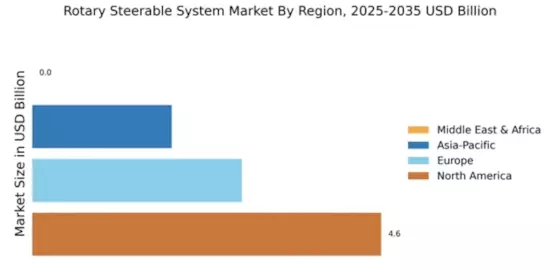
North America continues to lead the Rotary Steerable System market, holding a significant share of 4.63 in 2024. The region's growth is driven by advancements in drilling technologies, increasing oil and gas exploration activities, and supportive regulatory frameworks. The demand for efficient drilling solutions is further fueled by the need to optimize resource extraction and reduce operational costs. Regulatory catalysts, including environmental standards, are also shaping market dynamics, encouraging innovation and sustainability in drilling practices. The competitive landscape in North America is robust, featuring key players such as Schlumberger, Halliburton, and Baker Hughes. These companies are at the forefront of technological advancements, offering cutting-edge solutions that enhance drilling efficiency. The presence of established firms, coupled with a strong focus on R&D, positions the region as a hub for innovation in the rotary steerable systems market. As exploration activities ramp up, North America is expected to maintain its leadership position in the coming years.

Europe : Emerging Market with Growth Potential

Europe's Rotary Steerable System market is poised for growth, with a market size of 2.78. The region is witnessing increased investments in oil and gas exploration, driven by the need for energy security and sustainability. Regulatory frameworks promoting renewable energy and efficient resource management are also influencing market dynamics. The demand for advanced drilling technologies is expected to rise as companies seek to enhance operational efficiency and reduce environmental impact. Leading countries in Europe, such as the UK and Norway, are home to several key players, including KCA Deutag and Weatherford International. The competitive landscape is characterized by a mix of established firms and emerging players, all striving to innovate and capture market share. As the region transitions towards more sustainable energy practices, the rotary steerable systems market is likely to benefit from increased demand for efficient drilling solutions.

Asia-Pacific : Emerging Powerhouse in Drilling

The Asia-Pacific region, with a market size of 1.85, is emerging as a significant player in the Rotary Steerable System market. The growth is driven by increasing energy demands, particularly in countries like China and India, where rapid industrialization and urbanization are fueling exploration activities. Additionally, supportive government policies aimed at enhancing energy security and reducing dependence on imports are catalyzing market growth. The region is also witnessing a shift towards advanced drilling technologies to improve efficiency and reduce costs. Key players in the Asia-Pacific market include Nabors Industries and Precision Drilling Corporation, which are actively expanding their operations to meet the rising demand. The competitive landscape is evolving, with both local and international firms vying for market share. As the region continues to invest in energy infrastructure, the rotary steerable systems market is expected to experience substantial growth in the coming years.

Middle East and Africa : Resource-Rich Frontier

The Middle East and Africa region currently shows a market size of 0.0 in the Rotary Steerable System sector, indicating significant challenges in market development. Factors such as geopolitical instability, fluctuating oil prices, and limited investment in advanced drilling technologies are hindering growth. However, the region's vast oil reserves present a long-term opportunity for market expansion. Governments are increasingly recognizing the need for modernization in drilling practices to enhance efficiency and attract foreign investment. Countries like Saudi Arabia and the UAE are focusing on diversifying their economies and investing in technology to improve drilling operations. The competitive landscape is still developing, with a few key players beginning to establish a presence. As the region stabilizes and investments increase, the rotary steerable systems market may see gradual growth, driven by the need for efficient resource extraction.

Key Players and Competitive Insights

The Rotary Steerable System Market is currently characterized by a dynamic competitive landscape, driven by technological advancements and increasing demand for efficient drilling solutions. Key players such as Schlumberger (US), Halliburton (US), and Baker Hughes (US) are at the forefront, each adopting distinct strategies to enhance their market positioning. Schlumberger (US) emphasizes innovation through substantial investments in R&D, focusing on developing advanced steerable systems that improve drilling accuracy and reduce operational costs. Meanwhile, Halliburton (US) has been pursuing strategic partnerships to expand its service offerings, thereby enhancing its competitive edge in the market. Baker Hughes (US) appears to be concentrating on digital transformation, integrating AI and data analytics into its operations to optimize drilling performance and reduce downtime, which collectively shapes a competitive environment that is increasingly reliant on technological prowess.

In terms of business tactics, companies are localizing manufacturing and optimizing supply chains to enhance operational efficiency. The market structure is moderately fragmented, with several players vying for market share, yet the collective influence of major companies like National Oilwell Varco (US) and Weatherford International (IE) cannot be overlooked. These companies are leveraging their extensive networks and resources to establish a strong foothold in various regions, thereby intensifying competition.

In November 2025, Schlumberger (US) announced a strategic collaboration with a leading technology firm to develop next-generation rotary steerable systems that utilize machine learning algorithms. This partnership is poised to enhance the precision of drilling operations, potentially leading to significant cost savings for clients. The strategic importance of this collaboration lies in its potential to set new industry standards for efficiency and reliability in drilling operations.

In October 2025, Halliburton (US) launched a new suite of rotary steerable systems designed specifically for challenging geological formations. This product line aims to address the growing demand for advanced drilling solutions in complex environments. The introduction of this technology is likely to strengthen Halliburton's market position by catering to a niche segment that requires specialized equipment, thereby enhancing its competitive differentiation.

In September 2025, Baker Hughes (US) unveiled a digital platform that integrates its rotary steerable systems with real-time data analytics. This platform is designed to provide operators with actionable insights, enabling them to make informed decisions during drilling operations. The strategic significance of this development lies in its potential to revolutionize operational efficiency, as it allows for real-time adjustments based on data-driven insights, thereby minimizing risks and enhancing performance.

As of December 2025, the competitive trends in the Rotary Steerable System Market are increasingly defined by digitalization, sustainability, and AI integration. Strategic alliances are becoming more prevalent, as companies recognize the need to collaborate to stay ahead in a rapidly evolving landscape. The shift from price-based competition to a focus on innovation, technology, and supply chain reliability is evident, suggesting that future competitive differentiation will hinge on the ability to deliver cutting-edge solutions that meet the evolving needs of the industry.

Key Companies in the Rotary Steerable System Market market include

Industry Developments

November 2020: The Invictus rotary steerable tool (RST) was introduced by D-Tech. With the release of this product, directional firms will be able to employ the RST with their preferred measurement while drilling (MWD) sensors for real-time downhole communication, improving user awareness of downhole conditions while minimising costs. The launch expanded its rotary steerable offering category as well.  

Future Outlook

Rotary Steerable System Market Future Outlook

The Rotary Steerable System Market is projected to grow at a 5.01% CAGR from 2024 to 2035, driven by technological advancements, increasing demand for efficient drilling solutions, and expanding oil and gas exploration activities.

New opportunities lie in:

  • Development of advanced telemetry systems for real-time data analysis.
  • Integration of AI-driven predictive maintenance solutions.
  • Expansion into emerging markets with tailored product offerings.

By 2035, the Rotary Steerable System Market is expected to achieve robust growth and enhanced competitive positioning.

Market Segmentation

Rotary Steerable System Market End User Outlook

  • Oil and Gas Companies
  • Mining Corporations
  • Geothermal Energy Firms
  • Water Well Drilling Companies

Rotary Steerable System Market Application Outlook

  • Oil and Gas Exploration
  • Mining
  • Geothermal Energy
  • Water Well Drilling

Rotary Steerable System Market Component Type Outlook

  • Drilling Tools
  • Control Systems
  • Sensors
  • Power Supply Units

Rotary Steerable System Market Deployment Type Outlook

  • Onshore
  • Offshore
  • Land-based

Rotary Steerable System Market Technology Type Outlook

  • Rotary Steerable Systems
  • Conventional Systems
  • Hybrid Systems

Report Scope

MARKET SIZE 2024 9.26(USD Billion)
MARKET SIZE 2025 9.73(USD Billion)
MARKET SIZE 2035 15.86(USD Billion)
COMPOUND ANNUAL GROWTH RATE (CAGR) 5.01% (2024 - 2035)
REPORT COVERAGE Revenue Forecast, Competitive Landscape, Growth Factors, and Trends
BASE YEAR 2024
Market Forecast Period 2025 - 2035
Historical Data 2019 - 2024
Market Forecast Units USD Billion
Key Companies Profiled Schlumberger (US), Halliburton (US), Baker Hughes (US), National Oilwell Varco (US), Weatherford International (IE), Nabors Industries (BM), Precision Drilling Corporation (CA), KCA Deutag (GB), Kongsberg Gruppen (NO)
Segments Covered Application, Technology Type, End User, Component Type, Deployment Type
Key Market Opportunities Advancements in automation and digitalization enhance efficiency in the Rotary Steerable System Market.
Key Market Dynamics Technological advancements and competitive pressures drive innovation in the Rotary Steerable System market, enhancing drilling efficiency.
Countries Covered North America, Europe, APAC, South America, MEA

Market Highlights

Author
Anshula Mandaokar
Team Lead - Research

Anshula Mandaokar holds an academic degree in Chemical Engineering and has been contributing to the field for more than 5 years. She has expertise in Market Research and Business Consulting and serves as a Team Lead for a reputed Market Research firm under the Chemicals and Materials domain spectrum. She has worked on multiple projects, generating explicit results in a quick turnaround time. Her understanding of data interpretation justifies her role as a leader.

Leave a Comment

FAQs

How much is the Rotary Steerable System market?

The Rotary Steerable System market size was valued at USD 8.0 Billion in 2023.

What is the growth rate of the Rotary Steerable System market?

The market is projected to grow at a CAGR of 5.12% during the forecast period, 2025-2034.

Which region held the largest market share in the Rotary Steerable System market?

North America had the largest share in the market.

Who are the key players in the Rotary Steerable System market?

The key players in the market are Baker Hughes, a GE Company LLC, Halliburton, National Oilwell Varco, Schlumberger Limited, Weatherford International Plc, APS Technology, Inc., Double Barrel RSS, Nabors Industries, Ltd., Gyrodata Incorporated, Leam Drilling Systems, LLC, Target Energy Solutions, Huisman Equipment B.V., and D-Tech Rotary Steerable.

Which Type led the Rotary Steerable System market?

The Push the Bit Type dominated the market in 2022.

Which Application had the largest market share in the Rotary Steerable System market?

The Onshore Application had the largest share in the market.

Download Free Sample

Kindly complete the form below to receive a free sample of this Report

Compare Licence

×
Features License Type
Single User Multiuser License Enterprise User
Price $4,950 $5,950 $7,250
Maximum User Access Limit 1 User Upto 10 Users Unrestricted Access Throughout the Organization
Free Customization
Direct Access to Analyst
Deliverable Format
Platform Access
Discount on Next Purchase 10% 15% 15%
Printable Versions