×
Request Free Sample ×

Kindly complete the form below to receive a free sample of this Report

* Please use a valid business email

Leading companies partner with us for data-driven Insights

clients tt-cursor
Hero Background

Russia Flat Steel Market

ID: MRFR/CnM/45574-HCR
200 Pages
Garvit Vyas
October 2025

Russia Flat Steel Market Research Report By Product Type (Slabs, Hot-Rolled Coil, Cold-Rolled Coil, Sheets & Strips, Tinplate, Coated Steel) and By End Use Industry (Building & Construction, Automotive & Transportation, Machinery, Electronics, Consumer Goods & Appliances, Oil & Gas, Energy)- Forecast to 2035

Share:
Download PDF ×

We do not share your information with anyone. However, we may send you emails based on your report interest from time to time. You may contact us at any time to opt-out.

Russia Flat Steel Market Infographic
Purchase Options

Russia Flat Steel Market Summary

As per analysis, the Russia flat steel market is projected to grow from USD 7.69 Billion in 2024 to USD 8.15 Billion in 2025, exhibiting a compound annual growth rate (CAGR) of 6.0% during the forecast period (2025 - 2035), reaching USD 14.6 Billion by 2035.

Key Market Trends & Highlights

The Russia flat steel market is currently experiencing a robust upward trajectory driven by various factors.

  • The automotive segment remains the largest consumer of flat steel, reflecting a steady demand for vehicle production.
  • The construction sector is identified as the fastest-growing segment, propelled by increasing infrastructure projects.
  • Sustainability initiatives are gaining traction, influencing production methods and material choices in the flat steel industry.
  • Government infrastructure investments and rising automotive production are key drivers fueling market expansion.

Market Size & Forecast

2024 Market Size 7.69 (USD Billion)
2035 Market Size 14.6 (USD Billion)
CAGR (2025 - 2035) 6.0%

Major Players

Severstal (RU), NLMK (RU), MMK (RU), Evraz (RU), TMK (RU), Metalloinvest (RU), Ural Steel (RU), Cherepovets Steel Mill (RU), Krasnoyarsk Metallurgical Plant (RU)

Russia Flat Steel Market Trends

The Russia flat steel market is currently characterized by a complex interplay of domestic production capabilities and international trade dynamics. The country has established itself as a significant player in the flat steel sector, with a robust manufacturing base that includes several large-scale producers. These entities have invested in modernizing their facilities, which has enhanced production efficiency and product quality. Furthermore, the market appears to be influenced by various factors, including government policies aimed at supporting the steel industry and fluctuating demand from key sectors such as construction and automotive. In December 2025, the Russia flat steel market seems to be navigating challenges related to global supply chain disruptions and competition from foreign imports. Despite these hurdles, there is a potential for growth driven by domestic infrastructure projects and an increasing focus on sustainable practices within the industry. The ongoing developments in technology and innovation may also play a crucial role in shaping the future landscape of this market, as producers seek to adapt to changing consumer preferences and regulatory requirements.

Increased Domestic Production

The Russia flat steel market is witnessing a trend towards enhanced domestic production capabilities. Local manufacturers are focusing on expanding their output to meet rising demand from various sectors, particularly construction and manufacturing. This shift is supported by government initiatives aimed at bolstering the steel industry, which may lead to a more self-sufficient market.

Sustainability Initiatives

There is a growing emphasis on sustainability within the Russia flat steel market. Producers are increasingly adopting eco-friendly practices and technologies to reduce their environmental impact. This trend aligns with global movements towards greener production methods, suggesting that Russian manufacturers are keen to improve their sustainability credentials.

Technological Advancements

Technological innovation is becoming a pivotal factor in the Russia flat steel market. Companies are investing in advanced manufacturing processes and automation to enhance efficiency and product quality. This trend indicates a shift towards more modern production techniques, which could potentially reshape the competitive landscape of the market.

Market Segment Insights

By Application: Automotive (Largest) vs. Construction (Fastest-Growing)

In the Russia flat steel market, the application segments exhibit varied market share distribution. The automotive sector stands out as the largest application, driven by the growing demand for automotive vehicles and advancements in manufacturing technologies. Following closely is the construction segment, which has gained significant traction due to the ongoing infrastructure development projects and increasing urbanization trends across the country. Other segments, such as manufacturing, shipbuilding, and electrical applications, also contribute to the overall market but do not match the scale of automotive and construction.

Automotive: Dominant vs. Construction: Emerging

The automotive application of flat steel in Russia is characterized by its robust demand and significant market presence, being essential for vehicle manufacturing and weight reduction initiatives. This segment benefits from steady industrial production and innovations aimed at enhancing vehicle performance and sustainability. On the other hand, the construction sector is emerging rapidly due to government initiatives and increased investments in infrastructure. This shift has led to a heightened need for flat steel in structural applications, with advancements in building techniques fostering enhanced efficiency and functionality. Together, these segments illustrate a dynamic interplay between legacy demand and emerging opportunities.

By End Use: Building Materials (Largest) vs. Automotive Components (Fastest-Growing)

In the Russia flat steel market, the distribution of market share among end-use segments reveals that Building Materials is the largest segment, significantly contributing to overall demand. This segment's dominance is attributed to the robust construction industry, which utilizes flat steel for various applications such as structural frameworks and roofing systems. Automotive Components follow closely, driven by increasing vehicle production and innovation in automotive technology, signaling a shift in consumer preferences toward more sophisticated vehicle designs. Moreover, growth trends indicate that Automotive Components is emerging as the fastest-growing segment due to rising demand for lightweight materials and fuel-efficient vehicles. This aligns with global automotive industry trends that prioritize sustainability and efficiency. The Building Materials segment is expected to maintain its strength, supported by ongoing urbanization and infrastructure development initiatives, which continue to create a strong demand for flat steel in construction projects.

Building Materials (Dominant) vs. Automotive Components (Emerging)

Building Materials represents a dominant segment in the Russia flat steel market, characterized by its extensive use in the construction and infrastructure sectors. This segment benefits from a stable demand driven by ongoing urbanization and government investments in public infrastructure. On the other hand, Automotive Components is emerging, reflecting the growing shift towards innovative automotive manufacturing processes and materials. This segment is increasingly influenced by trends focusing on eco-friendliness and weight reduction in vehicle design. As car manufacturers look for high-strength, lightweight, and cost-effective solutions, the demand for flat steel in automotive applications continues to expand rapidly, establishing it as a key area of focus for manufacturers in the upcoming years.

By Product Type: Hot Rolled Steel (Largest) vs. Cold Rolled Steel (Fastest-Growing)

In the Russia flat steel market, Hot Rolled Steel dominates with significant market share, favored for its versatility and cost-effectiveness in various applications. It serves as the backbone in industries such as construction and automotive, where robust mechanical properties are essential. Meanwhile, Cold Rolled Steel, known for its precise dimensions and smooth surfaces, is gaining traction among manufacturers aiming for high-quality output. This segment enjoys rapid growth sparked by increasing demand in consumer goods and high-tech applications.

Hot Rolled Steel (Dominant) vs. Cold Rolled Steel (Emerging)

Hot Rolled Steel remains the dominant product type in the Russia flat steel market, valued for its robustness and adaptability to numerous industrial applications. Its production process, which involves rolling at high temperatures, results in a material that is economical and ideal for structural components. In contrast, Cold Rolled Steel is emerging as a vital segment, appealing to sectors that prioritize surface finish and dimensional accuracy. This product type is increasingly utilized in sophisticated manufacturing processes, such as electronic devices and automotive parts, driven by technological advancements and rising quality standards.

By Thickness: Thin Gauge (Largest) vs. Ultra-Thin Gauge (Fastest-Growing)

The thickness segment of the Russia flat steel market reveals a diverse distribution among various gauge categories. Thin Gauge currently holds the largest market share due to its widespread application in industries like automotive and construction. Following closely are Medium and Heavy Gauge segments, which serve specific needs in heavy machinery and structural applications. Ultra-Thin Gauge, although smaller in market share, is gaining traction due to advancements in production technologies and increasing demand for light-weight materials.

Thin Gauge (Dominant) vs. Ultra-Thin Gauge (Emerging)

Thin Gauge is characterized by its versatility and suitability for a wide range of applications, particularly in sectors such as automotive and building materials. Its dominance in the market stems from its favorable balance between strength and weight, making it an ideal choice for contemporary designs. On the other hand, Ultra-Thin Gauge is emerging rapidly, driven by trends towards lightweight construction and energy efficiency. It is gaining popularity in sectors that prioritize material savings without compromising quality, appealing to manufacturers aiming to innovate and reduce material costs. This dynamic between Thin and Ultra-Thin Gauge suggests a pivotal shift in preferences within the Russian market.

By Surface Treatment: Coated (Largest) vs. Galvanized (Fastest-Growing)

In the Russia flat steel market, the surface treatment segment reveals a diverse landscape with coated steel leading in market share. Coated steel products are favored for their enhanced protection against corrosion and wear, making them highly sought after in construction and manufacturing industries. Meanwhile, galvanized flat steel, known for its robust durability and corrosion resistance, has emerged as a compelling choice for diverse applications, capturing an increasing share of the market amid growing demand. The growth trajectory of the surface treatment segment is propelled by the rising construction projects and infrastructure development across Russia. Coated and galvanized steel products are witnessing heightened adoption due to their longer lifespan and lower overall maintenance requirements, driving their acceptance in new builds and renovation projects alike. Furthermore, sustainability trends are influencing manufacturers to prioritize surface treatments that enhance material longevity and reduce environmental impacts, further boosting market dynamics.

Coated (Dominant) vs. Painted (Emerging)

Coated steel is a dominant player in the Russia flat steel market due to its multifaceted advantages, including superior corrosion resistance and customization potential through various finishing options. It is widely used in various sectors such as automotive and construction, where durability is paramount. On the other hand, painted steel is an emerging segment that offers aesthetic appeal combined with protection from environmental factors, making it increasingly popular among consumers looking for visually appealing solutions. With advancements in paint technology and an increase in demand for colorful, durable finishes, painted steel is carving out a niche market and attracting attention as an essential player in enhancing the overall aesthetic and functional qualities of flat steel products.

Get more detailed insights about Russia Flat Steel Market

Key Players and Competitive Insights

The flat steel market in Russia is characterized by a competitive landscape that is both dynamic and multifaceted. Key growth drivers include increasing domestic demand for construction and automotive applications, alongside a push towards modernization and sustainability in production processes. Major players such as Severstal (RU), NLMK (RU), and MMK (RU) are strategically positioned to leverage these trends. Severstal (RU) focuses on innovation and digital transformation, aiming to enhance operational efficiency and reduce environmental impact. NLMK (RU) emphasizes regional expansion and partnerships, particularly in Eastern Europe, to bolster its market presence. Meanwhile, MMK (RU) is investing in advanced manufacturing technologies to improve product quality and reduce costs, collectively shaping a competitive environment that prioritizes technological advancement and sustainability.

In terms of business tactics, companies are increasingly localizing manufacturing and optimizing supply chains to enhance responsiveness to market demands. The competitive structure of the market appears moderately fragmented, with several key players exerting influence over pricing and production capabilities. This fragmentation allows for a variety of strategies to coexist, fostering innovation and competition among the leading firms.

In November 2025, Severstal (RU) announced a partnership with a leading technology firm to develop AI-driven solutions for predictive maintenance in its production facilities. This strategic move is likely to enhance operational efficiency and reduce downtime, positioning Severstal (RU) as a frontrunner in the adoption of smart manufacturing technologies. The integration of AI into production processes may also lead to significant cost savings and improved product quality, reinforcing the company's competitive edge.

In October 2025, NLMK (RU) unveiled plans to expand its production capacity by 15% through the construction of a new steel mill in the Volga region. This expansion is indicative of NLMK's commitment to meeting rising domestic demand and enhancing its market share. The strategic importance of this move lies in its potential to solidify NLMK's position as a leading supplier in the region, while also contributing to local economic development and job creation.

In September 2025, MMK (RU) launched a new line of high-strength flat steel products aimed at the automotive sector. This initiative reflects MMK's focus on innovation and product differentiation, catering to the evolving needs of its customers. By investing in advanced materials technology, MMK (RU) is likely to enhance its competitive positioning and attract new clients in the automotive industry, which is increasingly demanding lightweight and durable materials.

As of December 2025, current competitive trends in the flat steel market are heavily influenced by digitalization, sustainability, and the integration of advanced technologies such as AI. Strategic alliances among key players are shaping the landscape, fostering collaboration and innovation. The shift from price-based competition to a focus on technological advancement and supply chain reliability is becoming increasingly evident. Companies that prioritize innovation and sustainability are likely to differentiate themselves in this evolving market, suggesting a future where competitive advantage is defined by technological prowess and environmental responsibility.


Key Companies in the Russia Flat Steel Market market include

Industry Developments

In recent months, the Russia Flat Steel Market has seen significant developments, particularly as companies like Novolipetsk Steel and Severstal continue to adapt to global market conditions. The ongoing geopolitical tensions have affected supply chains, with firms strategically working to secure raw materials. In September 2023, NLMK announced plans to enhance its production facilities, aiming to boost efficiency in response to fluctuating demand. Simultaneously, Evraz has been focusing on expanding its export markets, particularly into Asia, to offset domestic challenges.

Additionally, there have been notable mergers and acquisitions, with TMK acquiring a minority stake in a technology firm to enhance its Research and Development capabilities as of August 2023. Furthermore, the valuation of Russia's flat steel sector has shown positive growth, driven by increased demand for construction and infrastructure projects, with key players like Magnitogorsk Iron and Steel Works and Ural Steel recording stable revenue increases in recent financial quarters.

Over the last few years, market activity has been vibrant, with a mix of strategic expansions and collaborations, such as the joint venture formed by Mechel and Bashkortostan Steel Plant in April 2022 to enhance production capacity.

Future Outlook

Russia Flat Steel Market Future Outlook

The Russia flat steel market is projected to grow at a 6.0% CAGR from 2024 to 2035, driven by infrastructure development, automotive demand, and energy sector investments.

New opportunities lie in:

  • Expansion of advanced high-strength steel production facilities.
  • Development of customized flat steel solutions for renewable energy applications.
  • Investment in automated steel processing technologies to enhance efficiency.

By 2035, the market is expected to solidify its position as a key player in the global flat steel industry.

Market Segmentation

Russia Flat Steel Market End Use Outlook

  • Building Materials
  • Automotive Components
  • Industrial Equipment
  • Consumer Goods
  • Infrastructure

Russia Flat Steel Market Thickness Outlook

  • Thin Gauge
  • Medium Gauge
  • Thick Gauge
  • Ultra-Thin Gauge
  • Heavy Gauge

Russia Flat Steel Market Application Outlook

  • Automotive
  • Construction
  • Manufacturing
  • Shipbuilding
  • Electrical

Russia Flat Steel Market Product Type Outlook

  • Hot Rolled Steel
  • Cold Rolled Steel
  • Galvanized Steel
  • Coated Steel
  • Stainless Steel

Russia Flat Steel Market Surface Treatment Outlook

  • Coated
  • Uncoated
  • Galvanized
  • Painted
  • Polished

Report Scope

MARKET SIZE 20247.69(USD Billion)
MARKET SIZE 20258.15(USD Billion)
MARKET SIZE 203514.6(USD Billion)
COMPOUND ANNUAL GROWTH RATE (CAGR)6.0% (2024 - 2035)
REPORT COVERAGERevenue Forecast, Competitive Landscape, Growth Factors, and Trends
BASE YEAR2024
Market Forecast Period2025 - 2035
Historical Data2019 - 2024
Market Forecast UnitsUSD Billion
Key Companies ProfiledSeverstal (RU), NLMK (RU), MMK (RU), Evraz (RU), TMK (RU), Metalloinvest (RU), Ural Steel (RU), Cherepovets Steel Mill (RU), Krasnoyarsk Metallurgical Plant (RU)
Segments CoveredApplication, End Use, Product Type, Thickness, Surface Treatment
Key Market OpportunitiesGrowing demand for advanced high-strength steel in automotive and construction sectors in the Russia flat steel market.
Key Market DynamicsIntensifying competition and regulatory shifts are reshaping the dynamics of Russia's flat steel market.
Countries CoveredRussia

Leave a Comment

FAQs

What is the expected market size of the Russia Flat Steel Market in 2024?

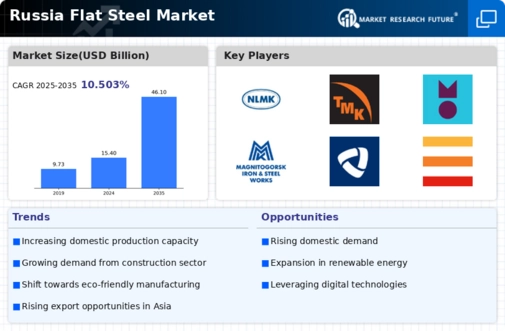
The Russia Flat Steel Market is expected to be valued at 15.38 billion USD in 2024.

What is the projected market value for the Russia Flat Steel Market by 2035?

The market is anticipated to reach a value of 46.14 billion USD by the year 2035.

What is the expected CAGR for the Russia Flat Steel Market between 2025 and 2035?

The average annual growth rate for the market is forecasted to be 10.503 percent from 2025 to 2035.

Which product type holds the largest market value in 2024?

In 2024, 'Slabs' hold the largest market value at 4.5 billion USD.

What is the market size of the Hot-Rolled Coil segment in 2024?

The Hot-Rolled Coil segment is valued at 3.8 billion USD in 2024.

Who are the major players in the Russia Flat Steel Market?

Key players include Novolipetsk Steel, TMK, Mechel, Severstal, and Magnitogorsk Iron and Steel Works.

What is the projected market value for Cold-Rolled Coil by 2035?

The Cold-Rolled Coil segment is projected to reach a market value of 9.0 billion USD by 2035.

What challenges does the Russia Flat Steel Market currently face?

The market faces challenges including fluctuating raw material costs and geopolitical tensions affecting trade.

What growth drivers are influencing the Russia Flat Steel Market?

Drivers include rising demand from construction and automotive industries, as well as infrastructure developments.

What is the estimated value of the Tinplate segment in 2035?

The Tinplate segment is estimated to be valued at 3.77 billion USD in 2035.

Download Free Sample

Kindly complete the form below to receive a free sample of this Report

Compare Licence

×
Features License Type
Single User Multiuser License Enterprise User
Price $4,950 $5,950 $7,250
Maximum User Access Limit 1 User Upto 10 Users Unrestricted Access Throughout the Organization
Free Customization
Direct Access to Analyst
Deliverable Format
Platform Access
Discount on Next Purchase 10% 15% 15%
Printable Versions