×
Request Free Sample ×

Kindly complete the form below to receive a free sample of this Report

Leading companies partner with us for data-driven Insights

clients tt-cursor
Hero Background

S1P Receptor Modulator Drug Market

ID: MRFR/Pharma/37019-HCR
100 Pages
Rahul Gotadki
October 2025

S1P Receptor Modulator Drug Market Research Report By Application (Multiple Sclerosis, Cardiovascular Diseases, Transplant Rejection), By Route of Administration (Oral, Injectable, Topical), By Drug Class (Sphingosine 1-Phosphate Receptor Modulators, Immunomodulators, Antiproliferatives), By Patient Type (Pediatric, Adult, Geriatric) and By Regional (North America, Europe, South America, Asia Pacific, Middle East and Africa) - Forecast to 2035

Share:
Download PDF ×

We do not share your information with anyone. However, we may send you emails based on your report interest from time to time. You may contact us at any time to opt-out.

S1P Receptor Modulator Drug Market Infographic
Purchase Options

S1P Receptor Modulator Drug Market Summary

As per MRFR analysis, the S1P Receptor Modulator Drug Market Size was estimated at 2.887 USD Billion in 2024. The S1P Receptor Modulator Drug industry is projected to grow from 3.123 USD Billion in 2025 to 6.857 USD Billion by 2035, exhibiting a compound annual growth rate (CAGR) of 8.18 during the forecast period 2025 - 2035.

Key Market Trends & Highlights

The S1P Receptor Modulator Drug Market is poised for substantial growth driven by innovative therapeutic applications and increasing investments.

  • North America remains the largest market for S1P receptor modulators, reflecting a robust demand for innovative therapies.
  • The Asia-Pacific region is emerging as the fastest-growing market, fueled by rising healthcare investments and increasing disease prevalence.
  • Multiple Sclerosis continues to dominate the market segment, while the cardiovascular diseases segment is experiencing rapid growth.
  • Key market drivers include the rising prevalence of autoimmune diseases and advancements in drug development technologies.

Market Size & Forecast

2024 Market Size 2.887 (USD Billion)
2035 Market Size 6.857 (USD Billion)
CAGR (2025 - 2035) 8.18%

Major Players

Bristol-Myers Squibb (US), Novartis (CH), Pfizer (US), Sanofi (FR), Merck & Co. (US), AstraZeneca (GB), Eisai (JP), Receptos (US)

S1P Receptor Modulator Drug Market Trends

The S1P Receptor Modulator Drug Market is currently experiencing a notable evolution, driven by advancements in therapeutic applications and a growing understanding of sphingosine-1-phosphate receptor biology. This market encompasses a range of innovative drugs that modulate S1P receptors, which play a crucial role in various physiological processes, including immune response and vascular stability. As research progresses, the potential for these modulators to treat conditions such as multiple sclerosis and other autoimmune disorders appears increasingly promising. Furthermore, the expanding pipeline of candidates suggests a robust future for this sector, as pharmaceutical companies invest in developing novel formulations and delivery methods. In addition to therapeutic advancements, regulatory frameworks are adapting to accommodate the unique characteristics of S1P receptor modulators. This shift may facilitate faster approvals and market entry for new drugs, thereby enhancing competition and accessibility. The interplay between scientific innovation and regulatory support indicates a dynamic landscape for the S1P Receptor Modulator Drug Market. Stakeholders, including researchers, healthcare providers, and patients, are likely to benefit from the ongoing developments, which may lead to improved treatment options and outcomes for various diseases.

Increased Research and Development

The S1P Receptor Modulator Drug Market is witnessing a surge in research and development activities. Pharmaceutical companies are increasingly focusing on understanding the mechanisms of S1P receptors, which may lead to the discovery of new therapeutic targets. This trend suggests a commitment to innovation and the potential for groundbreaking treatments.

Emerging Therapeutic Applications

There is a growing interest in exploring the therapeutic applications of S1P receptor modulators beyond traditional uses. Researchers are investigating their efficacy in treating a wider range of conditions, including cardiovascular diseases and neurodegenerative disorders. This expansion could significantly broaden the market's scope.

Regulatory Adaptations

Regulatory bodies are evolving their frameworks to better accommodate the unique properties of S1P receptor modulators. This adaptation may streamline the approval process for new drugs, potentially leading to quicker market access. Such changes could enhance competition and improve patient access to innovative therapies.

S1P Receptor Modulator Drug Market Drivers

Rising Prevalence of Autoimmune Diseases

The increasing incidence of autoimmune diseases, such as multiple sclerosis and ulcerative colitis, is a primary driver for the S1P Receptor Modulator Drug Market. As these conditions affect millions worldwide, the demand for effective treatment options is surging. According to recent estimates, the prevalence of multiple sclerosis is approximately 150 cases per 100,000 individuals in certain regions, highlighting a significant patient population in need of innovative therapies. S1P receptor modulators have shown promise in managing these diseases by modulating immune responses, thereby potentially improving patient outcomes. This growing patient base is likely to propel investments in research and development, further stimulating the S1P Receptor Modulator Drug Market.

Regulatory Support for Innovative Therapies

Regulatory bodies are increasingly supportive of innovative therapies, which is positively impacting the S1P Receptor Modulator Drug Market. Initiatives aimed at expediting the approval process for new drugs are encouraging pharmaceutical companies to pursue the development of S1P receptor modulators. This regulatory environment fosters a climate of innovation, allowing for faster access to potentially life-changing therapies for patients. Additionally, the introduction of programs that provide incentives for developing treatments for rare diseases is likely to stimulate interest in S1P receptor modulators. As a result, the S1P Receptor Modulator Drug Market is poised for growth as more therapies gain regulatory approval.

Advancements in Drug Development Technologies

Technological advancements in drug development are transforming the S1P Receptor Modulator Drug Market. Innovations such as high-throughput screening and computational drug design are expediting the discovery of new S1P receptor modulators. These technologies enable researchers to identify promising compounds more efficiently, reducing the time and cost associated with bringing new drugs to market. Furthermore, the integration of artificial intelligence in drug discovery processes is enhancing the ability to predict drug interactions and efficacy. As a result, pharmaceutical companies are increasingly investing in these technologies, which could lead to a more robust pipeline of S1P receptor modulators, ultimately benefiting the S1P Receptor Modulator Drug Market.

Increased Investment in Biopharmaceutical Research

The surge in investment in biopharmaceutical research is a crucial factor influencing the S1P Receptor Modulator Drug Market. Governments and private entities are allocating substantial funds to support research initiatives aimed at developing novel therapies for chronic diseases. This financial backing is essential for advancing the understanding of S1P receptor biology and its implications in various diseases. As a result, the number of clinical trials focusing on S1P receptor modulators is expected to increase, leading to a broader range of treatment options for patients. The influx of capital into biopharmaceutical research is likely to enhance the overall growth trajectory of the S1P Receptor Modulator Drug Market.

Growing Awareness and Diagnosis of Neurological Disorders

The heightened awareness and improved diagnostic capabilities for neurological disorders are contributing to the expansion of the S1P Receptor Modulator Drug Market. As healthcare professionals become more adept at identifying conditions like multiple sclerosis, the number of diagnosed cases is likely to rise. This increase in diagnosis not only leads to a greater demand for effective treatments but also encourages pharmaceutical companies to invest in the development of S1P receptor modulators. Recent data suggests that early diagnosis can significantly improve treatment outcomes, further driving the need for innovative therapies within the S1P Receptor Modulator Drug Market.
Market Segment Insights

By Application: Multiple Sclerosis (Largest) vs. Cardiovascular Diseases (Fastest-Growing)

In the S1P Receptor Modulator Drug Market, Multiple Sclerosis currently holds the largest share, driven by its critical role in managing this debilitating neurological condition. This segment has established itself as the front-runner in terms of prescription rates and treatment outcomes, making it a focal point for pharmaceutical companies. Meanwhile, the Cardiovascular Diseases segment, although smaller, is rapidly gaining traction thanks to increasing prevalence rates and heightened awareness of heart health, which are opening up new avenues for S1P modulators in treatment regimens.

Multiple Sclerosis (Dominant) vs. Cardiovascular Diseases (Emerging)

The Multiple Sclerosis application segment is characterized by its established market position, facilitating a wide array of treatment options that cater to varying levels of disease severity. This segment benefits from a well-defined patient population and extensive clinical research backing the efficacy of S1P modulators. Conversely, the Cardiovascular Diseases segment, while currently emerging, is marked by accelerated research initiatives and a growing understanding of S1P receptor pathways in cardiac health. The increasing burden of cardiovascular conditions combined with innovations in drug formulations positions this segment for significant growth, potentially elevating its importance within the overall S1P Receptor Modulator landscape.

By Route of Administration: Oral (Largest) vs. Injectable (Fastest-Growing)

The S1P Receptor Modulator Drug Market is characterized by three primary routes of administration: Oral, Injectable, and Topical. Among these, the Oral route dominates the market due to its convenience and ease of use, making it a preferred choice for many patients and healthcare providers. Injectable options, while smaller in share, are gaining traction due to their effectiveness and improved delivery systems, which appeal to a growing segment of the patient population seeking quick relief from neurological disorders. The Topical route trails behind, representing a niche market focused on specific therapeutic applications.

Route of Administration: Oral (Dominant) vs. Injectable (Emerging)

The Oral route of administration is recognized as the dominant player in the S1P Receptor Modulator Drug Market, primarily due to its user-friendly characteristics and established patient compliance. Patients appreciate the convenience of oral medications, contributing to higher market adoption. In contrast, the Injectable segment is emerging rapidly, driven by advancements in delivery technologies and a strong focus on tailored treatment regimens for chronic conditions. Injectables offer more precise dosing and the potential for improved therapeutic outcomes, making them increasingly attractive for patients needing quick, effective interventions. Both segments exhibit unique strengths that cater to different patient needs, with Oral maintaining a significant lead while Injectable strategies evolve.

By Drug Class: Sphingosine 1-Phosphate Receptor Modulators (Largest) vs. Immunomodulators (Fastest-Growing)

In the S1P Receptor Modulator Drug Market, the distribution of market share reveals Sphingosine 1-Phosphate Receptor Modulators as the dominant player due to their established efficacy in treating multiple sclerosis and other autoimmune diseases. Their prominence is supported by a range of approved drugs that cater to various patient needs, thereby solidifying their market position. Conversely, Immunomodulators are gaining traction, buoyed by a growing acceptance in therapeutic routes, positioning them as an emerging segment with significant potential for expansion. Growth trends within this segment are largely driven by increasing patient populations requiring novel treatment options for chronic and debilitating diseases. The surge in R&D for new formulations and the expansion of clinical indications for existing drugs contribute to the rapid emergence of Immunomodulators. Additionally, advancements in biotechnology and personalized medicine are set to further enhance the appeal and utility of these drug classes, ensuring their sustained growth well into the future.

Sphingosine 1-Phosphate Receptor Modulators (Dominant) vs. Antiproliferatives (Emerging)

Sphingosine 1-Phosphate Receptor Modulators represent the cornerstone of the S1P Receptor Modulator Drug Market, displaying robust clinical efficacy and broad application in managing autoimmune conditions. This dominance is reinforced by continuous developments and approvals of new agents, thereby extending their therapeutic reach. In contrast, Antiproliferatives are emerging as a noteworthy segment due to their unique mechanism of action and potential in targeting various malignancies. These agents, although less prevalent, show promise in expanding their role within oncology, driven by ongoing research that seeks to leverage their properties in combination therapies. As the landscape evolves, the differentiated advantages of each segment will shape treatment paradigms and patient outcomes.

By Patient Type: Adult (Largest) vs. Geriatric (Fastest-Growing)

In the S1P Receptor Modulator Drug Market, the distribution among patient types reveals that adults represent the largest share, driving the overall market demand significantly. Pediatric segments contribute to a smaller portion of the market, primarily due to the limited number of approved S1P receptor modulators for younger patients. Geriatric patients are gradually carving out a more substantial share as their unique health needs become increasingly recognized in the treatment landscape, particularly in chronic conditions that require modulation of the immune response.

Adult: Dominant vs. Geriatric: Emerging

Adults remain the dominant patient type in the S1P Receptor Modulator Drug Market, primarily because most S1P receptor modulators have been developed with this demographic in mind, addressing prevalent autoimmune diseases. They benefit from established healthcare pathways and a broader range of approved treatments. In contrast, the geriatric population is emerging as a significant segment, driven by the aging global population and an increasing prevalence of chronic conditions among seniors. This demographic requires specialized treatment approaches that consider the complexities of their health status, leading to a heightened demand for S1P modulators tailored to meet their unique therapeutic needs.

Get more detailed insights about S1P Receptor Modulator Drug Market

Regional Insights

North America : Market Leader in Innovation

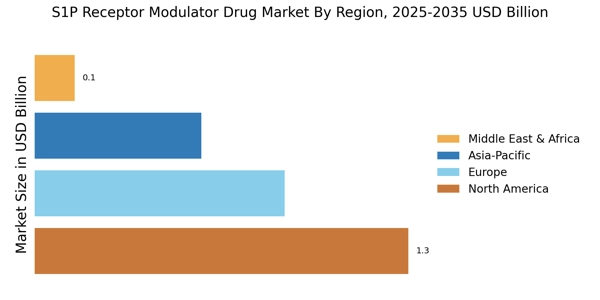
North America is the largest market for S1P receptor modulators, accounting for approximately 45% of the global market share. The region benefits from advanced healthcare infrastructure, high R&D investments, and a growing prevalence of autoimmune diseases. Regulatory support from agencies like the FDA further accelerates market growth, with a focus on innovative therapies and expedited approval processes. The United States leads the market, driven by major pharmaceutical companies such as Bristol-Myers Squibb, Pfizer, and Merck & Co. Canada also plays a significant role, contributing to the competitive landscape. The presence of key players fosters innovation and collaboration, enhancing the overall market dynamics.

Europe : Emerging Market with Potential

Europe is the second-largest market for S1P receptor modulators, holding around 30% of the global market share. The region is characterized by increasing healthcare expenditure, a rising number of clinical trials, and supportive regulatory frameworks from the European Medicines Agency (EMA). Countries are focusing on improving patient access to innovative therapies, which is expected to drive demand further. Germany, France, and the UK are the leading countries in this market, with significant contributions from companies like Novartis and Sanofi. The competitive landscape is marked by collaborations and partnerships among pharmaceutical firms, enhancing research and development efforts. The presence of established healthcare systems supports the adoption of new therapies, making Europe a key player in the S1P modulator market.

Asia-Pacific : Rapidly Growing Market

Asia-Pacific is witnessing rapid growth in the S1P receptor modulator market, accounting for approximately 20% of the global share. The region's growth is driven by increasing healthcare investments, a rising prevalence of chronic diseases, and a growing awareness of innovative treatment options. Regulatory bodies are also becoming more supportive, streamlining approval processes for new drugs. China and Japan are the leading countries in this market, with significant contributions from local and international players like Eisai and AstraZeneca. The competitive landscape is evolving, with a focus on expanding market access and enhancing patient care. Collaborations between pharmaceutical companies and healthcare providers are expected to further boost the market's growth in the coming years.

Middle East and Africa : Untapped Market Potential

The Middle East and Africa region represents an emerging market for S1P receptor modulators, holding about 5% of the global market share. The growth is driven by increasing healthcare investments, a rising prevalence of autoimmune diseases, and a focus on improving healthcare infrastructure. Regulatory bodies are beginning to recognize the importance of innovative therapies, which is expected to catalyze market growth. Countries like South Africa and the UAE are leading the way in adopting new therapies, with a growing presence of international pharmaceutical companies. The competitive landscape is characterized by partnerships and collaborations aimed at enhancing access to innovative treatments. As healthcare systems evolve, the region is poised for significant growth in the S1P modulator market.

S1P Receptor Modulator Drug Market Regional Image

Key Players and Competitive Insights

The competitive landscape of the S1P Receptor Modulator Drug Market has evolved significantly, marked by a surge in research and development activities aimed at understanding and maximizing the therapeutic potential of Sphingosine-1-Phosphate (S1P) receptor modulators. These modulators are increasingly recognized for their ability to manage various autoimmune diseases, particularly multiple sclerosis. The market is characterized by a mix of established pharmaceutical giants and emerging biotech firms, all vying for competitive advantage through innovative product offerings, strategic partnerships, and robust clinical pipelines. 

As the demand for effective treatments continues to rise, companies are focusing on expanding their portfolios and enhancing their capabilities to deliver advanced therapeutics to patients in need. Market players are also leveraging technology and data analytics to refine their strategies, better understand patient needs, and optimize the overall drug development process.Merck and Co has carved out a significant presence in the S1P Receptor Modulator Drug Market, showcasing several strengths that position it favorably against competitors.

The company is recognized for its extensive experience and expertise in developing innovative therapies, including S1P receptor modulators that address pivotal health challenges. Merck and Co. boasts a well-established research and development framework, allowing it to rapidly bring advanced drugs to market while ensuring regulatory compliance and clinical effectiveness. Its commitment to advancing healthcare is evidenced by its strong pipeline of therapeutics and investment in cutting-edge technologies. Additionally, the company has built strong partnerships with academic institutions and other research entities, further enhancing its capability to leverage novel discoveries and integrate them into its product offerings.

Pfizer has also made notable strides in the S1P Receptor Modulator Drug Market, focusing on harnessing its robust portfolio to deliver effective solutions to patients suffering from autoimmune conditions. 

The company benefits from a comprehensive understanding of the therapeutic landscape and has invested heavily in research initiatives aimed at understanding the complex mechanisms associated with S1P receptor modulation. Pfizer's clinical trials are strategically designed to yield significant data that can enhance treatment regimens and improve patient outcomes. With a reputation for innovation, Pfizer continually seeks to differentiate its product offerings through superior efficacy and safety profiles.

The company’s global reach and established distribution networks further enable it to maintain a strong market presence and reach diverse patient populations, thereby solidifying its footprint in the competitive arena of S1P receptor modulators.

Key Companies in the S1P Receptor Modulator Drug Market market include

Industry Developments

The S1P Receptor Modulator Drug Market has recently witnessed significant developments, particularly among key players such as Merck  Co, Pfizer, and Amgen, which are actively advancing their pipelines for S1P modulators. In addition, companies like Takeda Pharmaceutical and Roche have also made strides in expanding their portfolios, focusing on innovative treatments for multiple sclerosis and other autoimmune diseases. Current negotiations and collaborative efforts are shaping the competitive landscape, showcasing a trend toward strategic partnerships aimed at enhancing RD capabilities.

Recent merger and acquisition activities include notable movements by Bristol Myers Squibb and Celgene, which have entered into agreements targeted at strengthening their presence in the neurology specialty. Furthermore, growth in market valuation for top firms like AstraZeneca and Novartis has been positively impacting investor confidence and expanding research initiatives in S1P-related therapies. This upward trend reflects an increased demand for advanced drug solutions, underpinning the dynamic nature of the S1P Receptor Modulator Drug Market and its potential for future expansion. Companies are leveraging these developments to drive innovation and meet the rising healthcare demands.

Future Outlook

S1P Receptor Modulator Drug Market Future Outlook

The S1P Receptor Modulator Drug Market is projected to grow at an 8.18% CAGR from 2024 to 2035, driven by increasing demand for innovative therapies and expanding indications.

New opportunities lie in:

  • Development of combination therapies to enhance efficacy and patient adherence.
  • Expansion into emerging markets with tailored pricing strategies.
  • Investment in digital health solutions for remote patient monitoring and engagement.

By 2035, the S1P Receptor Modulator Drug Market is expected to achieve substantial growth and innovation.

Market Segmentation

S1P Receptor Modulator Drug Market Drug Class Outlook

  • Sphingosine 1-Phosphate Receptor Modulators
  • Immunomodulators
  • Antiproliferatives

S1P Receptor Modulator Drug Market Application Outlook

  • Multiple Sclerosis
  • Cardiovascular Diseases
  • Transplant Rejection

S1P Receptor Modulator Drug Market Patient Type Outlook

  • Pediatric
  • Adult
  • Geriatric

S1P Receptor Modulator Drug Market Route of Administration Outlook

  • Oral
  • Injectable
  • Topical

Report Scope

MARKET SIZE 20242.887(USD Billion)
MARKET SIZE 20253.123(USD Billion)
MARKET SIZE 20356.857(USD Billion)
COMPOUND ANNUAL GROWTH RATE (CAGR)8.18% (2024 - 2035)
REPORT COVERAGERevenue Forecast, Competitive Landscape, Growth Factors, and Trends
BASE YEAR2024
Market Forecast Period2025 - 2035
Historical Data2019 - 2024
Market Forecast UnitsUSD Billion
Key Companies ProfiledMarket analysis in progress
Segments CoveredMarket segmentation analysis in progress
Key Market OpportunitiesEmerging therapies targeting autoimmune diseases drive growth in the S1P Receptor Modulator Drug Market.

Key Market DynamicsRising demand for S1P receptor modulators driven by advancements in multiple sclerosis treatment and regulatory approvals.
Countries CoveredNorth America, Europe, APAC, South America, MEA

Leave a Comment

FAQs

What is the projected market valuation of the S1P Receptor Modulator Drug Market by 2035?

The projected market valuation for the S1P Receptor Modulator Drug Market is expected to reach 6.857 USD Billion by 2035.

What was the market valuation of the S1P Receptor Modulator Drug Market in 2024?

The overall market valuation of the S1P Receptor Modulator Drug Market was 2.887 USD Billion in 2024.

What is the expected CAGR for the S1P Receptor Modulator Drug Market during the forecast period 2025 - 2035?

The expected CAGR for the S1P Receptor Modulator Drug Market during the forecast period 2025 - 2035 is 8.18%.

Which companies are considered key players in the S1P Receptor Modulator Drug Market?

Key players in the S1P Receptor Modulator Drug Market include Bristol-Myers Squibb, Novartis, Pfizer, Sanofi, Merck & Co., AstraZeneca, Eisai, and Receptos.

What are the main applications of S1P Receptor Modulator Drugs and their market values?

The main applications include Multiple Sclerosis valued at 3.5 USD Billion, Cardiovascular Diseases at 2.0 USD Billion, and Transplant Rejection at 1.357 USD Billion.

How does the route of administration impact the S1P Receptor Modulator Drug Market?

The route of administration shows Oral drugs valued at 3.5 USD Billion, Injectable at 2.1 USD Billion, and Topical at 1.257 USD Billion.

What are the different drug classes within the S1P Receptor Modulator Drug Market?

The drug classes include Sphingosine 1-Phosphate Receptor Modulators valued at 3.5 USD Billion, Immunomodulators at 2.1 USD Billion, and Antiproliferatives at 1.257 USD Billion.

What is the market segmentation based on patient type for S1P Receptor Modulator Drugs?

Market segmentation by patient type includes Pediatric at 1.367 USD Billion, Adult at 3.415 USD Billion, and Geriatric at 2.075 USD Billion.

How does the S1P Receptor Modulator Drug Market compare to other pharmaceutical markets?

The S1P Receptor Modulator Drug Market appears to be growing robustly, with a projected increase from 2.887 USD Billion in 2024 to 6.857 USD Billion by 2035.

What trends are influencing the growth of the S1P Receptor Modulator Drug Market?

Trends influencing growth include advancements in drug formulations, increasing prevalence of related diseases, and the strategic initiatives of key players like Novartis and Pfizer.

Download Free Sample

Kindly complete the form below to receive a free sample of this Report

Compare Licence

×
Features License Type
Single User Multiuser License Enterprise User
Price $4,950 $5,950 $7,250
Maximum User Access Limit 1 User Upto 10 Users Unrestricted Access Throughout the Organization
Free Customization
Direct Access to Analyst
Deliverable Format
Platform Access
Discount on Next Purchase 10% 15% 15%
Printable Versions