×
Hero Background
English
Chinese
French
Japanese
Korean
German
Spanish

Single-Photon Emission Computed Tomography Market Analysis

ID: MRFR/HC/5764-HCR
90 Pages
Kinjoll Dey
October 2025

Single-Photon Emission Computed Tomography Market Research Report Information By Type (Hybrid SPECT Systems and Standalone SPECT Systems), Application (Oncology, Cardiology, and Neurology), End-User (Hospitals, Diagnostic Imaging Centers), and By Region (North America, Europe, Asia-Pacific, And Rest Of The World) –Market Forecast Till 2035

Share:
Download PDF ×

We do not share your information with anyone. However, we may send you emails based on your report interest from time to time. You may contact us at any time to opt-out.

Single-Photon Emission Computed Tomography Market Infographic
Purchase Options

Market Analysis

In-depth Analysis of Single-Photon Emission Computed Tomography Market Industry Landscape

The market dynamics of Single-Photon Emission Computed Tomography (SPECT) mirror a complex interaction of technological advancements, healthcare trends, and regulatory influences. Advances in SPECT generation are a riding force in market dynamics. Continuous upgrades in detector generation, photograph reconstruction algorithms, and the combination of hybrid imaging systems, including SPECT/CT, enhance the diagnostic abilities of SPECT scanners, contributing to improved adoption and market boom. The versatility of SPECT in numerous medical packages shapes market dynamics. SPECT performs an essential function in nuclear medicine for imaging and diagnosing conditions consisting of cardiovascular sicknesses, cancer, and neurological disorders. The increasing variety of scientific packages broadens the market's scope and relevance in the healthcare landscape. The growing occurrence of continual sicknesses, which include cardiovascular problems and cancer, notably affects market dynamics. SPECT's ability to provide detailed practical information aids in the early detection and tracking of those conditions, riding its adoption as a precious diagnostic tool. The increasing demand for nuclear medicine approaches contributes to market dynamics. SPECT is a key component of nuclear imaging, and the growing range of nuclear medication research for both diagnostic and healing functions drives the demand for SPECT scanners in healthcare facilities. Market dynamics are stimulated through the fee-effectiveness and accessibility of SPECT generation. Compared to a few superior imaging modalities, SPECT structures are regularly more price-powerful, making them a viable choice for healthcare companies, specifically in aid-restricted settings. This affordability complements market penetration. Regulatory frameworks and compliance requirements play a pivotal role in shaping market dynamics. Adherence to regulatory necessities ensures the protection and efficacy of SPECT structures, and evolving rules impact product development, market access, and normal enterprise practices. Concerns about radiation exposure contribute to market dynamics. The enterprise's commitment to minimizing radiation doses without compromising diagnostic accuracy influences the improvement of recent technologies and protocols, aligning with the growing emphasis on affected person protection in healthcare. Ongoing studies and improvement projects make contributions to market dynamics by fostering innovation. Investments in novel radiotracers, imaging protocols, and software answers beautify the abilities of SPECT, using its continued relevance within the evolving landscape of diagnostic imaging. The globalization of healthcare offerings impacts market dynamics, with a growing demand for standardized diagnostic answers internationally. SPECT's position as a flexible imaging device aligns with the globalization trend, leading to elevated adoption in various healthcare settings.


Author
Kinjoll Dey
Research Analyst Level I

He is an extremely curious individual currently working in Healthcare and Medical Devices Domain. Kinjoll is comfortably versed in data centric research backed by healthcare educational background. He leverages extensive data mining and analytics tools such as Primary and Secondary Research, Statistical Analysis, Machine Learning, Data Modelling. His key role also involves Technical Sales Support, Client Interaction and Project management within the Healthcare team. Lastly, he showcases extensive affinity towards learning new skills and remain fascinated in implementing them.

Leave a Comment

FAQs

What is the projected growth of the Single-Photon Emission Computed Tomography market?

The Single-Photon Emission Computed Tomography market is the expected increase in total market value of 3.56 USD billion over a defined forecast period 2025–2035. It is driven by factors such as demand trends, technological advances, regulatory changes, and geographic expansion.

What is the size of the Single-Photon Emission Computed Tomography market?

Single-Photon Emission Computed Tomography market size was valued at approximately 1.71 billion USD in 2024. This figure will reach 3.56 billion USD covering all regions (America, Europe, Asia, MEA and ROW), focusing its segments / services / distribution channels till 2035.

What is the CAGR of the Single-Photon Emission Computed Tomography market?

Single-Photon Emission Computed Tomography market is expected to grow at a CAGR of 6.9% between 2025 and 2035.

How much will the Single-Photon Emission Computed Tomography market be worth by 2035?

Single-Photon Emission Computed Tomography market is expected to be worth of 3.56 billion USD, reflecting growth driven by usage, technology and global demands by the end of 2035.

How will the Single-Photon Emission Computed Tomography market perform over the next 10 years?

Over the next 10 years the Single-Photon Emission Computed Tomography market is expected to shift from usd billion 1.71 to 3.56 billion USD, led by adoption of advanced tech, demographic trends, regulatory approvals, with potential headwinds from 2025 to 2035.

How much is the single-photon emission computed tomography market?

The market size of the single-photon emission computed tomography market was prized at USD 1.5 Billion in 2024.

Market Summary

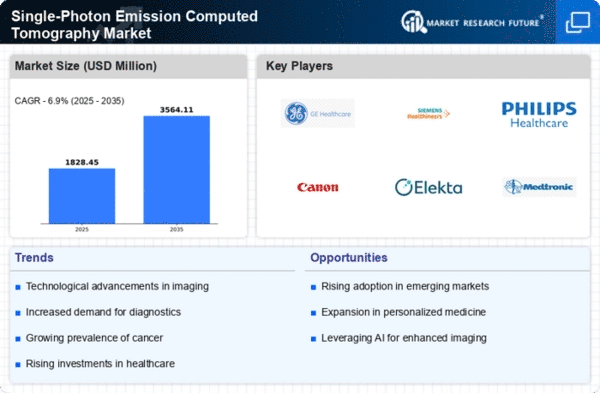
As per MRFR analysis, the Single-Photon Emission Computed Tomography Market Size was estimated at 1710.43 USD Million in 2024. The Single-Photon Emission Computed Tomography industry is projected to grow from 1828.49 USD Million in 2025 to 3564.11 USD Million by 2035, exhibiting a compound annual growth rate (CAGR) of 6.9 during the forecast period 2025 - 2035.

Key Market Trends & Highlights

The Single-Photon Emission Computed Tomography Market is poised for substantial growth driven by technological advancements and increasing healthcare demands.

  • Technological advancements in imaging are enhancing the capabilities of Single-Photon Emission Computed Tomography systems. North America remains the largest market, while the Asia-Pacific region is emerging as the fastest-growing area for this technology. The cardiology segment continues to dominate the market, whereas oncology is witnessing the most rapid growth. Key market drivers include the rising incidence of chronic diseases and enhanced reimbursement policies, which are likely to propel market expansion.

Market Size & Forecast

2024 Market Size 1710.43 (USD Million)
2035 Market Size 3564.11 (USD Million)
CAGR (2025 - 2035) 6.9%
Largest Regional Market Share in 2024 North America

Major Players

<p><a href="https://www.gehealthcare.com/products/computed-tomography/photon-counting-ct?srsltid=AfmBOop25O6mD5G_GxO9CVv87nLZC3GObseu2AGK4pwgeaWd1dIfISKf">GE Healthcare (</a>US), Siemens Healthineers (DE), <a href="https://www.philips.co.in/healthcare/diagnostic-imaging/computed-tomography">Philips Healthcare</a> (NL), Canon Medical Systems (JP), Elekta (SE), Medtronic (IE), Hitachi Medical Corporation (JP), Nuclear Imaging (US)</p>

Market Trends

The Single-Photon Emission Computed Tomography Market is currently experiencing notable advancements driven by technological innovations and increasing demand for precise diagnostic imaging. The integration of artificial intelligence and machine learning into imaging systems appears to enhance the accuracy and efficiency of scans, thereby improving patient outcomes. Furthermore, the growing prevalence of chronic diseases necessitates advanced imaging techniques, which may contribute to the market's expansion. As healthcare providers seek to optimize their diagnostic capabilities, the Single-Photon Emission Computed Tomography Market is likely to witness a surge in adoption across various medical facilities. In addition, the rising awareness regarding the benefits of early disease detection is influencing the market landscape. Healthcare professionals are increasingly recognizing the value of Single-Photon Emission Computed Tomography in identifying conditions at earlier stages, which could lead to more effective treatment plans. Moreover, collaborations between technology firms and healthcare institutions may foster innovation, potentially resulting in the development of more sophisticated imaging solutions. Overall, the Single-Photon Emission Computed Tomography Market seems poised for growth as it adapts to the evolving needs of the healthcare sector.

Technological Advancements

Recent innovations in imaging technology are transforming the Single-Photon Emission Computed Tomography Market. Enhanced imaging systems, incorporating advanced algorithms, are likely to improve diagnostic accuracy and reduce scan times. This trend may lead to increased adoption among healthcare providers.

Growing Demand for Early Diagnosis

There is a rising emphasis on early disease detection within the healthcare community. The Single-Photon Emission Computed Tomography Market appears to benefit from this shift, as practitioners recognize the importance of timely interventions. This trend could drive market growth as more facilities integrate these imaging techniques.

Collaborative Efforts in Healthcare

Partnerships between technology companies and healthcare organizations are becoming more prevalent. Such collaborations may facilitate the development of innovative imaging solutions, potentially enhancing the capabilities of the Single-Photon Emission Computed Tomography Market. This trend suggests a future of improved diagnostic tools.

Single-Photon Emission Computed Tomography Market Market Drivers

Market Growth Projections

The Global Single-Photon Emission Computed Tomography Market Industry is projected to experience substantial growth in the coming years. With a market value of 1.71 USD Billion in 2024, it is expected to reach 3.56 USD Billion by 2035. This growth trajectory suggests a compound annual growth rate of 6.89% from 2025 to 2035. Such projections indicate a robust demand for SPECT technology driven by various factors, including technological advancements, rising disease prevalence, and increased healthcare investments. The anticipated growth reflects the critical role of SPECT in modern diagnostics, highlighting its importance in improving patient care and outcomes.

Increasing Geriatric Population

The Global Single-Photon Emission Computed Tomography Market Industry is also driven by the increasing geriatric population. As individuals age, they are more susceptible to various health issues, including neurological disorders and cardiovascular diseases, which necessitate advanced diagnostic imaging. SPECT is particularly valuable in evaluating conditions such as Alzheimer's disease and other dementias, providing critical insights into brain function. The demographic shift towards an older population is prompting healthcare providers to adopt SPECT technology more widely. This trend is expected to support market growth, with a compound annual growth rate of 6.89% projected for the period from 2025 to 2035, indicating a robust demand for diagnostic imaging solutions tailored to the elderly.

Growing Awareness of Early Diagnosis

The Global Single-Photon Emission Computed Tomography Market Industry benefits from the growing awareness of the importance of early diagnosis in disease management. Patients and healthcare providers are increasingly recognizing that early detection can lead to better treatment outcomes and improved quality of life. SPECT imaging provides valuable information that aids in the timely diagnosis of various conditions, including cancers and cardiac diseases. This heightened awareness is driving demand for SPECT technology, as healthcare systems strive to implement more effective diagnostic protocols. Consequently, the market is poised for growth, with the increasing emphasis on preventive healthcare likely to bolster the adoption of SPECT imaging solutions.

Expansion of Healthcare Infrastructure

The Global Single-Photon Emission Computed Tomography Market Industry is positively impacted by the expansion of healthcare infrastructure, particularly in emerging economies. As these regions invest in modernizing their healthcare facilities, there is a growing need for advanced diagnostic imaging technologies, including SPECT. The establishment of new hospitals and diagnostic centers is creating opportunities for the adoption of SPECT systems, which are essential for accurate disease diagnosis and management. This expansion is expected to drive market growth, as healthcare providers seek to enhance their diagnostic capabilities. The increasing availability of SPECT technology in these regions may lead to improved patient outcomes and greater access to quality healthcare.

Rising Prevalence of Cardiovascular Diseases

The Global Single-Photon Emission Computed Tomography Market Industry is significantly influenced by the rising prevalence of cardiovascular diseases. As these conditions become more common, the demand for effective diagnostic tools increases. SPECT plays a crucial role in assessing myocardial perfusion and detecting coronary artery disease, making it an essential tool in cardiology. With the global burden of cardiovascular diseases expected to rise, healthcare systems are likely to invest more in SPECT technology. This trend is anticipated to contribute to the market's growth, with projections indicating a market value of 3.56 USD Billion by 2035, reflecting a growing recognition of the importance of early diagnosis and intervention.

Technological Advancements in Imaging Techniques

The Global Single-Photon Emission Computed Tomography Market Industry is experiencing rapid technological advancements that enhance imaging techniques. Innovations such as hybrid imaging systems, which combine SPECT with CT, are becoming increasingly prevalent. These systems provide improved diagnostic accuracy and better anatomical localization of functional abnormalities. As a result, healthcare providers are more inclined to adopt these advanced systems, which are projected to drive market growth. The integration of artificial intelligence in image analysis further augments the capabilities of SPECT, potentially leading to more precise and efficient patient management. Such advancements are likely to contribute to the market's expansion, with a projected value of 1.71 USD Billion in 2024.

Market Segment Insights

By Application: Cardiology (Largest) vs. Oncology (Fastest-Growing)

<p>In the Single-Photon Emission Computed Tomography (SPECT) market, the application segment is predominantly driven by cardiology, accounting for the largest share. This is largely due to the increasing prevalence of cardiovascular diseases and the effective diagnostic capabilities that SPECT provides. On the other hand, oncology is witnessing significant growth, positioning itself as the fastest-growing segment due to rising cancer incidences and the enhanced specificity and sensitivity of SPECT in tumor imaging.</p>

<p>Cardiology: Dominant vs. Oncology: Emerging</p>

<p>In the realm of SPECT applications, cardiology holds a dominant position owing to its historical reliance on nuclear imaging for accurate diagnosis and management of heart diseases. The methodologies employed in cardiology facilitate early detection and monitoring of cardiovascular anomalies, making it an essential tool in clinical practice. Conversely, oncology is rapidly emerging as a pivotal application due to technological advancements and a heightened focus on cancer diagnostics. The ability of SPECT to map metabolic processes in tumors allows for tailored therapeutic strategies, making it a critical asset in oncology departments.</p>

By End Use: Hospitals (Largest) vs. Diagnostic Imaging Centers (Fastest-Growing)

<p>In the Single-Photon Emission Computed Tomography (SPECT) market, hospitals represent the largest end-use segment, leveraging advanced diagnostic capabilities to cater to diverse patient needs. This extensive utilization is fueled by the integration of SPECT systems in routine medical practices, ensuring comprehensive imaging solutions that enhance patient outcomes. On the other hand, <a href="https://www.marketresearchfuture.com/reports/diagnostic-imaging-market-6765">diagnostic imaging</a> centers are emerging as a fast-growing segment, as their specialized focus on imaging technologies drives demand and establishes them as key players in the healthcare landscape.</p>

<p>Hospitals (Dominant) vs. Diagnostic Imaging Centers (Emerging)</p>

<p>Hospitals boast significant market dominance in the SPECT landscape due to their access to advanced technologies, a broad patient base, and the integration of multidisciplinary services that facilitate effective diagnosis and treatment. The capability to perform a range of imaging procedures in one setting enhances hospitals' appeal, allowing them to remain at the forefront. Conversely, diagnostic imaging centers are rapidly emerging, characterized by their specialized services and flexibility which cater specifically to imaging needs. Their focused approach and collaboration with healthcare providers enable them to adapt to changing market demands, propelling their growth further in the SPECT sector.</p>

By Technology: Hybrid Imaging (Largest) vs. Standalone Systems (Fastest-Growing)

<p>In the Single-Photon Emission Computed Tomography (SPECT) market, Hybrid Imaging holds the largest market share due to its ability to integrate different imaging modalities, thus enhancing diagnostic accuracy. Standalone Systems occupy a significant portion as well, but they have been quickly losing ground to hybrid technologies, which offer a more comprehensive solution for medical imaging needs. Digital Imaging and Analog Imaging, while still relevant, represent smaller portions of the market share as healthcare facilities increasingly favor advanced imaging technologies for better patient outcomes. The growth trends in this segment are largely driven by technological advancements that improve image quality and enhance patient diagnostics. There is a notable shift towards Hybrid Imaging systems due to their versatility in providing both anatomical and functional imaging. Additionally, the increasing adoption of Standalone Systems is fueled by advancements in their design and functionality, enabling faster imaging services and better integration into existing healthcare processes. As hospitals and clinics modernize their facilities, Hybrid Imaging and, to a lesser extent, Standalone Systems will continue to see upward trends, while Digital and Analog Imaging solutions are declining in prominence.</p>

<p>Technology: Hybrid Imaging (Dominant) vs. Standalone Systems (Emerging)</p>

<p>Hybrid Imaging technology represents the forefront of the Single-Photon Emission Computed Tomography market, combining the capabilities of SPECT with other imaging modalities such as CT or MRI. This integration leads to superior diagnostic solutions, enhancing the precision in disease detection and monitoring. The market dynamics favor Hybrid Imaging due to its superior functionality and efficiency, making it the preferred choice in clinical settings. In contrast, Standalone Systems, though emerging, are gaining traction for their ease of use and cost-effectiveness. They cater specifically to facilities that require quick, reliable imaging without the complexities of hybrid systems. As standalone technologies improve, they may carve out a more significant niche in the market, particularly in smaller healthcare environments where budget constraints dominate.</p>

By Tracer Type: Technetium-99m (Largest) vs. Gallium-68 (Fastest-Growing)

<p>The Single-Photon Emission Computed Tomography (SPECT) market is predominantly driven by the use of Technetium-99m, which holds the largest share among tracer types. This widely used radioactive isotope is favored for its ideal physical properties, including optimal energy and half-life, making it the go-to choice for various diagnostic procedures. Following it is Gallium-68, which has been gaining traction in specific applications due to its effectiveness in PET imaging, especially in oncology. As healthcare technology advances, the market for these tracers is witnessing notable growth. Technetium-99m is supported by extensive clinical use and a well-established supply chain, while Gallium-68 is rapidly emerging thanks to innovations in cyclotron production. Iodine-123 and Fluorine-18 also play significant roles; however, their growth rates are currently outpaced by Gallium-68, which is increasingly utilized in novel diagnostic applications for targeted therapies.</p>

<p>Tracer Type: Technetium-99m (Dominant) vs. Gallium-68 (Emerging)</p>

<p>Technetium-99m remains the dominant tracer in the Single-Photon Emission Computed Tomography market due to its favorable characteristics for a variety of nuclear medicine applications. Its widespread use is attributed to its compatibility with numerous radiopharmaceutical agents, making it a staple in the diagnosis of heart disease and cancer. In contrast, Gallium-68 is an emerging player that is gaining popularity for its unique benefits, particularly in oncological imaging. Enhanced specificity in capturing certain tumor types and favorable pharmacokinetics have positioned Gallium-68 as a promising option in precision medicine, driving its growth amid evolving healthcare narratives. While Technetium-99m continues to lead, advancements in Gallium-68 production and utilization signify a shift towards more targeted imaging solutions in SPECT.</p>

By Patient Type: Adult (Largest) vs. Geriatric (Fastest-Growing)

<p>In the Single-Photon Emission Computed Tomography (SPECT) market, the patient type segment showcases a diverse distribution among pediatric, adult, and geriatric patients. Currently, the adult segment dominates the market, holding the largest share due to higher prevalence rates of cardiovascular and neurological disorders within this demographic. The geriatric segment, while smaller, is rapidly gaining traction as the global population ages, highlighting the increasing need for effective diagnostic imaging solutions for older patients. Growth trends for the patient type segment reflect a significant focus on innovation and adaptation within the SPECT market to address specific needs. The adult segment continues to thrive, propelled by rising healthcare investments and advancements in imaging technology. On the other hand, the geriatric segment is experiencing the fastest growth, driven by an escalating incidence of degenerative diseases and higher diagnostic requirements for elderly patients, positioning SPECT as an invaluable tool in geriatric care.</p>

<p>Adult (Dominant) vs. Geriatric (Emerging)</p>

<p>The adult patient segment in the SPECT market is characterized by its dominant position, driven by a high incidence of conditions such as heart disease and cancer. This segment benefits from established diagnostic protocols and a robust healthcare infrastructure focused on adult health issues. Conversely, the geriatric segment is emerging as a critical player, significantly influenced by the aging global population. Geriatric patients often present complex health profiles requiring tailored imaging solutions. SPECT addresses their unique needs by providing non-invasive, accurate diagnostic images essential for managing chronic illnesses. As healthcare systems increasingly prioritize age-related healthcare challenges, the geriatric segment's growth potential becomes increasingly evident, positioning it as a vital focus area in the SPECT market.</p>

Get more detailed insights about Single-Photon Emission Computed Tomography Market Research Report – Forecast till 2035

Regional Insights

North America : Market Leader in Innovation

North America continues to lead the Single-Photon Emission Computed Tomography (SPECT) market, holding a significant share of 900.0M in 2024. The region's growth is driven by advanced healthcare infrastructure, increasing prevalence of chronic diseases, and rising demand for early diagnosis. Regulatory support and funding for innovative imaging technologies further catalyze market expansion, making it a hub for SPECT advancements. The competitive landscape in North America is robust, featuring key players like GE Healthcare and Siemens Healthineers. The U.S. remains the largest market, supported by a high adoption rate of advanced imaging technologies. The presence of leading manufacturers and ongoing research initiatives contribute to a dynamic market environment, ensuring continuous innovation and improved patient outcomes.

Europe : Emerging Market with Growth Potential

Europe's Single-Photon Emission Computed Tomography market is valued at 450.0M, reflecting a growing demand for advanced diagnostic imaging solutions. Factors such as an aging population, increased healthcare expenditure, and supportive regulatory frameworks are driving market growth. The European market is also witnessing a shift towards personalized medicine, enhancing the need for precise imaging technologies. Leading countries in this region include Germany, France, and the UK, where significant investments in healthcare technology are evident. Major players like Siemens Healthineers and Philips Healthcare are actively expanding their presence. According to the European Commission, "The healthcare sector is expected to grow significantly, driven by technological advancements and increased patient needs."

Asia-Pacific : Rapidly Growing Healthcare Sector

The Asia-Pacific region, with a market size of 300.0M, is experiencing rapid growth in the Single-Photon Emission Computed Tomography sector. Key drivers include rising healthcare investments, increasing awareness of early disease detection, and a growing elderly population. Governments are also implementing policies to enhance healthcare access, which is expected to further boost market demand for SPECT technologies. Countries like Japan, China, and India are at the forefront of this growth, with significant contributions from local and international players. Companies such as Canon Medical Systems and Hitachi Medical Corporation are expanding their operations in this region. The competitive landscape is evolving, with a focus on innovation and affordability to meet diverse healthcare needs.

Middle East and Africa : Emerging Market with Challenges

The Middle East and Africa region, valued at 60.43M, presents unique opportunities and challenges in the Single-Photon Emission Computed Tomography market. Factors such as increasing healthcare investments and a rising prevalence of chronic diseases are driving demand. However, challenges like limited healthcare infrastructure and regulatory hurdles may impede growth. Governments are focusing on improving healthcare access, which could enhance market prospects. Leading countries in this region include South Africa and the UAE, where investments in healthcare technology are on the rise. The presence of key players is gradually increasing, with companies looking to establish a foothold in this emerging market. The competitive landscape is characterized by a mix of local and international firms aiming to address the growing demand for advanced imaging solutions.

Key Players and Competitive Insights

The Single-Photon Emission Computed Tomography Market is currently characterized by a dynamic competitive landscape, driven by technological advancements and increasing demand for precise diagnostic imaging. Key players such as GE Healthcare (US), Siemens Healthineers (DE), and Philips Healthcare (NL) are at the forefront, each adopting distinct strategies to enhance their market presence. GE Healthcare (US) focuses on innovation through the development of advanced imaging technologies, while Siemens Healthineers (DE) emphasizes strategic partnerships to expand its product offerings. Philips Healthcare (NL) is actively pursuing digital transformation initiatives, integrating AI capabilities into its imaging solutions, thereby shaping a competitive environment that prioritizes technological superiority and customer-centric solutions.

In terms of business tactics, companies are increasingly localizing manufacturing to reduce costs and enhance supply chain efficiency. The market structure appears moderately fragmented, with several players vying for market share. However, the collective influence of major companies like Canon Medical Systems (JP) and Elekta (SE) is notable, as they contribute to a competitive atmosphere that encourages innovation and collaboration.

In November 2025, Siemens Healthineers (DE) announced a strategic partnership with a leading AI firm to enhance its imaging solutions. This collaboration aims to integrate advanced AI algorithms into their SPECT systems, potentially improving diagnostic accuracy and operational efficiency. Such a move underscores Siemens' commitment to leveraging cutting-edge technology to maintain a competitive edge in the market.

In October 2025, GE Healthcare (US) launched a new line of SPECT imaging systems designed for enhanced patient comfort and reduced scan times. This initiative not only reflects GE's focus on innovation but also addresses the growing demand for patient-centric healthcare solutions. By prioritizing user experience, GE Healthcare positions itself favorably against competitors, potentially increasing its market share.

In September 2025, Philips Healthcare (NL) unveiled a comprehensive digital platform aimed at streamlining imaging workflows and enhancing data management. This platform integrates cloud-based solutions, allowing for real-time data sharing and analysis. The strategic importance of this development lies in its potential to improve operational efficiencies and foster collaborative care models, which are increasingly sought after in modern healthcare settings.

As of December 2025, the competitive trends in the Single-Photon Emission Computed Tomography Market are heavily influenced by digitalization, sustainability, and AI integration. Strategic alliances are becoming pivotal, as companies recognize the need to collaborate to enhance their technological capabilities. The shift from price-based competition to a focus on innovation and supply chain reliability is evident, suggesting that future competitive differentiation will hinge on the ability to deliver advanced, reliable, and efficient imaging solutions.

Key Companies in the Single-Photon Emission Computed Tomography Market market include

Industry Developments

March 2022 GE Healthcare wants to enhance its product portfolio with two pipeline radiopharmaceuticals, one for Positron Emission Tomography (PET) and the other for single-photon release calculated tomography imaging. According to a report from the business, the first patient in Phase III clinical trial for a PET radiopharmaceutical imaging intermediate that aims to assess adult patients with suspected Parkinsonian disorders, conduct research, and enhance patient maintenance has received medication.

March 2020 Curium announced that the Pulmotech MAA had been authorized by the US Food and Drug Administration (FDA). Pulmotech MAA is a single-photon emission agent for lung imaging when labeled to technetium Tc 99m as an auxiliary in evaluating pulmonary perfusion and, in adults, to aid in evaluating peritoneovenous shunt patency.

Future Outlook

Single-Photon Emission Computed Tomography Market Future Outlook

<p>The Single-Photon Emission Computed Tomography Market is projected to grow at a 6.9% CAGR from 2024 to 2035, driven by technological advancements, increasing prevalence of chronic diseases, and rising demand for diagnostic imaging.</p>

New opportunities lie in:

  • <p>Development of AI-driven imaging analysis software for enhanced diagnostic accuracy.</p>
  • <p>Expansion of mobile SPECT units for remote healthcare services.</p>
  • <p>Partnerships with pharmaceutical companies for radiopharmaceutical development.</p>

<p>By 2035, the market is expected to achieve substantial growth, solidifying its role in advanced diagnostic imaging.</p>

Market Segmentation

Single-Photon Emission Computed Tomography Market End Use Outlook

  • Hospitals
  • Diagnostic Imaging Centers
  • Research Institutions
  • Ambulatory Surgical Centers

Single-Photon Emission Computed Tomography Market Technology Outlook

  • Hybrid Imaging
  • Standalone Systems
  • Digital Imaging
  • Analog Imaging

Single-Photon Emission Computed Tomography Market Application Outlook

  • Cardiology
  • Oncology
  • Neurology
  • Infectious Diseases
  • Orthopedics

Single-Photon Emission Computed Tomography Market Tracer Type Outlook

  • Technetium-99m
  • Iodine-123
  • Gallium-68
  • Fluorine-18

Single-Photon Emission Computed Tomography Market Patient Type Outlook

  • Pediatric
  • Adult
  • Geriatric

Report Scope

MARKET SIZE 2024 1710.43(USD Million)
MARKET SIZE 2025 1828.49(USD Million)
MARKET SIZE 2035 3564.11(USD Million)
COMPOUND ANNUAL GROWTH RATE (CAGR) 6.9% (2024 - 2035)
REPORT COVERAGE Revenue Forecast, Competitive Landscape, Growth Factors, and Trends
BASE YEAR 2024
Market Forecast Period 2025 - 2035
Historical Data 2019 - 2024
Market Forecast Units USD Million
Key Companies Profiled GE Healthcare (US), Siemens Healthineers (DE), Philips Healthcare (NL), Canon Medical Systems (JP), Elekta (SE), Medtronic (IE), Hitachi Medical Corporation (JP), Nuclear Imaging (US)
Segments Covered Application, End Use, Technology, Tracer Type, Patient Type
Key Market Opportunities Integration of artificial intelligence in Single-Photon Emission Computed Tomography Market enhances diagnostic accuracy and efficiency.
Key Market Dynamics Technological advancements and regulatory changes drive innovation and competition in the Single-Photon Emission Computed Tomography Market.
Countries Covered North America, Europe, APAC, South America, MEA

FAQs

What is the projected growth of the Single-Photon Emission Computed Tomography market?

The Single-Photon Emission Computed Tomography market is the expected increase in total market value of 3.56 USD billion over a defined forecast period 2025–2035. It is driven by factors such as demand trends, technological advances, regulatory changes, and geographic expansion.

What is the size of the Single-Photon Emission Computed Tomography market?

Single-Photon Emission Computed Tomography market size was valued at approximately 1.71 billion USD in 2024. This figure will reach 3.56 billion USD covering all regions (America, Europe, Asia, MEA and ROW), focusing its segments / services / distribution channels till 2035.

What is the CAGR of the Single-Photon Emission Computed Tomography market?

Single-Photon Emission Computed Tomography market is expected to grow at a CAGR of 6.9% between 2025 and 2035.

How much will the Single-Photon Emission Computed Tomography market be worth by 2035?

Single-Photon Emission Computed Tomography market is expected to be worth of 3.56 billion USD, reflecting growth driven by usage, technology and global demands by the end of 2035.

How will the Single-Photon Emission Computed Tomography market perform over the next 10 years?

Over the next 10 years the Single-Photon Emission Computed Tomography market is expected to shift from usd billion 1.71 to 3.56 billion USD, led by adoption of advanced tech, demographic trends, regulatory approvals, with potential headwinds from 2025 to 2035.

How much is the single-photon emission computed tomography market?

The market size of the single-photon emission computed tomography market was prized at USD 1.5 Billion in 2024.

  1. Definition
    1. Scope of the Study
      1. Research Objective
      2. Assumptions
      3. Limitations
    2. Introduction
    3. Primary Research
    4. Secondary Research
    5. Market Size Estimation
    6. Drivers
    7. Restraints
    8. Opportunities
    9. Porter’s Five Forces Analysis
      1. Bargaining Power of Suppliers
      2. Bargaining Power of Buyers
      3. Threat of New Entrants
      4. Threat of Substitutes
      5. Intensity of Rivalry
    10. Value Chain Analysis
  2. Chapter 6. Global Single-Photon Emission Computed Tomography (SPECT) Market, by Type
    1. Introduction
    2. Hybrid SPECT Systems
    3. Standalone SPECT Systems
  3. Chapter 7. Global Single-Photon Emission Computed Tomography (SPECT) Market, by Application
    1. Introduction
    2. Oncology
    3. Cardiology
    4. Neurology
    5. Others
  4. Chapter 8. Global Single-Photon Emission Computed Tomography (SPECT) Market, by End User
    1. Introduction
    2. Hospitals
    3. Diagnostic Imaging Centers
    4. Academic & Research Centers
    5. Others
  5. Chapter 9. Global Single-Photon Emission Computed Tomography (SPECT) Market, by Region
    1. Introduction
    2. America
      1. North America
      2. South America
    3. Europe
      1. Western Europe
      2. Eastern Europe
    4. Asia-Pacific
      1. Japan
      2. China
      3. India
      4. Australia
      5. Republic of Korea
      6. Rest of Asia-Pacific
    5. Middle East & Africa
      1. The Middle East
      2. Africa
    6. Chapter 10. Company Landscape
    7. Introduction
    8. Market Share Analysis
    9. Key Development & Strategies
    10. Chapter 11 Company Profiles
    11. Koninklijke Philips N.V (The Netherlands)
      1. Company Overview
      2. Type Overview
      3. Financials
      4. Key Developments
      5. SWOT Analysis
    12. Siemens (Germany)
      1. Company Overview
      2. Type Overview
      3. Financial Overview
      4. Key Developments
      5. SWOT Analysis
    13. Positron Corporation (U.S)
      1. Company Overview
      2. Type Overview
      3. Financial Overview
      4. Key Development
      5. SWOT Analysis
    14. Neusoft Medical Systems
      1. Company Overview
      2. Type/Business Segment Overview
      3. Financial Overview
      4. Key Development
      5. SWOT Analysis
    15. Digirad Corporation
      1. Company Overview
      2. Type Overview
      3. Financial overview
      4. Key Developments
      5. SWOT Analysis
    16. Gamma Medica Inc.
      1. Company Overview
      2. Type Overview
      3. Financial Overview
      4. Key Developments
      5. SWOT Analysis
    17. GE Healthcare
      1. Overview
      2. Type Overview
      3. Financials
      4. Key Developments
      5. SWOT Analysis
    18. Oncovision
      1. Overview
      2. Type Overview
      3. Financials
      4. Key Developments
      5. SWOT Analysis
    19. Bruker Corporation
      1. Overview
      2. Type Overview
      3. Financials
      4. Key Developments
      5. SWOT Analysis
    20. Mediso Ltd.
      1. Overview
      2. Type Overview
      3. Financials
      4. Key Developments
      5. SWOT Analysis
    21. Others.
    22. Chapter 12 Appendix
  6. LIST OF TABLES
  7. GLOBAL SINGLE-PHOTON EMISSION COMPUTED TOMOGRAPHY (SPECT) MARKET INDUSTRY SYNOPSIS, 2023-2032
  8. GLOBAL SINGLE-PHOTON EMISSION COMPUTED TOMOGRAPHY (SPECT) MARKET ESTIMATES & FORECAST, 2023-2032, (USD MILLION)
  9. GLOBAL SINGLE-PHOTON EMISSION COMPUTED TOMOGRAPHY (SPECT) MARKET, BY REGION, 2023-2032, (USD MILLION)
  10. GLOBAL SINGLE-PHOTON EMISSION COMPUTED TOMOGRAPHY (SPECT) MARKET, BY TYPE, 2023-2032, (USD MILLION)
  11. GLOBAL SINGLE-PHOTON EMISSION COMPUTED TOMOGRAPHY (SPECT) MARKET, BY APPLICATION, 2023-2032, (USD MILLION)
  12. GLOBAL SINGLE-PHOTON EMISSION COMPUTED TOMOGRAPHY (SPECT) MARKET, BY END USER, 2023-2032, (USD MILLION)
  13. NORTH AMERICA: SINGLE-PHOTON EMISSION COMPUTED TOMOGRAPHY (SPECT) MARKET, BY TYPE, 2023-2032, (USD MILLION)
  14. NORTH AMERICA: SINGLE-PHOTON EMISSION COMPUTED TOMOGRAPHY (SPECT) MARKET, BY APPLICATION, 2023-2032, (USD MILLION)
  15. NORTH AMERICA: SINGLE-PHOTON EMISSION COMPUTED TOMOGRAPHY (SPECT) MARKET, BY END USER, 2023-2032, (USD MILLION)
  16. US: SINGLE-PHOTON EMISSION COMPUTED TOMOGRAPHY (SPECT) MARKET, BY TYPE, 2023-2032, (USD MILLION)
  17. US: SINGLE-PHOTON EMISSION COMPUTED TOMOGRAPHY (SPECT) MARKET, BY APPLICATION, 2023-2032, (USD MILLION)
  18. US: SINGLE-PHOTON EMISSION COMPUTED TOMOGRAPHY (SPECT) MARKET, BY END USER, 2023-2032, (USD MILLION)
  19. CANADA: SINGLE-PHOTON EMISSION COMPUTED TOMOGRAPHY (SPECT) MARKET, BY TYPE, 2023-2032, (USD MILLION)
  20. CANADA: SINGLE-PHOTON EMISSION COMPUTED TOMOGRAPHY (SPECT) MARKET, BY APPLICATION, 2023-2032, (USD MILLION)
  21. CANADA: SINGLE-PHOTON EMISSION COMPUTED TOMOGRAPHY (SPECT) MARKET, BY END USER, 2023-2032, (USD MILLION)
  22. SOUTH AMERICA: SINGLE-PHOTON EMISSION COMPUTED TOMOGRAPHY (SPECT) MARKET, BY TYPE, 2023-2032, (USD MILLION)
  23. SOUTH AMERICA: SINGLE-PHOTON EMISSION COMPUTED TOMOGRAPHY (SPECT) MARKET, BY APPLICATION, 2023-2032, (USD MILLION)
  24. SOUTH AMERICA: SINGLE-PHOTON EMISSION COMPUTED TOMOGRAPHY (SPECT) MARKET, BY END USER, 2023-2032, (USD MILLION)
  25. EUROPE: SINGLE-PHOTON EMISSION COMPUTED TOMOGRAPHY (SPECT) MARKET, TYPE, 2023-2032, (USD MILLION)
  26. EUROPE: SINGLE-PHOTON EMISSION COMPUTED TOMOGRAPHY (SPECT) MARKET, APPLICATION, 2023-2032, (USD MILLION)
  27. EUROPE: SINGLE-PHOTON EMISSION COMPUTED TOMOGRAPHY (SPECT) MARKET, BY END USER, 2023-2032, (USD MILLION)
  28. WESTERN EUROPE: SINGLE-PHOTON EMISSION COMPUTED TOMOGRAPHY (SPECT) MARKET, BY TYPE, 2023-2032, (USD MILLION)
  29. WESTERN EUROPE: SINGLE-PHOTON EMISSION COMPUTED TOMOGRAPHY (SPECT) MARKET, BY APPLICATION, 2023-2032, (USD MILLION)
  30. WESTERN EUROPE: SINGLE-PHOTON EMISSION COMPUTED TOMOGRAPHY (SPECT) MARKET, BY END USER, 2023-2032, (USD MILLION)
  31. EASTERN EUROPE: SINGLE-PHOTON EMISSION COMPUTED TOMOGRAPHY (SPECT) MARKET, BY TYPE, 2023-2032, (USD MILLION)
  32. EASTERN EUROPE: SINGLE-PHOTON EMISSION COMPUTED TOMOGRAPHY (SPECT) MARKET, BY APPLICATION, 2023-2032, (USD MILLION)
  33. EASTERN EUROPE: SINGLE-PHOTON EMISSION COMPUTED TOMOGRAPHY (SPECT) MARKET, BY END USER, 2023-2032, (USD MILLION)
  34. ASIA-PACIFIC: SINGLE-PHOTON EMISSION COMPUTED TOMOGRAPHY (SPECT) MARKET, BY TYPE, 2023-2032, (USD MILLION)
  35. ASIA-PACIFIC: SINGLE-PHOTON EMISSION COMPUTED TOMOGRAPHY (SPECT) MARKET, BY APPLICATION, 2023-2032, (USD MILLION)
  36. ASIA-PACIFIC: SINGLE-PHOTON EMISSION COMPUTED TOMOGRAPHY (SPECT) MARKET, BY END USER, 2023-2032, (USD MILLION)
  37. MIDDLE EAST & AFRICA: SINGLE-PHOTON EMISSION COMPUTED TOMOGRAPHY (SPECT) MARKET, BY TYPE, 2023-2032, (USD MILLION)
  38. MIDDLE EAST & AFRICA: SINGLE-PHOTON EMISSION COMPUTED TOMOGRAPHY (SPECT) MARKET, BY APPLICATION, 2023-2032, (USD MILLION)
  39. MIDDLE EAST & AFRICA: SINGLE-PHOTON EMISSION COMPUTED TOMOGRAPHY (SPECT) MARKET, BY END USER, 2023-2032, (USD MILLION)
  40. LIST OF FIGURES
  41. RESEARCH PROCESS
  42. SEGMENTATION FOR THE GLOBAL SINGLE-PHOTON EMISSION COMPUTED TOMOGRAPHY (SPECT) MARKET
  43. MARKET DYNAMICS FOR THE GLOBAL SINGLE-PHOTON EMISSION COMPUTED TOMOGRAPHY (SPECT) MARKET
  44. GLOBAL SINGLE-PHOTON EMISSION COMPUTED TOMOGRAPHY (SPECT) MARKET SHARE, BY TYPE 2020
  45. GLOBAL SINGLE-PHOTON EMISSION COMPUTED TOMOGRAPHY (SPECT) MARKET SHARE, BY APPLICATION 2020
  46. GLOBAL SINGLE-PHOTON EMISSION COMPUTED TOMOGRAPHY (SPECT) MARKET SHARE, BY END USER, 2020
  47. GLOBAL SINGLE-PHOTON EMISSION COMPUTED TOMOGRAPHY (SPECT) MARKET SHARE, BY REGION, 2020
  48. NORTH AMERICA SINGLE-PHOTON EMISSION COMPUTED TOMOGRAPHY (SPECT) MARKET SHARE, BY COUNTRY, 2020
  49. EUROPE PRESCRIBED HEALTH APPS SHARE, BY COUNTRY, 2020
  50. ASIA-PACIFIC SINGLE-PHOTON EMISSION COMPUTED TOMOGRAPHY (SPECT) MARKET SHARE, BY COUNTRY, 2020
  51. MIDDLE EAST & AFRICA SINGLE-PHOTON EMISSION COMPUTED TOMOGRAPHY (SPECT) MARKET SHARE, BY COUNTRY, 2020
  52. GLOBAL SINGLE-PHOTON EMISSION COMPUTED TOMOGRAPHY (SPECT) MARKET: COMPANY SHARE ANALYSIS, 2020 (%)
  53. KONINKLIJKE PHILIPS N.V.: KEY FINANCIALS
  54. KONINKLIJKE PHILIPS N.V.: SEGMENTAL REVENUE
  55. KONINKLIJKE PHILIPS N.V: GEOGRAPHICAL REVENUE
  56. SIEMENS.: KEY FINANCIALS
  57. SIEMENS.: SEGMENTAL REVENUE
  58. SIEMENS.: GEOGRAPHICAL REVENUE
  59. POSITRON CORPORATION.: KEY FINANCIALS
  60. POSITRON CORPORATION.: SEGMENTAL REVENUE
  61. POSITRON CORPORATION.: GEOGRAPHICAL REVENUE
  62. NEUSOFT MEDICAL SYSTEMS: KEY FINANCIALS
  63. NEUSOFT MEDICAL SYSTEMS: SEGMENTAL REVENUE
  64. NEUSOFT MEDICAL SYSTEMS: GEOGRAPHICAL REVENUE
  65. DIGIRAD CORPORATION.: KEY FINANCIALS
  66. DIGIRAD CORPORATION.: SEGMENTAL REVENUE
  67. DIGIRAD CORPORATION.: GEOGRAPHICAL REVENUE
  68. GAMMA MEDICA INC.: KEY FINANCIALS
  69. GAMMA MEDICA INC.: SEGMENTAL REVENUE
  70. GAMMA MEDICA INC.: GEOGRAPHICAL REVENUE
  71. MEDTRONIC PLC : KEY FINANCIALS
  72. MEDTRONIC PLC: SEGMENTAL REVENUE
  73. MEDTRONIC PLC : GEOGRAPHICAL REVENUE

Single-Photon Emission Computed Tomography Market Segmentation

Single-Photon Emission Computed Tomography Type Outlook (USD Billion, 2018-2032)

  • Hybrid SPECT Systems
  • Standalone SPECT System

Single-Photon Emission Computed Tomography Application Outlook (USD Billion, 2018-2032)

  • Oncology
  • Cardiology
  • Neurology

Single-Photon Emission Computed Tomography End-User Outlook (USD Billion, 2018-2032)

  • Hospitals
  • Diagnostic Imaging Centers

Single-Photon Emission Computed Tomography Regional Outlook (USD Billion, 2018-2032)

  • North America Outlook (USD Billion, 2018-2032)

  • North America Single-Photon Emission Computed Tomography by Type

  • Hybrid SPECT Systems
  • Standalone SPECT System
  • North America Single-Photon Emission Computed Tomography by Application

  • Oncology
  • Cardiology
  • Neurology
  • North America Single-Photon Emission Computed Tomography by End-User

  • Hospitals

      • Diagnostic Imaging Centers
    • US Outlook (USD Billion, 2018-2032)

  • US Single-Photon Emission Computed Tomography by Type

  • Hybrid SPECT Systems
  • Standalone SPECT System
  • US Single-Photon Emission Computed Tomography by Application

  • Oncology
  • Cardiology
  • Neurology
  • US Single-Photon Emission Computed Tomography by End-User

  • Hospitals
      • Diagnostic Imaging Centers
    • CANADA Outlook (USD Billion, 2018-2032)

  • CANADA Single-Photon Emission Computed Tomography by Type

  • Hybrid SPECT Systems
  • Standalone SPECT System
  • CANADA Single-Photon Emission Computed Tomography by Application

  • Oncology
  • Cardiology
  • Neurology
  • CANADA Single-Photon Emission Computed Tomography by End-User

  • Hospitals
      • Diagnostic Imaging Centers
  • Europe Outlook (USD Billion, 2018-2032)

  • Europe Single-Photon Emission Computed Tomography by Type

  • Hybrid SPECT Systems
  • Standalone SPECT System
  • Europe Single-Photon Emission Computed Tomography by Application

  • Oncology
  • Cardiology
  • Neurology
  • Europe Single-Photon Emission Computed Tomography by End-User

  • Hospitals
      • Diagnostic Imaging Centers
    • Germany Outlook (USD Billion, 2018-2032)

  • Germany Single-Photon Emission Computed Tomography by Type

  • Hybrid SPECT Systems
  • Standalone SPECT System
  • Germany Single-Photon Emission Computed Tomography by Application

  • Oncology
  • Cardiology
  • Neurology
  • Germany Single-Photon Emission Computed Tomography by End-User

  • Hospitals
      • Diagnostic Imaging Centers
    • France Outlook (USD Billion, 2018-2032)

  • France Single-Photon Emission Computed Tomography by Type

  • Hybrid SPECT Systems
  • Standalone SPECT System
  • France Single-Photon Emission Computed Tomography by Application

  • Oncology
  • Cardiology
  • Neurology
  • France Single-Photon Emission Computed Tomography by End-User

  • Hospitals
      • Diagnostic Imaging Centers
    • UK Outlook (USD Billion, 2018-2032)

  • UK Single-Photon Emission Computed Tomography by Type

  • Hybrid SPECT Systems
  • Standalone SPECT System
  • UK Single-Photon Emission Computed Tomography by Application

  • Oncology
  • Cardiology
  • Neurology
  • UK Single-Photon Emission Computed Tomography by End-User

  • Hospitals
      • Diagnostic Imaging Centers
    • ITALY Outlook (USD Billion, 2018-2032)

  • ITALY Single-Photon Emission Computed Tomography by Type

  • Hybrid SPECT Systems
  • Standalone SPECT System
  • ITALY Single-Photon Emission Computed Tomography by Application

  • Oncology
  • Cardiology
  • Neurology
  • ITALY Single-Photon Emission Computed Tomography by End-User

  • Hospitals
      • Diagnostic Imaging Centers
    • SPAIN Outlook (USD Billion, 2018-2032)

  • SPAIN Single-Photon Emission Computed Tomography by Type

  • Hybrid SPECT Systems
  • Standalone SPECT System
  • SPAIN Single-Photon Emission Computed Tomography by Application

  • Oncology
  • Cardiology
  • Neurology
  • SPAIN Single-Photon Emission Computed Tomography by End-User

  • Hospitals
      • Diagnostic Imaging Centers
    • Rest Of Europe Outlook (USD Billion, 2018-2032)

  • Rest Of Europe Single-Photon Emission Computed Tomography by Type

  • Hybrid SPECT Systems
  • Standalone SPECT System
  • Rest Of Europe Single-Photon Emission Computed Tomography by Application

  • Oncology
  • Cardiology
  • Neurology
  • Rest Of Europe Single-Photon Emission Computed Tomography by End-User

  • Hospitals
      • Diagnostic Imaging Centers
  • Asia-Pacific Outlook (USD Billion, 2018-2032)

  • Asia-Pacific Single-Photon Emission Computed Tomography by Type

  • Hybrid SPECT Systems
  • Standalone SPECT System
  • Asia-Pacific Single-Photon Emission Computed Tomography by Application

  • Oncology
  • Cardiology
  • Neurology
  • Asia-Pacific Single-Photon Emission Computed Tomography by End-User

  • Hospitals
  • Diagnostic Imaging Centers
    • China Outlook (USD Billion, 2018-2032)

  • China Single-Photon Emission Computed Tomography by Type

  • Hybrid SPECT Systems
  • Standalone SPECT System
  • China Single-Photon Emission Computed Tomography by Application

  • Oncology
  • Cardiology
  • Neurology
  • China Single-Photon Emission Computed Tomography by End-User

  • Hospitals
      • Diagnostic Imaging Centers
    • Japan Outlook (USD Billion, 2018-2032)

  • Japan Single-Photon Emission Computed Tomography by Type

  • Hybrid SPECT Systems
  • Standalone SPECT System
  • Japan Single-Photon Emission Computed Tomography by Application

  • Oncology
  • Cardiology
  • Neurology
  • Japan Single-Photon Emission Computed Tomography by End-User

  • Hospitals
      • Diagnostic Imaging Centers
    • India Outlook (USD Billion, 2018-2032)

  • India Single-Photon Emission Computed Tomography by Type

  • Hybrid SPECT Systems
  • Standalone SPECT System
  • India Single-Photon Emission Computed Tomography by Application

  • Oncology
  • Cardiology
  • Neurology
  • India Single-Photon Emission Computed Tomography by End-User

  • Hospitals
      • Diagnostic Imaging Centers
    • Australia Outlook (USD Billion, 2018-2032)

  • Australia Single-Photon Emission Computed Tomography by Type

  • Hybrid SPECT Systems
  • Standalone SPECT System
  • Australia Single-Photon Emission Computed Tomography by Application

  • Oncology
  • Cardiology
  • Neurology
  • Australia Single-Photon Emission Computed Tomography by End-User

  • Hospitals
      • Diagnostic Imaging Centers
    • Rest of Asia-Pacific Outlook (USD Billion, 2018-2032)

  • Rest of Asia-Pacific Single-Photon Emission Computed Tomography by Type

  • Hybrid SPECT Systems
  • Standalone SPECT System
  • Rest of Asia-Pacific Single-Photon Emission Computed Tomography by Application

  • Oncology
  • Cardiology
  • Neurology
  • Rest of Asia-Pacific Single-Photon Emission Computed Tomography by End-User

  • Hospitals
      • Diagnostic Imaging Centers
  • Rest of the World Outlook (USD Billion, 2018-2032)

  • Rest of the World Single-Photon Emission Computed Tomography by Type

  • Hybrid SPECT Systems
  • Standalone SPECT System
  • Rest of the World Single-Photon Emission Computed Tomography by Application

  • Oncology
  • Cardiology
  • Neurology
  • Rest of the World Single-Photon Emission Computed Tomography by End-User

  • Hospitals
      • Diagnostic Imaging Centers
    • Middle East Outlook (USD Billion, 2018-2032)

  • Middle East Single-Photon Emission Computed Tomography by Type

  • Hybrid SPECT Systems
  • Standalone SPECT System
  • Middle East Single-Photon Emission Computed Tomography by Application

  • Oncology
  • Cardiology
  • Neurology
  • Middle East Single-Photon Emission Computed Tomography by End-User

  • Hospitals
      • Diagnostic Imaging Centers
    • Africa Outlook (USD Billion, 2018-2032)

  • Africa Single-Photon Emission Computed Tomography by Type

  • Hybrid SPECT Systems
  • Standalone SPECT System
  • Africa Single-Photon Emission Computed Tomography by Application

  • Oncology
  • Cardiology
  • Neurology
  • Africa Single-Photon Emission Computed Tomography by End-User

  • Hospitals
      • Diagnostic Imaging Centers
    • Latin America Outlook (USD Billion, 2018-2032)

  • Latin America Single-Photon Emission Computed Tomography by Type

  • Hybrid SPECT Systems
  • Standalone SPECT System
  • Latin America Single-Photon Emission Computed Tomography by Application

  • Oncology
  • Cardiology
  • Neurology
  • Latin America Single-Photon Emission Computed Tomography by End-User

  • Hospitals
      • Diagnostic Imaging Centers
Infographic

Free Sample Request

Kindly complete the form below to receive a free sample of this Report

Get Free Sample

Customer Strories

Compare Licence

×
Features License Type
Single User Multiuser License Enterprise User
Price $4,950 $5,950 $7,250
Maximum User Access Limit 1 User Upto 10 Users Unrestricted Access Throughout the Organization
Free Customization
Direct Access to Analyst
Deliverable Format
Platform Access
Discount on Next Purchase 10% 15% 15%
Printable Versions