×
Request Free Sample ×

Kindly complete the form below to receive a free sample of this Report

* Please use a valid business email

Leading companies partner with us for data-driven Insights

clients tt-cursor
Hero Background

Skin Health Foods Market

ID: MRFR/FnB/28719-HCR
128 Pages
Varsha More
October 2025

Skin Health Foods Market Research Report By Type (Dairy Products, Fruits, Vegetables, Seafood, Nuts and Seeds, Whole Grains), By Function (Skin Hydration, Antioxidant Protection, Anti-Inflammatory Effects, Anti-Aging Properties, Collagen Production), By Target Population (Women, Men, Teenagers, Adults over 50, Individuals with Specific Skin Conditions), By Source (Animal-Based, Plant-Based, Marine-Based, Lab-Created), By Distribution Channel (Supermarkets and Hypermarkets, Health Food Stores, Pharmacies, Online Retailers, Direct-to-Consumer)... read more

Share:
Download PDF ×

We do not share your information with anyone. However, we may send you emails based on your report interest from time to time. You may contact us at any time to opt-out.

Skin Health Foods Market Infographic
Purchase Options

Skin Health Foods Market Summary

As per MRFR analysis, the Skin Health Foods Market Size was estimated at 5.51 USD Billion in 2024. The Skin Health Foods industry is projected to grow from 5.817 USD Billion in 2025 to 10.0 USD Billion by 2035, exhibiting a compound annual growth rate (CAGR) of 5.57 during the forecast period 2025 - 2035.

Key Market Trends & Highlights

The Skin Health Foods Market is experiencing a dynamic shift towards natural and personalized solutions.

  • The market is witnessing a rise in plant-based ingredients, reflecting a broader consumer preference for natural options.
  • Personalization in skin health products is becoming increasingly prevalent, catering to individual skin needs and preferences.
  • North America remains the largest market, while the Asia-Pacific region is emerging as the fastest-growing area for skin health foods.
  • Key drivers include increasing consumer awareness of skin health and a rising demand for natural and organic products.

Market Size & Forecast

2024 Market Size 5.51 (USD Billion)
2035 Market Size 10.0 (USD Billion)
CAGR (2025 - 2035) 5.57%

Major Players

Nestle (CH), Unilever (GB), Danone (FR), Kraft Heinz (US), PepsiCo (US), Herbalife (US), Amway (US), Garden of Life (US), Nature's Way (US), New Chapter (US)

Skin Health Foods Market Trends

The Skin Health Foods Market is currently experiencing a notable evolution, driven by increasing consumer awareness regarding the connection between diet and skin health. This market encompasses a diverse range of products, including supplements, functional foods, and beverages that are formulated to enhance skin appearance and overall health. As individuals become more health-conscious, they are gravitating towards natural and organic ingredients, which are perceived as safer and more effective. This shift in consumer preferences is prompting manufacturers to innovate and expand their product lines, thereby fostering a competitive landscape. Moreover, the rise of social media and influencer culture plays a pivotal role in shaping consumer perceptions and driving demand within the Skin Health Foods Market. As beauty and wellness influencers promote various skin health foods, consumers are increasingly inclined to explore these options. This trend is further supported by scientific research that highlights the benefits of specific nutrients, such as antioxidants and vitamins, in promoting skin vitality. Consequently, brands are focusing on transparency and sustainability in their marketing strategies, appealing to a more informed and discerning audience. The future of this market appears promising, with potential for continued growth as consumers seek holistic approaches to skincare.

Rise of Plant-Based Ingredients

There is a growing trend towards the incorporation of plant-based ingredients in skin health foods. Consumers are increasingly seeking products that utilize natural sources, such as fruits, vegetables, and herbs, which are believed to offer superior benefits for skin health. This shift reflects a broader movement towards sustainability and wellness, as individuals become more conscious of the ingredients they consume.

Personalization in Skin Health Products

The Skin Health Foods Market is witnessing a shift towards personalized nutrition. Brands are beginning to offer tailored solutions that cater to individual skin types and concerns. This trend suggests that consumers are looking for products that address their specific needs, leading to a more customized approach in product development and marketing.

Integration of Technology in Marketing

Technology is playing an increasingly vital role in the marketing strategies of skin health food brands. Companies are leveraging digital platforms and data analytics to better understand consumer behavior and preferences. This integration allows for more targeted marketing efforts, enhancing customer engagement and driving sales.

Skin Health Foods Market Drivers

Emergence of Functional Foods

The Skin Health Foods Market Industry is witnessing the emergence of functional foods that offer specific health benefits beyond basic nutrition. These foods are formulated with bioactive compounds that target skin health, such as collagen, omega-3 fatty acids, and probiotics. The functional foods market is anticipated to grow significantly, with projections indicating a value of USD 275 billion by 2026. This growth is driven by consumer demand for products that not only nourish the body but also enhance skin appearance and health. As awareness of the benefits of functional foods increases, the Skin Health Foods Market Industry is likely to see a proliferation of products designed to meet these specific health needs, thereby attracting a diverse consumer demographic.

Increasing Consumer Awareness of Skin Health

The Skin Health Foods Market Industry is experiencing a notable surge in consumer awareness regarding the importance of nutrition for skin health. As individuals become more informed about the impact of diet on skin conditions, there is a growing demand for foods that promote skin vitality. This trend is reflected in the increasing sales of skin health foods, which are projected to reach USD 5 billion by 2026. Consumers are actively seeking products rich in antioxidants, vitamins, and minerals that support skin health, leading to a diversification of offerings in the market. This heightened awareness is likely to drive innovation and product development within the Skin Health Foods Market Industry, as brands strive to meet the evolving preferences of health-conscious consumers.

Growing Interest in Holistic Health Approaches

The Skin Health Foods Market Industry is benefiting from a rising interest in holistic health approaches that emphasize the interconnectedness of diet, lifestyle, and overall well-being. Consumers are increasingly recognizing that skin health is not solely dependent on topical treatments but is also influenced by dietary choices. This paradigm shift is leading to a greater acceptance of skin health foods as essential components of a comprehensive wellness regimen. Market data suggests that the holistic health market is projected to grow at a CAGR of 8% over the next five years. This trend is likely to encourage the development of innovative products that combine skin health benefits with overall wellness, thereby expanding the offerings within the Skin Health Foods Market Industry.

Rising Demand for Natural and Organic Products

The Skin Health Foods Market Industry is witnessing a significant shift towards natural and organic products. As consumers become more health-conscious, there is a growing preference for food items that are free from synthetic additives and chemicals. This trend is supported by data indicating that the organic food market is expected to grow at a CAGR of 10% over the next five years. The demand for clean-label products is influencing manufacturers to reformulate their offerings, incorporating organic ingredients that are perceived as safer and more effective for skin health. This movement towards natural solutions is likely to enhance the appeal of skin health foods, thereby expanding the market reach and attracting a broader consumer base.

Influence of Social Media and Digital Marketing

The Skin Health Foods Market Industry is increasingly shaped by the influence of social media and digital marketing strategies. Platforms such as Instagram and TikTok have become vital channels for brands to engage with consumers, showcasing the benefits of skin health foods through visually appealing content. This trend is evidenced by the fact that 70% of consumers are influenced by social media when making purchasing decisions. As brands leverage influencer partnerships and user-generated content, they are able to create a community around skin health, fostering brand loyalty and driving sales. The integration of digital marketing into the Skin Health Foods Market Industry is likely to enhance brand visibility and consumer engagement, ultimately contributing to market growth.
Market Segment Insights

By Type: Dairy Products (Largest) vs. Nuts and Seeds (Fastest-Growing)

In the Skin Health Foods Market, Dairy Products hold the largest market share, benefiting from their rich nutritional profile that promotes skin hydration and elasticity. This segment is preferred for its wide availability and familiarity among consumers. In contrast, Nuts and Seeds are emerging as a fast-growing segment. Their market appeal derives from the increasing consumer awareness of the benefits of healthy fats and essential nutrients that support skin health.

Dairy Products (Dominant) vs. Nuts and Seeds (Emerging)

Dairy Products play a dominant role in the Skin Health Foods Market, offering a range of items such as yogurt, cheese, and fermented drinks that are linked to enhanced skin health through probiotics and vitamins. These products are appreciated for their heritage and established benefits in skin moisturization and rejuvenation. Conversely, Nuts and Seeds are rapidly positioning themselves as the emerging heroes of this market. Packed with antioxidants, vitamins, and healthy fats, they appeal to health-conscious consumers looking for plant-based options. Their versatility in application, from snacks to ingredient boosters, combined with growing trends towards veganism and plant-based diets, supports their accelerated growth.

By Function: Skin Hydration (Largest) vs. Antioxidant Protection (Fastest-Growing)

In the Skin Health Foods Market, Skin Hydration emerges as the largest segment, reflecting consumer demand for products that enhance moisture retention and overall skin health. Antioxidant Protection follows closely, marking itself as the fastest-growing segment as more consumers become aware of the role antioxidants play in protecting skin from oxidative stress and aging. Together, these segments underscore a shift towards functional foods that not only nourish the skin but also address specific skin concerns.

Skin Hydration (Dominant) vs. Antioxidant Protection (Emerging)

Skin Hydration remains a dominant player in the Skin Health Foods Market, characterized by products rich in hydrators like hyaluronic acid and various botanicals designed to optimize skin moisture levels. This segment is seeing robust demand as consumers prioritize hydration as a fundamental aspect of skincare. In contrast, Antioxidant Protection is emerging as a significant force, driven by an increase in awareness of the detrimental effects of free radicals on skin health. Products fortified with vitamins C, E, and other antioxidants are gaining traction, appealing to health-conscious consumers seeking comprehensive skin benefits beyond just hydration.

By Target Population: Women (Largest) vs. Teenagers (Fastest-Growing)

In the Skin Health Foods Market, women represent the largest share of the target population, significantly influencing product development and marketing strategies. Their preferences tend to drive demand for a variety of health foods that promise skin-improving benefits, making them a key demographic for brands targeting skin health. Additionally, their purchasing power and willingness to invest in beauty and wellness-related foods have solidified their dominant presence within the market, shaping the overall landscape.

Women (Dominant) vs. Teenagers (Emerging)

Women play a pivotal role in the Skin Health Foods Market due to their proactive approach towards health and beauty. They are more likely to invest in specialized diets and supplements that enhance skin quality, thus seeking products rich in antioxidants and essential nutrients. Conversely, teenagers are emerging as a fast-growing segment, influenced by social media and the increasing awareness of skincare. Their focus is on products that offer convenience and novelty, making them vital for brands looking to tap into younger demographics, and this trend is increasingly drawing the attention of marketers.

By Source: Plant-Based (Largest) vs. Animal-Based (Fastest-Growing)

The Skin Health Foods Market reveals a diverse distribution among its source segments, with the Plant-Based category leading the pack. This segment comprises a significant portion of market preference, driven by the increasing consumer awareness of health benefits and sustainability. In contrast, the Animal-Based segment, though smaller, is witnessing remarkable growth due to rising demand for protein-rich food options and the appeal of traditional sources in skin health formulations. Growth trends indicate that the Plant-Based segment continues to flourish, fueled by innovations in plant ingredients that promote skin health, alongside a shift in consumer behavior towards vegan and cruelty-free products. Meanwhile, the Animal-Based segment is gaining traction as consumers seek high-quality, nutrient-dense options that are known to support skin vitality. This dynamic interplay between segments not only highlights the changing preferences of consumers but also the ongoing evolution of the Skin Health Foods Market.

Plant-Based (Dominant) vs. Animal-Based (Emerging)

The Plant-Based segment stands as the dominant force in the Skin Health Foods Market, reflecting the growing preference for natural, organic, and sustainable ingredients. Products in this category often leverage powerful antioxidants and phytochemicals sourced from fruits, vegetables, and grains, known for their skin-enhancing benefits. With an increasing number of consumers pursuing vegan lifestyles, this segment is well-positioned to expand further as it addresses health, sustainability, and ethical concerns. On the other hand, the Animal-Based segment represents the emerging player, characterized by traditional protein sources such as dairy and eggs that appeal to consumers seeking verifiable wellness results. While still capturing a smaller market share, it is rapidly becoming popular for those consumers who value nutrient density and efficacy in skin health formulations. This growing interest could lead to innovative product developments focused on high-quality animal-derived ingredients.

By Distribution Channel: Supermarkets and Hypermarkets (Largest) vs. Online Retailers (Fastest-Growing)

In the Skin Health Foods Market, distribution channels play a crucial role in reaching consumers effectively. Supermarkets and hypermarkets dominate this segment due to their extensive reach and established customer base. They provide consumers with a wide range of skin health food products in one location, thus leading to significant market share. In contrast, health food stores and pharmacies capture a considerable yet smaller share, as they appeal to niche markets focused on health-oriented consumers. Online retailers, while presently smaller in market share, are rapidly catching up as more consumers gravitate towards the convenience of online shopping. Growth trends indicate a shifting consumer preference towards health-conscious products, significantly impacting the skin health foods segment. The rapid rise of online retailers points to a growing trend of convenience and accessibility that modern consumers value. Factors driving this growth include increased awareness of skin health, the convenience of home delivery, and tailored product recommendations. As skincare and nutrition intertwine, the market is likely to see continued evolution in distribution channels, adapting to changing consumer behaviors and preferences.

Supermarkets and Hypermarkets: Dominant vs. Online Retailers: Emerging

Supermarkets and hypermarkets are the dominant players in the Skin Health Foods Market, benefiting from vast resources and extensive supply chains. They can offer a comprehensive range of skin health products, which appeals to a broad customer base seeking convenience. In these retail environments, consumers often try new products alongside their grocery purchases, allowing for cross-selling opportunities. Conversely, online retailers are an emerging force in this market, appealing especially to younger consumers who are accustomed to digital shopping. These retailers leverage e-commerce technology to provide tailored marketing, convenient purchasing options, and home delivery. As a result, they are carving out a larger share of the market, with innovative strategies designed to engage consumers in their buying journey.

Get more detailed insights about Skin Health Foods Market

Regional Insights

North America : Health-Conscious Consumer Base

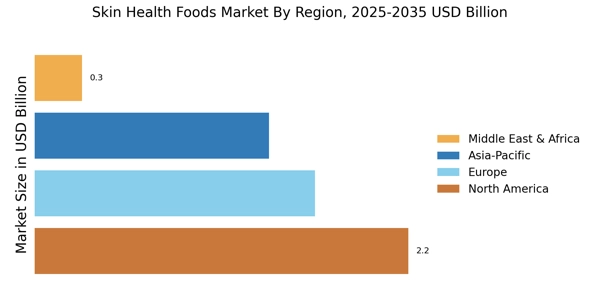
North America is the largest market for skin health foods, accounting for approximately 40% of the global market share. The region's growth is driven by increasing consumer awareness regarding skin health, coupled with a rising demand for natural and organic products. Regulatory support from agencies like the FDA ensures product safety and efficacy, further boosting market confidence. The trend towards preventive healthcare is also a significant catalyst for growth. The United States dominates the North American market, with key players such as Nestle, Unilever, and Herbalife leading the charge. The competitive landscape is characterized by a mix of established brands and emerging startups focusing on innovative formulations. Canada also plays a vital role, contributing to the market with its growing health-conscious population. The presence of major retailers enhances product accessibility, driving sales further.

Europe : Emerging Market with Innovation

Europe is witnessing a significant rise in the skin health foods market, holding approximately 30% of the global share. The region's growth is fueled by increasing consumer preference for natural and organic products, alongside stringent regulations promoting product safety and quality. Countries like Germany and France are at the forefront, with a growing trend towards preventive health measures and wellness. Regulatory frameworks from the European Food Safety Authority (EFSA) support innovation in this sector, ensuring compliance and safety. Germany leads the European market, followed closely by France and the UK. The competitive landscape is marked by a blend of multinational corporations and local brands, with key players like Danone and Unilever investing in research and development. The presence of health-focused retailers and e-commerce platforms further enhances market penetration, catering to the rising demand for skin health foods among consumers seeking holistic wellness solutions.

Asia-Pacific : Rapid Growth and Urbanization

Asia-Pacific is rapidly emerging as a significant player in the skin health foods market, accounting for approximately 25% of the global share. The region's growth is driven by urbanization, rising disposable incomes, and increasing awareness of skin health among consumers. Countries like China and Japan are leading this trend, with a growing demand for products that promote skin wellness. Regulatory bodies are also becoming more proactive in ensuring product safety and efficacy, which is crucial for market expansion. China is the largest market in the region, with Japan following closely. The competitive landscape features a mix of local and international brands, with companies like Amway and Herbalife making substantial investments. The rise of e-commerce and health-focused retail channels is facilitating greater access to skin health foods, catering to the evolving preferences of health-conscious consumers in urban areas.

Middle East and Africa : Untapped Market Potential

The Middle East and Africa region is gradually emerging in the skin health foods market, holding about 5% of the global share. The growth is primarily driven by increasing consumer awareness of health and wellness, alongside a rising trend towards natural and organic products. Countries like South Africa and the UAE are leading this growth, with regulatory bodies beginning to implement standards that promote product safety and quality, which is essential for market development. South Africa is the largest market in the region, with the UAE showing significant potential for growth. The competitive landscape is still developing, with a mix of local brands and international players entering the market. The increasing availability of health-focused products in retail outlets and online platforms is enhancing consumer access, driving interest in skin health foods among the population.

Skin Health Foods Market Regional Image

Key Players and Competitive Insights

Major players in the Skin Health Foods Market industry are continuously focused on developing innovative products to gain a competitive edge. Leading Skin Health Foods Market players are investing heavily in research and development to create products that meet the evolving needs of consumers. The Skin Health Foods Market landscape is expected to remain competitive in the coming years, with key players focusing on expanding their product portfolios, entering new markets, and forming strategic partnerships. To stay competitive, companies are adopting various strategies such as mergers and acquisitions, joint ventures, and collaborations.

The competitive landscape is further characterized by the presence of numerous small and medium-sized enterprises that are offering niche products and services to cater to specific consumer segments.Ajinomoto Co., Inc. is a leading company in the Skin Health Foods Market. The company offers a wide range of skin health foods, including collagen peptides, hyaluronic acid, and ceramides. Ajinomoto Co., Inc. has a strong presence and its products are sold in over 100 countries. The company has a strong focus on research and development and is continuously investing in new product development.

Ajinomoto Co., Inc. is also actively involved in mergers and acquisitions to expand its product portfolio and enter new markets.Nestlé S.A. is a major competitor in the Skin Health Foods Market. The company offers a range of skin health foods, including collagen peptides, hyaluronic acid, and probiotics. Nestlé S.A. has a strong presence and its products are sold in over 190 countries. The company has a strong focus on innovation and is continuously investing in new product development. Nestlé S.A. is also actively involved in mergers and acquisitions to expand its product portfolio and enter new markets.

Key Companies in the Skin Health Foods Market market include

Industry Developments

The skin health foods market is projected to reach USD 8.5 billion by 2032, exhibiting a CAGR of 5.57% during the forecast period (2024-2032).

The market growth is attributed to rising consumer awareness about the importance of skin health and the increasing popularity of natural and organic skincare products.Recent news developments in the market include In March 2023, Nestle launched a new range of skin health supplements under the brand name "NUTRIBEAUTY". In April 2023, Unilever announced the acquisition of the skincare brand "Paula's Choice", known for its focus on skin health. In May 2023, L'Oréal introduced a new line of skincare products specifically designed for people with sensitive skin.These developments indicate the growing focus of major players on the skin health foods market and the increasing demand for products that promote skin health and well-being.

Future Outlook

Skin Health Foods Market Future Outlook

The Skin Health Foods Market is projected to grow at a 5.57% CAGR from 2024 to 2035, driven by increasing consumer awareness and demand for natural ingredients.

New opportunities lie in:

  • Development of personalized skin health food products based on genetic profiling.
  • Expansion into emerging markets with tailored marketing strategies.
  • Partnerships with dermatologists for co-branded product lines.

By 2035, the market is expected to solidify its position as a leader in health and wellness.

Market Segmentation

Skin Health Foods Market Type Outlook

  • Dairy Products
  • Fruits
  • Vegetables
  • Seafood
  • Nuts and Seeds
  • Whole Grains

Skin Health Foods Market Source Outlook

  • Animal-Based
  • Plant-Based
  • Marine-Based
  • Lab-Created

Skin Health Foods Market Function Outlook

  • Skin Hydration
  • Antioxidant Protection
  • Anti-Inflammatory Effects
  • Anti-Aging Properties
  • Collagen Production

Skin Health Foods Market Target Population Outlook

  • Women
  • Men
  • Teenagers
  • Adults over 50
  • Individuals with Specific Skin Conditions

Skin Health Foods Market Distribution Channel Outlook

  • Supermarkets and Hypermarkets
  • Health Food Stores
  • Pharmacies
  • Online Retailers
  • Direct-to-Consumer

Report Scope

MARKET SIZE 20245.51(USD Billion)
MARKET SIZE 20255.817(USD Billion)
MARKET SIZE 203510.0(USD Billion)
COMPOUND ANNUAL GROWTH RATE (CAGR)5.57% (2024 - 2035)
REPORT COVERAGERevenue Forecast, Competitive Landscape, Growth Factors, and Trends
BASE YEAR2024
Market Forecast Period2025 - 2035
Historical Data2019 - 2024
Market Forecast UnitsUSD Billion
Key Companies ProfiledMarket analysis in progress
Segments CoveredMarket segmentation analysis in progress
Key Market OpportunitiesGrowing consumer demand for natural ingredients in the Skin Health Foods Market presents significant growth opportunities.
Key Market DynamicsRising consumer awareness drives demand for innovative skin health foods, influencing market competition and product development.
Countries CoveredNorth America, Europe, APAC, South America, MEA

Leave a Comment

FAQs

What is the current valuation of the Skin Health Foods Market as of 2024?

The Skin Health Foods Market was valued at 5.51 USD Billion in 2024.

What is the projected market size for the Skin Health Foods Market by 2035?

The market is projected to reach 10.0 USD Billion by 2035.

What is the expected CAGR for the Skin Health Foods Market during the forecast period 2025 - 2035?

The expected CAGR for the Skin Health Foods Market during 2025 - 2035 is 5.57%.

Which companies are considered key players in the Skin Health Foods Market?

Key players include Nestle, Unilever, Danone, Kraft Heinz, PepsiCo, Herbalife, Amway, Garden of Life, Nature's Way, and New Chapter.

What are the primary segments of the Skin Health Foods Market?

The primary segments include Type, Function, Target Population, Source, and Distribution Channel.

How much is the Dairy Products segment projected to grow by 2035?

The Dairy Products segment is projected to grow from 0.83 USD Billion in 2024 to 1.5 USD Billion by 2035.

What is the expected growth for the Plant-Based source segment by 2035?

The Plant-Based source segment is expected to grow from 2.0 USD Billion in 2024 to 4.0 USD Billion by 2035.

Which distribution channel is anticipated to have the highest growth by 2035?

Supermarkets and Hypermarkets are anticipated to grow from 2.2 USD Billion in 2024 to 4.0 USD Billion by 2035.

What is the projected market size for Anti-Aging Properties by 2035?

The Anti-Aging Properties segment is projected to grow from 1.21 USD Billion in 2024 to 2.2 USD Billion by 2035.

How does the market size for Women compare to that for Men in 2035?

By 2035, the market size for Women is projected to be 3.0 USD Billion, compared to 2.0 USD Billion for Men.

Download Free Sample

Kindly complete the form below to receive a free sample of this Report

Compare Licence

×
Features License Type
Single User Multiuser License Enterprise User
Price $4,950 $5,950 $7,250
Maximum User Access Limit 1 User Upto 10 Users Unrestricted Access Throughout the Organization
Free Customization
Direct Access to Analyst
Deliverable Format
Platform Access
Discount on Next Purchase 10% 15% 15%
Printable Versions