×
Request Free Sample ×

Kindly complete the form below to receive a free sample of this Report

* Please use a valid business email

Leading companies partner with us for data-driven Insights

clients tt-cursor
Hero Background

Smart Vent Market

ID: MRFR/ICT/35192-HCR
100 Pages
Aarti Dhapte
October 2025

Smart Vent Market Research Report: By Product Type (Smart Vents, Smart Thermostats, HVAC Control Systems, Smart Sensors), By Technology (Wi-Fi Controlled, Zigbee Technology, Bluetooth Technology), By Application (Residential, Commercial, Industrial), By End Use (Home Automation, Energy Management, Climate Control) and By Regional (North America, Europe, South America, Asia Pacific, Middle East and Africa) - Forecast to 2035

Share:
Download PDF ×

We do not share your information with anyone. However, we may send you emails based on your report interest from time to time. You may contact us at any time to opt-out.

Smart Vent Market Infographic
Purchase Options

Smart Vent Market Summary

As per MRFR analysis, the Smart Vent Market Size was estimated at 1.464 USD Billion in 2024. The Smart Vent industry is projected to grow from 1.657 in 2025 to 5.717 by 2035, exhibiting a compound annual growth rate (CAGR) of 13.18 during the forecast period 2025 - 2035.

Key Market Trends & Highlights

The Smart Vent Market is poised for substantial growth driven by technological advancements and increasing energy efficiency demands.

  • Integration with smart home systems is becoming a prevalent trend, enhancing user convenience and control.
  • The focus on energy efficiency is intensifying, as consumers seek solutions to reduce utility costs and environmental impact.
  • Customization and personalization options are gaining traction, allowing users to tailor their heating and cooling preferences.
  • Rising demand for energy efficiency and technological advancements in HVAC systems are key drivers propelling market growth in North America and Asia-Pacific.

Market Size & Forecast

2024 Market Size 1.464 (USD Billion)
2035 Market Size 5.717 (USD Billion)
CAGR (2025 - 2035) 13.18%

Major Players

Ecovent (US), Nest Labs (US), Honeywell (US), Airflow (US), Smart Vent (US), Flair (US), Tado (DE), Mysa (CA), Ecobee (CA)

Smart Vent Market Trends

The Smart Vent Market is currently experiencing a notable transformation, driven by advancements in technology and a growing emphasis on energy efficiency. As consumers become increasingly aware of the benefits of smart home solutions, the demand for smart vents is likely to rise. These devices, which optimize airflow and enhance indoor climate control, appear to be gaining traction among homeowners seeking to reduce energy consumption and improve comfort levels. Furthermore, the integration of smart vents with home automation systems suggests a trend towards more interconnected living environments, where users can manage their heating and cooling systems remotely. In addition to technological advancements, environmental concerns are influencing the Smart Vent Market. As sustainability becomes a priority for many, the potential for smart vents to contribute to energy savings and lower carbon footprints is becoming more apparent. This shift in consumer behavior indicates a growing market for products that not only enhance comfort but also align with eco-friendly practices. Overall, the Smart Vent Market seems poised for growth, with innovations and sustainability at the forefront of its evolution.

Integration with Smart Home Systems

The Smart Vent Market is witnessing a trend towards seamless integration with existing smart home technologies. This development allows users to control their ventilation systems through centralized platforms, enhancing convenience and efficiency.

Focus on Energy Efficiency

A significant trend in the Smart Vent Market is the increasing emphasis on energy efficiency. Consumers are becoming more conscious of their energy consumption, leading to a demand for products that can help reduce utility costs while maintaining comfort.

Customization and Personalization

Customization is emerging as a key trend within the Smart Vent Market. Manufacturers are offering tailored solutions that cater to individual preferences, allowing users to adjust settings based on their specific needs and lifestyles.

Smart Vent Market Drivers

Rising Demand for Energy Efficiency

The Smart Vent Market is experiencing a notable surge in demand for energy-efficient solutions. As energy costs continue to rise, consumers are increasingly seeking ways to reduce their utility bills. Smart vents, which optimize airflow and temperature control, are becoming a preferred choice for homeowners aiming to enhance energy efficiency. According to recent data, the energy-efficient home market is projected to grow significantly, with smart home technologies playing a pivotal role. This trend indicates that the Smart Vent Market is well-positioned to capitalize on the growing consumer preference for sustainable living solutions.

Growing Awareness of Indoor Air Quality

The Smart Vent Market is witnessing a heightened awareness regarding indoor air quality (IAQ). Consumers are becoming more informed about the health implications of poor air quality, leading to a demand for solutions that can enhance IAQ. Smart vents, which can regulate airflow and filter pollutants, are increasingly recognized as effective tools for improving indoor environments. This trend is supported by research indicating that better IAQ can lead to improved health outcomes. As awareness continues to grow, the Smart Vent Market is likely to see increased interest from consumers prioritizing health and wellness in their living spaces.

Technological Advancements in HVAC Systems

Technological innovations in heating, ventilation, and air conditioning (HVAC) systems are driving the Smart Vent Market forward. The integration of advanced sensors and IoT capabilities into smart vents allows for real-time monitoring and control of indoor climates. This evolution not only enhances user experience but also improves system efficiency. As HVAC technology continues to advance, the Smart Vent Market is likely to benefit from increased adoption rates. Market data suggests that the HVAC market is expected to expand, further propelling the demand for smart vent solutions that complement these advancements.

Increased Adoption of Smart Home Technologies

The Smart Vent Market is benefiting from the broader trend of smart home technology adoption. As more consumers invest in smart home devices, the integration of smart vents into these ecosystems becomes increasingly appealing. Smart vents can seamlessly connect with other smart devices, allowing for enhanced control and automation of home environments. Market analysis indicates that the smart home market is on an upward trajectory, suggesting that the Smart Vent Market will likely experience growth as consumers seek cohesive smart home solutions that include efficient ventilation systems.

Regulatory Support for Energy Efficiency Initiatives

The Smart Vent Market is positively influenced by regulatory support for energy efficiency initiatives. Governments are implementing policies and incentives aimed at promoting energy-efficient technologies, which includes smart ventilation solutions. These regulations not only encourage consumers to adopt energy-saving products but also create a favorable market environment for manufacturers. Data indicates that regions with strong energy efficiency mandates are seeing increased investments in smart home technologies. Consequently, the Smart Vent Market is poised to thrive as regulatory frameworks continue to support the transition towards more sustainable living practices.

Market Segment Insights

By Type: Smart Vents (Largest) vs. Smart Thermostats (Fastest-Growing)

In the Smart Vent Market, the leading segment is Smart Vents, capturing the majority of market share due to their ability to enhance energy efficiency and improve indoor air quality. Smart Thermostats are gaining traction, appealing to eco-conscious consumers and energy savers alike. The integration of these technologies within HVAC systems is crucial, with Smart Vents representing a robust investment in system versatility while Smart Thermostats prove their value through intelligent automation.

Smart Vents (Dominant) vs. Smart Sensors (Emerging)

Smart Vents are an established player in the Smart Vent Market, known for their capability to regulate airflow, thus optimizing heating and cooling throughout residential and commercial spaces. They dominate the segment due to increased consumer awareness of energy savings and comfort control. In contrast, Smart Sensors are emerging as a vital complementary technology, leveraging real-time data to enhance system performance further. These sensors adaptively adjust settings based on occupancy and environmental conditions, making them essential for modern smart homes. As consumers increasingly adopt automated solutions for energy management, the position of Smart Sensors is expected to strengthen, appealing to tech-savvy users keen on intelligent space management.

By Technology: Wi-Fi Controlled (Largest) vs. Zigbee Technology (Fastest-Growing)

In the Smart Vent Market, the distribution of market share among technologies reveals a clear prominence of Wi-Fi Controlled systems, which have emerged as the preferred choice for both residential and commercial applications. Zigbee Technology follows as a significant player, while Bluetooth Technology, although valued for its ease of use, holds a smaller share in comparison. The adoption of Wi-Fi Controlled systems, driven by their interoperability with existing smart home ecosystems, places them at the forefront of this technology segment. Examining growth trends, Wi-Fi Controlled technology continues to capitalize on its vast connectivity options, appealing to users seeking seamless integration with various smart devices. Conversely, Zigbee Technology is experiencing rapid growth, largely due to its energy efficiency and robust performance in home automation systems. The demand for low-power, reliable communication protocols aligns with rising consumer preference for smart homes, fueling Zigbee’s expansion in the Smart Vent Market.

Technology: Wi-Fi Controlled (Dominant) vs. Zigbee Technology (Emerging)

Wi-Fi Controlled technology in the Smart Vent Market is recognized as the dominant player, primarily due to its ability to connect effortlessly with existing Wi-Fi networks and various smart home devices. This technology allows for convenient remote control and monitoring, making it highly desirable among consumers. On the other hand, Zigbee Technology is considered an emerging force in this segment, appealing to tech-savvy users looking for energy-efficient solutions. Zigbee offers advantages in terms of low power consumption and secure communication, making it a preferred choice for smart home networks that require reliable connectivity. While Wi-Fi Controlled systems cater to a broad audience, Zigbee's growing adoption signifies a shift toward advanced automation solutions.

By Application: Residential (Largest) vs. Commercial (Fastest-Growing)

The Smart Vent Market is primarily categorized into three key application segments: Residential, Commercial, and Industrial. Among these, the Residential segment holds the largest share, influenced by the increasing demand for energy-efficient solutions in households. Consumers are increasingly adopting smart ventilation systems to enhance indoor air quality and control energy consumption, thus boosting the share of this segment. In contrast, the Commercial segment is emerging rapidly, owing to a significant rise in the construction of smart buildings and a growing focus on sustainable practices within businesses.

Application: Residential (Dominant) vs. Commercial (Emerging)

The Residential segment in the Smart Vent Market is characterized by its widespread usage in homes, driven by the need for better HVAC efficiency and indoor air quality management. The rising trend of smart home technologies and the integration of IoT are propelling its dominance. Meanwhile, the Commercial segment is emerging swiftly, marked by its focus on integrated building management systems and energy-efficient ventilation solutions. As more companies recognize the importance of sustainable practices and occupant comfort, the demand for smart ventilation in commercial spaces is expected to surge, creating a dynamic landscape in the market.

By End Use: Home Automation (Largest) vs. Climate Control (Fastest-Growing)

In the Smart Vent Market, the 'End Use' segment demonstrates a diverse distribution among three primary categories: Home Automation, Energy Management, and Climate Control. Home Automation captures the largest market share, driven by the increasing adoption of smart technologies in residences. On the other hand, Climate Control is rapidly gaining traction due to growing consumer awareness of sustainability and energy efficiency, making it an essential aspect of modern home design. Growth trends in this segment are propelled by the rising popularity of smart home devices, which enhance convenience and efficiency. Energy Management is witnessing a robust expansion as businesses and homeowners seek innovative solutions for reducing energy consumption and lowering utility costs. Climate Control is projected to be the fastest-growing area, motivated by technological advancements and societal shifts towards climate-conscious living.

Energy Management: Dominant vs. Climate Control: Emerging

The analysis of the Smart Vent Market highlights Energy Management as the dominant segment due to its emphasis on improving energy efficiency within spaces. This focus resonates with consumers who are increasingly looking to optimize energy costs while maintaining comfort levels. Meanwhile, Climate Control is an emerging segment, gaining momentum as it addresses the immediate need for adaptive environments influenced by changing climates. Smart vents in this sector are tailored to enhance indoor air quality and temperature, leveraging technology to create responsive systems that cater to diverse user requirements. As environmental considerations shape buying preferences, both segments are poised for robust growth, reflecting a shift towards smarter living solutions.

Get more detailed insights about Smart Vent Market

Regional Insights

North America : Innovation and Technology Hub

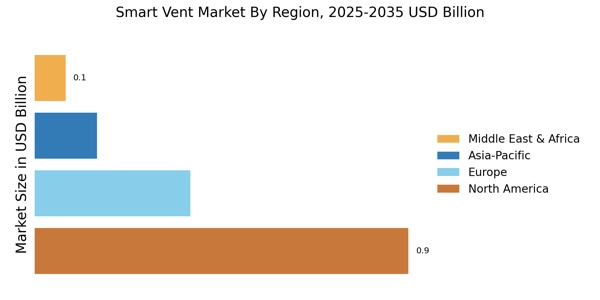
North America is the largest market for smart vents, accounting for approximately 60% of the global share. The region's growth is driven by increasing energy efficiency awareness, smart home technology adoption, and favorable government regulations promoting sustainable building practices. The U.S. leads this market, followed by Canada, which holds around 15% of the market share. Regulatory incentives and energy efficiency programs are significant catalysts for growth in this sector. The competitive landscape in North America is robust, featuring key players such as Ecovent, Nest Labs, and Honeywell. These companies are at the forefront of innovation, offering advanced smart vent solutions that integrate seamlessly with existing HVAC systems. The presence of a tech-savvy consumer base and a strong focus on energy conservation further enhance market dynamics, making it a fertile ground for new entrants and innovations.

Europe : Emerging Smart Home Solutions

Europe is witnessing significant growth in the smart vent market, driven by increasing energy efficiency regulations and a growing emphasis on sustainable living. The region holds approximately 25% of the global market share, with Germany and the UK being the largest contributors. Regulatory frameworks, such as the EU's Energy Efficiency Directive, are pivotal in promoting smart home technologies, including smart vents, to reduce energy consumption and carbon footprints. Germany leads the European market, supported by a strong manufacturing base and innovative companies like Tado. The UK follows closely, with a rising demand for smart home solutions. The competitive landscape is characterized by both established players and startups, fostering innovation and diverse product offerings. The presence of key players like Ecobee and Flair further enhances market competition, driving advancements in smart vent technology.

Asia-Pacific : Rapidly Growing Market Potential

Asia-Pacific is emerging as a significant player in the smart vent market, with a projected market share of around 10%. The growth is fueled by rapid urbanization, increasing disposable incomes, and a rising awareness of energy efficiency. Countries like China and Japan are leading the charge, with government initiatives aimed at promoting smart home technologies and energy-efficient solutions. The region's market is expected to expand as more consumers adopt smart home systems. China is the largest market in the region, driven by its vast population and urban development. Japan follows closely, with a strong focus on technology and innovation. The competitive landscape is evolving, with both local and international players vying for market share. Companies like Mysa and Ecobee are making inroads, contributing to the region's dynamic market environment, which is ripe for growth and innovation.

Middle East and Africa : Untapped Market Opportunities

The Middle East and Africa region is still in the nascent stages of smart vent market development, holding approximately 5% of the global market share. However, the potential for growth is significant, driven by increasing urbanization, rising energy costs, and a growing interest in smart home technologies. Countries like the UAE and South Africa are beginning to adopt smart solutions, supported by government initiatives aimed at enhancing energy efficiency and sustainability. The competitive landscape is relatively underdeveloped, with few key players currently operating in the market. However, the presence of international companies is expected to increase as demand for smart home solutions rises. The region's unique challenges, such as varying economic conditions and regulatory environments, present both opportunities and hurdles for market entrants looking to capitalize on this emerging market.

Smart Vent Market Regional Image

Key Players and Competitive Insights

The Smart Vent Market is experiencing significant growth, driven by a blend of technological advancements and increasing awareness among consumers regarding energy efficiency and indoor air quality. As smart home technology continues to evolve, the demand for innovative solutions that promote optimal temperature control and ventilation in residential and commercial spaces is on the rise. The competitive landscape of this market is characterized by a variety of players who are leveraging cutting-edge technology to introduce products that not only enhance comfort but also contribute to energy savings.

Companies are continuously striving to differentiate themselves through enhanced functionalities, user-friendly interfaces, and integration capabilities with existing home automation systems, resulting in a dynamic and rapidly evolving market.AirGenius has established a prominent position within the Smart Vent Market, recognized for its commitment to expanding the boundaries of smart ventilation solutions. The company has developed a range of advanced smart vents that optimize airflow dynamically based on real-time data and user preferences. Its products are designed to maximize energy efficiency by utilizing smart sensors to monitor indoor conditions and adjust airflow accordingly.

AirGenius is noted for its reliable technology that provides consumers with seamless control over their indoor environments through easy-to-use mobile applications. Furthermore, the company emphasizes the integration of its systems with other smart home devices, which enhances user experience and strengthens its market presence by offering comprehensive solutions tailored to individual needs.Airflow is another key player in the Smart Vent Market, distinguished by its innovative approach to enhancing indoor air quality and comfort. The company focuses on creating smart vent systems that offer precise airflow control, enabling users to tailor their home environments effectively.

Airflow's products are equipped with distinct features that facilitate integration with existing HVAC systems, ensuring that homes remain energy-efficient while providing optimal comfort. The strength of Airflow lies in its dedication to research and development, which allows it to stay ahead of the competition by continually introducing features that address evolving consumer demands. The company’s emphasis on sustainability and energy saving resonates with eco-conscious consumers, solidifying its reputation as a leader in the smart vent sector.

Key Companies in the Smart Vent Market market include

Industry Developments

Recent advancements in the Smart Vent Market have garnered significant attention, with companies like Honeywell and Ecobee pushing the boundaries of smart home automation. AirGenius and Airflow are increasingly innovating their product lines to enhance energy efficiency and user comfort. Notably, Lutron's entry into the market has further diversified the competitive landscape as they focus on integrating smart vent solutions within their broader home automation systems. In terms of mergers and acquisitions, Johnson Controls recently announced plans to acquire a smaller tech firm specializing in IoT solutions, which is expected to boost its smart vent capabilities.

Additionally, Schneider Electric is exploring partnerships with emerging startups to expand its market footprint, reflecting the competitive dynamics at play. The market valuation of these companies has shown considerable growth due to rising awareness of energy efficiency and smart home technologies, with Nest Labs and Tado leading the charge in consumer interest. This growth is projected to enhance market dynamics significantly, leading to innovative product developments and strategic collaborations in the coming years.

Future Outlook

Smart Vent Market Future Outlook

The Smart Vent Market is projected to grow at a 13.18% CAGR from 2024 to 2035, driven by increasing energy efficiency demands and smart home integration.

New opportunities lie in:

  • Development of AI-driven climate control systems
  • Expansion into emerging markets with tailored solutions
  • Partnerships with HVAC manufacturers for integrated products

By 2035, the Smart Vent Market is expected to be robust, driven by innovation and strategic partnerships.

Market Segmentation

Smart Vent Market Type Outlook

  • Smart Vents
  • Smart Thermostats
  • HVAC Control Systems
  • Smart Sensors

Smart Vent Market End Use Outlook

  • Home Automation
  • Energy Management
  • Climate Control

Smart Vent Market Technology Outlook

  • Wi-Fi Controlled
  • Zigbee Technology
  • Bluetooth Technology

Smart Vent Market Application Outlook

  • Residential
  • Commercial
  • Industrial

Report Scope

MARKET SIZE 20241.464(USD Billion)
MARKET SIZE 20251.657(USD Billion)
MARKET SIZE 20355.717(USD Billion)
COMPOUND ANNUAL GROWTH RATE (CAGR)13.18% (2024 - 2035)
REPORT COVERAGERevenue Forecast, Competitive Landscape, Growth Factors, and Trends
BASE YEAR2024
Market Forecast Period2025 - 2035
Historical Data2019 - 2024
Market Forecast UnitsUSD Billion
Key Companies ProfiledMarket analysis in progress
Segments CoveredMarket segmentation analysis in progress
Key Market OpportunitiesIntegration of smart home technology enhances energy efficiency in the Smart Vent Market.
Key Market DynamicsRising consumer demand for energy-efficient solutions drives innovation and competition in the Smart Vent Market.
Countries CoveredNorth America, Europe, APAC, South America, MEA

Leave a Comment

FAQs

What is the projected market valuation of the Smart Vent Market by 2035?

The Smart Vent Market is projected to reach a valuation of 5.717 USD Billion by 2035.

What was the market valuation of the Smart Vent Market in 2024?

In 2024, the Smart Vent Market was valued at 1.464 USD Billion.

What is the expected CAGR for the Smart Vent Market during the forecast period 2025 - 2035?

The expected CAGR for the Smart Vent Market during the forecast period 2025 - 2035 is 13.18%.

Which companies are considered key players in the Smart Vent Market?

Key players in the Smart Vent Market include Ecovent, Nest Labs, Honeywell, Airflow, Smart Vent, Flair, Tado, Mysa, and Ecobee.

What are the main segments of the Smart Vent Market?

The main segments of the Smart Vent Market include type, technology, application, and end use.

How did the Smart Vents segment perform in terms of valuation from 2024 to 2035?

The Smart Vents segment is expected to grow from 0.438 USD Billion in 2024 to 1.688 USD Billion by 2035.

What technology types are utilized in the Smart Vent Market?

The Smart Vent Market utilizes technologies such as Wi-Fi, Zigbee, and Bluetooth.

What is the projected valuation for Wi-Fi controlled smart vents by 2035?

Wi-Fi controlled smart vents are projected to reach a valuation of 2.267 USD Billion by 2035.

What applications are driving growth in the Smart Vent Market?

The applications driving growth in the Smart Vent Market include residential, commercial, and industrial sectors.

What end-use segments are expected to contribute to the Smart Vent Market's growth?

End-use segments expected to contribute to growth include home automation, energy management, and climate control.

Download Free Sample

Kindly complete the form below to receive a free sample of this Report

Compare Licence

×
Features License Type
Single User Multiuser License Enterprise User
Price $4,950 $5,950 $7,250
Maximum User Access Limit 1 User Upto 10 Users Unrestricted Access Throughout the Organization
Free Customization
Direct Access to Analyst
Deliverable Format
Platform Access
Discount on Next Purchase 10% 15% 15%
Printable Versions