Sorghum And Millet-Based Beer Market
Sorghum And Millet-Based Beer Market Summary
As per Market Research Future analysis, the Sorghum And Millet-Based Beer Market Size was estimated at 0.6857 USD Billion in 2024. The Sorghum And Millet-Based Beer industry is projected to grow from USD 0.767 Billion in 2025 to USD 2.351 Billion by 2035, exhibiting a compound annual growth rate (CAGR) of 11.85% during the forecast period 2025 - 2035
Key Market Trends & Highlights
The Sorghum and Millet-Based Beer Market is experiencing a dynamic shift towards health-conscious and innovative consumption patterns.
- Health-conscious consumers are increasingly gravitating towards sorghum and millet-based beers due to their perceived health benefits.
- The craft brewing movement is gaining momentum in North America, leading to a rise in artisanal sorghum beer production.
- E-commerce is rapidly expanding as a distribution channel, particularly for flavored millet beers in the Asia-Pacific region.
- The market is driven by the health benefits of sorghum and millet, alongside growing sustainability concerns among consumers.
Market Size & Forecast
| 2024 Market Size | 0.6857 (USD Billion) |
| 2035 Market Size | 2.351 (USD Billion) |
| CAGR (2025 - 2035) | 11.85% |
Major Players
Sorghum Beer Company (US), Millet Brewing Co (NG), Sorghum Craft Brewery (ZA), Millet & Sorghum Beverages (IN), Sorghum & Millet Brewing (KE), Sorghum Brewmasters (ET), Millet Beer Makers (TZ), Sorghum Innovations (UG)
Sorghum And Millet-Based Beer Market Trends
The Sorghum And Millet-Based Beer Market is currently experiencing a notable transformation, driven by a growing consumer preference for gluten-free and health-conscious beverages. This shift appears to be influenced by an increasing awareness of dietary restrictions and a desire for alternative options that align with wellness trends. As a result, producers are exploring innovative brewing techniques and unique flavor profiles, which may enhance the appeal of these beverages to a broader audience. Furthermore, the market seems to be benefiting from a rise in craft brewing, where small-scale producers are experimenting with sorghum and millet to create distinctive offerings that cater to niche markets. In addition, the Sorghum And Millet-Based Beer Market is likely to witness an expansion in distribution channels, particularly through online platforms and specialty retailers. This trend suggests that consumers are seeking convenient access to diverse beverage options, which could lead to increased visibility for these products. Moreover, the potential for collaboration between traditional brewers and health-focused brands may further stimulate growth, as both parties aim to capitalize on the evolving preferences of modern consumers. Overall, the market appears poised for continued development, with various factors contributing to its dynamic landscape.
Health-Conscious Consumption
There is a discernible trend towards health-conscious consumption among consumers, who are increasingly seeking gluten-free and nutritious beverage options. This shift is prompting producers to innovate and create sorghum and millet-based beers that align with these preferences.
Craft Brewing Movement
The craft brewing movement is gaining momentum within the Sorghum And Millet-Based Beer Market, as small-scale brewers experiment with unique ingredients and brewing techniques. This trend is likely to attract a diverse consumer base, eager for distinctive flavors and artisanal products.
E-commerce Growth
The expansion of e-commerce platforms is reshaping the distribution landscape for sorghum and millet-based beers. Consumers are increasingly turning to online shopping for convenience, which may enhance the market's reach and accessibility.
Sorghum And Millet-Based Beer Market Drivers
Evolving Consumer Preferences
Evolving consumer preferences are reshaping the landscape of the Sorghum And Millet-Based beer Market. As consumers seek diverse and unique flavor experiences, there is a growing interest in alternative beer options. Sorghum and millet-based beers offer distinct taste profiles that appeal to adventurous drinkers. Market data suggests that the demand for gluten-free and alternative grain beers is on the rise, indicating a shift in consumer behavior. This trend may lead to increased product offerings and innovation within the Sorghum And Millet-Based Beer Market, as breweries respond to the changing tastes and preferences of their customers.
Innovation in Brewing Techniques
Innovation in brewing techniques is a driving force behind the Sorghum And Millet-Based Beer Market. As craft breweries continue to experiment with new ingredients and methods, the incorporation of sorghum and millet is becoming more prevalent. This innovation not only enhances the flavor and variety of beers available but also attracts a diverse consumer base. The rise of craft brewing has led to an increase in the number of breweries exploring alternative grains, which may contribute to the growth of the Sorghum And Millet-Based Beer Market. The ability to create unique and flavorful beers using these grains could position breweries favorably in a competitive market.
Cultural and Traditional Significance
The cultural and traditional significance of sorghum and millet in various regions plays a crucial role in the Sorghum And Millet-Based Beer Market. In many cultures, these grains have been used for centuries in traditional brewing processes, creating a unique flavor profile that resonates with consumers. As interest in authentic and culturally rich beverages grows, the market for sorghum and millet-based beers is likely to expand. This trend is particularly evident in regions where these grains are staples, suggesting that the Sorghum And Millet-Based Beer Market could benefit from a resurgence in traditional brewing methods and the promotion of heritage beverages.
Health Benefits of Sorghum and Millet
The increasing awareness of health benefits associated with sorghum and millet is a notable driver for the Sorghum And Millet-Based Beer Market. These grains are rich in nutrients, gluten-free, and have a low glycemic index, making them appealing to health-conscious consumers. As more individuals seek alternatives to traditional barley-based beers, the demand for sorghum and millet-based options is likely to rise. Recent studies indicate that the consumption of these grains can contribute to better digestive health and lower cholesterol levels. This trend aligns with the broader movement towards healthier lifestyles, suggesting that the Sorghum And Millet-Based Beer Market could experience substantial growth as consumers prioritize wellness in their dietary choices.
Sustainability and Environmental Concerns
Sustainability is becoming increasingly important in consumer choices, influencing the Sorghum And Millet-Based Beer Market. Sorghum and millet are drought-resistant crops that require fewer resources compared to traditional grains, making them more environmentally friendly. As consumers become more aware of the environmental impact of their purchases, the demand for sustainable products is likely to increase. The cultivation of these grains can contribute to reduced carbon footprints and promote biodiversity. This shift towards sustainable consumption patterns may drive the growth of the Sorghum And Millet-Based Beer Market, as breweries that utilize these grains can appeal to eco-conscious consumers seeking to support environmentally responsible practices.
Market Segment Insights
By Type: Sorghum Beer (Largest) vs. Millet Beer (Fastest-Growing)
In the Sorghum and Millet-Based Beer Market, Sorghum Beer holds the largest market share, significantly overshadowing its counterpart, Millet Beer. The popularity of Sorghum Beer can be attributed to its traditional roots and widespread acceptance in various regions, especially in Africa, where it has been brewed for centuries. Millet Beer, while smaller in market share, is rapidly gaining traction, particularly among health-conscious consumers looking for gluten-free options or those interested in craft brewing. This market dynamics showcases the growing diversity and richness of the beer market tailored to local tastes and preferences. The growth trends in this segment indicate a shift in consumer preferences, with Millet Beer emerging as a favorite among younger demographics who are more experimental with their beverage choices. The increase in interest toward ancient grains is also propelling Millet Beer’s growth, alongside its perceived health benefits. Additionally, innovative brewing techniques and the rise of microbreweries focusing on niche segments are contributing to the rapid expansion of Millet Beer, further diversifying the market landscape.
Sorghum Beer (Dominant) vs. Millet Beer (Emerging)
Sorghum Beer has long been considered the dominant segment in the Sorghum and Millet-Based Beer Market, celebrated for its rich flavor, nutritional benefits, and deeply ingrained cultural significance in various regions. This beer type is characterized by its gluten-free properties and the utilization of sorghum grains, making it a staple for many communities. On the other hand, Millet Beer is viewed as an emerging player with the potential for substantial growth. Known for its unique taste and health benefits, it is increasingly popular among consumers seeking alternative, healthier adult beverage options. The rising awareness of millet as a superfood combined with its adaptability in brewing is positioning Millet Beer as a competitive option, appealing to both traditional consumers and modern craft beer enthusiasts.
By Flavor: Plain (Largest) vs. Flavored (Fastest-Growing)
The Sorghum And Millet-Based Beer Market showcases a diverse range of flavors with a notable distribution between plain and flavored offerings. The plain segment holds the largest share within the market as it appeals to purists seeking the authentic taste of sorghum and millet. Meanwhile, the flavored segment is rapidly gaining traction, reflecting a growing consumer tendency towards innovative and diverse flavor profiles that enhance drinking experiences. This distribution indicates established preferences alongside emerging trends in craft brewing. As the market evolves, the introduction of unique flavors is driven by shifting consumer tastes and the rise of craft breweries specializing in exotic blends. Flavored sorghum and millet beers, infused with fruits and herbs, are particularly popular among younger consumers looking for exciting beverages. This trend is supported by increasing interest in health-conscious options, where the use of natural flavorings aligns with the overall shifts in consumer preferences towards authenticity and adventure in food and drink choices.
Flavor: Plain (Dominant) vs. Flavored (Emerging)
In the Sorghum And Millet-Based Beer Market, the plain beer segment is considered dominant due to its established consumer base that values traditional brewing practices. Plain beers boast the quintessential flavors of sorghum and millet, appealing to consumers who prefer authenticity and straightforward taste profiles. Conversely, the flavored segment is marked as emerging, characterized by a vibrant assortment of infused varieties that include fruits, herbs, and spices. This segment is gaining momentum as innovative craft brewers explore new flavor combinations, attracting adventurous drinkers. Flavored offerings not only enhance the overall beer experience but also tap into the growing market of health-conscious consumers seeking non-alcoholic options without compromising taste.
By Packaging: Bottles (Largest) vs. Cans (Fastest-Growing)
In the Sorghum And Millet-Based Beer Market, the packaging segment is primarily dominated by bottles, which hold the largest share of consumer preference. Bottles are favored for their traditional appeal and convenience for both on-premise and off-premise consumption. They provide a classic presentation that resonates well with consumers who value heritage and authenticity in their beverage choices. Meanwhile, cans are quickly gaining traction, particularly among younger demographics who prioritize portability and ease of disposal. This shift indicates a changing landscape in consumer habits that is essential for market players to consider.
Bottles (Dominant) vs. Cans (Emerging)
Bottles in the Sorghum And Millet-Based Beer Market are recognized as the dominant form of packaging due to their widespread acceptance and perception of quality. They are often seen as a symbol of craft brewing heritage, attracting consumers who appreciate artisanal products. However, cans are emerging as a compelling alternative, especially for their lightweight and recyclable nature, making them a more eco-friendly option. This appeal is particularly strong among health-conscious and environmentally-aware consumers, leading to a surge in popularity. As the market matures, breweries are increasingly diversifying their packaging strategies to leverage the strengths of both bottles and cans, ensuring they capture a broader spectrum of consumer preferences.
By End User: On-premise (Largest) vs. Off-premise (Fastest-Growing)
In the Sorghum and Millet-Based Beer market, the on-premise segment, which includes bars and restaurants, has established itself as the largest contributor to overall consumption. This segment benefits from social interactions, where patrons seek unique and artisanal beer experiences, especially in urban areas. According to recent trends, the on-premise channel thrives on curated experiences, tapping into the growing demand for local and craft beer options. On the other hand, the off-premise segment, represented by retail stores, has been gaining momentum, attracting consumers who prefer to enjoy sorghum and millet-based beers at home. This shift is largely driven by convenience and the increasing acceptance of these beverages among a broader audience.
On-premise (Dominant) vs. Off-premise (Emerging)
The on-premise segment remains dominant in the Sorghum and Millet-Based Beer market, characterized by a strong emphasis on experiential consumption. Bars and restaurants leverage the unique flavor profiles of sorghum and millet to entice consumers, often featuring these beers in specialty menus or local events. This segment benefits from a social setting that fosters community engagement and brand loyalty. Conversely, the off-premise segment is emerging rapidly, fueled by changing consumer lifestyles that favor convenience and accessibility. Retail stores are increasingly stocking these products, catering to an audience interested in exploring diverse beverage options at home. The growth in this segment reflects a shift towards home entertaining and the burgeoning trend of craft beer enthusiasts seeking distinctive flavors in their purchases.
By Distribution Channel: Direct Sales (Largest) vs. Wholesalers/Distributors (Fastest-Growing)
In the Sorghum and Millet-Based Beer Market, distribution channels are vital in shaping accessibility and consumer reach. Direct sales hold the largest market share, leveraging face-to-face engagement and personalized customer experiences. This traditional channel thrives on the relationships built between producers and local communities, facilitating brand loyalty and authenticity. Meanwhile, wholesalers and distributors are capturing a fast-growing portion of the market by enhancing supply chain efficiencies and reaching broader regional markets.
Direct Sales (Dominant) vs. Wholesalers/Distributors (Emerging)
Direct sales represent a dominant force in the Sorghum and Millet-Based Beer Market, characterized by producers engaging directly with consumers at local events and markets. This approach builds strong personal connections and brand loyalty, allowing for more customized experiences tailored to local tastes and preferences. Conversely, wholesalers and distributors are emerging as a crucial channel for scalability. They enable rapid market penetration by managing larger volumes and expanding into newer regions, thus facilitating availability and variety for consumers. This growing segment is driven by an increasing demand for craft and artisanal beverages, which wholesalers channel effectively to meet consumer trends.
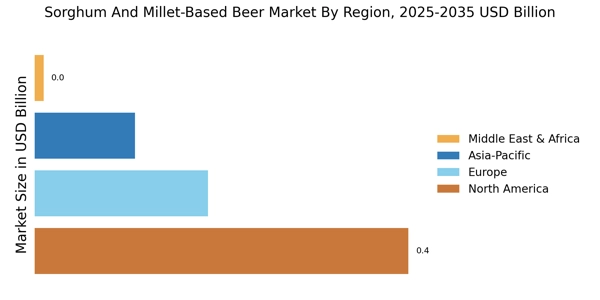
Regional Insights
North America : Innovation and Sustainability Focus
The North American sorghum and millet-based beer market is driven by increasing consumer demand for gluten-free and sustainable beverage options. The U.S. holds the largest market share at approximately 60%, followed by Canada at around 25%. Regulatory support for gluten-free labeling and organic certifications further catalyzes market growth, encouraging local breweries to innovate with sorghum and millet ingredients. Leading players in this region include Sorghum Beer Company and various craft breweries that emphasize local sourcing and sustainable practices. The competitive landscape is characterized by a growing number of microbreweries and craft beer producers focusing on unique flavors and health-conscious options. This trend is supported by consumer education on the benefits of sorghum and millet, enhancing market penetration.

Europe : Cultural Heritage and Innovation
In Europe, the sorghum and millet-based beer market is gaining traction due to a growing interest in traditional brewing methods and gluten-free alternatives. Germany and the UK are the largest markets, collectively holding about 55% of the regional share. Regulatory frameworks promoting organic and gluten-free products are significant growth drivers, encouraging innovation in brewing techniques and ingredient sourcing. Countries like Germany and the Netherlands are leading in production, with several craft breweries experimenting with sorghum and millet. The competitive landscape features established brands alongside new entrants focusing on artisanal and organic offerings. This blend of tradition and innovation is reshaping consumer preferences, making sorghum beer a sought-after choice in the European market.
Asia-Pacific : Emerging Markets and Growth Potential
The Asia-Pacific region is witnessing a surge in the sorghum and millet-based beer market, driven by increasing health consciousness and demand for gluten-free beverages. India and Nigeria are the largest markets, accounting for approximately 50% of the regional share. Government initiatives promoting local grains and sustainable agriculture are key drivers, fostering a favorable environment for market growth and innovation. Leading players include Millet & Sorghum Beverages in India and Millet Brewing Co in Nigeria, both capitalizing on local tastes and preferences. The competitive landscape is evolving, with new entrants focusing on unique flavor profiles and health benefits. This region's diverse consumer base is increasingly open to trying new beverage options, further propelling market expansion.
Middle East and Africa : Cultural Significance and Growth
In the Middle East and Africa, the sorghum and millet-based beer market is influenced by cultural significance and growing health trends. South Africa and Kenya are the largest markets, holding around 45% of the regional share. The increasing awareness of gluten-free diets and local sourcing initiatives are driving demand, supported by government policies promoting indigenous grains and sustainable practices. Countries like Ethiopia and Uganda are also emerging players, with local breweries focusing on traditional brewing methods. The competitive landscape is characterized by a mix of established brands and new entrants, all aiming to cater to the growing consumer interest in healthier beverage options. This trend is reshaping the market dynamics in the region, making sorghum beer a popular choice among consumers.

Key Players and Competitive Insights
Key Companies in the Sorghum And Millet-Based Beer Market include
Industry Developments
The Sorghum and Millet-Based Beer Market is projected to reach USD 1.5 billion by 2032, exhibiting a CAGR of 11.85% during the forecast period (2024-2032). Increasing consumer demand for gluten-free and healthier beer alternatives is driving market growth. Sorghum and millet-based beers are gaining popularity due to their nutritional benefits, such as high fiber and protein content and lower calorie count compared to traditional beer. Craft brewers are also experimenting with these grains to create unique and flavorful beers, further fueling market demand.
Additionally, government initiatives promoting the use of indigenous grains and the growing popularity of health and wellness trends are contributing to market growth.
Future Outlook
Sorghum And Millet-Based Beer Market Future Outlook
The Sorghum and Millet-Based Beer Market is projected to grow at 11.85% CAGR from 2025 to 2035, driven by rising health consciousness and demand for gluten-free products.
New opportunities lie in:
- Expansion into e-commerce platforms for direct consumer sales.
- Development of premium craft sorghum and millet beers targeting niche markets.
- Partnerships with health-focused restaurants and bars for exclusive offerings.
By 2035, the market is expected to solidify its position as a key player in the global beverage industry.
Market Segmentation
Sorghum And Millet-Based Beer Market Type Outlook
- Sorghum Beer
- Millet Beer
Sorghum And Millet-Based Beer Market Flavor Outlook
- Plain
- Flavored (e.g., fruit, herbs)
Sorghum And Millet-Based Beer Market End User Outlook
- On-premise (e.g., bars, restaurants)
- Off-premise (e.g., retail stores)
Sorghum And Millet-Based Beer Market Packaging Outlook
- Bottles
- Cans
- Kegs
Sorghum And Millet-Based Beer Market Distribution Channel Outlook
- Direct sales
- Wholesalers/distributors
- Online retailers
Report Scope
| MARKET SIZE 2024 | 0.6857(USD Billion) |
| MARKET SIZE 2025 | 0.767(USD Billion) |
| MARKET SIZE 2035 | 2.351(USD Billion) |
| COMPOUND ANNUAL GROWTH RATE (CAGR) | 11.85% (2025 - 2035) |
| REPORT COVERAGE | Revenue Forecast, Competitive Landscape, Growth Factors, and Trends |
| BASE YEAR | 2024 |
| Market Forecast Period | 2025 - 2035 |
| Historical Data | 2019 - 2024 |
| Market Forecast Units | USD Billion |
| Key Companies Profiled | Sorghum Beer Company (US), Millet Brewing Co (NG), Sorghum Craft Brewery (ZA), Millet & Sorghum Beverages (IN), Sorghum & Millet Brewing (KE), Sorghum Brewmasters (ET), Millet Beer Makers (TZ), Sorghum Innovations (UG) |
| Segments Covered | Product Type, Flavor, Packaging, End User, Distribution Channel, Regional |
| Key Market Opportunities | Growing consumer preference for gluten-free beverages enhances opportunities in the Sorghum And Millet-Based Beer Market. |
| Key Market Dynamics | Rising consumer preference for gluten-free beverages drives growth in the Sorghum and Millet-Based Beer Market. |
| Countries Covered | North America, Europe, APAC, South America, MEA |
FAQs
What is the current market valuation of the Sorghum and Millet-Based Beer Market?
As of 2024, the market valuation stood at 0.6857 USD Billion.
What is the projected market size for the Sorghum and Millet-Based Beer Market by 2035?
What is the expected CAGR for the Sorghum and Millet-Based Beer Market during the forecast period?
Which companies are considered key players in the Sorghum and Millet-Based Beer Market?
What are the main types of products in the Sorghum and Millet-Based Beer Market?
How does the flavor segment perform in the Sorghum and Millet-Based Beer Market?
What packaging options are available in the Sorghum and Millet-Based Beer Market?
What are the end-user segments for Sorghum and Millet-Based Beer?
What distribution channels are utilized in the Sorghum and Millet-Based Beer Market?
How does the market for Sorghum and Millet-Based Beer compare to traditional beer markets?
Kindly complete the form below to receive a free sample of this Report
Customer Stories
“This is really good guys. Excellent work on a tight deadline. I will continue to use you going forward and recommend you to others. Nice job”
“Thanks. It’s been a pleasure working with you, please use me as reference with any other Intel employees.”
“Thanks for sending the report it gives us a good global view of the Betaïne market.”
“Thank you, this will be very helpful for OQS.”
“We found the report very insightful! we found your research firm very helpful. I'm sending this email to secure our future business.”
“I am very pleased with how market segments have been defined in a relevant way for my purposes (such as "Portable Freezers & refrigerators" and "last-mile"). In general the report is well structured. Thanks very much for your efforts.”
“I have been reading the first document or the study, ,the Global HVAC and FP market report 2021 till 2026. Must say, good info! I have not gone in depth at all parts, but got a good indication of the data inside!”
“We got the report in time, we really thank you for your support in this process. I also thank to all of your team as they did a great job.”